.webp)
The 28 best shopping apps in 2026, ranked from US App Store and Google Play data and scored on discovery, personalization, retention, and checkout.
Look at your phone's home screen and you will see how much shopping has changed. In 2026, the app Americans download most on both the US Apple App Store and Google Play isn't a marketplace at all, it's Vinted, a place to buy and sell secondhand clothes.
Amazon, Walmart, and SHEIN still command the top of the charts. But resale took the crown, led by Vinted. Live shopping went mainstream through Whatnot. And deals apps, rewards, cashback, and buy-now-pay-later climbed higher than ever as shoppers hunted for value.
In this article we cover the 28 best shopping apps of 2026, ranked, scored on what actually matters to shoppers, and broken down by what each one does better than the rest.
This ranking isn't based on opinion. We pulled the live US Apple App Store and Google Play shopping charts as of September 2026, cross-referenced both, and scored every app on discovery, personalization, retention, and checkout speed. Here's how the 28 best shopping apps of 2026 stack up. (See full methodology below.)
The 28 best shopping apps of 2026
Shoppers now spend an astonishing 78 billion hours a year inside shopping apps, and those apps convert 3x better than the mobile web.
Here are the 28 best shopping apps of 2026, ranked from live US chart data and scored on what actually keeps people coming back.
|
# |
App |
Category |
2026 status |
Best for |
|
1 |
Vinted |
Resale |
US downloads up~800% YoY, 286K→2.6M |
Secondhand fashion |
|
2 |
Temu |
Marketplace |
Most-downloaded US shopping app of 2025 |
Lowest-price discovery |
|
3 |
Whatnot |
Live shopping |
Users average~80 min/day, more than Netflix |
Live auctions & drops |
|
4 |
SHEIN |
Fast fashion |
2nd most-downloaded US shopping app 2025 |
Trend-led fast fashion |
|
5 |
Walmart |
Big-box |
12.9M iOS ratings; top-3 on both stores |
Omnichannel + pickup |
|
6 |
Amazon |
Marketplace |
1B+ installs, 4.8★/8.4M ratings |
All-in-one convenience |
|
7 |
AliExpress |
Marketplace |
Top-11 on both US charts, Sept 2026 |
Global bargain range |
|
8 |
TikTok Shop |
Live/social |
US live sales more than doubled in H1 2026 |
Creator-led live selling |
|
9 |
Depop |
Resale |
~3.9M US downloads early 2026, double YoY |
Gen-Z vintage resale |
|
10 |
Shop (Shopify) |
Shopping assistant |
Top-5 on the US iOS chart, Sept 2026 |
Tracking + DTC discovery |
|
11 |
eBay |
Marketplace |
100M+ downloads, top-14 both stores |
Auctions & resale |
|
12 |
Target |
Big-box |
AI referrals up 1,600%+ YoY |
Style + everyday deals |
|
13 |
Costco |
Warehouse |
Top-14 on both US charts, Sept 2026 |
Warehouse-club value |
|
14 |
Wayfair |
Home |
AR "View in Room" cuts return guesswork |
Furniture & décor |
|
15 |
Fetch |
Rewards |
Top American shopping app on Google Play |
Receipt-scan rewards |
|
16 |
Capital One Shopping |
Deals |
Top-9 on the US iOS chart, Sept 2026 |
Auto-coupons & compare |
|
17 |
Affirm |
BNPL |
Top-20 on both US charts, Sept 2026 |
Buy now, pay later |
|
18 |
Best Buy |
Electronics |
Top-22 on both US charts, Sept 2026 |
Tech & electronics deals |
|
19 |
Ulta Beauty |
Beauty |
Top-25 US iOS shopping app, Sept 2026 |
Beauty loyalty & rewards |
|
20 |
Nike (Editorial) |
Brand-owned |
~$1B+ digital sales via app & SNKRS |
Membership & sneaker drops |
|
21 |
Starbucks (Editorial) |
Brand-owned |
30M+ active rewards members |
Loyalty & order-ahead |
|
22 |
Sephora (Editorial) |
Brand-owned |
25M+ Beauty Insider members |
Beauty personalization |
|
23 |
StockX (Editorial) |
Resale |
Sneaker authentication |
|
|
24 |
Poshmark (Editorial) |
Resale |
~$1.9B GMV, 100M+ users |
Social resale fashion |
|
25 |
Gymshark (Editorial) |
Brand-owned |
Community + content |
|
|
26 |
SKIMS (Editorial) |
Brand-owned |
$5B valuation |
Drop-driven demand |
|
27 |
Pixi Beauty(Editorial) |
Brand-owned |
Beauty superfan loyalty |
|
|
28 |
Rakuten (Editorial) |
Cashback |
Cashback shopping |
Resale & live shopping apps
Resale and live shopping used to be niche. Not anymore these apps are leading in 2026. The two apps sitting at the top of the US charts right now don't sell new products at all, they sell secondhand clothes and live auctions. That tells you where shopping is going faster than any forecast.
1. Vinted
Vinted is the number-one shopping app on both the US Apple App Store and Google Play. You can use it to buy and sell pre-loved clothes, and its defining feature is that sellers pay no fees, so they keep everything they earn.
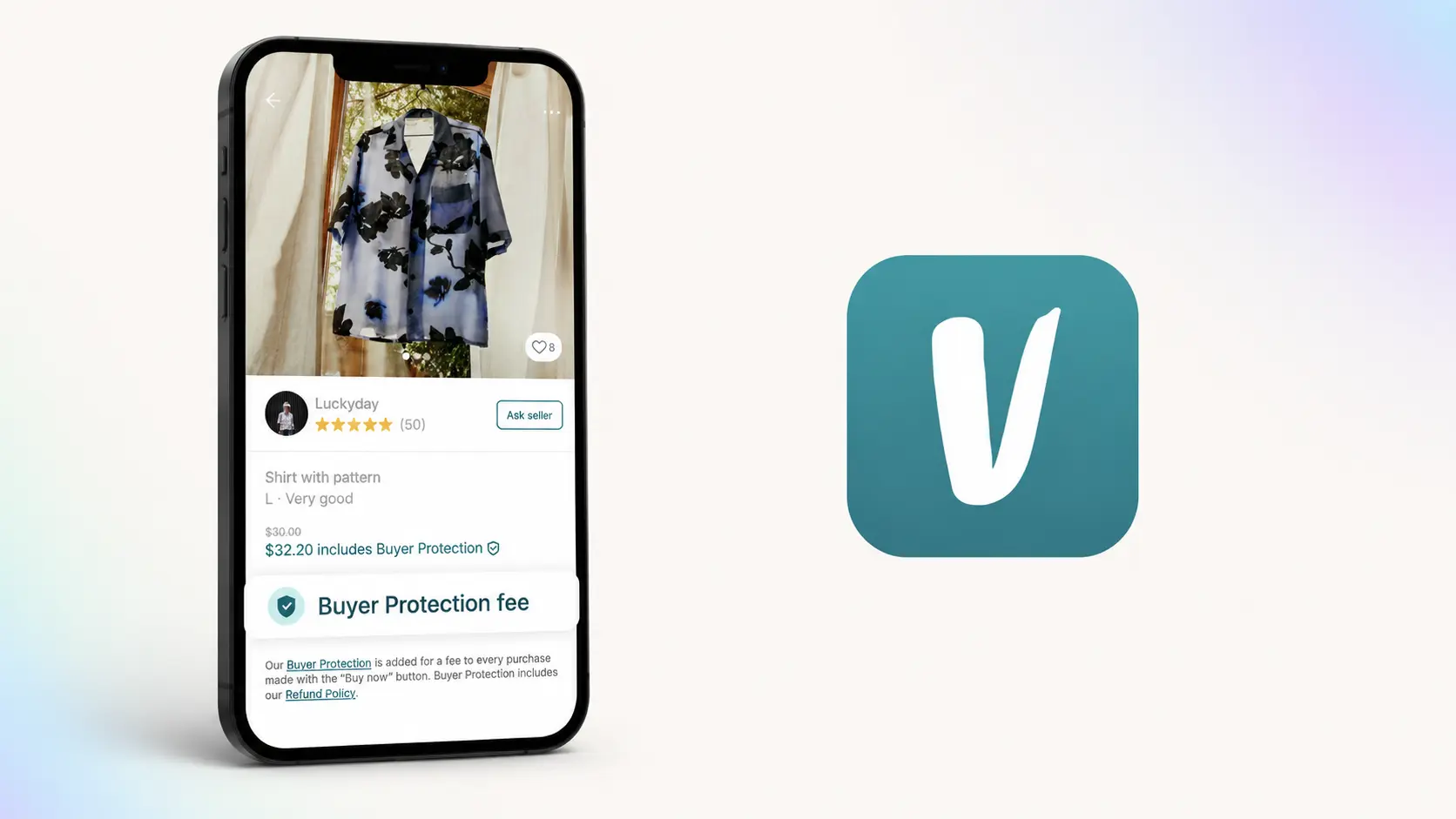
By removing seller fees, Vinted undercut Poshmark and Depop on economics and gave people a reason to list more and shop more. The downloads followed quickly: Vinted's US installs jumped nearly 800% year over year, from roughly 286,000 to 2.6 million in the same four-month window.
2. Depop
Depop competes on taste where Vinted competes on price. It presents resale as a social feed built for Gen-Z fashion, so listing an item feels like posting to your profile and shopping feels like scrolling one.
eBay completed its $1.2 billion acquisition of Depop in July 2026 and is keeping it running as a separate, independent marketplace, a sign of how seriously the biggest players are now taking fashion resale.
3. Whatnot
People spend around 80 minutes a day inside Whatnot, which is more time than the average person gives Netflix. Whatnot is a live-shopping app where real sellers host real-time auction shows, and viewers tune in the way they would to a livestream, with buying happening naturally along the way.
That entertainment-first format made Whatnot the fastest-growing US shopping app of 2025 and helped it drive more than $8 billion in sales, the majority of it in the US. For anyone selling products with a story or a community behind them, live shopping is the format worth understanding early.
4. TikTok Shop
TikTok Shop lets you buy without ever leaving the app you were already scrolling. Products appear directly inside the "For You" feed and live streams, so you can discover something and check out in the same swipe, with no separate app or search to slow you down.
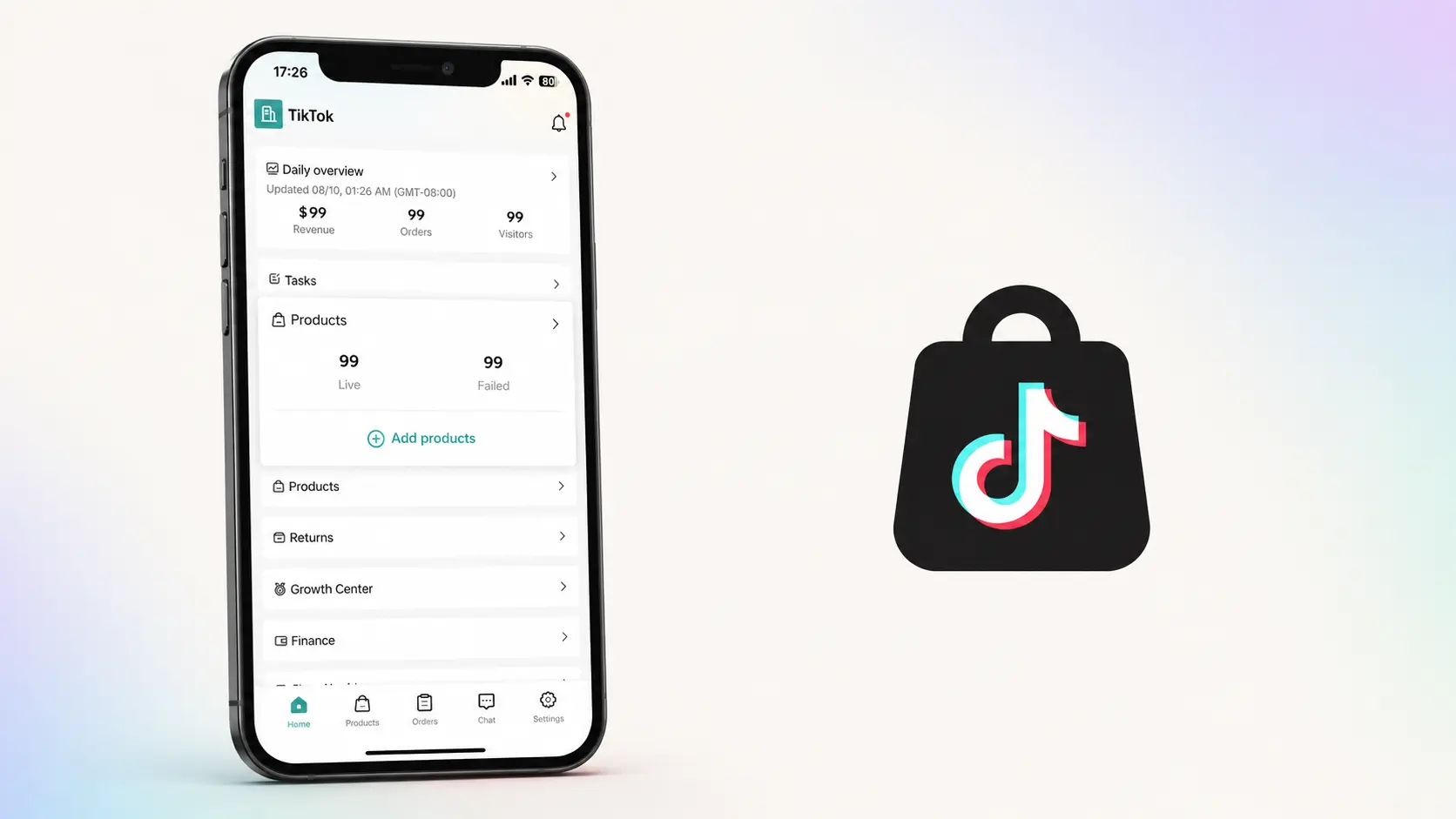
That seamless path is why it has become the engine of US live commerce, with TikTok Shop's US live sales more than doubling in the first half of 2026. More than any other app here, it shows how discovery and checkout are merging into a single moment.
5. eBay
eBay was doing resale long before the category had a name, and it remains one of the largest players, sitting as a top-14 shopping app on both US stores with over 100 million downloads. Auctions, secondhand finds, and hard-to-source items are still where it is strongest.
Its acquisition of Depop tightened its position in exactly the resale wave younger shoppers are driving. eBay remains the app to reach for when you want something you genuinely cannot find anywhere else.
6. Poshmark
Poshmark built its marketplace on the idea that reselling should feel social, and that bet has held up well. Features like follows, shares, likes, and live selling make it behave more like a social network than a store, which is what keeps sellers logging in daily rather than listing once and disappearing.

Now owned by Naver, Poshmark moved roughly $1.9 billion in GMV in 2025 across more than 100 million users, with 93% of that coming from the US. Its lasting lesson is that engagement features, not just listings, are what keep a two-sided marketplace alive.
7. StockX
StockX solved the problem that quietly kills most peer-to-peer resale, which is trust. Every sneaker, streetwear piece, and collectible is authenticated before it ships, so buyers know exactly what they are getting.
That guarantee is the entire product, and it turned a once-risky corner of online shopping into about $2.1 billion in GMV in 2025 and the default destination for sneaker resale. When trust is the thing standing between a shopper and a purchase, removing it becomes the strongest feature you can offer.
Mobile commerce giants
These are the apps you probably think of first when someone says "shopping app." They're the marketplaces that put millions of products in your pocket, and they run the US charts on scale, selection, and speed. If you want to know what shoppers expect from a modern app, this is where to start.
8. Temu
Temu is built to keep you looking. The home screen is an endless, personalized feed of deals, wrapped in spin-to-win games and countdown timers that make bargain-hunting feel like play rather than a chore.

Temu users spend an average of 21 minutes a day in the app, more time than they give Amazon, eBay, or AliExpress.
The US is its single largest market, drawing roughly 665 million visits a month. For anyone studying discovery, Temu is a case study in how a feed built for exploration, rather than search, can turn browsing itself into a product.
9. Amazon
You already know how Amazon works, and that familiarity is the point. It set the modern standard for convenience by removing every reason to hesitate before buying, with saved payment details, one-tap ordering, fast delivery, and a search bar that covers a near-endless catalog.
Amazon's app has passed a billion installs and still outperforms Temu, SHEIN, and AliExpress on registered users, even as newer rivals chase it on raw downloads. If your own checkout takes more than a few taps, Amazon is the benchmark to measure it against.
10. SHEIN
SHEIN is designed around constant newness. It adds thousands of new styles at a speed no traditional retailer can match, then surfaces them through a feed tuned to your taste and an app that rewards you for checking in daily.
That relentless pace is what made SHEIN the second most-downloaded shopping app in the world, trailing only Temu.
11. Walmart
Walmart's app earns its place by connecting online shopping to its enormous store network. You can order for delivery, pick up at the curb, or find an item in-store, with groceries and everyday essentials kept front and center rather than buried under general merchandise.
That blend of digital and physical keeps it near the top of both US charts. Because groceries bring people back week after week, Walmart shows how a genuinely useful recurring need can turn an app into a habit.
12. AliExpress
AliExpress is the app to reach for when you want almost anything at the lowest possible price and you are willing to wait for it. It connects you directly to sellers offering enormous range, and its experience is built for patient browsing rather than urgency.
Its strength is the same as its trade-off: near-limitless selection rewards the shopper who enjoys the hunt more than the one who wants it tomorrow.
Best brand-owned shopping apps
Marketplaces dominate the charts, but some of the smartest apps belong to a single brand. They do not try to sell everything. They deepen the relationship with one brand's customers through loyalty, membership, and access, and for anyone thinking about building their own app, they are the clearest lessons on the list.
13. Nike
Nike built its app around membership rather than the catalog. Instead of points, NikePlus rewards access, early looks, exclusive gear, and members-only drops, and its separate SNKRS app turns limited sneaker releases into genuine events people set alarms for.
That model pays off: Nike Membership has passed 100 million members, and members spend roughly three times more than non-members. The lesson worth stealing is that rewarding status and access can build deeper loyalty than any discount.
14.Starbucks
Starbucks runs what many consider the gold standard of app-driven loyalty, and the mechanism is quietly brilliant. Customers preload money onto the app, order ahead, and earn Stars, which turns a coffee run into a frictionless daily ritual.
If you take one idea from Starbucks, make it this: remove friction from your most frequent purchase and it becomes a habit.
15. Sephora
Sephora's app tackles the hardest part of buying beauty online, which is uncertainty about whether something will actually suit you. Virtual try-on, detailed reviews, and tailored recommendations do the reassuring, all wrapped inside its Beauty Insider program.
Any brand in a high-hesitation category can learn from it, because solving the customer's biggest doubt is often the whole job.
16. Pixi Beauty
Pixi Beauty is proof that you do not need to be a giant to run a smart brand app. Founded by makeup artist Petra Strand in a Soho boutique in 1999, it grew a cult following around its award-winning Glow Tonic and is now sold across Target, Ulta, and Sephora in more than 50 countries.
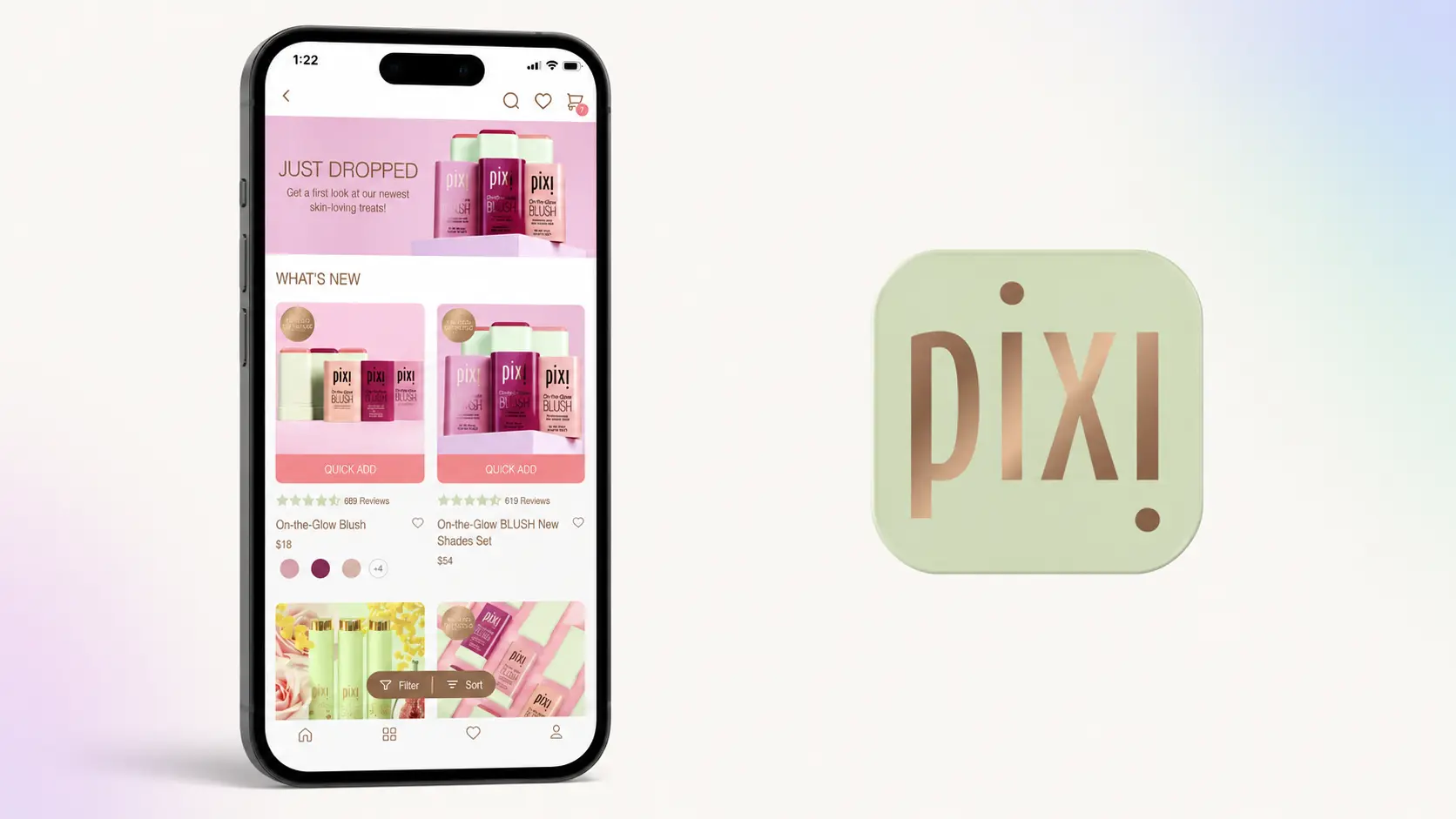
Its app skips the marketplace game entirely and focuses on superfans, offering early access to launches and a more personal line to the brand than any retail shelf allows.
17. Gymshark
Gymshark carried its community-first strategy straight onto the phone. The app holds the same identity as the brand, training content, athlete partnerships, and drops, so it feels like part of a fitness movement rather than a storefront.
That engine helped grow a garage startup into a brand doing £646 million in annual sales, and the app deepens the loyalty behind it. Its takeaway is simple: give your app a job beyond selling, and people will open it between purchases.
18. SKIMS
SKIMS engineered its app around the moment that defines the brand: the drop. It notifies members of restocks and new collections and keeps checkout fast enough to survive the frenzy each launch creates.
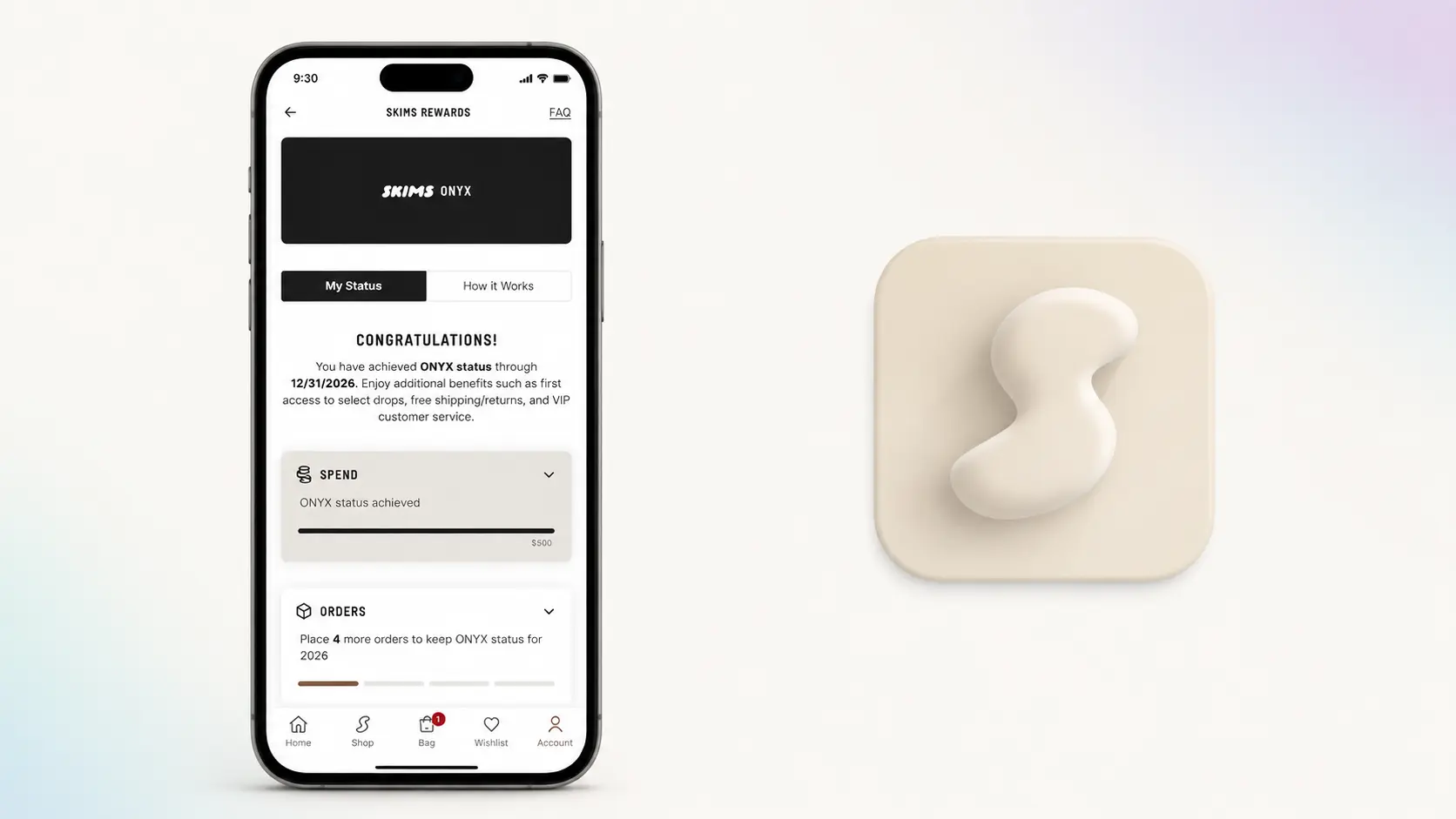
That demand machine helped push SKIMS to a $5 billion valuation in November 2025 on more than $1 billion in projected sales. When scarcity is part of your model, the app is the best channel you have to reward the people waiting for it.
{{cta}}
Marketplace & big-box
Not every winning app is a viral newcomer or a discount giant. This group is the dependable middle of the US charts: the marketplaces and big-box retailers people open when they know roughly what they want and simply need a good place to get it. What they share is trust, range, and a shopping experience that has been refined over years.
19. Shop (by Shopify)
Shop is the rare app that started as a package tracker and grew into a storefront. It began by letting you follow deliveries in one place, then used that daily habit to surface products from the thousands of independent brands that run on Shopify.
For a smaller brand, Shop offers a way onto a major discovery surface without competing head-on with Amazon. It comes with a real trade-off, though: your products live inside someone else's app rather than your own, a distinction we cover in Shop vs Shopify.
20. Etsy
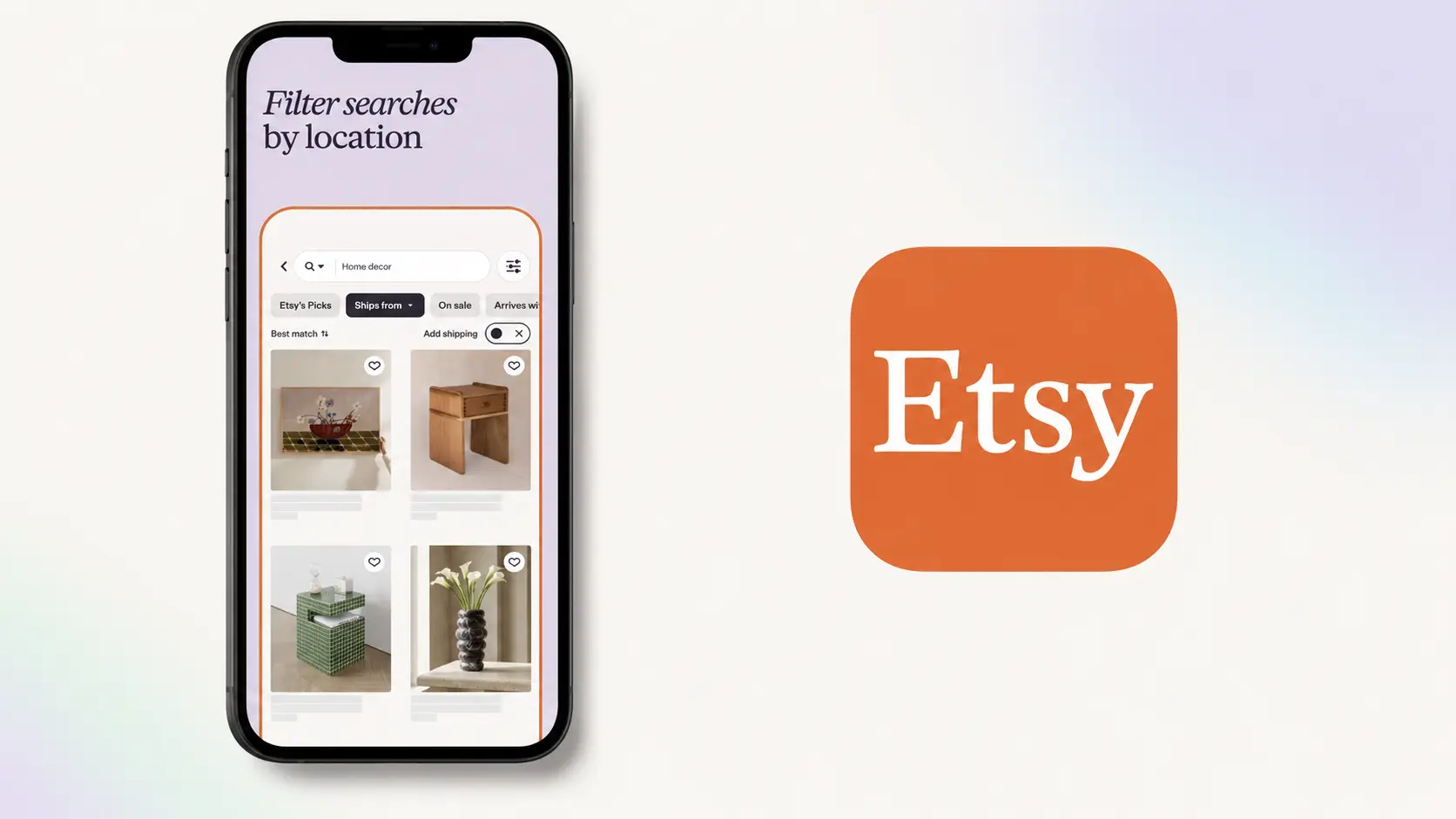
Etsy is where you go for something you will not find anywhere else. It is the global marketplace for handmade, vintage, and made-to-order goods, and its scale is easy to underestimate: as of December 2025 it had 86.5 million active buyers, 5.6 million sellers, and more than 100 million unique items for sale.
21. Target
Target's app succeeds by making a trip to Target more efficient rather than replacing it. It pairs everyday deals with tools people actually use, from same-day pickup to its Circle rewards program, so the app becomes part of the shopping routine rather than an occasional stop. It sits comfortably in the top tier of both US charts.
It is also quietly at the center of a bigger shift in how people find products: Target was among the retailers whose AI-driven referral traffic grew more than 1,600% in a single year, a sign that discovery is starting to move through AI assistants as well as apps.
22. Costco
Costco's app works because it extends the membership. Members use it to browse warehouse deals, manage their membership, order same-day grocery delivery, and shop bulk items, all tied to the loyalty that already defines the brand.
23. Best Buy
Best Buy's app is built around a high-consideration purchase: electronics you want to research before you buy. It leans into detailed specifications, reviews, price-match confidence, and the option to check in-store availability, which matters when you would rather not drive across town for a sold-out TV.
Its approach suits any category where people compare carefully before committing.
24. Wayfair
Wayfair took on the hardest problem in online retail: convincing people to buy large furniture they cannot see in person. Its answer is technology that removes the guesswork, most notably an augmented-reality "View in Room" feature that lets you place a sofa or table in your actual space before buying.
Deals, rewards & BNPL
This last group exists for one reason: to help you spend less, or to spread out what you do spend. Cashback apps, rewards trackers, and buy-now-pay-later services do not sell products themselves, but they sit alongside the apps that do, and in a year when shoppers are hunting hard for value, they have climbed the charts right alongside the marketplaces.
25. Fetch
Fetch turned the most boring part of shopping, the receipt, into a rewards engine. You snap a photo of any receipt, from any store, and earn points that convert into gift cards, which means you can play whether you shop online or in person.
26. Capital One Shopping
Capital One Shopping works quietly in the background so you do not have to hunt for savings. It automatically applies coupon codes at checkout, compares prices across retailers, and flags better deals, removing the manual work that stops most people from bothering.
27. Affirm
Affirm is not a store, but it shapes how people buy thousands of them. It lets you split a purchase into predictable installments with clear terms and no surprise fees, and it appears at checkout across a huge range of retailers.
Buy-now-pay-later has become a genuine driver of conversion, especially for larger purchases, because it lowers the moment-of-decision barrier. When a $200 item becomes four payments of $50, more people say yes.
28. Rakuten
Rakuten has been paying people to shop online since long before cashback was fashionable. You start your shopping through Rakuten, buy as you normally would at any of 3,500-plus partner stores, and a percentage comes back to you as cash.
Its longevity holds a lesson that outlasts any single feature. Rakuten rewards existing behavior rather than trying to change it, and a rewards layer that fits neatly into how people already shop can keep them loyal for decades.
What do the best shopping apps have in common?
Look across all 28 apps and a pattern emerges. The winners span wildly different categories, from billion-dollar marketplaces to secondhand closets to single-brand loyalty apps, yet they succeed for the same handful of reasons.
1. They turn discovery into entertainment
The best shopping apps have stopped waiting for you to search. Temu and SHEIN replaced the search bar with an endless personalized feed, TikTok Shop and Whatnot turned browsing into live video. Discovery is becoming entertainment.
2. They personalize until the app feels like yours
Every winning app learns from what you do. Amazon makes reordering effortless, SHEIN tailors its feed to your taste, and Sephora recommends products from your profile and past purchases. Personalization is what separates an app that feels generic from one that feels built for you.
3. They give you a reason to come back
Downloads get an app onto your phone. Retention keeps it there, and it is where these apps invest most. Starbucks and Sephora use loyalty, Gymshark and Whatnot use community and live events, Nike and SKIMS use exclusive drops, and Fetch rewards you for shopping anywhere at all.
4. They make buying almost invisible
Once you decide to purchase, the best apps get out of your way. Saved payment details, one-tap checkout, digital wallets, and buy-now-pay-later options like Affirm all shrink the gap between wanting something and owning it.
5. The thread running through all four
These apps win because they are built for the phone first, not adapted to it. Live shopping, AR try-on, push notifications, and personalized feeds are not website features squeezed onto a smaller screen; they are things only an app can do well.
How we ranked the best shopping apps of 2026
To find the best shopping apps of 2026, we pulled the current top-ranked shopping apps from both the US Apple App Store and Google Play, then cross-referenced the two charts to see which apps are genuinely winning across both platforms.
Chart position tells you what people download. It doesn't tell you what makes an app good. So we scored every app on the Appbrew Shopping App Scorecard, four things that separate an app people tolerate from one they open every day:
- Discovery: how easily you find products you will actually want.
- Personalization: how well the app tailors itself to you over time.
- Retention: the reasons you come back: loyalty, community, drops, and well-timed notifications.
- Checkout speed: how little friction sits between wanting something and owning it.
A note on live shopping: TikTok Shop and Whatnot don't always appear in the App Store's "Shopping" category because they're classed under social and entertainment. With US live shopping forecast to reach nearly $20 billion in 2026, up about 35% year over year, we've included them where they belong: among the best shopping apps of the year.
Data sources:
- The live US Apple App Store and Google Play shopping charts as of September 2026.
- Appfigures for download estimates and rank movement.
- Sensor Tower, Business of Apps, Statista, and CNBC for benchmarks and live-shopping data, plus company disclosures.
This is a US-focused ranking. Global performance, like Temu's reach across dozens of countries, is noted but not the primary lens.
What this means for ecommerce brands
If you run an ecommerce brand, the takeaway from this list is not that you need to out-Amazon Amazon. It is that the behavior powering these apps, shoppers who browse for entertainment, expect personalization, and buy in a single tap, is now the standard everywhere. Your customers carry that expectation into your store whether or not you have an app.
The advantages these apps rely on are no longer reserved for giants. A branded mobile app used to require a large budget and a dedicated engineering team. Today, a brand on Shopify can turn its store into a native iOS and Android app without rebuilding anything, which is why so many of the brands in this list, from Gymshark to SKIMS, now run one.
For fashion and apparel brands in particular, where drops and community drive repeat purchases, the right app builder can be the difference between a one-time buyer and a loyal one.
FAQs
What is the best shopping app in 2026?
There is no single best app, because it depends on what you are shopping for. As of September 2026, Vinted is the number-one shopping app on both the US Apple App Store and Google Play, driven by the boom in secondhand fashion. For everyday range and speed, Amazon and Walmart lead; for lowest prices, Temu; and for live shopping, Whatnot and TikTok Shop.
What is the most downloaded shopping app in the US?
Vinted currently tops the US download charts on both app stores, while Temu was the most-downloaded shopping app of 2025 overall. The bigger story is that resale and live-shopping apps have overtaken traditional marketplaces at the very top of the charts.
What are the top 5 shopping apps right now?
Based on the live US charts in September 2026, the top five shopping apps are Vinted, Temu, SHEIN, Walmart, and Amazon. Rankings shift week to week, but these five have consistently held the top positions across both the Apple App Store and Google Play.
What are the newest shopping apps worth trying in 2026?
The fastest-rising apps in 2026 are Whatnot and TikTok Shop for live shopping, and Vinted and Depop for secondhand fashion. Whatnot was the fastest-growing US shopping app of 2025, and Vinted's US downloads climbed nearly 800% year over year.
Which brands have the best shopping apps?
Among brand-owned apps, Nike, Starbucks, and Sephora set the standard, using membership, loyalty, and personalization to drive repeat purchases. In fashion, Gymshark, SKIMS, and Fashion Nova run strong branded apps built around community and product drops.
Are shopping apps safe to use?
Most major shopping apps are safe when downloaded from the official Apple App Store or Google Play, which vet apps for security. To stay protected, stick to well-reviewed apps, avoid saving card details on apps you do not trust, and be cautious with deals that seem too good to be true, especially on unfamiliar marketplaces.