


.webp)
No, Shop and Shopify aren't the same. Shopify is the platform brands sell on; Shop is its free consumer app. See the key differences for 2026 explained.
If you have spent any time around Shopify, you have probably seen the names Shopify and Shop used almost interchangeably and wondered whether Shop and Shopify are the same thing. They are not.
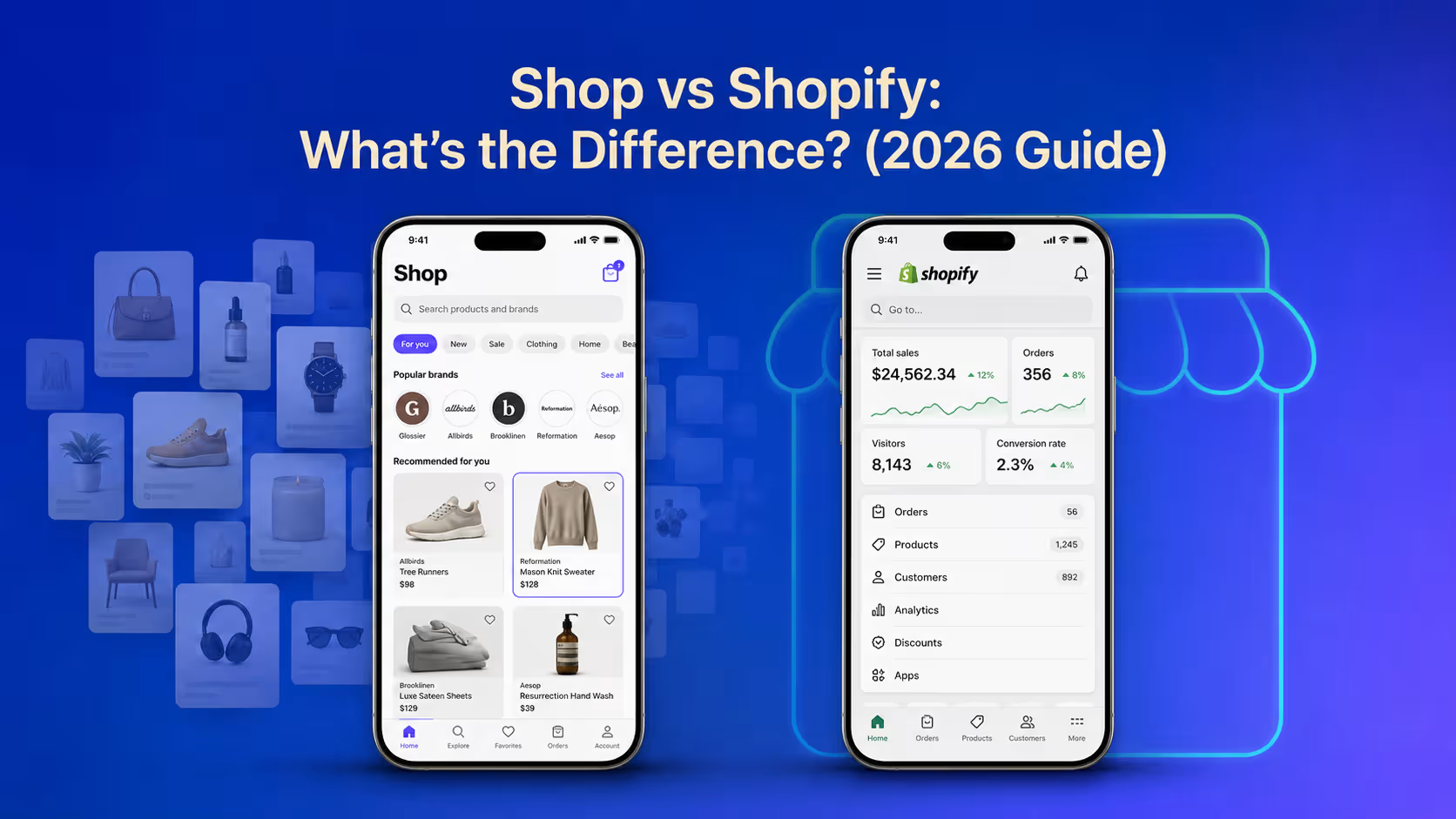
Shopify is the platform merchants use to build and run an online store. Shop is Shopify's free consumer app, where shoppers track orders, discover brands, and check out in one tap. Same company, two very different products, built for two different people.
This guide clears up the confusion between Shopify vs shop app, shows where Shop Pay fits, covers what changed in 2026, and covers a third option many people miss: building your own Shopify mobile app.
Quick overview
- Shopify is the merchant platform: you build your store, manage products, take payments, and ship orders from one admin.
- The Shop app is Shopify's free consumer app for buyers: order tracking, brand discovery, and one-tap checkout.
- Shop Pay is a checkout method, not the app. It works on any Shopify checkout, and since the Spring '26 Edition it works on non-Shopify stores too.
- They are complementary, not competitors. Shopify runs your business; Shop improves your customer's experience.
- The Shop app is free for merchants. Eligible stores on Shopify Payments are listed automatically.
Shop vs Shopify at a glance
|
Aspect |
Shopify (the platform) |
Shop app (the consumer app) |
|
Who it is for |
Merchants and sellers |
Shoppers and buyers |
|
What it does |
Build, manage, and scale an online store |
Track orders, discover brands, check out fast |
|
Cost |
Paid subscription, from $39/mo |
Free for shoppers and for merchants |
|
Where it lives |
Web admin plus sales channels |
iOS, Android, and web |
|
Checkout |
Shopify Checkout (customizable) |
Shop Pay, one tap |
|
Product catalog |
You create and manage it |
Auto-listed from eligible Shopify stores |
|
Brand control |
Full: your domain, your rules |
Limited: shared, standardized experience |
Shopify is where you run your business, and Shop is one place your customers experience it.
What is Shopify?
Shopify is a subscription-based commerce platform that gives a business everything it needs to sell online: a store builder, product and inventory management, checkout, payments, shipping, and analytics, all from one dashboard. It powers millions of merchants worldwide and handles hosting, security, and PCI compliance so you can focus on selling rather than servers.
In plain terms, Shopify is the engine room. Nothing a shopper sees in the Shop app exists without a merchant running a Shopify store first.
Shopify pros and cons for merchants
|
Pros |
Cons |
|
All-in-one: store, payments, shipping, analytics |
Monthly subscription, plus fees if you skip Shopify Payments |
|
Fast to launch, hosting and security handled |
Deeper customization needs apps or a developer |
|
Scales from first sale to enterprise |
You still drive your own traffic and retention |
|
Large app and integration ecosystem |
Native mobile app is not included, you add it |
If Shopify is the engine room, the Shop app is the showroom some of your customers walk into.
What is the Shop App?
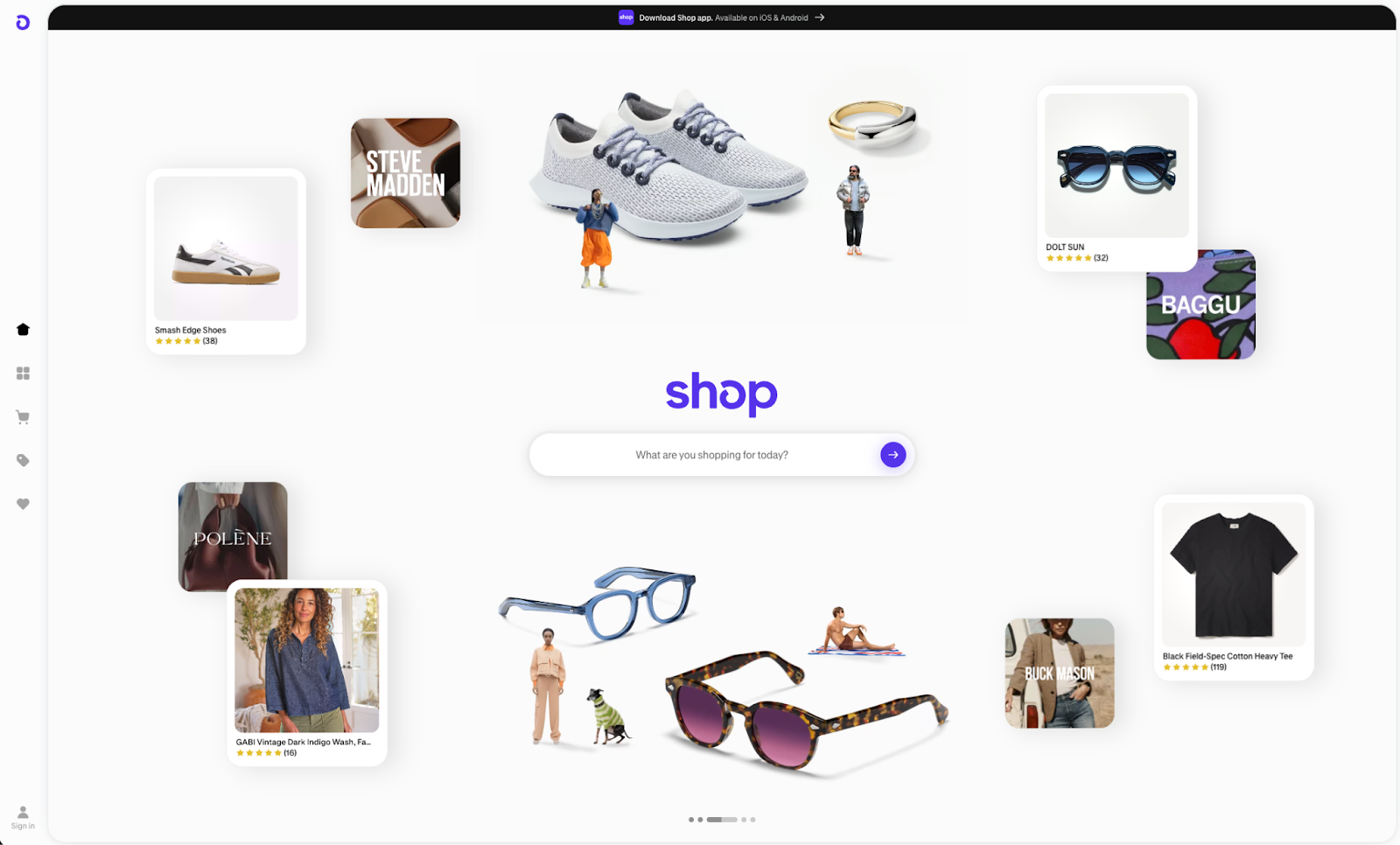
The Shop app is Shopify's consumer-facing shopping companion. It lets buyers track every Shopify order in one place, discover and follow brands, get personalized recommendations, and check out in one tap with Shop Pay. Where Shopify is the merchant's tool, Shop is the buyer's tool.
For merchants, the Shop app is a free discovery and retention channel. Your products can surface to shoppers who already buy from Shopify stores, customers can follow your brand for updates, and real-time tracking cuts down "where is my order" support tickets. The tradeoff is control: inside Shop, your products sit next to other brands in a standardized layout you do not own.
Shop app pros and cons for merchants
|
Pros |
Cons |
|
Free to use, no separate commissions |
Your products appear next to competitors |
|
Automatic listing and product discovery |
Limited branding and a standardized layout |
|
Real-time tracking reduces support tickets |
Limited data and merchant insight |
|
Shop Pay lifts checkout conversion |
Only in Shopify Payments countries |
|
Follows and Shop Cash drive repeat visits |
You do not own the customer relationship |
Does Shopify own the Shop app?
Yes. Shopify built, launched, and operates the Shop app. It started as Arrive, a package-tracking app Shopify introduced in 2017, and was rebranded and expanded into Shop in April 2020 with discovery, brand following, and Shop Pay added on top of the original tracking. So Shop and Shopify are not two companies. They are one company with two products aimed at opposite sides of the same transaction.
Shop Pay vs the Shop app: what's the difference?
Shop Pay is an accelerated checkout that saves a buyer's email, payment, and shipping details for one-tap purchases. The Shop app is the mobile app where Shop Pay lives alongside tracking and discovery. You can use Shop Pay without ever opening the Shop app, because Shop Pay works on any Shopify checkout, on desktop or mobile.
The reason merchants care: Shop Pay lifts conversion by up to 50% compared with guest checkout, according to an external study Shopify cites, and it is free to turn on with Shopify Payments. It is now used by more than 250 million shoppers across 24 countries.
What changed for Shop and Shopify in 2026
Shopify's Spring '26 Edition, released on June 17, 2026 under the theme "Everywhere," shipped more than 150 updates and moved the line between Shopify and Shop in a few ways worth knowing.
- Shop Pay is no longer Shopify-only. Brands on any platform can now offer Shop Pay at checkout through simplified onboarding, tapping into Shop Pay's 250M+ shopper network.
- Your products can appear inside AI assistants. Through Shopify Catalog and the Universal Commerce Protocol, eligible products can be discovered and bought inside ChatGPT, Microsoft Copilot, Google's AI Mode, and the Shop app.
- Shop Campaigns reach more surfaces. Shopify's pay-per-conversion campaigns now extend to ChatGPT, Pinterest, and the open web, on top of Shop and other channels.
The direction is clear: Shopify wants to be the checkout and product layer wherever buying happens, including places that are not a traditional storefront. That makes owning your customer relationship more valuable, which is exactly what a Shopify mobile app gives you.
Suggested Read: How to Increase Customer Lifetime Value in Ecommerce (2026 Guide)
Shopify vs the Shop app vs a Shopify mobile app
Most people compare only two things, Shopify and Shop, and miss a third that decides whether you own your customers or share them:
- Shopify is the platform your store runs on.
- The Shop app is Shopify's shared consumer app, where your products appear alongside other brands.
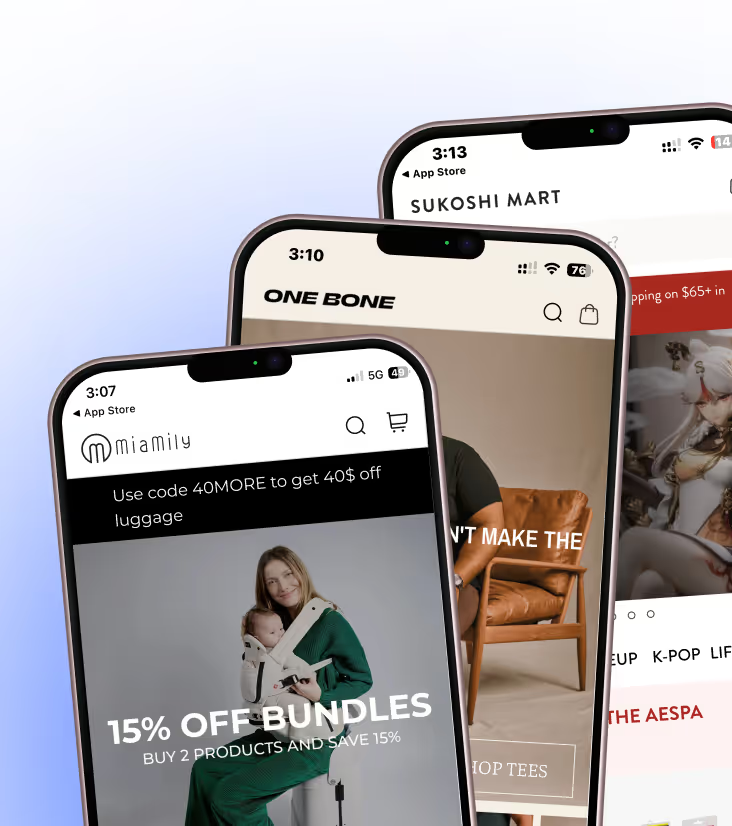
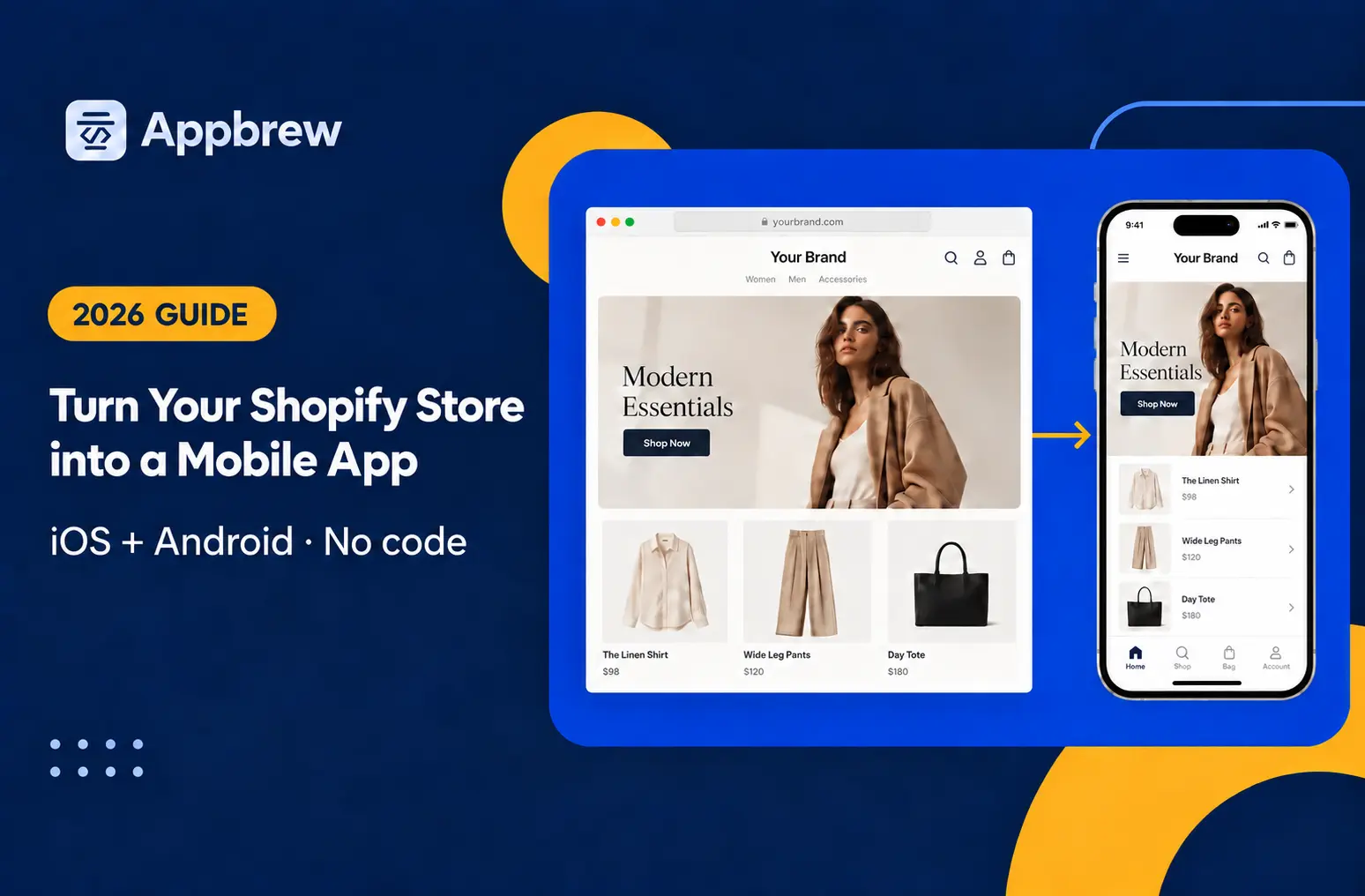
- A Shopify mobile app is your own branded native app: only your products, on the customer's home screen, with your own push notifications. It is not the Shop app, and it is not just your mobile website. It is your storefront as a native app, usually built with a no-code Shopify mobile app builder rather than coded from scratch.
Keep the Shop channel on for free discovery, build your own app to own the relationship, and, if you can, do both.
What is a Shopify mobile app?
A Shopify mobile app is a branded, native iOS and Android app that turns your Shopify store into a standalone app. Built with a mobile app builder like Appbrew, it is dedicated to your brand alone. It lives on the App Store and Google Play, and it syncs your catalog, collections, pricing, and inventory with Shopify in real time.
There are two ways to build one.
You can develop a custom app from scratch, which gives total flexibility but usually takes three to six months and a developer budget.
Or you can use a no-code Shopify mobile app builder, which syncs with your store and launches in days. This is why most established brands, including well-known DTC names, go the no-code route: they get a native app without the cost and timeline of custom development.
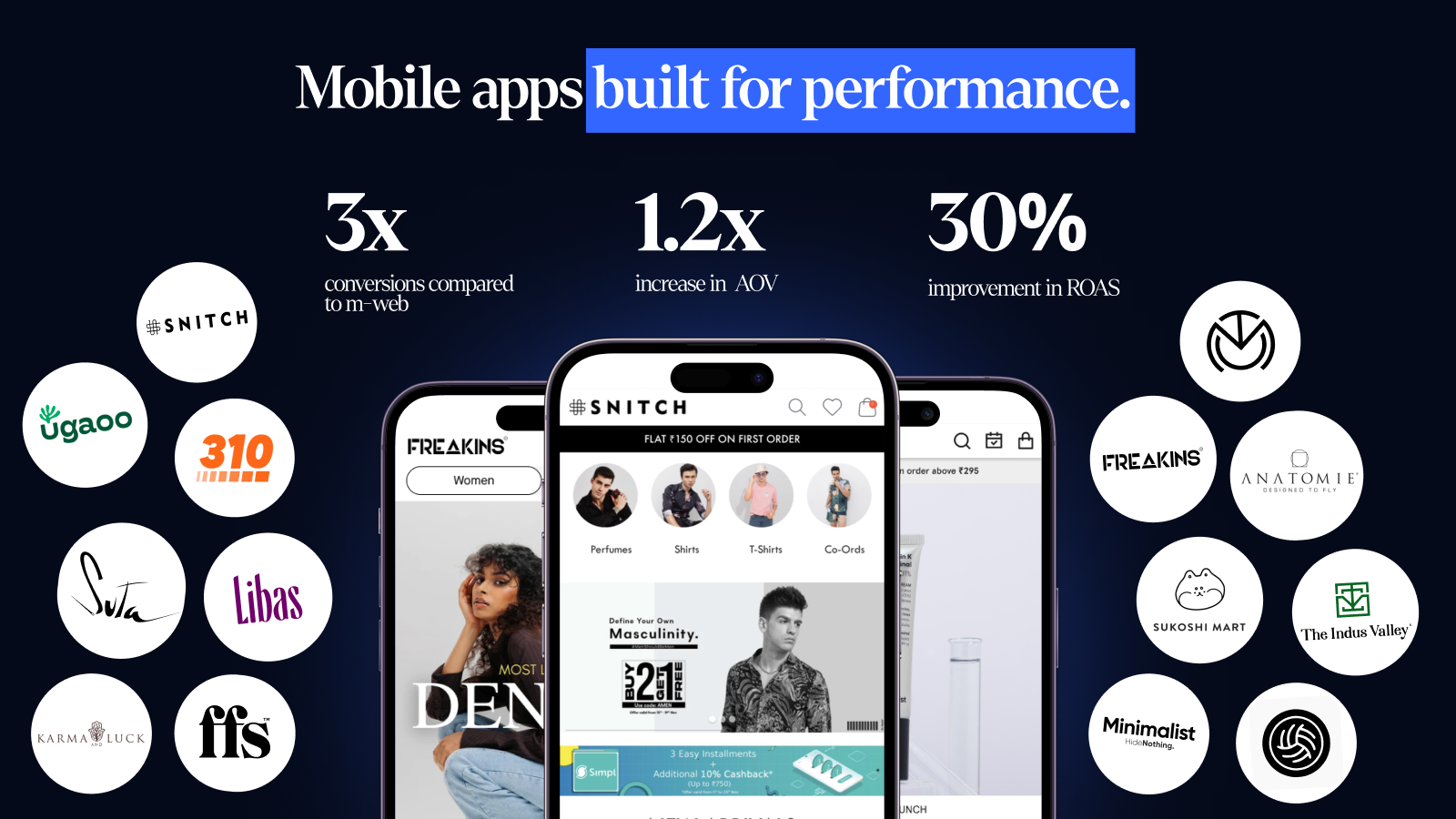
Core capabilities of a Shopify mobile app builder like Appbrew, usually include:
- A true native app experience, plus AI features like Milo for a more premium feel.
- Unlimited push notifications for launches, promotions, and abandoned-cart recovery.
- Design that matches your brand: logo, colors, and layout you control.
- Built-in loyalty, wishlists, and personalization.
- Multi-currency and multi-language support.
- AI-powered CMS with built-in AI copywriting and AI image generation
- Real-time product and inventory synchronization with your Shopify store
- Native mobile checkout with saved payment methods
- Offline browsing capabilities with automatic sync
- Advanced analytics and user behavior tracking
Key differences between Shopify mobile app and shop app: Side-by-Side Comparison
Here’s a quick overview of the difference b/w a Shopify Mobile App and the Shop App:
|
Aspect |
Custom Shopify Mobile App |
Shop App |
|
Brand Ownership |
Your branded app exclusively for your store |
Multi-brand platform owned by Shopify |
|
App Store Presence |
Listed under your brand name on iOS/Android stores |
Listed as "Shop" by Shopify Inc. |
|
Product Catalog |
Only your products and collections |
Products from thousands of Shopify stores |
|
Customer Control |
Direct relationship with your customers |
Customers also see competing brands |
|
Customization |
Fully customizable design, features, and user experience |
No customization - standard Shopify interface |
|
Push Notifications |
Unlimited, fully controlled by you for your campaigns |
Limited to the Shop App's notification system |
|
Data & Analytics |
Complete access to user behavior, engagement, and conversion data |
Limited merchant insights |
|
Customer Loyalty |
Build exclusive loyalty programs and rewards |
Shared platform - harder to build brand loyalty |
|
Cost |
Monthly subscription ($400-$1000+) or one-time development |
Free for merchants and customers |
|
Setup Control |
Full control over features, layout, and functionality |
Basic listing - limited control |
|
Conversion Rates |
3-5x higher than mobile web |
Low conversion due to competition |
How each option performs for merchants
The Shop app and a Shopify mobile app are strong at different things. One drives discovery inside a shared network, the other drives conversion and retention inside a channel you own. Here is what the numbers show for each.
How the Shop app performs
In Shopify's first quarter of 2026, GMV through the Shop app rose about 70% year over year, monthly active users grew more than 40%, and unique buyers purchasing directly on Shop grew more than 50% compared with the same quarter a year earlier.
For merchants, the payoff is reach and retention at no cost:
- Free exposure to Shop Pay's network of more than 250 million shoppers across 24 countries.
- Repeat visits driven by brand follows, real-time order tracking, and Shop Cash rewards.
The limit is control. Inside Shop, your products sit in a shared, standardized feed next to other brands, and you get limited data on the customers who buy.
How a Shopify mobile app performs
Across retail, mobile apps convert at roughly 145% higher than mobile browsers. The reasons show up across four areas, and here is what tends to happen once a brand has its own app.
Engagement. An app sits on the home screen and carries only your brand, so sessions run far longer than on mobile web. In the Shop app, attention is split across dozens of competitors, which makes deep engagement harder.
Speed. Apps load noticeably faster than mobile sites and can work offline, so browsing stays smooth even on a weak connection. The Shop app spans thousands of merchants, which can make performance less consistent.
Loyalty and retention. Push notifications you fully control drive repeat visits and stronger 30-day retention, and targeted recovery messages bring back abandoned carts. In the Shop app, your notifications compete with alerts from every other brand a shopper follows, so building real loyalty is harder.
Conversion and revenue. Shoppers who download your app arrive with intent rather than browsing casually across brands, so they convert at much higher rates and often spend more per order as the focused environment removes distractions.
Across Appbrew's 250+ brands:
- Kiyoko Beauty saw a 60% higher conversion rate on app compared with web.
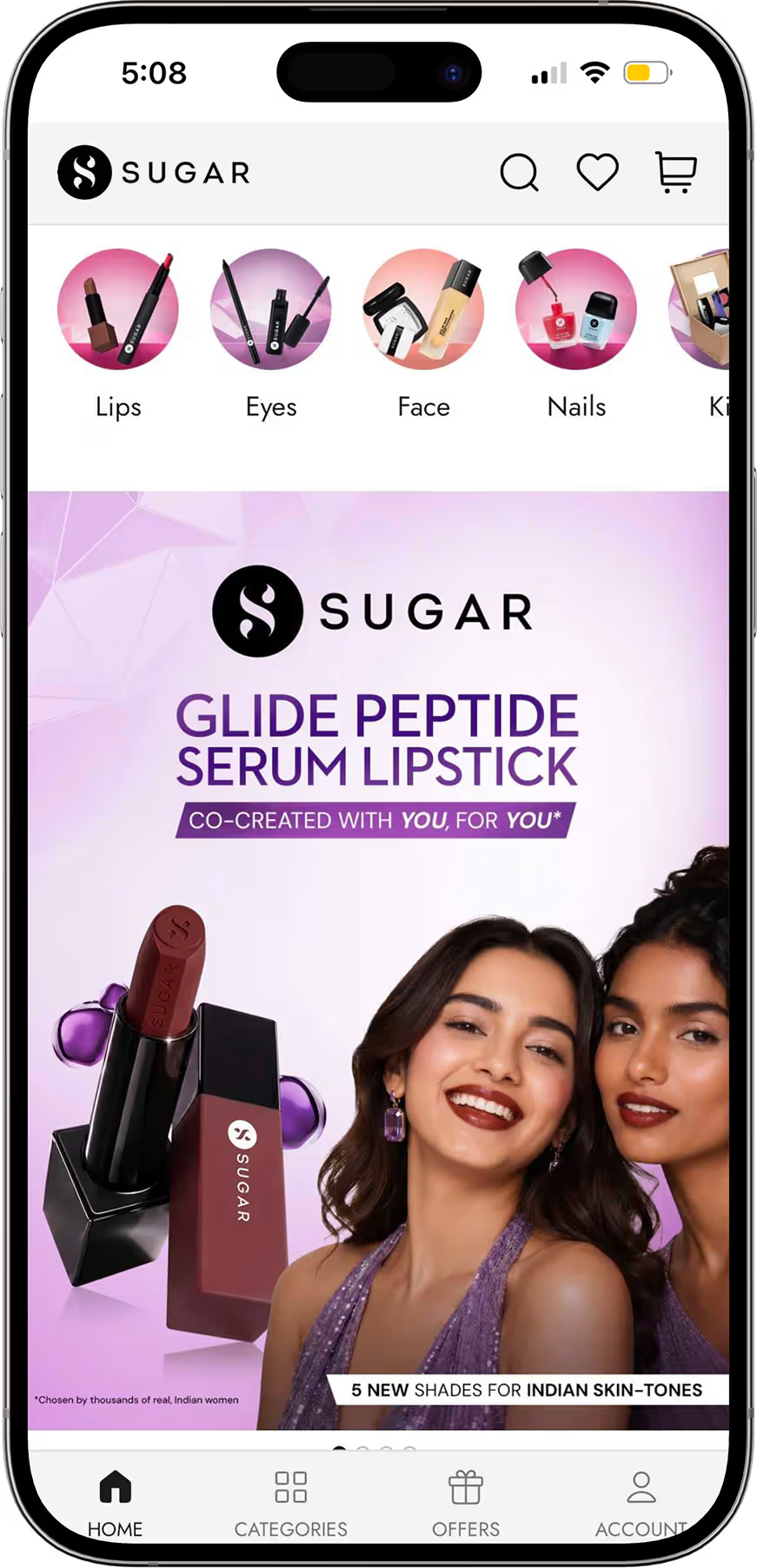
- SUGAR Cosmetics rebuilt mobile into a core commerce channel and reached 70% higher conversions.
- Mixology roughly doubled its conversion rate after going omnichannel with an app.
- Karma and Luck achieved a 50% increase in conversion rate .
The pattern is consistent: the Shop app wins on reach, and a Shopify mobile app wins on conversion, retention, and the customer data you keep. Brands that can support both use the Shop app to get discovered and their own app to turn those buyers into repeat customers.
For a fuller breakdown, see our guide to ecommerce mobile conversion rates.
{{cta}}
Which one should you use: Shopify, the Shop app, or a Shopify mobile app?
These three are not really an either/or. Shopify is the foundation, and the Shop app and a Shopify mobile app are channels that sit on top of it. Here is the quick decision.
|
Option |
Choose it when |
Best for |
|
Shopify (platform) |
You need to build and run an online store at all |
Every merchant. It is the base the other two run on |
|
Shop app |
You want free discovery and tracking with zero setup |
Early traction, testing demand, extra exposure |
|
Shopify mobile app |
You have customers and want to own the relationship |
Loyalty, repeat purchases, and lifetime value |
Choose Shopify when
you are deciding what to build your store on in the first place. This one is less "either/or" and more "yes, first," because you cannot use the Shop app or launch a Shopify mobile app without a Shopify store behind them.
Choose the Shop app when
you are early, want free discovery, and are not ready to invest in a Shopify mobile app yet. It suits new brands seeking exposure, stores with fairly standardized products, and growth-stage teams focused on acquisition and comfortable with marketplace dynamics. It is a low-risk way to test demand and gain visibility on Shopify's consumer surface, and it costs nothing to switch on.
Choose a custom Shopify mobile app when
You need complete control over your brand experience and customer relationships. A custom app makes sense when you have an established customer base ready to download and engage with your branded platform.
If you're generating consistent monthly revenue and want to maximize customer lifetime value, a custom app is essential. It's the right choice when you need direct communication through unlimited push notifications, want to reduce dependency on paid advertising, and aim to build a loyal community around your brand.
Businesses focused on retention, repeat purchases, and premium customer experiences see the highest returns from custom apps.
The optimal strategy: both
Most successful Shopify merchants use both platforms strategically. The Shop App attracts new customers through discovery. Your custom app converts them into loyal, high-value repeat buyers. This dual approach maximizes reach while maintaining control over your most valuable customer relationships and long-term revenue growth.
If you are weighing app builders, our comparison pages (for example Tapcart vs Appbrew) break down features side by side, and our guide on Shopify mobile app development cost in 2026 shows what a build actually costs.
Final Thoughts
Shop and Shopify are not competitors, and they are not the same product. Shopify runs your store; Shop helps your customers discover brands and track orders; Shop Pay speeds up checkout. They are complementary tools that serve different stages of the same customer journey.
Keep the Shop channel and Shop Pay switched on, since both are free and both help conversion. Then decide the bigger question: are you content to be one brand inside Shopify's shared app, or do you want a branded app that keeps the customer, the data, and the home-screen spot yours?
If you're ready to build your custom Shopify mobile app, Appbrew is the most trusted solution out there for more than 250+ shopify brands. With an intuitive drag-and-drop design, real-time Shopify synchronization, and proven performance metrics, Appbrew helps you launch in less than a week without any coding knowledge.
The platform delivers everything you need - unlimited push notifications, AI features and editors, advanced analytics, loyalty programs, and seamless checkout - all at pricing that makes sense for growing brands.
FAQs
Is the Shop app the same as Shopify?
No. Shopify is the platform merchants use to build and run a store. The Shop app is Shopify's free consumer app for tracking orders and discovering brands. Same company, two different products for two different users.
Does Shopify own the Shop app?
Yes. Shopify built it and launched it in April 2020 as an evolution of its Arrive package-tracking app.
What is the difference between the Shop app and Shop Pay?
Shop Pay is a one-tap checkout method that works on any Shopify checkout. The Shop app is the mobile app where Shop Pay lives alongside order tracking and discovery. You can use Shop Pay without the app.
Is the Shop app free for merchants?
Yes. Eligible stores using Shopify Payments are listed automatically at no extra cost, and there are no separate commissions for the Shop channel.
Can customers buy from my store without the Shop app?
Yes. The Shop app is optional for both merchants and shoppers. Customers can buy from your store and check out with Shop Pay without downloading it.
Do I need a Shopify mobile app if I already use the Shop app?
They do different jobs. The Shop app is a shared discovery you do not control. A Shopify mobile app is your branded, owned channel for loyalty and repeat purchases. Many brands run both.
Can I turn my Shopify store into my own app?
Yes. A no-code app builder syncs your Shopify catalog and lets you launch a branded iOS and Android app in under a week, with no coding.
Do I need coding knowledge to build a Shopify mobile app?
No. Builders like Appbrew use a drag-and-drop interface, so you can design, customize, and launch without writing any code.
Is the shop spp enough for mobile commerce?
No. The Shop App provides exposure, but custom apps deliver 3-5x higher conversion rates through optimized, branded experiences. The Shop App is useful for discovery, but it can't replace a dedicated mobile strategy focused on conversion and retention.
How much does building a Shopify mobile app cost?
No-code app builders cost $400-$1000 per month, comparable to standard marketing tools. Custom development from scratch runs $20,000-$100,000, but it's unnecessary. With an average 35% sales increase within six months, app builders deliver strong ROI without massive upfront investment.