


.webp)

Stop gambling with an evolving platform. Discover the 7 best Fuego alternatives in 2026, including Appbrew, that offer the stability, deep integrations, and performance high-growth DTC brands need to scale their Shopify mobile app.
The mobile commerce race is heating up, and Fuego has quickly become a name to watch. Its AI-driven approach and unique social features are turning heads, making it a tempting choice for stores wanting a fresh start.
But if you’re an established brand, is an evolving platform worth the gamble? When your reputation is on the line, you can’t risk your mobile experience on a tool that’s still finding its feet.
While Fuego is innovative, the 2026 market is packed with high-performance alternatives offering the stability, deep integrations, and speed that enterprise-level stores demand. There are better Fuego alternatives to build your Shopify mobile app available right now, delivering superior features and proven reliability.
In this blog, we’re breaking down the top seven Fuego alternatives that provide the premium performance your brand needs to scale without the growing pains.
Let’s find the perfect fit for your store.
Quick Comparison: Fuego Alternatives
To help you choose the right platform for your scale, here is a quick comparison of the top Fuego alternatives in 2026. While Fuego is a strong entry-level choice, Appbrew stands out as the premium alternative for brands that prioritize performance, deep AI integration, and a battle-tested infrastructure.
| Feature | Appbrew (Top Pick) | Tapcart | Vajro (Superfans) | Shopney | Fuego |
|---|---|---|---|---|---|
| Best For | High-Growth DTC Brands | Large Enterprise Stores | Live Video Selling | Design-Focused Stores | Startups & Creators |
| Rating | 5.0/5 (Proven) | 4.8/5 | 4.9/5 | 5.0/5 | 4.7/5 |
| Performance | Sub-second load times | High Performance | Standard Native | Standard Native | Evolving |
| Customization | Unlimited (No-Blocks) | Block-based + HTML | Template-based | Theme-based | Template-based |
| AI Features | Milo AI, Concierge, AI Skin Analyzer, etc. | Basic Insights | Smart Recommendations | AI Copywriting | AI Creative Assistant |
| Integrations | 120+ | 100+ Premium | 70+ (Live Selling) | Core Marketing Apps | Limited / Growing |
| Support | 24/7 White-Glove | Priority (High-Tier) | 24/7 Support | Success Manager | Basic / Email |
Where Fuego Falls Short for Growing eCommerce Brands
While Fuego’s rapid rise is impressive, scaling brands often hit a glass ceiling when their ambitions outpace the platform's current capabilities.
For a business that needs to differentiate itself in a crowded market, these four areas are where Fuego typically falls short compared to its alternatives.
1. Need for Deeper Customization
Fuego operates on a block-based builder. While this makes the initial setup fast, it can feel like building with a limited set of LEGO bricks; eventually, you run out of ways to make your app look unique. Growing brands often have strong UX opinions that rigid templates can’t satisfy.
In contrast, alternatives like Appbrew eliminate these restrictive blocks. By allowing you to mirror your exact web experience without layout constraints, they ensure your app feels like a bespoke extension of your brand identity rather than a cookie-cutter template.
2. Desire to Reuse Existing Web Experience
One of the biggest friction points with Fuego is the need to rebuild your screens within their specific editor. For brands that have spent years optimizing their Shopify storefront for conversions, this feels like reinventing the wheel.
Fuego alternatives allow you to "wrap" or mirror your high-converting web store inside a native app. This means any CRO (Conversion Rate Optimization) improvements or design tweaks you make on your website automatically carry over to the app, significantly reducing your development workload and ensuring a seamless cross-channel experience.
3. Flexibility Around Integrations and Tech Stack
Fuego’s integration list is growing, but it is still limited to what their internal team has approved and built connectors for. If you run a complex tech stack, perhaps involving headless components, niche loyalty programs, or custom-coded features, you might find Fuego’s ecosystem too restrictive.
The best alternatives prioritize a "whatever works on your web, works in your app" philosophy. This flexibility is vital for brands that don't want to compromise their existing workflows just to fit into a mobile builder’s ecosystem.
4. Operational Simplicity and Support Expectations
Managing a Fuego app still requires significant internal bandwidth to configure layouts and manage template updates during campaigns. For lean teams, this is another tool to master and maintain.
Established Shopify brands often prefer "done-for-you" setups and white-glove support. Some Fuego competitors offer much faster time-to-market and ongoing strategic assistance, allowing you to focus on driving sales rather than troubleshooting app layouts or manually syncing your latest product drops.
Best Fuego Alternatives in 2026
As brands grow, the need for more flexibility, scalability, and control becomes non-negotiable. If Fuego’s limitations are holding you back, switching to a more capable platform can make a significant difference to your mobile strategy. Here are the top Fuego alternatives in 2026:
1. Appbrew: The Best Shopify Mobile App Builder
If you are looking for the gold standard in Shopify mobile app builders, Appbrew is the definitive frontrunner. Designed specifically for high-growth DTC and eCommerce brands, Appbrew allows non-technical teams to launch premium, fully customized native apps without writing a single line of code.
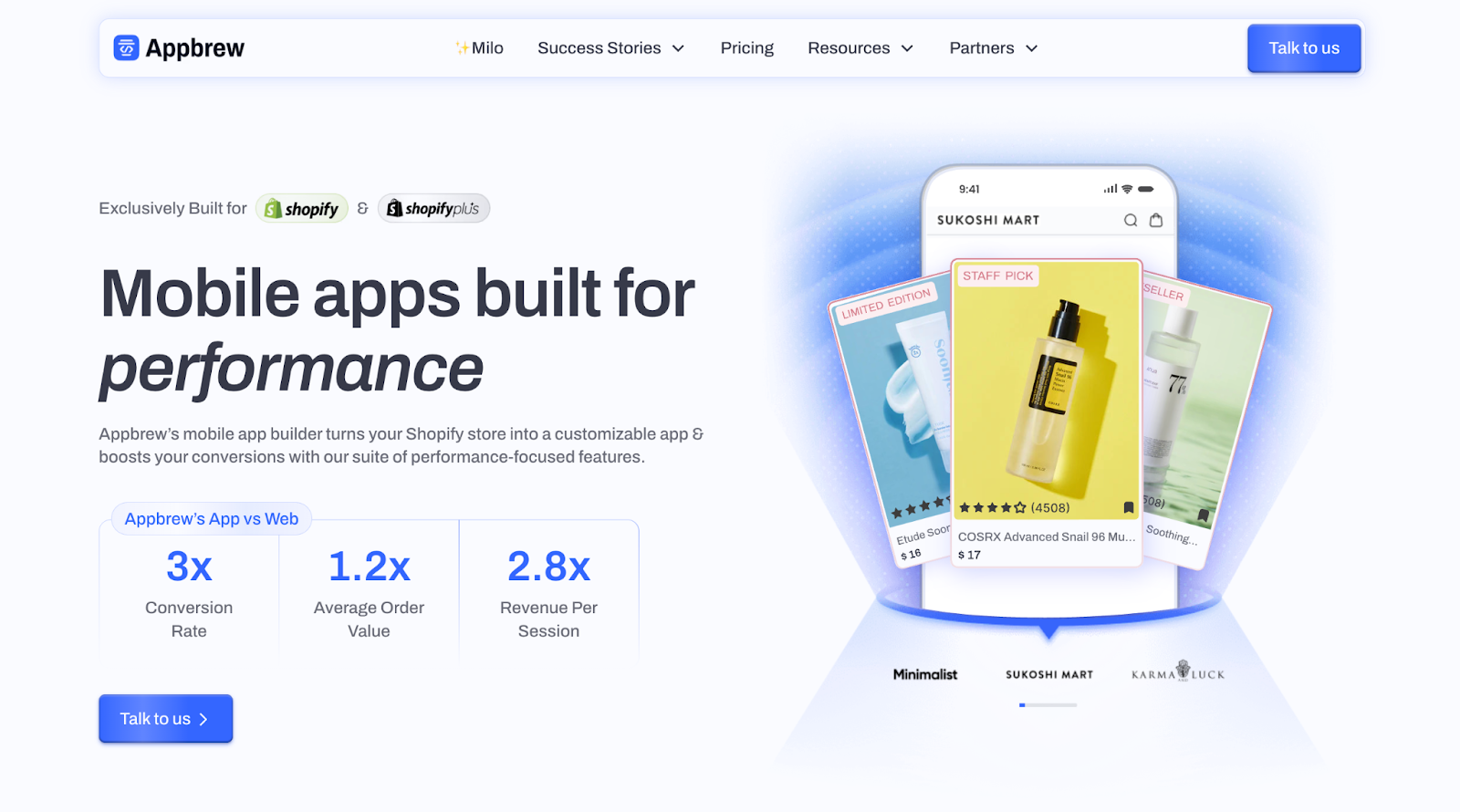
Backed by industry giant Accel Partners and Riverside Ventures, the platform is engineered for performance, boasting sub-second load times and a seamless shopping experience that consistently delivers 3x higher conversions and 5x greater Customer Lifetime Value (LTV) compared to mobile web.
Key Features
- Real-Time Shopify Sync: Instant synchronization of products, inventory, collections, and customer data.
- Unlimited Push Notifications: Automated triggers for abandoned carts, back-in-stock alerts, and highly segmented personalized campaigns.
- Cutting-Edge AI Suite: Includes Milo (your AI growth operator), Concierge (a personal shopping assistant), and specialized tools like the AI Skin Analyzer for beauty and skincare brands.
- Lightning-Fast Checkout: Native support for Apple Pay and Google Pay with optimized one-second load times to eliminate friction.
- Advanced Customization: A sophisticated drag-and-drop UI with conditional blocks and a powerful CMS to mirror your brand's unique identity.
- 120+ Deep Integrations: Seamlessly connects with your existing stack, including Klaviyo, Yotpo, ReCharge, and Searchanise.
Why Brands Love Appbrew
- Dramatic Results: Brands consistently report a 3-4x jump in conversion rates after migrating from mobile web.
- White-Glove Support: Reviews frequently highlight the dedicated customer success teams that go beyond troubleshooting to offer strategic growth advice.
- Frictionless UX: Features like one-tap social logins and native post-purchase flows make the shopping journey effortless for customers.
- Proven Reliability: With a perfect 5.0-star rating on the Shopify App Store, it is trusted by brands that cannot afford downtime.
Why Appbrew is the Best Fuego Alternative
- Superior Stability: While Fuego is still evolving, Appbrew offers a mature, battle-tested platform with a higher user rating and more extensive documentation.
- Advanced AI Capabilities: Unlike Fuego’s more basic social-first features, Appbrew provides deep AI integration for search, personalization, and operational growth.
- Deeper Integration Ecosystem: Appbrew supports over 120 integrations, including native subscription management, which remains a limitation for many newer builders.
- Enterprise-Grade Performance: Appbrew is built for scale, offering the speed and reliability that established brands need to protect their reputation.
2. OneMobile
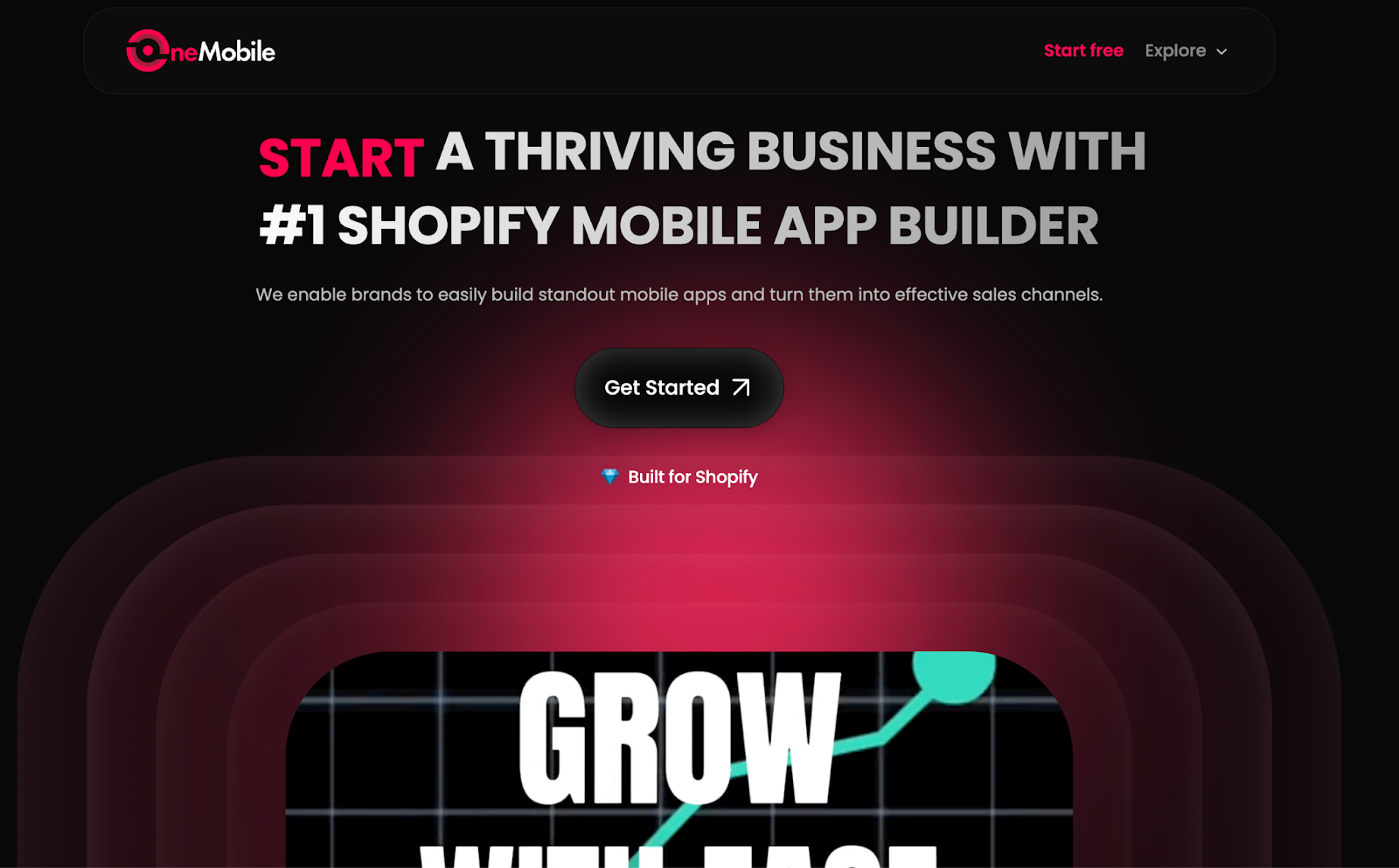
OneMobile is a high-performance Fuego alternative that positions itself as a comprehensive engagement suite. It focuses on turning Shopify stores into conversion machines using AI-driven sales assistants and "shoppertainment" features like shoppable videos. With a 5.0-star rating and a unique revenue-share model for smaller brands, it is an accessible yet powerful option for those looking to scale aggressively.
Key Features
- AI Sales Assistant: Automated shopping guidance to boost conversions.
- Shoppable Video: High-engagement video feeds directly within the app.
- Smart Push Engine: AI-powered segmentation for automated, personalized alerts.
- Deep Analytics: Robust tracking of app engagement and revenue attribution.
Pros
- Proven 5.0-star reliability and social proof.
- Advanced "Shoppertainment" features (video shopping).
- Low barrier to entry with a generous free tier.
- Dedicated success managers for high-tier plans.
Cons
- Revenue share fees apply after reaching certain sales milestones.
- Setup is more involved than basic DIY builders.
3. Tapcart
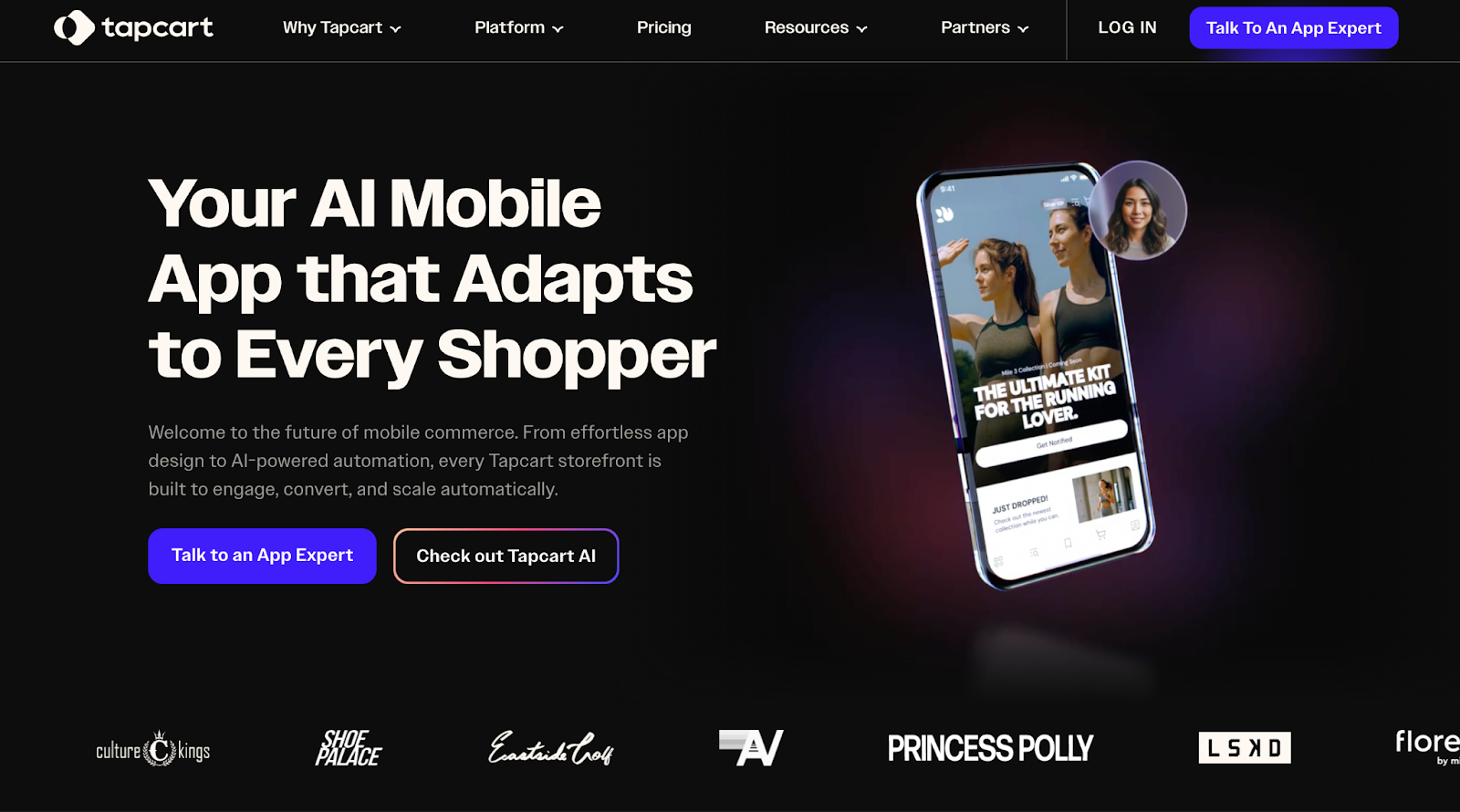
As a market leader, Tapcart is the go-to for established brands like Princess Polly and BÉIS. It excels in stability and enterprise-grade tools, offering a highly polished "App Studio" for design. Its standout feature, Tapcart Drops, allows brands to automate product launches, making it a favorite for stores that rely on high-velocity marketing campaigns.
Key Features
- Tapcart Drops: Automated, scheduled app-wide product launches.
- Custom Blocks: Use HTML/CSS/JS for bespoke, unique app sections.
- Insights Pro: Native, deep-dive analytics platform.
- Web Bridge SDK: Mirrors rich web experiences directly into the app.
Pros
- Exceptional performance and high-speed checkout.
- Best-in-class automation for product launches.
- Seamless integration with premium Shopify Plus apps.
- Robust developer tools for extreme customization.
Cons
- Higher starting price point compared to competitors.
- Design blocks can feel repetitive across different brands.
4. Vajro (Now Superfans)
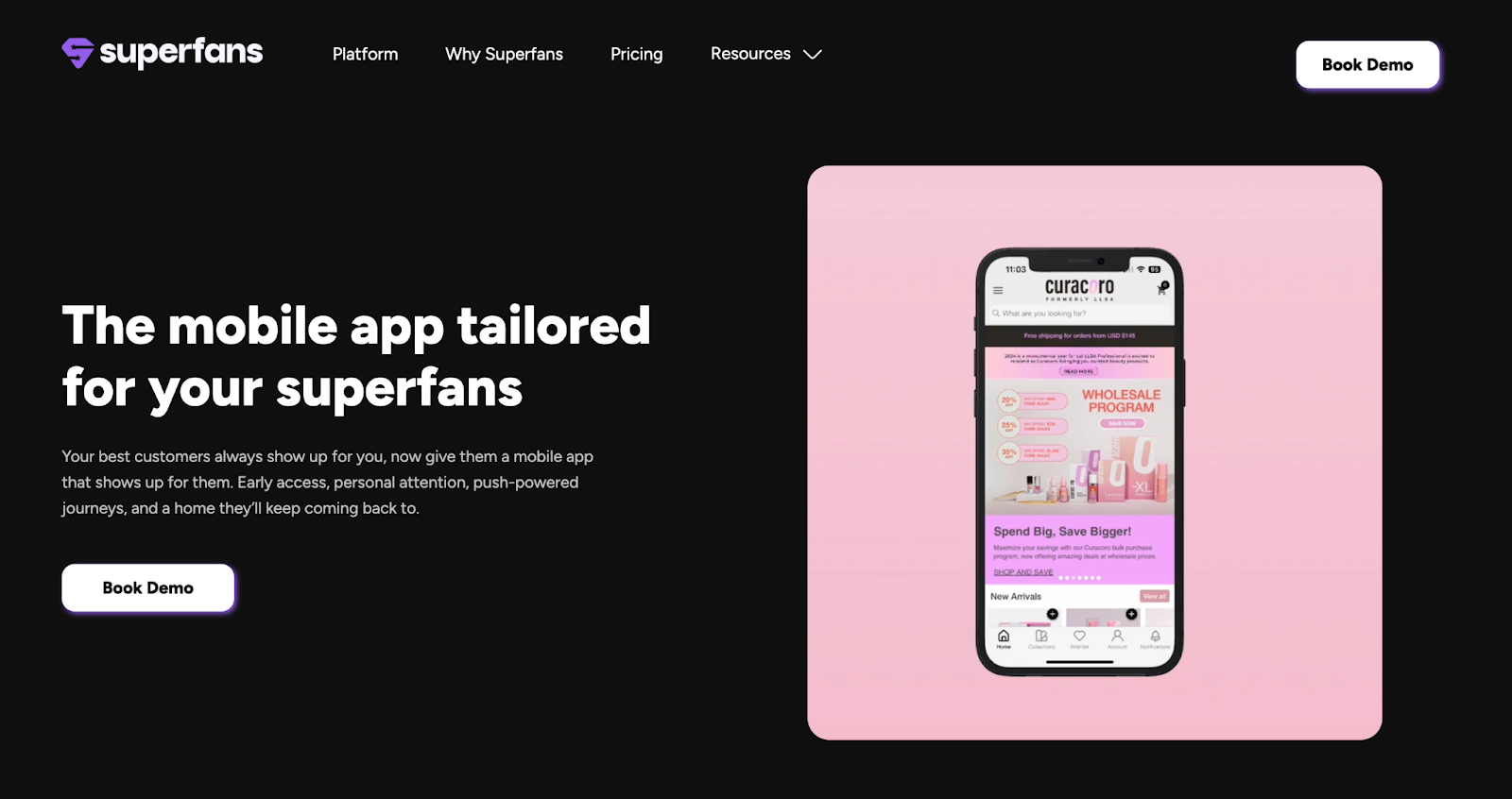
Recently rebranded as Superfans, Vajro focuses on turning casual shoppers into loyal advocates. It is renowned for its Live Selling capabilities, allowing brands to broadcast directly to their app audience. With over 70+ integrations, it offers one of the most flexible ecosystems for brands that want their app to be a community hub rather than just a storefront.
Key Features
- Live Selling: Real-time video broadcasting with instant in-app purchasing.
- 70+ Integrations: The widest range of supported Shopify apps in the category.
- Smart Search: AI-powered discovery and product recommendations.
- Price Lock Guarantee: Transparent pricing with no hidden success fees.
Pros
- Industry-leading live video commerce features.
- Massive integration library for complex tech stacks.
- 24/7 world-class support with Slack channel access.
- High multi-language and multi-currency flexibility (80+ currencies).
Cons
- Interface can feel cluttered due to the vast feature set.
- Can be expensive for smaller stores needing only basic features.
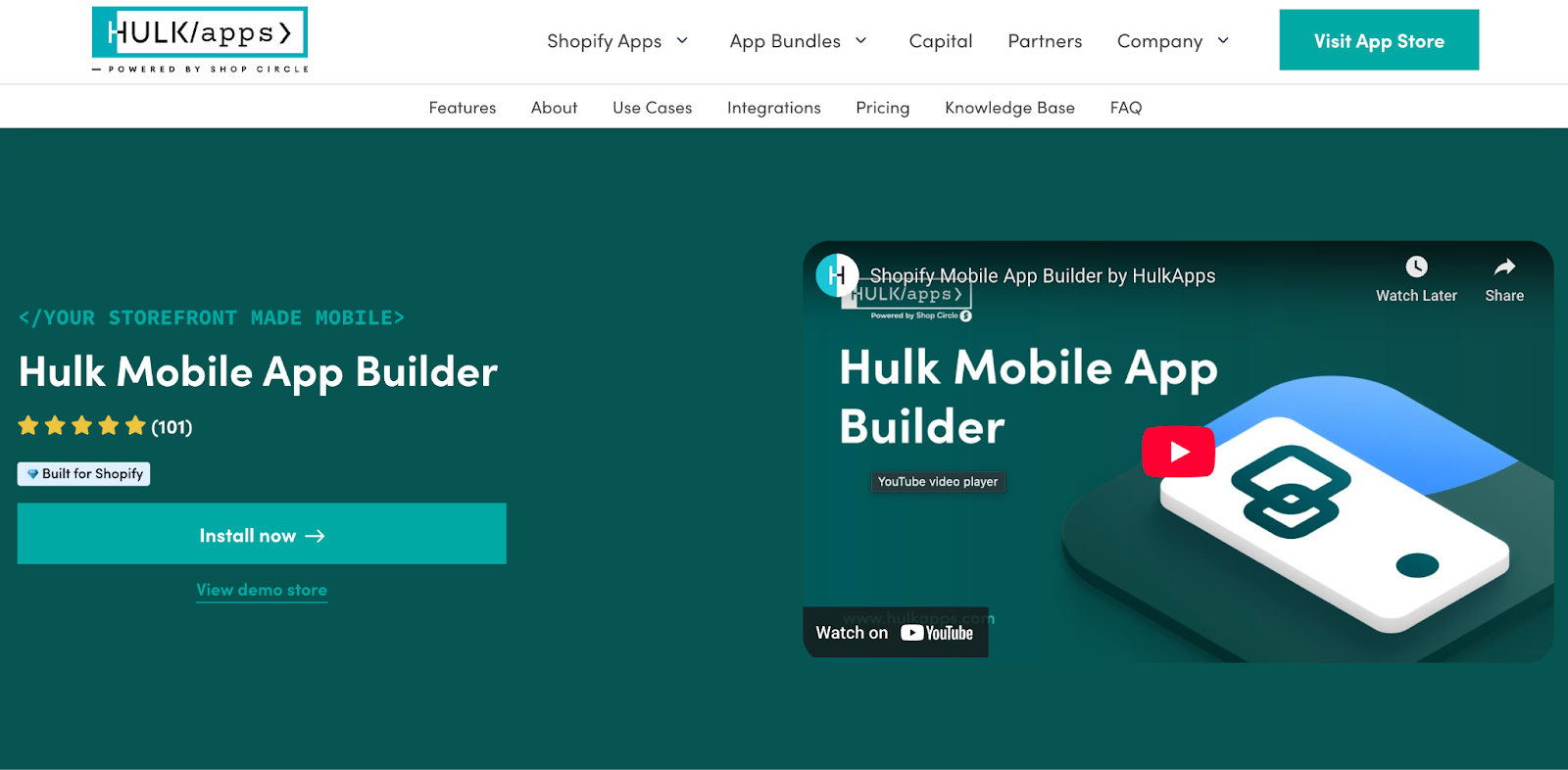
5. Hulk Mobile App Builder
Part of the reputable Shop Circle ecosystem, Hulk Mobile App Builder is designed for speed and operational ease. It is perfect for brands that want a professional native app without a long development cycle. They offer "white-glove" submission services, handling the technical hurdles of the Apple and Google stores for you.
ˀKey Features
- Expert Submission: Full management of the App Store/Play Store publishing process.
- AR Integration: Support for Augmented Reality to preview products.
- Deep Linking: Advanced integration with Meta and Google Analytics.
- Offline Access: Allows customers to browse products without an active connection.
Pros
- Extremely fast time-to-market.
- High-quality support that handles the technical heavy lifting.
- Cost-effective pricing for the feature depth provided.
- Regular quarterly design and feature updates.
Cons
- Design customization is not as deep as enterprise builders.
- Limited advanced logic for segmented push notifications on lower plans.
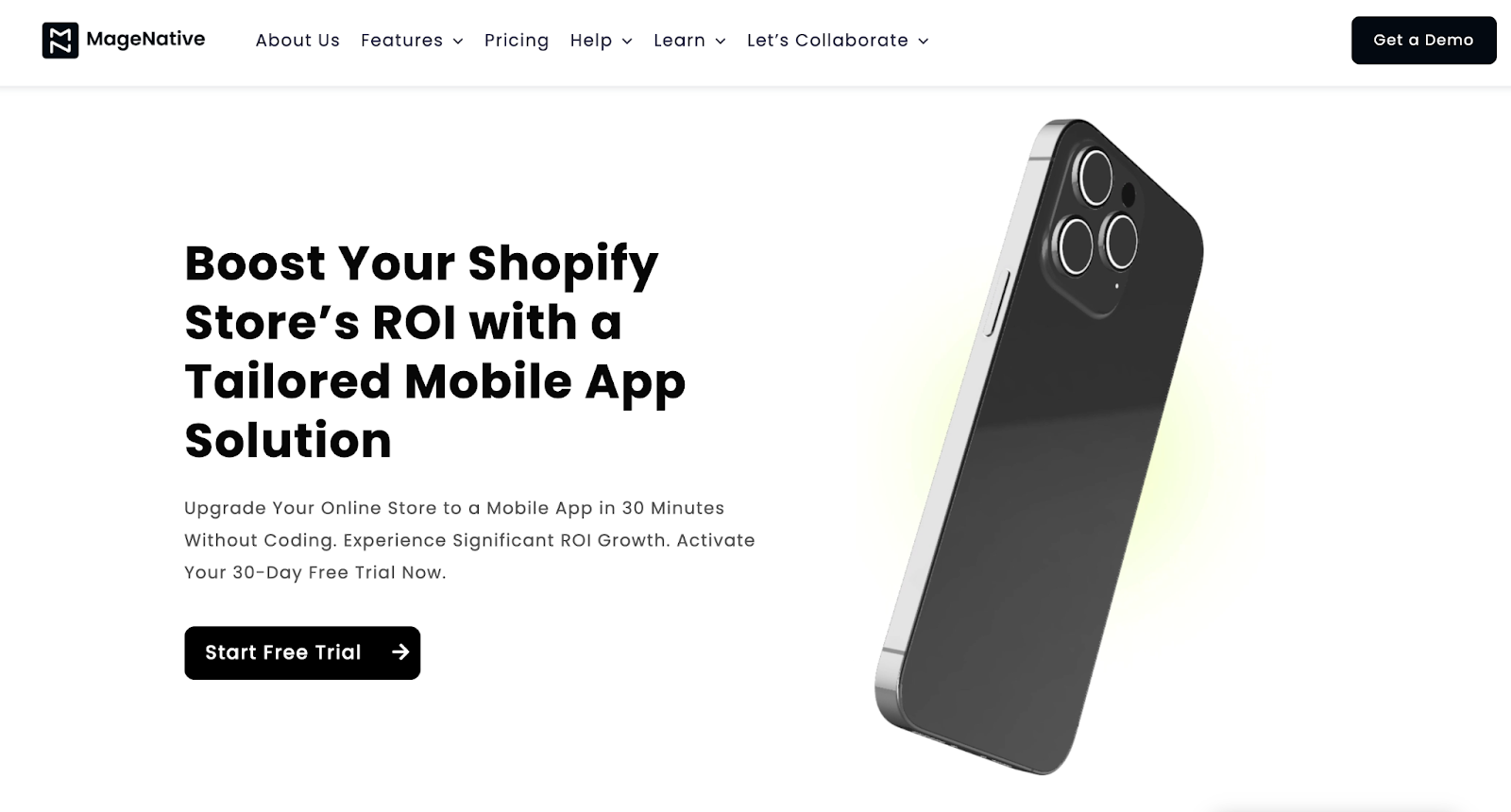
6. MageNative
MageNative is a robust Fuego alternative that excels in international commerce. With native support for RTL (Right-to-Left) languages and extensive currency options, it is the preferred choice for brands scaling across diverse global markets. It also bridges the gap between digital and physical with innovative features like Image Search and Augmented Reality.
Key Features
- Visual Search: Customers can search for products using their phone camera.
- RTL Support: Full compatibility for Arabic, Hebrew, and other RTL languages.
- AI Recommendations: Personalized product feeds based on user behavior.
- WhatsApp Integration: Direct customer support via popular messaging apps.
Pros
- Exceptional for international stores (multi-language/currency).
- Innovative "Image Search" increases product discovery.
- Highly affordable starting price for native apps.
- 30-day free trial allows for extensive testing.
Cons
- Some templates feel slightly dated compared to Tapcart or Appbrew.
- Integration syncing can occasionally experience minor lags.
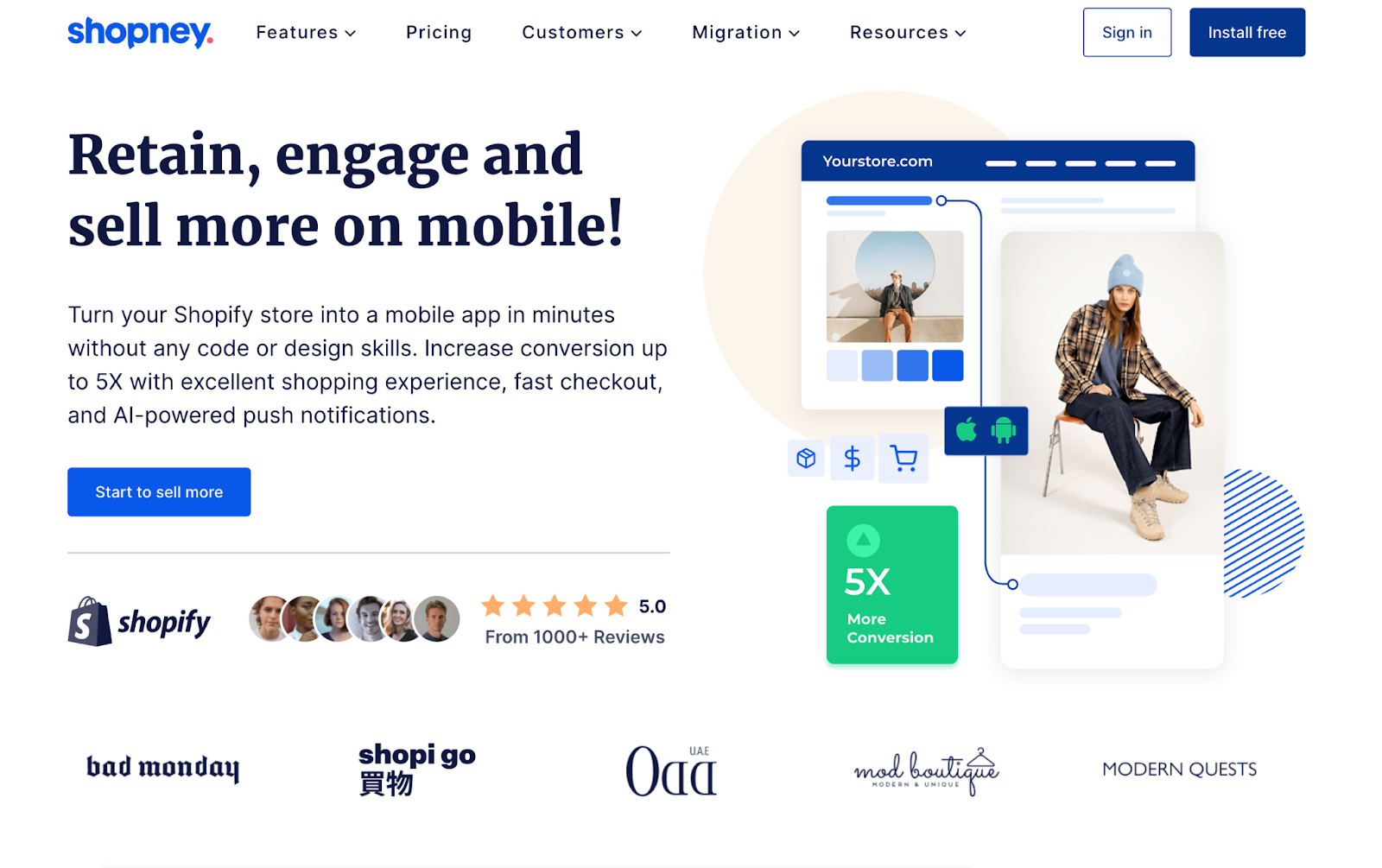
7. Shopney
Shopney prides itself on aesthetics and UX, offering unique layout "themes" tailored to specific industries like Fashion or Beauty. Its standout feature is the In-App Live Chat, which allows brands to close sales through real-time conversations. It focuses on reducing CAC (Customer Acquisition Cost) by moving the marketing focus from expensive social ads to free, unlimited push notifications.
Key Features
- Industry-Specific Themes: Pre-optimized layouts for different niches.
- In-App Chat: Native messaging to provide real-time shopping assistance.
- Generative AI Push: AI tools to help write engaging notification copy.
- Barcode Scanner: Bridges the gap for brands with physical retail locations.
Pros
- Strongest focus on industry-specific design and aesthetics.
- Excellent native chat feature to boost customer trust.
- Very proactive and responsive customer success team.
- No revenue-based "success fees" on any plan.
Cons
- Lacks some of the advanced developer tools found in enterprise options.
- Analytics dashboard is less comprehensive than some competitors.
Conclusion
eCommerce in 2026 moves too fast for "good enough." While Fuego is an exciting entry point for new creators, established brands require a platform that scales without compromise. After comparing the top contenders, Appbrew clearly emerges as the best Fuego alternative.
By removing the "block-based" limitations that hold other builders back, Appbrew gives you the total creative freedom to mirror your high-converting web store exactly. Combined with its enterprise-grade stability and AI-driven growth tools like Milo, it’s no surprise that merchants are seeing a 3x jump in conversions and a 6x increase in LTV. You aren’t just building an app; you’re building your most powerful sales channel.
Don't let your brand’s growth be capped by an evolving platform. Transition to a solution that is battle-tested and performance-optimized.
Book a demo with Appbrew today!