


.webp)

.webp)
.webp)

Compare the 8 best Shopify app creators for high-revenue stores in 2026 by features, pricing and performance to pick the right app builder.
You're past the "should we build an app" phase. Your store's revenue proves you need one. Now you're facing the real question: which platform won't become a bottleneck as you scale.
Features are not so much of a differentiator in these Shopify app creators. Every platform claims drag-and-drop builders and push notifications. What separates them is how they handle 50,000 concurrent users during a flash sale, whether their API limits will throttle your Black Friday promotions, and if you can customize checkout flows without hiring a development team.
The wrong choice right now can cost you six months and a migration headache. The right one becomes invisible infrastructure that just works. For the wider field, see our guide to choosing a Shopify app builder.
We tested each against scenarios high-revenue stores actually face to come up with this list of the best Shopify app creators. Let’s dive right in!
Best Shopify Mobile App Creator in 2026
Here’s a quick overview of the best Shopify mobile app makers:
| Platform | Best Suited For | Core Strength | Operational Trade-off |
|---|---|---|---|
| Appbrew | High-revenue & scaling Shopify brands | Native performance, deep customization, scale-ready infrastructure | More capability than lightweight app tests need |
| OneMobile | Marketing-led teams focused on engagement | Campaigns, loyalty, post-install retention | Less emphasis on advanced app infrastructure |
| Superfans | Brands using live selling & drops | Built-in live commerce and real-time engagement | Limited beyond live-led experiences |
| StoreLab | SMBs wanting hands-on guidance | Managed support + app builder bundled together | Lower self-serve flexibility |
| Tapcart | Mid-market & enterprise teams | Mature ecosystem, marketing automation | Deeper customization needs technical resources |
| SimiCart | Brands testing mobile apps risk-free | Free entry point, fast launch | Limited depth for long-term scaling |
| Shopney | Design-first Shopify stores | Strong themes, ease of use, support | Less control over complex flows |
| MageNative | Budget-conscious merchants experimenting | Affordable plans, AR & AI add-ons | Advanced features gated by higher tiers |
1. Appbrew
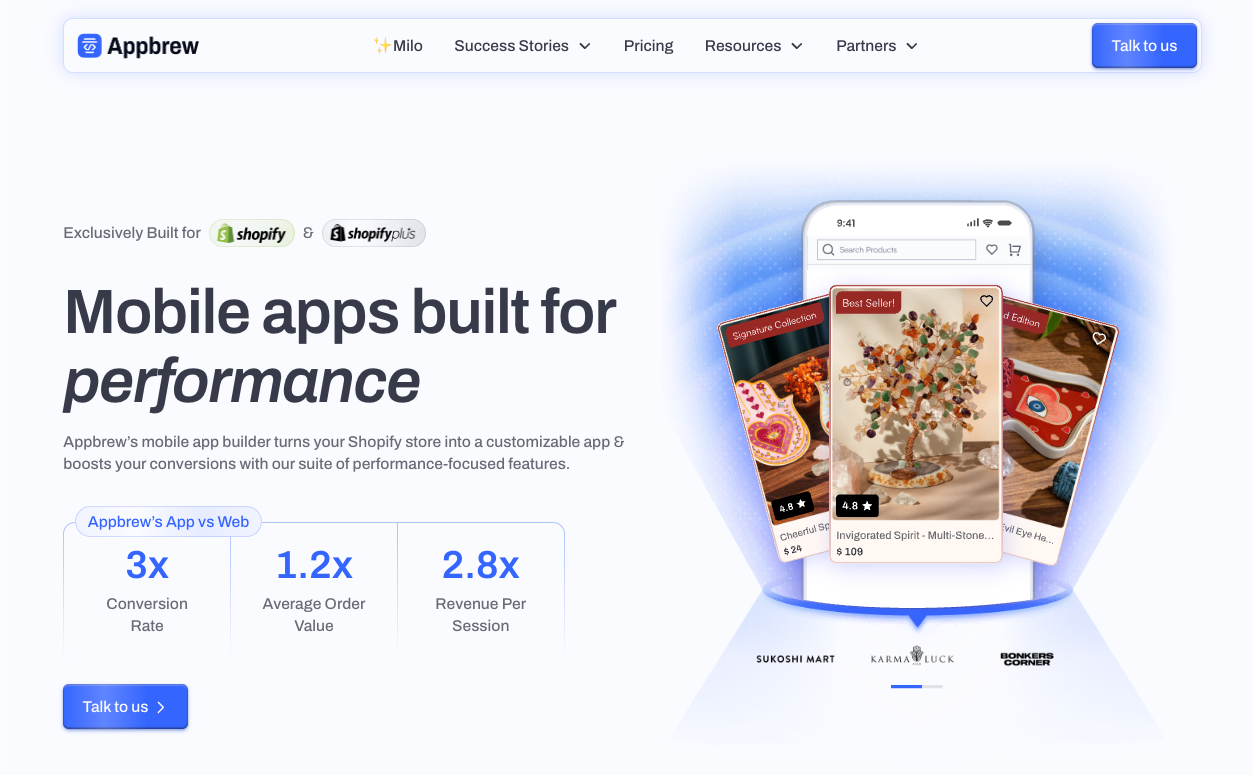
Most app makers quote you 6-8 weeks for launch. Some stretch into months. Appbrew gets your mobile app live in days. It’s a mobile app creator exclusively built for Shopify and Shopify Plus.
Here's what happens - you connect your Shopify store, our team builds out your native iOS and Android apps while you review designs, and you're submitting to app stores within a week. There’s no development queue. No waiting for the next sprint cycle.
This matters because every week you delay is revenue you're leaving on mobile. Your customers are already browsing on their phones; you're just giving them a faster, more conversion-optimized way to buy.
Appbrew works for new stores testing mobile as a channel and established brands doing $5M+ who need their app infrastructure to handle scale. The platform doesn't force you to choose between speed and capability.
The infrastructure that runs underneath
Real-time sync means your Shopify product data, inventory levels, pricing, customer profiles, orders, and discount codes update instantly in the app. You change a product price at 2 PM, it's live in the app at 2 PM. No batch updates or manual syncing are required.
The app operates as its own sales channel in Shopify, so attribution is clean, and you can track mobile performance separately from web. You get a CMS dashboard that lets your marketing team update content, launch promotions, and test layouts without touching code.
Appbrew handles app store submissions for both Google Play and Apple App Store as part of the launch. They know the guidelines, they know what gets flagged, and they make sure your app passes review the first time.
{{cta}}
What happens after launch (this is where most app creators disappear)
Other platforms launch your app and move to the next client. Appbrew's customer success team provides a growth playbook tailored for DTC mobile apps, covering both organic and paid strategies.
We work with you on app store optimization, so your app actually gets discovered in searches. We provide guidance on Meta and Google Ads specifically for app install campaigns, which run differently from web campaigns. You also get ready-to-use website widgets that promote app downloads to your existing traffic.
This isn't optional support you pay extra for. It's built into how we work with brands.
Why DTC Brands Choose Appbrew
- Native iOS and Android apps built for Shopify, delivering faster load times, higher stability, and better mobile conversions than progressive web apps or hybrid solutions
- AI features like Milo, Skin Analyzer, Concierge, and more that make your app feel more premium and improve conversion
- AI-powered CMS that gives marketing teams full control over themes, design blocks, bottom bar edits, and unlimited custom pages, with built-in AI copywriting and AI image generation to create on-brand content and visuals faster.
- Conversion-optimized checkout with sub-one-second load speed, modal flows, Apple Pay, Google Pay, and reduced drop-offs
- Advanced search and discovery powered by AI including smart search, image search, similar styles, filters, sorting, and merchandising controls
- Hyper-personalization using location, behavior, device-level data, and intent-based experiences across home, PDP, and collections
- Interactive PDPs with A+ content, reviews, size charts, wishlists, pre-orders, and cross-sell recommendations
- Built-in engagement tools like unlimited push notifications, deep links, QR codes, in-app popups, and abandoned cart recovery
- Unified analytics combining app and web data with integrations into Meta, Google, Klaviyo, WebEngage, and CRM tools
- Native support for loyalty, subscriptions, gifting, returns, cancellations, and order tracking inside the app
- 100+ integrations across search, reviews, logistics, marketing, analytics, and payments; the most comprehensive integration library of any eCommerce app maker
- End-to-end launch support, including App Store and Play Store submissions, plus a dedicated customer success team
2. OneMobile
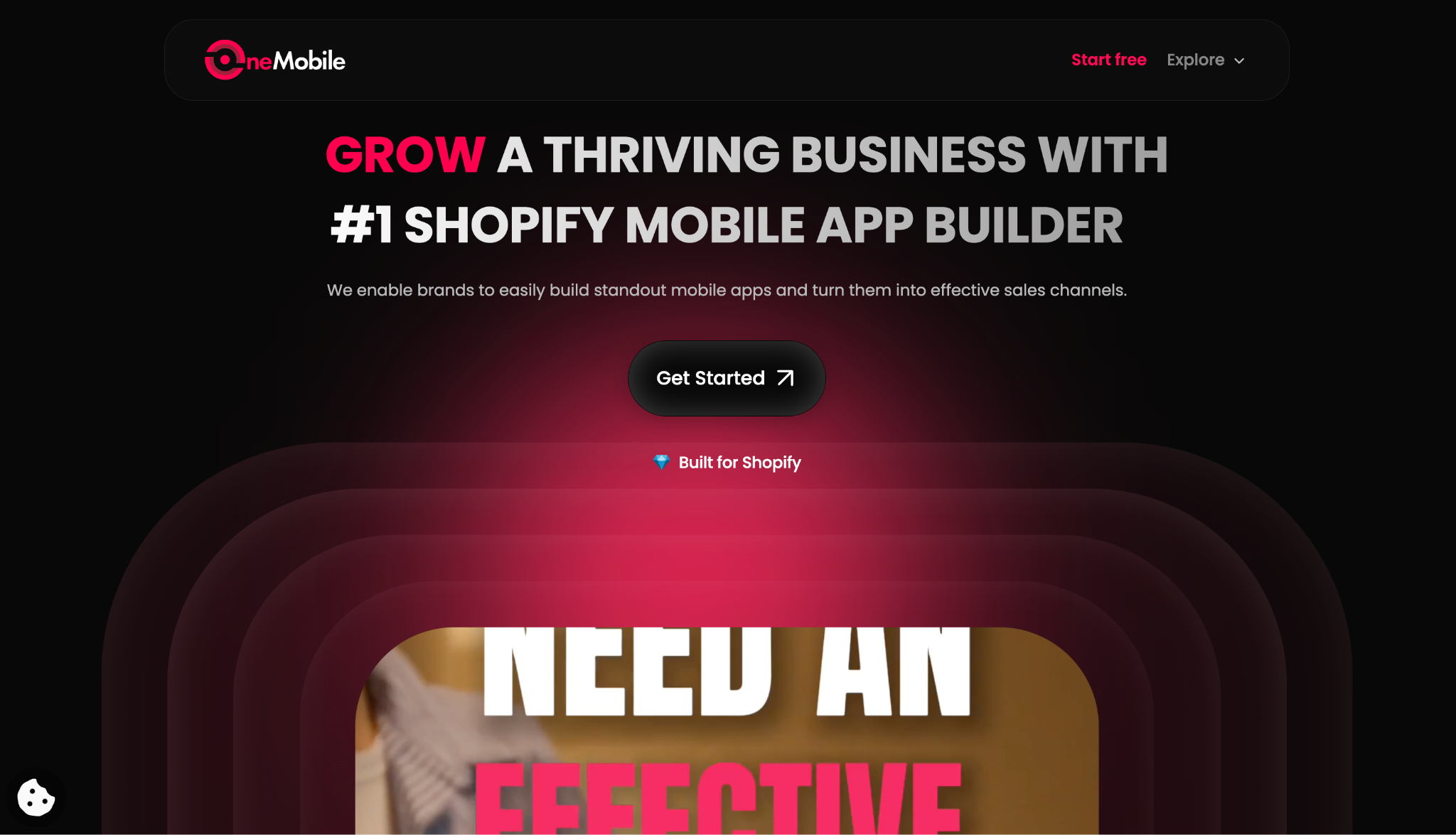
OneMobile is geared toward Shopify brands that want a branded mobile app to go live quickly, with day-to-day control staying in the hands of marketing teams.
The platform focuses on making app creation and iteration simple - layouts, content, and campaigns can be adjusted without involving developers or slowing down launches.
This Shopify app creator puts particular emphasis on post-install engagement. Push campaigns, loyalty programs, and interactive content are designed to help brands turn app installs into repeat usage, rather than treating the app as a static extension of the storefront.
Key features
- Drag-and-drop app builder for layout and design changes without code
- Tools focused on app user acquisition and retention
- Push notifications and in-app messaging for campaign-driven engagement
- Built-in loyalty and rewards support, including OneLoyalty integration on higher plans
- AI-assisted content generation for app store listings and in-app copy
- Real-time Shopify sync for products, inventory, orders, and customers
- Interactive commerce features like shoppable video on advanced plans
- Multi-language and multi-currency support
3. StoreLab
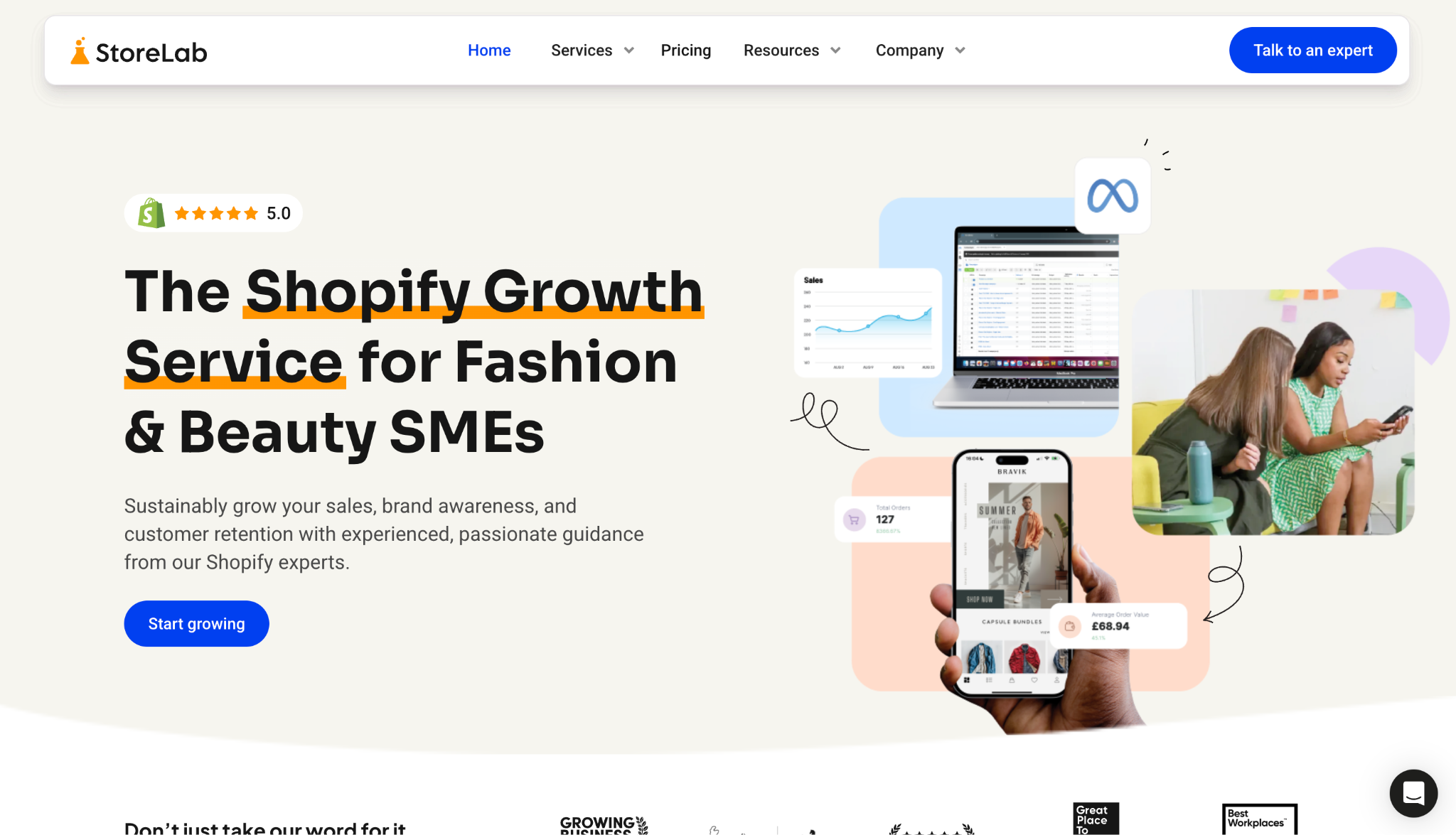
StoreLab positions itself less as a pure software platform and more as a managed growth partner for Shopify brands. Alongside a no-code mobile app creator, the offering bundles hands-on support, making it a fit for teams that want an app live without owning the operational details end to end.
The emphasis here is on execution and outcomes rather than customization depth. With account managers involved in launch and ongoing optimization, StoreLab appeals to small and mid-sized teams that prefer guided growth over self-managed app infrastructure.
Key features
- No-code builder for native iOS and Android apps
- Dedicated account manager for launch, strategy, and ongoing support
- Unlimited push notifications, including abandoned cart recovery
- Unlimited integrations with existing Shopify tools
- Fully managed app design, launch, and operations on higher tiers
- Growth-focused approach centered on sales, AOV, and retention
4. Superfans
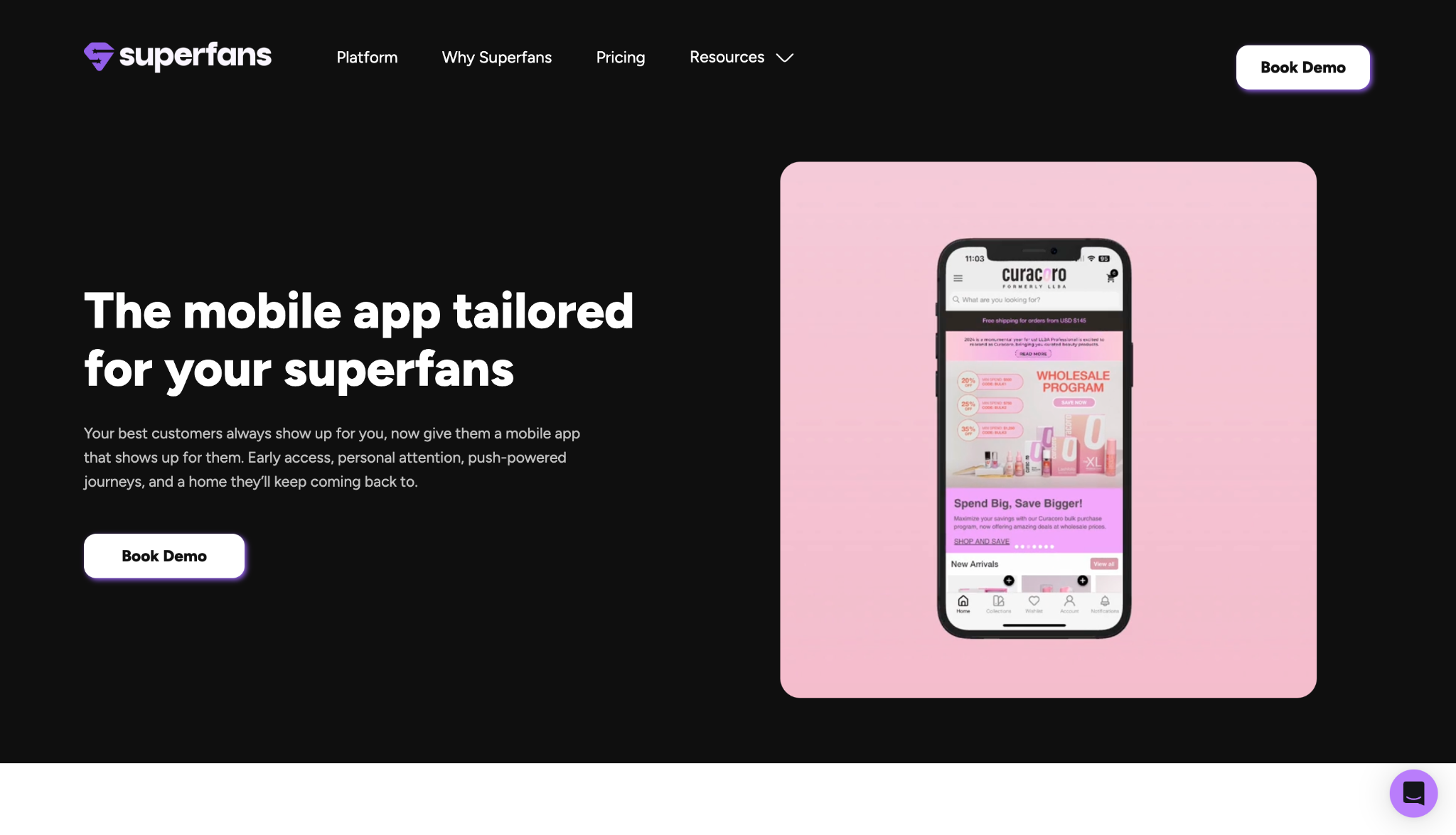
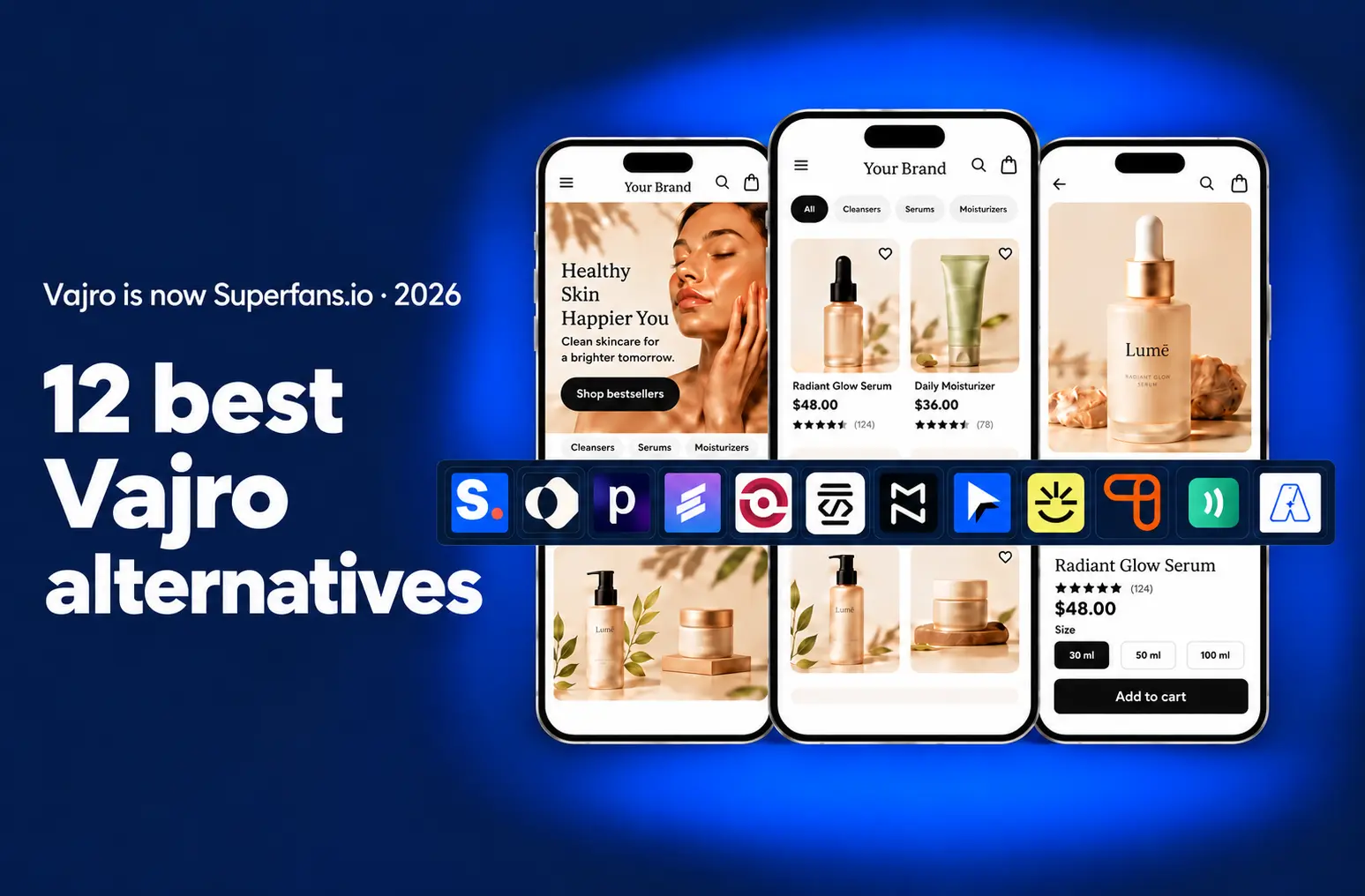
Superfans (previously Vajro) is also built around this clear use case: helping Shopify brands turn mobile apps into a more interactive, community-driven sales channel. The platform combines a simple app creator with native live selling, making it appealing for brands that already rely on video, drops, or real-time launches to drive demand.
Rather than optimizing for deep customization, Superfans prioritizes speed and engagement. Its live commerce capabilities are tightly integrated into the app experience, allowing brands to experiment with real-time selling formats without stitching together multiple tools.
Key features
- Drag-and-drop builder for native iOS and Android apps
- Built-in live selling with interactive video streams inside the app and on Facebook
- Targeted push notifications for customer engagement (usage limits vary by plan)
- Real-time Shopify sync for products, inventory, and orders
- Pre-built themes and layouts to speed up initial launch
- Multi-language and multi-currency support on higher tiers
- In-app analytics covering sales, campaigns, and user behavior
- 24/7 customer support via chat, email, and Zoom
5. SimiCart
SimiCart is often chosen by Shopify merchants looking for a low-risk entry point into mobile apps. Its free plan and no-code setup make it possible to launch a native app without upfront commitment, while still meeting Shopify’s performance and security standards as a Built for Shopify solution.
The platform prioritizes accessibility and speed to launch over advanced customization. For brands testing mobile as a channel or validating app-led retention before scaling further, SimiCart offers a straightforward way to get started.
Key features
- Drag-and-drop builder for creating native mobile apps without code
- Free plan with app publishing handled via SimiCart’s developer account
- Unlimited push notifications on supported plans
- Real-time Shopify sync for products, inventory, and orders
- Pre-built themes and design elements for faster setup
- Multi-language and multi-currency support on paid tiers
{{cta2}}
6. MageNative
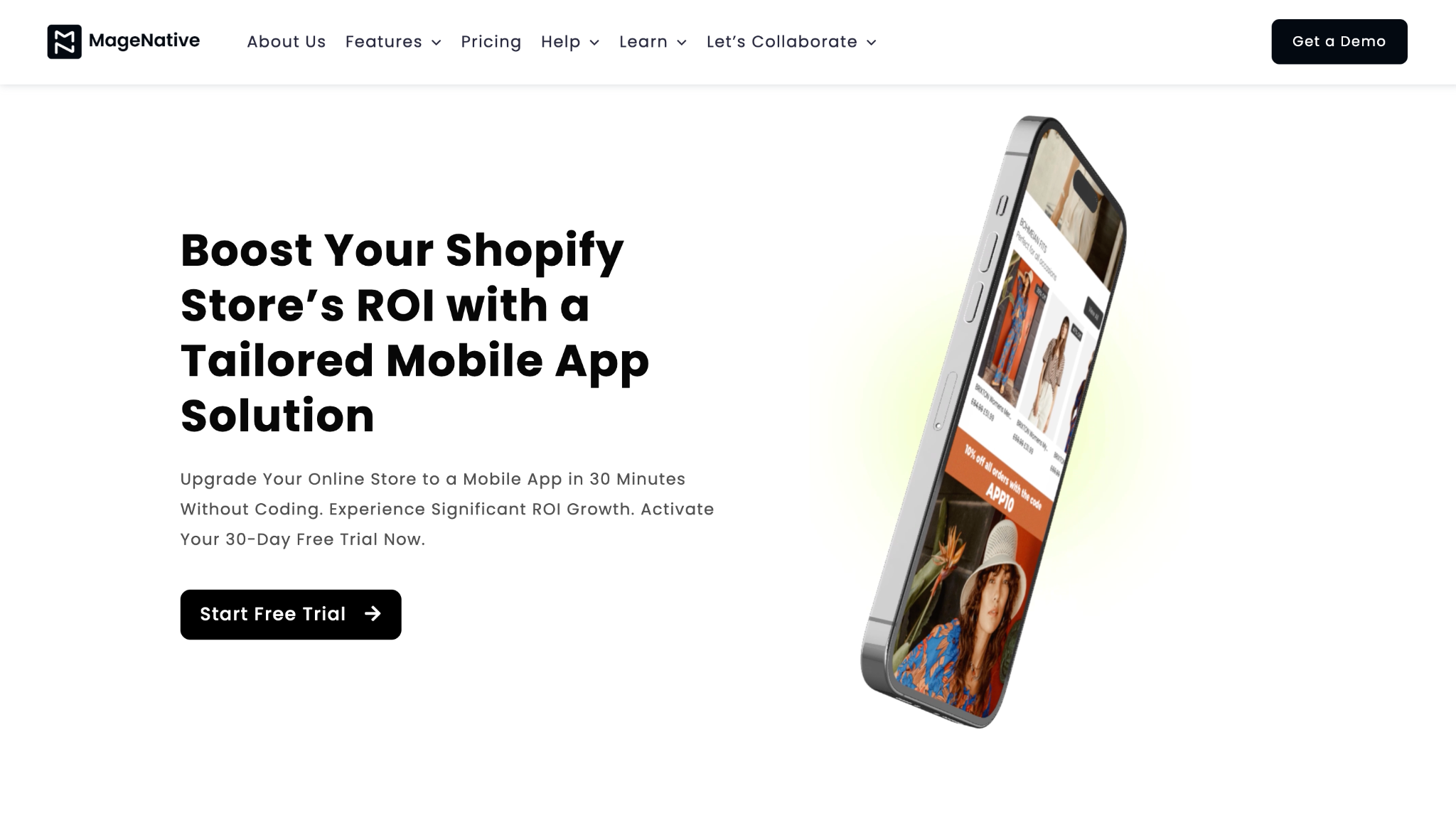
MageNative focuses on accessibility and value, offering Shopify merchants a no-code path to launching native mobile apps at a relatively low entry point. The platform covers core app functionality while layering in more advanced capabilities on higher tiers.
Where MageNative differentiates is in extending standard app experiences with features like AR and AI-driven recommendations. This makes it a practical option for brands that want to experiment with richer product discovery without investing in custom development upfront.
Key features
- Push notifications for customer engagement (limits vary by plan)
- Customizable themes and layouts to match brand identity
- Augmented reality support for immersive product views on premium plans
- AI-based product recommendations
- Multi-language and multi-currency support from standard plans upward
- Integrations with third-party Shopify apps
- Analytics for tracking performance and engagement
- Social login options for faster user onboarding
7. Shopney
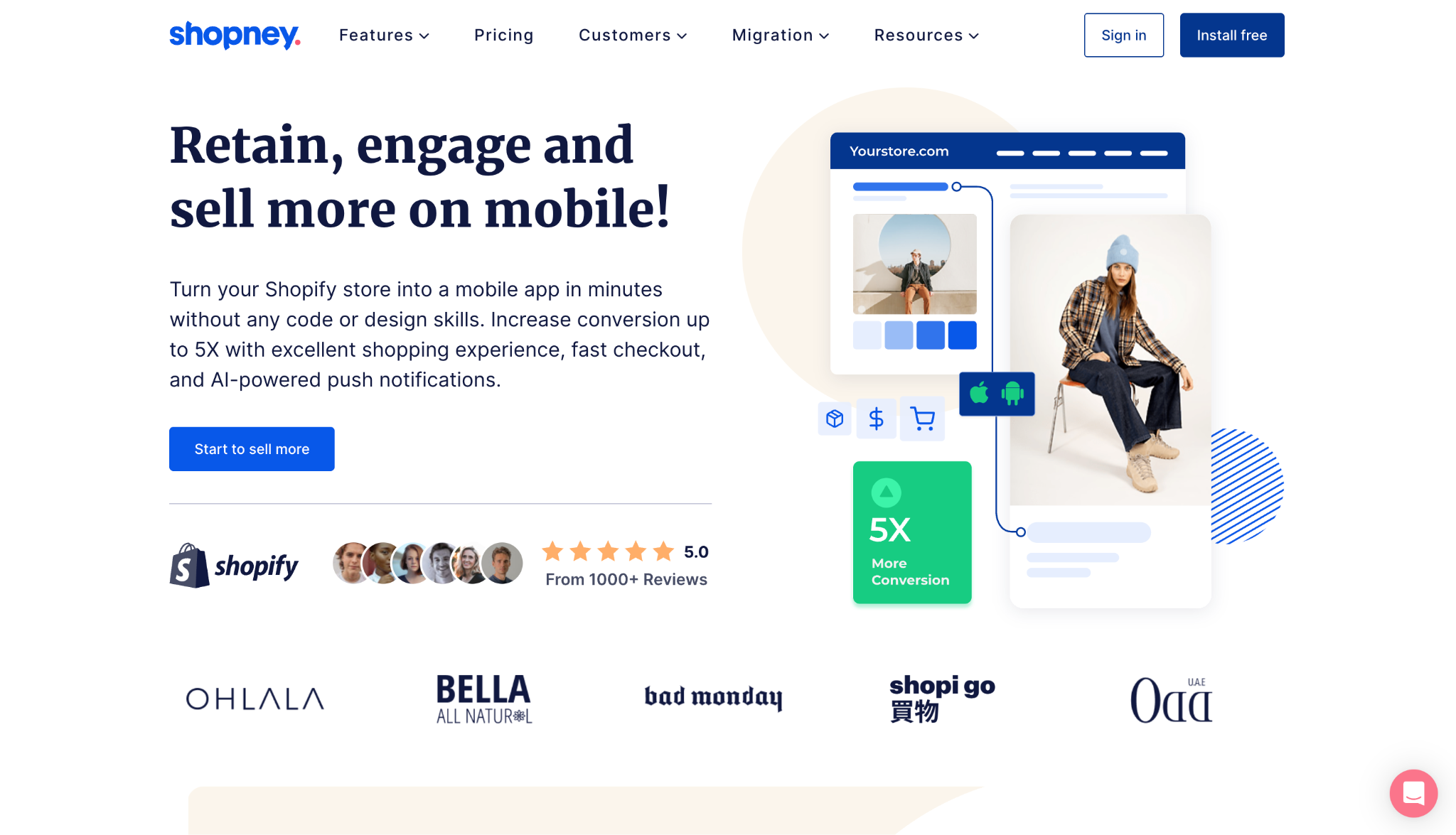
Shopney is designed for Shopify merchants who want a polished, well-designed mobile app without spending time on complex configuration. The platform emphasizes visual quality and usability, making it easy to launch an app that looks cohesive with the brand from day one.
Beyond design, Shopney leans into engagement and support. Features like in-app chat and unlimited push notifications are built to help brands turn mobile traffic into conversations and repeat purchases, while keeping app operations straightforward.
Key features
- Drag-and-drop builder for native iOS and Android apps
- Multiple pre-built themes and layouts for different store types
- Unlimited push notifications for promotions and updates
- In-app live chat to support customers and drive conversions
- Integrations with review, loyalty, and marketing automation tools
- Real-time Shopify sync for products, inventory, and orders
- Multi-language and multi-currency support on higher plans
- Analytics to track app performance and user behavior
8. Tapcart
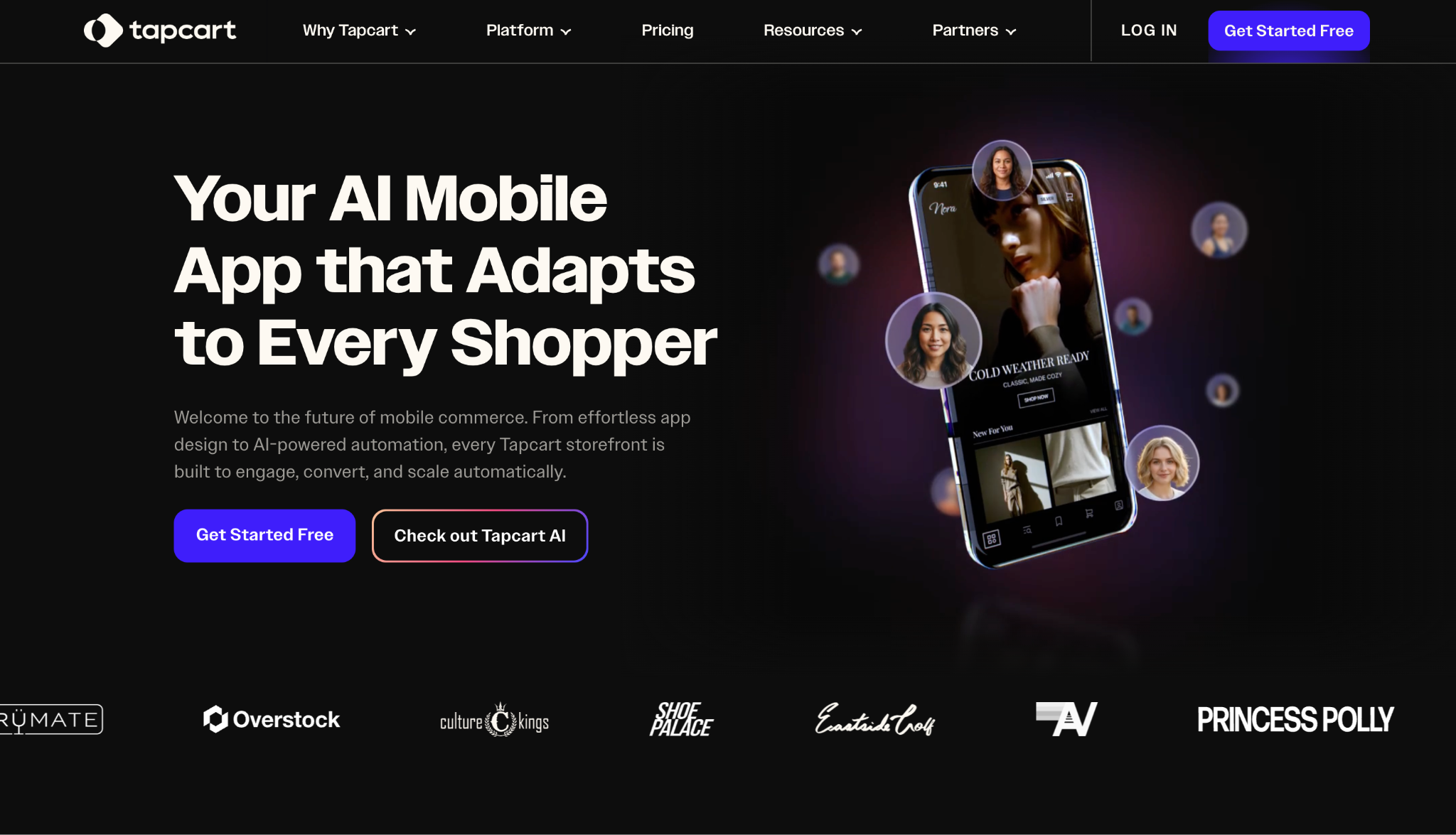
Tapcart is one of the most established players in the Shopify mobile app space, commonly adopted by mid-market and enterprise brands that view mobile apps as a serious revenue channel. The platform is built around marketing-led use cases, with strong tooling for campaigns, automation, and brand-led experiences.
Its flexibility increases significantly at higher plans, where custom blocks and developer tooling allow brands to go beyond standard layouts. For teams with technical resources or agency support, Tapcart offers room to extend functionality while staying within a structured ecosystem.
Key features
- Drag-and-drop App Studio for building native iOS and Android apps
- Advanced push notifications with automation and deep linking
- Real-time Shopify sync across products, inventory, and orders
- Integrations with marketing, loyalty, subscriptions, and analytics tools
- Native analytics via Insights Pro to track app performance and ROI
- Custom blocks and developer tools for deeper customization
- Branded QR codes to drive app installs from offline and online touchpoints
Final Thoughts
To choose the right Shopify mobile app creator, you must evaluate how seriously you want to treat mobile as a revenue channel. Some platforms help you launch quickly, others help you experiment, and a few are built to support real scale once your app starts driving meaningful traffic and orders.
For high-revenue stores, long-term costs usually surface after launch. If your goal is to build a mobile app that can handle growth without forcing a rebuild six months later, Appbrew stands out as a platform designed for scale, speed, and control.
Frequently Asked Questions
1. What is the best Shopify mobile app creator?
The best Shopify mobile app creator is the one that can support your store after launch too, like Appbrew. For high-revenue and scaling brands, that usually means native iOS and Android apps, real-time Shopify sync, no performance degradation during traffic spikes, and flexibility to customize checkout and discovery flows.
2. What’s the difference between a Shopify app creator and a Shopify mobile app creator?
A Shopify app creator usually refers to tools that build apps for the Shopify admin (extensions, plugins, workflows). A Shopify mobile app creator turns your Shopify storefront into a customer-facing mobile app.
3. How do I turn my Shopify store into a mobile app?
You can turn your Shopify store into a mobile app using a no-code Shopify mobile app creator like Appbrew. It connects directly to your store and sync products, inventory, customers, and orders into a native app.
4. What should I look for in a Shopify mobile app creator?
For decision-makers, the evaluation should go beyond templates and themes. Important factors include:
- Native app performance (not web wrappers)
- Real-time Shopify sync with no batch delays
- App-only checkout, payments, and promotions
- Attribution as a separate Shopify sales channel
- Proven ability to handle flash sales and high concurrent traffic
Creators like Appbrew are typically selected when brands need mobile infrastructure that scales without rework.
5. Is a Shopify to mobile app setup worth it for established stores?
Yes, especially if a large share of your traffic already comes from mobile. A Shopify to mobile app setup usually delivers faster load times, higher conversion rates, and stronger retention through push notifications and app-only experiences. The long-term value depends on choosing a Shopify mobile app creator that won’t require a rebuild once the app becomes a meaningful revenue driver.