


.avif)
.webp)
.webp)

Learn how to build a high-converting Mother’s Day marketing campaign for Shopify. Discover proven strategies like personalized emails, gift bundles, emotional storytelling, and mobile optimization to increase conversions, boost AOV, and turn seasonal shoppers into repeat customers.
Every year, the same thing happens. Brands scramble to throw together a Mother's Day sale in the final week of April, send one promotional email to their entire list, and wonder why conversion rates are flat. Meanwhile, the stores that planned three weeks ahead, built campaigns around emotion instead of discounts, and showed up on the right channel at the right moment were the ones that ultimately drove the strongest results.
Mother's Day is not a complicated holiday to market for, but it rewards preparation and punishes generic. This guide breaks down the ideas that actually move the needle, the mechanics behind each one, and how to put them together into a campaign that converts.
TL;DR
- Mother’s Day is a high-intent, high-spend retail moment, driven by emotional purchasing behavior, not just discounts.
- Start campaigns 3–4 weeks early and structure them across discovery, consideration, and conversion phases to match shopper intent.
- Personalization drives performance—segmented emails and push notifications, tailored product recommendations, and gifting signals significantly increase conversions.
- Dedicated landing pages and gift bundles reduce decision friction and improve AOV by simplifying the buying journey.
- Emotional storytelling outperforms discount-led campaigns, especially for gifting occasions like Mother’s Day.
- Mobile optimization is critical, as shopping traffic surges 2–3x on mobile during emotional gifting events.
- Capture last-minute shoppers with urgency, shipping deadlines, and digital gift cards to maximize final conversions.
- Use Mother’s Day as a retention engine by tagging customers, tracking behavior, and building post-purchase flows for future gifting occasions.
Mother's Day Is One of the Highest-ROI Retail Moments of the Year
Two things make Mother's Day unusually valuable for e-commerce brands: the spend is large, and the purchase motivation is emotional. That combination is rarer than it sounds.
The market size
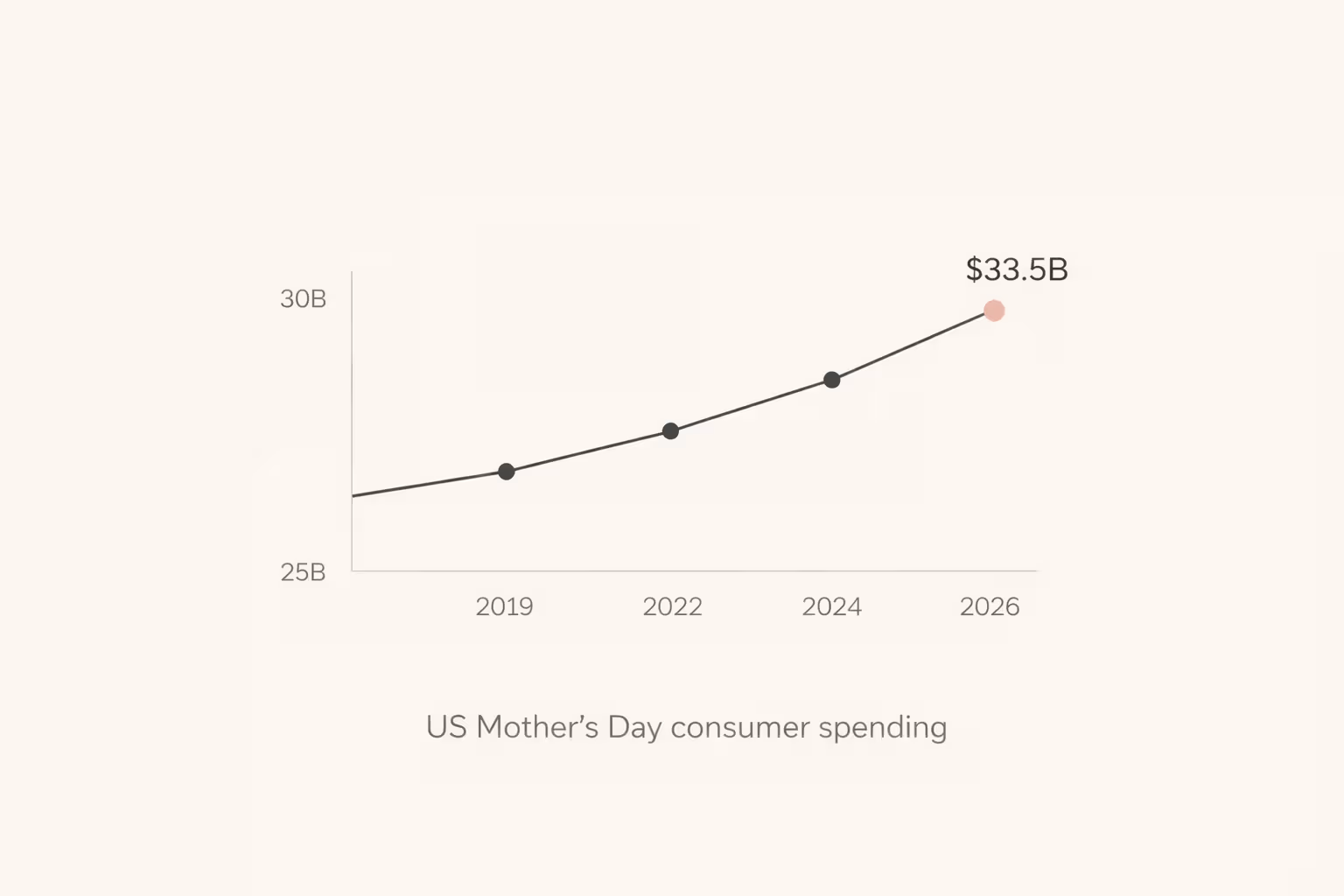
U.S. Mother's Day spending is projected to hit $33.5 billion on the occasion in 2026, with the average celebrant spending $254, per the NRF. What makes that figure credible is the trajectory behind it: spending grew steadily from 2019 through 2025, including through pandemic disruptions, according to data compiled by Webeyez. Even in 2020, when physical retail froze, U.S. Mother's Day spend still rose 7% year over year as shoppers moved online. Thus, the commercial case for prioritizing this holiday is not speculative. It is a five-year trend line pointing steadily upward.
What shoppers are actually buying
Flowers and greeting cards lead by volume, but they are not where the money is. The NRF data tells a different story:
- High volume, lower spend: Flowers (74% of buyers), greeting cards
- High spend, lower volume: Jewelry, electronics, apparel
- Growing fast: Personalized gifts, experiential gifts, self-care and wellness
For Shopify merchants, this implied that categories like beauty, wellness, home goods, food, fashion, and personalized products all sit squarely in the gifting window. If your store touches any of these categories, the question is not whether Mother's Day is relevant to you, but whether your campaign is built to capture it.
Why emotional holidays convert differently
What makes it particularly valuable for Shopify merchants is the emotional gravity behind the purchase. According to The Shelf's 2025 Mother's Day Insights Report, 31.5% of shoppers spend more on Mother's Day than they do on Father's Day. Shoppers in the Mother's Day window are not comparing prices across tabs the way they do during Black Friday or back-to-school. They are looking for something that feels worth it, and that shift in buyer psychology changes what good marketing looks like. Emotional resonance converts here in a way it simply does not during transactional sale events.
{{cta}}
10 Mother's Day Marketing Ideas for Shopify Stores
Here are the ideas that consistently drive results for ecommerce brands, from campaign structure to channel tactics to last-minute conversion plays.
1. Build a Three-Stage Campaign Instead of a Single Blast
"Start early" is not a strategy. It is a reminder. The real insight is that Mother's Day shoppers are in a fundamentally different mental state three weeks out versus three days out, and most brands treat the entire window as one uniform push.
Map your campaign to how shopper intent actually shifts:
|
Stage |
Timing |
Shopper Mindset |
Your Job |
|
Discovery |
3 to 4 weeks out |
Browsing, not deciding |
Get shortlisted. Gift guides, editorial content, collection spotlights. No urgency language. |
|
Consideration |
10 to 14 days out |
Comparing options |
Personalized recommendations tied to purchase history. Introduce a soft offer: bundle discount, free gift with purchase, limited engraving. |
|
Conversion |
Final 5 days |
Procrastinating or reconsidering |
Shipping deadlines, urgency CTAs, digital gift cards for last-minute buyers. |
The brands that outperform are not the ones that started earliest, but they are the ones that matched their message to each stage, rather than blasting the same promotional email three times and hoping it lands.
2. Create a Dedicated Mother's Day Landing Page
Sending paid traffic to your homepage for a holiday campaign is one of the most common conversion leaks in Shopify marketing. Your homepage is built for general discovery. A holiday campaign needs a page built for decision-making.

What a high-converting Mother's Day landing page includes:
- An emotional header that names the occasion, not just the sale
- Products organized by persona or price point ("For the Mom Who Loves Self-Care," "Under ₹1,000")
- A curated gift guide section if your catalog is deep
- Shipping deadline callout, updated in real time as the date approaches
- A single, clear CTA per product block
A dedicated page also gives your Mother's Day email marketing campaigns and paid ads a clean destination, and that attribution clarity, being able to see exactly which channel converted and at what rate, is worth the setup time on its own.
3. Use Personalized Communication, Not Broadcast Campaigns
Most stores send the same Mother's Day campaign to their entire list and wonder why conversion is flat. The problem is not the offer. It is that a lapsed customer, a high-AOV gifter, and someone who has never bought a gift from your store are all receiving the same message at the same time. Personalized communication, across both email and push, is what closes that gap.
Email marketing drives roughly 20% of holiday online sales, per Campaign Monitor. Push notifications, for brands that have them, cut through at the moments email cannot: when inboxes are saturated in the final days before the holiday and the shopper is on their phone, not their laptop.
The channel is less important than the principle behind it. A message that reflects what a specific customer has already done, and anticipates what they are likely to do next, will always outperform a broadcast. Personalized emails alone see 29% higher open rates and 41% higher CTRs compared to generic sends per research cited by Wisernotify
How to segment your Mother's Day list:
- Past purchase category: Someone who bought a face serum six months ago is likely buying for themselves. Someone who bought a gift set in December is likely a gift-giver. Send the first group a "treat your mom the way you treat yourself" angle. Send the second group a curated Mother's Day gift set recommendation, because you already know they shop this way.
- Purchase recency: A customer who bought in the last 60 days is warm. A customer who last bought 8 months ago needs a reason to come back, not just a product recommendation. A re-engagement offer ("We haven't seen you in a while, here's 10% off for Mother's Day") works on a lapsed buyer in a way a standard promo does not.
- Order value history: Customers who have spent above your store's average AOV are not looking for the cheapest option. Send them your premium bundles, personalized products, or limited-edition gift sets. Sending them a flat 15% off code is leaving money on the table.
- Gifting behavior signals: If your store has gift wrapping, gift notes, or shipping-to-a-different-address data, that is your clearest signal that someone buys for others. These are your highest-priority Mother's Day targets. They have done it before. They will do it again if you show up with the right prompt.
The subject line is where segmentation pays off most visibly. "Gift ideas for her skincare routine" outperforms "Mother's Day Sale" because it signals relevance before the inbox is even opened.
4. Offer Personalized Products as a Standalone Idea
Personalization does not have to be limited to just an email tactic. It is an effective product strategy which, if executed well, can become one of the highest-leverage moves a Shopify store can make.
According to the NRF, 47% of Mother’s Day shoppers are looking for something unique and different, and personalization meets that need directly. Monogrammed items, custom engraving, message cards, and name-based designs aren’t just add-ons; they often end up becoming the deciding factor that drives a shopper to choose one store over another.
Two commercial advantages worth noting:
- Higher margin. Personalized products carry a premium that shoppers willingly pay.
- Comparison-proof. A product customized with someone's name or a personal message cannot be found cheaper on Amazon. It removes the price competition entirely.
If your store does not currently offer personalization, even a simple "add a message card" option at checkout creates perceived value that generic products cannot.
5. Build Gift Bundles That Solve the Decision Problem
One of the most friction-heavy parts of Mother's Day shopping is the decision itself. Buyers know their budget and have a rough sense of what their mother likes, but they are not sure which specific product to choose. Gift bundles solve that problem while increasing your AOV.
What makes a bundle work:
- 2 to 4 complementary products from your catalog
- A thematic name that sells the emotion, not the contents ("The Mom Who Deserves a Break" vs. "Candle + Bath Salt Bundle")
- Priced at a modest discount versus buying items individually
- Presented as ready-to-gift, not just a product grouping
The promo code angle: Bundles give you a clean vehicle for targeted Mother's Day promo code ideas without blanket-discounting your whole catalog. A code like MOM15 that applies only to gift sets creates urgency without margin damage across your full range.
6. Run a Giveaway to Build Audience Before the Sale Window Opens
A well-structured giveaway does something most promotional tactics cannot: it grows your audience and generates social proof simultaneously, before you spend a rupee on paid media.
The mechanics:
- Prize: your top-selling product or a curated gift set
- Entry: one low-friction action (follow + tag a person they'd buy for, or share a story about their mother)
- Duration: 7 to 10 days, launched no later than 3 weeks before Mother's Day
- Output: follower growth, UGC content, and a warmed audience entering your sale window
French skincare brand Caudalie has used this format consistently, offering a curated bundle prize with email-only entry. The combination of list-building and social amplification makes giveaways one of the most capital-efficient Mother's Day retail promotion ideas for brands without large paid media budgets.
One rule to remember is not to over-engineer the entry mechanics. Every additional step required reduces participation by a meaningful margin so simplicity is key: one action, one entry.
7. Run Emotional Campaigns, Not Just Discount Campaigns
The brands that win Mother's Day are not the ones with the deepest discounts, but the ones who make shoppers feel something.
According to The Shelf's 2025 Insights Report, messaging that leads with meaning rather than price wins customer loyalty well beyond the holiday window. Two examples that illustrate the principle:
- Apple's 2024 campaign "Celebrate Whoever You Call Mom" led entirely with inclusivity and emotional recognition, not product specs
- Walmart's TikTok series featuring celebrity moms answering real parenting questions generated 120 million views on its top video without a single lead discount
Thus, your holy grail structure for any Mother’s Day-related campaign should be emotion first, offer second. A 15% discount embedded inside a campaign about "the mom who showed up every single time" converts much more effectively than the same discount presented as a generic seasonal sale. The product is the same but the context changes everything.
This also applies to your mother's day marketing messages across every channel, be it email subject lines, paid ad copy, social captions, and push notifications. Name the moment before you name the offer.
8. Build a Dedicated Last-Minute Gift Strategy
Mother's Day has a hard deadline, and a significant portion of shoppers will not make a decision until they are up against it. This is not a fringe group, but a predictable segment that shows up every year, and most stores have no dedicated play for them beyond a generic "still need a gift?" email sent too late.
The mistake is assuming these shoppers are less committed. In reality, their intent is just as strong, often stronger, because the emotional stakes are more immediate. Your marketing’s role isn’t to convince them to buy, but to remove the guilt and friction that’s holding them back.
That is why the framing of your offer matters as much as the offer itself. Consider the two options given below:
- "Not sure what to get? Send a gift card." (translates to: we know you failed to plan)
- "Give her the freedom to choose exactly what she loves." (translates to: this is a considered, generous choice)
Same offering, but the second framing removes the shame from the purchase, which is the actual barrier for this shopper.
What to have ready for the final 3 to 5 days:
- A "Last-Minute Gifts" collection or landing page banner surfacing your fastest-shipping products
- Prominent "order by [date] for Sunday delivery" callouts updated daily as the deadline tightens
- Digital gift cards with instant email delivery, positioned as the lead option, not an afterthought
- A push notification or SMS on the Friday and Saturday before Mother's Day, with a clear delivery deadline front and centre
The last two days before Mother's Day are when this segment is actively searching. If your store is not visible and explicit about what can still arrive in time, you are invisible to them.
9. Optimize for Mobile or Lose the Sale
Mobile shopping surges 2-3 times during emotional gifting events like Mother's Day. Most Shopify merchants know this and still do nothing about it before the campaign goes live.
What to audit before your campaign launches:
- Page load: Anything over 2.5 seconds is losing you buyers. Test on a real device on a mobile network, not just Chrome DevTools.
- CTAs: One per screen section, large enough to tap with a thumb without zooming. If it requires precision, it will be missed.
- Checkout flow: Shop Pay or one-tap payment options should be surfaced by default. Every additional form field between intent and confirmation is a drop-off point.
- Product images: Check how your gift sets and bundles render on a 375px screen. A product that looks premium on desktop can look cluttered and unconvincing on mobile if the images have not been tested.
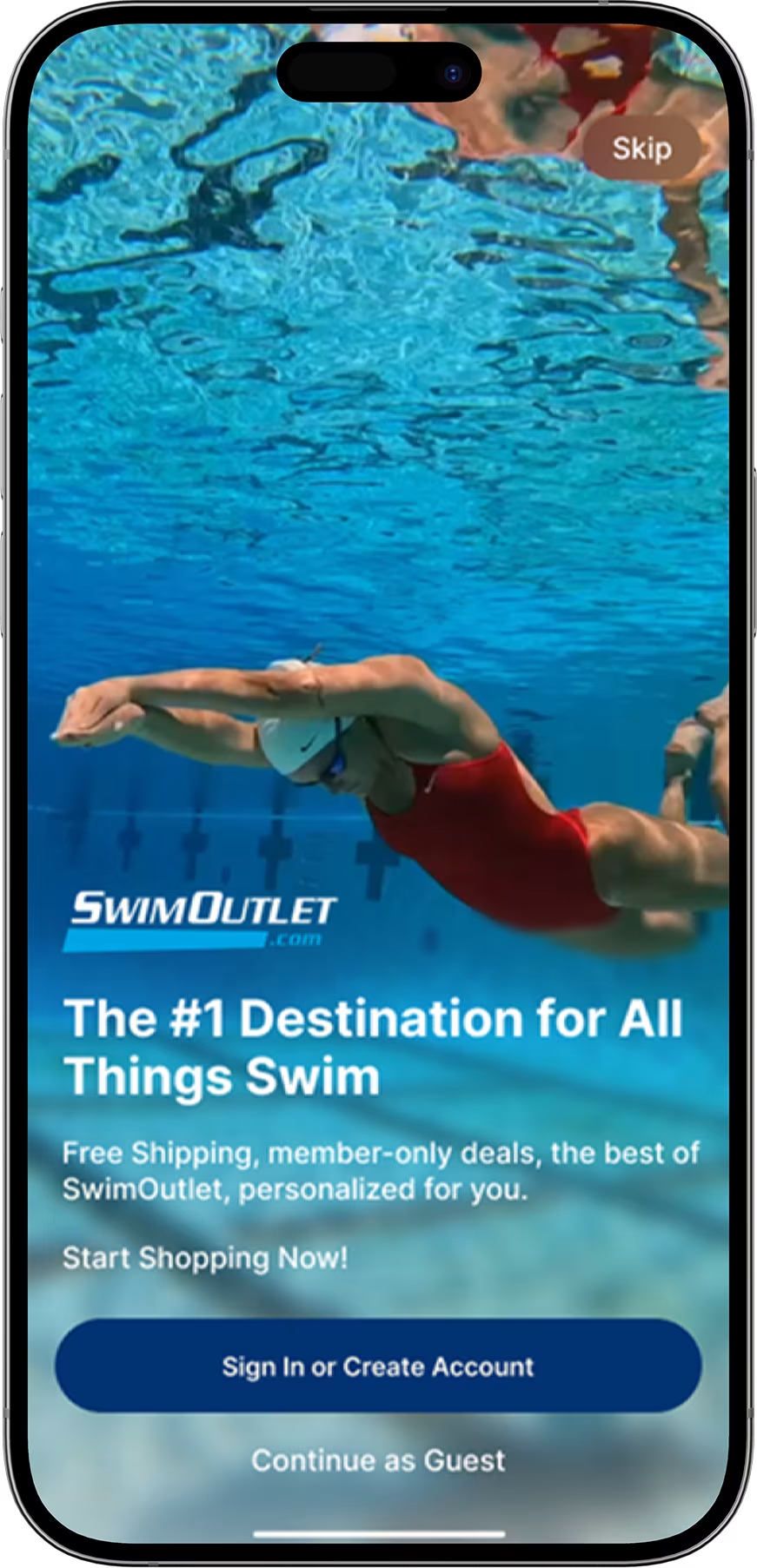
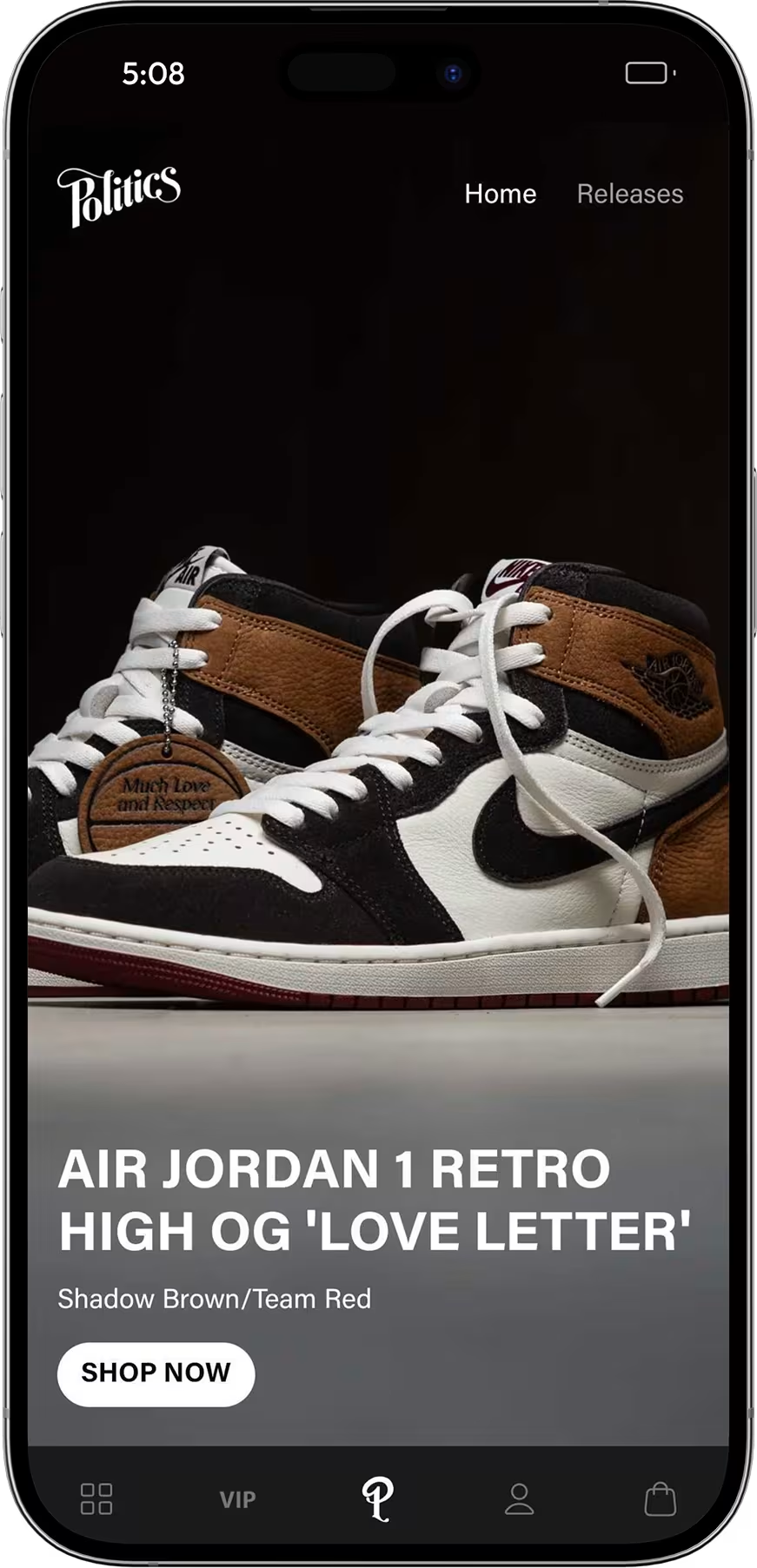
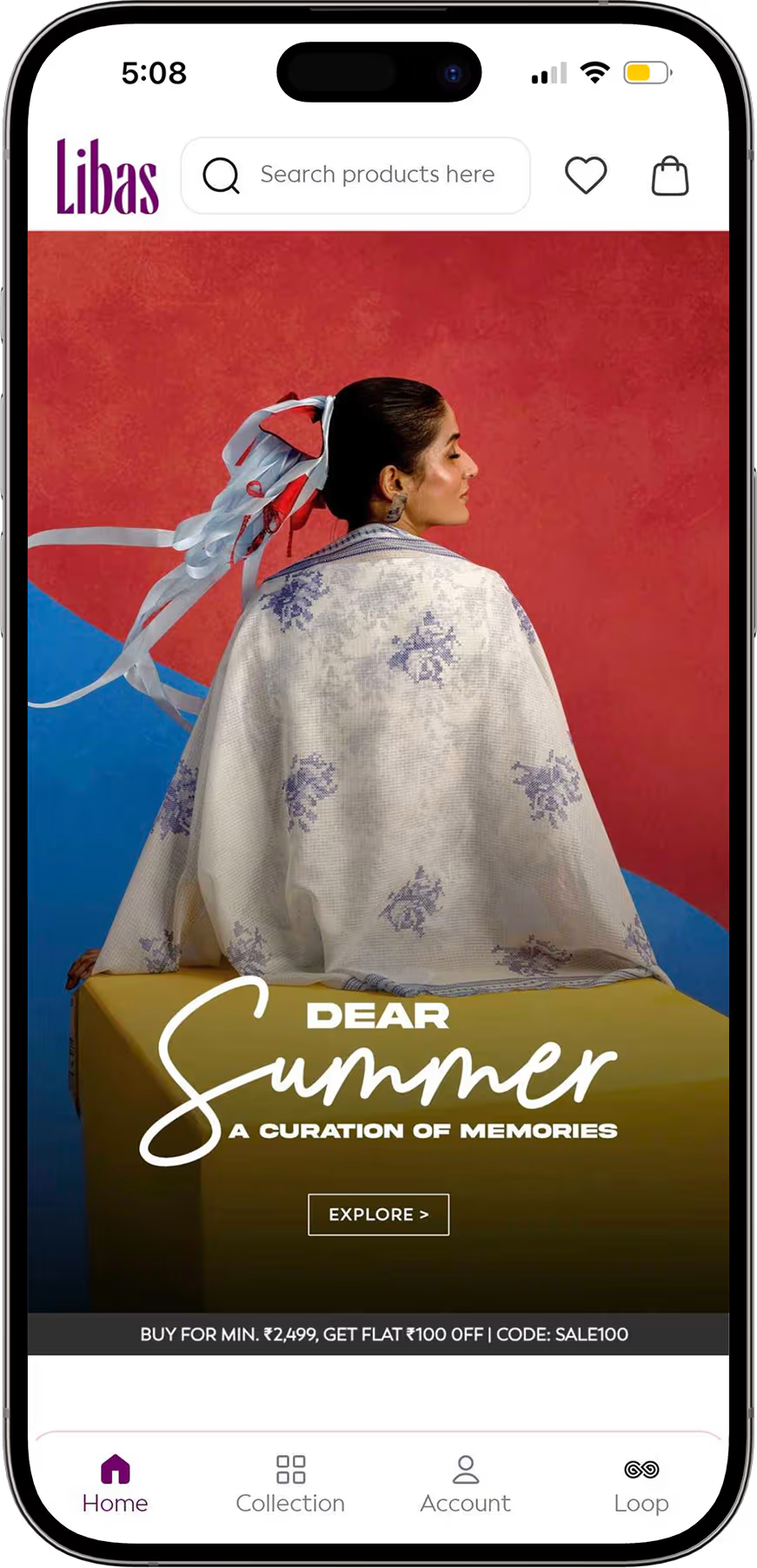
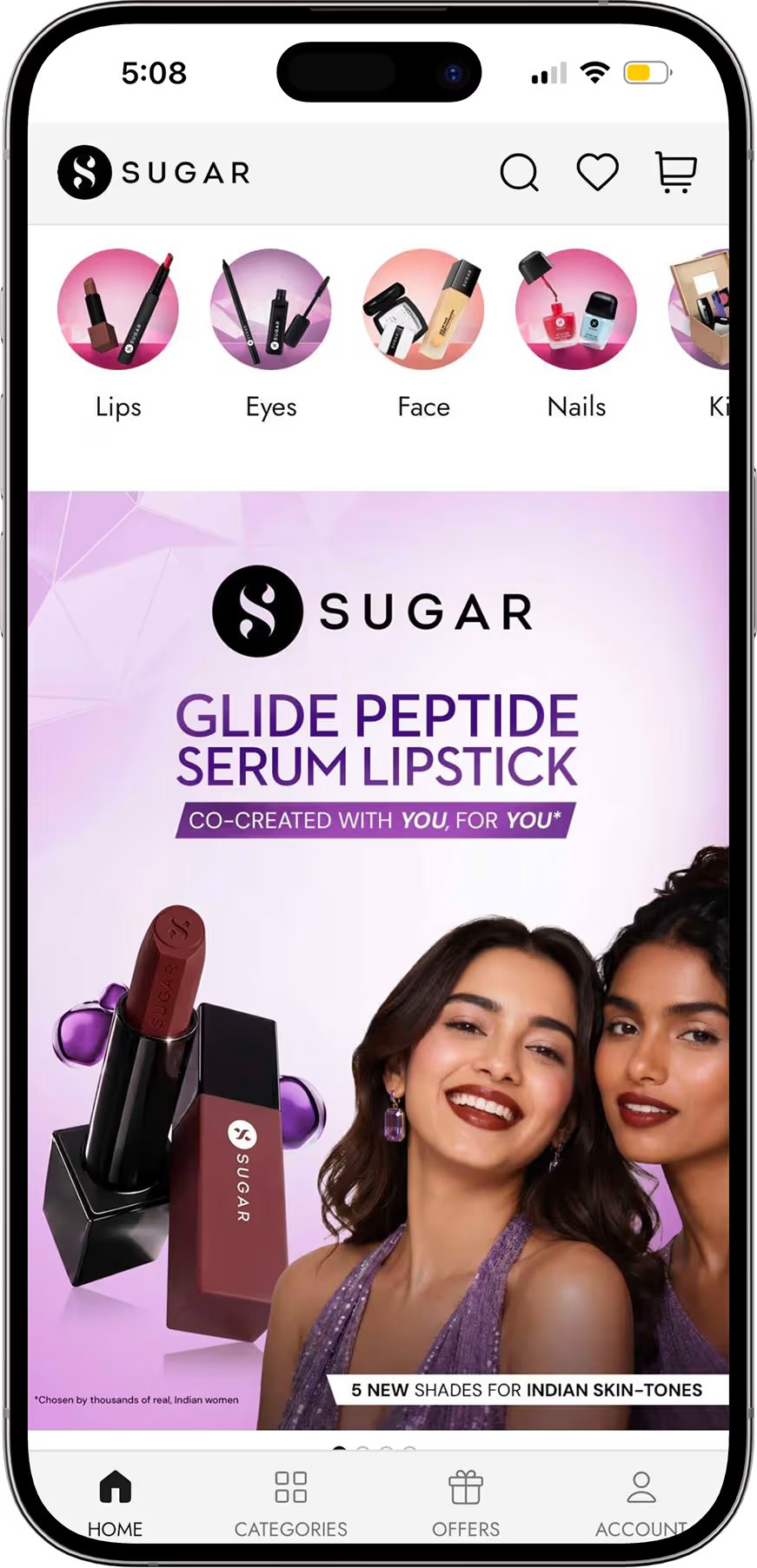
Brands with a dedicated Shopify mobile app consistently see the biggest lift here, for two compounding reasons.
- First, app experiences remove browser-based friction entirely: no slow page loads, no saved-card retrieval, no re-entering shipping addresses. The path from product discovery to checkout is shorter by design.
- Second, and more importantly for Mother's Day specifically, a mobile app gives you push notification access. This means you are not just optimizing the shopping experience for mobile users but also able to reach them directly, with personalized messages, on the channel where they are already spending time.
The combination of a frictionless purchase experience and a direct communication channel is what separates mobile app brands from mobile web brands during high-intent gifting windows. Appbrew's data across 250+ Shopify brands shows higher conversion rates and AOV on mobile app versus mobile web as a consistent pattern across the portfolio
10. Use Mother's Day to Set Up Your Post-Holiday Retention Play
Most Shopify merchants treat Mother's Day as a closed revenue window, but the merchants who treat it as a list-building and retention event are clearly winning the game.
Every new customer acquired during Mother's Day is a candidate for Father's Day, a birthday, an anniversary, and the next gifting occasion on the holiday marketing calendar. A shopper who bought skincare as a Mother's Day gift is likely to do it again next year, if you show up at the right moment with the right message.
What to build into your campaign from day one:
- Tag Mother's Day buyers in your ESP as a segment. You will email them again in April next year.
- Note what they bought. The product category is a strong signal for future recommendations.
- Post-purchase flow: A thank-you email sent after Mother's Day with a "save for next time" offer converts a seasonal buyer into a returning one.
Additionally, the UTM structure matters here too. Tag every asset (email, paid social, push, organic) separately before launch. That data tells you which channel drove which conversion, which product outperformed, and which segment responded best, allowing you to already have a tried and tested blueprint for next year’s campaign instead of a blank slate.
How to Put It Together: Steps and Best Practices
Great ideas are only half the battle. The real impact comes from executing them in the right order, at the right time.
The pre-campaign checklist (4 weeks out):
- Identify your top 5 to 8 gift candidates and build your dedicated landing page
- Set up your UTM structure across all channels before anything goes live
- Build or activate your Mother's Day email segments based on purchase history
- Decide on your bundle offer and promo code logic
- Launch your giveaway (if you are running one)
The campaign window timeline:
- Week 1: Discovery email, editorial social content, gift guide goes live
- Week 2: Personalized recommendation emails, soft offer introduced
- Week 3: Urgency messaging, shipping deadline callouts, paid retargeting activated
- Final 3 days: Last-minute push, gift card positioning, push notification if you have a mobile app
.avif)
What to track during the campaign:
|
Metric |
What It Tells You |
|
Landing page add-to-cart rate |
Whether the page is converting or the product mix is wrong |
|
Email open rate by segment |
Whether your subject line segmentation is working |
|
Email CTR by segment |
Whether the product recommendation is landing |
|
Channel-level conversion (via UTM) |
Which channel is driving actual revenue, not just traffic |
|
Bundle vs. individual product revenue |
Whether the AOV play is working |
Do not wait until after Mother's Day to look at these numbers. Monitor the landing page add-to-cart rate daily from two weeks out. If it drops below your store's normal benchmark, check load time, CTA copy, and product selection before assuming the offer is the problem.
The Bottom Line
Mother's Day rewards preparation and emotional clarity in a way that most retail holidays do not. The stores that convert this window are not the ones running the deepest discount. Instead, they are the ones who mapped their campaign to how shoppers actually think across the three-week lead-up, personalized their messaging to what buyers already care about, and removed friction from every step between discovery and checkout.
Build the campaign in phases, optimize for mobile, personalize your flows, and tag everything so your 2026 campaign starts with data instead of guesswork.
If you want to turn Mother's Day shoppers into year-round customers, a mobile app is one of the highest-leverage tools a Shopify brand can build for repeat purchase, push notification reach, and owned channel revenue. Book a demo with Appbrew →
Frequently Asked Questions
When should I start my Mother's Day marketing campaign?
Start no later than three to four weeks before Mother's Day, which typically falls on the second Sunday of May. Over 40% of U.S. consumers begin shopping two or more weeks in advance, per Statista. Brands that launch in late April capture the majority of purchase-ready shoppers before the competitive window closes in early May.
What are the best mother's day promotion ideas for Shopify stores?
The highest-converting promotions combine emotional storytelling with a clear offer. Curated gift bundles with a themed discount, personalized products with a limited-time option, and tiered free shipping thresholds consistently outperform flat-rate sitewide discounts. For last-minute shoppers, digital gift cards with instant delivery are the most reliable conversion tool.
How do I write effective mother's day marketing messages?
Lead with the emotional context before the offer. Acknowledge the significance of the occasion, reflect your brand's voice in how you talk about motherhood, and then present the promotion as a way to act on that sentiment. Campaigns that open with a discount code before establishing emotional resonance consistently underperform against those that earn the commercial moment first.
What makes a good mother's day email marketing campaign?
A three-stage sequence outperforms a single blast: a discovery email three to four weeks out, a personalized recommendation email ten to fourteen days out, and an urgency email three to five days before the holiday. Personalized emails see 29% higher open rates and 41% higher click-through rates compared to generic campaigns.
Should I offer discounts or focus on premium positioning for Mother's Day?
Both work, but the framing matters more than the discount depth. A 15% discount inside emotionally resonant creative outperforms a 30% discount in a generic sale email. Shoppers in the Mother's Day window are spending on meaning. Premium positioning supported by strong storytelling consistently captures higher AOV, particularly in jewelry, beauty, and personalized gift categories.