


.webp)
.webp)

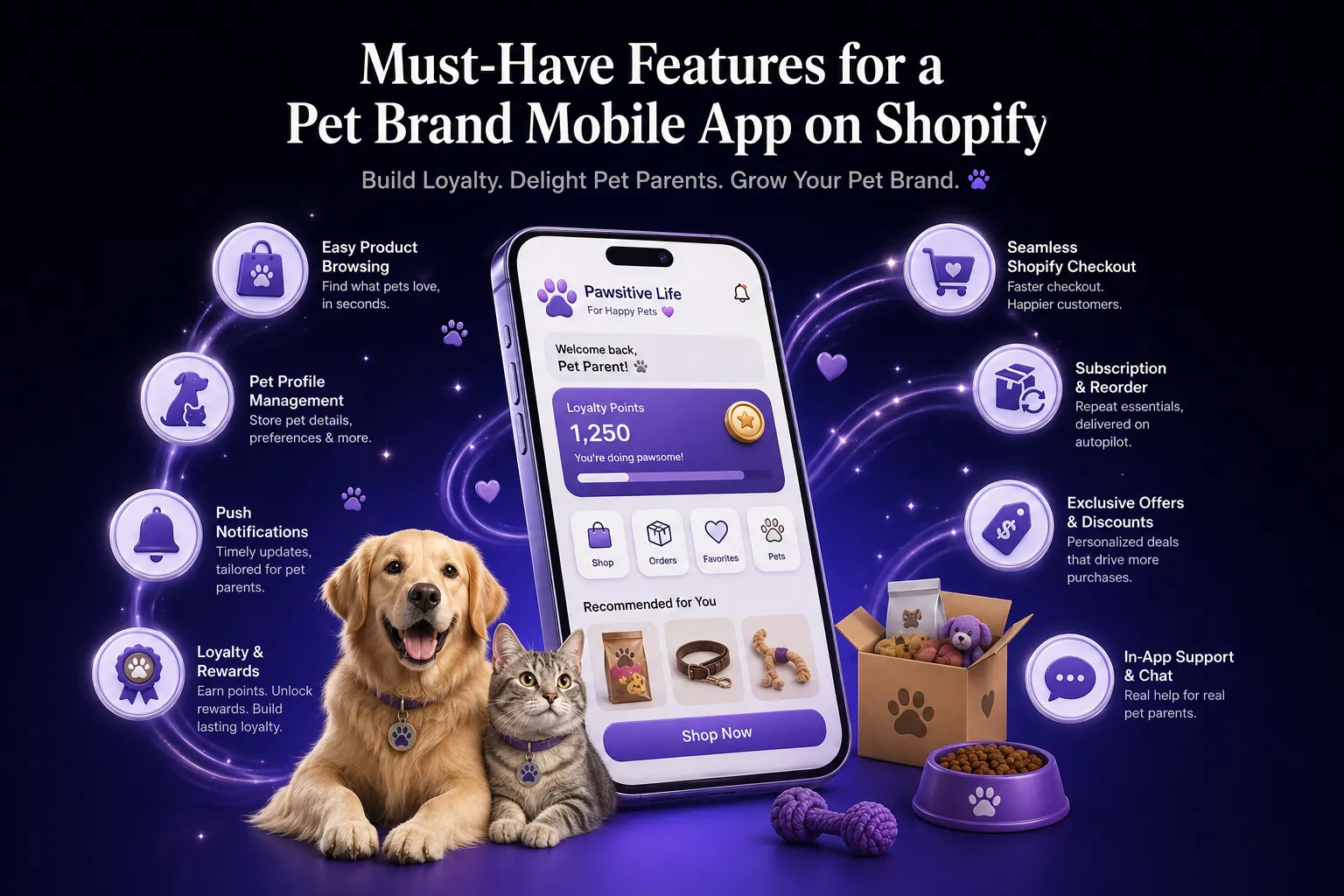
Discover the essential features for building a high-converting mobile app for your pet brand on Shopify.
Pet owners are not casual shoppers. They reorder the same food every three weeks, obsess over ingredient labels, and buy for personality, not just need. That behavior is perfectly suited to a mobile app. Yet most pet brands are still sending those customers to a generic mobile website and wondering why retention is flat.
The problem is structural. Mobile web cannot replicate the personalization, push, and subscription management that drives loyalty in this category. Every time a repeat customer has to re-enter their pet's details, hunt for their last order, or miss a restock reminder, the brand loses ground to whoever makes it easier.
A native Shopify mobile app purpose-built for pet brands fixes this. This post covers exactly what needs to be in it. By the end, you'll have a clear feature checklist and an understanding of why each one works specifically in this category. For examples from other categories, see our guide to ecommerce mobile app features and examples.
TL;DR
- Subscription management in-app is non-negotiable for pet food and consumables brands
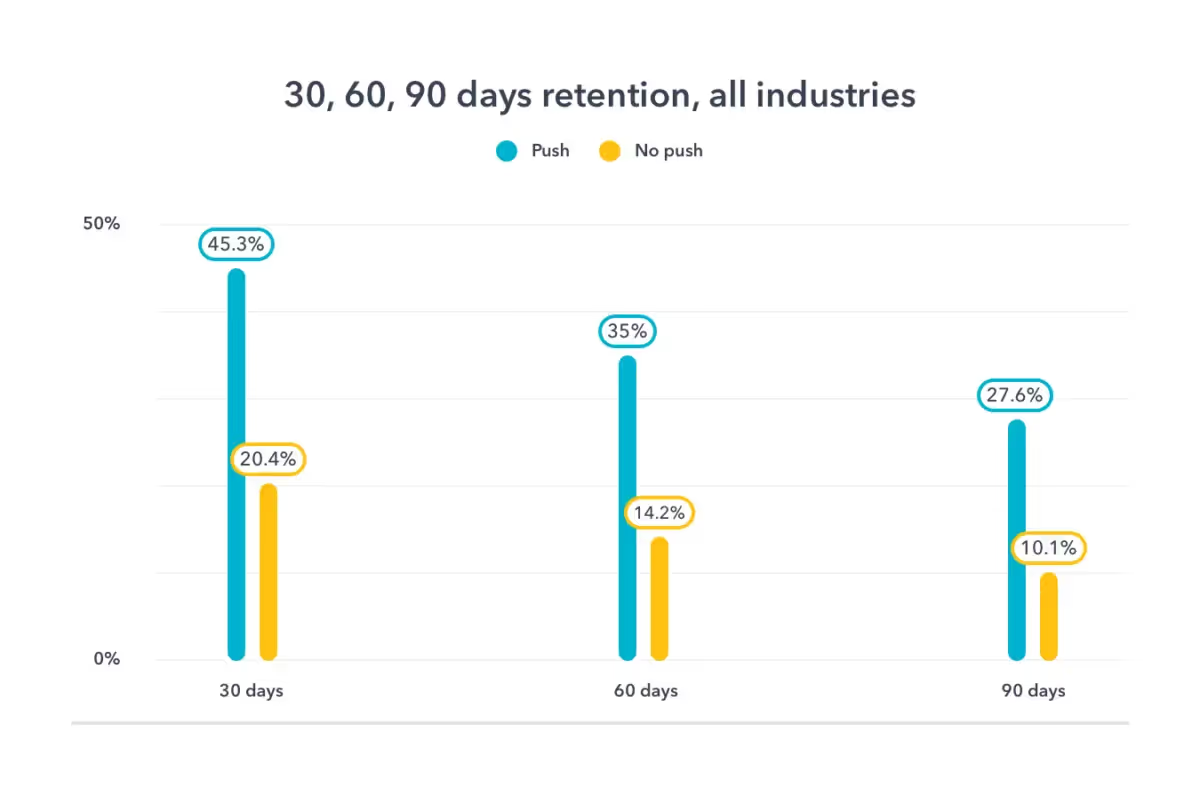
- Push notifications for reorder reminders outperform email in pet because purchase cycles are predictable
- Pet profile features, like name, breed, weight, and age, enable personalization that meaningfully reduces cart abandonment
- Smart search with breed and ingredient filters addresses how pet owners actually shop
- App-exclusive bundles and starter kits reduce first-purchase friction for new pet parents
- Native reviews with photo upload convert better because social proof in pets is visual
- Post-purchase order tracking with milestone notifications increases retention for new customers
Why Pet Brands Are a Strong Fit for Native Mobile Apps
Here’s why pet brands are a strong fit for native mobile apps:
The Repeat-Purchase Dynamic
Pet consumables have one of the highest natural repurchase rates in DTC ecommerce. A dog owner buying the same kibble every three weeks isn't browsing; they're restocking. That behavior is exactly what a mobile app is built to serve.
Compare this to fashion or home categories, where purchase frequency might be two to four times a year. Pet food and supplements operate on tight, predictable cycles. Mobile apps capture that recurring behavior better than the web through push reminders, one-tap reorder, and subscription management, all in one place, and the customer keeps it on their phone.
The key insight here is that an app doesn't create repeat purchase behavior in pets; it amplifies behavior that already exists. If your store has a strong rate of returning customers, a native app turns that into a compounding retention asset.
The Emotional Purchase Driver
Pet owners don't shop the way consumers shop in most other categories. They're buying for a living creature they're responsible for, which means trust signals, ingredient transparency, and personalization carry significantly more weight here than in fashion or home goods.
Generic "you might also like" recommendations don't cut it. A pet owner shopping for a senior Labrador with joint issues wants to know if a product is right for that dog. Breed-specific recommendations, health-goal filtering, and concierge-style guidance map directly to how these purchase decisions are actually made. The more the app feels like it knows their pet, the higher the likelihood of a second purchase.
The Must-Have Features for a Pet Brand Mobile App
Here are some must-have features for a pet brand mobile app on Shopify:
1. Subscription Management
Subscription management is the single highest-impact feature for any pet food or supplement brand, and most brands are getting it wrong. The majority of subscription changes still route customers through email links to a web portal.
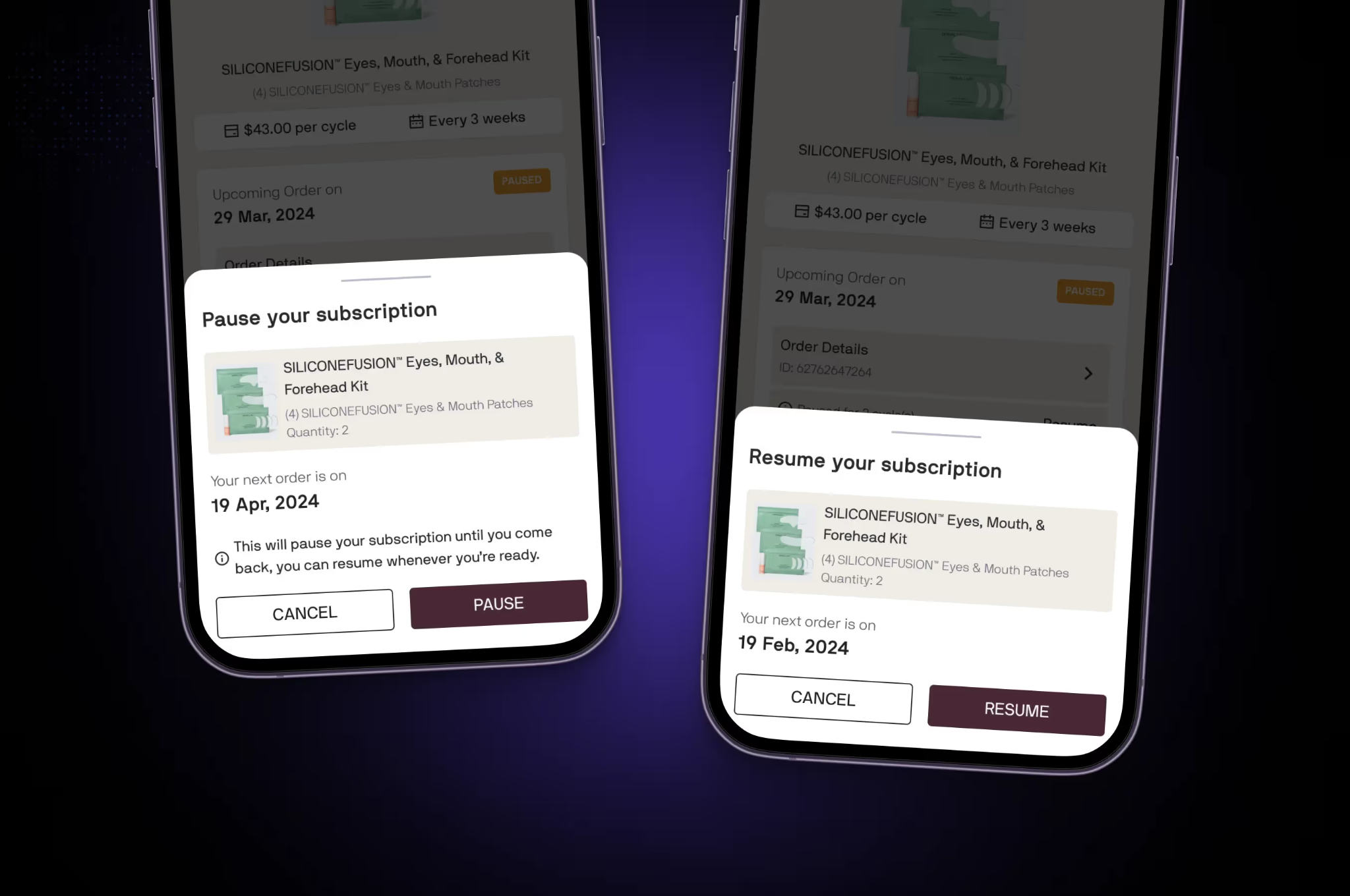
For a pet owner who wants to swap a protein flavor, skip a delivery, or shift a billing date, that friction isn't inconvenient; it's a cancellation waiting to happen. Subscription churn in pet is often a UX problem, not a product problem. The customer still wants the food. They just couldn't figure out how to pause it. Full in-app subscription management changes this completely:
- Swap flavor or variant without contacting support
- Pause, skip, or reschedule a delivery in two taps
- Change frequency based on how fast they're going through the product
- Clear next-order visibility so customers always know what's coming and when
Appbrew's Enterprise tier supports native subscription management with direct integrations with leading tools such as Recharge, Stay AI, and Prive. So the experience is seamless without rebuilding your existing stack. Reducing cancellation friction is worth more than any discount-based retention campaign.
2. Reorder and Back-in-Stock Push Notifications
Pet supply reorders are predictable. A customer buying a 5kg bag of dog food every 21 days is running on a cycle that the brand can see. The question is whether the brand acts on it first.
Push notifications built around purchase intervals close that loop before the customer shops elsewhere. A reorder reminder timed to a customer's average purchase cadence, "Bella's food is probably running low, reorder now", isn't intrusive. It's useful. That distinction is what drives push opt-in rates in this category.
Back-in-stock alerts matter equally for brands carrying limited SKUs. A customer turned away once and never notified is likely lost to a competitor. Back-in-stock push with one-tap reorder recovers that revenue automatically.
3. Pet Profile and Personalization
An app that remembers a customer's pet is one that customers don't want to delete. The profile inputs are straightforward, like name, species, breed, age, weight, and dietary restrictions. But what they unlock is significant.
Every field becomes a personalization input, like recommendations filtered by life stage, content relevant to their breed, and push cadence calibrated to their pet's routine. A senior Labrador owner and a new kitten owner have almost nothing in common from a product standpoint. Serving them the same homepage is a conversion killer.
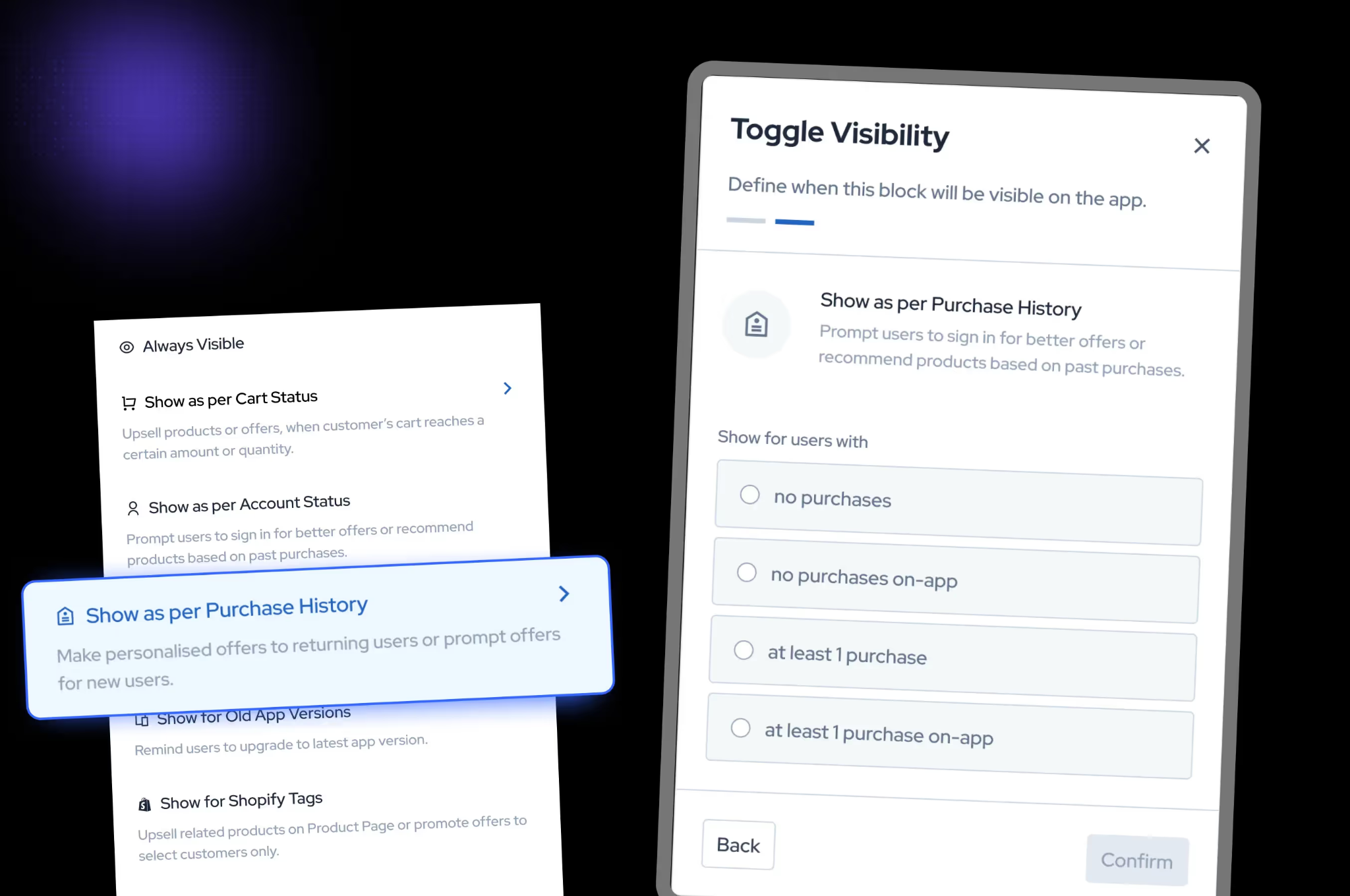
Here's what strong pet profile personalization looks like in practice:
- Homepage and featured products shift based on species, breed size, and life stage
- Push notifications reference the pet by name and trigger around their reorder cycle
- Promotions are filtered to relevant categories, so a senior dog owner doesn't see puppy content
- Content blocks surface breed-specific guides, ingredient explainers, and vet-backed advice
One question worth asking your Shopify mobile app builder: Can personalization rules be driven by customer tags synced from Shopify, or only by in-app behavior? The answer determines how deep personalization can go from day one.
4. Smart Search With Category-Specific Filters
Pet owners filter by species, breed size, life stage, protein source, and dietary flags. A generic search bar that ignores all of that fails them immediately.
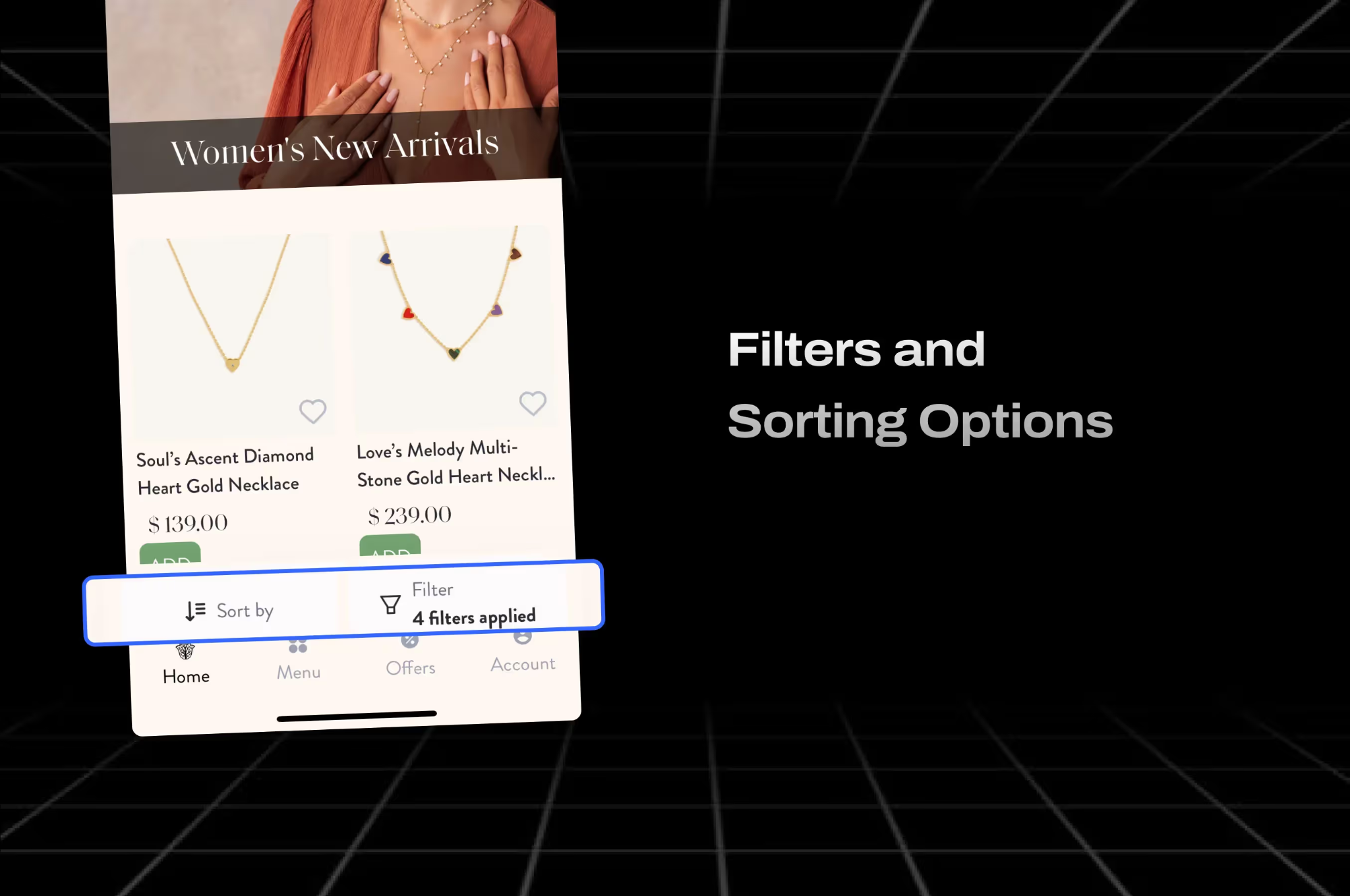
The filter set should cover species, breed size, age group, flavor, protein source, and flags like grain-free or hypoallergenic. Search suggestions should anticipate common queries, like "salmon cat food," "puppy training treats," and typo tolerance matters, given the complexity of breed names and ingredient terms.
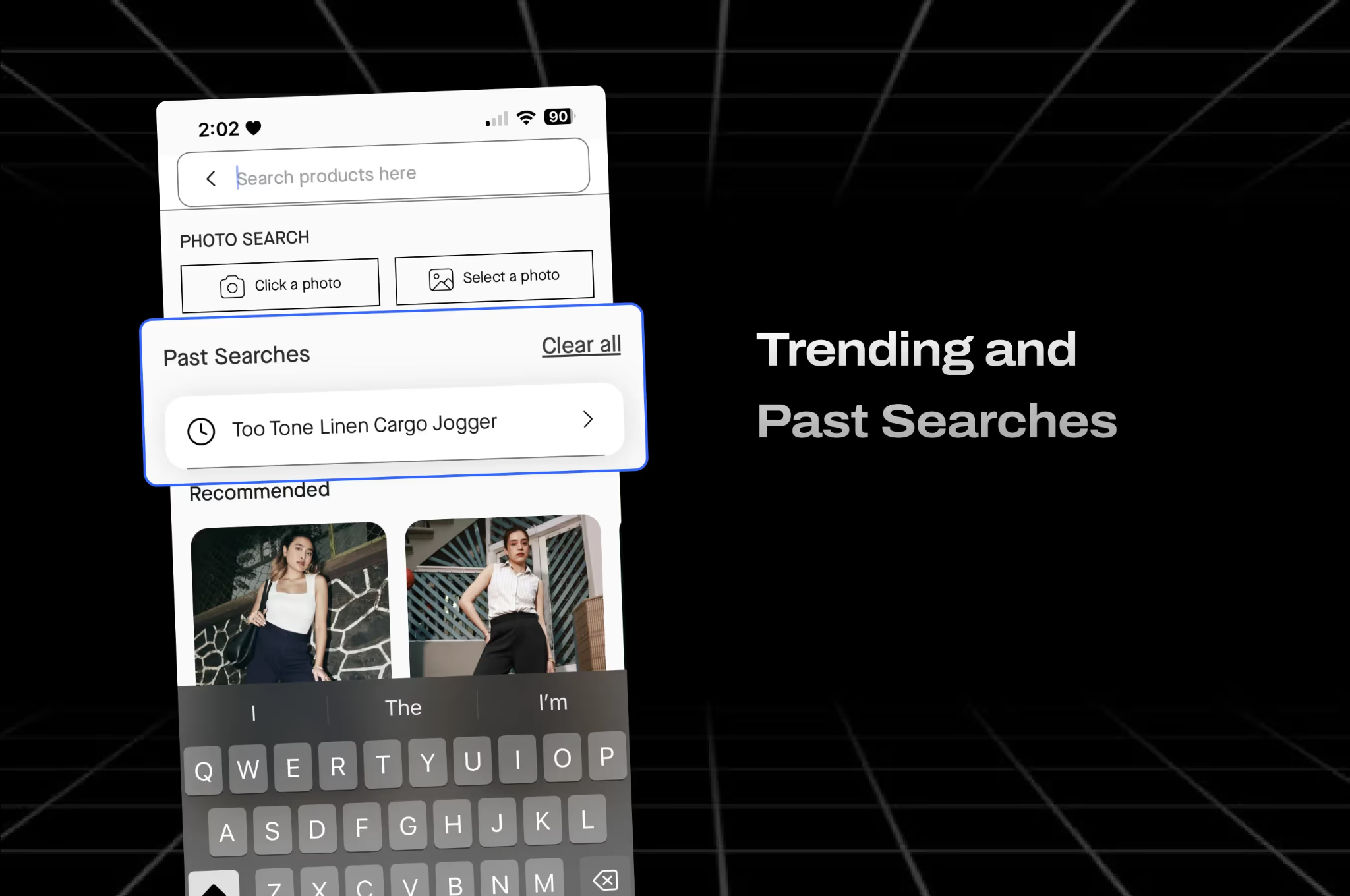
A search that returns everything with "chicken" in the title, regardless of species or format, sends customers to dead ends. A filtered smart search that narrows to relevant SKUs in two taps, informed by purchase history and pet profile, closes the gap between intent and purchase fast.
5. App-Exclusive Bundles and Starter Kits
New pet owners are high-intent and high-LTV if you capture them early. The first 90 days involve more product discovery and brand switching than almost any other period. An app-exclusive starter kit targets exactly that window.
Bundle discounts available only in-app reduce decision fatigue for first-time owners while giving them a concrete reason to download. App-only pricing and gift-with-purchase offers work as install drivers in a way that generic "download our app" prompts never do.
Getting a new pet owner into the app early ensures that every subsequent reorder, subscription, and push notification occurs in an owned environment. That's the real value of the install, not the first purchase, but everything that follows.
6. Visual Reviews and UGC Display
In most ecommerce categories, reviews support the purchase decision. In fact, a photo of someone else's golden retriever enthusiastically eating the food is the deciding factor in the purchase decision. Visual social proof converts differently here because the emotional driver of purchase is so strong.
The baseline requirement is in-app review display with photo upload, and integration with review platforms like Yotpo or Stamped that already hold the brand's existing review library. Starting from zero isn't necessary; the content is likely already there.
What separates weak from strong isn't just presence, it's placement and filterability:
- Photo reviews front and center on PDPs, not buried below the fold behind star ratings
- UGC-style carousels that show real pets using the product in context
- Sortable by pet type, breed size, or age group, so a senior cat owner sees reviews from your influencer marketing campaigns and people in the same situation
- Review prompts triggered post-purchase inside the app, where purchase context is liv,e and response rates are higher
A text-only star rating tells a pet owner the product has 4.7 stars. A photo of a picky eater finally finishing their bowl tells them it's worth trying.
7. Order Tracking and Post-Purchase Communication
First-time pet food buyers, especially those ordering prescription diets or raw food with cold-chain requirements, are more anxious about delivery than the average ecommerce customer. Silence after checkout doesn't build trust here. It creates doubt.
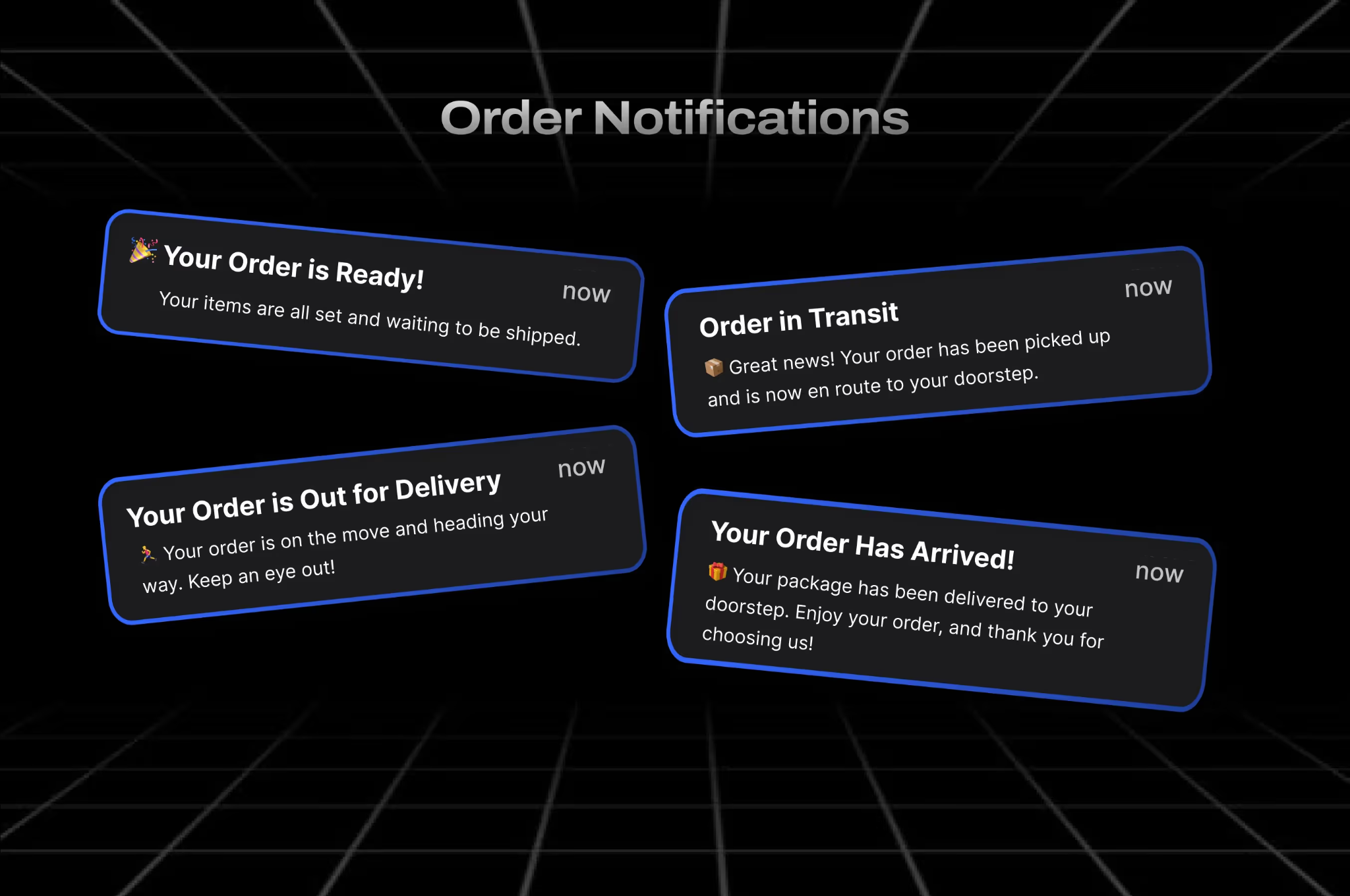
Native order tracking with real-time status updates removes that doubt. Push notifications at each shipping milestone, like dispatched, out for delivery, delivered, keep the customer informed without requiring them to hunt for a confirmation email. Returns and cancellations handled in-app, without a support ticket, complete the loop.
A customer who receives their first order with full visibility and zero friction is significantly more likely to subscribe. Post-purchase communication is one of the most underleveraged conversion tools in this category.
How to Evaluate Whether Your App Builder Supports These Features
Not all app builders are built equally. Before committing to a platform, run through these five checks:
- Ask whether subscription management is native in-app or still handled via a web redirect, specifically for your existing subscription tool. A webview redirect is not in-app subscription management.
- Confirm whether push notification flows can be triggered by purchase-interval data, not just by generic time delays. Reorder reminders only work if the timing is based on actual customer behavior.
- Test whether product filters and search can be configured around your specific taxonomy, like breed, life stage, and dietary flags, without custom development. If it requires a developer every time you add a filter, it won't stay current.
- Ask how pet profile and customer attribute data flow into personalization rules. Can it power homepage content blocks, not just recommendation widgets? The distinction determines how far personalization actually reaches.
- Verify that review integrations display photo reviews natively in the app, not via a webview embed. A webview breaks the native experience and undermines the trust signal you're trying to create.
Conclusion
Pet brands with strong repeat-purchase rates and subscription customers have more to gain from a native app than almost any other ecommerce category. The features that matter aren't generic; they're built around how pet owners actually shop: by pet type, on a predictable cycle, with high emotional investment in the product.
A mobile website can take orders. It can't replicate the personalization, push precision, and subscription control that turns a first-time buyer into a long-term customer.
For Shopify pet brands ready to make mobile a retention channel, not just a traffic channel, Appbrew's native app platform handles all of the above out of the box. Book a demo to see how Appbrew can be configured for your pet brand's catalog and customer base.
FAQs
What makes a mobile app better than a mobile website for a pet brand?
A native app enables push notifications, in-app subscription management, and pet profile-based personalization, none of which are replicable on mobile web without significant custom development.
Can a Shopify mobile app integrate with subscription platforms like Recharge or Stay AI?
Yes, platforms like Appbrew support native in-app subscription management with integrations for Recharge, Stay AI, and Prive, so customers can skip, swap, or pause without leaving the app.
How do push notifications improve retention for pet brands specifically?
Pet supply purchases run on predictable cycles. Automated push reminders, timed to a customer's average reorder interval, reach them at the moment of need before they search for a competitor.
Do I need a large customer base before a mobile app makes sense?
Not necessarily. If 40% or more of your sessions are mobile and you have a subscription product, the case is clear regardless of total customer count.
How long does it take to build and launch a Shopify mobile app for a pet brand?
With a managed platform like Appbrew, implementation takes days, not months. The brand provides guidelines and product data; the platform handles build, testing, and App Store submission.