

.webp)
Learn Christmas marketing strategies for Shopify brands, including holiday campaigns, gift guides, retention, push notifications, and January growth.
December is the only month in ecommerce where you can do everything right and still feel like you're losing. The traffic is there, the intent is there, and yet somehow, by January 3rd, you're looking at a ROAS report that doesn't quite justify what you spent to get it.
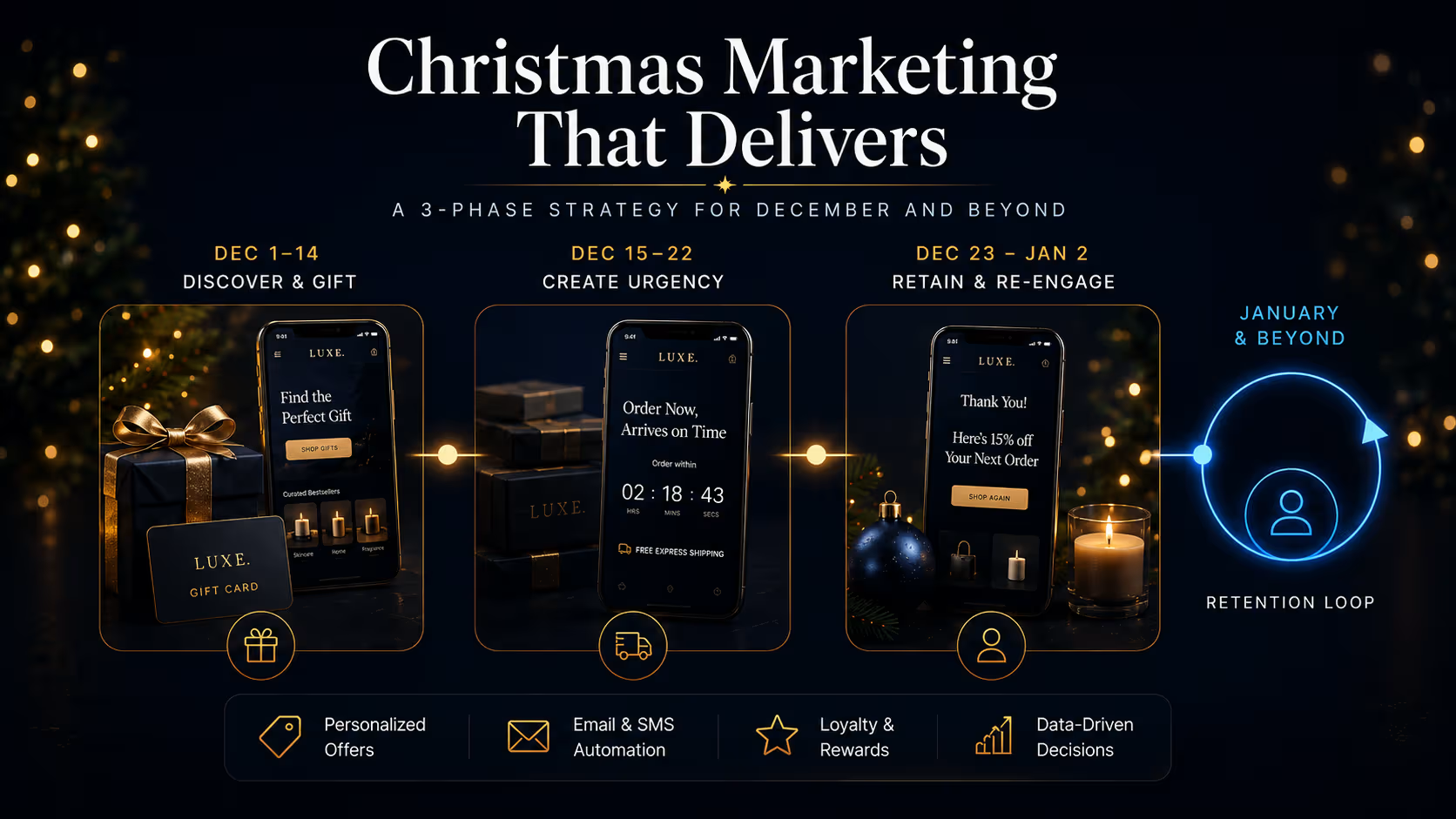
That's not a creative problem, rather a structure problem. Most Shopify brands run December as a single extended campaign when it's actually three distinct buying windows, each with different shopper psychology, different optimal channels, and different jobs for your marketing to do. Brands that treat it as one long sprint tend to peak early and then trail off. However, brands that plan in stages tend to convert better, spend less on acquisition in the back half of the month, and go into January with a retention engine already running.
This guide breaks down how to build a Christmas marketing strategy around the way shoppers actually behave in December, with the channel and tactic decisions that compound across the full window, including what to do after Christmas Day, which is the most under-marketed moment of the entire season. For the full-year view, start with Appbrew's 2026 ecommerce holiday marketing calendar for US.
TL;DR
- Christmas ecommerce success comes from treating December as three distinct shopping windows, each with different customer intent, messaging, and channel priorities.
- The most profitable Shopify brands view Christmas as both an acquisition opportunity and a retention engine, planning January campaigns before December begins.
- Mobile commerce dominates the holiday season, with 66.5% of Christmas Day online sales occurring on smartphones, making mobile optimization critical.
- Owned channels like email and push notifications outperform paid media during December because they avoid rising holiday advertising costs and inbox competition.
- Early December shoppers respond best to gift guides, product discovery content, and AI-friendly product pages, while mid-December buyers prioritize shipping certainty and convenience.
- The Dec 23–Jan 2 period is one of the most overlooked revenue opportunities, driven by gift cards, Christmas Day shopping, exchanges, and post-holiday purchasing.
- Push notifications and mobile apps create a structural advantage during peak holiday periods by enabling real-time personalization, browse-based targeting, and direct customer access.
- The highest-LTV holiday customers are those who make a second purchase within 90 days, making January retention campaigns as important as December acquisition efforts.
Why Most Christmas Marketing Campaigns Underperform
The standard playbook, gift guide in week one, urgency in week two, last-shipping-day panic in week three, works fine as a skeleton. However, the problem is that most brands run it on channels that are fighting every other brand for the same attention, at the highest CPCs of the year, with generic creative that doesn't account for where shoppers actually are in their decision process.
There's a second problem: most brands treat Christmas as an acquisition event and January as a hangover, but the math doesn't hold up. At a $60 CAC and a 40% gross margin on a $90 AOV, you're earning $36 against $60 in acquisition cost. This means you're running at a loss on every first-time December buyer who doesn't come back. The brands that actually win December are the ones who plan the 90-day retention arc before the month starts, not after it ends.
This article is built around both problems: getting the campaigns right in December, and turning those campaigns into a January retention machine.
Start With Channel Architecture, Not Campaign Ideas
Before planning a single creative asset, audit where your December traffic lands. If 60%+ of your sessions are mobile, campaigns need to be built for that context.
For context on how significant this gap is, mobile drove 56.4% of all ecommerce transactions in the 2025 holiday season, up from 54.5% the year before. On Christmas Day, that figure was 66.5%. Shoppers are on their phones, browsing between meals, queuing at airports, half-watching television. A landing page that doesn't load cleanly on a 4G connection, or a checkout flow designed for a trackpad, will lose conversions that no coupon code can recover.
The channel priority question for Christmas campaigns looks like this:
|
Channel |
Cost in December |
Reach |
Key Strength |
|
Paid social / search |
High (CPCs spike 40–60% vs. October) |
Broad |
New customer acquisition |
|
|
Low |
Owned list only |
Volume and segmentation |
|
Push notifications |
Near-zero |
Opted-in app users |
Immediacy, personalization |
|
SEO / organic |
Near-zero |
Ambient search traffic |
Gift guide and early-window discovery |
|
Social commerce (TikTok Shop, Instagram Shopping) |
Medium |
Social-native audiences |
Discovery-to-checkout in one session |
The brands with the strongest December margins are generally shifting budget toward channels they own outright, specifically email and app push notifications, during the window when renting attention on paid platforms costs the most. Segmented push notification campaigns deliver 16.3% open rates versus 4.7% for generic campaigns, compared to 2–3% for generic promotional emails. In mid-December, when every inbox is saturated, this difference becomes structural rather than marginal.
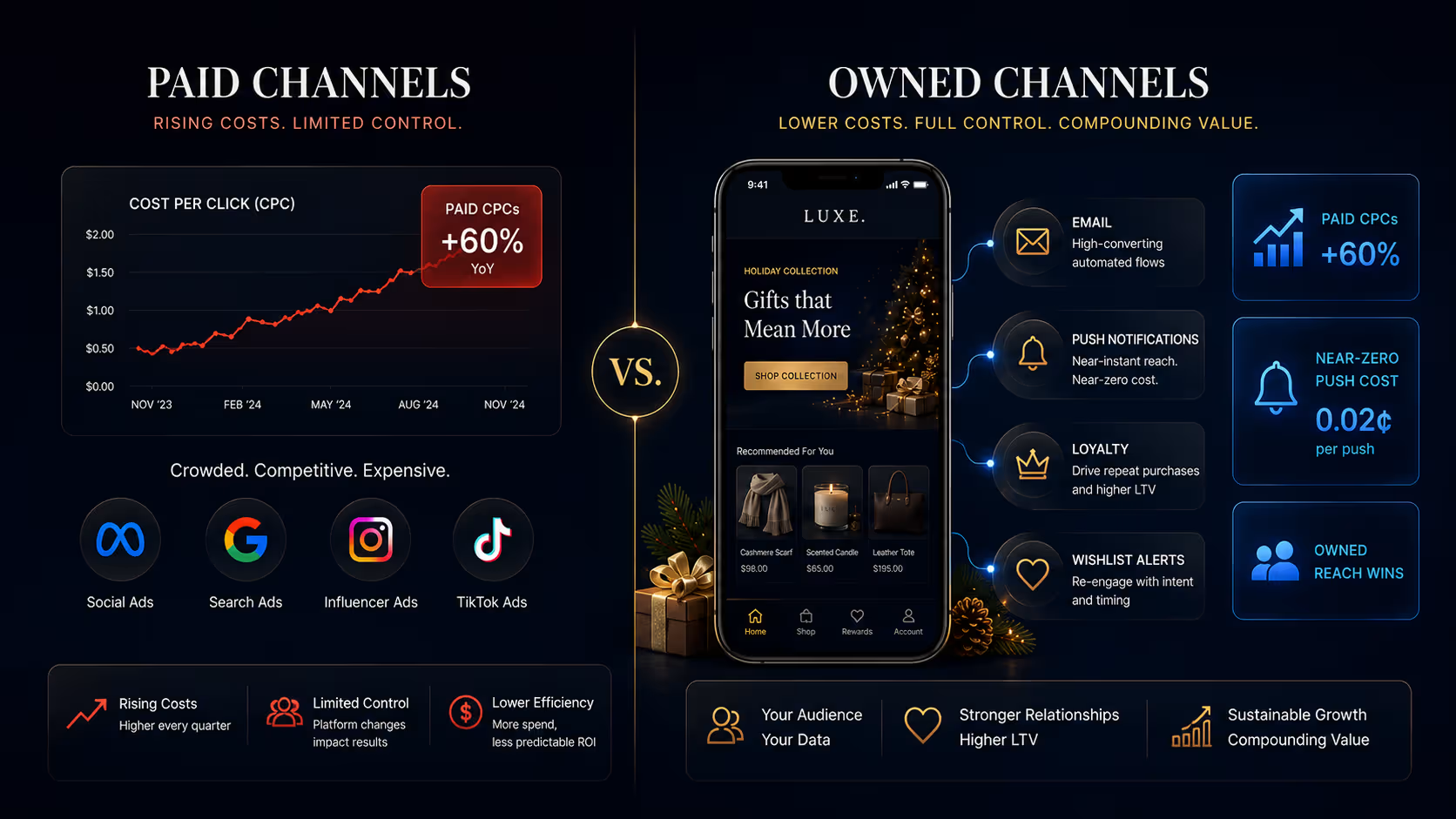
A branded mobile app is the only channel where you can reach an opted-in, high-intent audience with a personalized message on the day of your choosing, at a cost that doesn't spike because every other brand is also running Christmas campaigns.
{{cta}}
The Three Buying Windows in December (and How to Approach Each One)
Window 1: Early December (Dec 1-14)
Shoppers in the first two weeks of December are planners. They have time to compare, read reviews, and sit on a decision. Urgency messaging doesn't work here because it doesn't match where they are psychologically. Your job in this window is to be the obvious choice before the consideration phase closes.
Gift guides earn their traffic in this window; the ones that do are not broad "gifts for her" roundups, but specific-context guides. For instance, “gifts for the person who has everything”, “gifts under £50 for a coworker”, “gifts for the skincare-obsessed”, etc. The more precise the angle, the more useful the guide, and the more likely it is to surface in search and get shared. Early December is also your lowest-cost window for paid retargeting. Run traffic without conversion pressure to warm audiences you'll close in the back half of the month.
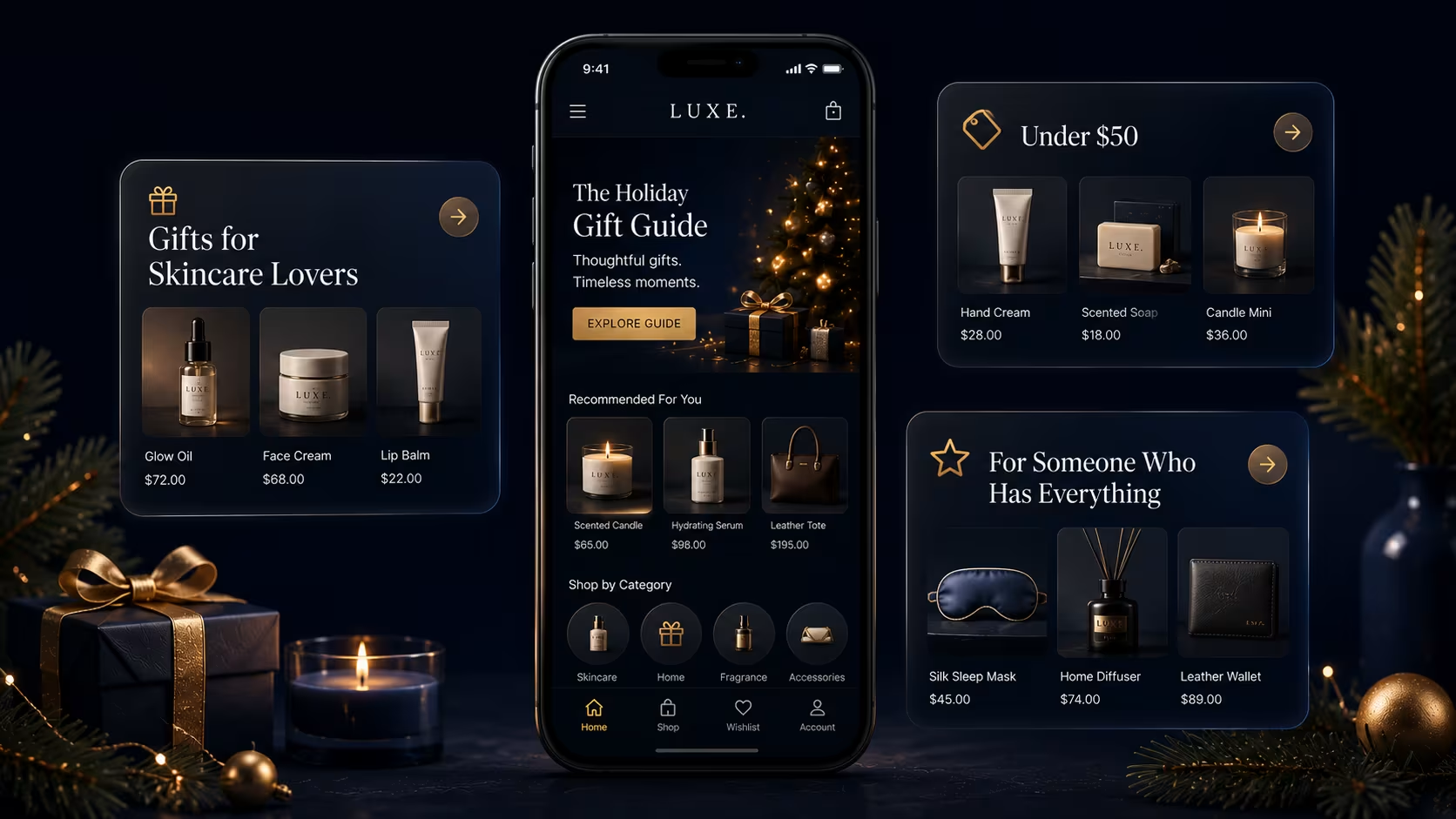
In the 2025 holiday season, AI tools influenced 20% of global holiday retail sales, and traffic from AI sources to retail sites rose 693% year-over-year. Shoppers are asking ChatGPT, Gemini, and Perplexity for gift ideas, and the products that get surfaced are the ones with strong structured data, detailed product descriptions, and recent review velocity. If your product pages are thin, the early December window is when that gap hurts you most, before the late-window urgency makes people buy without researching.
Window 2: Mid-December Crunch (Dec 15–22)
This is the highest-intent, highest-cost window of the year. Shoppers who didn't buy early are now searching with urgency, and the most powerful CTA in ecommerce is not a discount. It is a shipping guarantee.
Brands that are specific about shipping cutoffs by carrier and delivery type consistently outperform brands that use generic urgency language. For instance, "Standard shipping cutoff is December 19. Express available until December 22. Same-day available in selected postcodes until December 23" is a more useful message than "order now for Christmas delivery." Certainty converts where vagueness creates hesitation.
.avif)
Push notifications are the highest-leverage channel in this window. An app user who browsed a product category in the last 30 days and hasn't purchased is a high-value target for a personalized push: "Last chance for pre-Christmas delivery on [category] you've been looking at." The targeting does the creative work, while you just need the timing to be right.
BNPL surfacing matters here too. Buy Now Pay Later drove $20 billion in online holiday spend in 2025, up 9.8% year-over-year. In the mid-December crunch, a shopper deciding between a £180 item and a £95 item can be nudged upward with visible BNPL options at checkout. Shopify's native Shop Pay Instalments integrates without friction. The only question is whether you're surfacing it prominently in December or burying it in the payment step.
Window 3: Dec 23 to Jan 2 (The Underprogrammed Window)
Most brands go quiet in this period, assuming the shipping window has closed and the moment has passed. This is a mistake on almost every dimension.
Gift cards and digital products have no shipping cutoff, exchanges and returns create re-engagement moments that most brands completely ignore, and Christmas Day itself, which most brands treat as a dead zone, drove 66.5% of its online sales from smartphones in 2025. Someone is definitely shopping, be it people spending gift cards, people browsing between meals, or the people who bought nothing for themselves during the buying frenzy and are now treating themselves.
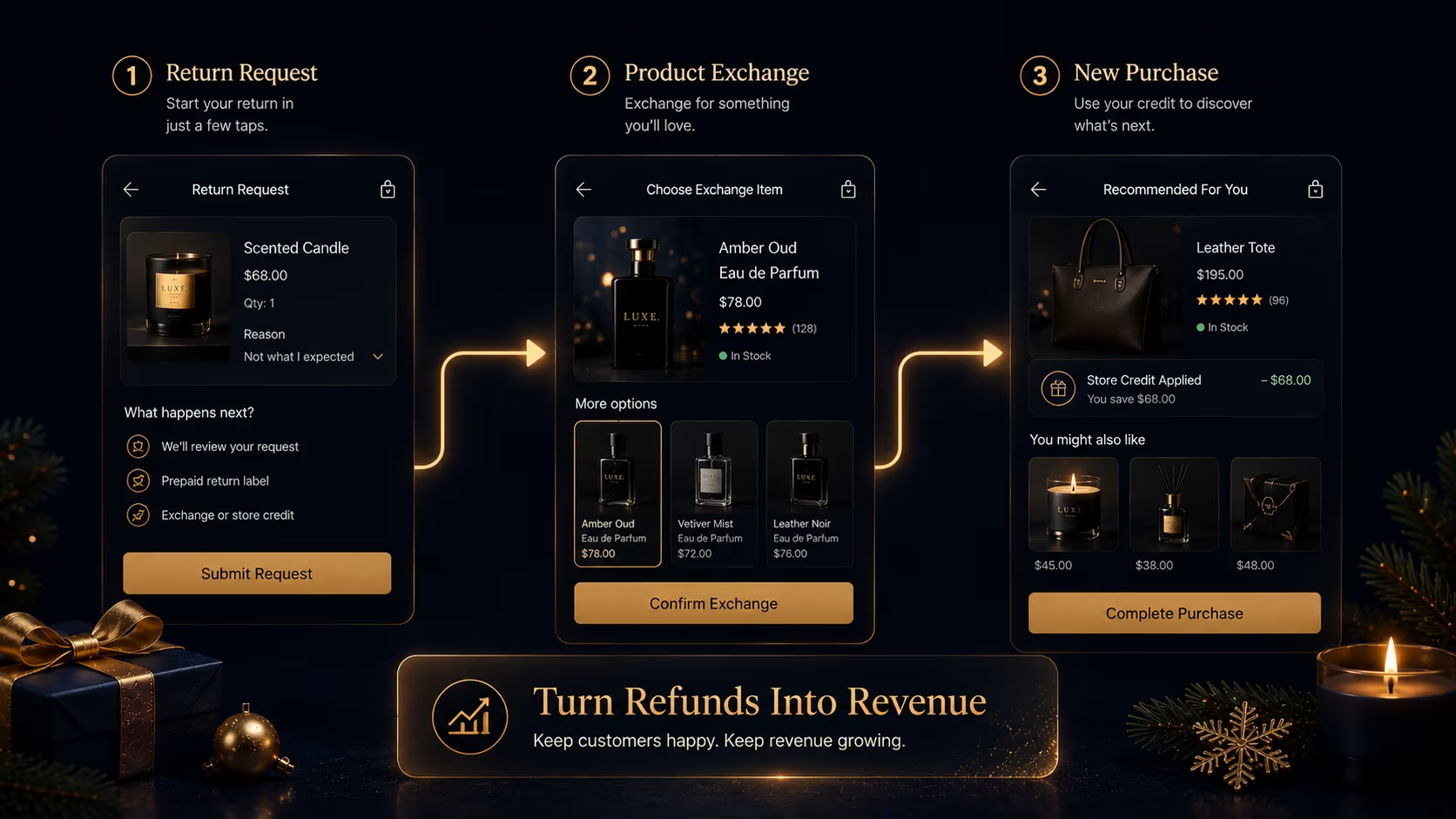
A single, low-pressure email or push on December 25th, something like "your wishlist is still there," costs nothing and lands in an inbox that is, for once, genuinely not flooded. The Dec 26 to Jan 2 return window is also the most contested moment in post-holiday marketing and the most underprepared. Returns were up 4.7% in the Dec 26 to Dec 31 period in 2025, and one in every seven returns for the entire season happened in that six-day window. A returns-to-exchange flow built before Christmas doesn't just recover revenue, but it turns a transaction that would have ended in a refund into a second purchase.
December Marketing Ideas That Actually Differentiate
Most Christmas marketing advice covers the same ground: send a gift guide, add a countdown timer, create urgency with a shipping deadline. These are not wrong, but they're table stakes. The brands that build separation in December do it with the things most brands skip.
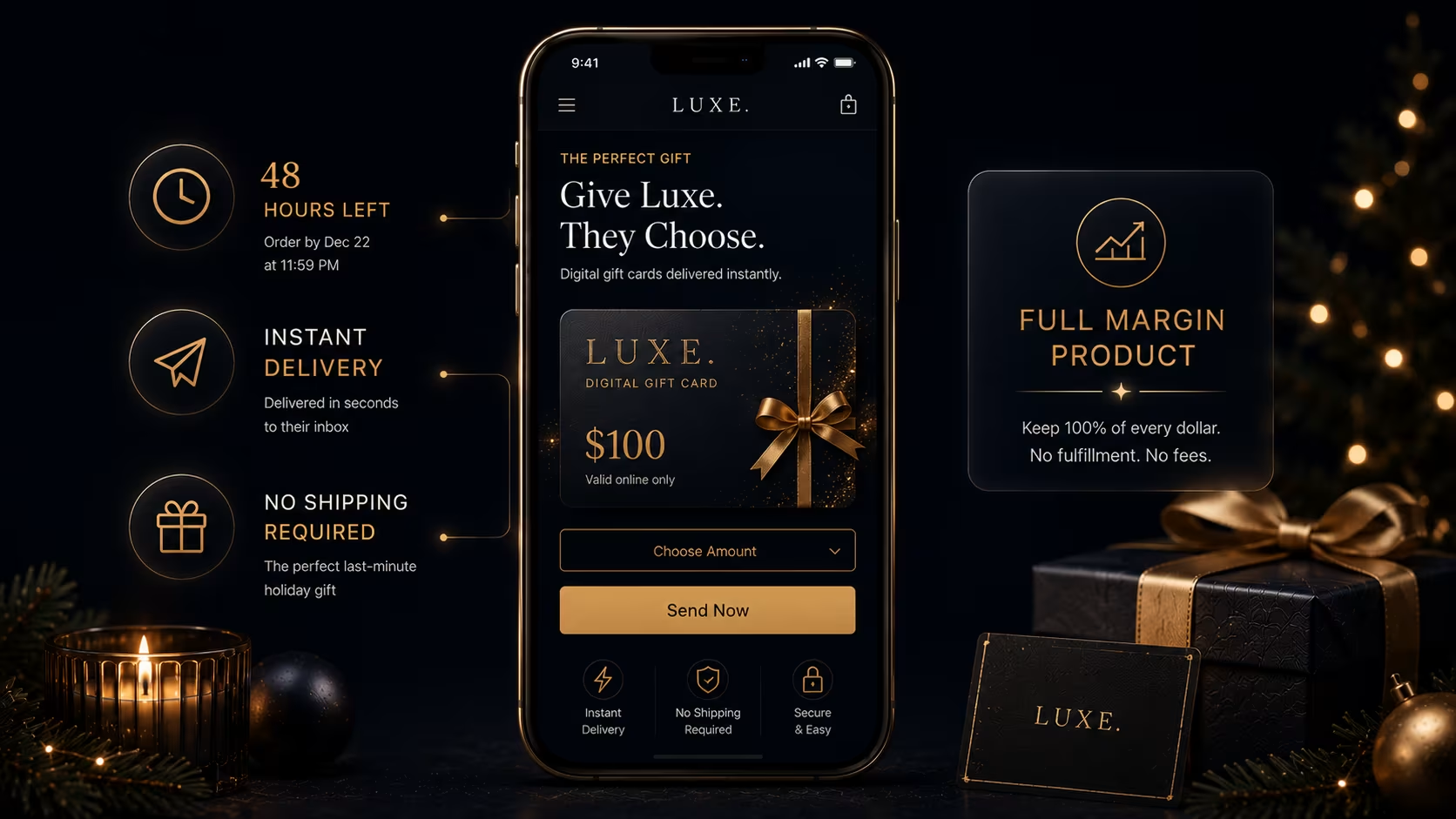
The 48-Hour Gift Card Push
Most brands treat gift cards as a fallback for people who couldn't think of something better. The reframe: they're a zero-inventory, zero-logistics, full-margin product with a 48-hour window where they outperform every other SKU. In the Dec 23 to 24 window, email your list with a single-product campaign, a beautifully presented digital gift card that lands instantly. The copy angle isn't "run out of ideas?" It's "give them exactly what they want." Brands that push this hard in the final 48 hours consistently see gift card campaigns outperform all other campaigns on a per-email basis during those two days.
Christmas Day Re-Engagement
Almost no brands engage customers on December 25th with the assumption that nobody is shopping. The data, however, says otherwise: 66.5% of Christmas Day 2025 online sales came from smartphones. A single push notification or email on Christmas morning, timed for 10 am local time, with no urgency and no discount, just a quiet acknowledgment of the day and a link to something the recipient might love, is one of the lowest-competition marketing moments of the year.
The Inventory-Honesty Email in January
The January clearance sale is a cliché. Every brand runs one, the copy is identical, and shoppers in early January have already been conditioned to scroll past it. The reframe isn't about the discount depth, it's about the framing. There's a meaningful difference between "50% off selected lines" and "we overestimated demand on this colorway, here's why, and here's what we're doing with the overstock." The first reads like noise, while the second reads like a brand genuinely talking to a customer rather than broadcasting at one. Post-holiday is the one window where buyer skepticism is at its peak and authenticity signals actually cut through, because so few brands bother with them when they're just trying to clear inventory.
Resolution Positioning Without the Clichés
January new year marketing campaigns run almost entirely on "new year, new you" energy, which means every brand is running the same message to the same person at the same time. The brands that cut through connect their product to a specific behavior rather than the resolution itself. For instance, not "start your wellness journey in 2026", rather "most people abandon fitness goals by January 19. Here's the gear that makes the first two weeks actually sustainable." Instead of being generic, this kind of messaging is specific, practical, even slightly inconvenient in its honesty. That's the tone that earns attention in January.
The Channel That Changes Your December Economics
There's a structural reason owned channels outperform paid in December. CPCs on Google and Meta spike sharply during the holiday window as every brand increases ad spend simultaneously, while the cost of reaching your own app users with a push notification remains the same whether you send on October 15th or December 20th.
This asymmetry compounds over time. An app user who has opted into push notifications is a qualitatively different audience from a general email subscriber. They downloaded your app, went through the permission flow, and said yes to direct access. Reaching them in the mid-December crunch window with a message personalized to their browse history, at no incremental media cost, while every competitor is spending 60% more per click to reach cold audiences, is a compounding structural advantage.
Brands on Appbrew's mobile platform see exactly this during peak periods. Minimalist, a Shopify Plus skincare brand, saw their app's share of DTC sales grow from under 5% to 30–40% after switching to Appbrew, with conversion rates doubling compared to mobile web. That's the compounding effect of an owned channel. The app doesn't just perform during peak windows, it grows its share of revenue the longer it runs.
The practical question for Shopify brands thinking about Christmas is whether you have a channel you own that lets you reach high-intent mobile users at the exact moment they're ready to buy, without paying peak December rates to rent that attention? If the answer is no, that's the gap.
{{cta2}}
New Year Marketing Campaigns: The Retention Frame
Most brands plan their January campaigns as a separate thing: a fresh start, a new message, a new target audience. The problem with that framing is it ignores the most valuable audience you already have, the people who just bought from you in December.
Here's the number that should anchor your January planning: customers who make a second purchase within 90 days of their first have 3 to 5x higher LTV than one-time buyers. A customer acquired on December 15th needs to be retained by March 15th, which covers your entire January and February. This means your new year campaigns aren't really about acquiring new customers, instead about converting your December buyers into repeat ones before that 90-day clock runs out.
Most brands don't have a plan for this. They have a welcome flow, and then those customers fall into the general broadcast list alongside everyone else. The brands with the strongest January numbers do something different: they treat December buyers as a named segment with their own dedicated sequence. Day 7 is a product education email. Day 30 is a replenishment or upsell nudge personalized to what they bought. Day 60 is a loyalty offer specifically for someone who paid full price in December and hasn't come back yet.
|
Retention Stage |
Timing |
Channel |
Angle |
|
Post-purchase welcome |
Dec 15 to Jan 7 (day 0) |
Email + push |
Confirm the purchase, set expectations |
|
Product education |
Day 7–14 |
|
Get more from what they bought |
|
Replenishment or upsell |
Day 30 |
Email + push |
Personalized to the category they bought in |
|
Loyalty offer |
Day 60 |
|
Reward for coming back before the 90-day window closes |
|
Win-back |
Day 85–90 |
Push + email |
Final re-engagement before the high-LTV window closes |
The paid media case for this is just as strong. Lookalike audiences built from repeat purchasers, not all customers, are meaningfully more efficient than broad prospecting audiences in January. Your December buyers are the seed data for that. Running your January ads against a cold audience while ignoring the warm one you just spent December building is the most common and most expensive mistake in post-holiday marketing. And once the 90-day window closes, your next major acquisition moment is Valentine's Day. The brands with the strongest February numbers are the ones who built the retention habit in January.
Your December-to-January Campaign Calendar
|
Date Range |
Primary Focus |
Channel Priority |
|
Dec 1–10 |
Gift guides, product discovery, audience building |
SEO content, email, paid social |
|
Dec 11–18 |
Urgency-based conversion, shipping cutoffs |
Email, push notifications, retargeting |
|
Dec 19–22 |
Express shipping push, BNPL surfacing, digital gift cards |
Email, push, homepage banner |
|
Dec 23–25 |
Gift card campaigns, Christmas Day re-engagement |
Push notifications, email |
|
Dec 26–31 |
Post-holiday re-engagement, returns-to-exchange, New Year teaser |
Email, push, retargeting |
|
Jan 1–7 |
New Year positioning, resolution marketing |
Email, push, paid retargeting |
|
Jan 8–31 |
90-day retention arc for December buyers, inventory clearance |
Email, push, loyalty flows |
The brands that outperform across this calendar plan it as a continuous arc, not a series of standalone campaigns. The customer who opened your Dec 8 gift guide email and the customer who gets your Jan 15 "have you tried X yet?" push notification should be having a coherent brand conversation, not receiving disconnected promotions that could have come from different companies.
Ready to see what a native Shopify mobile app could do for your December channel strategy and owned-channel reach? Book a demo with Appbrew →
Frequently Asked Questions
When should I start my Christmas marketing campaign in 2026?
Late November, right after BFCM, is when Christmas-specific campaigns should begin. Early December (Dec 1–10) is for consideration-stage content like gift guides and warm audiences. Conversion-pressure campaigns with shipping deadlines belong in the Dec 15–22 window. Starting urgency messaging too early dilutes it precisely when it needs to work hardest.
How do I get my products recommended by AI gift tools like ChatGPT or Gemini?
AI gift finders surface products based on structured data, review volume, and how well your product content matches a described need. Practically: use detailed, specific product titles and descriptions (not generic category names), ensure your reviews are current and numerous, add product schema markup to your pages, and consider whether your brand appears in editorial gift guides that AI tools reference. This is organic SEO work, with an AI-surfacing lens applied.
What's the best channel for Christmas campaigns on Shopify?
There isn't a single best channel, but the highest-leverage owned channel in December is push notifications via a branded mobile app. CPCs on paid platforms spike significantly during the holiday window. Email is high-volume but competing with every other brand in the inbox. Push reaches an opted-in audience at a cost that doesn't change with the season. The combination of email for volume and push for immediacy and personalization generally outperforms either alone.
How should New Year marketing campaigns differ from Christmas campaigns?
Christmas campaigns are acquisition-heavy: you're reaching shoppers actively looking to buy. New Year campaigns should be retention-heavy: the audience that matters most is the holiday buyers you just acquired. Resolution-based positioning works for new customer acquisition, but the higher-ROI play in January is getting your December buyers to return before the 90-day retention window closes.
Is a gift card campaign worth running in December?
Yes, specifically in the Dec 22–24 window when standard shipping cutoffs have passed. Gift cards are zero-inventory, zero-logistics, and full-margin. Positioned well, not as a fallback but as the intentional gift, they convert strongly in the final 48 hours. Digital gift cards can be purchased and sent in under a minute, which matches exactly how a last-minute gifter on Christmas Eve is actually behaving.
What December marketing ideas actually differentiate DTC brands on Shopify?
The underused ones: personalized push notifications tied to browse history rather than generic holiday blasts, Christmas Day re-engagement campaigns when inbox competition is near-zero, inventory-transparency emails in January that earn authenticity rather than performing it, and a structured post-purchase retention sequence for first-time December buyers instead of just adding them to the general list.