.webp)

An ecommerce mobile app is a retention channel, not a smaller website. Learn how they work, which features move revenue, what they cost, and if you need one.
Mobile drives roughly three-quarters of ecommerce site traffic (Statista), and eMarketer projects US mobile commerce will reach about $728 billion in 2026, close to 44% of all US ecommerce sales.
Your mobile website captures some of that demand. Then the shopper closes the tab, and you lose the thread until the next paid impression brings them back.
An ecommerce mobile app is a branded iOS or Android application through which customers discover products, buy, manage orders and stay connected to a retailer. Unlike a mobile website, it supports persistent customer identity, native push notifications, mobile-wallet checkout and app-specific shopping experiences.
In this article, we explain how ecommerce mobile apps work, which features affect commercial performance, how they compare with mobile websites and PWAs, what they cost, and how to tell whether your brand is ready for one.
Key Insights
- An ecommerce mobile app is a customer-facing iOS or Android shopping application connected to the brand's ecommerce operation. It is not the same as merchant-side "ecommerce apps" like marketing or inventory tools.
- A native app offers capabilities a mobile website cannot deliver consistently, including persistent login, full push-notification support and deeper device integrations. Users who received a push notification in their first 90 days had roughly 3x higher app retention (Airship study of 63 million users across 1,500 apps).
- Apps make the strongest commercial case for brands with meaningful mobile traffic and repeat-purchase potential, not for every store.
- Features should be prioritized by the metric they move: product discovery, checkout completion, average order value, retention or lifetime value.
- Brands can build through an internal team, an agency or a specialized mobile commerce platform like Appbrew, with different tradeoffs in cost, speed and control.
What is an ecommerce mobile app?
An ecommerce mobile app is a branded application, downloaded from Apple's App Store or Google Play, that lets customers browse products, buy them, track orders and manage their account with a specific retailer. It connects to the brand's ecommerce backend so products, prices, inventory, customers and orders stay in sync, and it layers on engagement functions the browser cannot match.
Think of it as the customer-facing mobile front of your store, running on the same commerce data as your website. Product information, pricing and stock levels sync from your backend rather than living separately inside the app.
The customer moves through familiar journeys:
- Home and collections
- Search
- Product detail page
- Cart and checkout
- Account
On top of those journeys sit the functions that make an app worth installing: push notifications, loyalty, subscriptions and post-purchase order tracking.
For Shopify brands, the app should read from Shopify as the source of truth. That keeps a single catalog, one set of prices and one customer record across web and app, which matters the moment you run a promotion or launch a product across both. For a deeper look at how these builds come together, see Shopify mobile app development.
Is an ecommerce app just a mobile website?
No. A basic app can reproduce your website's journeys screen for screen, and a bad one does exactly that.
The commercial value comes from what the installed environment adds:
- Persistent customer identity, so shoppers stay logged in
- Faster repeat access from the home screen
- Native push
- Device-level features and stored preferences
- App-specific merchandising
- Richer event data
A mobile website resets much of that every session. An app carries it forward.
How does an ecommerce mobile application work?
An ecommerce mobile application works as the customer-facing mobile layer sitting on top of your commerce backend and your marketing stack. It pulls catalog and customer data from your store, renders phone-first shopping journeys, adds engagement tools like push and loyalty, and feeds behavioral events back into analytics and attribution.
We call this the four layers of an ecommerce mobile app.
1. Commerce backend
This is your source of truth: product information, inventory, pricing, discounts, customer accounts and orders.
For Shopify brands, the app should synchronize with these records in real time rather than maintaining a separate copy. One catalog, one price, one customer record. When merchandising or a flash sale changes on Shopify, the app reflects it without manual re-entry.
2. Mobile storefront
The screens the customer actually touches: homepage, collections, search, product detail page, cart, checkout and account.
The mistake here is copying the desktop web layout onto a smaller screen. Phone shopping has different ergonomics, thumb reach, scroll behavior and attention span. These journeys should be designed for the device, not shrunk to fit it.
3. Engagement and retention layer
This is where an app earns its keep. Push notifications, deep links, loyalty, subscriptions, app-exclusive offers, order tracking, returns and exchanges all live here.
These functions give a customer reasons to come back that a mobile website struggles to deliver, and they connect a marketing message directly to the exact product screen it references.
Push performance depends heavily on the app being able to identify who it is talking to, which is why Shopify app push notifications work better inside a logged-in app than through a browser.
4. Analytics and attribution layer
Every meaningful action becomes a measurable event: installs, sessions, product views, add-to-cart, checkout, purchases, push engagement, uninstalls and campaign attribution.
This is the layer most generic app projects underbuild, and it is the one that tells you whether the channel is working. Well-instrumented mobile app analytics let you compare app cohorts against your mobile-web baseline instead of guessing.
Holding the four layers together is the connective tissue between the app and the rest of your stack: Shopify, plus search, reviews, loyalty, subscription and attribution tools. On Appbrew, that runs through native Shopify integrations so the app plugs into what you already use.
Types of ecommerce applications
Ecommerce applications fall into a handful of models depending on who sells to whom and how often people buy. The distinction matters because the model dictates which features carry weight. A replenishment brand lives or dies on subscription management; a marketplace lives on multi-seller search.
- Branded B2C shopping app is the default for DTC.
- Subscription app suits anything with a replenishment rhythm. A customer who resupplies every 30 days is exactly the kind of buyer an app keeps engaged.
- Omnichannel app suits brands with physical retail, where the app connects store loyalty to mobile commerce.

Mixology is a useful omnichannel example. Its app produced 2x the conversion rate of its mobile website, 50% higher average order value and 3x the engagement, largely by tying in-store loyalty to a mobile shopping experience. The full breakdown is in Mixology's omnichannel mobile app case study.
Ecommerce mobile app vs mobile website vs PWA
No format is universally best. The right choice depends on how you acquire customers, how often they repurchase, which device capabilities you need and whether you can realistically drive app installs.
A mobile website wins on reach, because anyone can land on it. A native app wins on conversion and retention among installed customers. A progressive web app (PWA) sits in between.
A native ecommerce app is an application built to run directly on iOS and Android, with full access to push, device features and the app store. A PWA is a website that behaves like an app in the browser and can be saved to the home screen, without full native capabilities.
When a mobile website is enough
Sometimes it is. Keep investing in the mobile web, not an app, when:
- Purchase frequency is low
- The returning-customer base is thin
- The brand is still finding product-market fit
- Mobile traffic is small
- There is no plan to promote installs
- The product has a very long repurchase cycle
In those cases an app collects downloads and little else.
When a native app becomes commercially useful
The math changes when a brand has:
- High mobile traffic
- Frequent repeat purchases and product drops
- An active loyalty or subscription program
- Rising SMS or retargeting costs
- A need for persistent customer profiles and advanced mobile personalization
These are the conditions under which an installed audience compounds.
For the format comparison in depth, see Shopify mobile app versus mobile website. The trade-offs specific to progressive web apps are covered in PWA versus native mobile app.
Why do ecommerce brands build mobile apps?
Brands build apps to own a direct, repeatable relationship with their best customers. The mechanism is not "apps convert better" in the abstract.
It is that an app does three things a browser session cannot:
- Removes friction for returning shoppers
- Creates a re-entry channel that does not depend on paid impressions
- Captures first-party behavioral data a browser session throws away
Here is how each of those works.
Reduce friction for returning shoppers
A returning shopper on your mobile website often re-authenticates, re-enters payment details and re-navigates from scratch. In an app, persistent login, saved preferences, stored addresses and mobile wallets collapse that into a few taps.
Digital wallets already account for about half of global ecommerce transaction value and are projected near 54% by 2026 (Worldpay Global Payments Report). The app is where Apple Pay and Google Pay do the most work, because the customer is identified before checkout even begins.
This does not mean an app always converts better. It means the conversion advantage shows up specifically for identified, returning buyers.
Create a direct re-entry channel
Push notifications give you a route back to the customer that email deliverability and SMS costs do not. They carry:
- Abandoned-cart recovery
- Back-in-stock alerts
- Product launches and early access
- Order updates
- Replenishment reminders
- Win-back campaigns
Push has no per-message charge the way SMS does, so the constraint is relevance, not budget.
Get it right and the retention effect is large. Airship's study of 63 million users across 1,500 apps found roughly 3x higher retention among users who received a push in their first 90 days.
Reduce dependence on paid customer reacquisition
Paid acquisition should be doing one job: bringing in new customers.
When you also pay to retarget existing customers through Meta and Google, you are buying back an audience you already earned, which quietly raises the real cost of repeat revenue. An installed app gives those customers a way back that does not require a paid impression for every visit.
The full economics are in reduce ecommerce CAC with a mobile app.
Increase repeat purchase and customer lifetime value
This is where loyalty redemption, subscription management, app-only product access, replenishment prompts, personalized merchandising and post-purchase service compound. Each one gives a customer a reason to open the app that has nothing to do with a discount.
Our ecommerce retention strategies guide covers these flows in detail.
Improve customer identification and behavioral data
A logged-in app produces a continuous customer profile: cross-session behavior, product and search events, push engagement, even uninstall signals and clean campaign attribution. A browser session, by contrast, resets and fragments.
The difference in data quality is the subject of mobile app versus website customer data.
Across 250+ Shopify brands, Appbrew first-party data shows app buyers outperforming mobile web on every core metric:
- 3x the conversion rate
- 1.2x the average order value
- 6x the customer lifetime value
- 10x the session time
If you want to see what those mechanics look like on your own catalog before committing to anything, book a demo with Appbrew to build a free mockup of your store as a mobile app.
{{cta}}
Ecommerce mobile app features that affect revenue and retention
Feature selection should start with the customer or commercial problem you are solving, not the longest feature list a vendor can show you. A feature earns its place when it moves a specific metric: discovery, checkout completion, average order value, retention or lifetime value.
Organized by funnel role, the landscape looks like this.
Discovery
- Mobile-first navigation
- Predictive search and filters
- Personalized product feeds
- Recently viewed
- Shoppable video
Conversion
- Persistent login and fast cart
- Apple Pay and Google Pay
- Product recommendations
- Bundles and gift with purchase
- Cart-progress incentives
Retention
- Segmented push
- Loyalty and referral rewards
- Subscription management
- Back-in-stock alerts
- App-exclusive drops
Post-purchase
- Order tracking and delivery notifications
- Returns, exchanges and cancellations
Measurement
- Event analytics and attribution
- Cohorts
- Uninstall tracking
- A/B testing
The point of grouping them this way is to force a question before you build anything: which number does this move? The table below maps common features to the friction they remove and the metric they affect.
For the full breakdown of which features to prioritize and why, see must-have ecommerce app features.
Ecommerce mobile app examples and what brands can learn
The best ecommerce mobile apps do more than shrink a website onto a smaller screen. They give customers a faster way to discover products, complete purchases, access loyalty benefits and return through relevant push.
For examples across the wider market, see our roundup of the best mobile apps for ecommerce.
The examples below are all Appbrew customers, chosen because the mechanism behind each result is visible, not just the headline number.
Kiyoko Beauty: design the app around product discovery
Kiyoko Beauty carries a large multi-brand beauty catalog, which is exactly the situation where discovery becomes the bottleneck. A shopper who cannot find the brand or product they want does not convert.
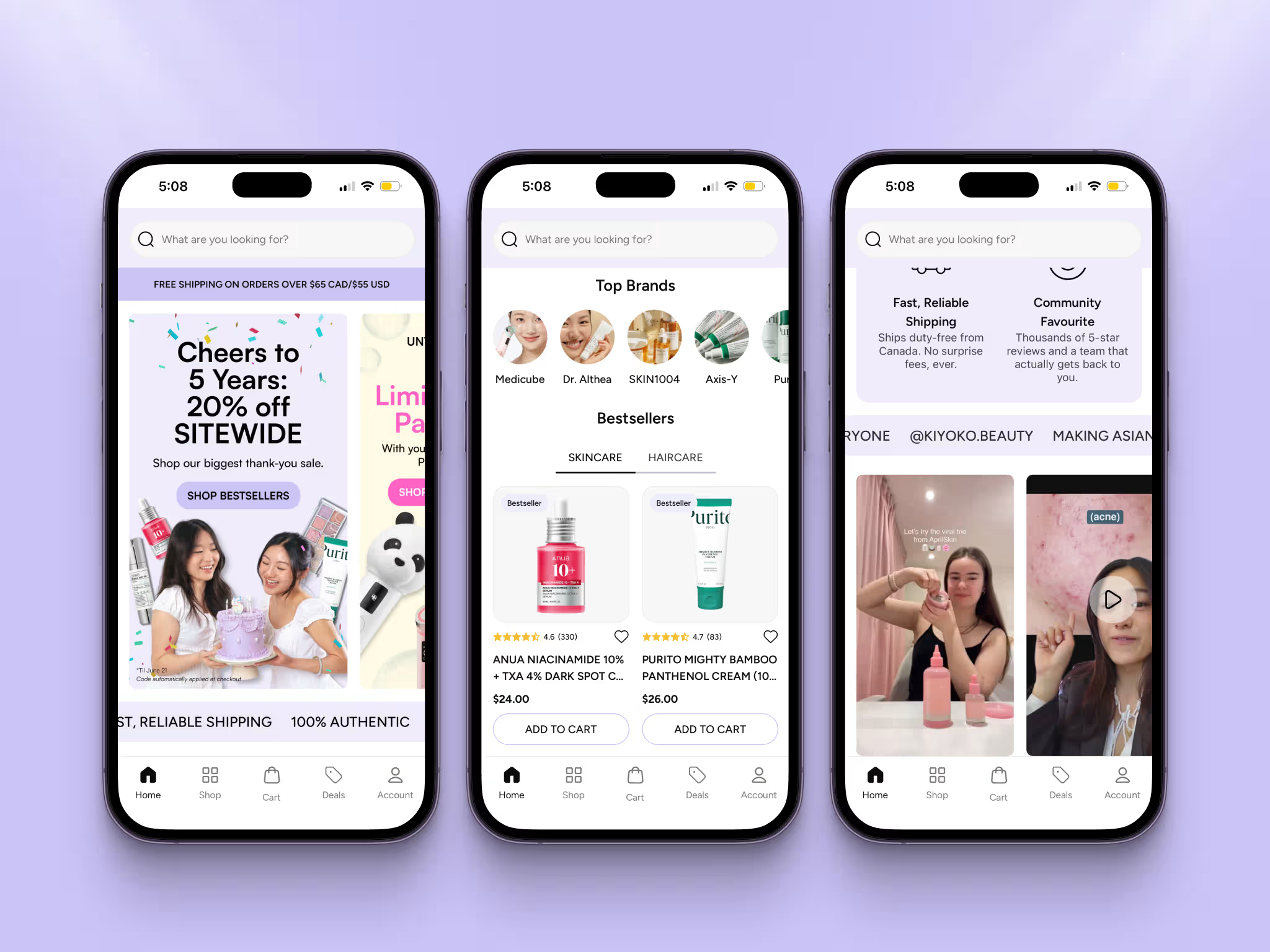
The app leads with a discovery-first homepage, a browsable brand directory, clear category navigation, product recommendations and multi-currency shopping, so a broad catalog stops feeling overwhelming.
The result:
- 60% higher conversion than web
- 7% higher average order value
- 21% of DTC revenue running through the app
The lesson for any large-catalog brand: the homepage should reduce discovery friction, not showcase everything at once. Details are in Kiyoko Beauty's mobile commerce strategy.
Mixology: connect offline loyalty with mobile commerce
Mixology runs physical retail alongside DTC, so its challenge was joining two customer experiences that usually stay separate.
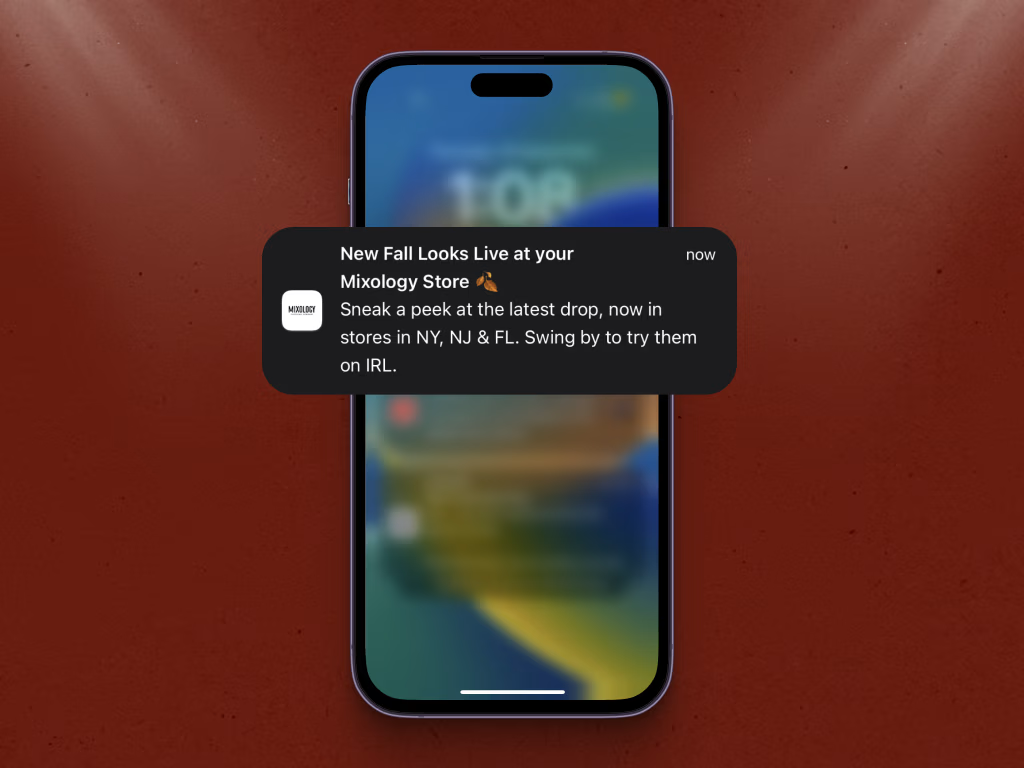
The app ties omnichannel loyalty to location-specific pushes, shoppable content and curated upsells, so a store customer and an app customer are treated as the same person. As noted earlier, that produced 2x conversion, 50% higher AOV and 3x engagement against mobile web.
The lesson: for retail brands, the app's job is to make loyalty portable between the store and the phone.
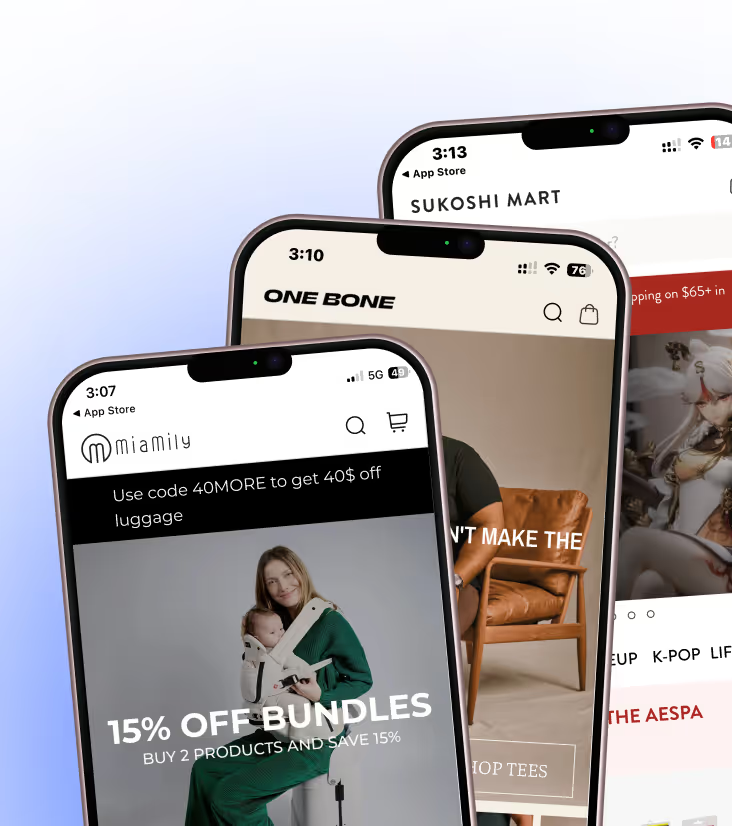
Sukoshi Mart: treat migration as a performance project
Sukoshi Mart moved off a previous app builder and treated the migration as a chance to fix performance, not just relaunch. The rebuilt app integrated search, reviews and loyalty, added deep links and multi-currency, and instrumented analytics properly from day one.
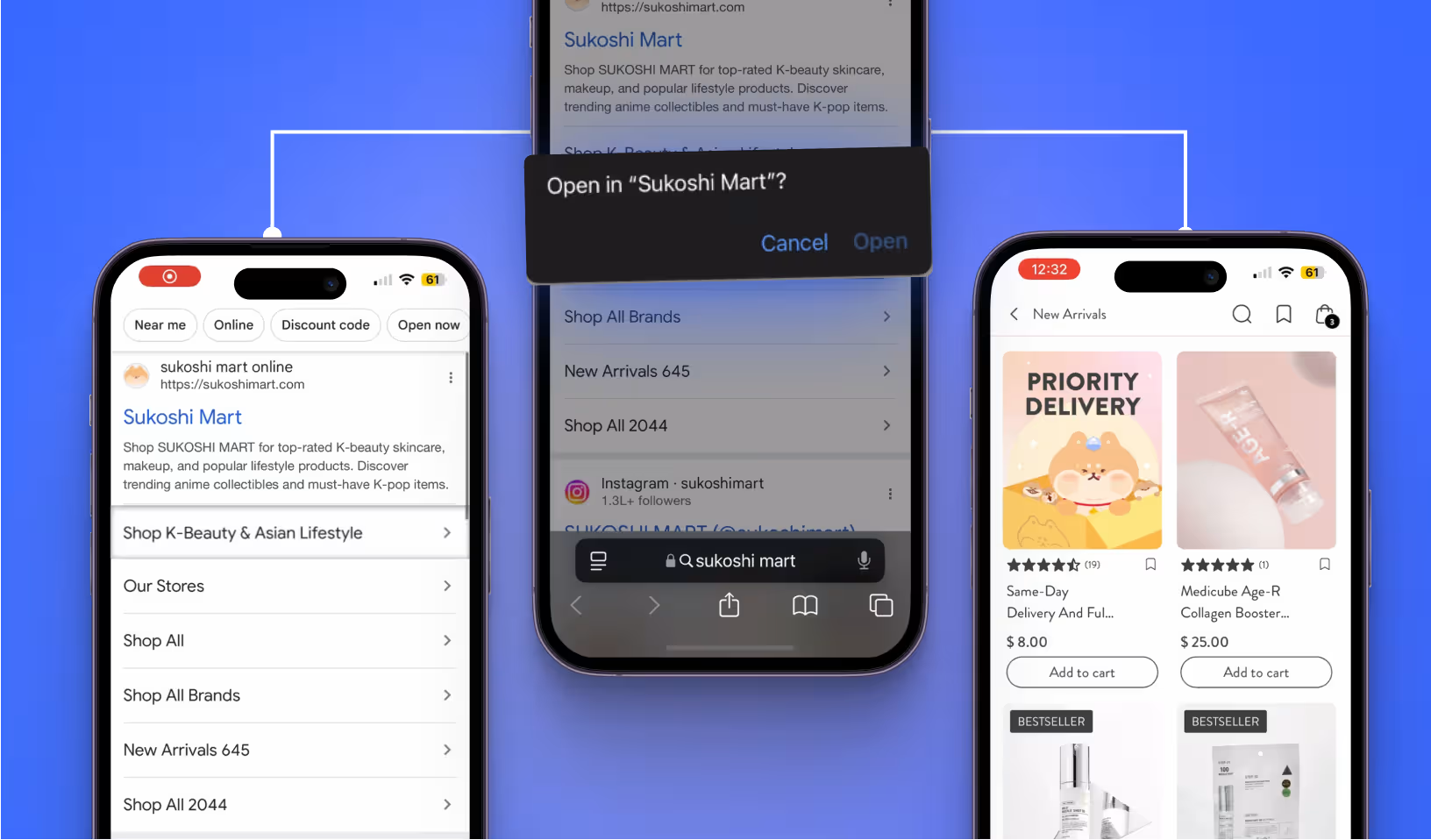
Measured app versus web:
- 3x conversion
- 40% of DTC contribution
- 22% higher AOV
The lesson: a migration is worth doing when it is scoped as a performance upgrade with clean measurement, not a like-for-like port.
Suta: support brand-specific commerce journeys
Suta needed shopping journeys its previous builder could not support. That included a custom Pre-Drape experience built around how its customers actually shop for sarees, plus loyalty, reviews and search integrations and branded product-page requirements.

The lesson here is different from the others: when your product needs a non-standard buying journey, a template-only builder becomes a ceiling, and a customizable app removes it. See Suta's mobile app migration for how the custom experience was built.
SUGAR Cosmetics: build promotions into the shopping experience
SUGAR Cosmetics sells in a category driven by launches, bundles and gifting. Its app builds promotion mechanics directly into the shopping experience: bundles, promotions, gifting and content-led beauty discovery, rather than bolting offers on as afterthoughts.
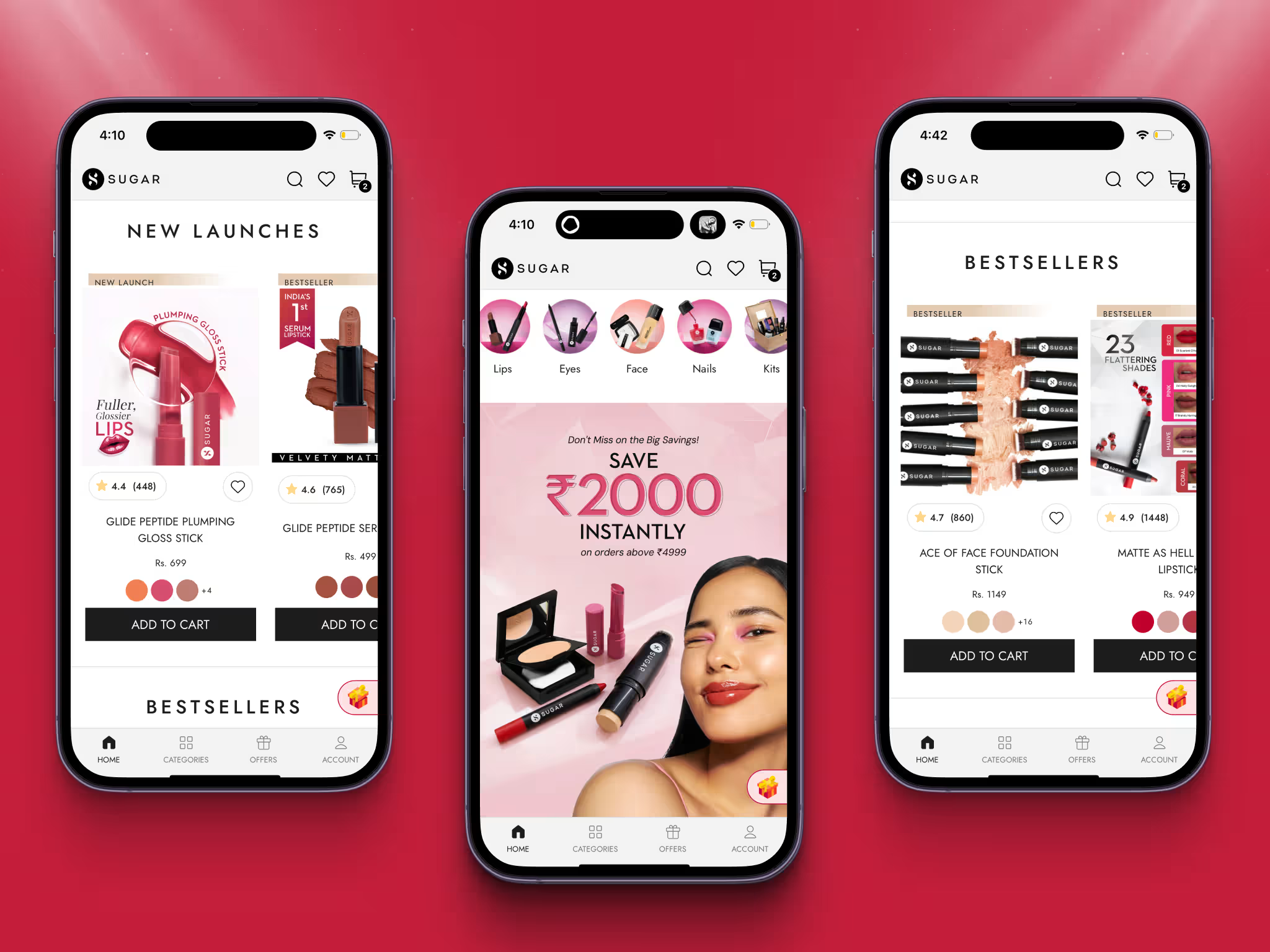
The lesson for beauty and other promotion-heavy categories: the merchandising engine and the promotion engine should be the same surface. The full write-up is in the SUGAR Cosmetics mobile app case study.
How much does an ecommerce mobile app cost?
Ecommerce mobile app cost varies primarily by build route, design requirements, integrations, platform coverage, ongoing maintenance and any custom functionality.
Beyond the route, the factors that move the number are:
- iOS and Android support
- Custom design
- The depth of your integrations
- Checkout, loyalty and subscriptions
- Analytics
- Ongoing maintenance and app-store submission
- Any custom workflows
A brand that needs a bespoke buying journey and five integrations will not pay what a wrapper build pays.
For a detailed breakdown, see the cost of building a Shopify mobile app. Platform pricing for the recurring-fee route is on the Appbrew pricing page.
Before you commit to any published cost estimate, confirm its source, geography, scope and date. Development-cost figures go stale fast and vary widely by market.
How do you build an ecommerce mobile app?
Building an ecommerce mobile app is a buyer's process before it is a developer's process. The brands that get value from an app decide what it is for, confirm they have an audience to move, and then build in sequence.
- Define the commercial objective. Pick one primary goal: conversion, repeat purchase, loyalty, subscription retention, app-exclusive launches, SMS-cost reduction or omnichannel engagement. An app built for everything is built for nothing.
- Assess app readiness. Review mobile traffic, returning-customer share, purchase frequency, loyalty strength, your ability to promote installs and whether someone internally will own the channel.
- Choose the build route. Compare an app platform, an agency, in-house development and a wrapper against the objective from step one.
- Map the current ecommerce stack. List what the app must connect to: Shopify, search, reviews, loyalty, subscriptions, CRM, customer support, attribution and returns.
- Design the core shopping journeys. Prioritize homepage, navigation, search, collection, product page, cart, checkout and account, designed for a phone rather than ported from desktop.
- Establish measurement before launch. Define your mobile-web baseline and your app events for conversion, AOV, repeat purchase, cohort retention and attribution, so you can prove the channel later.
- Test the app. Cover load speed, crashes, login, payments, discounts, deep links, push, inventory sync and app-store requirements.
- Drive adoption. Use website banners, email, SMS, post-purchase pages, packaging QR codes, loyalty benefits and app-only access to get installs from the traffic you already have.
- Optimize after launch. Watch funnel drop-offs, app versions, push frequency, product discovery, D7 and D30 cohorts and install-source quality.
The most common failure is skipping step six. A brand launches, gets downloads, and cannot say whether the app is actually beating mobile web because it never set a baseline. For the full process, see turn your Shopify store into a mobile app.
How should ecommerce brands measure mobile app performance?
App downloads tell you almost nothing about whether the channel works. What matters is the quality of the audience you acquired, how well it converts, whether it comes back, and how much it contributes to total revenue.
A useful measurement model separates four kinds of metric, so you are not reading an engagement number as if it were a revenue number.
Metric
Read these in four buckets:
- Engagement metrics (sessions, push opt-in) tell you the audience is reachable.
- Conversion metrics (app conversion rate, install-to-purchase rate) tell you it buys.
- Retention metrics (D7, D30, repeat purchase) tell you it comes back.
- Channel-economics metrics (revenue per user, app revenue contribution, LTV) tell you whether the channel deserves more investment.
Set expectations with the right benchmark. Install-to-purchase rate is the share of installed users who go on to buy, and it exposes whether an install source sends real customers or vanity downloads.
D7 retention is the share of a cohort still active seven days after install; D30 is the share still active after 30 days. Across categories, D30 retention sits around 5% to 7%, and ecommerce apps land near 4% to 5% (Adjust Mobile App Trends 2026 and AppsFlyer State of App Marketing 2025).
App revenue contribution, the app's share of total DTC revenue, is the single number that settles how seriously to treat the channel.
Does your ecommerce brand need a mobile app?
An app is most valuable when a brand has both an audience worth moving and a reason for customers to return. If either is missing, the app collects downloads and stalls.
The scorecard below is a fast way to gauge fit. Give yourself one point for each statement that is true.
Appbrew Ecommerce App Readiness Scorecard
- More than half of your customer traffic is mobile.
- Customers can reasonably purchase more than once.
- Returning customers contribute meaningful revenue.
- You run frequent launches, drops or promotions.
- Loyalty is strategically important to you.
- Subscriptions or replenishment are relevant to your catalog.
- SMS or paid retargeting costs are material.
- You have enough web, email or customer traffic to drive installs.
- Your mobile website has clear conversion or retention limits.
- Someone internally can own app merchandising and lifecycle campaigns.
How to read your score:
- 0 to 3 points: Fix the mobile website and retention fundamentals first. An app would not have enough to work with yet.
- 4 to 6 points: Build a financial case and test app-adoption potential before committing.
- 7 to 10 points: A mobile app deserves serious evaluation.
Treat this as Appbrew's editorial readiness framework, a structured way to think it through, not a statistically validated industry model.
Cases where a mobile app may not be the priority
An app is premature when:
- Customers buy once or very rarely
- Traffic is very low
- Brand recognition is weak
- There is no returning-customer base
- No one internally can own the channel
- Core ecommerce fundamentals are shaky
- There is no realistic path to drive installs
When you do reach the evaluation stage and want to compare vendors, best Shopify mobile app builders lay out the options by use case, price and platform.
How Appbrew helps Shopify brands build ecommerce mobile apps
For Shopify brands that have reached the point where mobile should become a dedicated revenue and retention channel, Appbrew provides the application layer, integrations and operating tools without requiring the brand to assemble an internal mobile product team.
Five things separate Appbrew from a template builder, in the order that tends to matter:
- Native performance architecture, so the app behaves like an app and not a wrapped website.
- AI on both sides, for the brand team and the shopper.
- A Shopify integration ecosystem that plugs into the tools you already run.
- Customization that goes past templates when your product needs a specific journey.
- A growth partnership that continues after launch rather than ending at handoff.
You can see the full set in Appbrew mobile app features, and the AI side is covered in the Milo AI app growth operator.
Conclusion
An ecommerce mobile app is not a smaller copy of your mobile website, and it is not a substitute for it. The website remains your widest net for acquisition and accessibility.
The app is the dedicated channel for your highest-intent, returning customers: the ones worth moving into an environment with persistent login, direct re-engagement and better data.
The business case rests on three things: repeat-purchase potential, the ability to drive installs from traffic you already have, and someone who will operate the app after launch. Where those exist, an app compounds. Where they do not, it collects downloads.
Judge the result on commercial metrics, not the download count. App conversion rate against mobile web, install-to-purchase rate, D30 retention, repeat purchase and the app's share of DTC revenue are what tell you the channel is working.
{{cta2}}
FAQs
What is the difference between an ecommerce app and an ecommerce mobile app?
An "ecommerce app" often means merchant-side software: the marketing, loyalty, inventory or customer-service tools a business uses to run its store, including many Shopify apps. An ecommerce mobile app is the customer-facing shopping application your buyer downloads from the App Store or Google Play to browse, purchase and manage orders with your brand. One runs the business behind the scenes; the other is the storefront in the customer's hand.
Can Shopify create a mobile app?
Shopify provides the ecommerce backend, your catalog, checkout, customer records and orders, but it does not, on its own, produce a branded customer-facing iOS and Android app. Brands typically build that customer app through a specialized mobile app platform, a development agency or an in-house team, and connect it back to Shopify as the source of truth. That way products, pricing and customers stay in sync across the web and app.
Does an ecommerce mobile app replace a mobile website?
No. They do different jobs. The mobile website is your acquisition and accessibility layer, reachable by anyone who clicks a link, with the broadest reach. The app is your conversion and retention layer for customers who have opted in by installing it. Most brands run both: the website brings people in, and the app deepens the relationship with those who return.
How long does it take to build an ecommerce mobile application?
It depends on the build route, the number and depth of integrations, how much custom design the app needs, and app-store review timelines. A platform build that reuses existing Shopify data and standard integrations moves faster than a fully custom agency build with bespoke journeys. App-store review adds time at the end regardless of route. Scope the integrations and design decisions early, because those, not the coding, usually drive the timeline.
Is a native ecommerce app better than a PWA?
For most retention-driven ecommerce, native is the stronger fit. It offers full push-notification support, deeper device access, persistent login and a branded experience that a browser-based PWA cannot match consistently. A PWA can suit lower-cost, browser-led use cases where installs are unlikely and reach matters more than repeat engagement. The decision comes down to whether you are optimizing for an installed, returning audience or for broad web accessibility.
How do ecommerce brands get customers to download their apps?
Use the traffic you already own before paying for installs. Website and mobile-web banners, post-purchase pages, email and SMS prompts, packaging QR codes, loyalty incentives, early access and app-exclusive drops all convert existing customers into app users. The strongest installs come from people who already buy from you, because they retain and repurchase better than cold, paid installs. Make the app the best place to access loyalty and launches, and adoption follows.
Which metrics show whether an ecommerce mobile app is successful?
Look past downloads to install-to-purchase rate, app conversion rate against your mobile-web baseline, average order value, D7 and D30 retention, repeat purchase rate, uninstall rate, and the app's share of total DTC revenue. Lifetime value of app versus non-app cohorts is the clearest long-term signal. Together these tell you whether the app acquired real customers, converted them, kept them, and contributed meaningfully to revenue.