

.webp)

Shopify mobile app development cost in 2026 explained: compare custom builds, app builders, and no-code pricing, plus how to avoid hidden costs.
Shopify mobile app development costs range from around $500/mo to more than $150,000 for a custom build in 2026. That's a huge gap, but it isn't driven by features alone. The biggest factor is how you choose to build the app. A custom development project, an app builder, and a no-code platform can all deliver a mobile app for your Shopify store, yet they come with completely different budgets, timelines, and ongoing costs.
This guide breaks down what each approach costs, the factors that push pricing higher, the hidden expenses most merchants miss, and which option makes the most sense for your stage of growth.
How much does it cost to build a Shopify mobile app in 2026?
Shopify mobile app development cost in 2026 runs from about $500 per month on a no-code builder to $150,000 or more for a complex custom build. Custom development runs $50,000–$200,000+ upfront, app builders cost $500–$1,500+ per month, and no-code platforms bill a predictable monthly fee.
TL;DR
- Custom development costs the most and typically takes 6 to 12 months to launch. It's best suited for businesses building a unique product or requiring highly specialized functionality.
- App builders reduce upfront costs and speed up launch but can become restrictive as your customization and feature requirements grow.
- No-code platforms provide native iOS and Android apps with predictable monthly pricing, making them the most cost-effective option for most Shopify brands.
- Maintenance is the biggest hidden expense. Custom apps typically require 15% to 25% of the original development cost every year for updates, bug fixes, and platform compatibility.
- The lowest upfront quote isn't always the lowest total cost. Compare development, maintenance, launch timeline, and long-term flexibility before choosing how to build your Shopify mobile app.
Shopify mobile app cost calculator: your true 3-year price
Upfront price is not the number that decides whether an app pays off. The three-year total is. Most cost guides stop at the sticker price, which is exactly why a cheap-looking quote can turn into the most expensive path you could have chosen.
Shopify mobile app development cost at a glance
Most Shopify mobile apps fall into three complexity tiers, and each carries its own budget and timeline. Here's the fast version before we get into what drives each number.
|
App complexity |
Estimated cost |
Typical timeline |
|
Basic (product catalog, simple checkout, core features) |
$3,000–$10,000 |
2–4 weeks |
|
Mid-level (custom UI, multiple integrations, push) |
$10,000–$40,000 |
1–3 months |
|
Advanced (AR, real-time sync, automation, AI) |
$40,000–$150,000+ |
3–6+ months |
One clarification before the numbers confuse you. "Shopify app" means one of two things:
- A mobile shopping app for your own store. This is what most brands mean, and what this guide focuses on.
- An app published to the Shopify App Store, or a private app for one store's admin. Priced very differently, covered near the end.
To reconcile the ranges above: the $500 end is realistic on a no-code platform. The $50,000 floor applies specifically to full custom development, where you pay for two native apps, a backend, design, and QA from scratch.
The 3 ways to build your Shopify mobile app (and what each costs)
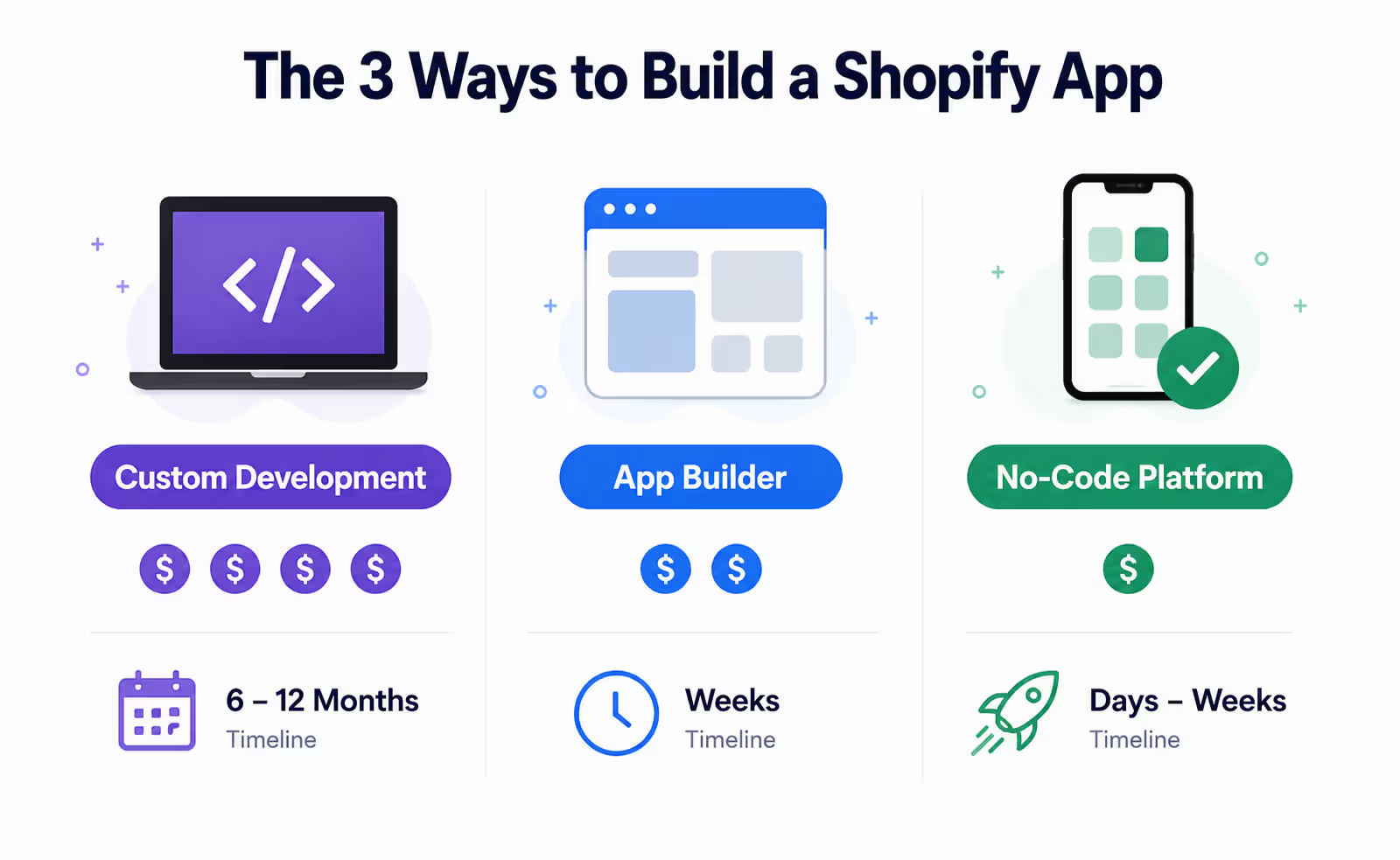
There are three real paths from Shopify store to mobile app. They differ on upfront cost, speed, and how much you will still be maintaining a year from now.
Custom development cost
This is building a native iOS and Android app from scratch, usually with an agency or an in-house team. You get total control over features, design, and backend logic. You also carry the full weight of it.
Expect $50,000 to $200,000+ upfront and six to twelve months before version one ships. After launch you own OS updates, bug fixes, and every new feature, which is why maintenance never really stops.
Custom makes sense when your app is the product or your requirements are genuinely unusual. For a store that mostly needs its catalog, cart, and push notifications in a native wrapper, it is a lot of money and risk for control you will not use. We go deeper in builder versus custom development.
Who builds it changes both the cost and the risk:
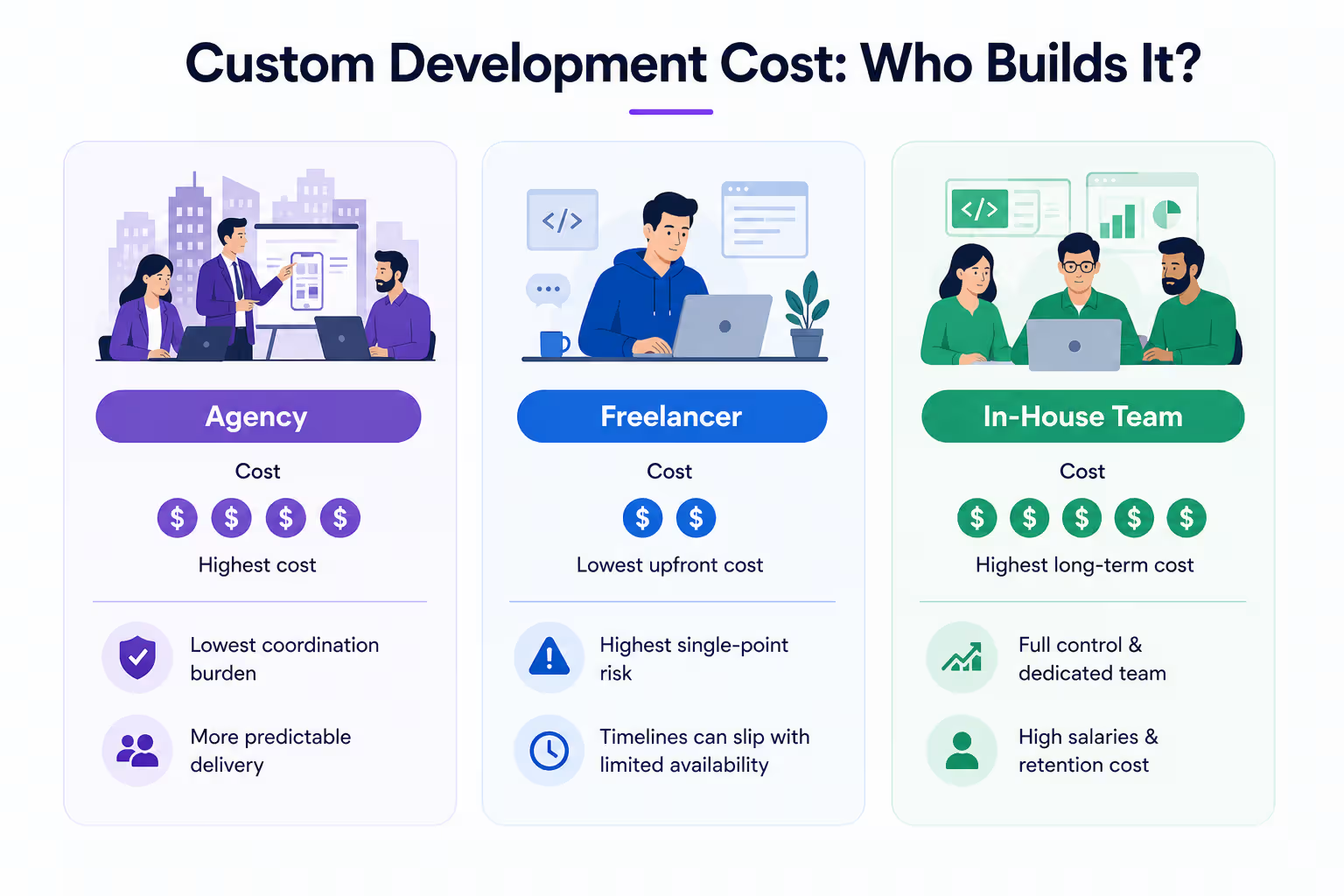
- Agency. Highest cost, lowest coordination burden. You pay for project management, QA, and continuity. Fewer surprises, bigger invoices.
- Freelancer. Lowest upfront cost, highest single-point risk. Timelines slip with limited availability, and a mid-project exit means expensive rework.
- In-house. Highest long-term cost. Salaries and retention only make sense if the app is central to your business for years.
Where the team sits changes the rate three to five times over. These are typical 2026 blended rates for a mobile app build:
|
Region |
Typical 2026 hourly rate |
|
North America (US, Canada) |
$100–$200 |
|
Western Europe / Australia |
$70–$150 |
|
Eastern Europe (Poland, Ukraine, Romania) |
$40–$85 |
|
Latin America (Mexico, Brazil, Argentina) |
$35–$75 |
|
India and Southeast Asia |
$15–$50 |
Sources: consolidated from 2026 rate reporting that draws on Glassdoor (US/UK/Germany/India salary data, 2026), ZipRecruiter (Feb 2026, US avg mobile dev ~$142k), and GoodFirms, Toptal, and Stack Overflow rate benchmarks.
Rates rise with specialization: senior developers in India with AI or cloud skills now bill $60–$90, close to Eastern European mid-level pricing. Our roundup of eCommerce app developers in the USA shows how agency rates vary by region.
Shopify mobile app builder cost
App builders convert your store into an app using prebuilt templates. They are faster and cheaper upfront than custom, usually $600 to $1,500+ per month depending on features and users.
The trade-off shows up as you grow. Templates cap how far you can customize layout and flows, and advanced features like subscriptions or loyalty often sit behind higher tiers or plugins.
Many brands launch fast on a builder, then hit a wall the first time they want something the template does not allow. Our list of the best Shopify mobile app builders compares the best options on features and pricing.
No-code mobile app platform cost
No-code platforms sit between the two. You get a fully branded, native app with deep customization, without hiring an engineering team or waiting two quarters.
Pricing is predictable and monthly, and launch timelines run in weeks. This is the sweet spot for most scaling brands: the customization and native performance of a custom build, at a fraction of the cost and time. See how the category works in our guide to no-code mobile app builders.
If your real question is "what is the monthly price," here is the quick view:
|
Path |
Typical price |
What it includes |
Best for |
|
App builder |
$600–$1,500+/month |
Templates, standard features; advanced features on higher tiers |
Fast, simple launch |
|
No-code platform (e.g. Appbrew) |
From $499/month |
Native iOS + Android, deep customization, maintenance bundled |
Scaling brands |
|
Custom |
$50,000–$200,000+ upfront, then 15%–25%/year |
Full control over features and backend |
App-as-product |
What affects your Shopify mobile app development cost?
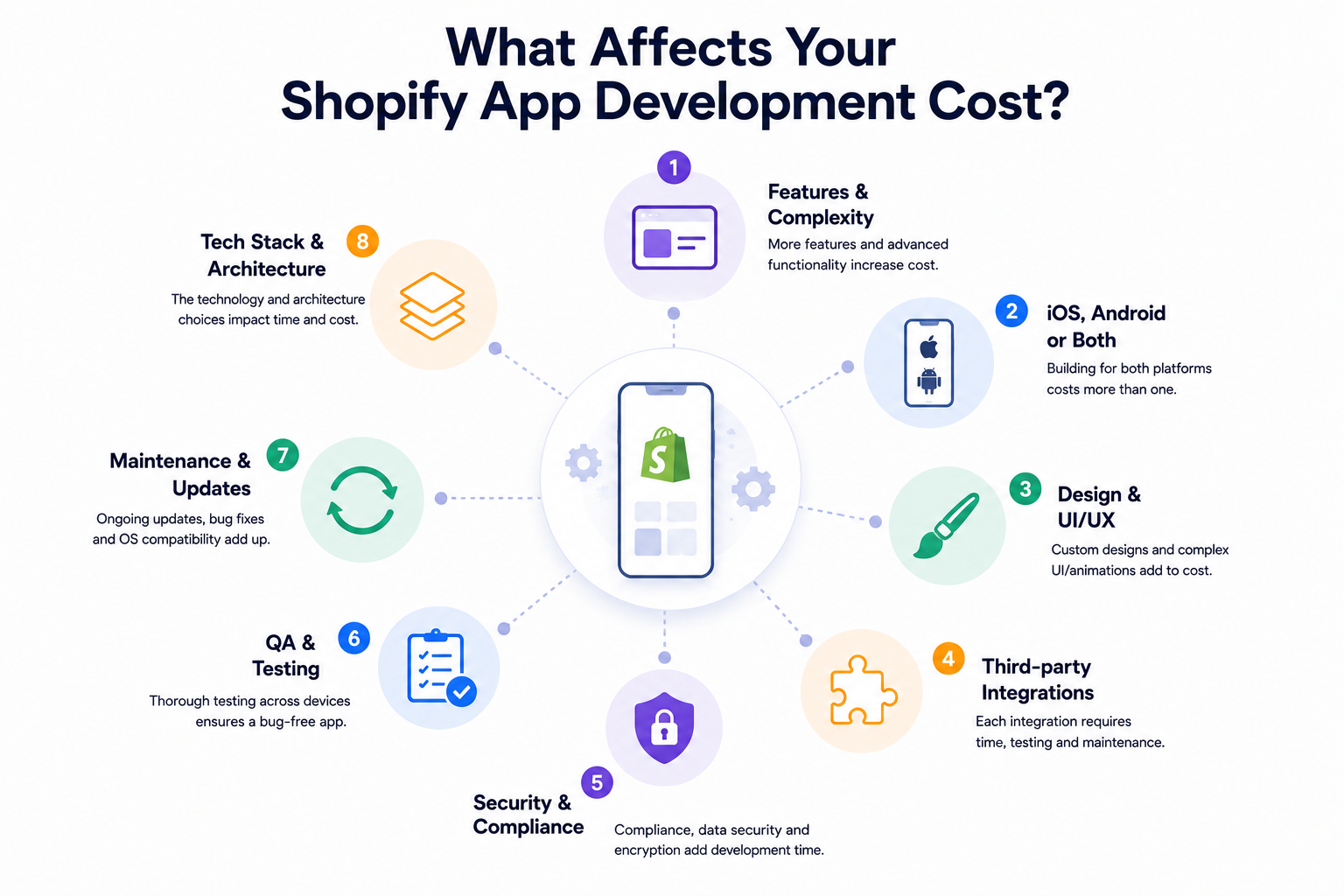
Inside any build path, eight things move the final number. Knowing them upfront is how you avoid the quote that doubles before beta.
Features and complexity.
The single biggest driver. A basic app with product pages and simple checkout sits at the low end. Push notifications, deep linking, personalization, AI recommendations, and AR to let customers try products virtually are each a separate layer of development, which is why two quotes for "the same app" can come back thousands of dollars apart.
iOS, Android, or both.
If you know your customers use only one type of device, developing for a single platform is an option. But in eCommerce, this is rarely the case. Where people shop is not tied to the device they use.
Most brands need an app for both platforms. If you take the traditional development route, building two native apps means separate coding efforts, which doubles the cost. A Shopify mobile app builder allows you to create a native eCommerce app for both iOS and Android with minimal extra effort and no extra cost. This significantly reduces costs while ensuring you reach all potential customers.
Design and UI/UX.
Standard components are cheap. Custom animations and bespoke layouts push design hours up, and a complex ecommerce UI can run past $20,000 in design alone.
Third-party integrations.
Your app rarely lives alone. Reviews, loyalty, subscriptions, your ESP, and analytics each need building, testing, and security validation. Each integration typically adds $2,000–$15,000, and messy vendor APIs often cost more in authentication and error handling than the feature itself.
Tech stack.
The frameworks your team picks change both the hour count and the hourly rate. Modern stacks like React Native let one codebase serve both platforms, which is why they have become standard for ecommerce apps. Headless or heavily decoupled architectures buy flexibility at a higher build rate and a more specialized, more expensive skill set. This is also where the native apps versus web view apps decision quietly shows up in your quote.
Security and compliance.
Any app handling customer and payment data has to meet PCI DSS, GDPR, and platform store requirements. Data encryption, secure authentication, and correct API permissions are not optional, and getting them audited adds real hours to a custom build.
On a custom build, audit-ready compliance work (encryption, access control, PCI-DSS or GDPR readiness) commonly adds $5,000–$20,000. On a managed platform most of this is handled for you, so it is a cost you avoid rather than one you pay.
QA and testing.
Before an app reaches the App Store or Play Store, it has to survive real conditions: different devices, screen sizes, OS versions, failed payments, dropped connections, and abandoned carts. Thorough QA is a meaningful line item on custom projects, and a common place where underfunded builds ship broken.
Maintenance.
Apple and Google push OS updates that break things, bugs surface, and Shopify keeps evolving its APIs. A widely used industry rule of thumb puts annual upkeep at 15% to 25% of the original build cost. On a builder or no-code platform that maintenance is bundled into your subscription instead of billed as a separate, growing line item.
That last figure is the reason the total cost of ownership looks so different across the three paths.
Custom vs app builder vs no-code: cost comparison
Here is the full picture across the dimensions that actually decide what you spend over the life of the app.
|
Factor |
Custom development |
App builder |
No-code platform |
|
Upfront cost |
$50,000–$200,000+ |
Low (setup only) |
Low |
|
Ongoing cost |
15%–25% of build/year |
$600–$1,500+/month |
Predictable monthly |
|
Time to launch |
6–12 months |
Weeks |
Weeks |
|
Customization |
Unlimited |
Template-limited |
Deep, flexible |
|
Maintenance |
You own it |
Bundled |
Bundled |
|
Best for |
App-as-product |
Fast, simple launch |
Scaling D2C/ecommerce/Shopify brands |
The hidden costs of Shopify mobile app development
The quote you sign is rarely the amount you spend. Four costs hide outside the build number:
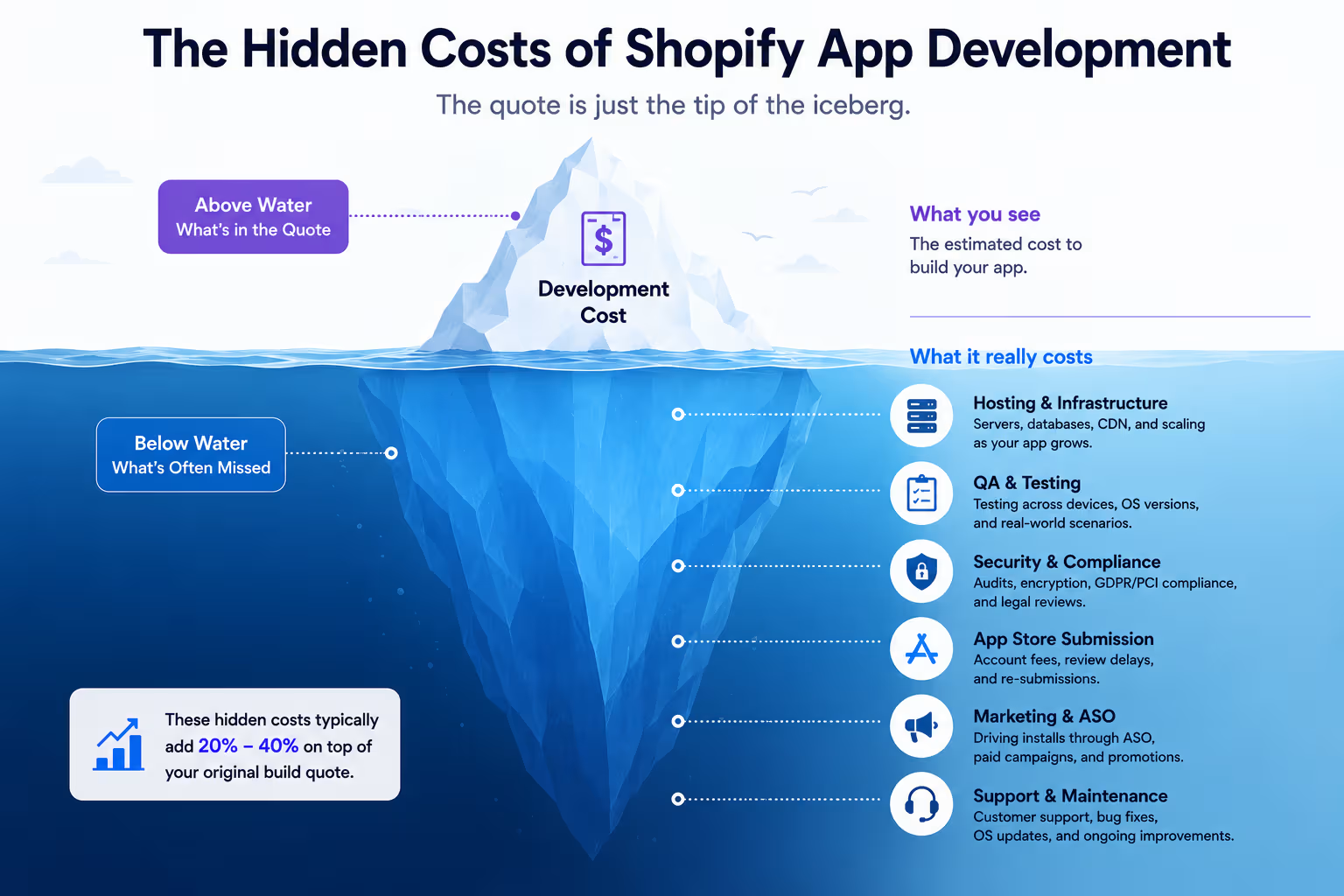
- Hosting and infrastructure. About $50–$500/month for a low-traffic app, and $500–$2,000+/month once you handle high order volumes or a large catalog.
- App Store submission. Eats time, and it can eat weeks when a build gets rejected or a shared developer account creates a bottleneck.
- Security audits and compliance. Pre-launch legal and privacy review runs $1,000–$5,000, and annual security audits for sensitive data run $3,000–$15,000.
- Marketing and support. Driving installs (ASO, paid, retention) and answering tickets is ongoing spend, on top of the annual maintenance covered above.
Together these commonly add 20% to 40% on top of the original build quote. On a managed platform they fold into a single subscription. On custom, they stay separate and compound.
How to spot a Shopify mobile app quote that is too cheap
The lowest number wins deals, but a quote that skips the unglamorous work just moves the cost to later. Before you sign, check for these five red flags:
- No maintenance line. If the quote ends at launch, you will pay for OS updates and Shopify API changes out of pocket within months.
- No QA or testing in scope. QA is normally 15–25% of build hours. If it is missing, the app ships broken and you fund the fixes.
- A fixed price with no discovery phase. Serious builds start with scoping. A flat number quoted sight-unseen almost always turns into change orders.
- A rate that cannot cover the work. A full native iOS and Android build for a few thousand dollars means corners are being cut somewhere you will find later.
- No ownership or handoff terms. If you do not get the code, repositories, and store accounts, you are locked in and re-buying the app the day you switch.
A slightly higher quote with QA, maintenance, and a clear handoff is usually cheaper by year two than the bargain that leaves them out.
How to choose the right way to build your Shopify mobile app
Match the method to the store, not the other way round:
- If the app is your business, meaning you plan to sell it or it is the core product, build custom and accept the timeline and upkeep.
- If the app is a channel for your business, a native way to reach the customers you already have, the money and the timeline both point to no-code.
A real example makes it obvious. Svaha USA, a scaling apparel brand, was stuck on a limited app setup with broken filtering and unreliable wishlists that added friction during its product drops.
After rebuilding the app as a proper channel on Appbrew's no-code platform, it delivered 3x higher conversion rates, 20% higher average order value, and over 40% higher lifetime value. The app still needed to be great. It just did not need a six-figure custom build to get there.
If you are weighing the move, our guide to turn your Shopify store into a mobile app walk through the steps.
How much does it cost to publish an app on the Shopify app store?
Publishing to the app stores is cheap compared to building. Here is what the stores charge:
|
Store |
Fee |
Type |
|
Apple App Store (Apple Developer Program) |
$99/year |
Recurring |
|
Google Play |
$25 |
One-time |
|
Shopify App Store (Partner registration) |
$19 |
One-time |
How to build a Shopify mobile app without the custom development cost
A branded mobile app is the closest thing to a fully owned channel in ecommerce. No algorithm sits between you and your best customers, and push notifications reach them at no per-send cost, unlike email or SMS.
That matters more every year: mobile now drives roughly 60% of global ecommerce sales, a share Statista expects to reach 63% by 2028 (Statista, 2026). The problem was always the price of entry, a six-figure custom build or a template you would outgrow in a year.
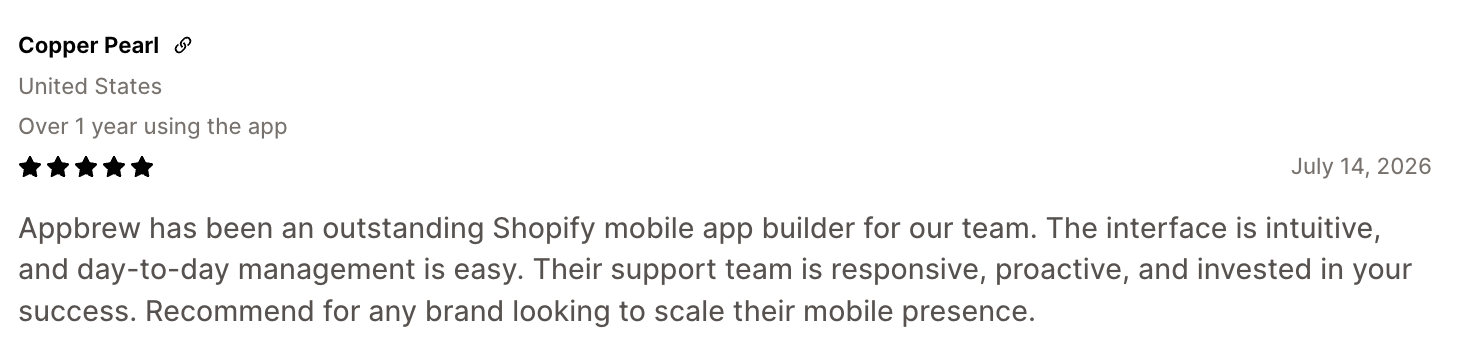
Appbrew removes that trade-off. It is an AI native Shopify mobile app builder that ships fully native iOS and Android apps from $499 per month, live in a few days to weeks, and you pay only once the app goes live. Here is what that includes:
- Native React Native apps, not webview wrappers. Sub-1-second load times versus the 5 to 6 seconds typical of webview builders. Speed is the root of the conversion difference.
- Real-time Shopify sync. Products, inventory, pricing, discounts, and customer data stay current automatically, with no separate system to maintain.
- Unlimited push notifications on every plan. Abandoned-cart, back-in-stock, price-drop, and win-back campaigns with no per-send fee. This is the channel economics that makes an app pay for itself.
- Milo, an AI growth operator. Segment audiences, draft and schedule push campaigns, spin up discounts and bundles, and surface funnel drop-offs from plain-language prompts, without adding headcount.
- A dedicated ecommerce UI/UX designer. Every account is paired with a designer, so you get real brand identity rather than a template with a logo swapped in.
- 120+ native integrations. Klaviyo, Recharge, LoyaltyLion, Yotpo, Gorgias, and AppsFlyer connect out of the box.
- A marketer-owned dashboard. Launch campaigns and update the app with no engineering dependency.
The channel performs. Across 250+ brands, apps built on Appbrew see 3x higher conversion rates and 6x higher customer lifetime value than mobile web (Appbrew first-party data):
- Kiyoko Beauty: 60% higher conversion rate on app versus web
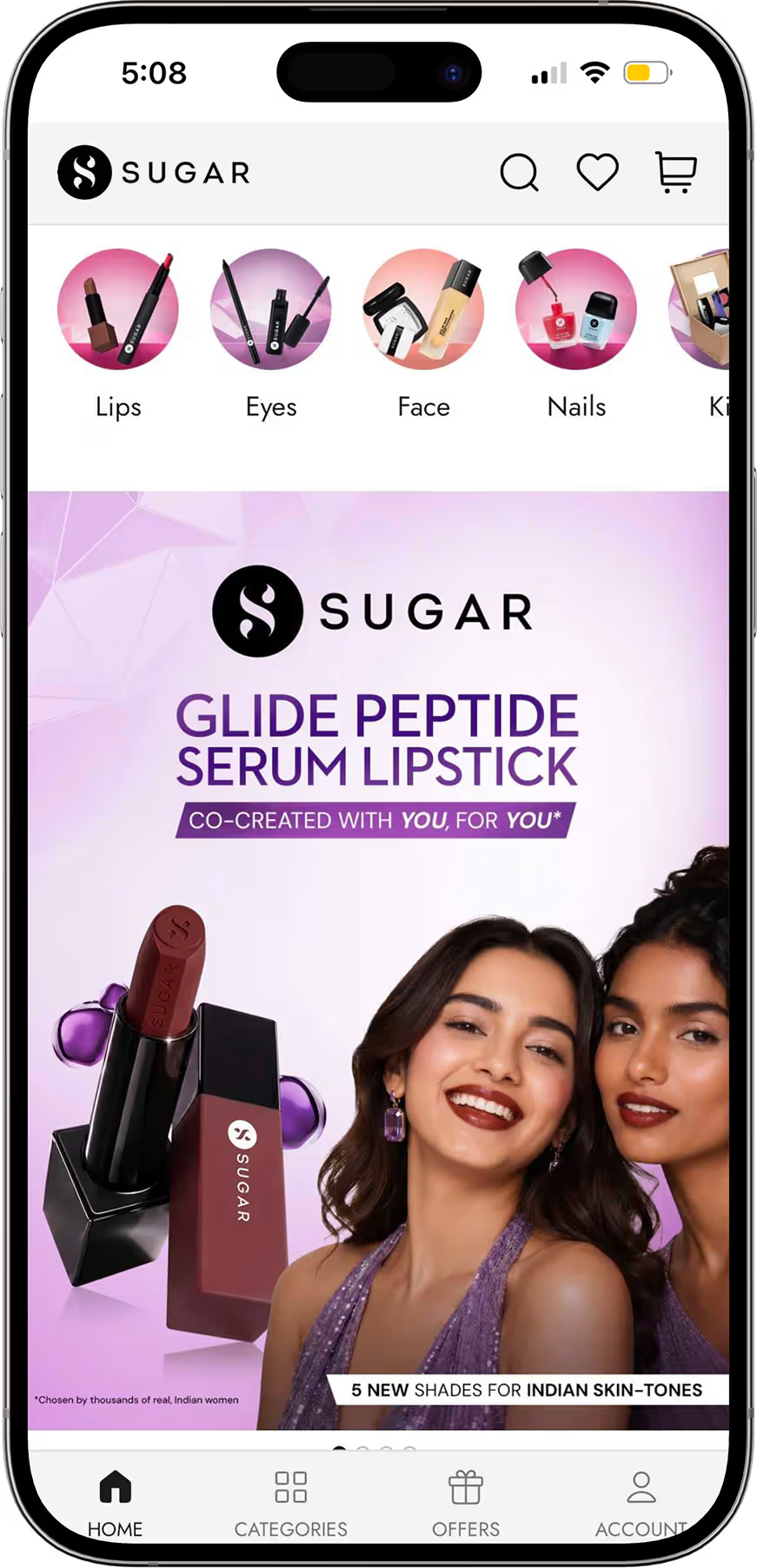
- SUGAR Cosmetics: 70% higher conversions after rebuilding around promotions and bundles
- Sukoshi Mart: 30% conversion lift after switching from another builder
- Karma and Luck: 50% increase in conversion rate
If you are comparing platforms, see how Appbrew stacks up against MobiLoud and Tapcart.
{{cta}}
The Bottom Line on Cost
The honest answer to "what does a Shopify mobile app cost" is that it depends on which project you're actually running. A custom build is $50,000 to $200,000+ and a multi-quarter commitment with maintenance attached for life. A builder is cheap to start and limiting to grow on. A no-code platform gives most D2C scaling brands the native app they want at a cost and speed that makes the math work.
Match the method to the store. If the app is your business, build custom. If it's a channel for your business, the money and the timeline both point toward no-code.
FAQs
How much does it cost to build a Shopify mobile app?
A basic app runs $3,000–$10,000, mid-level $10,000–$40,000, and advanced custom builds pass $150,000. No-code platforms replace the upfront cost with predictable monthly pricing.
Is it cheaper to use a Shopify mobile app builder or hire developers?
For most ecommerce/Shopify stores, a builder or no-code platform is far cheaper than hiring developers. Hiring developers means $50,000–$200,000+ upfront plus 15–25% of that annually in maintenance. A platform bundles maintenance into a monthly fee and ships in weeks instead of months.
How long does it take to build a Shopify mobile app?
Custom development takes six to twelve months to launch v1. App builders and no-code platforms like Appbrew launch in a few days to weeks, since the native infrastructure and integrations already exist.
What's the difference between Shopify store development cost and app development cost?
Store development ($2,000–$25,000+) builds your storefront: themes, product setup, and design. App development builds a separate native mobile experience on top of that store. They're different projects with different budgets.
Do I need separate apps for iOS and Android?
Effectively yes, since customers use both. On a custom build that can mean two codebases and roughly double the cost. React Native and no-code platforms build both from a single setup, which removes the duplication.
How much does it cost to publish an app on the app stores?
Apple charges $99/year, Google Play is a one-time $25 fee, and Shopify Partner registration is a one-time $19 fee. These are separate from the cost of building the app.