.webp)
Grow your Shopify store in 2026 with 12 marketing strategies ranked by ROI, plus how to prioritize them and what top Shopify brands do differently.
Shopify marketing is how you attract people to your store, convert them into customers, and bring them back to purchase again. It includes SEO, content, social media, email, SMS, paid advertising, referrals, loyalty programs, and mobile apps.
These channels do not have the same cost or purpose. Paid ads can generate traffic quickly, but you pay for every visit. SEO and content take longer but can keep producing traffic. Email, loyalty, and push notifications help you earn more from customers you have already acquired.
This guide covers 12 Shopify marketing strategies, how to prioritize them based on return and store readiness, and how leading Shopify brands use them in practice. It also includes first-party findings from Appbrew’s work with 250+ Shopify brands.
Quick Insights
- Shopify marketing is how you get found, convert visitors, and keep customers buying. It spans owned channels (email, SMS, apps), organic (SEO, content, social), and paid ads.
- Owned channels return the most per dollar. Email returns roughly $36 for every $1. Paid ads are the fastest way to grow but the most expensive, so they work best last, not first.
- The biggest 2026 shift: getting found inside AI answers. Shoppers now discover products through ChatGPT, Perplexity, and Google's AI Overviews, not just the ten blue links.
- Start with the customers you already have. Winning a repeat purchase costs a fraction of acquiring a stranger, and most stores ignore it.
What's changed for Shopify marketing in 2026?
Three things changed this year. If your plan looks like it did in 2023, you're behind on all of them.
1. People now find products inside AI
Your customers are starting to ask ChatGPT or Google's AI for recommendations instead of scrolling search results. Shopify turned this into a real channel in 2026 with Agentic Storefronts, which put your products inside ChatGPT, Gemini, Copilot, and Perplexity. It went live for US stores by default in March 2026, and AI-driven orders grew 15x year over year.
The catch: showing up isn't the same as getting picked. What decides it is clean product data. If yours is thin, the AI just recommends a competitor instead. Optimizing for this has a name now, AEO, and it sits right next to SEO.
2. Ads keep getting pricier
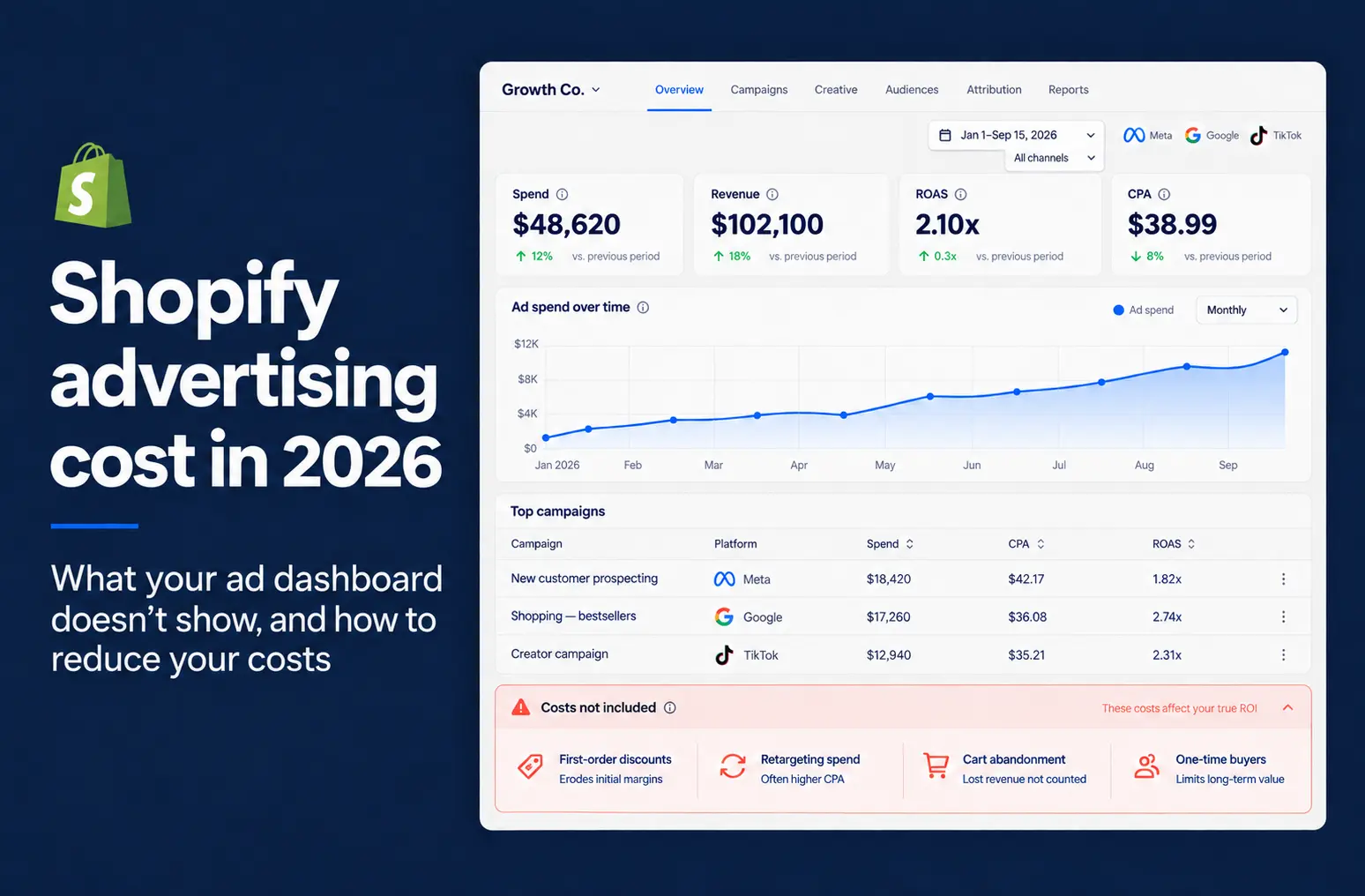
Meta costs for Shopify brands rose 20% last year, and it costs about 60% more to acquire a customer than it did five years ago. The more you lean on paid ads alone, the more it hurts. The channels you own get more valuable every year. (We cover the numbers in our Shopify advertising cost guide.)
3. Mobile performance now affects almost every marketing channel
Across the Shopify brands Appbrew works with, more than 85% of store traffic comes from mobile devices. That traffic may begin with Google, Instagram, TikTok, email, SMS, or an ad, but the purchase still depends on the mobile experience that opens after the click.
A slow product page, difficult checkout, or broken campaign link increases the effective cost of every marketing channel.
The stores winning in 2026 added three things on top: be findable by AI, own more of your channels, and build for mobile first.
12 Shopify marketing strategies that actually work
These strategies are ordered by where most Shopify stores should start, not by which channel gets the most attention. First, help more visitors buy and give existing customers a reason to return. Then build organic traffic. Paid acquisition comes later, once your store can turn expensive clicks into profitable customers.
1. Let your reviews and customers sell for you
Product reviews and user-generated content are the cheapest sales team you'll ever have. About 46% of shoppers say they trust online reviews as much as a recommendation from a friend.
They also give search engines and AI shopping tools clearer evidence about who the product is for. In Bazaarvoice’s 2025 survey of more than 7,000 consumers, 24% had already used generative AI instead of a search engine to find products.
Ask for reviews after customers have had time to use the product. Prompt them with a specific question, encourage photos and place the best responses near the add-to-cart button. Keep negative reviews visible and respond to them. A believable review section sells better than a perfect-looking one.
2. Show up on Google and in AI answers
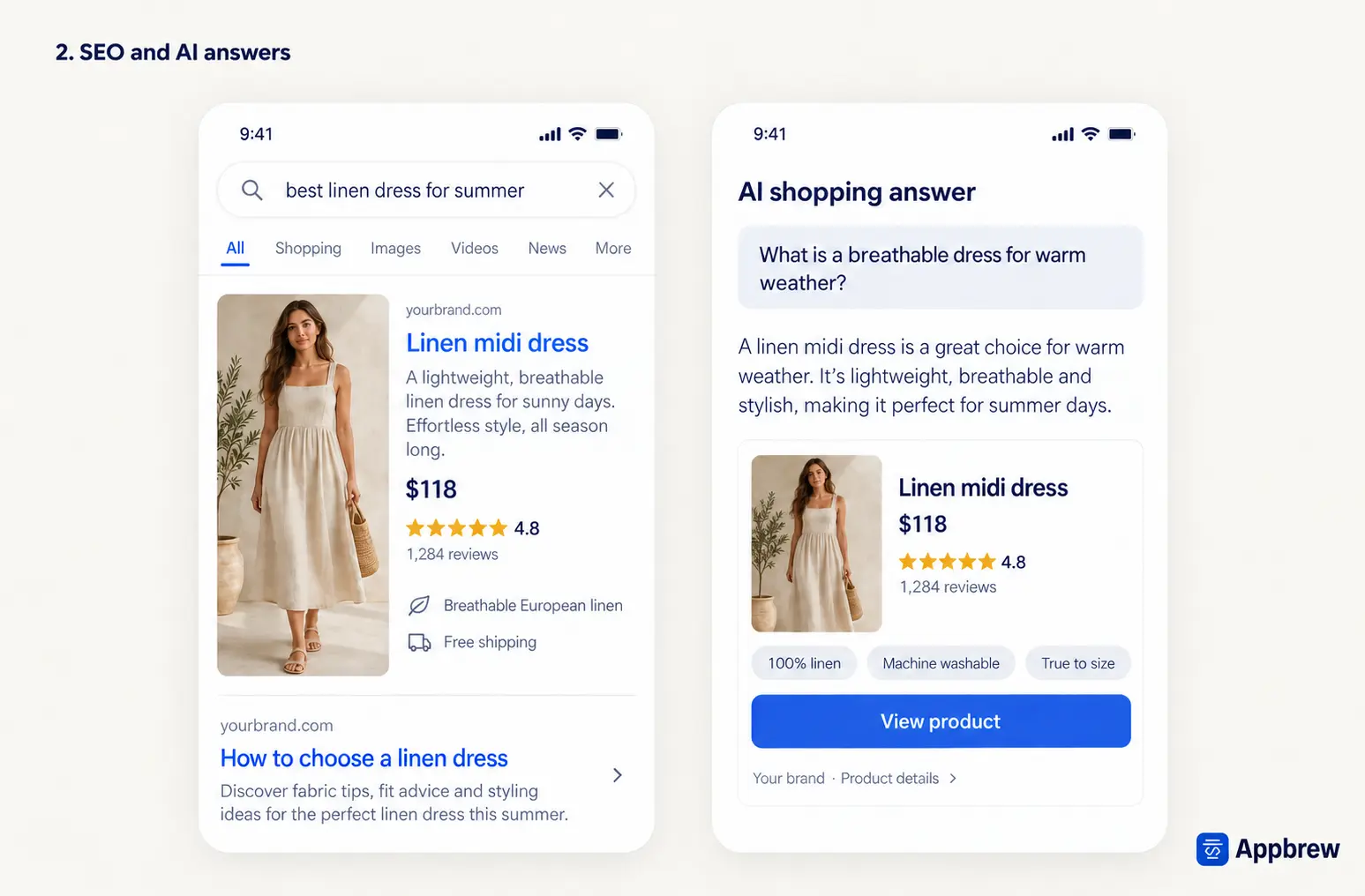
Shopify SEO now has two jobs: help your products rank in search and make them understandable to AI shopping tools. In January 2026, Shopify and Google introduced the Universal Commerce Protocol, an open standard that lets AI agents connect and transact with merchants.
- Write product titles and descriptions around the questions customers actually ask.
- Keep prices, inventory and variants accurate, add product schema, use descriptive image alt text and answer common buying questions on the page.
- UCP does not guarantee visibility. Your product data still needs to be complete, specific and easy to verify.
3. Write content that keeps bringing in traffic
Content marketing helps you rank for questions that do not belong on a product page. For apparel, that could be fit guides and styling comparisons. For beauty, it could be ingredient explainers, routines and product comparisons.
Build a small library around real customer questions. Answer each one clearly, include firsthand examples and link naturally to the relevant product or collection. Update useful articles instead of publishing thin posts to hit a schedule. Google’s 2026 guidance is clear: create content because it helps your audience, not simply because a topic is trending.
4. Sell where people already scroll
Social media is now both a discovery channel and a storefront. DHL’s 2026 survey of 29,000 online shoppers found that 45% already buy through social platforms.
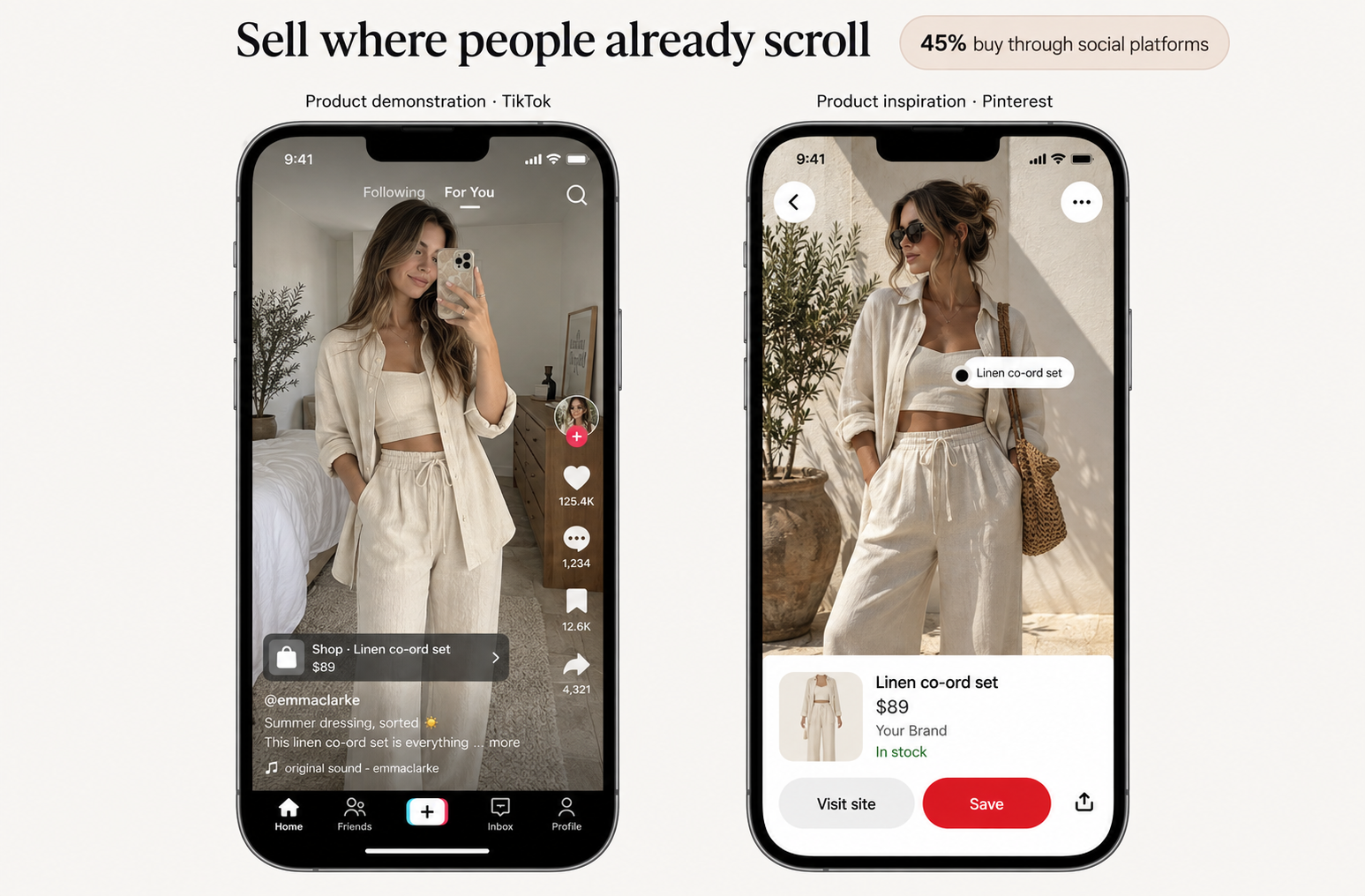
TikTok, Instagram, and Pinterest let you sync your Shopify catalog so people can discover and buy without leaving the app. Choose the one or two platforms your customers actually use, then connect your Shopify catalog so every product is easy to buy.
- Post useful demonstrations, try-ons, routines, comparisons and customer videos.
- Tag the exact product instead of sending people to your homepage.
- You do not need every trend. Repeat the formats that consistently drive saves, product-page visits and sales.
5. Use email and SMS to bring customers back
Email and SMS let you reach shoppers without paying to acquire them again.
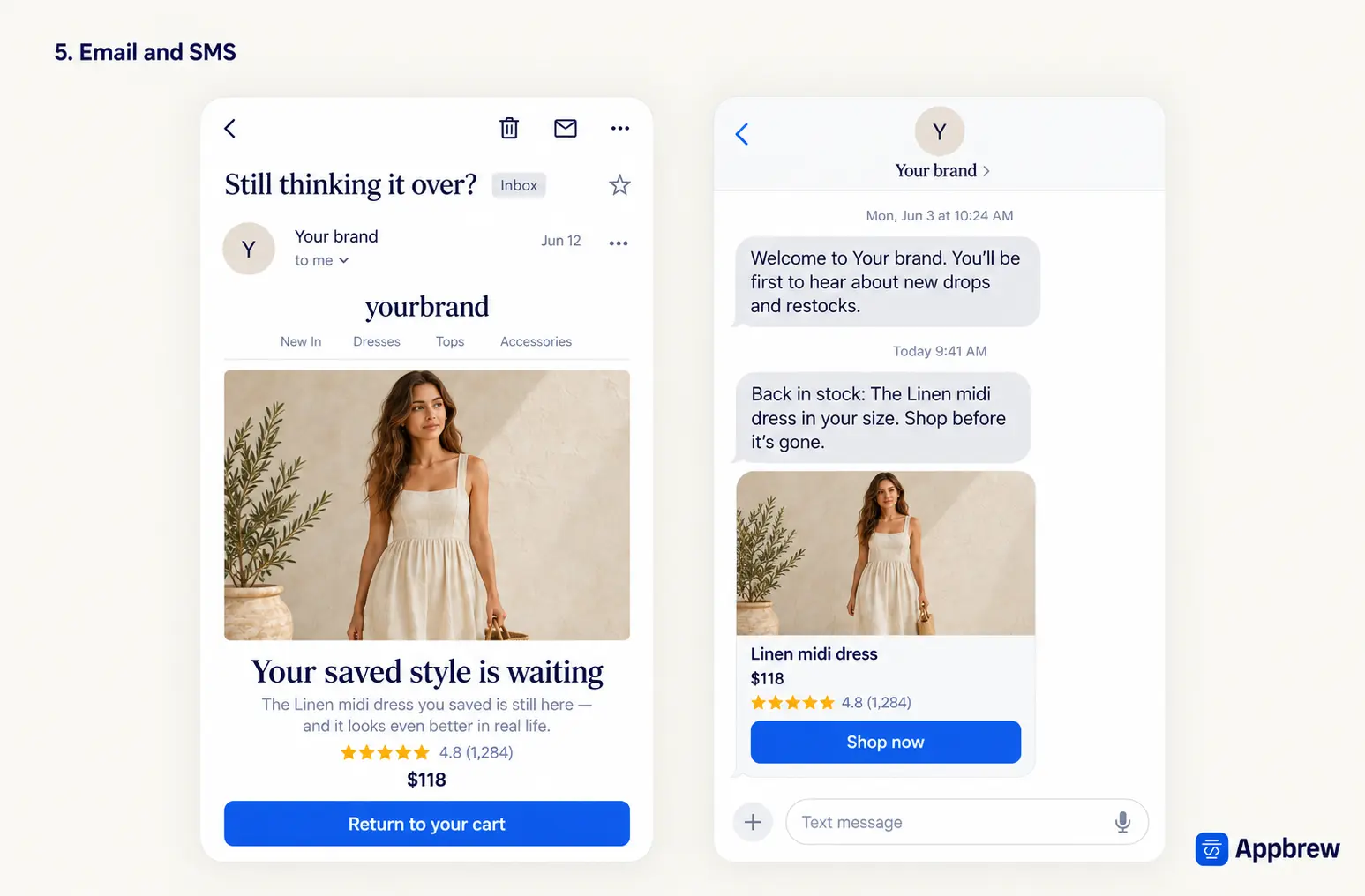
Start with welcome, browse abandonment, cart recovery, post-purchase and win-back flows. Use email for most communication and reserve SMS for urgent, high-intent messages such as restocks, order deadlines and limited launches. Segment by purchase history and product interest instead of sending every message to your entire list.
6. Get customers to buy a second time
Retention marketing starts after checkout. Help customers use the product well, remind them when it is time to reorder and give your best buyers a reason to return before offering another blanket discount.
Use post-purchase education, replenishment reminders, early access and loyalty rewards tied to useful actions. Measure repeat purchase rate, time between orders and revenue from returning customers, not just loyalty sign-ups.
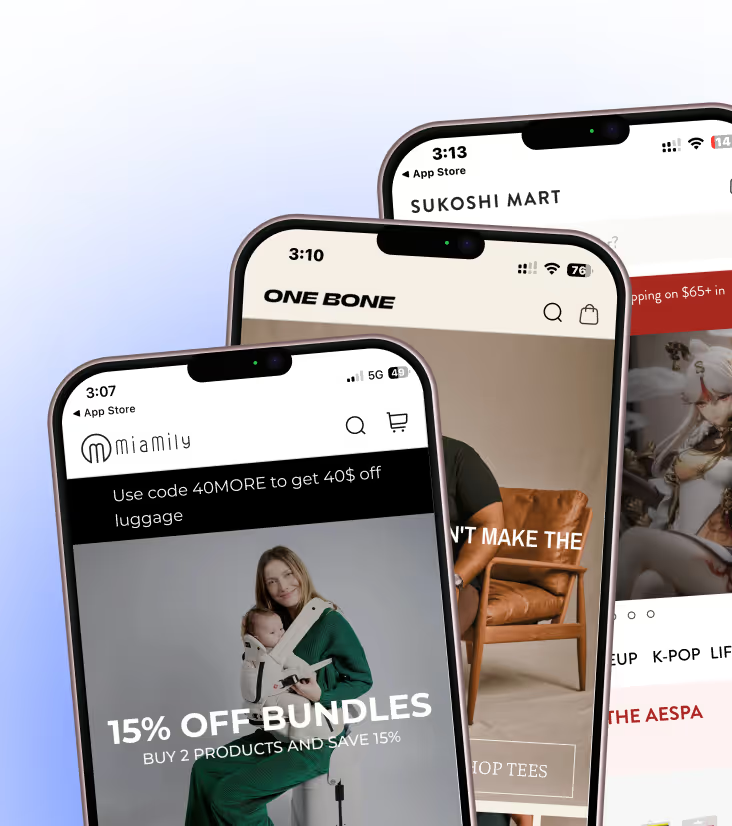
7. Reach your best customers through a mobile app
85% of ecommerce traffic is already on phones, and a mobile app turns that traffic into your highest-value channel. Once customers install it, push notifications let you announce drops, restocks and cart reminders without paying per message.
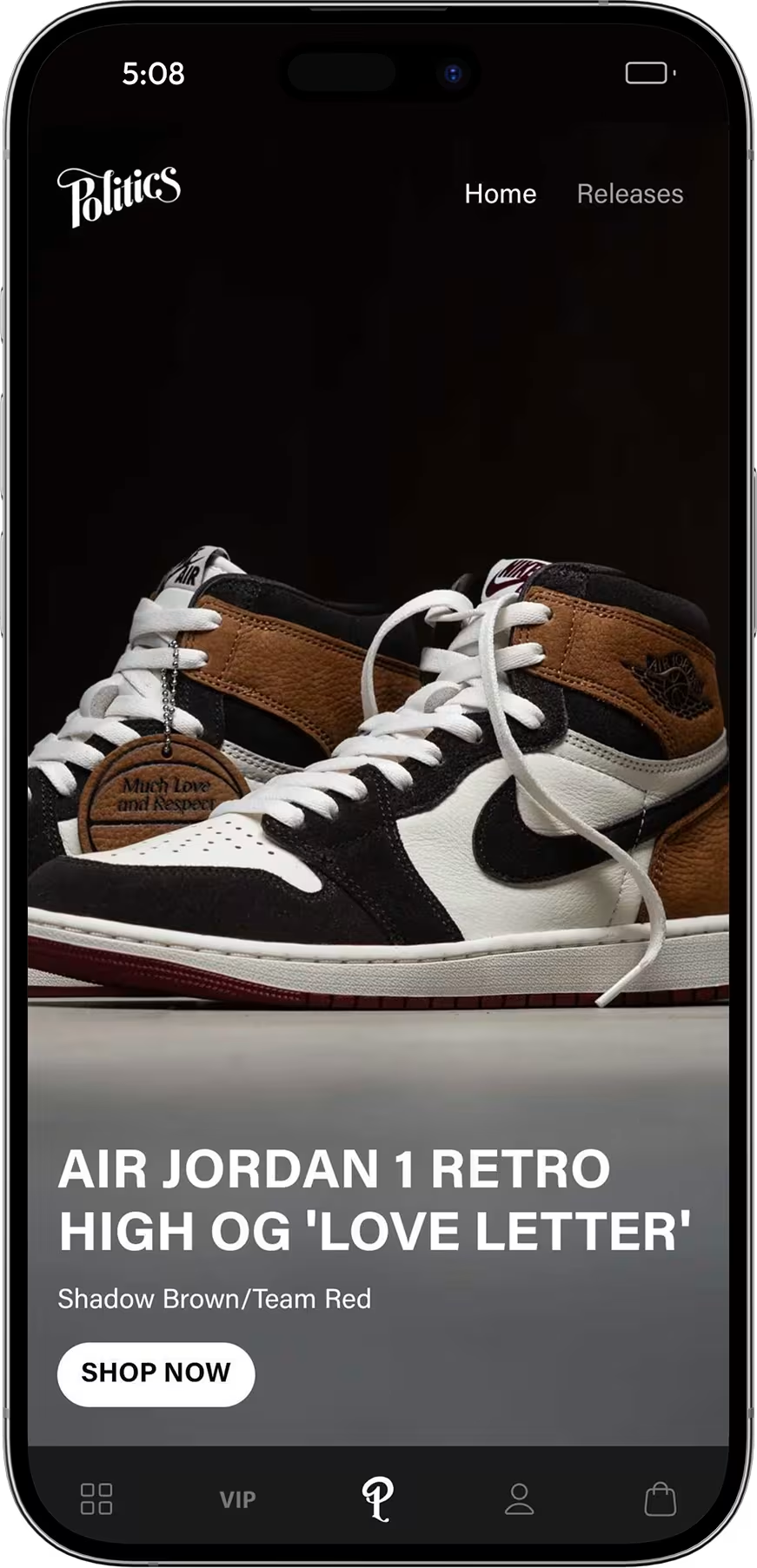
Sneaker Politics, a US streetwear brand, drives 57.9% of its in-app purchases through push notifications, at zero ad spend, with a 2.4x higher repeat purchase rate.
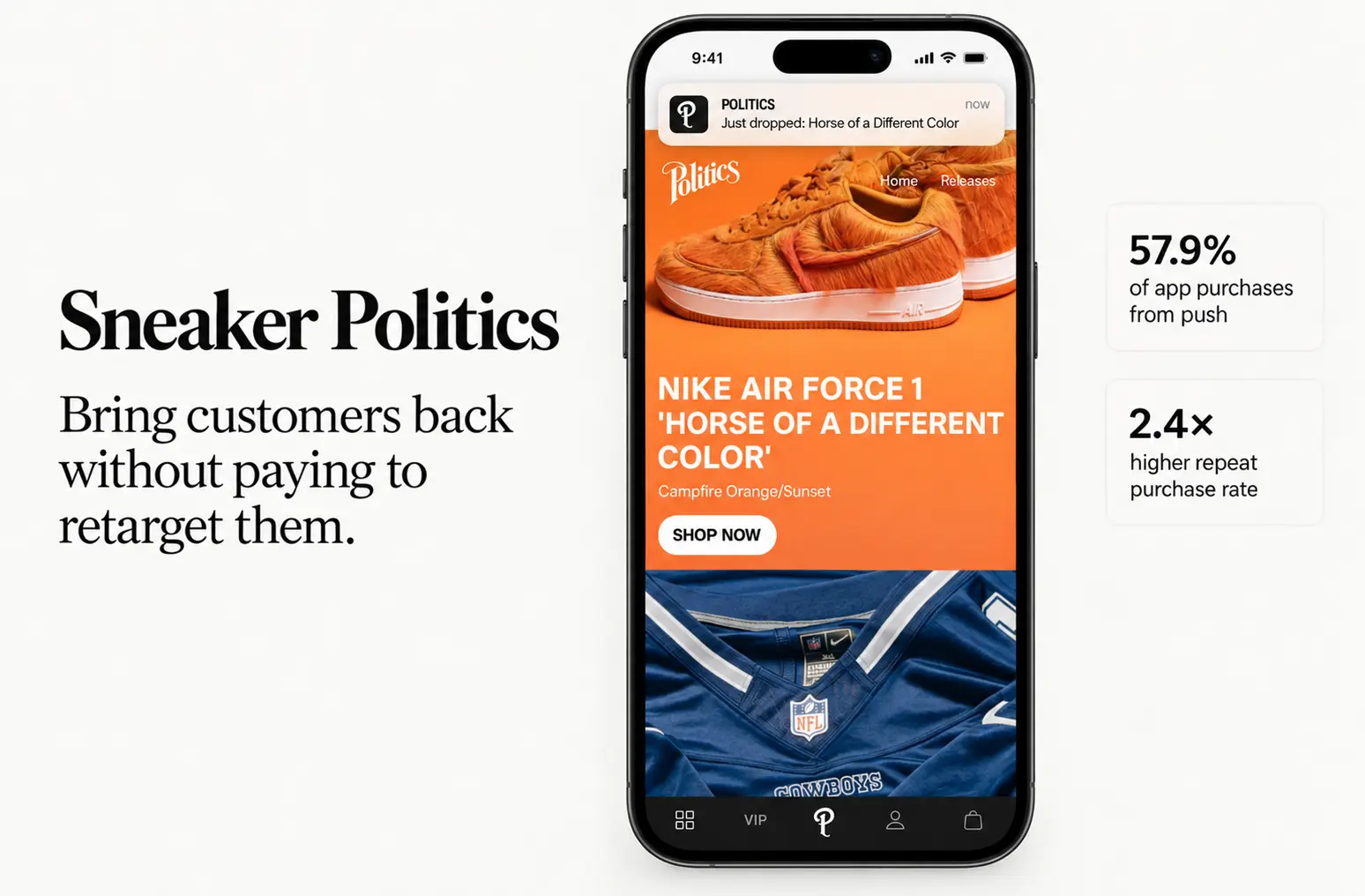
Apps work best for stores with strong mobile traffic, repeat buyers or frequent product launches. Segment notifications by browsing and purchase history, then link each message directly to the relevant product. If most customers buy only once, fix that problem before investing in an app.
{{cta}}
8. Capture visitors before they leave your site
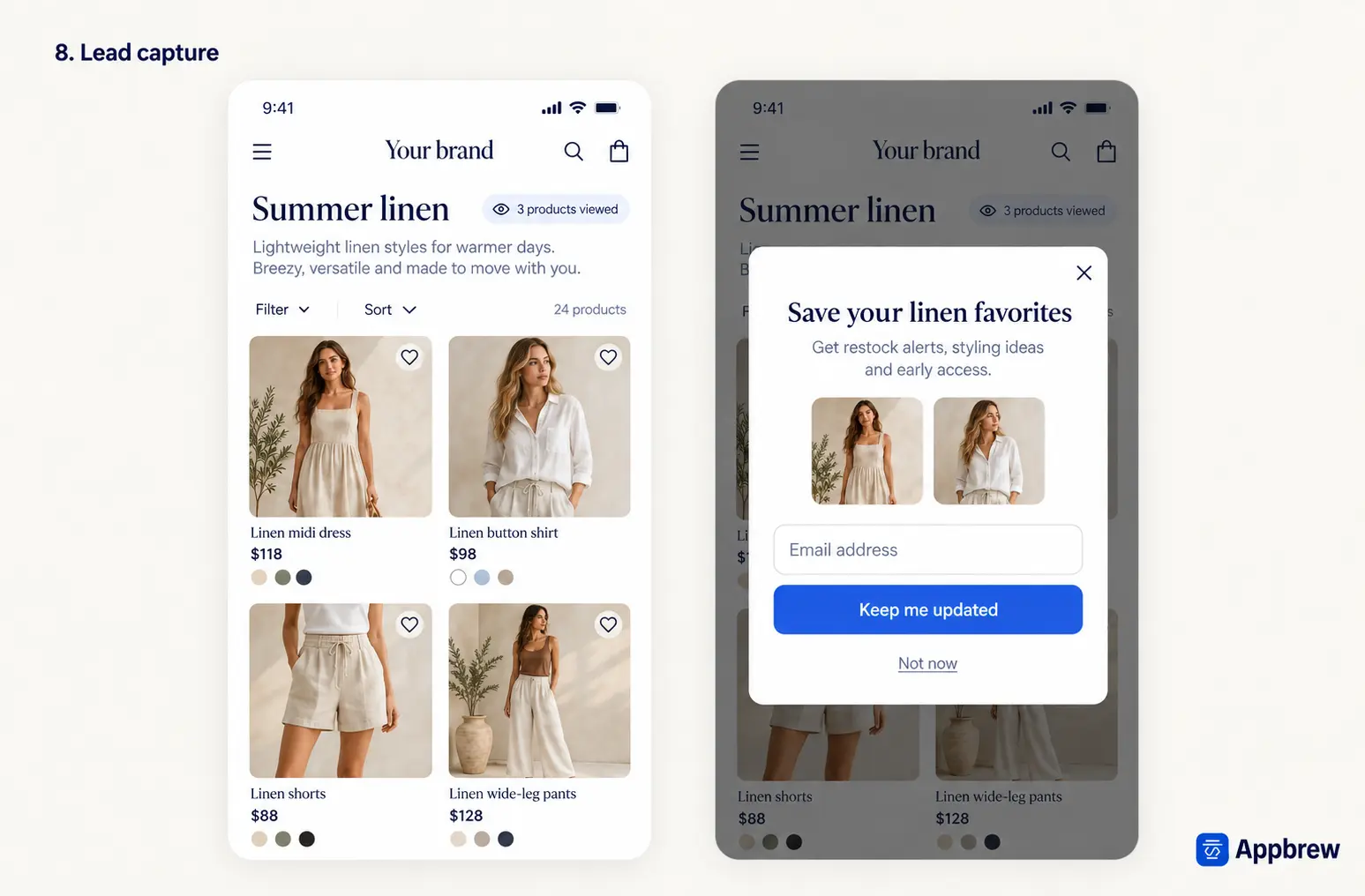
Most visitors will not buy on their first visit. A well-timed popup gives you another way to reach them by collecting an email or phone number. A 2026 benchmark found that email signup popups on Shopify stores converted 6.97% of displays.
- Do not show the same discount to everyone as soon as they land.
- Trigger the popup after someone browses a few products, reaches a cart value or starts to leave.
- Keep the form short, give them a clear reason to sign up, and connect it to a welcome or abandoned-cart flow.
9. Get bigger orders from the buyers you already have
Upselling and cross-selling raise your average order value without costing you a cent in new traffic. Someone's already on your product page or at checkout with their wallet out. Showing them a bigger size, a bundle, or a "goes well with this" add-on is the easiest revenue you'll find.
Keep the suggestions genuinely relevant. A phone case with the phone, a refill with the original, a matching piece with the outfit. Shopify apps handle this on autopilot with product-page and cart recommendations, and a post-purchase upsell (an offer shown right after checkout) adds sales without touching your conversion rate.
10. Paid ads work fast but cost the most
Paid ads can bring traffic as soon as a campaign goes live, but they become expensive when the store behind them does not convert. Triple Whale’s 2026 Google Ads benchmark found that median ecommerce CPA rose 9.96% to $28.14, while ROAS fell 3.54%.
- Use paid ads to scale products and offers that already sell.
- Start with one channel, track contribution profit after discounts and fulfilment, and compare that figure with your customer acquisition cost.
- If CAC is higher, spending more only increases the loss.
11. Get other people to promote your store
Customer referrals and creator partnerships put your products in front of audiences that already trust the person recommending them. The channel is getting crowded: IAB expects US creator ad spend to reach $44 billion in 2026.
- Give customers a clear reward for referring a friend.
- For creators, choose audience fit over follower count and use a unique link or discount code for each partnership.
- Track new-customer revenue, acquisition cost and repeat purchases. Reach means little if the audience does not buy.
12. Use holidays and slow seasons on purpose
Seasonal demand is too large to treat as a last-minute campaign. US shoppers spent a record $257.8 billion online during the 2025 BFCM season, up 6.8% year over year.
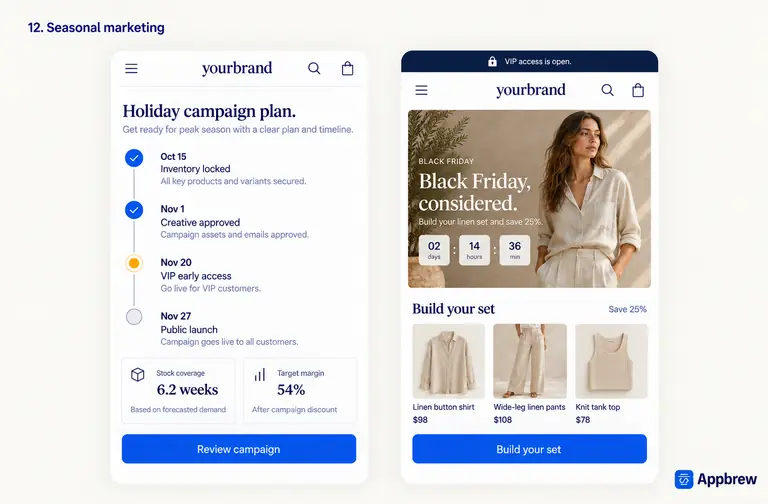
Plan inventory, offers, creative and retention flows before peak periods. Use slower months to test bundles, publish search content and win back inactive customers. Not every campaign needs a sitewide discount, and revenue means little if the promotion removes your profit.
How to prioritize your Shopify marketing
Do not try all 12 strategies at once. Move up this ladder as your store becomes ready:
1. Fix conversion and retention first
Improve reviews, lead capture, email flows, repeat purchases and order value. Add a mobile app when customers already have a reason to return.
2. Build organic demand.
Slower to pay off, but they keep returning long after the work is done and cut how much you'll ever spend on ads:
- SEO and AEO
- Content marketing
- Organic social and social commerce
- A mobile app for your (mostly mobile) traffic
3. Scale with paid ads last
Start only when you know your contribution margin, conversion rate and maximum affordable CAC. If visitors do not buy or customers do not return, more traffic only makes the problem more expensive.
How top Shopify stores market themselves
The best Shopify brands do not try to win every marketing channel. They find one reason for customers to pay attention, then build their content, store and retention around it.
1. Gymshark: organic social and community
Gymshark grew from a garage operation into a brand worth over $1 billion, largely by building a fitness community on social media before it leaned on paid ads. It seeded products with micro-influencers early, built a movement around them, and let organic content do the selling.
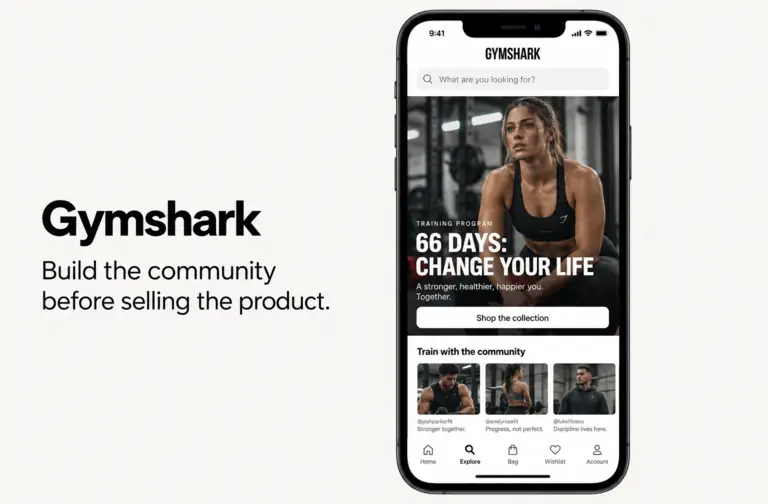
Its athletes, training guides and fitness challenges keep people engaged between purchases. The store connects that attention to loyalty rewards, product launches and app access. Read our guide on Gymshark marketing strategies.
2. Fashion Nova: influencer marketing at volume
Fashion Nova built a fast-fashion empire on relentless influencer partnerships, working with thousands of creators rather than a few big names. It turned everyday customers and micro-influencers into a constant stream of social proof, showing that breadth of partnerships can matter more than star power.
3. Dermaclara: help customers choose the right product
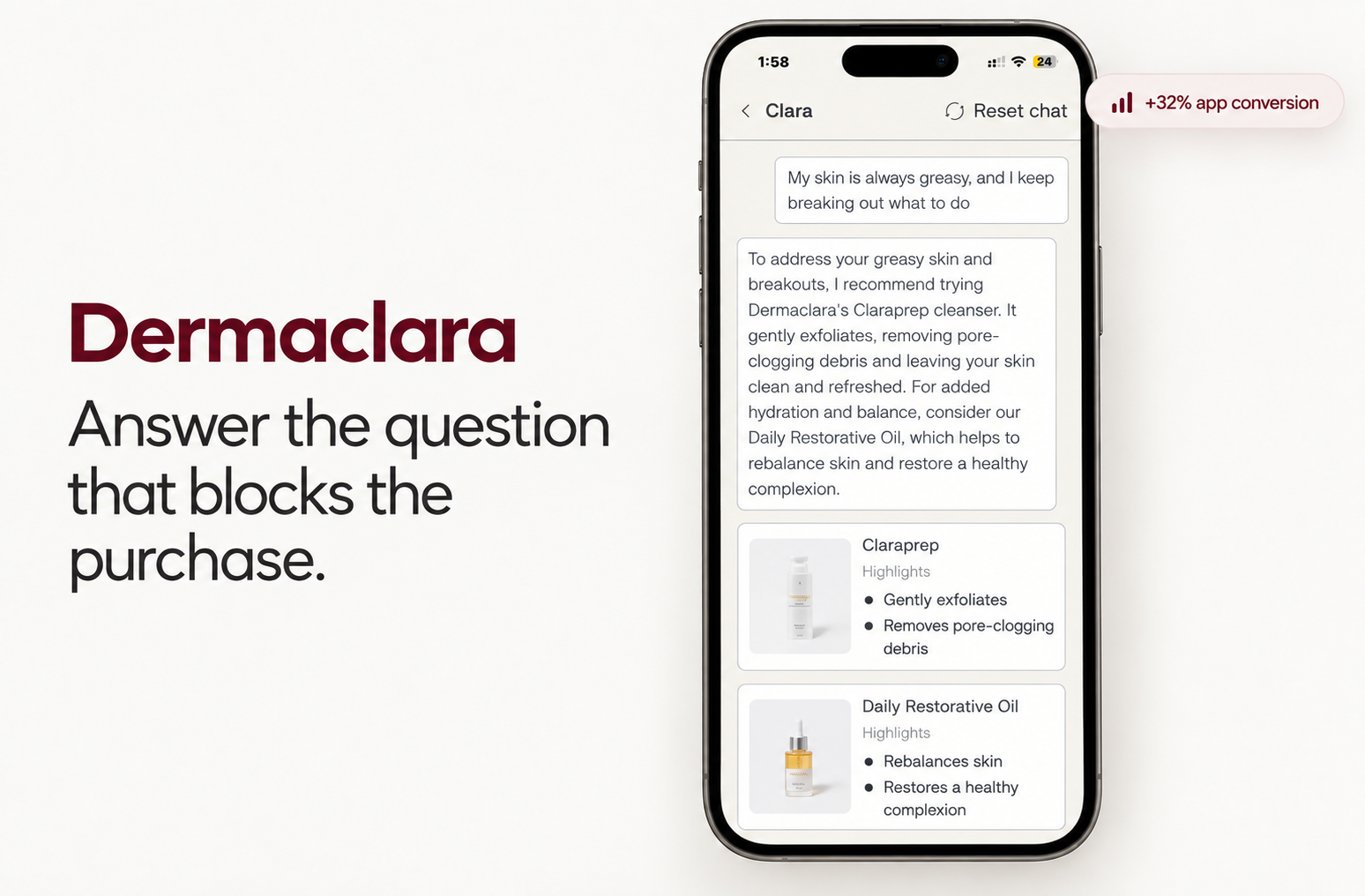
Its in-app AI concierge answers questions and recommends skincare routines. After moving from its previous app provider, app conversion increased 32% and app-driven revenue grew 3.5x.
4. Kylie Cosmetics: influencer reach and scarcity
Kylie Jenner turned a massive social following into sell-out product drops, with launches moving inventory in minutes. Products arrive with founder-led content, a clear launch date and a reason to buy now.
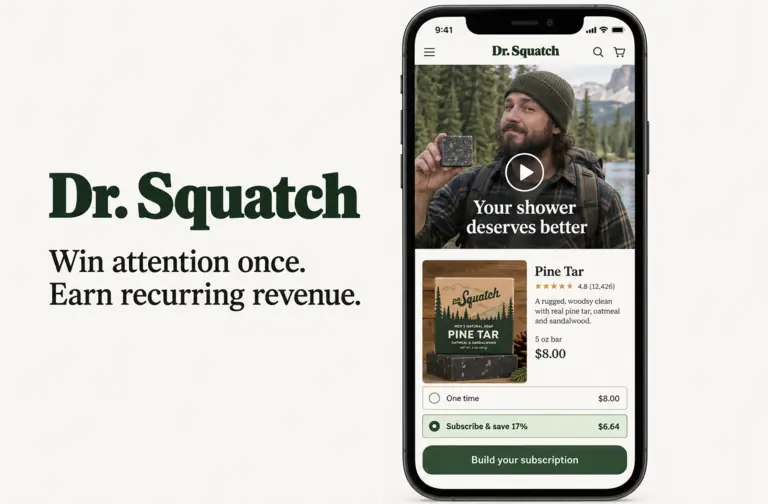
5. Dr. Squatch: viral video and subscription
The men's grooming brand rode bold, funny short-form video to viral reach, then locked in the revenue with a subscription-first model. Acquisition through entertaining content, retention through recurring orders, the two halves of the ROI ladder working together.
6. Sneaker Politics: push instead of paid retargeting
The streetwear retailer turned its app into a drop machine, alerting customers by push the moment a release goes live. Now 57.9% of in-app purchases come from push, at zero ad spend, with a 2.4x higher repeat purchase rate.
How to market a new Shopify store on a small budget?
A new store has no traffic, no list, and no budget to waste, so don't spread a small budget across ten channels. Work the ROI ladder from the top:
- Fix the basics first. Clear product pages, fast mobile checkout, a few reviews, and a popup capturing emails. Marketing to a store that doesn't convert just wastes it.
- Start with free and owned channels. Set up your core email flows, tap your network and communities for the first sales, pick one social platform, and lay the SEO/AEO groundwork. These cost time, not money.
- Add paid last. Once you're converting around 1.5% to 2%, test one platform at $10 to $30/day and scale only what pays back.
Brand example:
Forever Beaumore, a US beauty brand, did most of its business offline and leaned on an owned mobile channel to grow online instead of buying its way in with ads. Moving loyal customers onto its own app rather than chasing new traffic drove 5x higher conversion. When you grow through the customers and channels you own, you don't need a big ad budget to get going.
The mistake almost every new store makes is running ads on day one to a store that doesn't convert, then blaming the ads. Build the store and your owned channels first, and let paid be the accelerant.
How to measure your Shopify marketing
ROAS tells you what an ad platform claims. It does not tell you whether the customer was profitable. To measure Shopify marketing properly, track what you spent, what the order contributed and whether the customer returned.
Turn traffic into customers you can keep
Marketing a Shopify store is not about adding every available channel. It is about proving one profitable path from attention to purchase, then giving that customer a reason to return.
Once that path works, add more traffic and spend. Until then, a larger budget only makes the weak parts of your store more expensive.
If mobile is already where your customers shop, Appbrew can help you convert more of that traffic and bring buyers back through an app you control. Book a demo.
{{cta2}}