
%20(2).webp)
.webp)
She Walked Away From Five Sharks: Rimjim Deka on Building Littlebox From a One-BHK Apartment
.webp)


Rimjim Deka didn't set out to build a fast fashion company. She set out to prove she could start over, from a one-BHK apartment with a 500 square foot warehouse.
About this episode
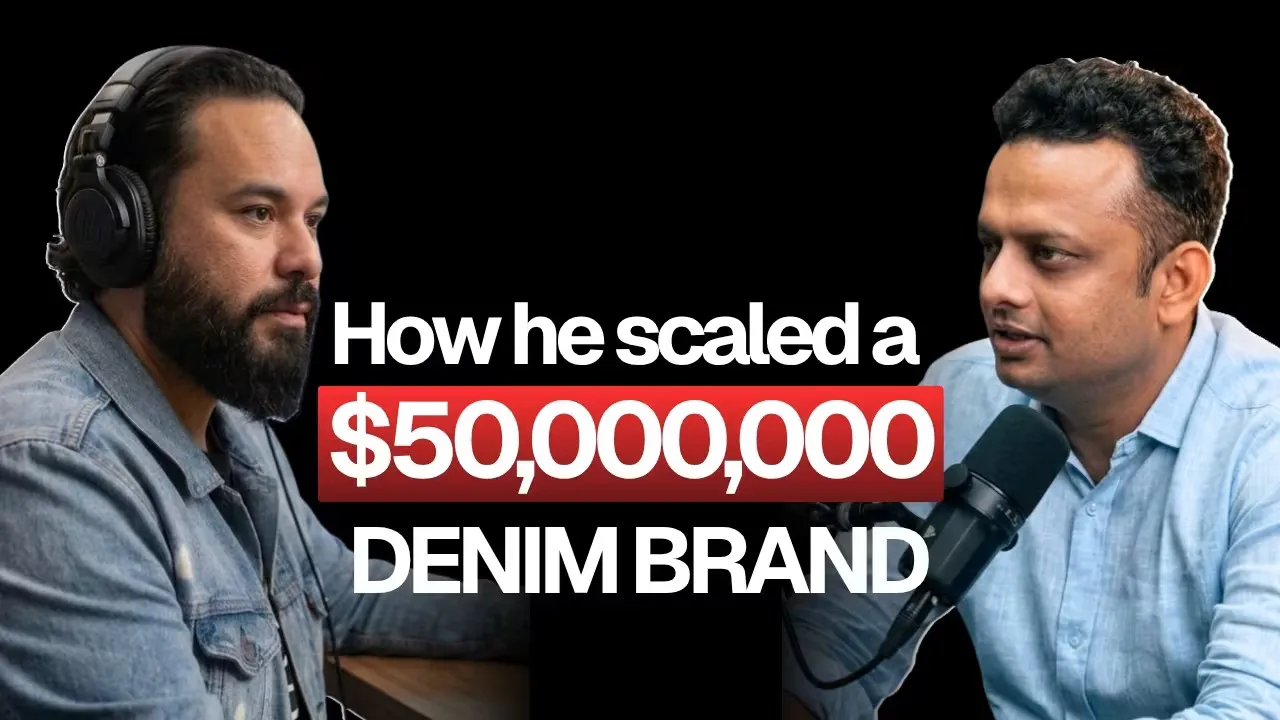
Rimjim Deka didn't set out to build a fast fashion company. She set out to prove that she could start over. After a decade building Streetstylestore, one of India's earliest fashion e-commerce platforms, into a business processing crores in annual revenue, she walked away from it, and started again from a one-BHK apartment in Guwahati with a 500 square foot warehouse and a single obsession: what if you could design a piece of clothing on Monday and sell it by Sunday.
In this episode of Brewed, Rimjim breaks down how that obsession became Littlebox, a fast fashion brand now serving 2.2 million customers entirely through its own channels, with no presence on Amazon or Myntra, an LTV to CAC ratio of 4.6, and a policy of never running a sale. She talks about launching viral content with zero models, the one decision she calls the worst mistake of her career, why she walked away from all five sharks on Shark Tank India after they said yes, and what it actually takes to build a fashion brand from the northeast of India when there is no one who has done it before you.
This conversation is for founders building outside India's usual startup hubs, DTC operators trying to understand what a real no-discount, no-overproduction model looks like in practice, and anyone who has ever had to start over with nothing but conviction.
What you'll learn
- The Littlebox story: from an 800-person valley to fast fashion 3.0
- Saying yes with no reference point: how a blogging gig became Streetstylestore
- Ten years at Streetstylestore: from fashion enthusiast to builder
- The COVID conversation that became Littlebox
- The first viral moment: launching without models
- Fast fashion 3.0: the Monday-to-Sunday, no-overproduction machine
- Why Littlebox has never run a sale
- Growth, the worst mistake, and staying bootstrap at heart
- The app as an experience, not a transaction
- The broader lesson: fearlessness and dreaming big from tier 2 India
The complete breakdown
1. The Littlebox story: from an 800-person valley to fast fashion 3.0
Rimjim Deka grew up in a valley of about 800 people near Zero in Arunachal Pradesh, in a small colony of five to six hundred families where her father worked for a central government electric corporation. There was no fashion industry to be exposed to, no brands, no reference point. The only fashion she saw came from her grandmother's home in Shillong, where she would visit for school holidays and watch women dress for Sunday church in the most stylish shoes she had ever seen.
That valley eventually produced a fast fashion company that today runs on a philosophy almost no one else in the industry has fully executed: ideate on Monday, sell by Sunday. Littlebox now serves 2.2 million customers, sells entirely through its own channels with no presence on Amazon or Myntra, operates a 40,000 square foot warehouse in Noida and a headquarters in Guwahati, and has sold roughly 25 lakh fashion pieces with fewer than 2,500 left unsold. Its LTV to CAC ratio sits at 4.6. And the company has never run a single sale.
"When you come from a place like where I come from, there is no excuse to hide behind. My parents would ask, what is this, what have you been talking about. But I told them, I don't want to go for engineering."
2. Saying yes with no reference point: how a blogging gig became Streetstylestore
Rimjim's academic path was a fight against the default. Her parents wanted engineering, like almost everyone else in the colony. She resisted from as early as class 10, insisted on studying arts, and eventually chose journalism, moving to a university she knew almost nothing about because she had missed her preferred deadline waiting on a state exam result.
College did not give her the career she expected. She loved the camera, not because of journalism, but because everything about being on screen felt connected to fashion and glamour. After graduation she moved to Delhi, and a chance meeting changed the direction of her life. A man running a small real estate blog needed content and asked her to write. She told him she could not write about real estate. When he asked what she was interested in, she said fashion. He suggested she start a fashion blog instead.
"It was 2012. Blogging was still a thing. I was inspired by an influencer I used to follow, who would wear beautiful clothes and write about them."
The blog did not make money. The same person who hired her suggested she try selling instead of just writing, curating pieces for customers directly. She had planned to do it for only a few months before returning home. She never left.
"That's how the story of Streetstylestore started. Writing about products, going to the wholesale markets of Delhi. That's how my first company began."
3. Ten years at Streetstylestore: from fashion enthusiast to builder
Streetstylestore.com launched into an Indian e-commerce landscape that barely existed yet. Flipkart was around, but there was no playbook for direct-to-consumer fashion. Rimjim did everything herself: photographing products, talking to customers, processing refunds, even handling banking. There was no one ahead of her to learn from.
"When I started in 2012, there was nobody to look up to. Nothing to learn from. I learned everything on my own, going and meeting vendors in the gullies of Delhi."
The conversion economics of that era look almost fictional now. Meta ad costs were around 25 rupees per conversion. Today, she says, that kind of cost is unimaginable given the competition and the algorithm changes since.
The most important shift during her decade at Streetstylestore was internal, not external. She stopped loving fashion as a product and started loving the machinery behind it.
"Today I don't love the dress. I love the behind-the-scenes of the dress. I am much more into going to the mills, talking to the manufacturers. That is where my heart lies. I am more of a builder than a fashion enthusiast."
After six or seven years, she began to feel like a manager rather than a builder inside her own company. The hardest realization was not that she wanted to leave. It was recognizing that she had, in her own words, fallen out of love with something she had built her entire adult life around.
4. The COVID conversation that became Littlebox
Partha Kakati came from a very different background. He belonged to a family with a history in the freedom movement, where business was viewed with suspicion and civil service was the expected path. He had been preparing for competitive exams for years, working a bank job on the side, while he and Rimjim maintained a long-distance relationship and eventually married.
COVID put them in the same city for an extended stretch for the first time, and gave Rimjim a rare stretch of time to sit with the exhaustion she had been feeling at Streetstylestore. She told Partha she wanted to leave. He told her he did not want to just take another job either. Between conversations and shared reading, an idea formed.
"He told me he wasn't interested in fashion at all. But he said, maybe we can build something differently. Maybe we can solve the problem of overproduction."
Rimjim had spent a decade watching overproduction quietly wreck fashion businesses from the inside. Partha brought analytical and operational rigor she felt she lacked. The partnership worked because it was complementary from day one: her product instinct and market feel, his structured, calculative thinking. Littlebox was built around solving overproduction specifically, not around a love of fashion for its own sake, which is precisely why the operating model turned out to be so different from anything else in the category.
5. The first viral moment: launching without models
When Littlebox launched, Rimjim was, in her words, a thousand percent certain it would work, not out of blind confidence but because a decade of hard-won experience had given her real conviction in her own instincts. The early weeks were inconsistent: orders for a week, then nothing for nine days. She stayed calm through it.
The moment that changed everything happened when Littlebox launched a set of products using only product shots, no models, foreign or Indian, at all. Every instinct on her team said this would not work. Fashion converts better with aspirational imagery, and in an industry where foreign models often see stronger engagement, going model-less looked like a mistake waiting to happen.
"I don't recall seeing any digital fashion brand projecting a product this way. But I understood something: a woman looking at a model already has a version of herself in mind. If a model doesn't match her body, her height, her skin tone, it breaks that imagination. Just show her the product, and she can imagine herself in it."
The content went viral without any real marketing push behind it. Some viewers even assumed the brand was foreign, an irony Rimjim doesn't celebrate but notes as proof of how much perception matters in fashion. The lesson she draws is not about avoiding models forever. It is that imagination sells better than depiction, a belief she holds personally as much as strategically.
6. Fast fashion 3.0: the Monday-to-Sunday, no-overproduction machine
Littlebox's central operating philosophy is that speed and low overproduction are not separate goals, they are the same goal viewed from two directions.
A traditional fashion brand plans a season three to six months out and commits to inventory long before knowing whether a design will sell. Littlebox works on a radically compressed loop. New product ideas are tested using organic content and social signals before a single unit is produced at scale. If a sample fabric is available, a prototype can be made in 48 to 72 hours. New styles launch on Fridays, get tested through the weekend, and by Monday the data determines what gets reordered.
"We do not shortlist a product and go find fabric for it. We are fabric-first. We look at what we already have in-house and ask what trending products we can build from it."
Once a style proves itself, it moves into a replenishment cycle where Littlebox forecasts only 15 days out rather than months, dramatically reducing the risk of being stuck with unsold stock. Purchase orders go out to stitching partners daily rather than in the traditional 30 to 45 day cycle most manufacturing relationships operate on.
"For us, my team gives priority orders to our stitching partners every single morning. Imagine being a manufacturing partner who gets a new priority purchase order every day of the month."
The complexity is compounded by the fact that women's fast fashion requires far more style variety than men's. A men's shirt might have three or four dominant patterns to manage at scale. Women's fashion multiplies that many times over, and Littlebox has built its entire manufacturing and forecasting machine to handle that variety at speed without stockpiling.
7. Why Littlebox has never run a sale
Discounting, in Rimjim's framing, is not a marketing lever. It is a symptom of a supply chain problem.
"Discounting in fashion is what happens because of overproduction. Nobody discounts their best-selling item. You discount what you overbought because you were wrong about demand."
Because Littlebox forecasts in 15-day windows and rarely commits to large batches upfront, it simply does not generate the kind of dead stock that forces most fashion brands into markdown cycles. The company could charge more for many of its pieces and still sell through, but has deliberately priced to avoid ever needing an exit ramp through discounts.
The customer profile reinforces the decision. Littlebox's core customer is not a price-sensitive shopper living on pocket money. She is self-actualized, financially independent, often a working professional, and buying pieces that do not look like something bought off a rack.
"If we pushed discounts, would people buy more? Yes, I don't deny that. But we don't have the kind of excess inventory that requires giving discounts, because we are optimized for lean manufacturing from the start."
8. Growth, the worst mistake, and staying bootstrap at heart
Littlebox's growth engine runs on two channels: performance marketing, which Rimjim considers the strongest lever, and influencer marketing, which the team scaled to onboarding around a thousand influencers a month starting from the beginning of the year. Both channels are run with a discipline she attributes directly to years of bootstrapped decision-making, even after raising institutional capital.
That discipline slipped once, and it became the costliest lesson of her career. After closing a funding round, the team decided to double marketing spend in a single month to push growth harder.
"It was one of the worst mistakes of my life. There is always a natural ceiling to your audience. You cannot just double or triple your paid marketing spend and expect revenue to scale with it."
The month that followed was chaotic: unit economics went haywire, and it took real time to rebuild the balance between spend and actual demand. The learning reshaped how she thinks about scaling paid channels permanently: growth has to be earned in proportion to genuine audience size, not forced through spend.
Despite the scale Littlebox has reached, Rimjim still personally reads customer messages and responds to complaints.
"I open the door and I talk to them myself. My team already knows the technical fixes. But when I read what customers are actually frustrated about, I sometimes realize that what we've been prioritizing internally isn't actually their top concern. Reading those messages resets what the organization focuses on."
9. The app as an experience, not a transaction
Rimjim knew from the beginning that owning a direct channel to her customer was non-negotiable, well before she understood how to execute it.
"If Instagram changed its algorithm or its commission structure overnight, there's nothing you can do about it. But if a customer has your app on her phone, nobody can take that away from you."
The path to a good app was not smooth. The first attempt, built with an early provider right as Littlebox was preparing to appear on Shark Tank India, was chaotic: a flood of downloads arriving just as the infrastructure struggled to hold up.
The insight that changed how she thought about the channel came from watching a specific customer profile: a 22-year-old who also had Zara, H&M, and Myntra installed on her phone. That Littlebox earned a place in that same short list, among the apps she checks habitually rather than only when she needs to buy something, was something Rimjim admits she doubted would happen in 2023.
"I doubted myself constantly on whether this investment made sense. When I saw that people were genuinely keeping the app and coming back to browse, it told me these are our real customers. Downloading and keeping an app is intentional. Scrolling from a Meta ad is impulsive."
That distinction reframed the entire purpose of the channel for her. The website exists for transactions. The app exists to stay present in a customer's life even in the weeks she isn't buying.
"It has to be more experiential than transactional. The web is for one order. The app has to be elevated, something she checks every Friday just to see what's new, even if she's not purchasing that day."
Asked what she would build if she led product at Appbrew for a month, her answer was immediate: deeper personalization by geography. A customer in Delhi and a customer in a smaller city have different aesthetic instincts, and she wants the ability to serve genuinely different visual experiences to each, rather than the same catalog dressed identically for everyone.
10. The broader lesson: fearlessness and dreaming big from tier 2 India
Two threads run through everything Rimjim has built, and both trace back to where she started.
The first is a comfort with starting over. When asked what Littlebox has taught her about herself that a decade at Streetstylestore never fully confirmed, her answer was direct: she is not afraid of losing what she has built, because she has already proven to herself that she can rebuild.
"I'm not scared of failure anymore. I can just start over. Nobody can take that away from me. That fearlessness is so important, because when you come from a protected background like mine, that fearlessness is usually the first thing you lose."
That fearlessness showed up most visibly when Littlebox appeared on Shark Tank India season 3 and received offers from all five sharks, then walked away from taking any investment.
"Inside that studio, the energy is incredibly high. You will make a decision in that moment that you might not make with a clear head. We got the valuation we wanted and we were happy. But we didn't want to set a precedent for future investors that we'd cave to that kind of pressure."
The appearance still gave Littlebox enormous visibility overnight, and the team spent the following months working to justify that spike rather than let it fade. It also became their real education in how fundraising and venture capital actually work, ahead of any future raise.
The second thread is culture, and Rimjim is candid that this is the part of scaling she worries about most. In the early days, culture transferred naturally because there were only a handful of people absorbing it directly from her and Partha. As Littlebox has grown past a hundred people, she has had to be far more deliberate about codifying values that used to spread by osmosis: honesty, kindness paired with direct feedback, frugality, and genuine ownership.
She points to a specific hire as proof the model works: a young graduate who joined with an interest in influencer marketing, was given real trust within a few months, and became the youngest team lead in the company, running a channel where Littlebox now spends significant marketing budget.
"We hired her straight out of college. Within two or three months we made her the lead of influencer marketing. She did phenomenally well. We trust people, and that trust is what lets them take ownership."
Her advice for founders building from tier 2 and tier 3 India, where she started, is unambiguous: dream disproportionately bigger than your surroundings suggest is reasonable, because there is no local blueprint to reassure you otherwise.
"If you're not dreaming big, don't even start. You won't be able to name a single person from a place like the northeast who has done this before you. That absence has to make you believe harder, not less."
She names The Souled Store as a domestic brand she admires for the strength of its repeat and retention after years of quiet struggle before its breakout, and Emma Grede internationally, for building Good American and Skims into businesses with real operating discipline behind brands that could have coasted on visibility alone.
Reflecting on what season two of her career has taught her that season one at Streetstylestore didn't fully cement, Rimjim lands on something quieter than fearlessness: certainty about her own skill.
"I've learned that I'm good at what I do. Genuinely good. There would be very few people in this category who understand what I understand about price points, about product, about this entire game. And if I had to start over again tomorrow, I would do it even better. That's not overconfidence. That's data-backed confidence."
The complete episode transcript
Abhijeet: Welcome to Brewed. Today's guest built Streetstylestore into a business doing crores in annual revenue, then walked away, and started over in a one-BHK apartment in Guwahati with a 500 square foot warehouse alongside her co-founder Partha Kakati. Her obsession: ideate fashion on Monday, sell it by Sunday. Today Littlebox has 2.2 million customers, sells entirely through their own channels with no Amazon or Myntra, runs a 40,000 square foot warehouse in Noida, has sold 25 lakh fashion pieces with fewer than 2,500 unsold, and has never run a single sale. She walked onto Shark Tank India, got offers from all five sharks, and walked away without taking the money. This is Rimjim Deka, co-founder and CEO of Littlebox, the first fast fashion brand from the northeast making waves across India. Welcome to Brewed.
Rimjim: Thank you, excited to be here.
Abhijeet: Take us back to before Littlebox. You grew up in a valley of about 800 people near Zero in Arunachal Pradesh, studied journalism, were ready to be a news anchor, and then someone asked you to write a fashion blog. What made you say yes, and when did you realize it was something more?
Rimjim: I think it was easier for me to say yes because I grew up in that valley. I had no reference point, no luxury of overthinking, nothing to compare it to, nobody senior in my life doing anything similar. So when someone asked, I just said yes. At that point in your life you say yes to things that are easy, not necessarily comfortable. And once I went ahead, I never stopped. Coming from a very small place shaped a lot of my decisions. I had nothing to prove, because the place I came from never pressured me to become something specific.
Abhijeet: What was the assignment, and how did that turn into building something in fashion?
Rimjim: I had a genuine interest in fashion and art, but where I grew up, that wasn't a normal thing, even for a girl to have an interest in fashion. We weren't exposed to any brands at all. But I was certain I loved curating things, loved color, loved anything unmistakable. I understood aesthetics from a young age, even if I didn't have the language for it back then. I knew I had to do something around it, but I had no plan. My parents wanted me to go for engineering, like everyone around us did. So I did coaching for it. That was the last decision my parents made for me. I went, but I was completely clueless. I understood physics and chemistry academically, scored decently, but my heart wasn't there. The only good thing that came out of that coaching institute was that I made friends. I told my parents that this was the last decision they would make for me. Since then, they haven't made another one for me.
Abhijeet: Tell me about your parents and your school years.
Rimjim: My father worked for a central government electric corporation, posted at a dam site. There were around 500 to 600 families living together there, like a colony, in a valley near the China border. During summer and winter vacations I would go to my grandmother's house in Shillong. Going there as a kid, I think that's where my interest in fashion actually came from. People in Shillong were incredibly stylish, everyone had their own aesthetic, bohemian, western, whatever it was. I was fascinated. Sunday church was the most fashionable event you'd see anywhere in the northeast. Even in small towns there'd be a tiny gift shop selling the most beautiful heels, and women would buy them just for Sunday mass.
Abhijeet: When did you first push back against the engineering track?
Rimjim: Even in class 10 I told my parents I didn't want to study science. I wanted to study arts, eventually history, maybe at a school abroad. I was very clear even then. But coming from where I did, there was no room for that kind of decision. My parents kept asking what I was even talking about. I finished 11th and 12th in the same stream, tried applying to engineering colleges like everyone around me, including juniors who all went to private engineering colleges. I chose not to. I was also waiting on an Assam state exam result that came late, and by the time I didn't clear it, most college admission windows had closed. I saw an ad for Lovely Professional University in the newspaper. I didn't know anything about it, just that it existed. My parents thought I was insane. Crossing the road in Delhi was already overwhelming for us, we'd never dealt with real traffic. But I told my father, I need to go somewhere, I need to study journalism, whether it helps me or not. He agreed. I think that was the moment he realized he wasn't going to interfere in my decisions anymore.
Abhijeet: How was college?
Rimjim: Honestly, I never fully enjoyed it. I made good friends, that was the best part. But I struggled with the culture and the weather. I was very interested in learning though. I'd come to Delhi for short internships at newspapers during breaks. By the last year of graduation I realized I wanted to be a news anchor, not because of journalism itself, but because everything about being on camera felt connected to fashion and glamour to me. So after graduation I moved to Delhi, where my sister was already living, and we stayed together.
Abhijeet: How did the fashion blog happen?
Rimjim: I met someone who was running a small real estate agency and needed blog content. He asked if I'd write, since I had a journalism background. I told him I couldn't write about real estate at all, I didn't understand square footage or any of it. He asked what I was actually interested in. I said fashion. So he said, fine, let's start a fashion blog. This was 2012, blogging was still a real thing. I was inspired by an influencer I followed who wrote about the clothes she wore. I wrote for a couple of months. Then he told me writing wasn't going to make money, and suggested I try selling instead, curating and selling pieces directly. I said why not. At the same time, my mother was pushing me to come back home, and I was considering it since my sister was also leaving Delhi after her graduation. I told him I'd do this for a few more months since he was also planning to leave in three months. He said, just do it for as long as you're here. And I never went back. That's the story of how Streetstylestore started, writing about products, going to the wholesale markets of Delhi.
Abhijeet: You built Streetstylestore over roughly a decade. For founders starting from scratch today, what do you want to share about that early journey?
Rimjim: Streetstylestore started from a mix of a love for fashion and complete ignorance of the business side. I never thought about where it would end up. Even the online versus offline distinction was new, Flipkart existed but there was no defined category for what we were doing. I realized I was genuinely good at curation, extremely good at execution. The other co-founder at the time handled tech. It wasn't as complicated a market then. If I had to tell a young founder to start a fashion brand exactly how I did in 2012, I'd tell them not to, because the competition today is completely different. We used to convert customers on Meta for about 25 rupees. That's unimaginable today given how much the algorithms and the competition have changed. The hard part back then was that there was nobody to learn from. No one who had built a brand this way before. Everything I learned, I learned by going and meeting manufacturers myself, in the narrow gullies of Delhi's wholesale markets. That experience made me who I am. I wasn't fearless at all back then, coming from a small, protective place. I was scared of a lot of things. But those years changed that.
Abhijeet: What changed for you personally over that decade?
Rimjim: I loved fashion as a product until I started Streetstylestore. After that, it became something else entirely. Today I don't love the dress itself, I love what's behind it. I'm far more interested in going to the mills, talking to manufacturers, understanding the chaos of supply chain, than in the finished product. That's where my heart actually is. I see myself as more of a builder than a fashion enthusiast now. After six or seven years, I started to feel like a manager rather than a builder inside my own company. The hard part wasn't leaving Streetstylestore. The hard part was realizing I had fallen out of love with it. I don't regret those years at all, they made me everything I am today.
Abhijeet: How did Littlebox and your partnership with Partha come together?
Rimjim: Partha comes from a family with a freedom fighter background, where business was viewed almost as illegal, and civil service was the expected path. He'd been preparing for competitive exams since childhood, also working a bank job on the side. We were in a long-distance relationship for a long time, eventually got married while still living apart. COVID brought us into the same place for an extended period for the first time, which meant he got a firsthand look at what building something actually looks like. During that time I told him I'd been feeling for a while that I needed to leave Streetstylestore. We talked, read some books together, and I told him I couldn't just go work for someone else, I'd always been the one in charge of my own path. He understood, and told me maybe we could build something together, since he wasn't interested in fashion himself but was interested in solving a real problem. I'd seen overproduction destroy fashion businesses from the inside for years, and I told him it was a mathematical problem we could actually solve. He got interested. He believed in me because he'd watched me grind for years at Streetstylestore and knew that if I said I could build something, I would. I always felt we complemented each other, I had the product instinct, he had the calculative, structured thinking I didn't. One condition from him early on: he wanted the business to also serve his community and his people, given his family's history of public service. I respected that completely, and it shaped how we built from day one.
Abhijeet: Tell us about the first moment you knew Littlebox was going to work.
Rimjim: When I started building Littlebox, I was a thousand percent sure it would be big, because I finally had real clarity, built over ten to twelve years of experience. Even when the early orders were inconsistent, a week of orders, then nine days of nothing after we launched in April, I stayed okay with it. The real moment came when we launched a set of products using only product images, no models at all, foreign or Indian. My entire team pushed back, said we needed models. I said no, let's try it without. It worked beautifully, went viral without much marketing effort behind it. Some people even assumed we weren't an Indian brand, which isn't something I celebrate, but it tells you how much perception matters in fashion. I don't recall seeing any digital fashion brand project products this way before. My reasoning was that a woman looking at a model has already built an image of herself wearing something. If the model doesn't match her body type, her height, her skin tone, that image breaks. Showing just the product lets her imagine herself in it, in whatever way she wants.
Abhijeet: How do you position Littlebox as, essentially, fast fashion 3.0?
Rimjim: Fast fashion as we've known it, Zara being an early version, then Shein representing a faster internet-era version, we're trying to marry both of those with something specific to us. We have to be fashion-first because our customer is exposed to global content on Instagram and wants to look like anyone else in the world. But we also had to solve overproduction, which became core to our DNA. Real-time production is essentially the same thing as no overproduction, they're directly correlated in supply chain terms. In traditional fashion, brands prepare inventory three to six months in advance. We do replenishment forecasting for only the next 15 days, and for new products we just watch what's happening in real time on our own channels. A traditional purchase order to a manufacturing partner takes 30 to 45 days to execute. My team gives priority orders to our stitching partners every single morning. Every day of the month, our partners are getting new priority purchase orders.
Abhijeet: How does the Monday-to-Sunday cycle actually work operationally?
Rimjim: Fridays are for new launches. We test what we've spotted as trending across Instagram and our own website, and we don't guess, we look at real signals. We're fabric-first rather than trend-first, which is unusual in fashion. We don't shortlist a design and then go find fabric for it. We look at what fabric we already have in-house and figure out what trending products we can build on top of it. In parallel we keep working on more neutral, evergreen pieces too, so we're covering both directions. We spot a trend, make a sample if the fabric is available, sometimes within 48 hours, sometimes 72. We launch every Friday, test through the weekend and into Monday, then ship the first batch within seven days. Once a product proves itself in that first cycle, it moves into our replenishment forecasting for the next 15 days.
Abhijeet: Women's fast fashion has far more style variety than men's. How does that complicate the machine?
Rimjim: In women's fast fashion, the number of styles you have to manage is extremely high compared to men's. A men's shirt is largely a men's shirt, maybe three or four dominant patterns. Women's fashion multiplies that many times over, and you need variety to stay relevant. Making all those patterns, sourcing fabric for each, producing them fast, and managing inventory without overstocking, the entire machine has to be close to perfect. Over the last three and a half years this is what we've been building toward, and I don't think anyone else in India, possibly the world, is running fast fashion with this level of real-time execution. Manufacturing being in-house is something we take real pride in.
Abhijeet: You've sold around 25 lakh pieces with fewer than 2,500 unsold, and you don't discount. What's the insight there?
Rimjim: What people call a "sale" in fashion is really just a symptom of overproduction. Nobody discounts their best-sellers, you discount your new arrivals that you were confident would work and then overproduced or overbought. Now you have inventory and no other way to move it except a 50 to 70 percent markdown, dressed up as a marketing campaign. It's not a strategy, it's just a consequence of producing too much. We never had to do that, so we've always been against discounting, and it shows in our pricing too. We know we could push prices up by 300 or 400 rupees on some pieces and still sell through, but we don't, because we don't want to get trapped in a discounting cycle eventually. We've spoken to other brands about this and heard that customers eventually expect discounts if you train them to. That's been a fundamental lesson for us. Our customer isn't a price-sensitive shopper living on pocket money looking for the next markdown. She's self-actualized, often a working professional, buying pieces that don't look like they came off a generic shelf.
Abhijeet: Let's talk growth. How have you scaled so fast within strong limits?
Rimjim: Performance marketing is definitely our strongest channel. We also have strong repeat purchase behavior. Influencer marketing is more recent, but our team has done a phenomenal job, onboarding around a thousand influencers a month since the start of this year, which gives us a lot of organic reach and strengthens our style presence on Instagram. But when it comes to growth overall, we're still very rooted in our bootstrap-era DNA of calculating every decision, even after raising money. I'll give you an example. We raised funding last July, aligned with our investors that we should now push harder on growth. I took a decision in September to double our marketing spend. It was one of the worst mistakes of my life. There's always a natural ceiling to your audience, you can't just double or triple your paid spend and expect revenue to scale proportionally. That was one of the hardest months we've had, everything went haywire. One month of overspending doesn't equal one month of proportional growth, it takes real time afterward to bring things back to balance, for the algorithm to recalibrate, for supply chain to catch up. We're growing fast, but we've made wrong decisions too, and we're learning from them.
Abhijeet: How do you personally stay close to customers at this scale?
Rimjim: I've always made it a habit to talk to customers directly. I still get a lot of DMs and I'm completely fine with that, I open them and respond myself. Operationally, my team already understands the technical fixes better than I do. But when there's a problem customers are facing, reading their actual messages tells me something my team's internal priority list sometimes misses. We might be solving problem A internally because we think it's the priority, but reading customer complaints sometimes shows me that problem B is actually what matters more to them right now. That realloc ates where we focus organizational resources.
Abhijeet: Let's get into the app. What made you decide it was a must-have channel, and what surprised you?
Rimjim: I always knew an app was a must-have, conceptually. If Instagram changed its algorithm overnight, or changed commission structures for anyone selling through their marketplace features, there's nothing you can do about it. But if a customer has your app on her phone, nobody can take that away from you. What I didn't know was how to actually execute it well, who the right partner was, what questions to even ask. It was new to me and to my entire team. Our first app was a mess. We launched it right around when we were also going on Shark Tank India, which brought a huge spike in visibility and downloads all at once, and the infrastructure struggled. We'd chosen a provider based on impressive-looking case studies and brand logos, but the actual experience building with them was extremely painful. Things broke that we were never prepared for. We had to pause and restart more than once.
Abhijeet: What was the customer behavior insight that surprised you most?
Rimjim: I knew the app was important conceptually, but I genuinely did not expect, back in 2023, that people would actually download it and keep it. We have a customer, around 22 years old, who has Zara, H&M, Myntra, all the usual big shopping apps on her phone. For our app to sit alongside those, something I as a founder couldn't fully wrap my head around at the time, felt significant. I doubted the investment constantly. But once we saw that people were genuinely downloading it and keeping it, it gave us so much confidence. Downloading an app and keeping it on your phone is intentional. Browsing from a Meta ad and buying impulsively is a completely different kind of customer signal. When you see how many genuinely intentional customers you have, it changes how you think about the whole channel.
Abhijeet: So even if someone only buys from Littlebox a few times a year, they might check the app much more often?
Rimjim: Exactly. It's not that they need to shop with us every month for the app to matter. What I've come to believe is that it doesn't matter if they purchase every single time they open the app. What matters is that when they check it every Friday just to see what's new, we're already occupying mind space that a website visit could never achieve. So I think the app has to be experiential, not just transactional. The website is for a single transaction. The app has to be elevated, more like a habit than a checkout tool.
Abhijeet: If you were Appbrew's product lead for a month with no constraints, what would you build?
Rimjim: I've thought about this before you asked. What I really want is deeper personalization by geography. A girl in Delhi and a girl in a smaller city have genuinely different tastes, different ways of seeing things, but right now we show both of them the same products, the same labels, the same experience. I'm not saying one should be more fashion-forward than the other, it could go either way, but it should be different. I want us to be able to track how customers behave differently across regions and then actually personalize the experience for her specifically, on the same app.
Abhijeet: Any other features on your wishlist?
Rimjim: Honestly, speed of execution matters more to me than any single feature. We operate on a Monday-to-Sunday philosophy, so the faster our internal teams can communicate and ship changes on the app, the better. We recently implemented video on the app and we're already tracking performance daily, testing variations weekly. I want that kind of rapid experimentation to keep accelerating, more than any one specific feature.
Abhijeet: What's the hardest unsolved problem in fashion you wish AI could fix?
Rimjim: This isn't a new problem, it's one of the oldest in fashion. If AI could tell me the actual size a specific customer should buy, accounting for her real measurements, that would change everything. There are companies working on virtual try-on, similar to how you can digitally try on lipstick now. But most of them don't actually tell you whether the size will be right. In India especially, "small" and "medium" have so many subsets, it's a huge challenge just from a manufacturing base size guide perspective. Even when we think we've accounted for everything, there's still variance we can't solve for. Getting that digital fitting accuracy right would save an enormous amount of organizational bandwidth. Returns are expensive, and if your return rate moves up even 2 to 3 percent, your entire unit economics shifts for the month. Because we forecast only 15 days out, our exposure is smaller than a traditional brand's, but it's still one of the biggest problems in the category. Solving fit accurately, not just visually showing a product, is the real opportunity.
Abhijeet: You walked onto Shark Tank India, got offers from all five sharks, and walked away without taking any money. Take us through that.
Rimjim: The visibility that came from the show was incredible, the name recognition happened overnight, and our focus afterward was just making sure we lived up to that spike. What happens inside that studio is that you're in an extremely high-energy environment. You make decisions in that moment based on that energy, not necessarily with a clear head. Getting a photo with all five sharks, being on national television, it's tempting to take whatever valuation gets you that outcome. We got the valuation we wanted and were genuinely happy with it in the room. But once we stepped outside that environment and had a few months to think it through, we realized it wasn't the right long-term call, especially since it would have been our first priced round and would have set a precedent for future investors. We decided not to move forward. But the process itself became our real education in fundraising, understanding what VCs actually look for, which we were preparing for anyway.
Abhijeet: As you've scaled past a hundred people, what worries you most about maintaining culture?
Rimjim: When we started, it was a small team, we put ideas together, pushed things forward as one unit. Everyone absorbed the culture naturally just by being close to us. As we've grown, that natural transfer becomes much harder. I'm confident we can always execute well on product and technology. What I'm genuinely concerned about is preserving the culture we built in those early, tighter-knit stages as we bring in more and more people who never experienced that phase directly.
Abhijeet: What are the values that define Littlebox's culture specifically?
Rimjim: Being honest and being kind sit right at the top. By kindness I don't mean avoiding criticism or withholding real feedback. There has to be a line between giving honest, even critical feedback and being unkind about it. That distinction matters enormously to me. Frugality is the second big one. Both Partha and I have that bootstrap DNA, and beyond that, coming from smaller places, we simply can't justify spending money that isn't truly ours to spend. Even after taking money from investors, we know that the further we go, the more scrutiny each rupee gets. So even today, when something goes wrong, the first conversation is about whether an expense is justifiable, and if it's not, understanding what mistake led to it. That discipline runs through the whole organization, people voluntarily avoid unnecessary spending, sometimes asking us before making even small purchases. And then there's ownership. We hired a girl straight out of college, her first job, with an interest in influencer marketing. Within two to three months we made her the lead of our entire influencer marketing function. She's done phenomenally well, and we're incredibly proud of her. We trust people genuinely, and that trust is what lets them actually take ownership rather than waiting for permission on every decision. We don't micromanage, though that doesn't mean we're not watching outcomes closely.
Abhijeet: What's your message for founders starting out from tier 2 and tier 3 India specifically?
Rimjim: If you're not dreaming disproportionately big, don't even start. You haven't seen enough of the ecosystem yet to know what's possible, and unlike founders from tier one cities who at least have a couple of examples from similar colleges or backgrounds to point to, you likely won't be able to name a single person from a place like the northeast who has done this before you. That absence should make you believe harder in yourself, not less. You have to get comfortable stepping outside your comfort zone, whatever that requires. When we started, we were building from two different locations simultaneously, which was never an easy decision, constantly splitting time between the tech and marketing team in one place and the factory in another. Even today I travel constantly, sometimes I don't even fully unpack between trips. The sense of being settled has genuinely left my life, and I'm okay with that, honestly I'm proud of that. Getting out of your comfort zone, learning wherever you can, asking questions even if they sound naive, seeking out experiences, and believing you can actually do it, that's the whole thing.
Abhijeet: Two brand founders you admire?
Rimjim: I follow fashion loosely, but I think The Souled Store is one of the standout examples in India for brand building, repeat purchase behavior, and retention. Their customer loyalty is extremely high, and I respect them because they struggled for a long time before things clicked. That struggle clearly built something real, and I genuinely admire it. Globally, I'm a big fan of Emma Grede. She came from East London, sold one company, then built Good American, and now runs Skims. Watching someone build across multiple ventures like that, with real business discipline behind each one, is something I look up to.
Abhijeet: You've now built two companies. What have you learned about yourself this second time around that you didn't fully know the first time?
Rimjim: When I left Streetstylestore, it took me a couple of years to actually make that decision, because I was scared, what would I do next, where would I go. But once I left and started building Littlebox, I felt so much more energetic. I started dreaming bigger. I never felt real depression after leaving, maybe a couple of weeks of sadness since I was leaving something I'd built my whole adult life around, but not more than that. What I've learned building Littlebox is that I can start over, that's one. And I've learned that I'm genuinely good at what I do, extremely good. There would be very few people in this specific category of fashion who understand what I understand, what the right price point is, what a customer actually wants, how to build for speed. I don't think we could have grown this fast without that. My confidence has always been high, but now it's backed by data rather than instinct alone. It's not that I'm simply repeating what worked once. It's that the data is confirming what I already believed about myself, and that's what's letting us grow ten times faster from here than we could have otherwise.
Abhijeet: Thank you, Rimjim. This was genuinely inspiring, an incredible journey building Littlebox, and I think this will push a lot of founders to bet on themselves and what they're good at, especially in a moment where, in the age of AI, individual grit is a skill that can't be copied.
Rimjim: Thank you so much, this was great.
.webp)

.webp)
%20(1).avif)
.webp)

.webp)

.webp)

.png)