

.webp)
Learn how to plan winning Diwali marketing campaigns with gifting guides, Dhanteras promotions, loyalty programs, and mobile commerce.
Every year, the same thing happens. A Shopify brand with a solid Indian customer base blocks out two weeks in October for Diwali. The sale goes live on the 20th. Orders spike. The post-mortem says it worked. And buried in the data, quietly, is the revenue that went to the store that started six weeks earlier.
This isn't a creative problem or a budget problem. The brands consistently outperforming during festive season haven't found a better discount structure or a more compelling subject line. They've restructured when the work happens: planning in August, content finalized by mid-September, paid campaigns in their learning phase before October begins.
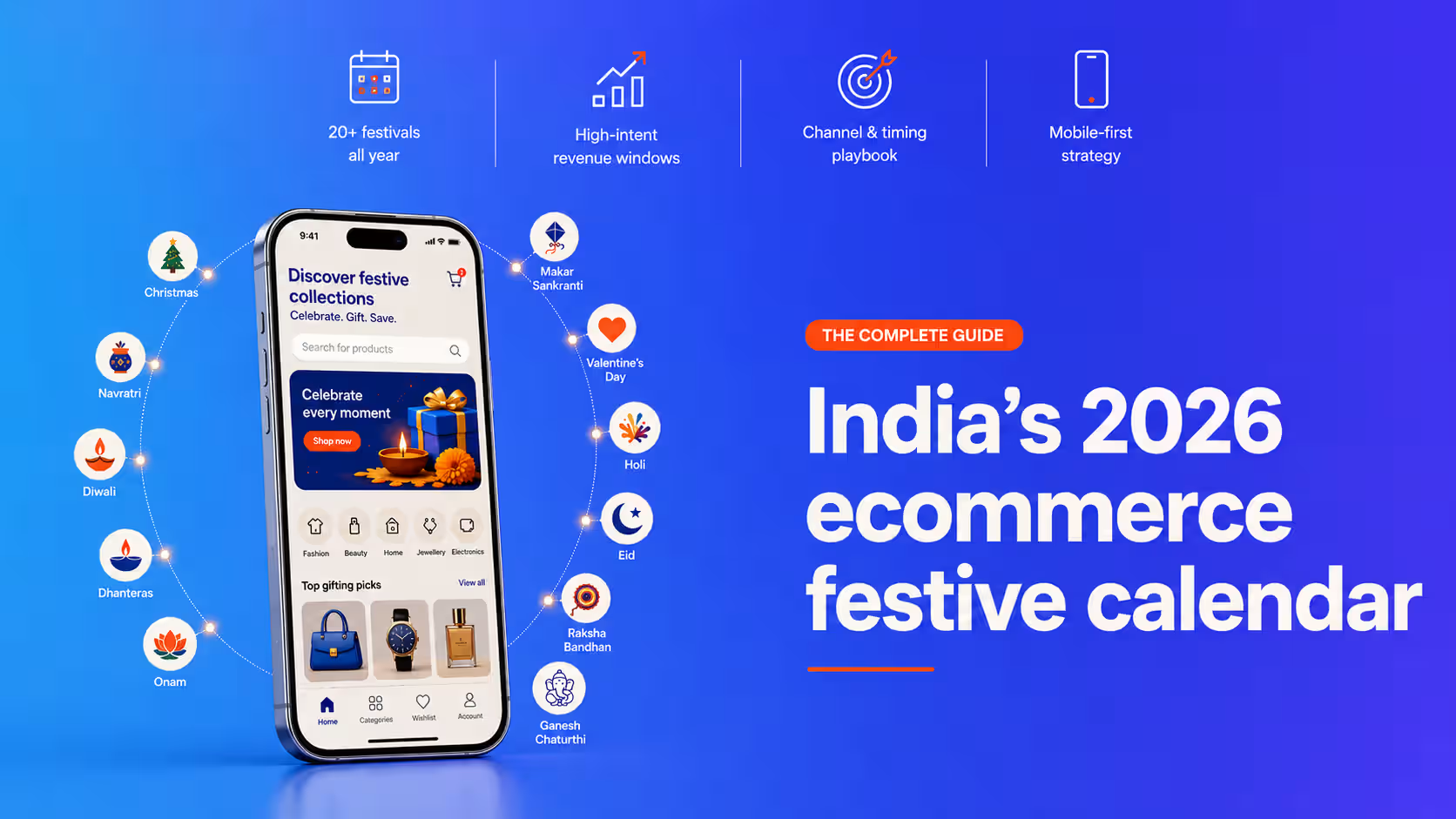
This guide covers what Diwali marketing actually requires in 2026: campaign types that convert, real examples from Indian brands, a Dhanteras-specific playbook, and a pre-festival checklist to run before the window opens. For a full view of every Indian festive peak from January through December, see The Definitive Ecommerce Festive Season Marketing Calendar for India (2026).
TL;DR
- Diwali is a six-week commercial window, not a spike event, with purchase intent building from September and peaking across Dhanteras and Diwali day.
- The most successful Shopify brands start festive planning in August, using September for audience building, gifting content, and campaign testing.
- Emotional storytelling consistently outperforms product-first promotions because Diwali is driven by celebration, gifting, and family, not rational purchasing.
- Dhanteras deserves its own 48-hour campaign with distinct assets and offer structure, separate from the main Diwali push.
- Mobile apps and push notifications give Shopify brands a direct line to opted-in customers exactly when email inboxes are overloaded and ad CPMs are at their seasonal peak.
Why Diwali Ecommerce Has Changed
The festival hasn't changed, but the shopping behavior has.
The 2025 season confirmed a pattern that's been building for three years: Diwali is no longer a spike event but a six-week commercial window with distinct phases, each requiring different marketing logic. Criteo's data from 2024 found that the shopping spree kicked off a full month before the festival itself, with sales jumping 44% in late September compared to early September (Criteo, 2025), and traffic to product pages staying 42% elevated through October before peaking in the final two weeks. A store that launches its Diwali campaign on October 20 has already missed the first wave of consumer intent.
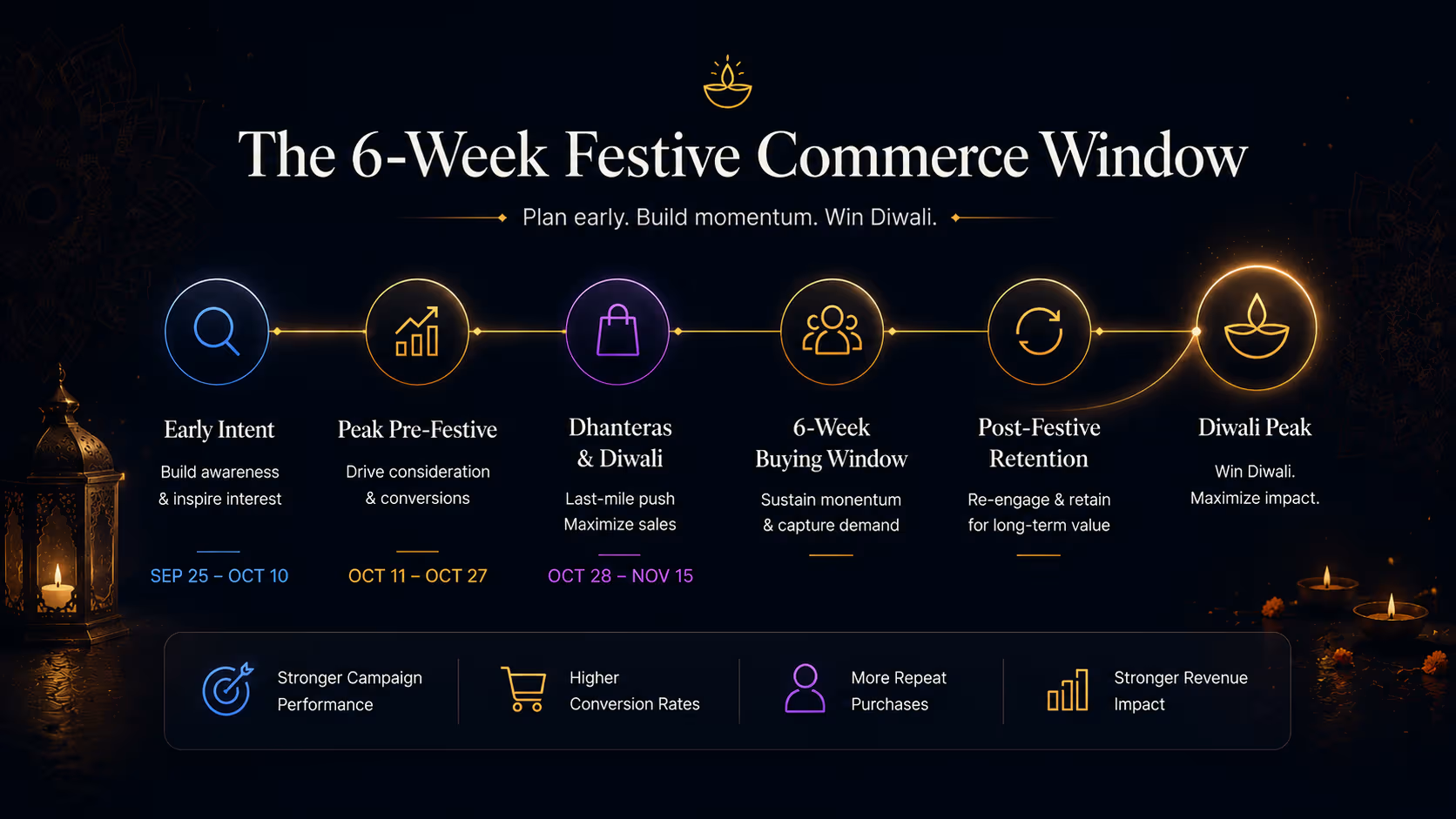
Two other structural shifts matter for how you plan. Quick commerce saw a 120% year-on-year jump in festive order volumes in 2025, which reshapes last-mile gifting and FMCG promotion logic entirely. And Tier II cities accounted for 55% of total Diwali orders, with Tier II towns specifically posting 28% YoY growth (Unicommerce, 2025). If your campaigns are metro-optimized, you're targeting a minority of the actual opportunity.
{{cta}}
Diwali Marketing Campaign Ideas That Work
Emotional storytelling campaigns
The most recalled Diwali campaigns across the last five years share one trait: they build a scene before they sell a product. Parle-G's 2025 campaign leaned into childhood memories and simple celebrations; Tanishq's "India Wali Diwali" centered togetherness and tradition; Bajaj Allianz focused entirely on a father's quiet sacrifices and never led with the product. These aren't coincidentally emotional. Diwali is a high-feeling, not a high-rational, purchase context, and emotional framing is the strategic default that earns the commercial ask.
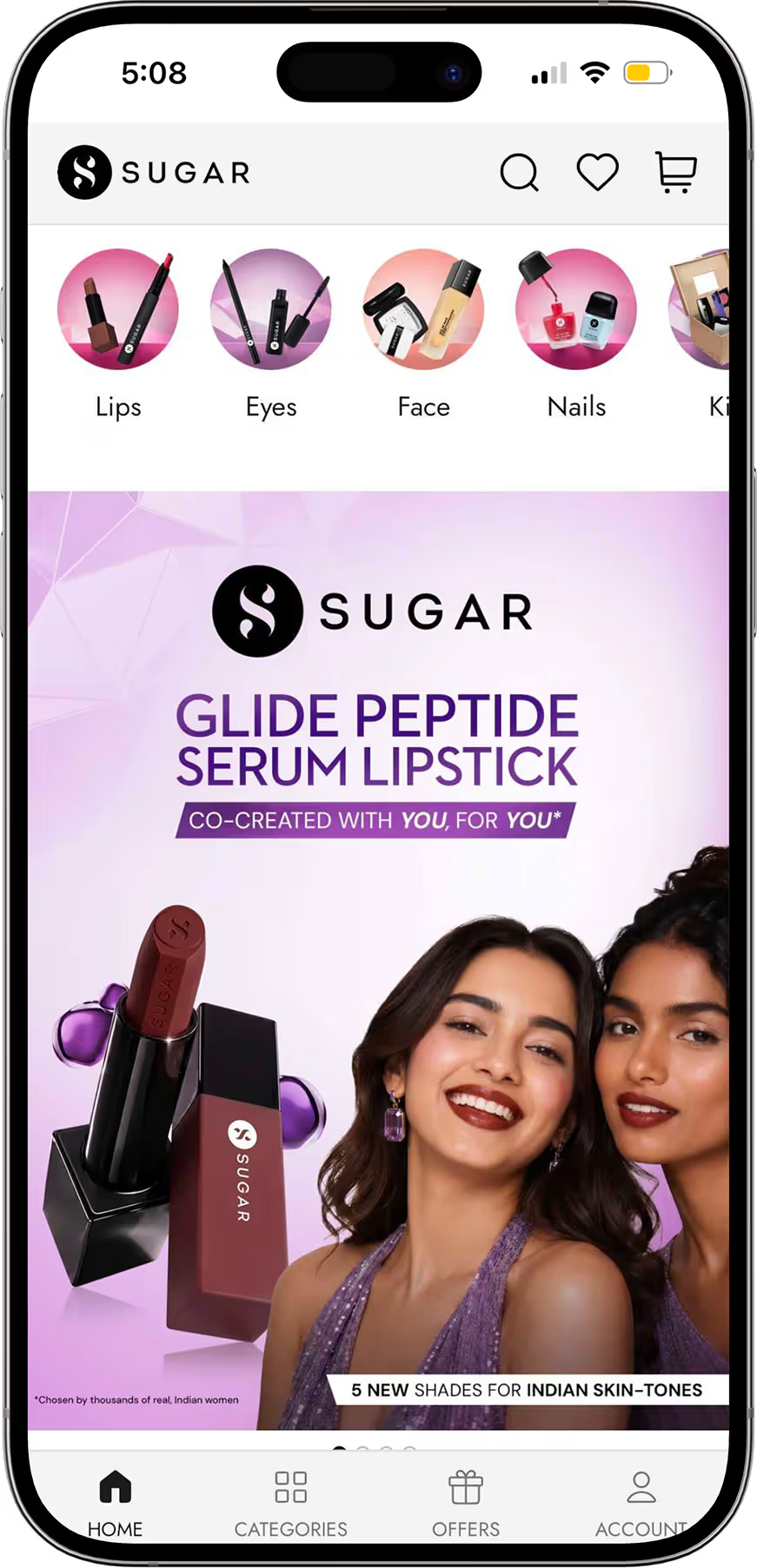
For Shopify brands running leaner productions, the same logic applies at smaller scale. A short-form video showing a family ritual with your product in the background will consistently outperform a product-first discount offer, because the emotional wrapper gives the viewer a reason to care before you give them a reason to buy. SUGAR Cosmetics rebuilt their entire mobile commerce experience around this principle during festive season, focusing on storytelling-led promotions rather than discount-led ones, and saw 70% higher conversions as a result.

Campaigns using regional languages and local cultural nuance have also outperformed pan-India generic creatives in Tier II and III markets, so if a meaningful portion of your customer base is non-metro, localization is worth the investment.
Gifting guides and curated collections
Over 80% of Diwali shoppers plan their purchases in advance, and many are buying for others, which changes the search intent entirely. Shoppers in October aren't searching "best kurta." They're searching "Diwali gift for wife under ₹2,000" or "Diwali corporate gift hamper," and if your store doesn't have a page that answers those queries directly, you're invisible to a high-intent audience that's already ready to buy.
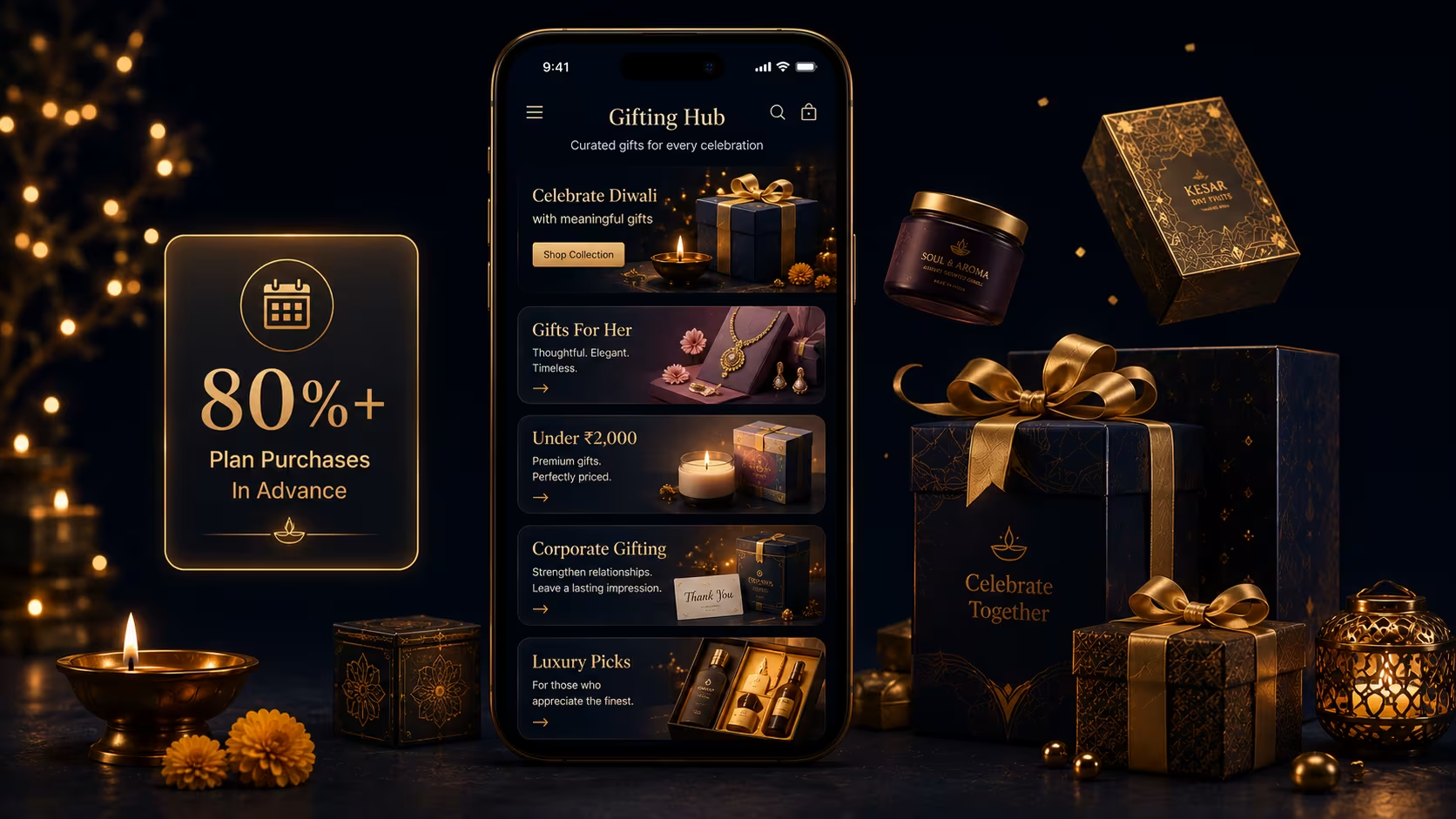
Gifting guide content does two things simultaneously: it captures organic traffic from gift-oriented searches and removes the decision fatigue that kills conversions when someone lands on your store without a specific product in mind. Structure these guides by recipient type (him, her, kids, colleagues), by price range, and by occasion sub-context (housewarmings, sweets exchange, corporate gifting). Run paid promotion on these pages from mid-September, since search volume for Diwali gifting terms builds steadily from the 15th and peaks sharply in the two weeks before the festival.
Flash sales timed to muhurat windows
Diwali's cultural calendar includes auspicious hours (muhurats) during which purchases are considered especially fortunate, with the most commercially significant ones falling on Dhanteras evening and Diwali's main night. Scheduling flash sales to coincide with these windows isn't gimmicky; it layers onto existing consumer intent rather than manufacturing urgency that has no cultural anchor.
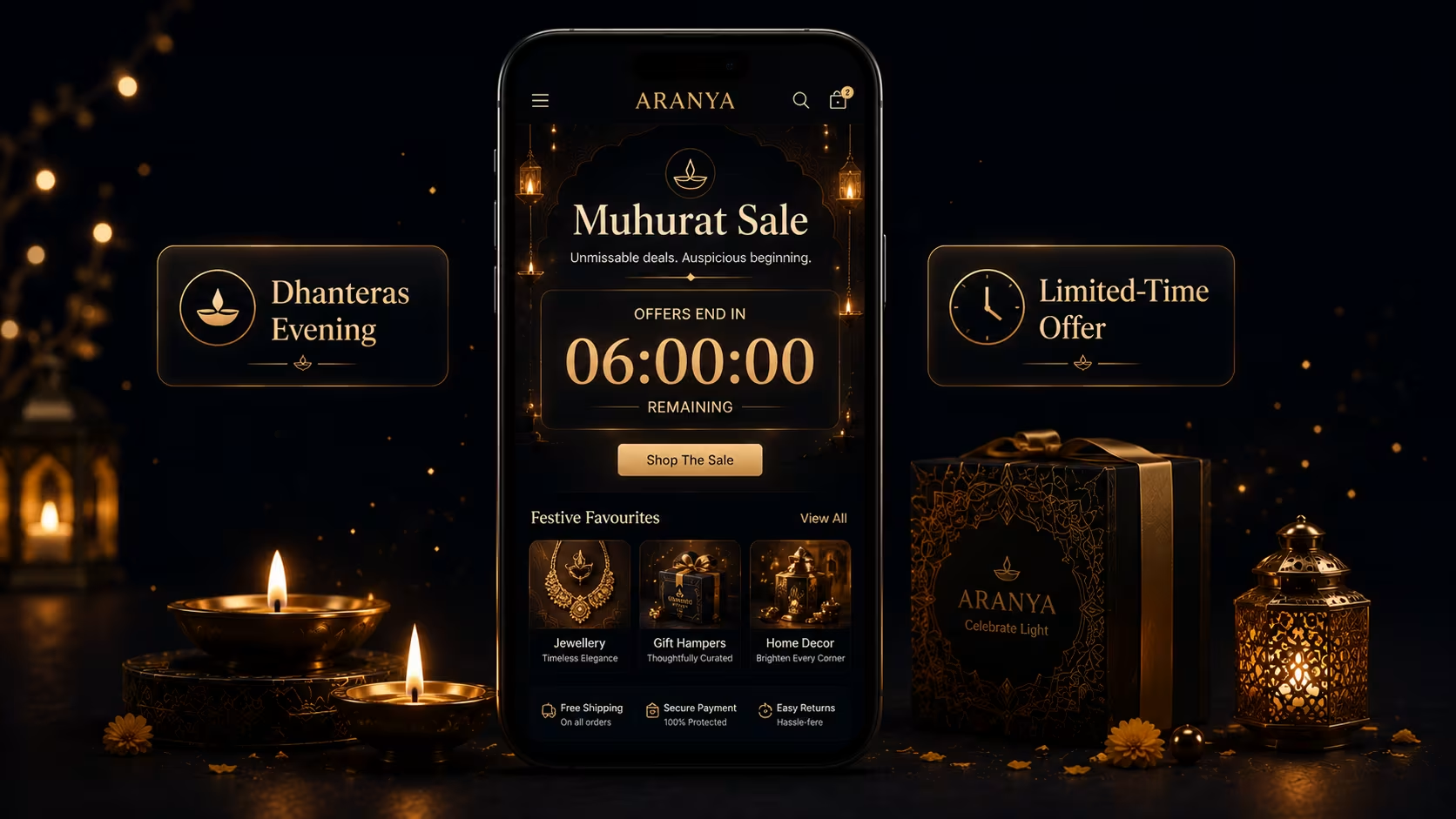
A concrete execution looks like this: a 6-hour flash sale starting at 6 PM on Dhanteras (6 November 2026), announced 48 hours in advance via push notification and WhatsApp, with a countdown timer on the landing page. The structure aligns with how customers are already thinking about the day, which means your promotion feels timely rather than intrusive.
User-generated content campaigns
Customers trust other customers more than polished brand content, especially during a festival this personal. That gives Shopify stores with smaller creative budgets a genuine UGC advantage: a hashtag campaign or a "show us your Diwali setup" prompt, paired with a real incentive, creates product-page social proof exactly when purchase intent is at its highest.
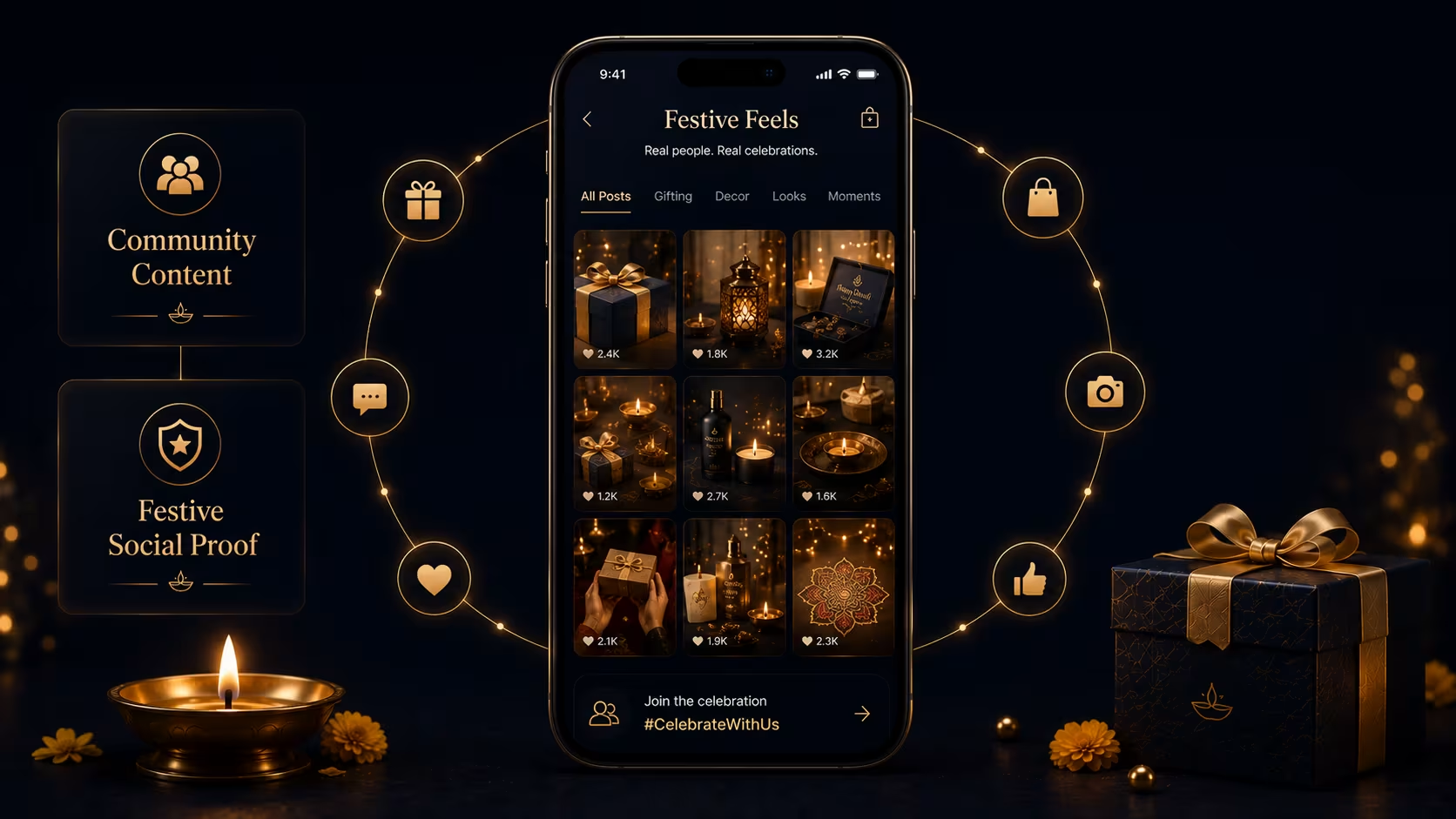
The mechanic matters more than the creative. "Share your Diwali look" with no incentive predictably underperforms; "Share your Diwali look featuring our collection for a chance to win ₹10,000 in store credit" converts. Feature the best submissions on your product pages during the campaign window, and they double as conversion content for shoppers arriving from paid channels.
Loyalty and early-access programs
Festive season is when your repeat customer base pays for itself. The stores extracting the most revenue from this window give existing customers something the general public doesn't get: early access to Diwali sales, a 24-hour head start before the public launch, or an app-exclusive product drop. The effect shows up clearly in both conversion rate and AOV from the repeat segment.
If your store has a Shopify mobile app, this mechanic works best when the early-access offer lives inside the app and gets announced via push notification rather than email. Email open rates during peak festive season fall sharply as every store's campaign lands simultaneously; push notifications, sent to an opted-in, high-intent audience, cut through that noise at a fraction of the cost.
Dhanteras Marketing: Treat It Separately
Dhanteras on 6 November 2026 is not a warm-up for Diwali. It has its own distinct purchase intent, and conflating the two in your campaign calendar is a mistake most stores make.
Traditionally, Dhanteras marks the purchase of gold, silver, utensils, and new valuables for prosperity. In 2025, that category profile had shifted significantly: electronics and automotive saw record Dhanteras sales, with Maruti Suzuki reporting approximately 51,000 unit deliveries (up from 42,000 the year before) and Hyundai India recording 14,000 deliveries, a 20% rise (Whalesbook, 2025). High gold prices pushed volume purchases down and redirected spending toward electronics and durables, making Dhanteras arguably a bigger commercial opportunity than the main Diwali day for stores in those categories.
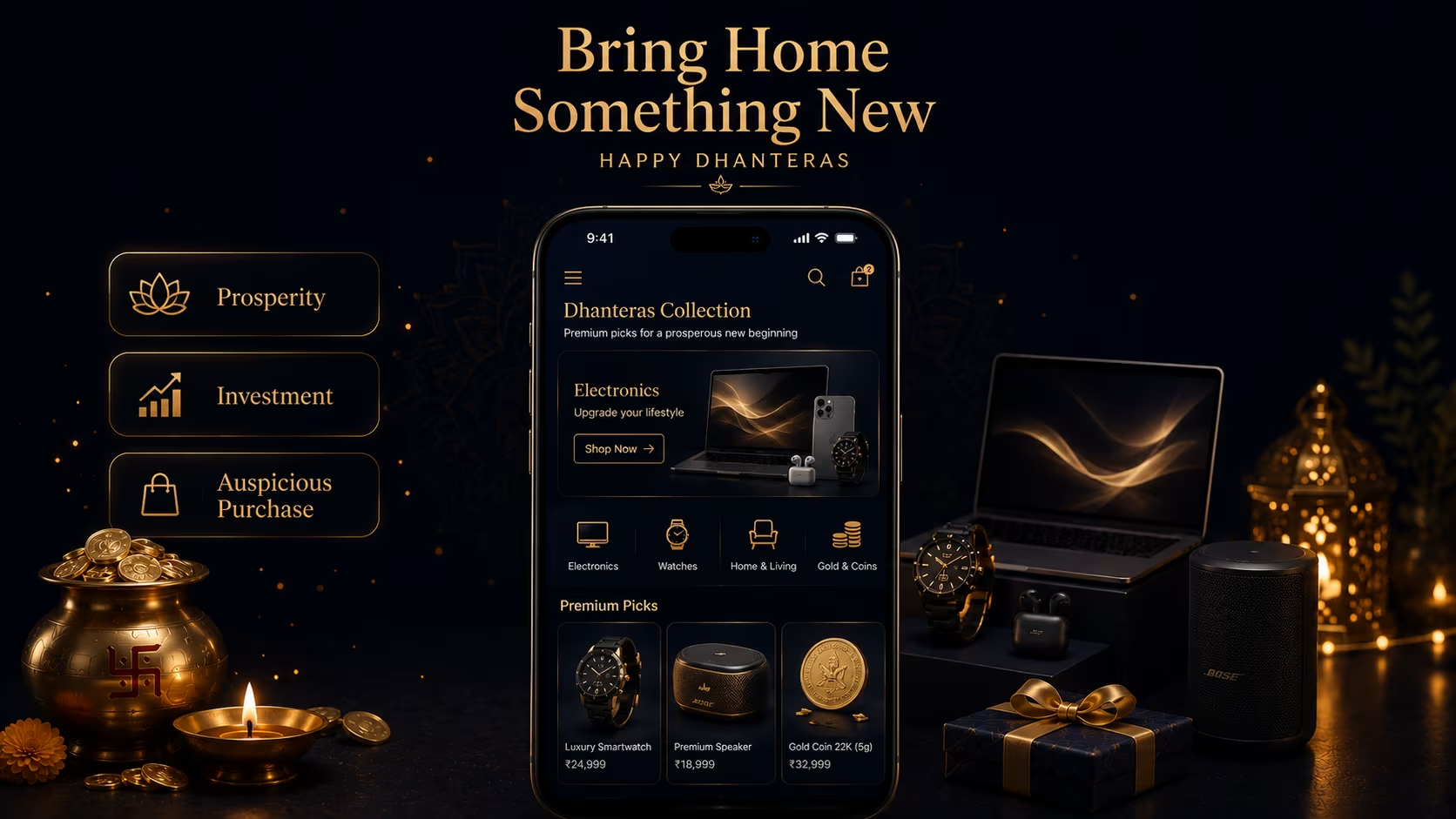
Dhanteras campaigns work best when the messaging leans into prosperity and investment framing native to the occasion. "Bring home something new this Dhanteras" outperforms generic discount messaging because it fits the cultural script; offers framed around "the auspicious day to invest in X" carry more permission than straight price-off promotions. Practically, this means running Dhanteras as a standalone 48-hour event with dedicated landing pages, distinct creative assets, and a separate push notification sequence. Don't fold it into the general Diwali campaign timing: the consumer's mindset on the 6th is genuinely different from the 8th.
The Diwali Campaign Timeline
|
Phase |
Timing |
Primary Focus |
|
Planning & asset production |
August |
Brief campaigns, build influencer partnerships, finalize creatives |
|
Teaser & awareness |
September 1–20 |
Build anticipation, launch gifting content, warm up email/push lists |
|
Early intent capture |
September 21 – October 15 |
Paid campaigns live, gifting guides indexed, pre-sale signups |
|
Peak pre-festival |
October 16 – November 5 |
Full campaign running, retargeting warm audiences, loyalty early access |
|
Dhanteras |
November 6 |
Dedicated standalone campaign, muhurat-timed promotions |
|
Diwali main days |
November 7–10 |
Flash sales, gifting push, UGC amplification, live offers |
|
Post-festival |
November 11–20 |
Retention campaigns, review collection, reactivation flows |
The August planning phase is not a suggestion, but a necessary step. Influencer briefs, content production, and paid campaign setup each take 2-4 weeks minimum, which means stores that treat September as their planning window are already behind. The November results are decided in August.
Pre-Festival Ecommerce Checklist
Site and app performance
- Load test your site for 3-5x normal traffic volume. Google's research shows 53% of mobile users abandon a site that takes more than three seconds to load, and that threshold becomes a hard conversion cliff during high-demand periods when your paid spend is at its peak. (Think with Google)
- Enable CDN caching and compress images sitewide. Festive banners and new collection imagery are consistently the biggest culprits for page bloat.
- If you have a mobile app, confirm the latest version is live on both app stores before September. App store review timelines can run 5–7 days, and a rejected update during peak campaign windows is a problem you can't fix quickly.
Inventory and logistics
- Map last year's top 10 Diwali SKUs against current inventory levels. Stockouts during peak are irreversible revenue loss with no recovery option once the campaign is running.
- Brief logistics partners on expected volume by October 1. Carriers increase their own hiring for the festive season, so late coordination means lower priority allocation.
- Set clear delivery date commitments on product pages, especially for items being bought as gifts. "Delivered before Diwali" is a conversion argument, not just a logistical detail.
Campaigns and content
- All creatives, landing pages, and campaign assets finalized and approved by September 15.
- Paid campaigns (Meta, Google) built and in learning phase by October 1. Campaigns launched cold during peak season pay a quality score penalty that shows up as higher CPMs exactly when you can least afford them.
- WhatsApp and push sequences scheduled and tested well before go-live, not drafted the week campaigns launch.
- Gifting guide pages live, SEO-indexed, and promoted via paid by mid-September to capture the early-intent curve.
Offers and pricing
- Offers approved and documented before campaign launch. Mid-campaign offer changes generate support volume and erode the trust you've spent the season building.
- Clearly defined end dates on every promotion. "Limited time" without a visible countdown doesn't create urgency; a timer does.
- EMI and UPI options clearly surfaced at checkout. In 2025, prepaid orders rose 26% during Diwali, but COD GMV rose 35%, suggesting customers are comfortable with larger COD purchases during the festival (Unicommerce, 2025). Both payment paths need to be completely frictionless.
Customer communication
- Segment your customer list before campaigns go out. Loyal buyers should receive early access offers; lapsed customers (no purchase in 90+ days) need a re-engagement hook, not the same message you're sending to your highest-LTV segment.
- Build a post-Diwali retention flow for buyers acquired during the festival before the season starts, not after. The cheapest customer to convert in December is the one who bought from you in November, and most stores don't set up this sequence until the window has already closed.
The Festive Season Demands a Plan, Not a Sprint
The brands that consistently win Diwali aren't the ones with the biggest budgets, but the ones that treat the season as a structured commercial program rather than a burst of October activity. The data from 2025 makes the window clear: six weeks of elevated consumer intent, with distinct peaks on Dhanteras and Diwali, and your gifting content, campaign learning cycles, and logistics briefings all need to be in place before that intent arrives, not after.
If you're building your Shopify brand's festive season strategy and want to add a high-retention owned channel before November, see what Appbrew can do for your store.
{{cta2}}
Frequently Asked Questions
When should ecommerce brands start Diwali marketing in 2026?
Campaign planning should begin in August, with content and creative assets ready by mid-September and paid campaigns live by October 1. Shoppers in 2024 began searching and buying as early as late September, a full month before the festival, which means brands that launch in mid-October are competing for an audience that has already been influenced and in many cases has already purchased.
What categories perform best during Diwali ecommerce sales in India?
In 2025, the top-performing categories were FMCG (fusion sweets, dry fruits, millet snacks), home décor and furniture, beauty and wellness, and health supplements, alongside electronics and appliances which dominated Dhanteras specifically (Unicommerce, 2025). Fashion and jewellery remain strong across the full five-day window. Almost every ecommerce category sees meaningful festive-period lift, but the category timing matters: electronics peak on Dhanteras, gifting peaks in the final pre-Diwali week.
How is Dhanteras marketing different from Diwali marketing?
Dhanteras (6 November 2026) carries distinct purchase intent oriented around prosperity, new acquisitions, and auspicious buying rather than gifting and celebration. Electronics, appliances, and premium lifestyle products see their highest Diwali-period demand on Dhanteras specifically, and campaign messaging should reflect that: investment and prosperity framing outperforms discount framing on this day. Run it as a separate 48-hour campaign with its own assets and offer structure.
How can smaller D2C brands compete with large platforms during Diwali?
Large platforms compete on price and inventory breadth, which is a battle smaller brands shouldn't enter. The stronger play is curation, narrative, and owned-channel access. A tight gifting guide with clear recommendation logic, a loyalty early-access offer delivered via push notification, and emotionally resonant short-form content can outperform a generic 30%-off banner for any brand with an engaged customer base. The metric to optimize is conversion rate on warm audiences, not top-of-funnel reach.
What role does a mobile app play in Diwali ecommerce performance?
App customers convert differently from mobile web shoppers during high-intent periods. For a detailed comparison, see Shopify Mobile App vs Mobile Website. Push notifications sent to opted-in app users land in a context where email is crowded and paid social CPMs are at their seasonal peak, which makes them disproportionately effective during Diwali. Stores with a Shopify mobile app can segment their audience, send personalized festive offers, and run exclusive early-access promotions that drive the kind of repeat behavior that compounds well beyond the festival window. App+web customers show roughly 3x higher LTV than single-channel customers, a gap that widens during high-repeat-purchase seasons like Diwali.