


.webp)
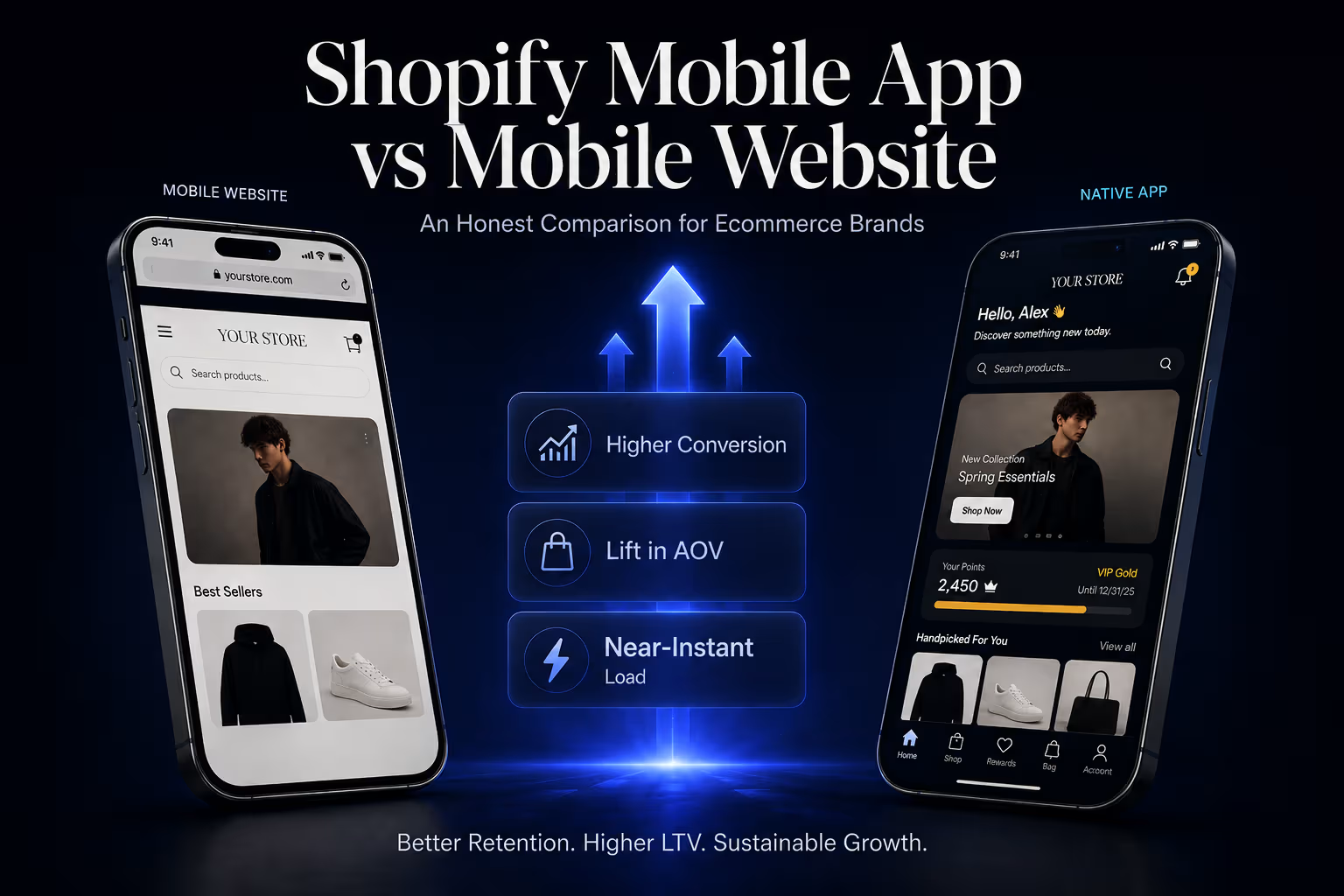
Compare Shopify mobile apps vs mobile websites and learn which drives better conversions, retention, AOV, and customer loyalty.
Mobile commerce crossed 59% of global ecommerce sales in 2025. That single fact has sent a lot of Shopify brands scrambling toward the same conclusion: build a mobile app.
The logic feels obvious. Customers are on their phones, apps are on phones, and therefore apps win. But that framing collapses an important distinction.
Your customers aren't just "on their phones." They're in different stages of a relationship with your brand, and those stages require fundamentally different infrastructure. The brands that treat a mobile app as a direct upgrade to their mobile website tend to be disappointed. The brands that treat them as different tools for different jobs tend to outperform on both.
This article breaks down where each platform actually wins, why the performance differences exist at a behavioral level, and when building an app makes genuine financial sense versus when it's a distraction from more pressing problems.
TL;DR
- Mobile commerce now drives the majority of ecommerce sales, but mobile apps and mobile websites solve fundamentally different problems for Shopify brands.
- A website is optimized for discovery and first-time conversions, while a mobile app is built for retention, repeat purchases, and owned customer engagement.
- Native apps consistently outperform mobile web on conversion rates, cart abandonment, session depth, and repeat purchase behavior due to lower friction and persistent personalization.
- Push notifications give apps a major retention advantage by enabling real-time customer re-engagement at near-zero marginal cost compared to email and SMS.
- Mobile web still remains essential for SEO, organic discovery, and customer acquisition, making apps a complement to websites rather than a replacement.
- Shopify brands with strong repeat purchase behavior, rising CAC, and high mobile traffic see the strongest ROI from investing in a native mobile app.
- Appbrew portfolio data shows that most brands experience higher AOV and stronger retention in-app compared to mobile web.
- The best ecommerce brands treat apps as a retention and owned-channel infrastructure layer, not simply another sales channel.
Why Your Mobile Website and Your App Are Solving Different Problems
A mobile website serves the first meeting. Someone discovers your brand through an Instagram ad, a Google search, or a friend's recommendation. They tap the link, land on your storefront, and make a decision about whether you're worth their money and attention. The website's job is to close that stranger efficiently, or at minimum, make enough of an impression that they come back.
A mobile app serves the relationship. It's built for people who have already decided they like you and want frictionless access to what you offer. The app is where that relationship deepens, where repeat purchases happen naturally, and where your marketing costs for each subsequent transaction drop significantly.
The most important concept in this whole discussion is that your website is for acquiring new customers, while your app is for retaining existing ones. Once you internalize that, most of the "which is better" debate resolves itself.
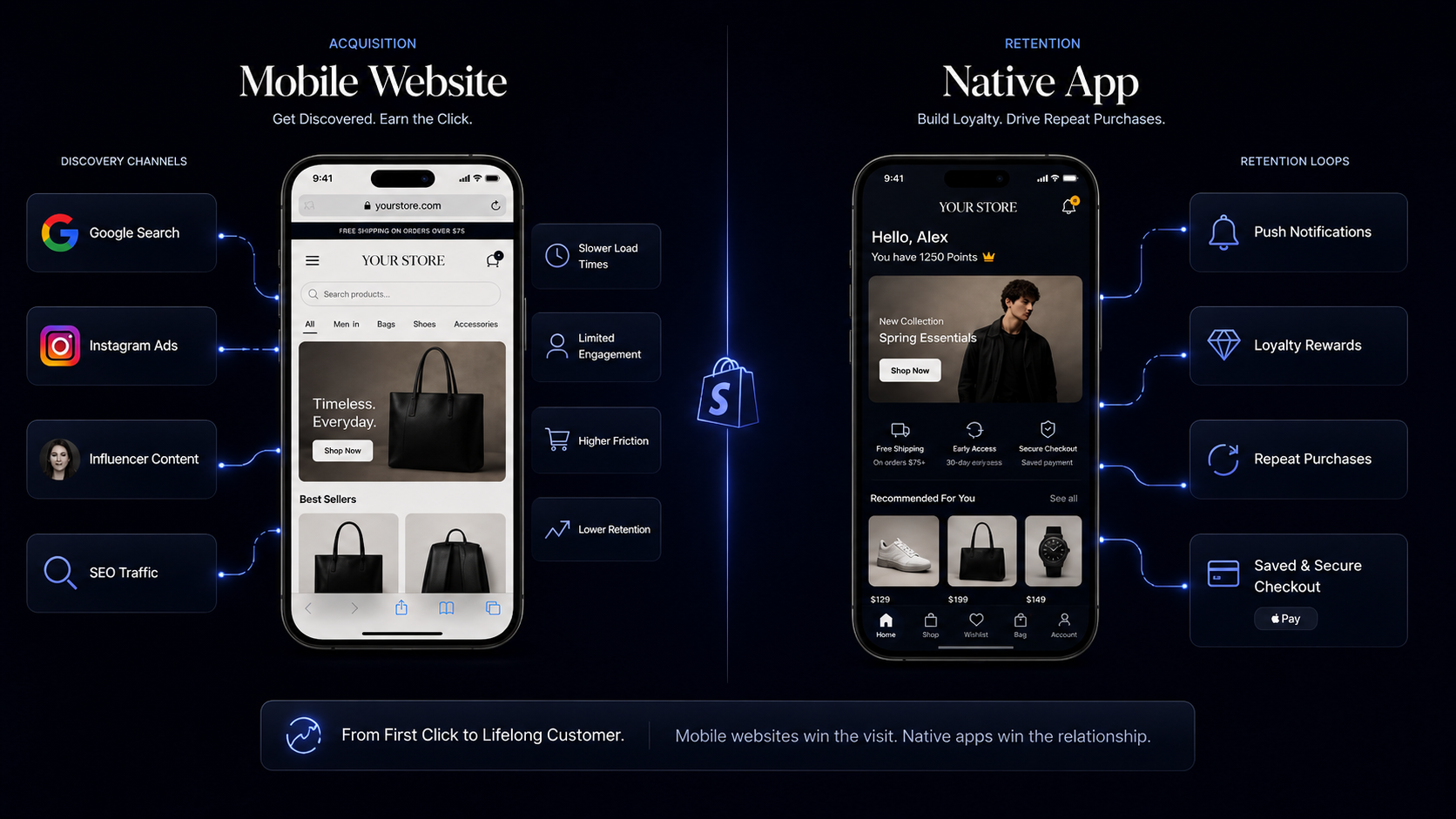
The mistake most brands make is treating an app as a substitute for a good mobile website rather than a complement to it. When you turn your Shopify store into mobile app, you add a new channel, which fundamentally changes (read eases) the way you market to your audience, thanks to push notifications. Your app cannot replace your website because it cannot replace discovery. No one installs an app from a brand they've never heard of, but once a customer is acquired, the economics of retention are dramatically better on a native app than on a mobile browser. That's the whole argument, and the lesson you need to learn for sustainable brand growth.
{{cta}}
Speed: What Load Time Actually Costs You
The average Shopify store load time can be as long as 7.06 seconds on mobile, and simply achieving a load time under 3 seconds would put a brand in the best-performing 20%. That benchmark is more alarming than it sounds. Consumer patience on mobile is thin in a way it isn't on desktop: people are multitasking, navigating under variable network conditions, and making snap judgments about whether a site is worth the wait.A one-second delay in mobile page load reduces conversions by approximately 7%. Not engagement. Conversions. The customer was close to buying, and a slow page sent them elsewhere.
Native apps sidestep this entirely. Because the core application is installed on the device, navigation is near-instant. Product images, category pages, and the checkout flow all load from cached assets rather than fresh server requests. This doesn't just feel better; it measurably extends session depth. Mobile app users view over four times more products per session than mobile website visitors, and load speed is the biggest reason why.
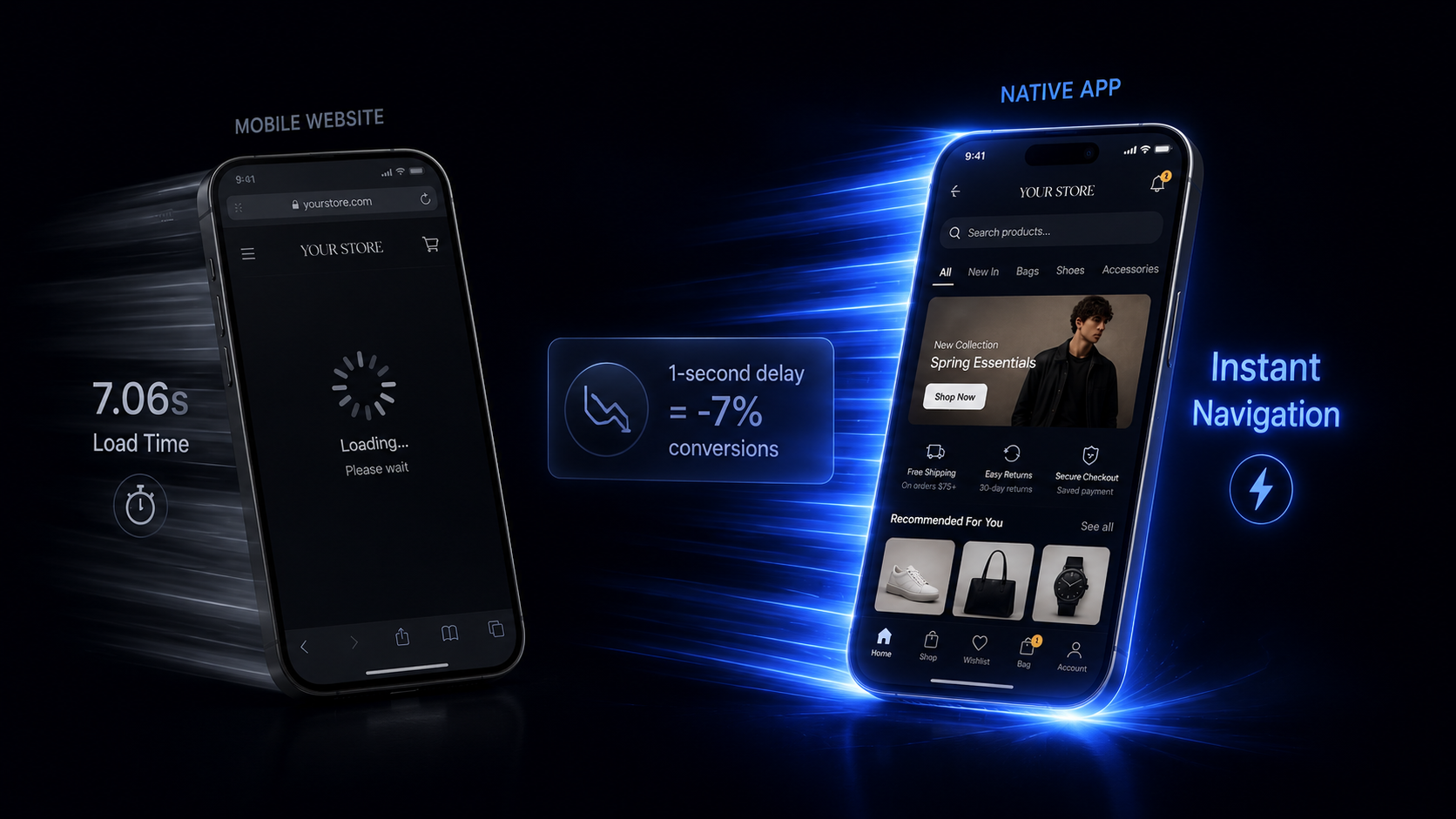
That said, speed is also where the "mobile website vs app" framing creates a false binary. A Shopify storefront running on an unoptimized theme with bloated third-party scripts isn't a representative baseline. Brands that have genuinely invested in mobile web performance, sub-2-second load times, compressed images, a lean integration stack, close much of the speed gap. If your mobile website is already fast, the speed advantage of an app is real but less dramatic.
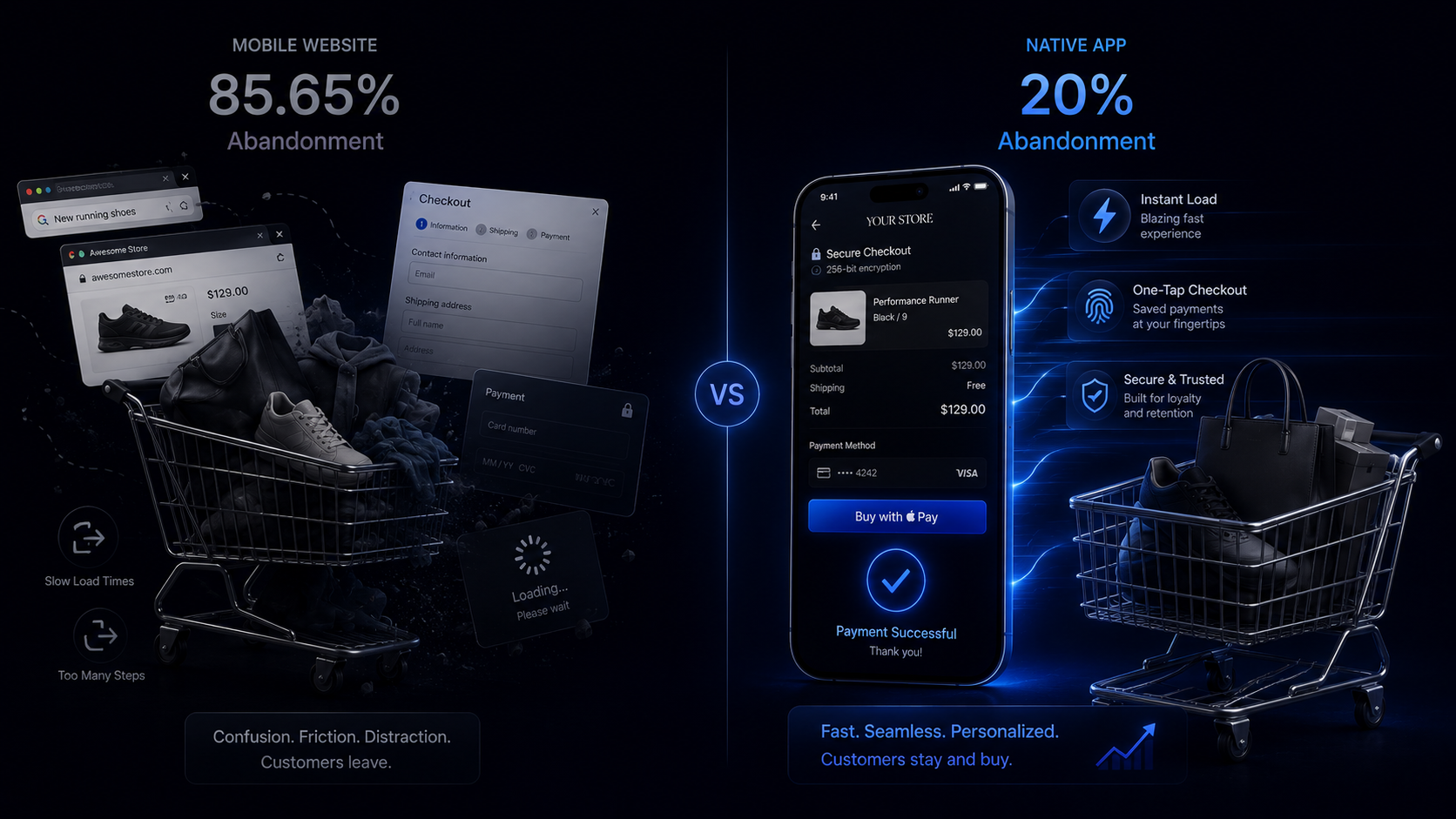
Where the gap remains irreducible is at checkout. Native apps support biometric authentication, stored payment credentials, and single-tap purchasing in a way that mobile browsers cannot fully replicate. Checkout completion rates on apps are measurably higher, and the friction floor on web remains higher even with Shop Pay and similar tools.
Conversion: Why Apps Convert Better (and What That Number Actually Means)
Apps average 157% higher conversion rates than mobile websites, and app users view 286% more products per session (Criteo). These numbers appear in almost every comparison article on this topic, and they're real, but they need interpretation before they're useful (Shopify).
The conversion advantage comes from two distinct sources: UX quality and audience quality. UX quality is the share that the app earns through faster navigation, smoother checkout, and personalized product display. Audience quality is the share that reflects who is using the app in the first place.
Customers who install a shopping app have already self-selected as high-intent. They've taken a deliberate action, downloading and retaining an app, that anonymous website visitors haven't. The app's audience skews toward repeat buyers with higher LTV. So when you see an app converting at 3x the rate of mobile web, some portion of that delta is the app working better. Some portion is the app being used by better-qualified customers.
Both effects are commercially valuable. But they matter differently. The UX improvement you can engineer. The audience quality improvement you have to earn by building a customer base worth retaining first. This is why a new brand with 2,000 lifetime customers will not see the same ROI from an app as a brand with 50,000.
Shopping apps see only about 20% cart abandonment, versus approximately 85.65% on mobile web. That gap is partly the checkout friction difference, partly the intent difference. In practice, when an established brand moves its repeat customers from web to app, both effects compound. The customer is already predisposed to buy, and then the checkout experience makes the actual transaction faster. The result is the conversion lift the industry benchmarks describe, as per Shopify’s own customer data research.
Customer Experience: What's Actually Different Inside a Native App
The experience differences between a mobile website and a native app run deeper than speed statistics suggest.
Personalization that actually works. Personalization on a mobile website is constrained by cookie lifespan and session continuity. Safari now expires first-party cookies in 24 hours. iOS 17 strips tracking parameters from URLs by default. The result is that behavioral history breaks down faster than most brands realize, and recommendations built on it become stale.
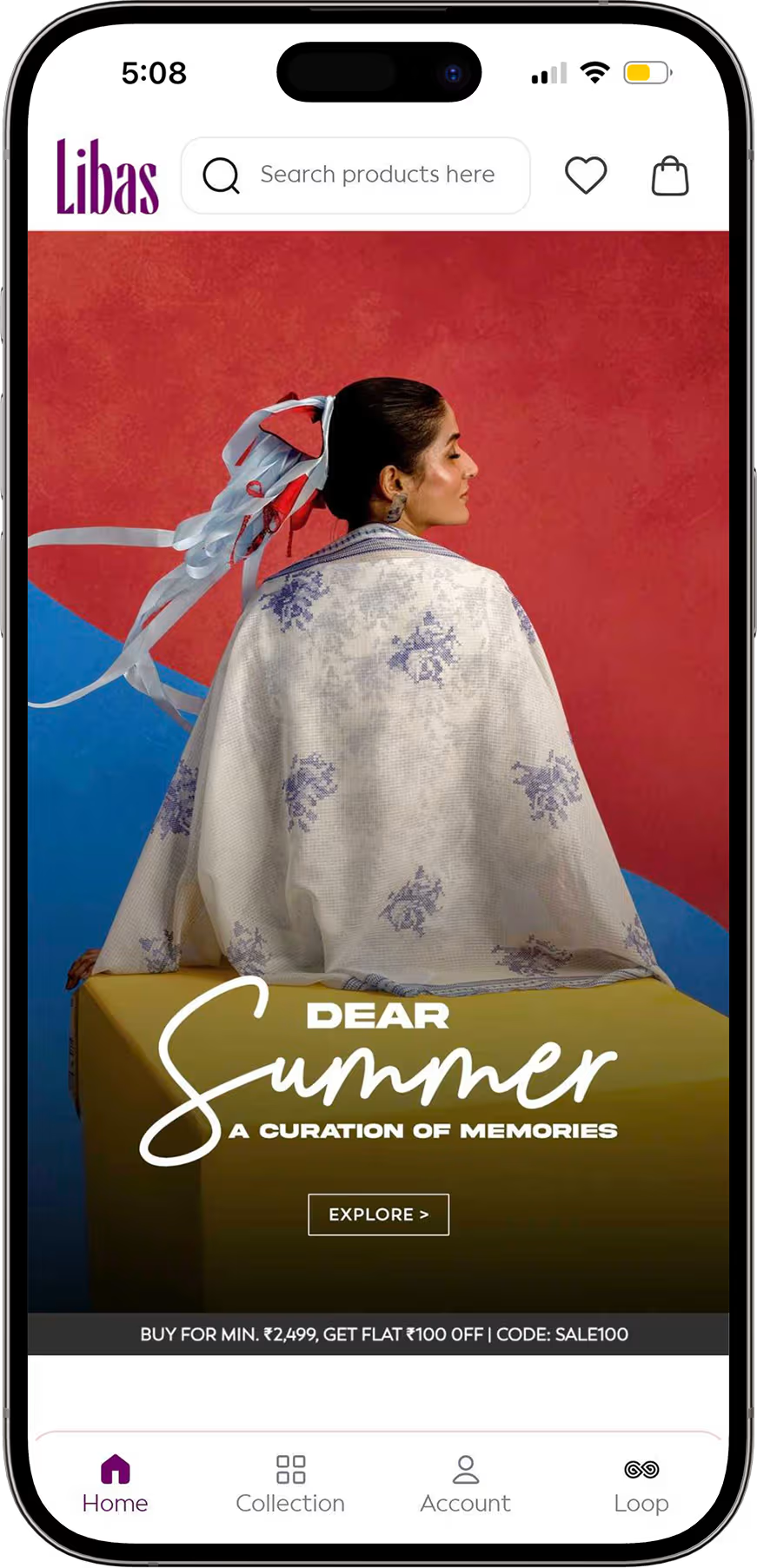
Native apps store user identity persistently. The same device ID ties together a customer's purchase history, browse behavior, search queries, and engagement patterns across every session, regardless of how much time has passed. When Libas serves a returning app user with a collection of kurtas matching her previous purchases, that recommendation is built on real behavioral memory. A mobile website trying to do the same thing is working from a much shorter, more fragmented data trail.
80% of US adults expect personalization from brands, and McKinsey research shows they're likely to shop with a competitor if they don't get it. The app is the channel where brands can actually deliver on that expectation without paying a developer to build a sophisticated web personalization layer that's fighting browser privacy restrictions from day one.
App-exclusive experiences. Brands like Naked Harvest and Bombshell Sportswear have used their apps not as a checkout surface but as a VIP channel: early access to new drops, app-only launches, loyalty rewards redeemable in the app interface. These experiences create a behavioral reason to install and keep the app beyond simple convenience. When a customer knows they'll see the new collection 48 hours before the website goes live, the app becomes the primary shopping destination not because the UX is better but because the inventory access is better.
Offline functionality. This matters less for most Shopify brands than the other differences, but for markets with patchy connectivity, being able to browse cached product catalogs without a live connection is a genuine experience improvement. For India-based brands in particular, where a significant share of Appbrew's portfolio operates, this remains a real differentiator.
Retention: Why Repeat Purchase Rate Is the Metric That Matters Most
The best argument for a mobile app isn't the conversion rate. It's what the conversion rate compounds into over time.
Retention economics work like this: the cost of acquiring a customer is fixed at the point of the first purchase. Every subsequent purchase from that customer requires no additional CAC. The brands with the strongest margins in 2025 are the ones winning on purchase frequency and LTV, not the ones winning on ROAS from first-purchase campaigns.
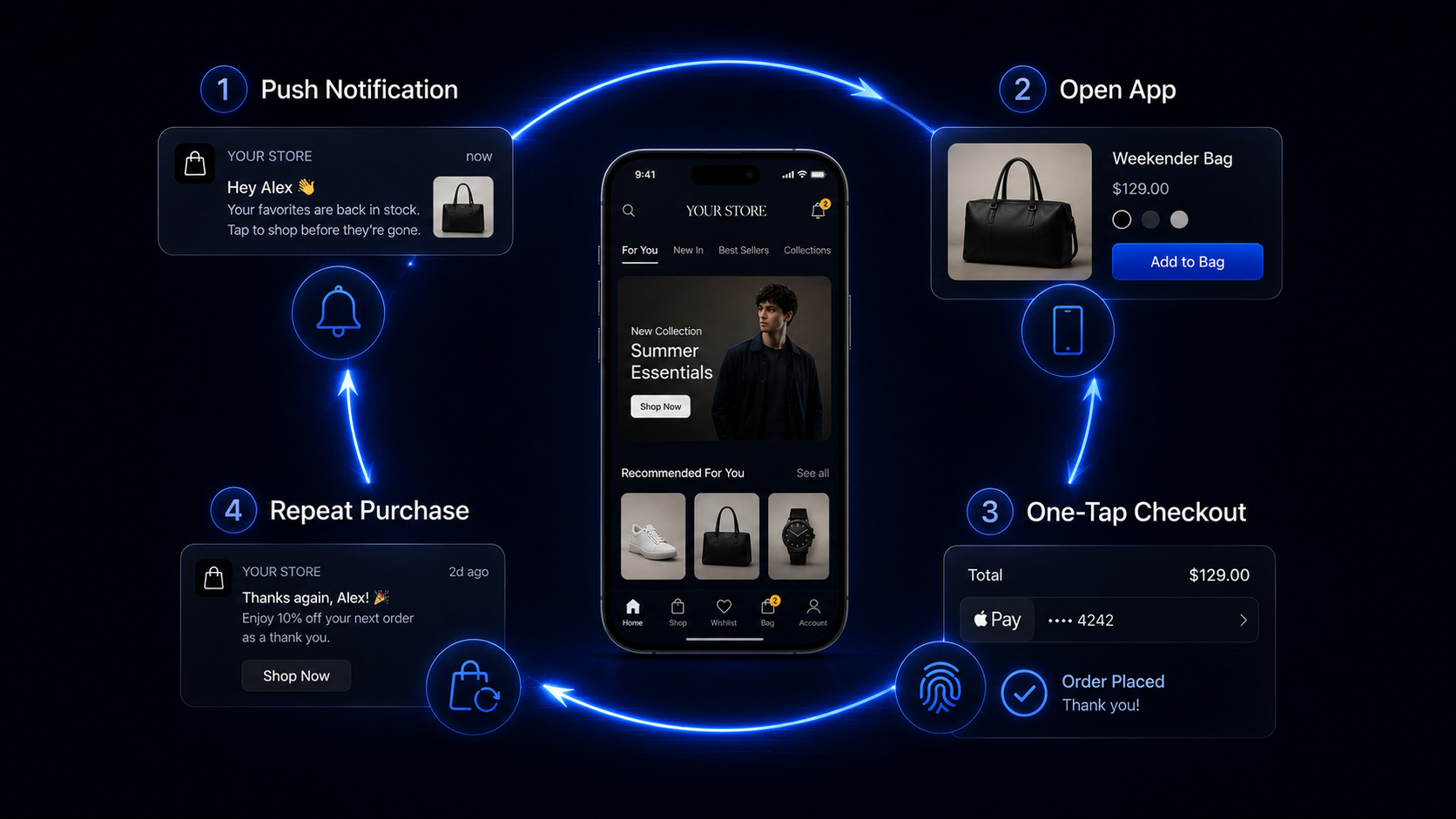
Push notifications are the mechanical engine behind this. Average push notification CTR runs at 4.6% on Android and 3.4% on iOS (Airship, 2025). For context, email marketing benchmarks sit around 15–25% open rates and 1% click-through rates. Push outperforms email on click-through by a factor of roughly 3x–4x, and it delivers that performance on a channel that costs nothing per message regardless of list size, as per Shopify's holiday season customer data.
The scale economics are meaningful. SMS marketing costs $0.01–$0.05 per message. At 100,000 subscribers, that's $1,000–$5,000 per campaign send. Push notifications at the same scale cost the same as push notifications at 10,000. This is the owned-channel argument at its clearest: as an app's audience grows, the per-message cost of reaching them approaches zero while the relevance of the message, with better behavioral data powering segmentation, improves.
Across Appbrew's portfolio, the repeat purchase rate pattern in-app is striking. Shakehands shows 83.2% of in-app orders coming from repeat buyers. SvahaUSA sits at 82.5%. Miduty at 79.3%. Libas, one of the largest brands in the portfolio by volume, shows 58.9% repeat order rate on app across 145,000 orders in the past 90 days. These numbers are not benchmarks from a Criteo white paper. They're the actual behavior of customers who have installed an app and decided to keep shopping through it.
That behavior reflects habit formation. The customers with the highest repeat rates have built the app into their shopping routine. The notification arrives, the checkout is one tap, the dopamine loop closes. App retention strategy, at its best, is really habit-formation strategy: find the triggers, reduce the friction, close the loop repeatedly until the behavior becomes automatic.
{{cta2}}
Customer Data: The Structural Gap Web Analytics Can't Close
One dimension that rarely gets adequate attention in these comparisons is what each platform can actually tell you about your customers.
Mobile web analytics are degrading. Safari's Intelligent Tracking Prevention caps first-party cookie life at 24 hours. iOS 17 link tracking protection strips UTM parameters from links. Ad blockers affect a substantial share of sessions. The result is that web analytics increasingly represent a sample of your traffic, not a complete picture, and that sample has systematic biases that make attribution less reliable.
Native apps track behavioral data through persistent device identifiers that are immune to these browser-level interventions. In-app session frequency, search queries, scroll patterns, notification engagement, and time-between-sessions are all available per identified user rather than per anonymous session. This isn't just better data for its own sake. It's what makes the segmentation in Klaviyo and Attentive actually work.

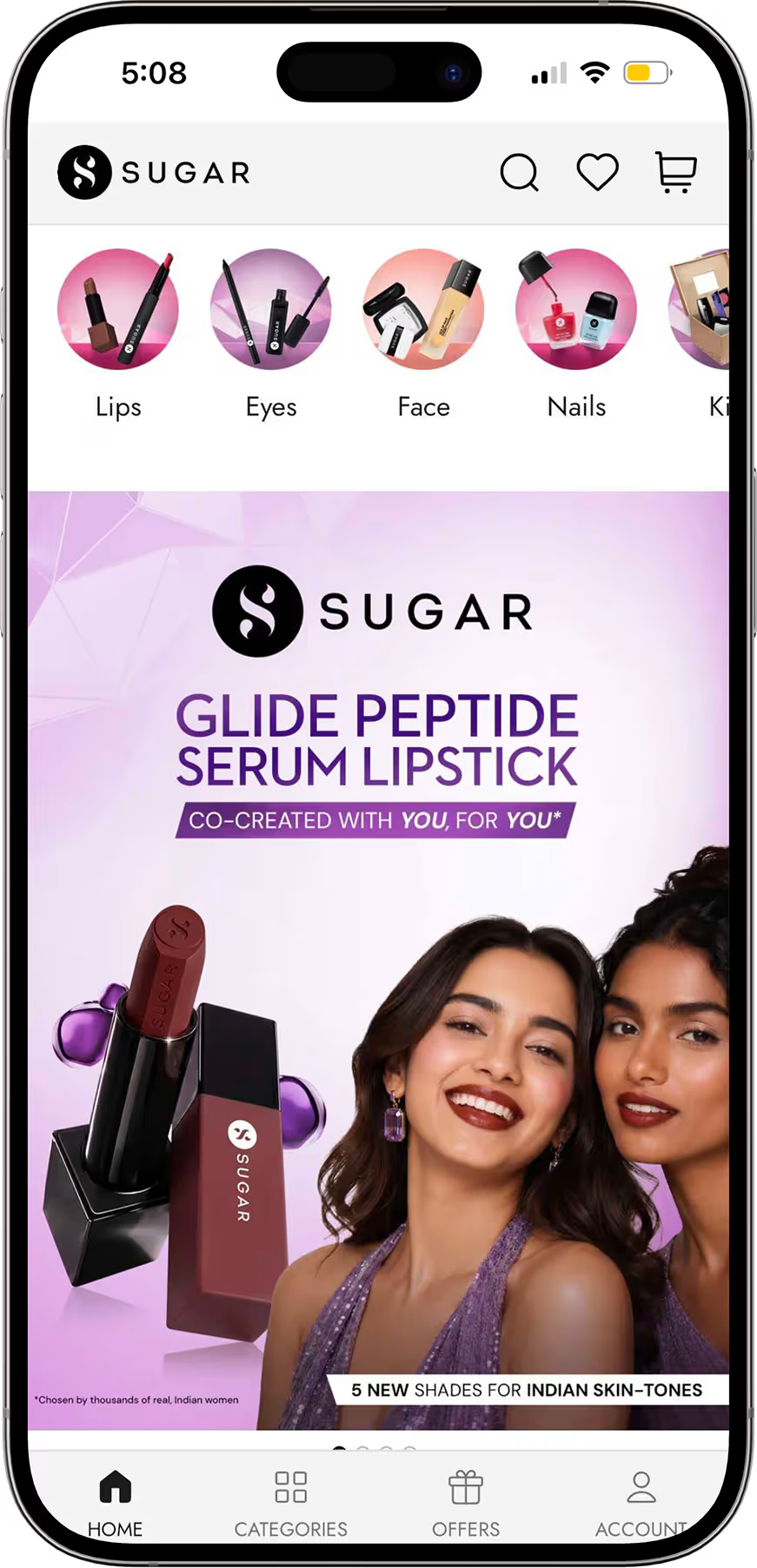
When an Appbrew brand like Sugar Cosmetics sends a push notification to customers who viewed a specific lipstick collection but didn't purchase within 72 hours, that targeting is possible because the app logged those views against an identified user. The same behavior on mobile web would be tied to a cookie that may have expired before the campaign fires.
This feeds directly into paid acquisition too. First-party app behavioral data flowing through Meta's Conversions API creates cleaner custom audiences than web pixel data increasingly can. Brands running both channels often find that their Meta CAPI audiences built from app data outperform website-derived audiences on return ROAS, simply because the underlying customer profiles are more complete.
AOV: What Appbrew's Portfolio Data Shows
Aggregate industry benchmarks tell you what's possible. Portfolio-level data tells you what's actually happening.
Across 108 Appbrew brands with at least 300 app orders and 300 web orders in the past 60 days, 78% show higher AOV on app than on web. The portfolio-wide average uplift is 10.2%. This pattern appears across verticals, from apparel to supplements to beauty.
Some brand-level examples illustrate the range: Campus Sutra shows app AOV of $17.5 versus web AOV of $13.8, a 27% differential. The Bear House runs app AOV of $25.3 against $20.3 on web, a 25% difference. Sugar Cosmetics shows $11.7 app AOV against $9.8 on web. These aren't anomalies; they represent the majority behavior in the portfolio.
The AOV differential partly reflects audience quality, again: app customers tend to be higher-LTV buyers already. But it also reflects the mechanics of the in-app shopping experience. Product recommendations driven by persistent behavioral data surface more relevant cross-sell and upsell opportunities than anonymous session-based personalization can. Customers who find what they were looking for, and two other things they weren't expecting to want, spend more.
The 24 brands where web AOV runs higher than app AOV are worth studying too. Several show patterns consistent with a specific hypothesis: their apps attract value-driven customers using app-exclusive discount codes, which suppresses app AOV mechanically even as volume grows. It's not a failure of the channel; it's a pricing strategy artifact. The other outliers tend to be brands where the app audience is still small and the sample is noisy.
Where the Mobile Website Still Wins
Here's a completely honest analysis, telling you why
Discovery is irreplaceable. Every customer who finds your brand through organic search, a Meta ad, or a creator's recommendation lands on your website. The app cannot intercept that traffic because it doesn't exist on the open web. Your Shopify storefront is indexed by Google. Your app is not. For brands at the early stage of building awareness, the website is not just the primary channel; it's the only channel.
Install friction is a real constraint. Asking a first-time visitor to download your app before they've decided to trust you doesn't work. The conversion funnel for app installs begins after the first purchase, not before it. A brand that routes cold traffic to an app install page instead of a product page will see worse first-purchase conversion across the board.
Operational cost and complexity. A mobile-optimized Shopify theme is part of your existing infrastructure. A native app requires build cost, developer accounts (Apple at $99/year, Google at $25 one-time), ongoing maintenance, and a submission process through two platform gatekeepers. For a brand doing $500K in annual revenue, this investment may not have a payback period short enough to justify.
The website still closes a majority of transactions. Even for Appbrew's highest-performing brands by app contribution, the website accounts for substantial GMV. At the portfolio level, the average app revenue contribution is 21.2%. The other 78.8% is transacting through other channels, mostly web. A brand that neglects mobile web optimization because they've built an app is leaving money on the table.
Shopify Mobile App vs Mobile Website: Side-by-Side
|
Dimension |
Mobile website |
Native app |
|
Discovery and SEO reach |
Full Google indexing |
Not indexed |
|
First-time visitor conversion |
Primary channel |
Requires prior relationship |
|
Load speed |
5–7s average (Shopify, 2024) |
Near-instant (cached) |
|
Cart abandonment rate |
~85.65% (Venn Apps, 2025) |
~20% |
|
Conversion rate |
1–2% average |
3–5% average (Criteo) |
|
Personalization depth |
Session-based, cookie-limited |
Persistent identity, behavior-linked |
|
Push notification access |
Browser push (limited opt-in) |
Native lock screen delivery |
|
AOV vs web |
Baseline |
+10.2% average (Appbrew portfolio, 2025) |
|
Repeat purchase rate |
Dependent on email/SMS |
Habit-forming via push, lower friction |
|
Data quality for attribution |
Degrading (ATT, ITP, ad blockers) |
Persistent device ID, first-party |
|
Development cost |
Included in Shopify plan |
Additional investment required |
|
Install barrier |
None |
Requires deliberate user action |
Who Actually Needs a Mobile App?
Not every Shopify brand should build one. The brands that see the strongest ROI share a few characteristics.
Your repeat purchase rate is already above 25%. At that level, you have a retention problem worth solving with owned infrastructure. Push notifications and app-based loyalty mechanics will compound meaningfully. Below that threshold, the audience worth retaining is small enough that email and SMS can cover the need at lower cost.
Your paid CAC is climbing. iOS 14.5 degraded Meta signal. CPMs are up across Google and Meta. The brands with the healthiest margins in 2025 are the ones who reduced their dependency on paid acquisition for repeat customers. An app gives you a zero-marginal-cost re-engagement channel for your existing base.
You're in a high-frequency vertical. Beauty, supplements, apparel, food. Categories where the natural repurchase cycle is short enough for push notifications to drive real incremental sessions. The repeat purchase rates Appbrew sees in verticals like health and wellness (Miduty at 79.3%, Diabexy at 74.7%) reflect how push notifications interact with consumable product categories.
Your mobile web conversion is already optimized. An app amplifies what's working. It doesn't fix what isn't. If your mobile site has checkout friction, slow load times, or a confusing navigation structure, those problems will surface in the app too, with more friction around the onboarding experience layered on top.
Hold off when: You're pre-$1M in annual revenue and still building your customer base. Your primary growth constraint is acquisition, not retention. Your tech stack, logistics, or customer service isn't stable enough to absorb the additional complexity. Get the mobile website right first. The app will be more valuable once you have 10,000 customers worth retaining.
When the signal is right, Appbrew builds iOS and Android apps on React Native architecture, with 150+ integrations across Klaviyo, AppsFlyer, MoEngage, Yotpo, and Recharge, and a typical launch timeline under 30 days. The product is built specifically for Shopify and Shopify Plus brands that have reached the retention-first stage of growth.
Frequently Asked Questions
Does a Shopify mobile app replace the mobile website?
No. They operate in different parts of the customer journey. The website handles new customer acquisition, organic discovery, and first-purchase conversion. The app handles retention, repeat purchases, and direct communication with your highest-value customers. The top-performing Shopify brands run both with clear strategic roles for each.
Why do mobile apps have higher conversion rates than mobile websites?
Two reasons, and both matter. First, the UX: faster navigation, stored payment credentials, persistent login, and single-tap checkout all reduce friction at the moment of purchase. Second, the audience: app users have already self-selected as high-intent buyers. Combine a frictionless experience with a pre-qualified audience and the conversion gap becomes predictable.
Is the AOV difference between app and web significant?
Across 108 Appbrew brands in a recent 60-day window, 78% showed higher AOV on app than on web, with an average differential of 10.2%. At high volume, that compounds into meaningful GMV. Campus Sutra, for example, shows a 27% app AOV advantage over web. That said, brands using heavy app-exclusive discounting may see the reverse, because the discounts suppress average order value mechanically.
How do push notifications compare to email for re-engaging existing customers?
Push notification CTR averages 4.6% on Android and 3.4% on iOS (Airship, 2025), compared to roughly 1% click-through for email. Push also lands in real-time rather than sitting in an inbox, which makes it substantially more effective for time-sensitive offers. The cost structure is also different: push notifications cost the same to send regardless of list size, while email and SMS costs scale with volume.
When is it too early to build a Shopify mobile app?
If your store is pre-$1M in annual revenue, still primarily in customer acquisition mode, or if your mobile website hasn't been optimized for conversion yet, the app investment will likely underperform. The app earns its ROI by retaining customers you've already acquired. The bigger and more purchase-active that base, the faster the payback period.