

.webp)
.webp)

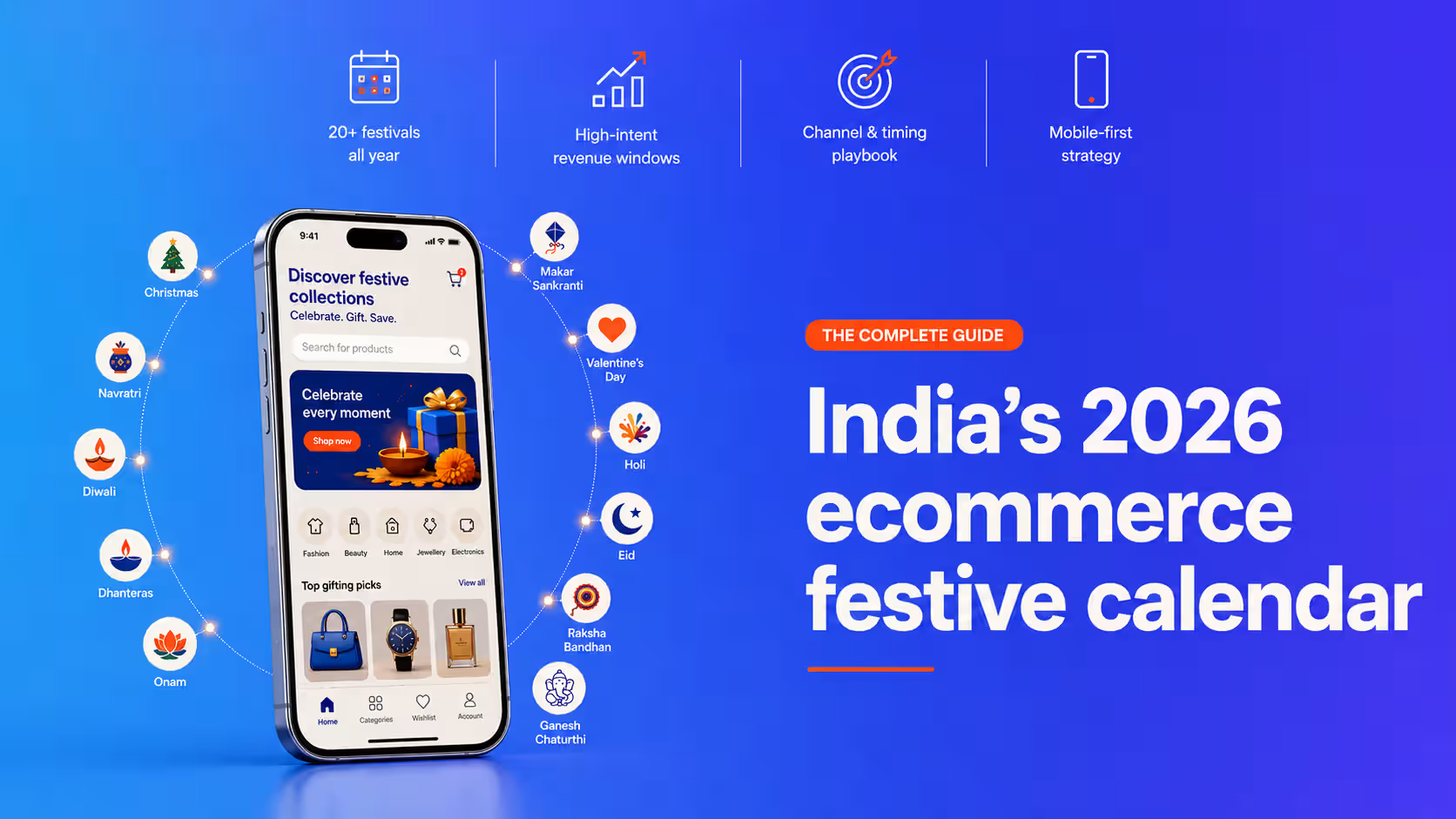
Explore India’s 2026 ecommerce festive calendar with strategies for Diwali, Holi, Raksha Bandhan, Eid, retention, and growth.
No market in the world gives DTC brands what India does: a calendar where the celebrations never really stop throughout the year, be it Lohri in January, Holi in March, or Diwali in November. Each festival carries its own emotional register, its own gifting culture, and its own high-intent product categories. Where most global markets hand brands one or two annual peaks, India hands them twenty.
The opportunity is enormous, and so is the planning gap. Most brands treat festive marketing as a Diwali campaign with a few other festive posts sprinkled in, but the brands that actually clean up treat the full arc from January through December as a single, sequenced strategy, building audiences in the quieter months, activating at every intent window, and carrying that momentum into the next peak rather than starting from scratch each time.
This guide maps every major festive moment of 2026 across India's ecommerce calendar, with verified dates, high-intent categories, and the timing and channel logic each window actually calls for.
TL;DR
- India’s ecommerce market operates on a year-round festive calendar, with major shopping spikes across festivals like Holi, Raksha Bandhan, Navratri, Dhanteras, Diwali, Eid, and Christmas.
- Ecommerce sales in the 30 to 35 days before Diwali 2025 crossed ₹1.15 lakh crore (approximately US$13.4 billion) in GMV, growing 20 to 25% year on year, the strongest performance in five years (Redseer).
- Tier 2+ cities now account for 60 to 65% of festive shoppers, and they buy differently from metro shoppers (Redseer).
- 85% of festive traffic in India happens on mobile (eShipz, 2025), which is why owned app and push infrastructure decides who wins the peak.
- Indian festive shoppers respond strongly to emotion-led campaigns, gifting collections, vernacular content, and category-specific storytelling rather than generic discounting.
- Diwali remains the largest ecommerce sales window in India, but festivals like Raksha Bandhan, Holi, Eid, and Onam also create major high-intent revenue opportunities.
- Brands that build email, WhatsApp, and push lists before September reach their best customers without paying the festive CPM auction.

What is festive season marketing, and why India plays by different rules
Festive season marketing is the practice of planning and sequencing campaigns around a market's cultural calendar of celebrations, matching each festival's emotional register and gifting behaviour to the product categories that spike during it. In India, that is not a single fourth-quarter event. It is a year-round discipline.
Compare this to the Western model, where an ecommerce holiday marketing calendar runs on three tentpoles: Black Friday, Cyber Monday, and Christmas. India runs on a different rhythm entirely. Over twenty festivals pull hard on distinct emotional registers and product categories.
Diwali is home decor and gifting. Holi is fashion and beauty. Raksha Bandhan is jewellery and accessories. Eid is apparel and food gifting. Each one is a purchase-intent event in its own right, not just a brand awareness moment.
The scale is real. About 90 million shoppers participated in just the first 11 days of the Diwali 2025 sales window, spending close to ₹7,000 (approximately US$82) each on average (Redseer, 2025). For D2C brands not riding marketplace sale events, the opportunity is the full-year arc: converting festival shoppers into repeat customers across every peak rather than treating each as a one-off.
The Festive season marketing strategy that actually works
The strategy that consistently wins is boringly simple to state and hard to execute:
- Build audiences before CPMs rise.
- Own your channels before you need them.
- Personalise by region and festival, rather than blasting one national campaign.
1. Build audiences before advertising gets expensive
By mid-September, Meta and Google CPMs in India climb sharply as every brand rushes in at once. The cost-per-acquisition gap between a warm audience and a cold one during peak can run 2–3x.
Brands that spend July and August running awareness campaigns build website visitor pools, social engagement, and retargeting audiences while acquisition costs are still low. When the festive rush begins, they're converting warm prospects instead of paying premium prices to acquire new customers.
2. Turn festive buyers into repeat customers
Festive traffic floods your store with first-time buyers. Brands that convert even a fraction of them into loyal customers strengthen their owned audience for every festive season that follows, which is exactly what strong ecommerce retention strategies are designed to achieve.
Discounting during every festival does the opposite. It trains customers to wait for the next sale and steadily compresses margins. Reserve deeper promotions for high-intent moments like Dhanteras, Diwali, and Black Friday, and rely on gifting collections and emotional campaigns throughout the rest of the year.
3. Invest in channels you own
Every email subscriber and app install you acquire before the season is one customer you never have to pay to reach during peak demand.
Focus your Shopify growth efforts on building your email list and app installs from June through August, when acquisition costs are significantly lower than they are in October. By the time festive shopping begins, you'll have a direct line to your highest-intent customers without competing in the festive CPM auction.
How to read this calendar
Each festival window below includes four things:
- Dates (2026): Verified 2026 dates from the Hindu calendar
- High-intent categories: Product categories that see the strongest demand lift
- Marketing timing: When to start warming up versus when to push hard
- Channel priority: Where to concentrate spend and effort for that window
The calendar is organized into three macro-seasons: the pre-season warm-up (January to July), the mid-season spike (August to September), and the core festive peak (October to December).
2026 India ecommerce festive calendar: at a glance
Before the deep-dive, here's the full year in one place. Use this as your planning reference when setting quarterly budgets and campaign calendars.
Phase 1: The pre-season warm-up (January-July)
These months are often written off as off-season, but they aren't. Every festival in this window represents a genuine purchase intent spike for the right categories, and they're substantially cheaper to advertise in than the October-November crunch.
Makar Sankranti and Pongal (January 14)
High-intent categories: Traditional sweets, kite-flying accessories, new clothes, home decor
Makar Sankranti marks the sun's transition into Capricorn and is celebrated as a harvest festival across India under different names: Pongal in Tamil Nadu, Uttarayan in Gujarat, Lohri in Punjab. Purchase intent skews heavily toward food gifting, sweets hampers, and ethnic wear in most of these markets.
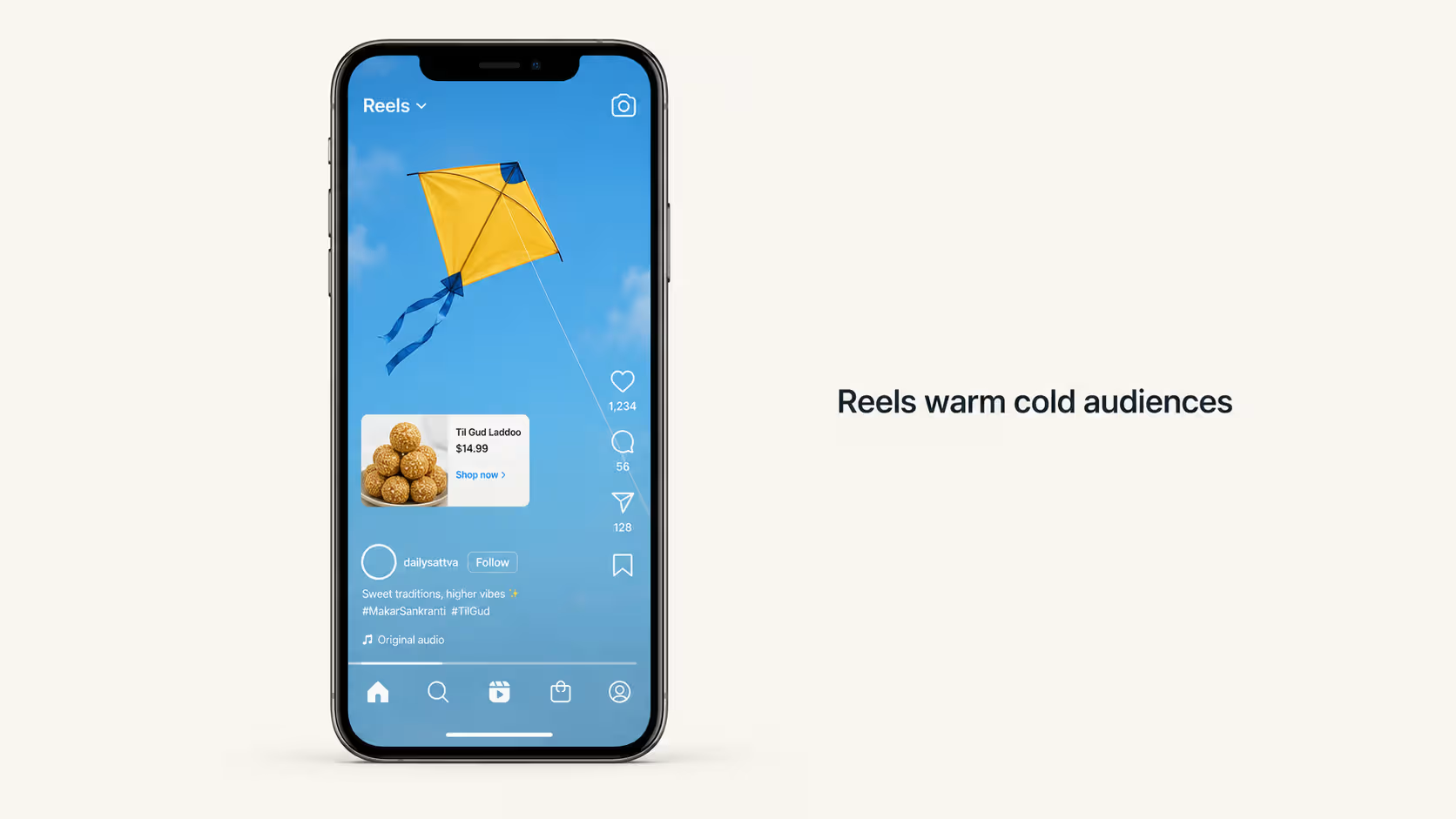
For e-commerce brands, this is a useful testing window. Ad CPMs are near their annual low in January, which makes it a low-risk period to run creative experiments and build retargeting audiences for the bigger peaks ahead.
Timing: Run awareness campaigns from January 7-10. Push promotional content on January 13-14.
Channel priority: Instagram Reels, WhatsApp broadcast to existing customers, email to lapsed segments.
Republic Day Sale (January 26)
High-intent categories: Electronics, fashion, home appliances
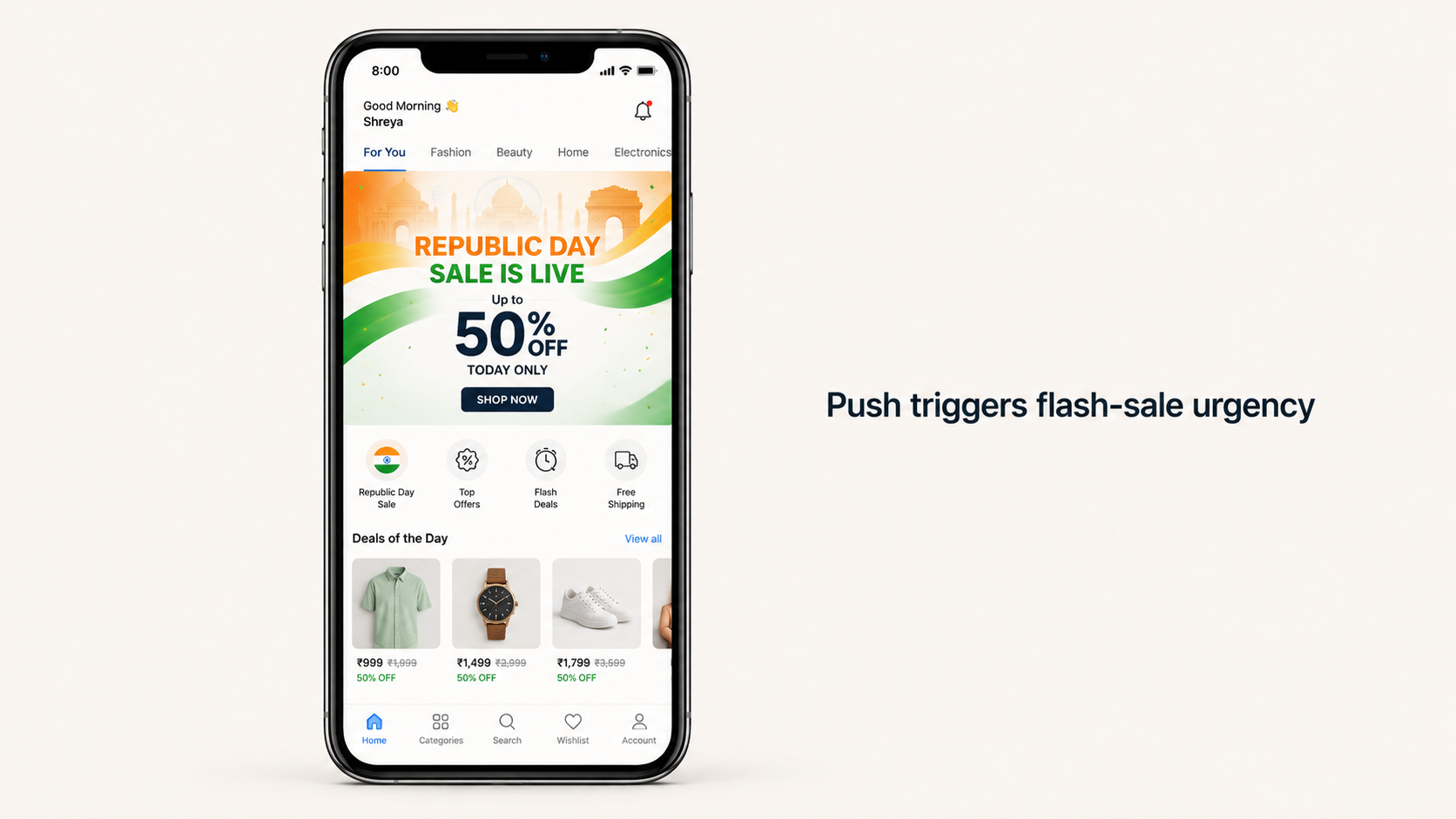
India's Republic Day (January 26) has become a genuine ecommerce sale moment, largely because the major platforms run promotional events. For D2C brands, it works best as a clearance window for post-holiday inventory, or a moment to acquire first-time buyers before the Valentine's Day push.
Timing: Announce sale 3-4 days prior. Send push notifications on the day with flash deal triggers.
Valentine's Day (February 14)
High-intent categories: Jewelry, fashion, personal care, gifting (chocolates, flowers, experiences).
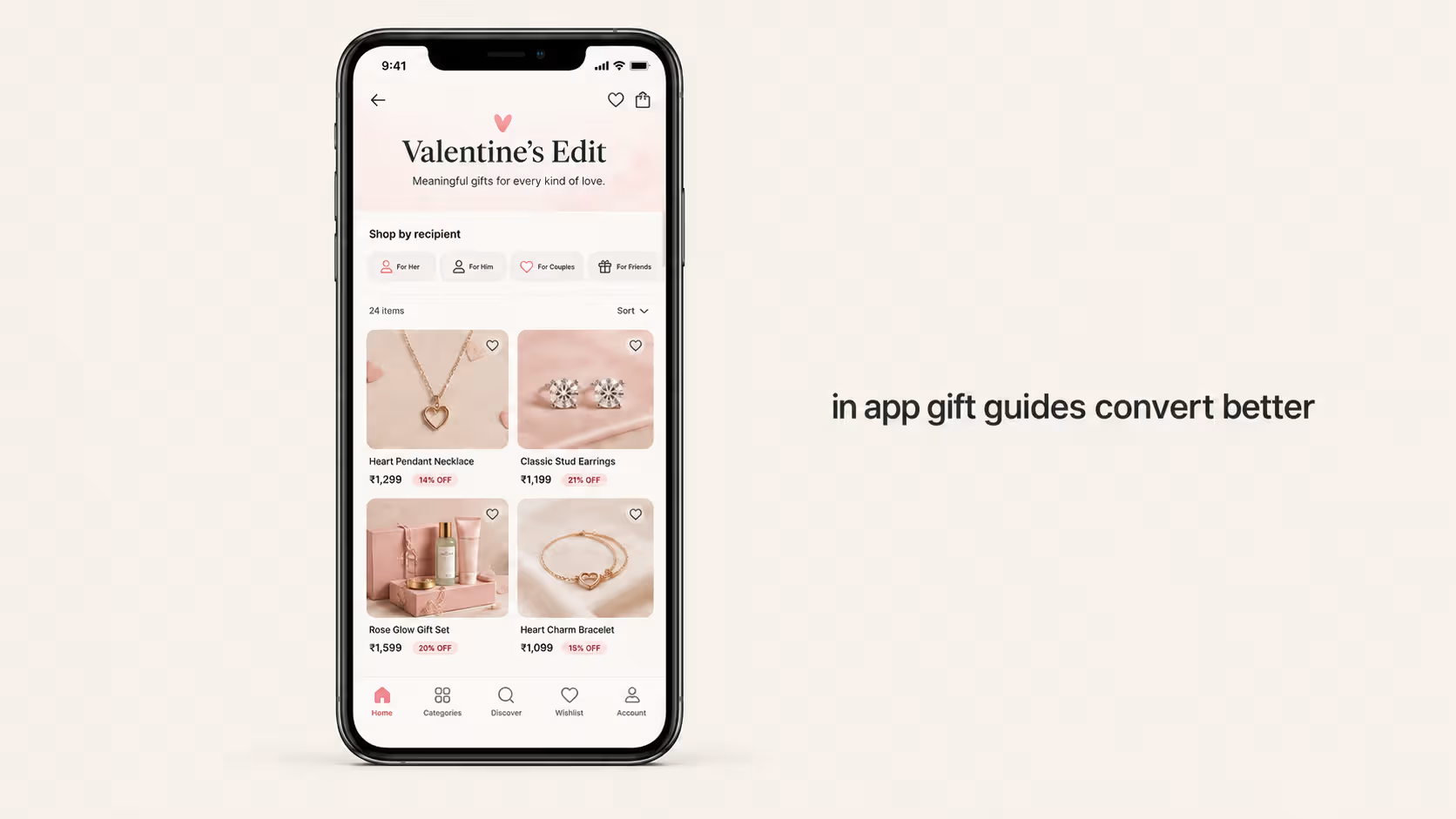
Your Valentine's Day ecommerce strategy should cover the entire fortnight from February 7-14. Brands in jewelry, beauty, fashion, and personalized gifting all see meaningful lifts. The gift guide format performs well in email and on-site, particularly for browsing shoppers who haven't decided yet.
Timing: Gift guide campaigns from February 1. Last-mile delivery urgency messaging from February 10-14.
Holi (March 4, 2026)
High-intent categories: Fashion and ethnic wear, beauty (skincare pre- and post-Holi), home decor, food gifting
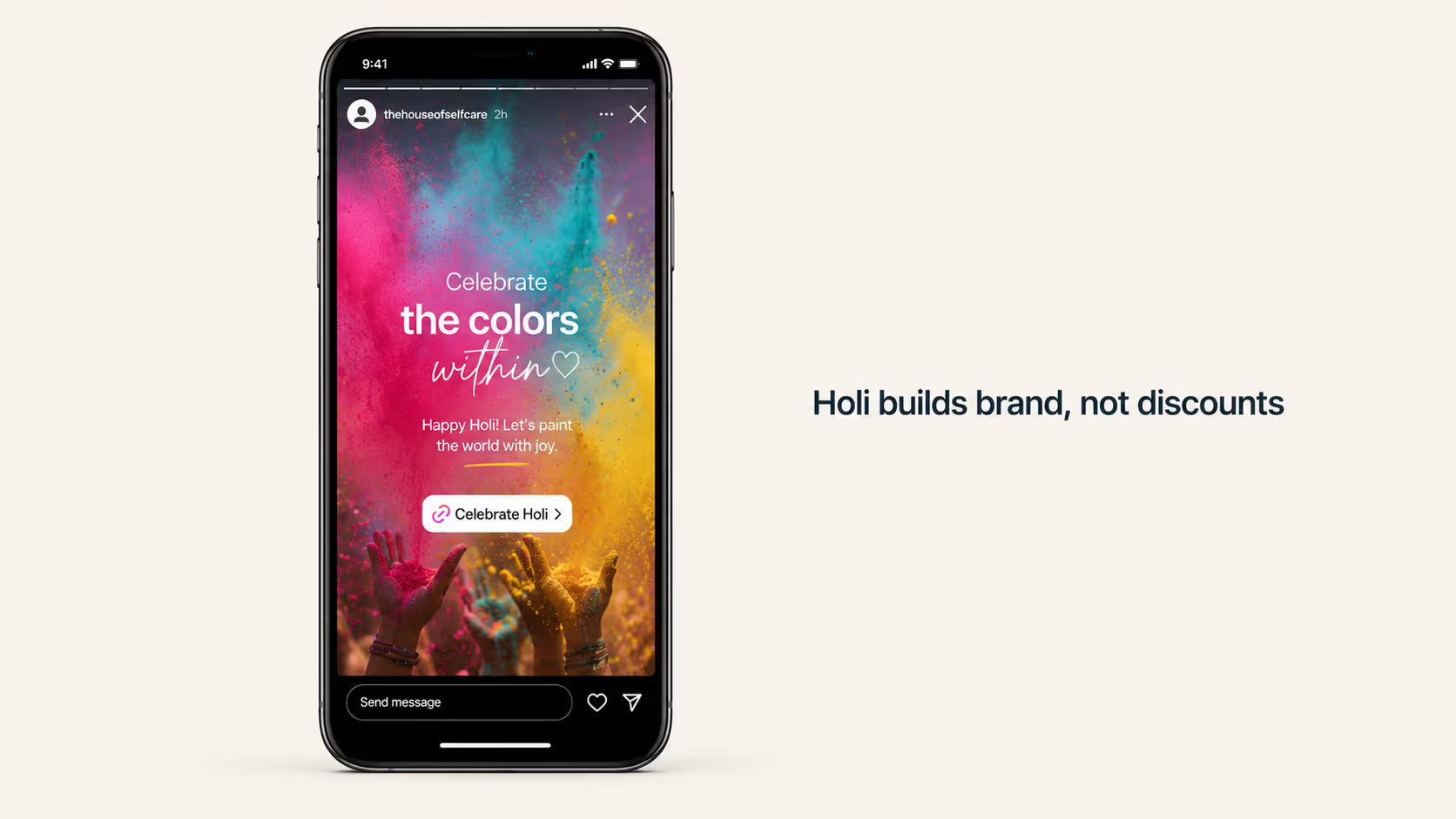
Holi is one of the few festivals where the product category range spans almost every vertical. Apparel brands run color-themed campaigns, beauty brands push protective skincare, food brands build on the sweets-gifting tradition, while the home decor brands connect to spring renewal narratives.
The opportunity is campaign creativity more than discount depth. Holi's emotional register is joyful and playful, which gives brands latitude to run less promotional and more brand-building content. UGC from customers sharing Holi photos around your products tends to overperform during this window.
Timing: 2-week pre-Holi content push starting February 18. Sale activation February 28 through March 4.
Channel priority: Instagram and YouTube for brand content, email and push for promotional activation.
Eid-ul-Fitr (March 21, 2026)
High-intent categories: Ethnic wear (specifically kurtas and sherwanis), footwear, perfumes, food gifting
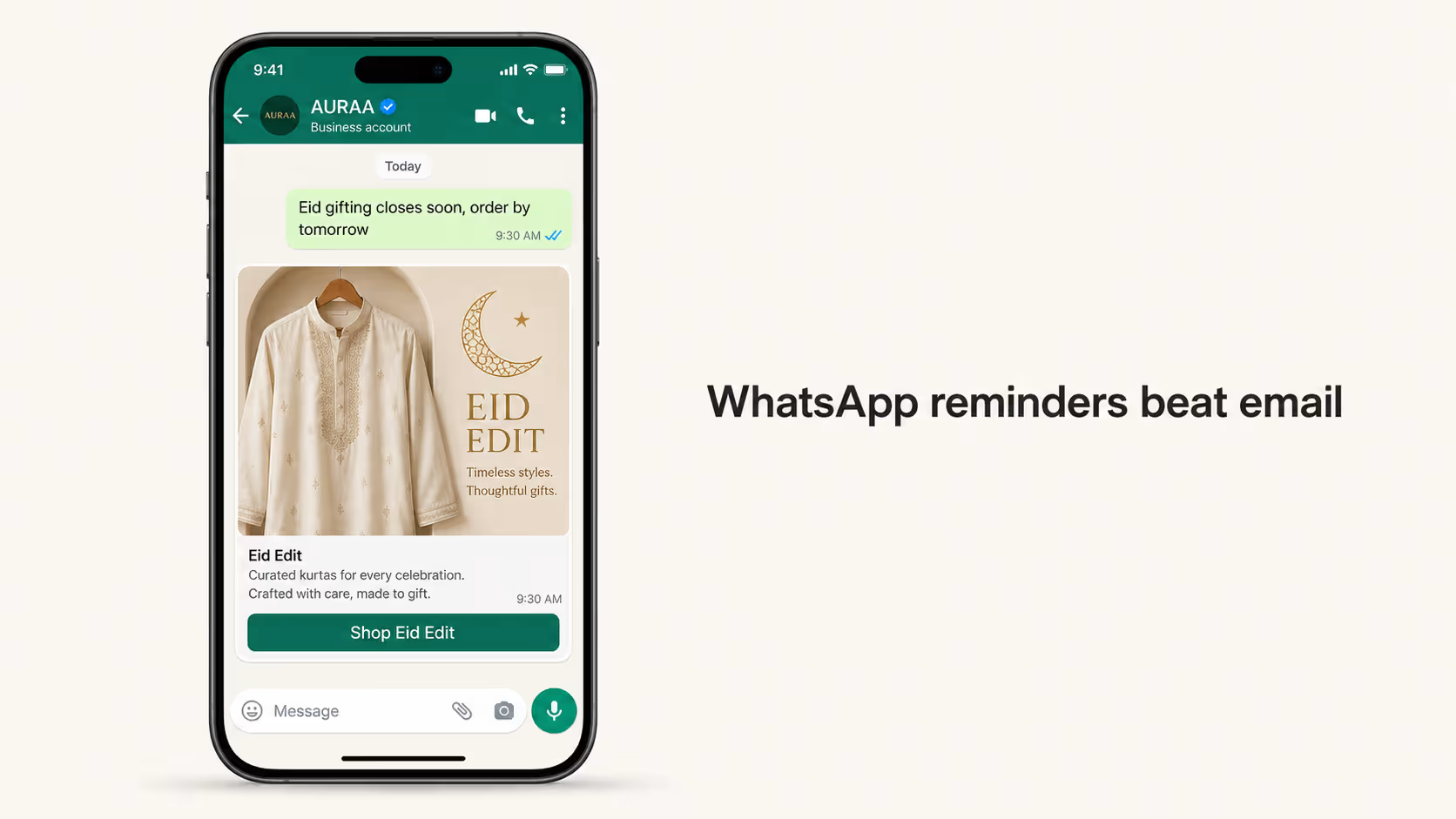
Eid-ul-Fitr is an enormous purchase moment for apparel and gifting brands, particularly those serving Muslim-majority markets in Uttar Pradesh, Bihar, Kerala, and West Bengal. At a national level, the category is dominated by ethnic wear and food gifting, with ecommerce adoption rising steeply in Tier 2+ cities.
The marketing dynamic is slightly different here since purchase decisions tend to cluster in the last week of Ramadan, when shopping intent spikes sharply. Brands that aren't actively present in this window leave traffic on the table.
Timing: Begin category-specific campaigns in the second week of Ramadan (late February 2026). Push heavy activation from March 14-21.
Channel priority: Meta with regional targeting, WhatsApp for order updates and gifting reminders.
Mother's Day (May 10, 2026)
High-intent categories: Jewelry, beauty, home, personalized gifts
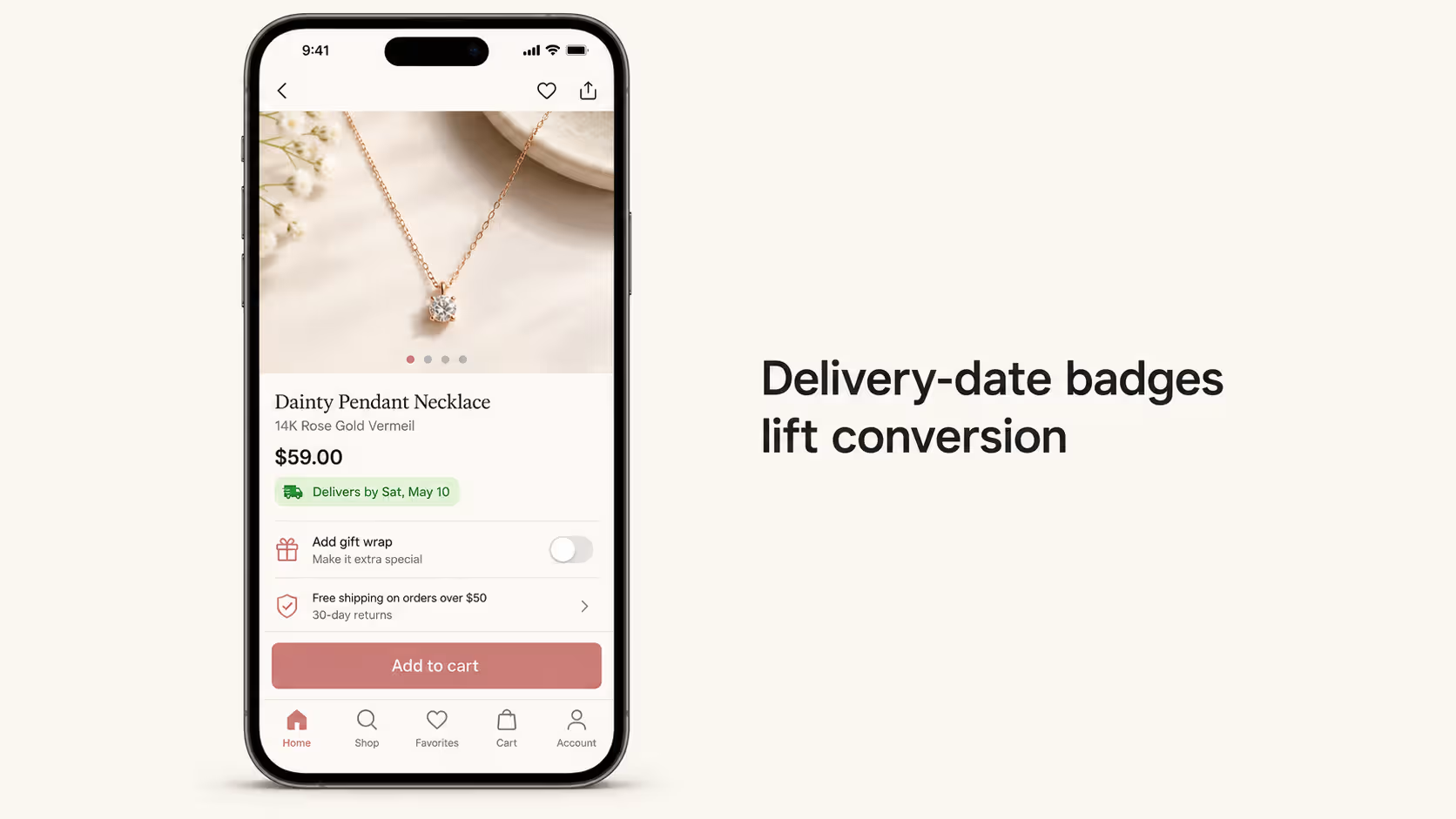
For Mother's Day marketing, the window is much smaller than the core festive season, but it's a high-conversion event. The emotional purchase motivation (gift for mother/mother-in-law) creates urgency and relatively lower price sensitivity. Gifting collections, free personalization, and delivery-by-date guarantees all perform well.
Eid-ul-Adha / Bakrid (May 27, 2026)
High-intent categories: Ethnic wear, home decor, food gifting, meat delivery (quick commerce)
Eid-ul-Adha is the second major Eid festival, and its ecommerce profile is growing year over year, especially in ethnic wear and home categories.
Phase 2: The mid-season spike (August–September)
August and September bring a concentrated cluster of major festivals. For many D2C brands, this is when the festive season effectively begins. Ad CPMs start rising here, and brands that haven't built their audiences yet start feeling the squeeze.
Independence Day (August 15)
High-intent categories: Fashion (patriotic themes), electronics, mattresses and home
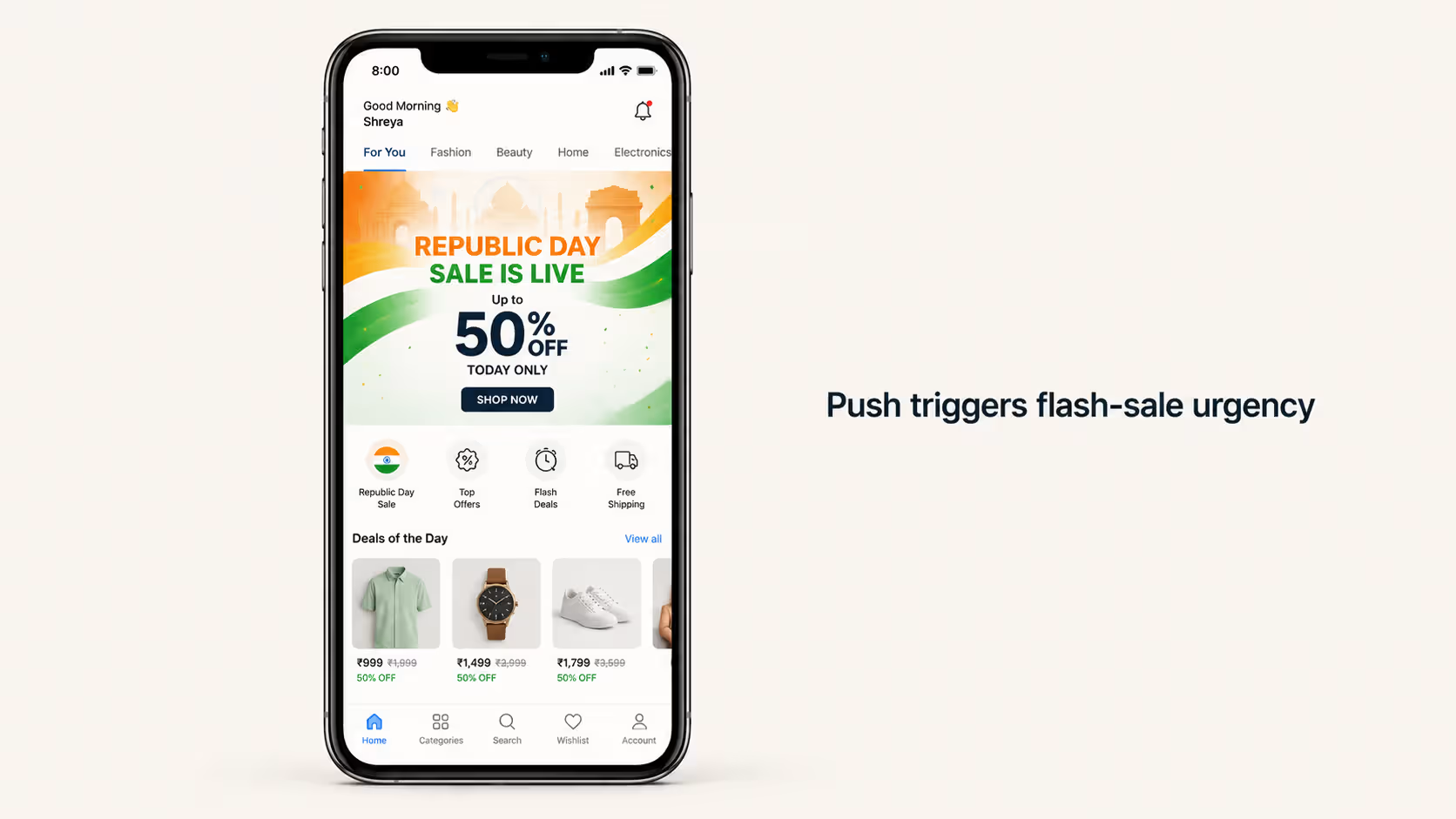
Independence Day has become one of India's biggest ecommerce sales events, with most major brands running promotional campaigns. Patriotic themes work well in content, but the category range is broad. It's also a natural moment to launch back-to-school promotions given the academic calendar timing.
Timing: Sale announcement August 10-12. Peak activation August 14-16.
Raksha Bandhan (August 20, 2026)
High-intent categories: Gifting (rakhi sets, dry fruits, chocolates, personalized items), jewelry, ethnic wear for women
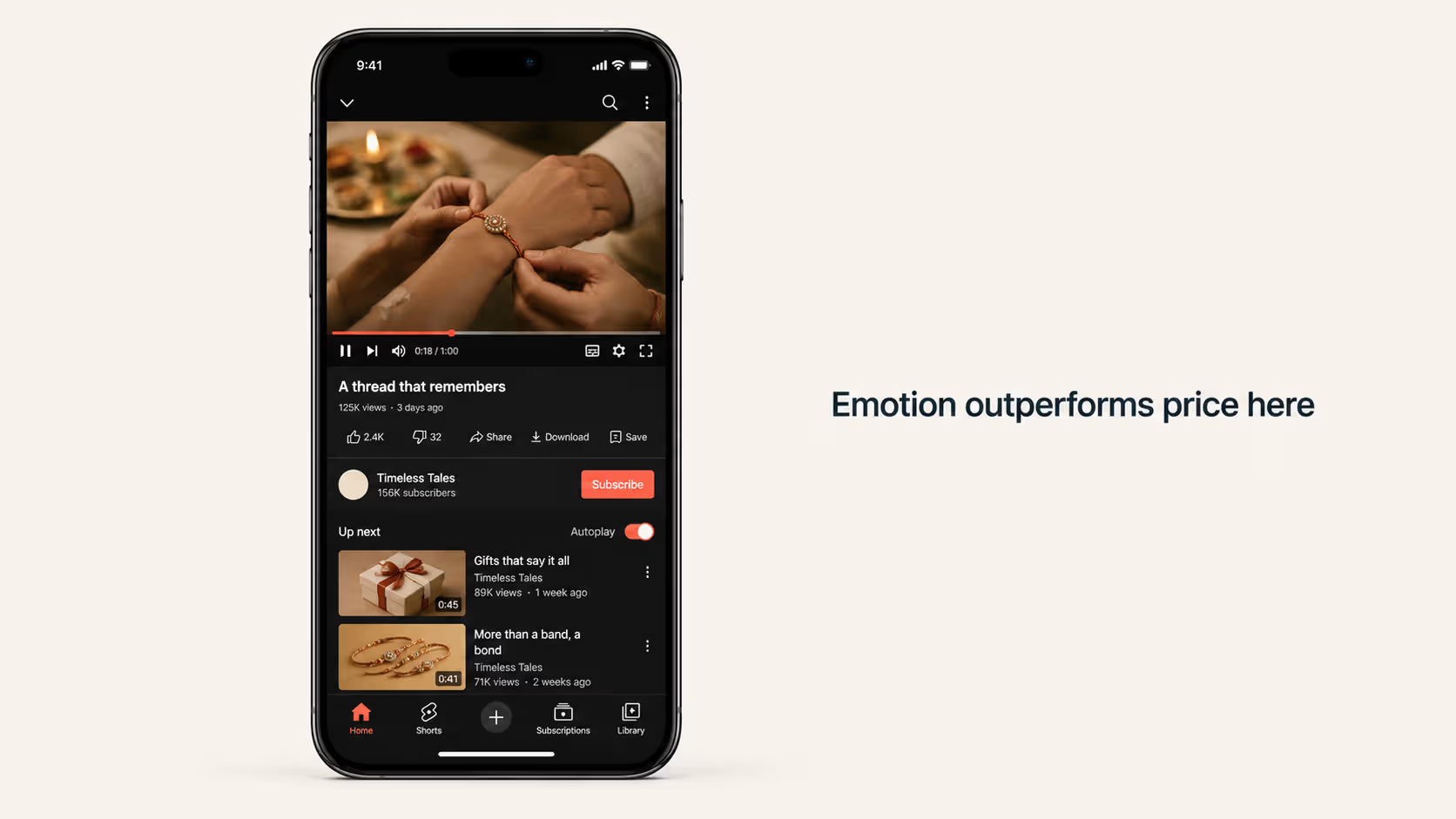
Raksha Bandhan is one of the strongest gifting-intent events in the Indian calendar. Purchase decisions start 10-12 days ahead of the festival, and the purchase is almost always a considered gift rather than an impulse buy. Brands in jewelry, accessories, and personalized gifting see some of their strongest conversion rates of the year during this window.
The marketing logic is simple: speak to the relationship, not the discount. Raksha Bandhan campaigns that lead with sibling emotion consistently outperform those that lead with price (GreenHonchos, 2025). Gift sets and curated bundles perform well because they reduce decision fatigue.
Timing: Gift guide content from August 8. Sale activation August 14-20. Last-chance messaging August 18-19.
Channel priority: Instagram and YouTube for emotional storytelling, email and push for promotional activation and cart recovery.
Ganesh Chaturthi (September 8–17, 2026)
High-intent categories: Ethnic wear, home decor, eco-friendly products, sweets and food gifting
Ganesh Chaturthi is primarily a Maharashtra and Karnataka festival but has national reach through its cultural presence. For ecommerce brands, it's particularly relevant for home decor, modak and sweet gifting, and ethnic wear. The festival also represents a growing opportunity in eco-friendly products, as demand for biodegradable Ganesha idols and sustainable decorations has risen each year.
Timing: Build content and product stories from September 1. Peak activation September 5-8.
Onam (August 28 – September 7, 2026)
High-intent categories: Ethnic wear (especially Kerala kasavu sarees and mundu), home decor, traditional food items, gold jewelry
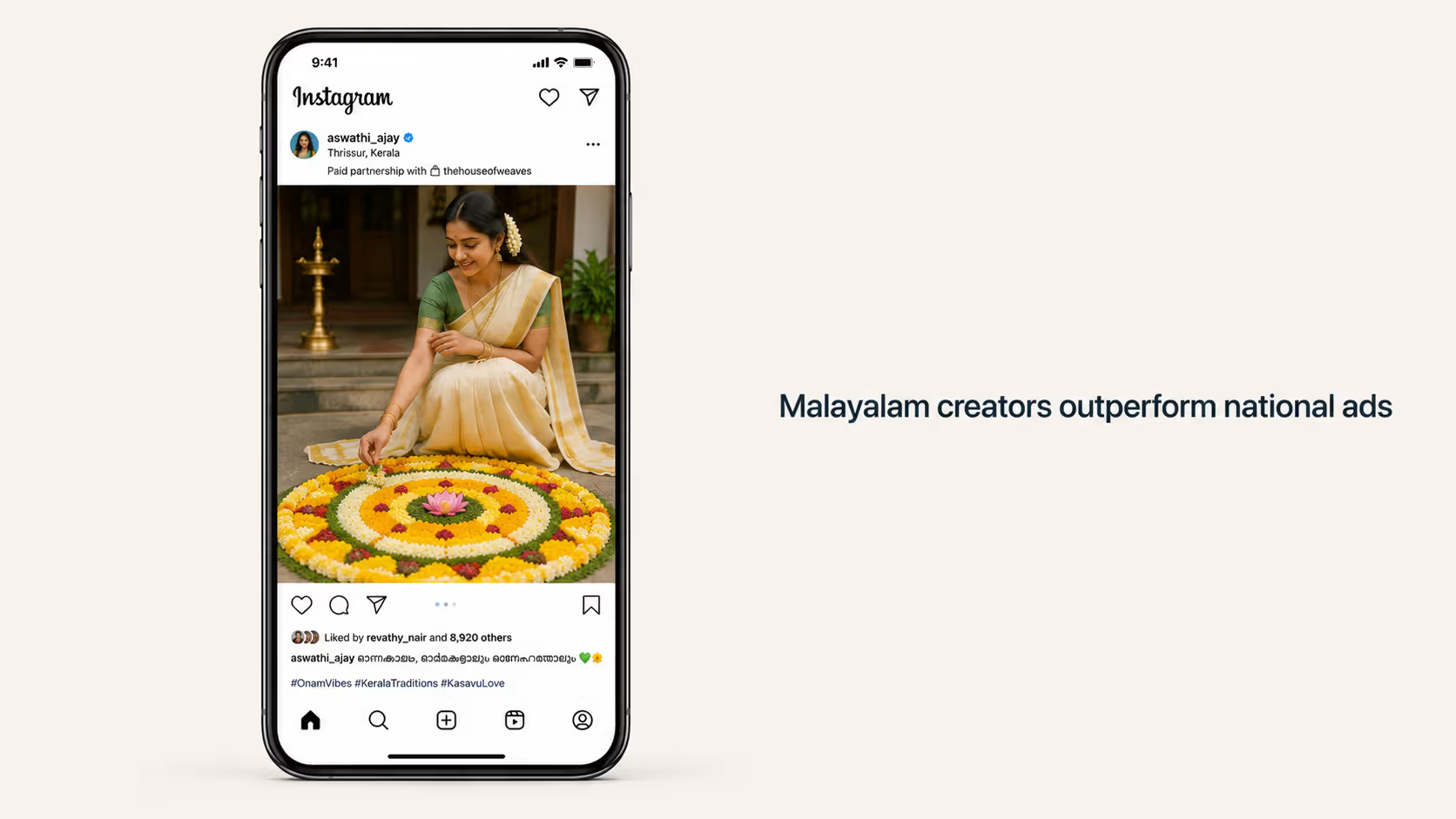
Onam is South India's biggest harvest festival and one of the most important ecommerce windows for brands targeting Kerala, Tamil Nadu, and the global Malayali diaspora. Purchase intent peaks strongly for ethnic wear and gold. Home decor sees a consistent 20% lift during Onam (GreenHonchos, 2022) and brands that run Kerala-specific creative and vernacular content consistently outperform those that deploy the same national campaign.
The most common mistake here is treating Onam as a subset of the broader festive season rather than giving it a distinct campaign arc. Brands that invest in Malayalam-language content and culturally specific product curation see meaningfully better engagement.
Timing: Campaign launch from August 18. Peak activation August 26 through September 7.
Channel priority: YouTube (high Malayalam-language viewership), Instagram, Meta with Kerala geo-targeting, influencer marketing with regional creators.
Pre-festive audience building (August-September)
One habit that consistently separates strong festive performers from average ones is building retargeting audiences before CPMs spike.
By mid-September, Meta and Google CPMs in India start rising sharply as brands rush into the market. Brands that started running awareness content in August, building website visitor audiences and social engagements, can run far more efficient retargeting campaigns in October and November with the cost-per-acquisition difference between a warm audience and a cold one during peak season being 2-3x.
Practically, this means: run non-promotional content campaigns in August and early September be it gift guides, brand storytelling, or product education. The objective is audience size, not immediate conversion.
Phase 3: The core festive peak (October–December)
This is the most congested, highest-stakes window in the Indian ecommerce calendar. Ad CPMs are near their annual peak, customer expectations for discounts are highest, the logistics strain is real, and the revenue potential is enormous.
Navratri (October 11–20, 2026)
High-intent categories: Ethnic wear (especially Navratri-specific chaniya choli and lehenga), footwear, jewelry, fashion accessories
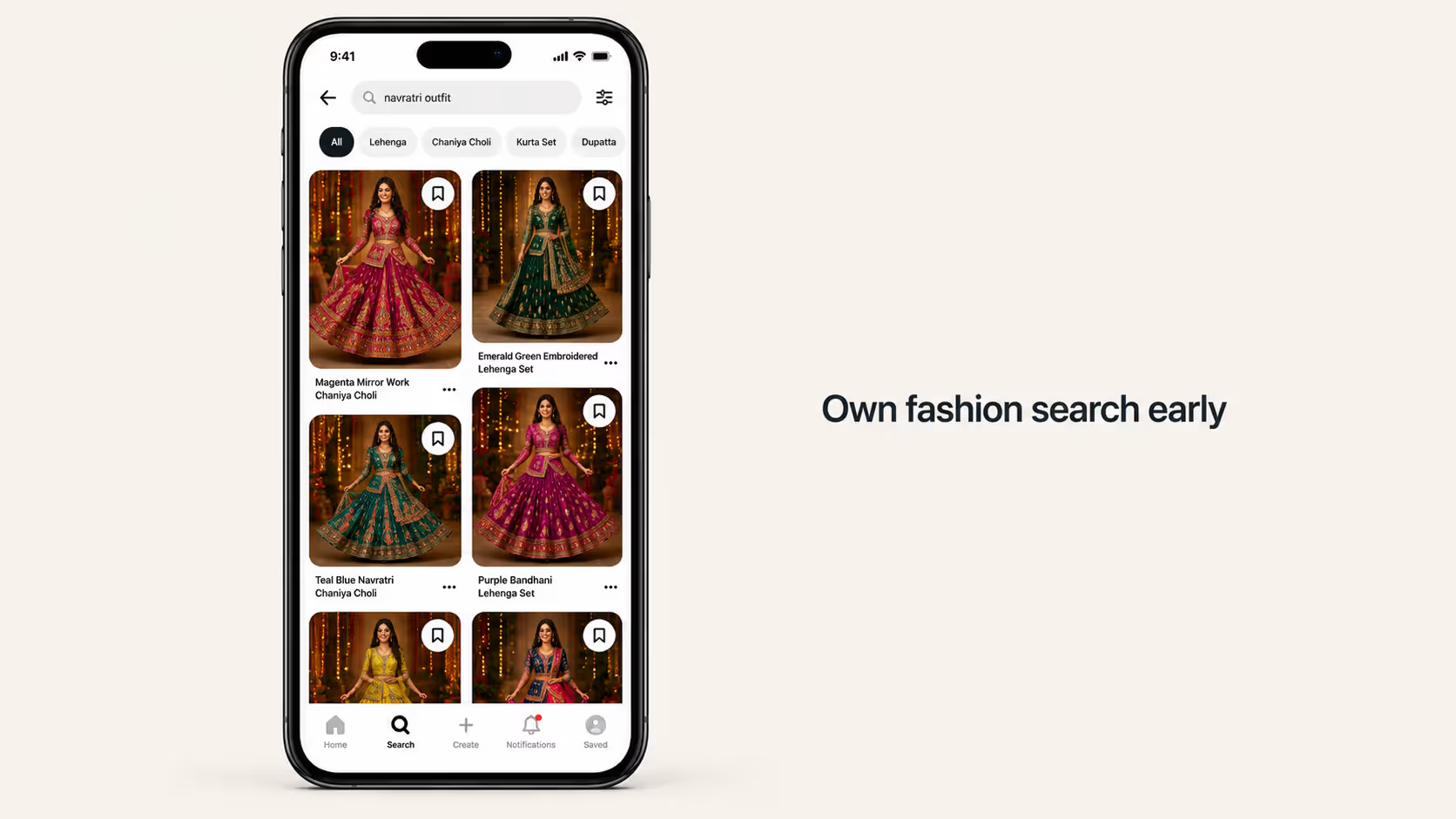
Navratri signals the official start of India's core festive shopping season. The festival runs for nine nights and its ecommerce profile is especially strong for ethnic wear and festive fashion. Brands in these categories need to have their inventory fully stocked and campaigns live by October 8 at the latest.
Search volumes for festive fashion start climbing sharply in early October. Brands that own the search real estate by October 11 capture early intent before the Dussehra and Diwali rush compounds the competition.
Timing: Campaign activation by October 8, daily or themed creative across the nine nights of Navratri.
Channel priority: Instagram and Pinterest for fashion discovery, Meta for broad reach, email and push notifications for existing customer activation.
Dussehra / Vijaya Dashami (October 21, 2026)
High-intent categories: Electronics, fashion, home appliances, automotive accessories
Dussehra marks the conclusion of Navratri and is considered an auspicious day for new purchases, particularly big-ticket items. It's one of the most popular days in India for gold and vehicle purchases. For ecommerce brands, it's a strong moment for electronics and home appliances, categories where "auspicious day" purchase motivation drives conversion well beyond what discounts alone would achieve.
The cultural logic matters here: many Indian consumers are not just looking for a deal, they're looking for the right moment to make a considered purchase. Messaging that acknowledges the auspiciousness of the day, without being heavy-handed about it, tends to outperform purely promotional copy.
Timing: Sale launch October 18–19. Peak activation October 21.
Dhanteras (November 6, 2026)
High-intent categories: Gold and silver jewelry, electronics, home appliances, utensils and kitchen items
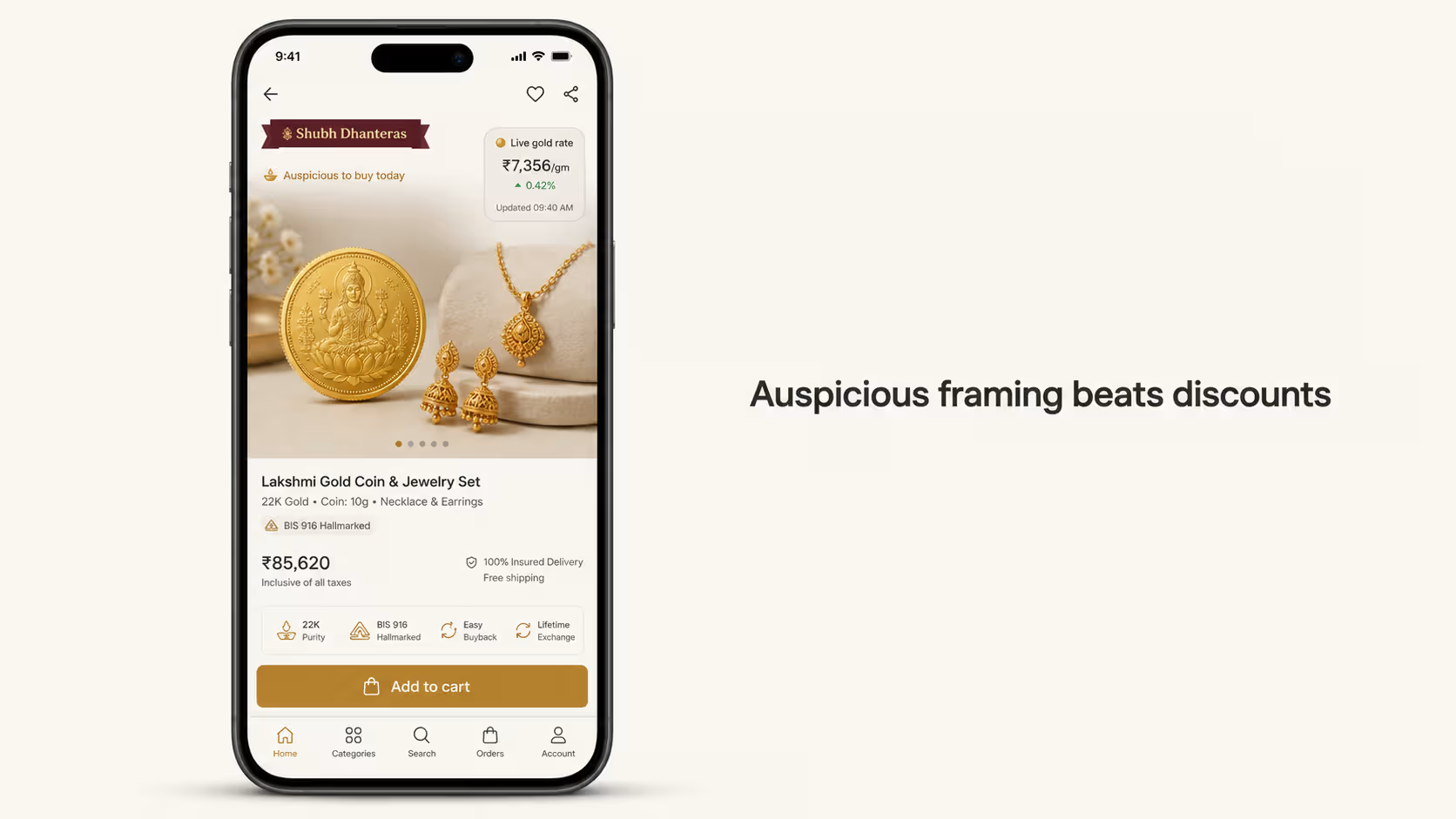
Dhanteras is traditionally the day to buy metals and new household items, making it the single highest-conversion day for jewelry and electronics brands in the Indian calendar. Search volumes for gold jewelry and electronics spike sharply on Dhanteras, and many consumers have specifically saved for this purchase.
The implication for brands is that this is not the day to run a generic sitewide discount. It's the day to lead with specific category promotions that align with the cultural logic of what people are looking for. "Buy gold today for prosperity" is a more resonant frame than "flat 20% off."
Timing: Campaign activation on November 1. Peak push November 5–6.
Diwali (November 8, 2026)
High-intent categories: Home decor, lighting, gifting (dry fruits, sweets, cosmetics, hampers), apparel, electronics, gold jewelry
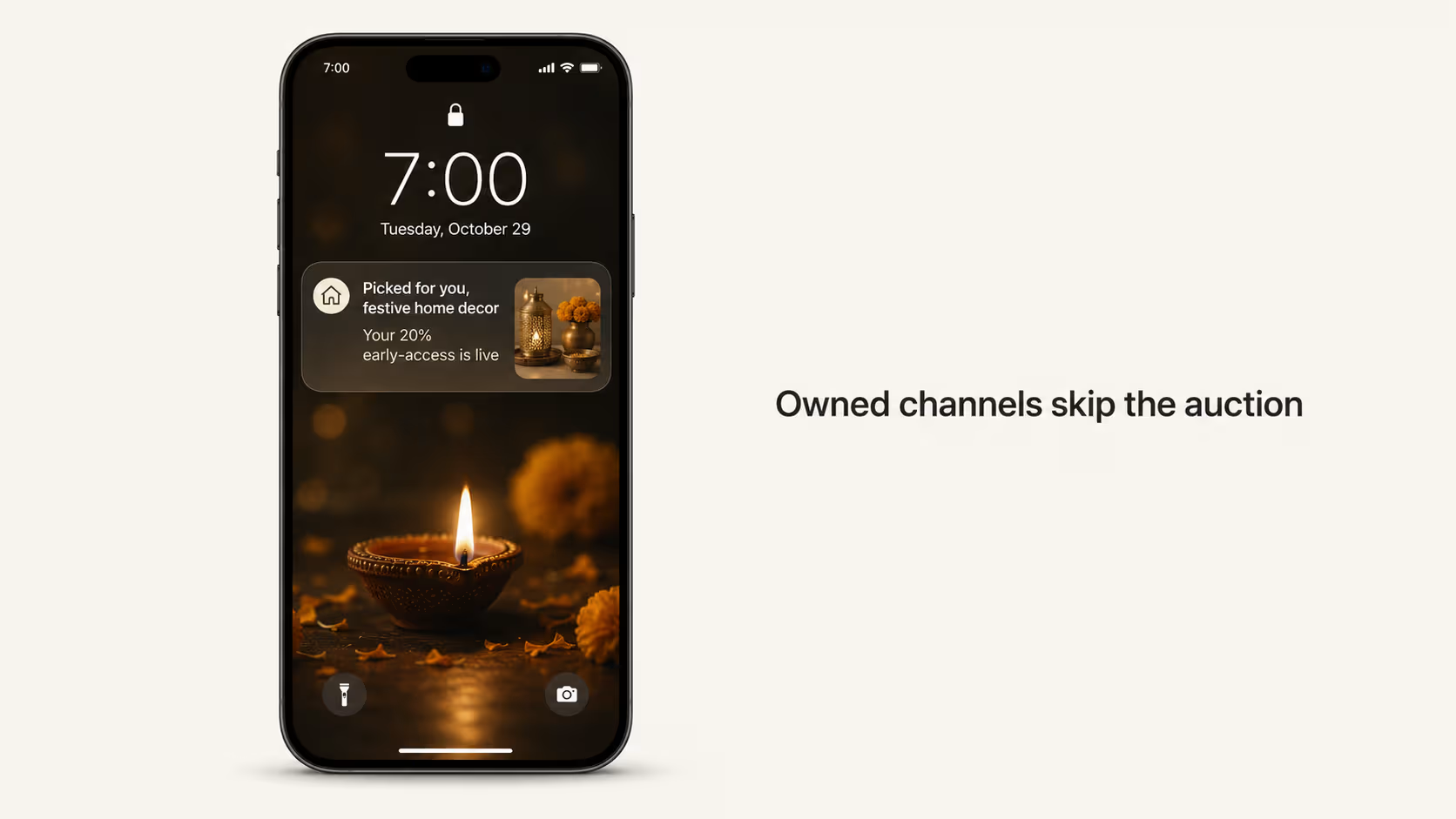
Diwali is the apex of India's festive season and one of the largest ecommerce events in the world. The 30-35 days leading up to Diwali 2025 generated ₹1.15 lakh crore in GMV, growing 20-25% year-on-year (Redseer, 2025). The platform sale events (Flipkart Big Billion Days, Amazon Great Indian Festival) happen during this window and pull enormous traffic to marketplaces, but they also lift overall category intent across the internet, benefiting D2C brands with strong owned-channel presence.
For brands not running on marketplaces, the strategic priority is owned channels: email, SMS, WhatsApp, and push notifications. These channels reach existing customers without competing in the CPM auction. Brands that built their subscriber and push notification lists through the pre-season months now have a compounding advantage.
A specific tactical note: post-Diwali demand is real and growing. Redseer's 2025 analysis identified a dual-peak phenomenon, with a second wave of high-ticket appliance purchases post-Diwali following GST reform news. Brands that maintained promotional activity through mid-November, rather than going dark after Diwali day, captured incremental revenue that single-peak planners missed.
Timing: Pre-Diwali campaign from October 22. Heavy activation October 29 through November 8. Post-Diwali retention push November 9–14.
Channel priority: For existing customers: push notifications, email, WhatsApp. For new acquisition: Meta and Google with retargeting lists built pre-season. For brand building: YouTube and Instagram Reels.
For the full campaign structure, gifting angles, and a pre-festival checklist, work from the dedicated Diwali marketing for ecommerce guide.
For Shopify brands with mobile apps, Diwali is when the push notification channel proves its ROI. Shoppers who have downloaded your app and opted into notifications are the highest-intent, lowest-acquisition-cost audience you have.
Segmented push campaigns for your app users, personalized by purchase history and browse behavior, consistently outperform broadcast email during this window.
Appbrew brands running festive push campaigns during Diwali week typically see 3x higher open rates, compared to the same campaigns in non-festive months, given that users are actively shopping and in purchase mode.
Bhai Dooj (November 10, 2026)
High-intent categories: Gifting (similar to Raksha Bandhan), sweets, personalized items
Bhai Dooj concludes the Diwali festivities and is a sibling gifting festival. The profile is similar to Raksha Bandhan in category terms but typically lower in purchase volume. Treat it as an extension of the Diwali activation rather than a standalone campaign.
Children's Day (November 14) and Black Friday (November 27, 2026)
High-intent categories: Toys, educational games, kids' apparel (Children's Day); electronics, fashion, home (Black Friday)
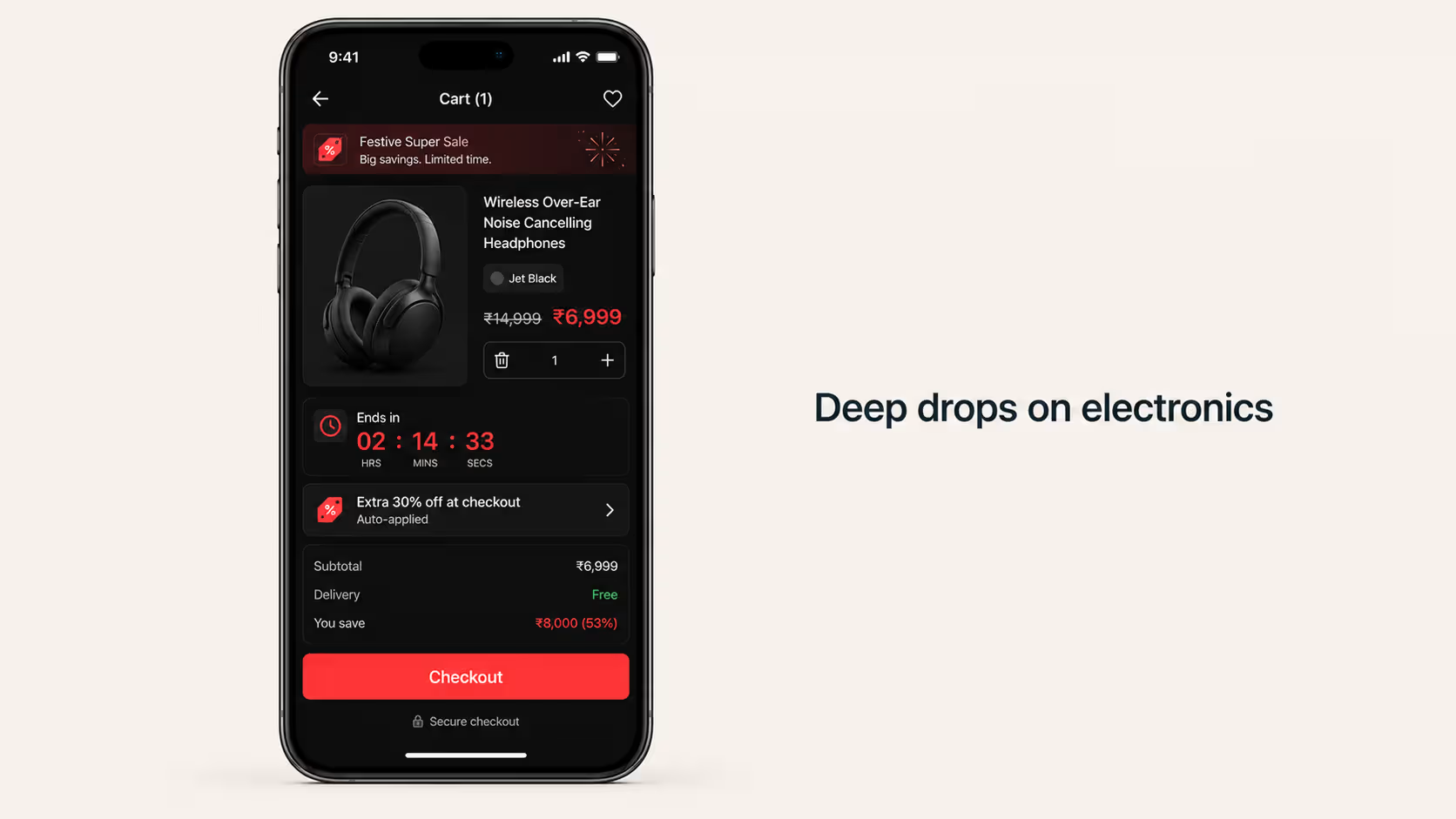
Black Friday has landed firmly in India's ecommerce calendar. Most major platforms and D2C brands now run Black Friday promotions, and Indian consumers have adopted the event with significant enthusiasm. The opportunity is especially strong for electronics and high-ticket fashion. Indian Black Friday campaigns that lead with price drops of 30%+ on premium categories consistently outperform soft promotional messaging.
Timing: Black Friday teaser from November 22. Peak November 27–30 (extending to Cyber Monday, November 30).
Christmas and New Year (December 25, 2026 / December 31, 2026)
High-intent categories: Fashion, home decor, personal care gifting, electronics, experiences
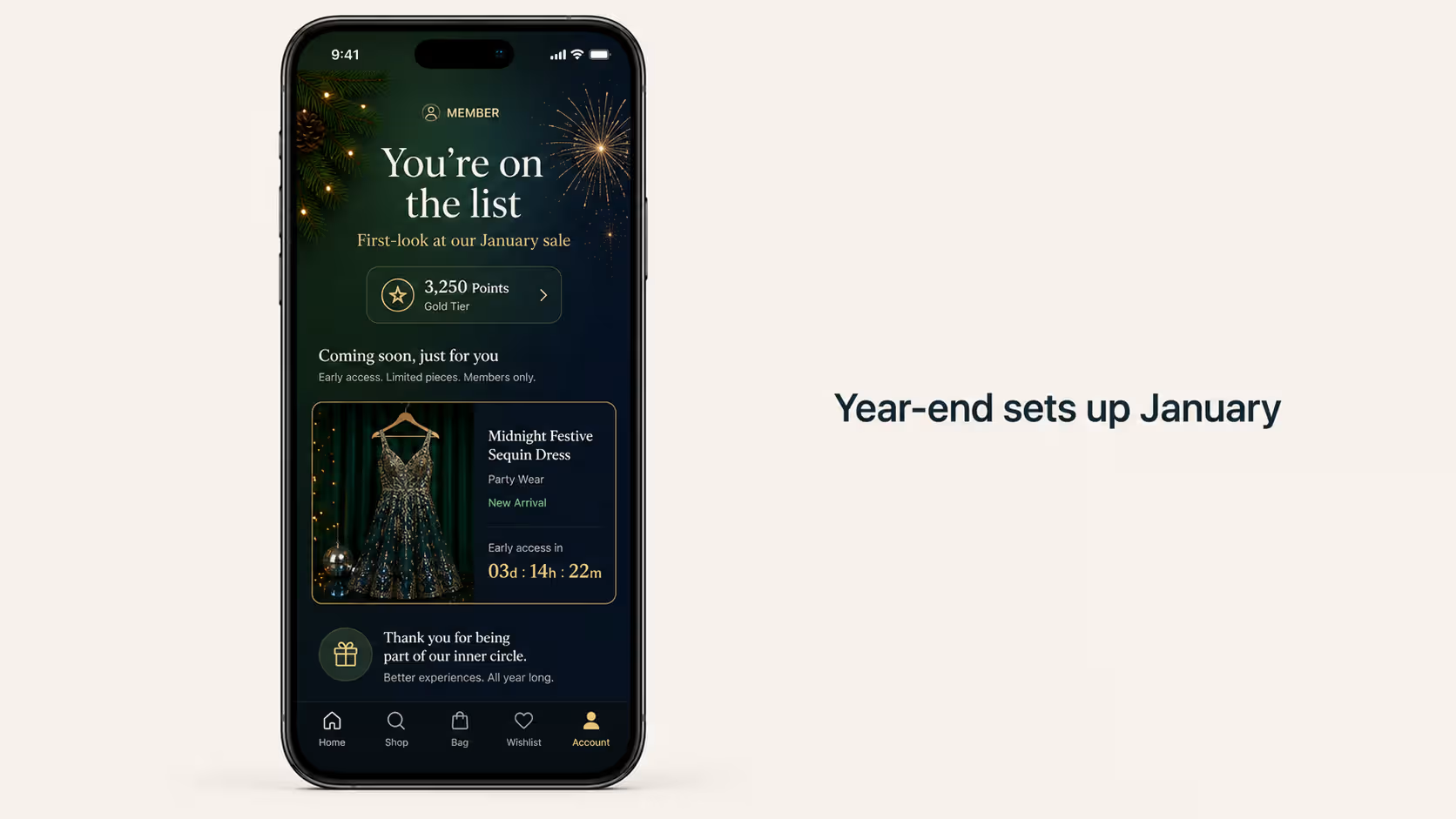
Christmas and New Year close out the festive year. For most consumer categories, the gift-giving angle is strong through Christmas, shifting to apparel, beauty, and experiences in the final week of December. New Year's Eve itself is increasingly a commerce moment: party wear, beauty, and food gifting all spike in the final 3-4 days of December.
Year-end is also the right time to focus on ecommerce retention strategies that set up strong January performance. Loyalty programs, first-look invites to January sales, and referral activations all work well in this window.
Timing: Christmas campaign from December 15. New Year activation from December 26.
The channel logic across the full calendar
Getting the timing right is only half the equation. The channel mix has to match the festival's purchase dynamic.
Email and push notifications are your owned channels: free to reach, high intent, and critical when paid CPMs are at their peak. Building your list is pre-season work. For brands with a ecommerce mobile app, push notifications add a direct line to your highest-value customers i.e. the people who've already downloaded your brand and opted in. During Diwali week, when ad costs are highest, that channel costs you nothing extra to activate.
Meta and Google are your acquisition channels: essential for new customer reach, but cost-constrained during peak periods. The strategy is to load up on audience building in the cheaper pre-season months and shift to retargeting during the festive peak, when you're converting warm audiences rather than paying to find cold ones.
Instagram Reels and YouTube anchor brand and content campaigns. These perform best when run consistently, not just during sale windows. Brands that publish festive content regularly across the season, rather than flooding the feed only during sale events, build stronger brand associations and higher organic reach.
WhatsApp has become a materially important channel for Indian ecommerce brands, particularly for order updates, cart recovery, and last-minute gifting reminders. Its open rates remain well above email, and the conversational format lends itself to customer service moments during high-traffic periods.
The pre-season planning checklist
Running a strong festive calendar requires infrastructure decisions made months in advance. Treat this as a July-August task list, not an October one.
- Inventory planning: Know your stock position by September 1 for core festive SKUs. Stockouts during Diwali week are brand-damaging and irrecoverable.
- Audience building: Run awareness-only campaigns in July and August to build retargeting pools before CPMs rise.
- Owned channel growth: Every email subscriber and app install acquired before the season is one you don't have to pay to reach at peak. Focus your Shopify growth efforts on list and install growth from June through August when CPMs for app install campaigns are significantly lower in this window than in October.
- Creative production: Lock Diwali and Navratri creative in August. Producing under deadline pressure in October is avoidable.
- Logistics confirmation: If you use third-party fulfillment, confirm SLAs and capacity windows in September.
- Mobile experience: 85% of festive traffic in India is on mobile (eShipz, 2025). A native app experience converts repeat shoppers better than mobile web with less friction at every step from browse to checkout.
For brands running a mobile app, the festive season is when that channel produces its clearest ROI. App users are already opted in, already familiar with your brand, and typically spending 25-40% more per order than new web visitors.
Why a mobile app pays for itself during festive season
When festive CPMs spike, brands without owned channels pay more to reach customers they already acquired. Brands with a mobile app skip that auction for their repeat shoppers entirely.
The economics are straightforward. App users across Appbrew's portfolio consistently show 25 to 40% higher AOV and 2 to 3x higher repeat purchase rates than web-only shoppers. A push notification costs nothing to send, and during Diwali week it reaches an audience actively in purchase mode, where segmented push campaigns typically see 3x higher open rates than the same message in a non-festive month.
The results show up in named brands, not just averages:
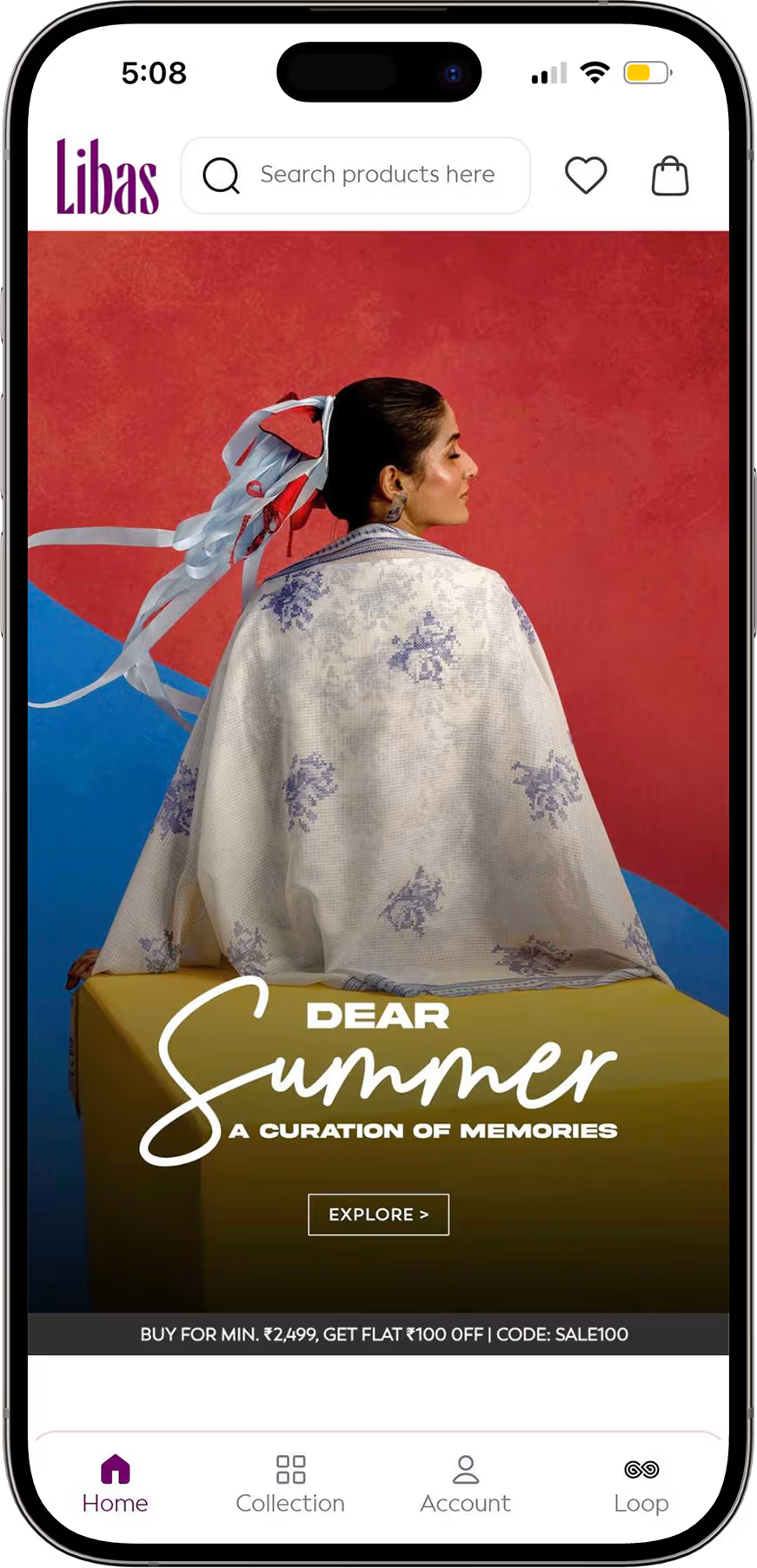
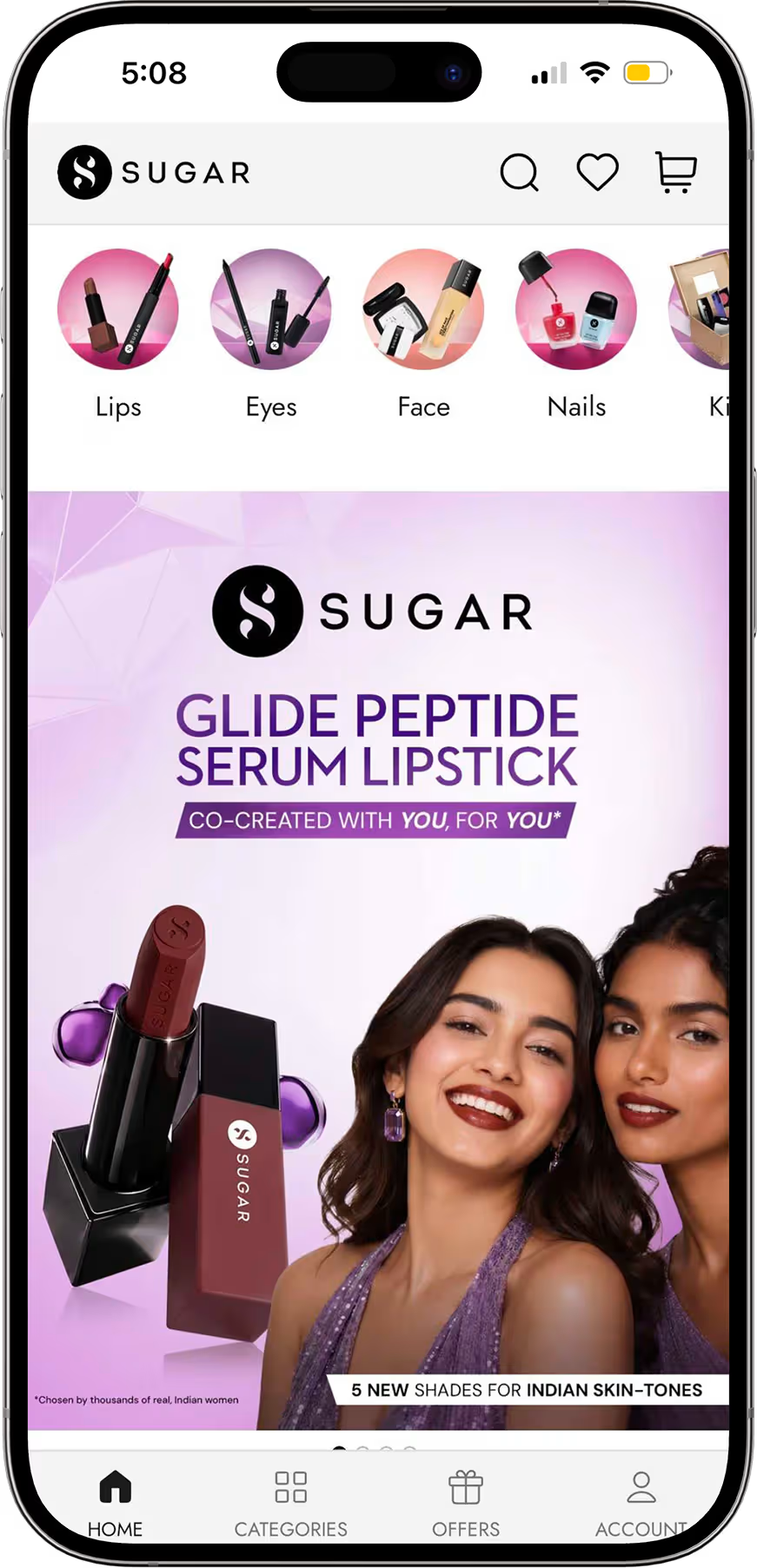
- SUGAR Cosmetics: 70% higher conversion rate on app versus web
- Karma and Luck (home decor): 50% increase in conversion rate
Getting there is faster than most teams expect. Appbrew builds native iOS and Android apps for Shopify brands using React Native, the same stack behind H&M and Zara, and the deeper mechanics are covered in the Shopify mobile app development guide.
For festive specifically, the CMS dashboard lets you switch seasonal themes, banners, and countdown timers without a developer, so a Diwali storefront goes live the moment the window opens.
Closing note
India's festive season rewards planning more than it rewards budget. The brands that consistently outperform built their audiences before CPMs peaked, warmed up their owned channels before October, and treated post-Diwali as a retention window rather than a cool-down.
The calendar above maps every key moment. The work is stringing them into a coherent arc so each festival builds on the last one rather than starting from scratch. A mobile app is one of the most effective ways to make that owned channel real: no auction, no CPM spike, just a direct line to your best customers at the moments that matter most.
Appbrew helps Shopify brands build and activate their mobile app channel for festive season campaigns. Talk to us to know more.
FAQs
When should Indian ecommerce brands start festive season marketing?
The practical answer is August for audience building and September for campaign activation. Brands that wait until October find themselves competing for CPMs that have already risen by 30–50% from their August baseline. Pre-season audience building, where you run awareness content without heavy promotional messaging, is the lowest-cost and most effective way to prepare for the peak. For Diwali specifically, the pre-activation phase should start no later than the last week of October.
Which festivals drive the highest ecommerce GMV in India?
Diwali, including the surrounding windows of Dhanteras and Navratri, accounts for the single largest festive commerce peak. The 30–35 day window before Diwali generates more ecommerce GMV than any other period in the calendar. Raksha Bandhan and Holi are the next most significant in terms of intent lift for specific categories, followed by Republic Day and Independence Day, which function as general sale events rather than category-specific intent drivers.
How do Tier 2+ cities change festive marketing strategy?
Tier 2+ cities now account for 60–65% of festive shoppers in India (Redseer, 2025), and they purchase differently from metro shoppers. Average order values are somewhat lower, but purchase frequency during festive windows is high. Vernacular language content, WhatsApp-first communication, cash-on-delivery options, and trust signals (customer reviews, return policy visibility) all carry more weight in Tier 2+ markets. Brands that geo-target and localize content for these markets systematically outperform those running a single national campaign.
Should D2C brands run sales during every festival?
No. The brands that discount during every festival train their customers to wait for discounts, which compresses margins year-round. A stronger approach is to use high-intent festivals for category-specific promotions rather than blanket sitewide sales. Reserve deep discounting for windows where purchase intent is already strong and you need to convert undecided shoppers: Dhanteras, Diwali day, and Black Friday. For other festivals, lead with gifting collections, curated bundles, and emotional campaigns that convert at similar rates without training customers to wait.
What makes festive push notification campaigns work in India?
Timing, personalization, and restraint. Push notifications sent during the first two hours of a sale event see the highest open rates, often 3–5x higher than the same message sent mid-day (Pushwoosh, 2025). Personalization based on past purchase category consistently outperforms generic broadcast messages. And restraint matters: brands that send daily push notifications during festive weeks see opt-out rates spike by the third day. The most effective festive push strategy is 2–3 well-timed messages per week, personalized to what the customer has shown interest in.