.webp)
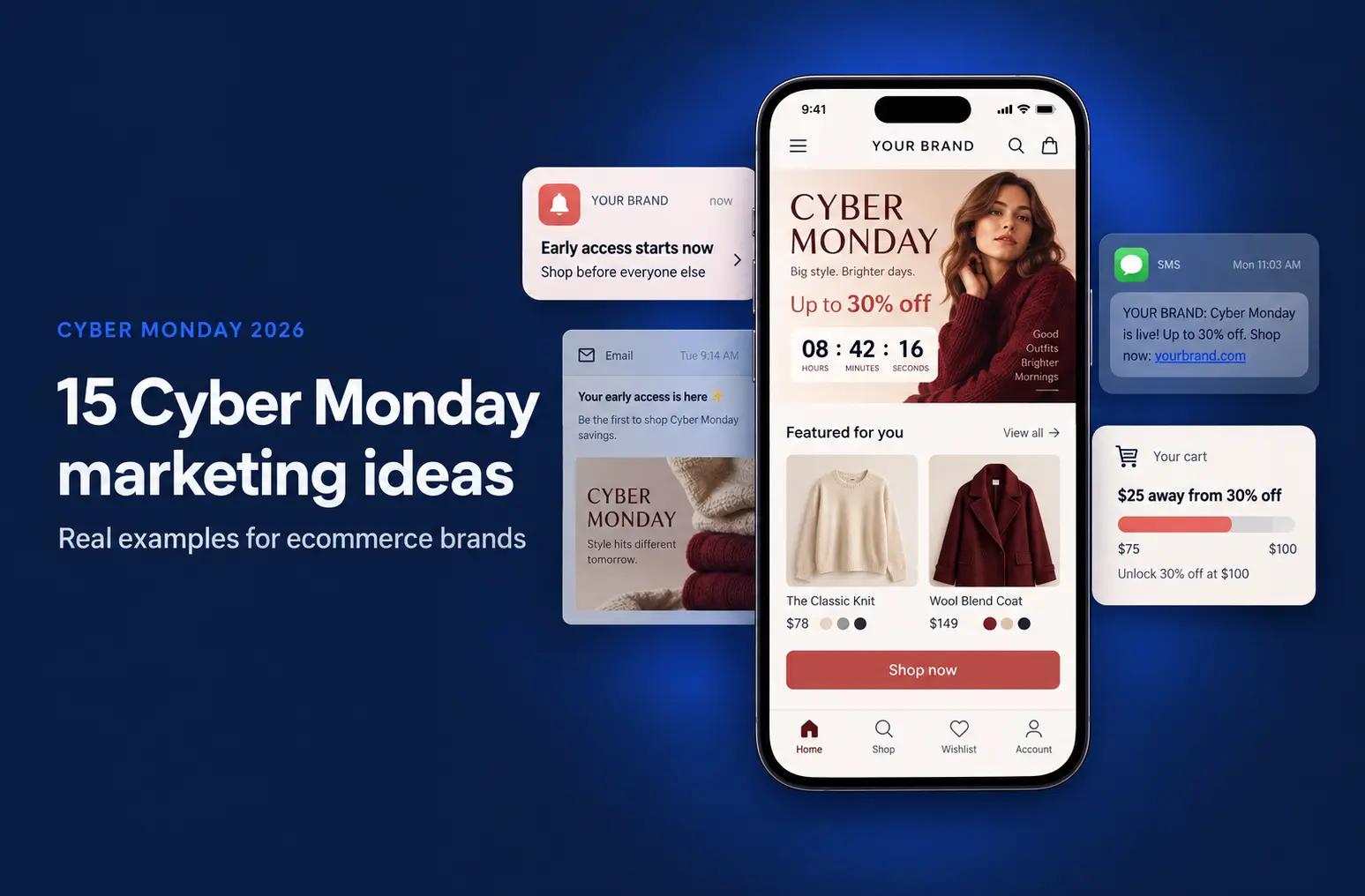
Agentic commerce lets AI agents shop and buy for customers. See 2026 use cases, the ACP and UCP protocols, the risks, and how to make your store agent-ready.
You have spent years tuning your store for humans. Fast product pages, a tight checkout, ad creative that actually converts.
Now a growing share of your buyers never see any of it. They ask ChatGPT or Gemini for a recommendation, and an agent picks the product, compares the options, and completes the purchase.
That shift is agentic commerce, and it is already moving real money. This guide covers what it is, the use cases running live in 2026, the protocols that make it work, the risks that come with it, and how to get your Shopify store ready before the agents arrive.
Quick insights
- Agentic commerce is AI agents researching, comparing, and buying on a shopper's behalf, with the human involved only at setup and final approval.
- AI traffic to US retail sites grew 393% year over year in Q1 2026, and it now converts 42% better than non-AI channels (Adobe Analytics, 2026).
- ChatGPT Instant Checkout, Walmart Sparky, Amazon Rufus, and Perplexity already complete purchases inside the assistant.
- McKinsey projects agentic commerce will drive $3 trillion to $5 trillion globally by 2030.
- The merchants who win are the ones whose product data is clean enough for an agent to read. Store design and ad spend matter less than they used to.
What is agentic commerce?
Agentic commerce is the use of AI agents to research, compare, and complete purchases on behalf of a shopper or a business buyer. The human sets the intent and the rules. The agent does the rest.
This is not a chatbot answering questions, and it is not a recommendation engine suggesting products. A chatbot waits for you to ask. A recommendation engine waits for you to browse. An agent acts: it interprets a goal, evaluates options across retailers, and executes the transaction.
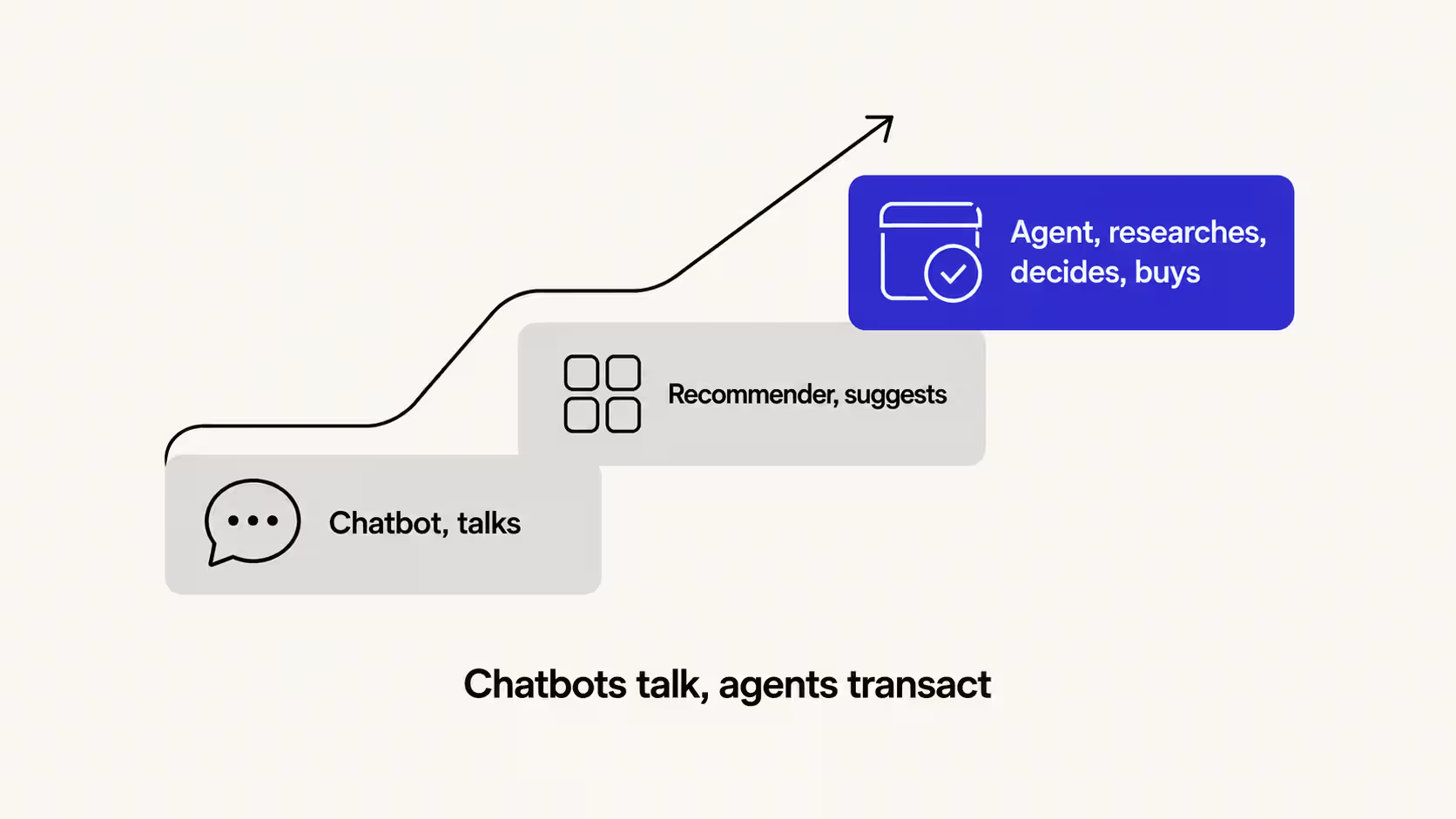
The behavior is already mainstream. A 2026 IBM Institute for Business Value study found that 45% of consumers already use AI for part of the buying journey (IBM, 2026). The distance between "assist" and "act" is closing fast.
Agentic commerce vs traditional ecommerce (and how it differs from AI commerce)
In traditional ecommerce a human does the searching, comparing, and clicking. In agentic commerce an agent does all of it and completes the purchase. AI commerce sits in the middle: it helps the shopper but stops short of buying.
Here is the split between the old model and the new one.
Most "AI shopping" today is still assistive, not agentic. The distinction that matters is autonomy.
The jump from assistive to agentic is exactly where most merchants' data and checkout readiness break.
The agentic commerce journey: from discovery to transaction
The agentic commerce journey runs across four stages after the shopper states an intent, and consumers want to hand off nearly every one of them. Visa's research across the US, Australia, and New Zealand found high willingness to let an agent take over at each stage of the buyer journey.
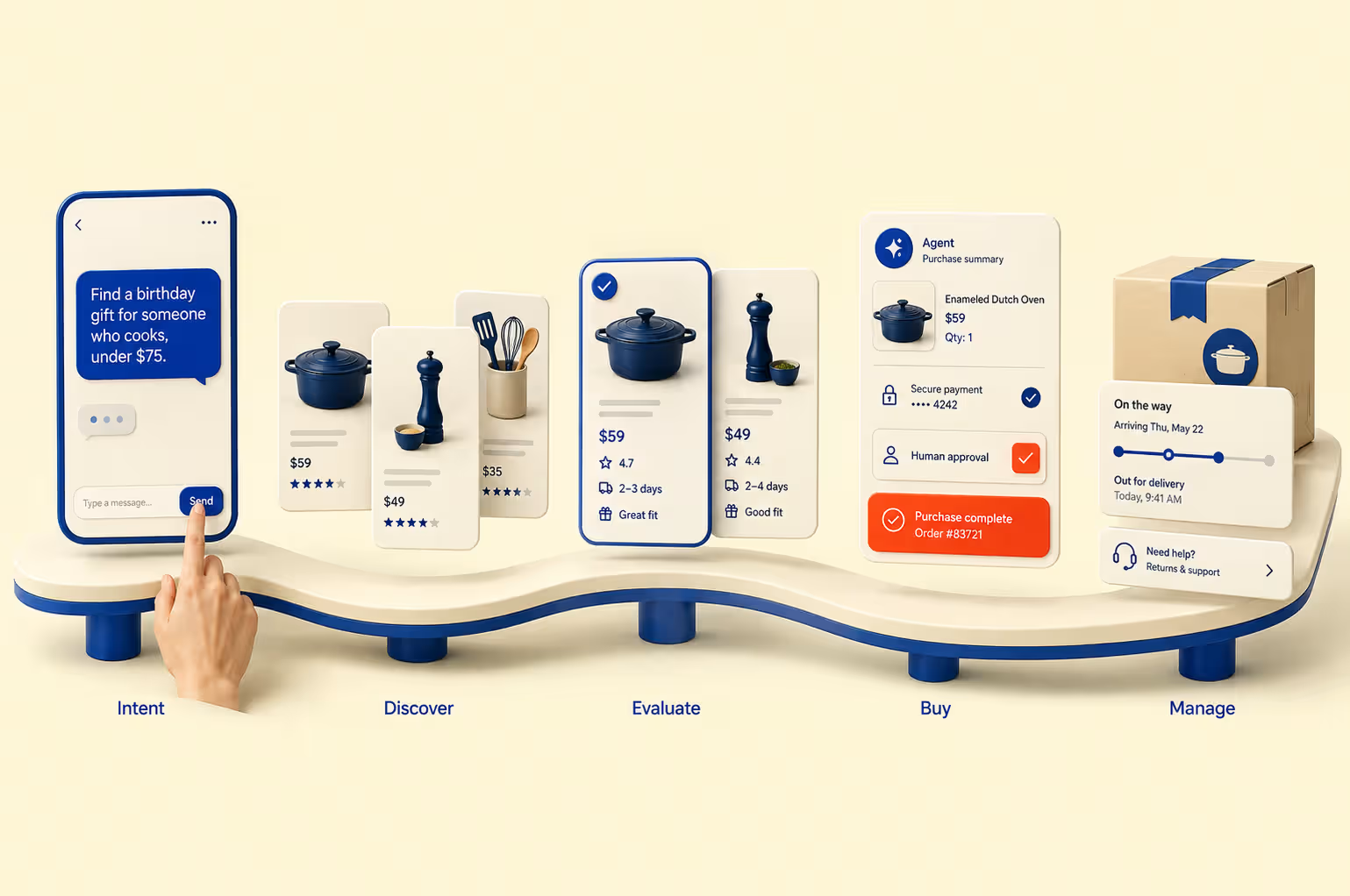
1. Intent capture
The shopper tells the agent what they want, either specifically ("reorder my usual coffee") or loosely ("a birthday gift for someone who cooks, under $75"). This is the one stage the human always owns, because it sets the rules the agent operates inside.
2. Discovery
The agent queries catalogs, reads reviews, and pulls real-time inventory and pricing to build a shortlist. Consumers were willing to let an agent replace this stage 73% of the time (Visa, 2025). For brands with an app, this is where an in-app AI concierge surfaces the shortlist instead of a filtered grid.
3. Evaluation
The agent compares specs, prices, and seller reputation across retailers to narrow the field. Willingness to offload this stage sat at 69% (Visa, 2025). Evaluation is decided on data quality, so this is the stage where thin product pages quietly cost you the sale.
4. Checkout and transaction
The agent builds the cart, applies discounts, and completes payment through tokenized rails, inside guardrails like spending limits and approval thresholds. Consumers accepted agent-run checkout 62% of the time.
5. Post-purchase
The agent tracks the order, handles delivery updates, and can start a return. Willingness here was 64%, higher than checkout, because tracking and returns are the chores people most want gone.
The pattern is consistent: the human keeps intent and approval, and the agent takes the busywork in between. That middle is where discovery and evaluation live, and it is where a native app earns its place.
Agentic commerce use cases in 2026: real examples of autonomous shopping
Agentic commerce shows up in a few concrete patterns in 2026: autonomous product discovery and checkout, price monitoring with auto-purchase, subscription replenishment, and full task completion in travel and B2B buying. The shopper states an intent once, and the agent handles everything after that.
The volume behind this stopped being theoretical. By March 2026, AI traffic to US retail sites converted 42% better than non-AI channels, a reversal from converting 38% worse a year earlier (Adobe Analytics, 2026).
Autonomous discovery and checkout is the most mature use case, and the biggest names are already live.
Launched in September 2025 with Etsy and Stripe, ChatGPT Instant Checkout let over a million Shopify merchants sell inside a conversation, with the buyer never leaving the chat. As Shopify's VP of Product Vanessa Lee put it, people are now discovering products in AI conversations, not just search or ads.
Task completion reaches past retail. In travel, corporate platforms like Navan use agents to rebook flights and find alternatives automatically after a cancellation. In B2B, Forrester expects 20% of B2B sellers to face agent-led quote negotiations by the end of 2026, as procurement agents reorder supplies and negotiate rates without a human at each step.
Replenishment is the quiet giant here. Around 32.6% of US shoppers say they would let AI auto-reorder staple items when they run low (eMarketer and Amazon Ads, 2025), which turns a one-time sale into a standing instruction the agent executes on repeat.
Outcomes still depend on how agent-ready you are, and this is where the use case turns practical. Walmart disclosed that Sparky drives 35% higher order values, while Amazon says Rufus shoppers are 60% more likely to complete a purchase. Same category, very different results, and the gap traces back to whether your product data is legible to an agent.
Here is what that looks like on Shopify.
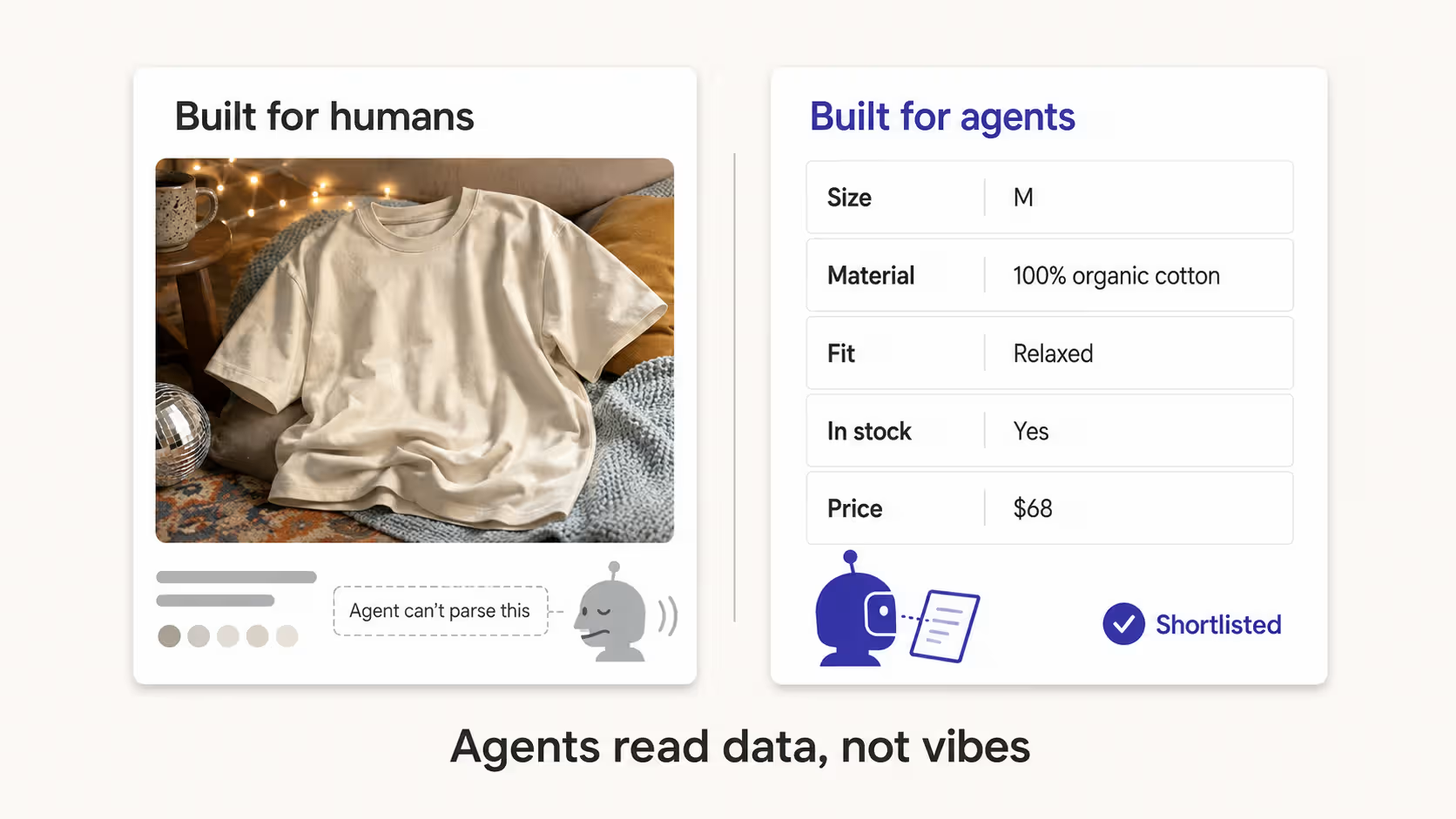
A mid-size apparel brand ran product pages built for human eyes: lifestyle photography, playful copy, and size details buried inside an image. Agents skipped those products because they could not read fit, material, or stock from the page.
After the brand restructured its catalog into machine-readable attributes and exposed a clean product feed, the same items started appearing in ChatGPT and Google AI Mode shortlists. AI-referred sessions began converting above the store's paid-search baseline. The catalog did not change. Its legibility to agents did.
For a wider look at the tools shaping this space, see our roundup of the best AI tools for ecommerce.
{{cta}}
The protocols behind agentic commerce: ACP, UCP, and AP2
An agent cannot buy from you unless there is a shared standard for the transaction. Four protocols now compete to be that standard, and you will likely need to support more than one.
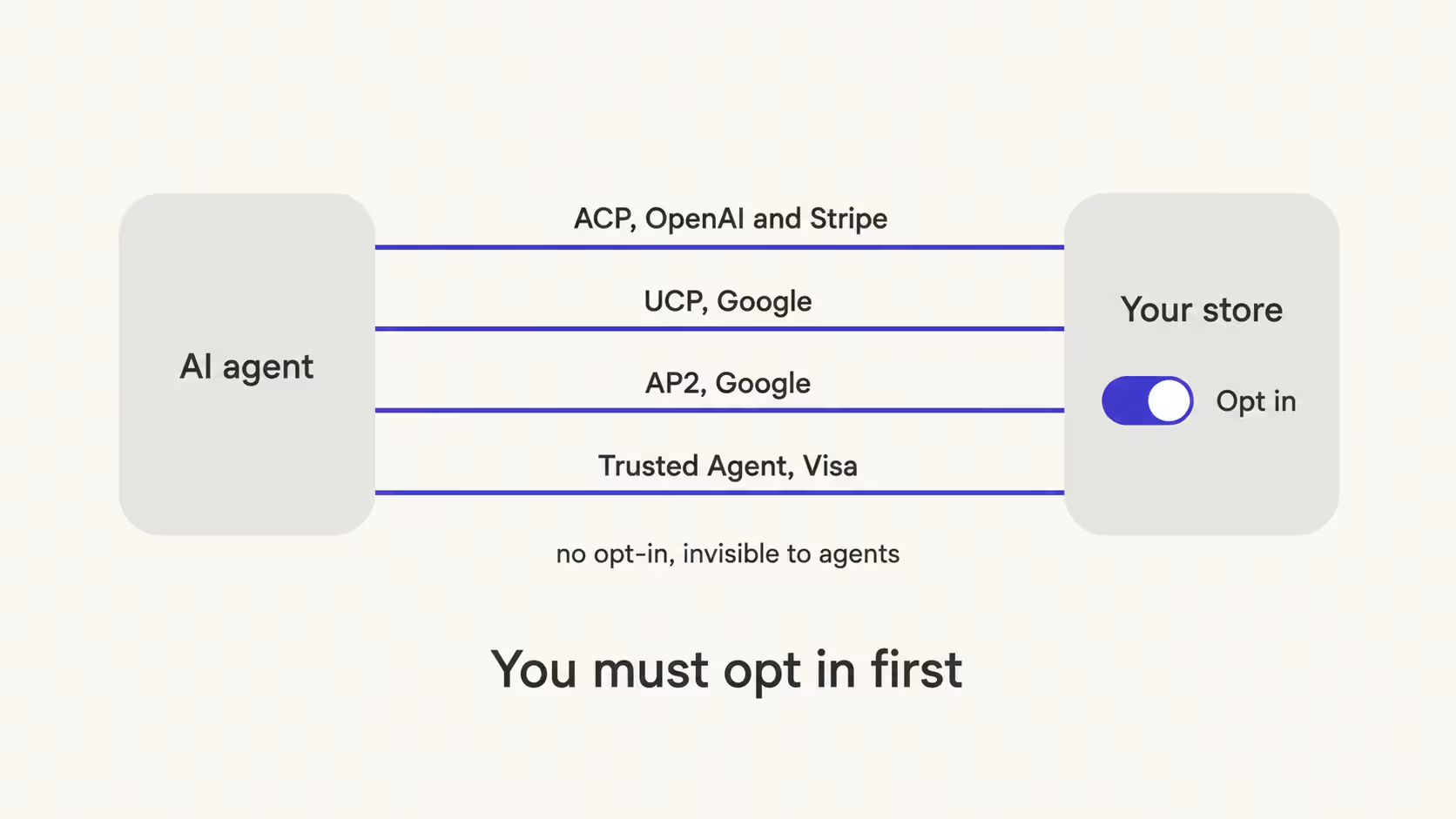
Payment networks are staking out the same ground. Mastercard has its own agent-payment framework, and PayPal powers Perplexity's checkout while expanding its work with OpenAI.
One catch matters for planning. Every one of these protocols requires the merchant to opt in, which means billions of products are still invisible to agents today. Getting listed is a choice you have to make, not a default.
Agentic commerce risks and mitigation strategies 2025-2026
Agentic commerce hands decisions to software that acts on delegated authority, and adoption is outrunning readiness. Only 29% of merchants feel very prepared for it, even as 3 in 4 are integrating or about to integrate agentic protocols (Ravelin, 2026). Gartner expects over 40% of agentic AI projects to be canceled by the end of 2027, partly because of weak risk controls.
What changed from 2025 to 2026. A year ago these risks were hypothetical, because almost nothing could transact. In 2026 the rails went live (ACP, UCP, Copilot Checkout), agents began buying at volume, and regulators moved: the EU AI Act's high-risk rules landed in August 2026. The threat surface stopped being a whiteboard exercise and became a live one.
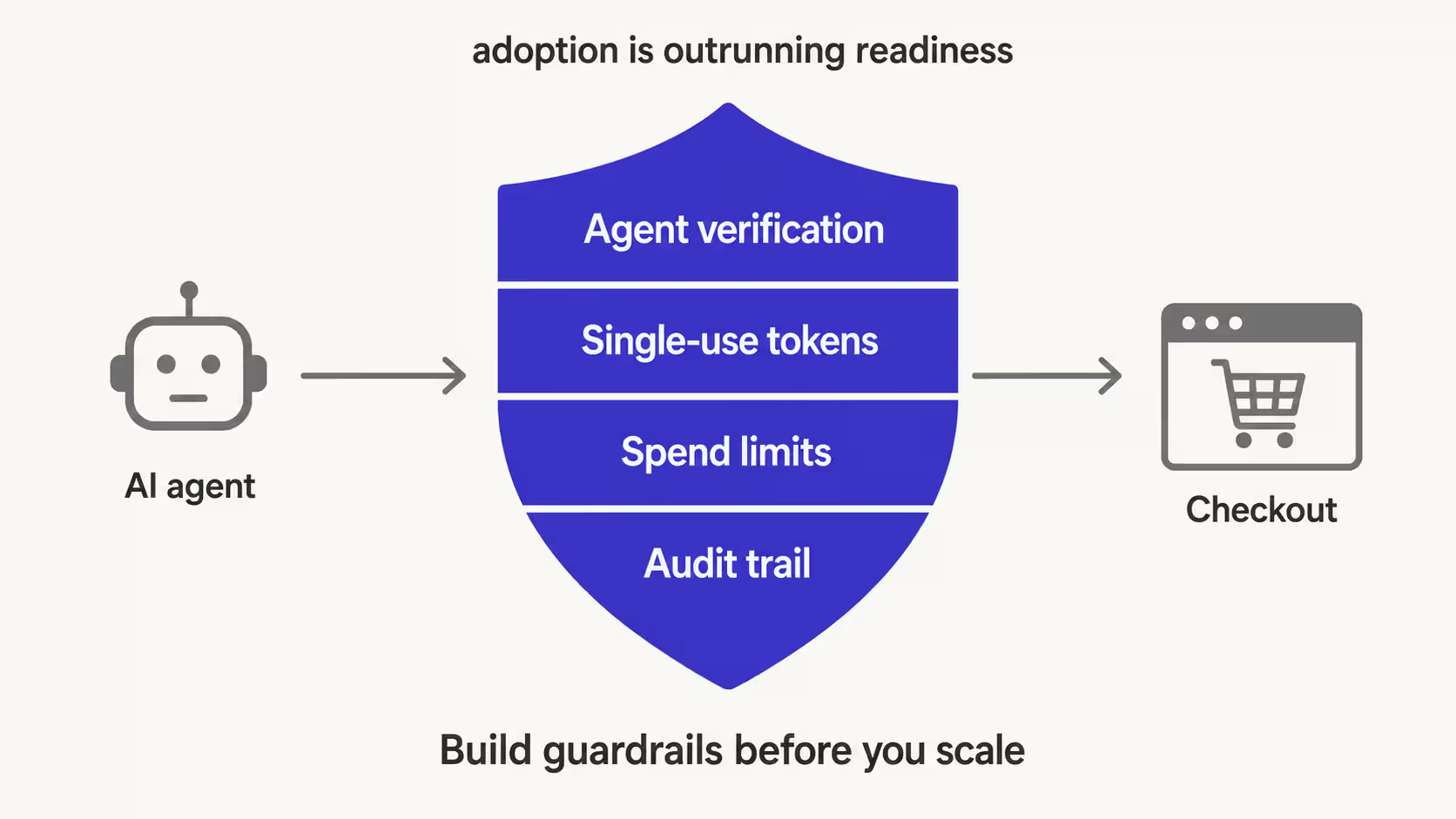
The risks are manageable if you build the guardrails before you scale. Here are the seven that matter most, each with its fix.
1. Fraud and a new attack surface
Agent impersonation, agent hijacking, prompt injection, and stolen-card testing at machine speed are net-new fraud vectors. Mitigate with agent verification, scoped single-use payment tokens, bot detection and rate limiting on checkout APIs, and real-time risk scoring tuned for machine transaction patterns.
2. Liability and authorization
When an agent buys and it goes wrong, it is still legally unclear who is responsible: merchant, agent provider, protocol, or consumer. A shopper can also still dispute the charge under Regulation E. Mitigate by capturing audit trails that log agent identity, authorization context, and decision signals at the moment of each transaction, backed by purchase mandates via AP2.
3. Regulatory exposure
The EU AI Act's high-risk requirements take full effect in August 2026, and autonomous purchasing decisions may fall inside scope. Mitigate by adopting a governance framework now, such as the NIST AI Risk Management Framework, rather than waiting for final rules.
4. Margin erosion
An agent optimizing for "cheapest option that meets the brief" will grind down your pricing power. Mitigate by enriching structured data with real differentiators (warranty, support, certifications) and by encoding floor prices into any agent constraints you control.
5. Brand misrepresentation and pricing control
Agents describe your product from aggregated data and third-party reviews, not your messaging, so inaccuracies and off-brand framing surface without your input. Mitigate by monitoring how AI models describe your brand and by fixing the source (review sites, forums), not the model.
6. Purchase accuracy and consumer trust
Around 43% of consumers worry an agent will pick the wrong product, and a bad autonomous purchase erodes trust fast. Mitigate with complete, accurate attributes and human-in-the-loop approval for high-value or unusual orders.
7. Data privacy and control
Agents pull purchase history, preferences, and browsing data, which creates new exposure. About 85% of consumers want control over the data an agent can access, and roughly half would stop using one without it (Visa, 2025). Mitigate with clear consent, transparency, and real data controls.
Fraud and liability are the two most underweight operators. Payment networks are building agent verification into their rails precisely because impersonation is easy when the buyer is a bot, and the accountability question stays open until regulators or courts settle it.
How to make your Shopify store agent-ready
Getting picked by an agent is an infrastructure problem, not a marketing one. It also pays off on acquisition: 35% of US consumers say they are more likely to buy from a retailer that offers an AI shopping agent (Visa, 2025).
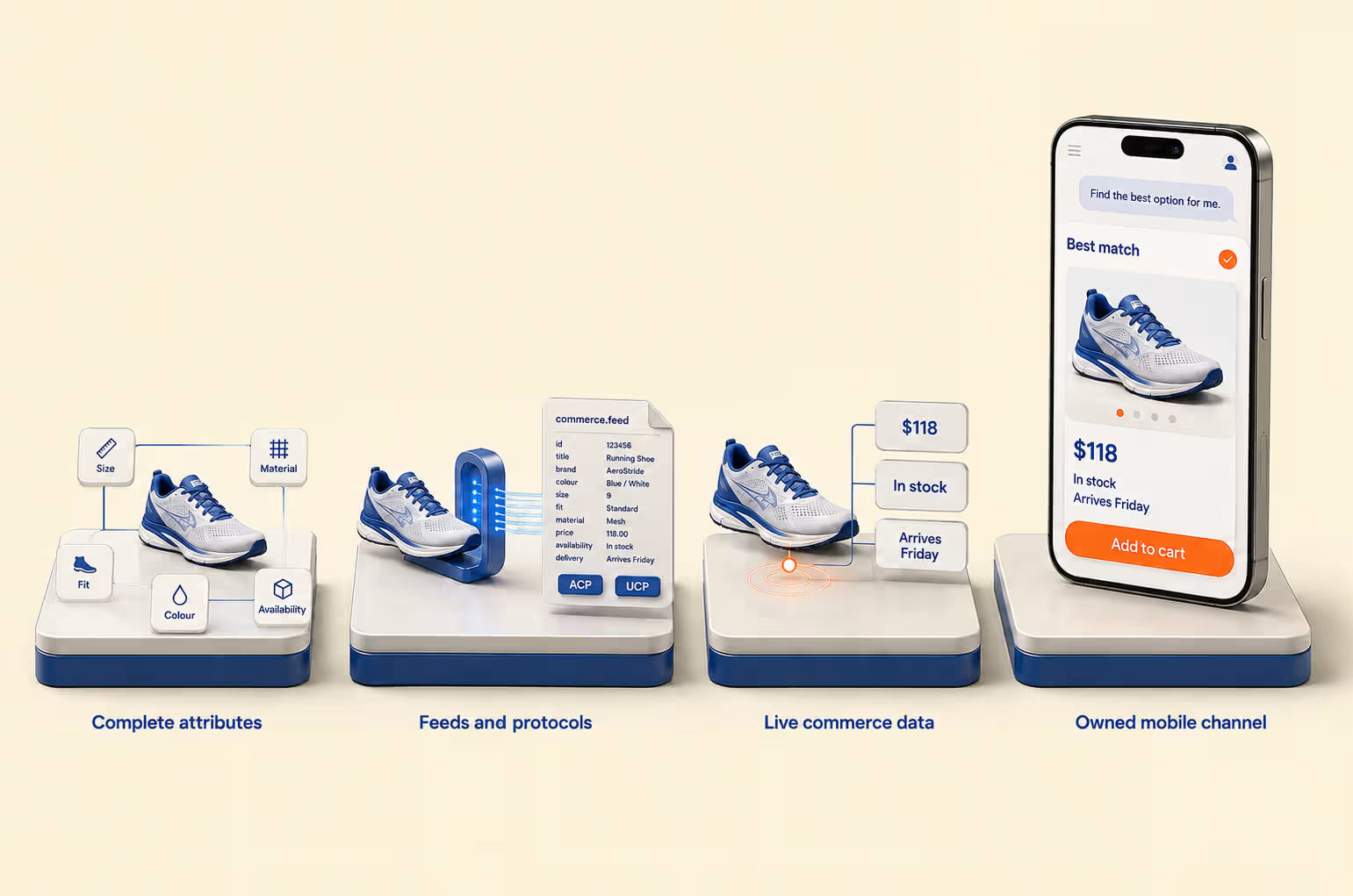
The work breaks into four moves.
1. Make product data machine-readable
Fill every attribute: size, material, fit, availability, specs. Walmart's Sparky leans heavily on a Listing Quality Score, and incomplete attributes are a hard reason to get left out. By some estimates only a small fraction of listings are genuinely AI-ready today, which is the gap you want to close first.
2. Expose a clean product feed and support the protocols
ACP and UCP are how agents transact with you. Opting in is what puts your catalog in front of them.
3. Keep pricing, inventory, and delivery data real-time and structured
Agents evaluate these programmatically. Stale data means missed sales or, worse, oversells.
4. Own a direct channel you control
Agents intermediate the open web, so a channel you own matters more, not less. A native app lets you reach shoppers directly with push notifications instead of waiting for an agent to surface you. Turn your Shopify store into a native app and you keep a line to the customer that no agent sits between.
Do the first three and you become legible to agents. Do the fourth and you keep a relationship the agents cannot disintermediate.
How Appbrew powers agentic and AI commerce for mobile apps
A native app is the closest thing to a fully owned channel in ecommerce right now, and it is also where agentic features are easiest to put in front of shoppers. That is what Appbrew is built for: agentic and AI capabilities across two layers, the team that runs the app and the shopper using it.
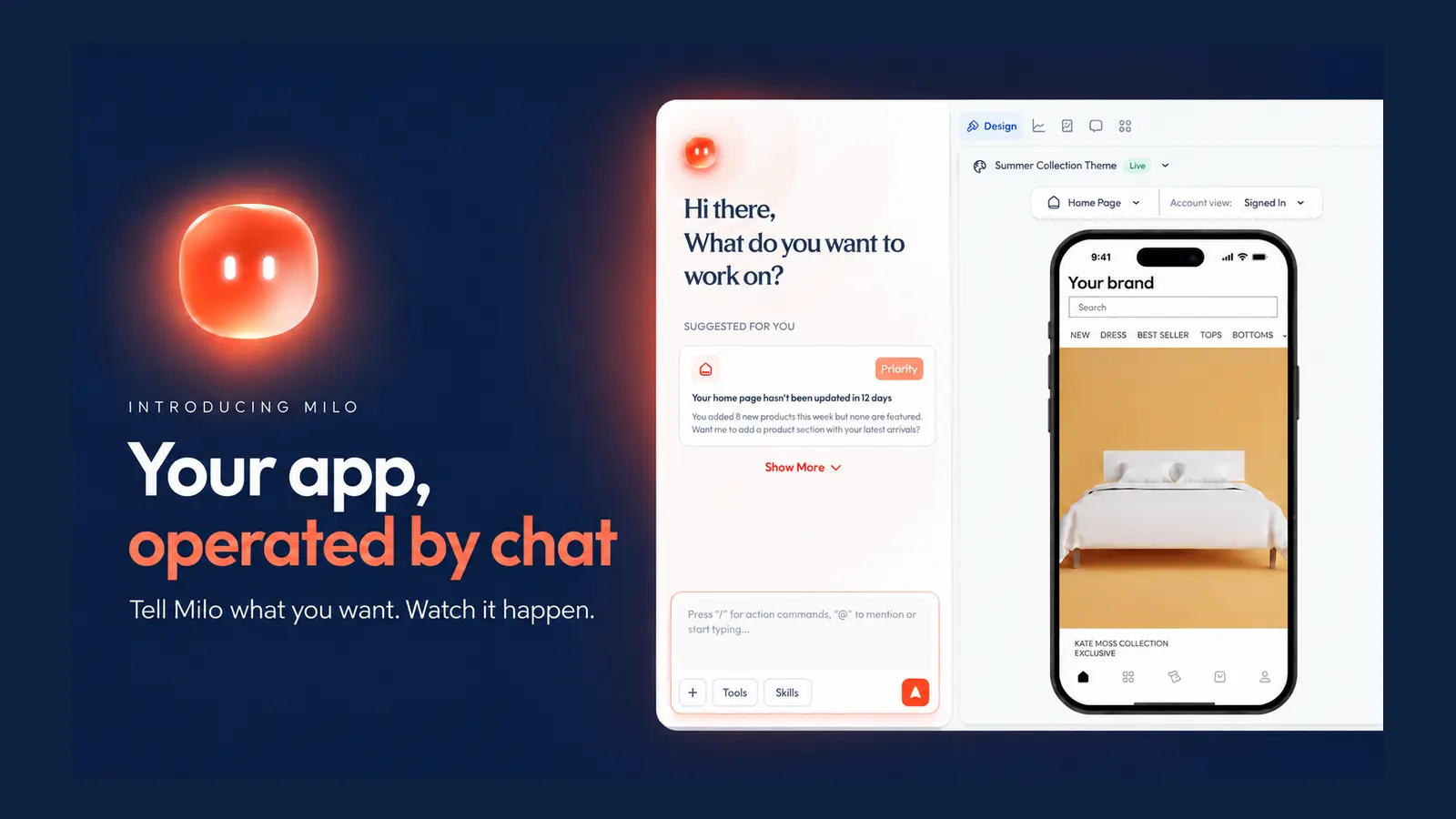
Milo, Appbrew’s AI agent for merchants and marketers: Milo AI, lets non-technical teams build and optimize a native app in plain language.
- Redesigns on the spot: Describe the layout, margins, colors, or banner you're picturing, or upload a mockup, and Milo turns it into a native layout block.
- Builds your offers: Ask for a "Buy X Get Y" or other deal, a bundle, a coupon, or a tiered cart goal, and Milo drafts it, ready to review and launch.
- Writes and times your push campaigns: Milo drafts the copy, suggests when to send it, delivers it in each shopper's local timezone, and sets up the triggers and segments behind it.
- Reports back before you ask: Curious about drop-off, session splits, revenue trends, or how your last push performed? Ask Milo and get a live chart back, not a dashboard you have to go dig through.
For teams who want to go deeper, Milo Code Studio (CLI) works alongside you as a full code and design partner: desktop previews as you build, Git management for everything Milo writes, and automated pipelines that ship straight to the app stores.
Shopper-facing agentic features (inside the native app): These put the agent in the customer's pocket.
- Agentic onboarding and fit guides: conversational flows that gather zero-party data through sizing quizzes and style surveys, then feed AI-driven personalization across product pages, listings, and the home screen.
- In-app AI Concierge: a shopping assistant that understands intent, recommends the right products, and helps the shopper get to checkout, with native support for specialized agents like Verifast AI, Bik.ai, and Gorgias AI.
The point is not novelty. It is that the same structured data and direct channel that make you agent-ready on the open web also power a better in-app experience you fully control.
The window is open now
The retailers pulling ahead in agentic commerce are not winning on brand recognition or ad budget. They are winning because their data is clean, their feeds are structured, and they own a channel the agents cannot sit between.
That advantage is about to move onto the phone. Sparky already runs inside ChatGPT and Gemini, Rufus lives in the Amazon app, and the next wave of agents will act where shoppers already spend their time. A native app is how you meet that shift on your own terms instead of someone else's.
Ready to see what an agent-ready native app could do for your store's discovery and conversion? Book a demo with Appbrew.
FAQs
What is the difference between agentic commerce and an AI chatbot?
A chatbot responds to questions and waits for the human to act. An agent interprets a goal, evaluates options across retailers, and completes the purchase itself. The difference is autonomy: the agent transacts, the chatbot only talks.
Which AI platforms can complete purchases right now?
As of 2026, ChatGPT (via Instant Checkout with Etsy and Shopify merchants), Perplexity (checkout through PayPal), Walmart Sparky, and Amazon Rufus and Buy for Me can all complete or initiate purchases inside the assistant. Google's AI surfaces support agentic checkout through the Universal Commerce Protocol.
Who is responsible if an AI agent buys the wrong thing?
It's still unsettled, and no jurisdiction has rules written specifically for agentic purchasing yet. In the US, existing frameworks like Regulation E and Z weren't built with delegated AI buyers in mind. It remains genuinely open whether a broad instruction like "find me the best deal" counts as authorizing whatever the agent ends up buying. This isn't legal advice, and the frameworks are still moving, so the practical hedge is the same regardless of jurisdiction: keep an audit trail of what the agent was authorized to do and what it actually did at the moment of purchase.
How do I make my Shopify products visible to AI shopping agents?
Structure every product attribute, expose a clean feed, and opt into the agent protocols (ACP and UCP). Agents skip products they cannot parse, so attribute completeness is the highest-impact fix. A dedicated app also helps: see Shopify mobile app development for the direct-channel side.
Does agentic commerce increase fraud and chargeback risk?
Yes, most fraud experts expect disputes to rise as agent volume grows, because intent is harder to prove when a bot is the buyer. Mitigate it with agent verification, machine-learning fraud scoring, and captured purchase mandates.
How big will agentic commerce get by 2030?
McKinsey projects $3 trillion to $5 trillion globally, while Morgan Stanley's more conservative estimate puts US agentic spend at $190 billion to $385 billion. Even the low end is one of the largest commerce shifts since the original ecommerce wave.