

.webp)
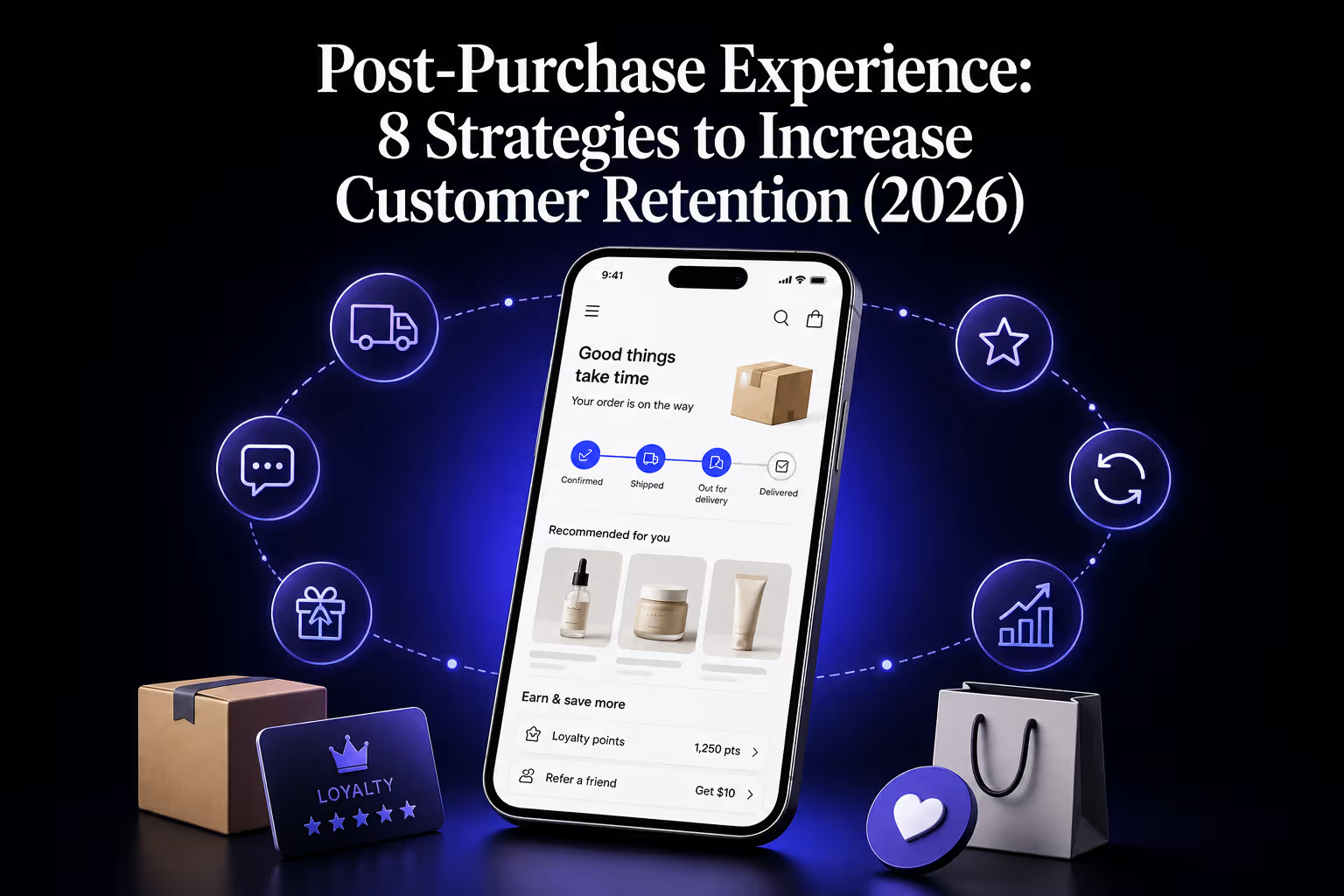
The post-purchase experience is every interaction after checkout. Learn the stages, 8 strategies, and metrics that turn first-time buyers into repeat customers.
Most ecommerce brands pour their budget into the moment before checkout: the ads, the offers, the discount codes that win a first order. Then, the second the payment clears, the relationship goes quiet. That silence is expensive. The post-purchase experience, everything a customer feels and does after they hit “buy”, is where repeat revenue, loyalty, and lifetime value are actually won or lost.
This guide covers what the post-purchase experience actually is, why it beats acquisition on pure economics, the stages and touchpoints that make it up, and eight proven strategies that turn a one-time buyer into a repeat one.
TL;DR
- The post-purchase experience is every interaction after checkout: order tracking, delivery, unboxing, onboarding, support, and re-engagement.
- Repeat orders run 31.9% larger than first orders ($40.83 vs $30.95 across 250+ Shopify brands), so the customers you retain are worth more per order than the ones you acquired.
- Owned channels do the heavy lifting: abandoned-cart push notifications convert at 19.91% open-to-purchase.
- Brands that re-engage buyers on a mobile app see a 37% relative lift in repeat purchase rate and a median 60.3% lift in LTV.
- Measure it with repeat purchase rate, LTV, and time-to-second-purchase, not vanity delivery metrics.
What is the post-purchase experience? (definition & meaning)
The post-purchase experience is the sum of every interaction a customer has with a brand after completing a purchase, from the order confirmation and shipping updates to unboxing, product onboarding, support, returns, and re-engagement that drives the next order.
In short, it is the entire customer journey that begins the moment the transaction ends. While acquisition gets a shopper to buy once, the post-purchase experience determines whether they ever come back.
What does “post-purchase” mean in ecommerce?
“Post-purchase” simply refers to the phase that follows a completed order. In ecommerce, this covers transactional communication (order and delivery updates), the physical delivery and unboxing, and the ongoing relationship: loyalty, subscriptions, reorders, and win-back campaigns. It is both an operational phase (fulfilling the order well) and a marketing phase (deepening the relationship).
Post-purchase experience vs. customer service: what’s the difference?
Customer service is reactive, it resolves issues when a customer reaches out. The post-purchase experience is proactive and holistic: it designs the entire journey after checkout so that fewer issues arise, expectations are managed, and customers feel valued at every step. Great customer service is one part of a great post-purchase experience, not a substitute for it.
The three phases of the buyer journey
Every purchase moves through three phases, and post-purchase is the one most brands starve.
- Pre-purchase is everything leading up to the sale: research, comparison, browsing, the cart.
- Purchase is the transaction itself, checkout and confirmation.
- Post-purchase is everything after the payment clears: tracking, delivery, unboxing, onboarding, support, returns, and every reorder that follows.
Pre-purchase and purchase happen once per order. The post-purchase phase reopens every time a customer thinks about buying again, which is exactly where repeat revenue lives.
Why the post-purchase experience matters more than acquisition
Acquisition costs keep climbing while paid channels grow noisier and less reliable. Retention, by contrast, compounds: a customer you already earned is far cheaper to sell to again, and they tend to spend more each time they return.
Across the 250+ brands on Appbrew platform, repeat orders carry an average order value of $40.83 versus $30.95 on a customer’s first order, a 31.9% larger basket once a shopper comes back. In other words, the customers your post-purchase experience retains are worth meaningfully more per order than the ones you fought to acquire.
How the post-purchase experience became a competitive advantage
As products and prices converge, experience is one of the few durable differentiators left. A brand that nails delivery visibility, thoughtful packaging, and timely follow-up earns trust that discounts can’t buy. Increasingly, shoppers choose (and re-choose) brands based on how they’re treated after the sale, making post-purchase a genuine competitive moat rather than a back-office cost center.
The impact of post-purchase experience on retention and LTV
A strong post-purchase experience directly moves the two metrics that decide long-term profitability: repeat purchase rate and lifetime value. When customers are re-engaged through owned, high-intent channels after their first order, both retention and cumulative spend rise, an effect we see clearly in the mobile-app data discussed later in this guide.
The 6 stages of the post-purchase customer journey
Mapping the journey helps you spot where customers drop off and where you can add value. Most post-purchase journeys move through six stages:
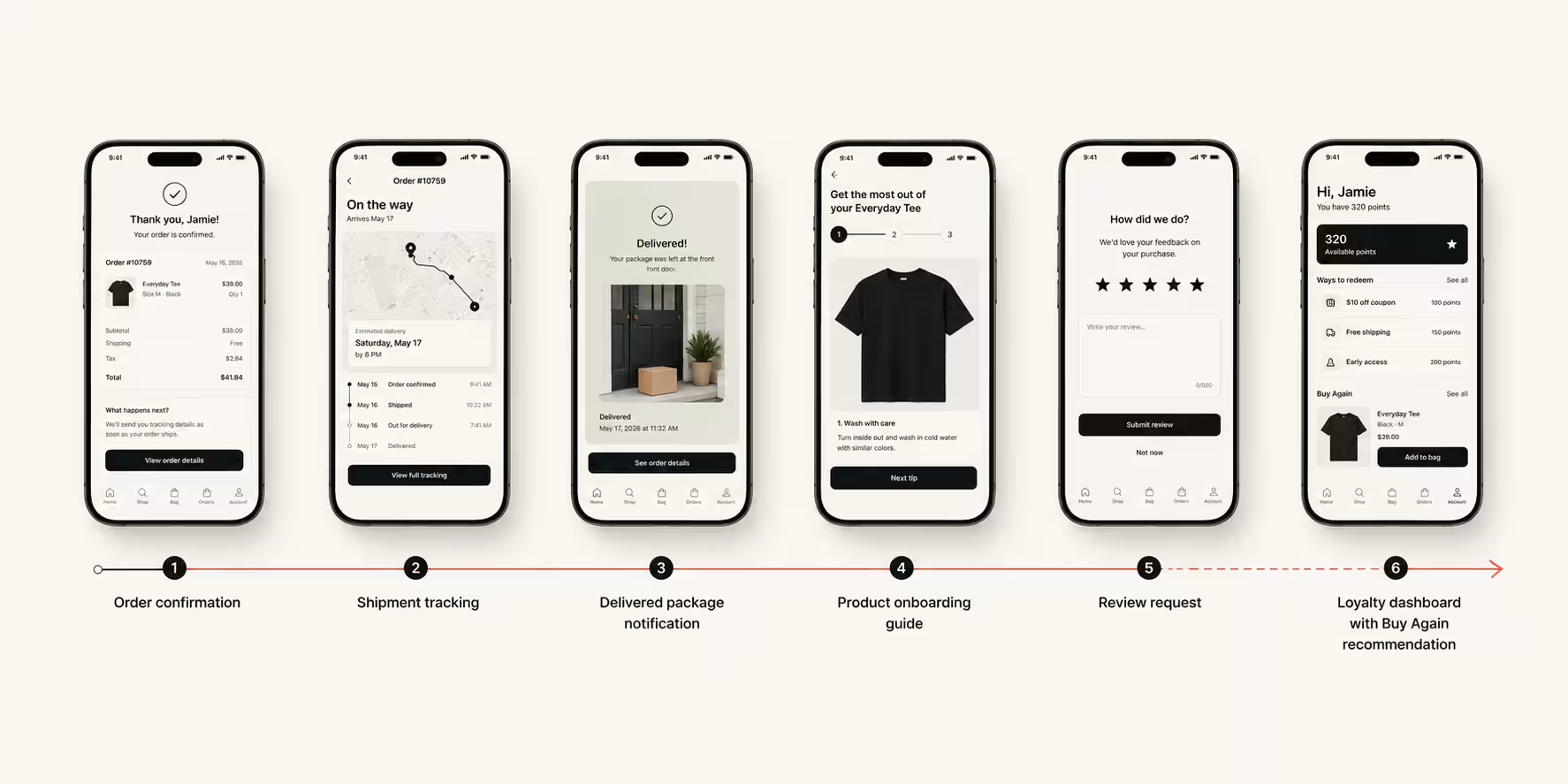
- Order confirmation: reassurance the purchase went through, with clear next steps.
- Fulfillment & shipping: proactive updates that manage expectations while the order is in transit.
- Delivery & unboxing: the first physical brand moment; packaging and presentation matter.
- Onboarding & first use: helping the customer get value from the product quickly.
- Follow-up & feedback: review requests, check-ins, and support that show you care.
- Reorder & advocacy: loyalty, subscriptions, and referrals that turn buyers into repeat customers.
Understanding post-purchase evaluation and buyer’s remorse
Right after buying, customers quietly ask themselves whether they made the right call. Psychologists call it post-purchase dissonance. Reassuring communication, easy access to help, and content that reinforces the value of the purchase lower that dissonance, which cuts returns and cancellations before they happen.
Key post-purchase touchpoints in ecommerce
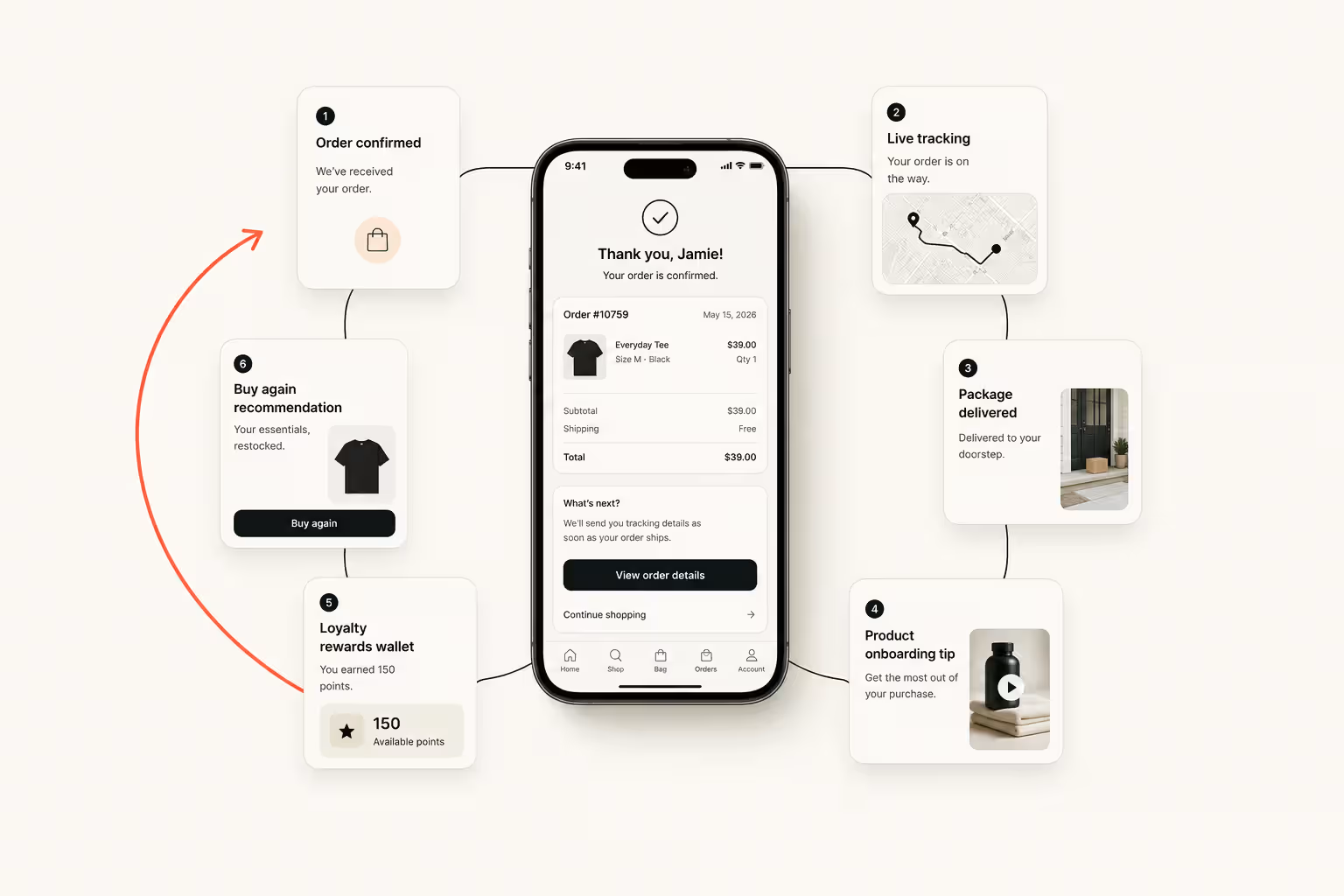
Each stage of the journey has specific touchpoints you can optimize:
- Order and shipping confirmations set expectations and kill "where is my order?" anxiety.
- Order tracking is the single most-checked touchpoint after a purchase, which makes it prime re-engagement real estate.
- Packaging and unboxing is your brand in physical form.
- Support and returns erode trust faster than anything when they're clumsy.
- Review requests capture social proof while sentiment is fresh.
- Loyalty, subscriptions, and reorder prompts are the actual engines of repeat revenue.
8 post-purchase experience strategies to improve customer retention
These strategies turn the touchpoints above into a system that reliably drives repeat purchases.
1. Proactive order tracking and delivery updates
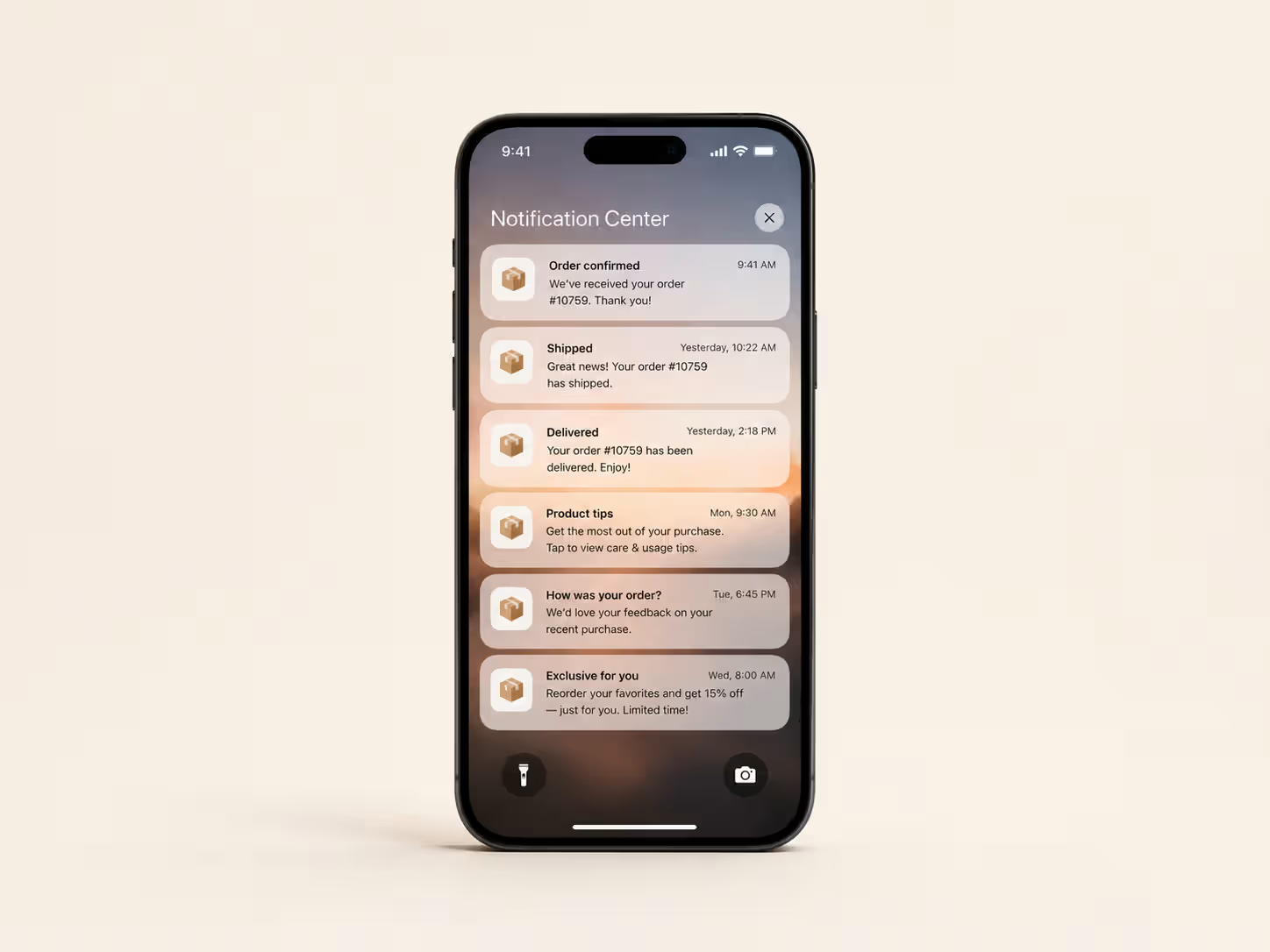
Don’t make customers hunt for their order status. Push real-time tracking and delivery updates to them. Beyond reducing support tickets, tracking is a high-attention moment you can use to re-engage, order-tracking push notifications drive an 8.91% open-to-purchase conversion rate, turning a logistics message into a sales channel.
2. Post-purchase communication flows (email, sms & push)
Build automated lifecycle flows for welcome, shipping, delivery, replenishment, win-back, across email, SMS, and push. Owned channels dramatically outperform here: our abandoned-cart push notifications convert at a 19.91% open-to-purchase rate. Nearly one in five opens ends in a completed order, a level email rarely reaches.
Abandoned-cart push notifications convert at 19.91% open-to-purchase; welcome flows at 9.08%. Based on an Appbrew proprietary data analysis across 250+ Shopify e-commerce brands (2026).
3. Loyalty programs and post-purchase rewards
Reward repeat behavior with points, tiers, or members-only perks. Loyalty gives customers a concrete reason to consolidate their spending with you rather than a competitor, and it makes the second and third purchase feel earned rather than solicited.
4. Subscriptions and easy reorder options
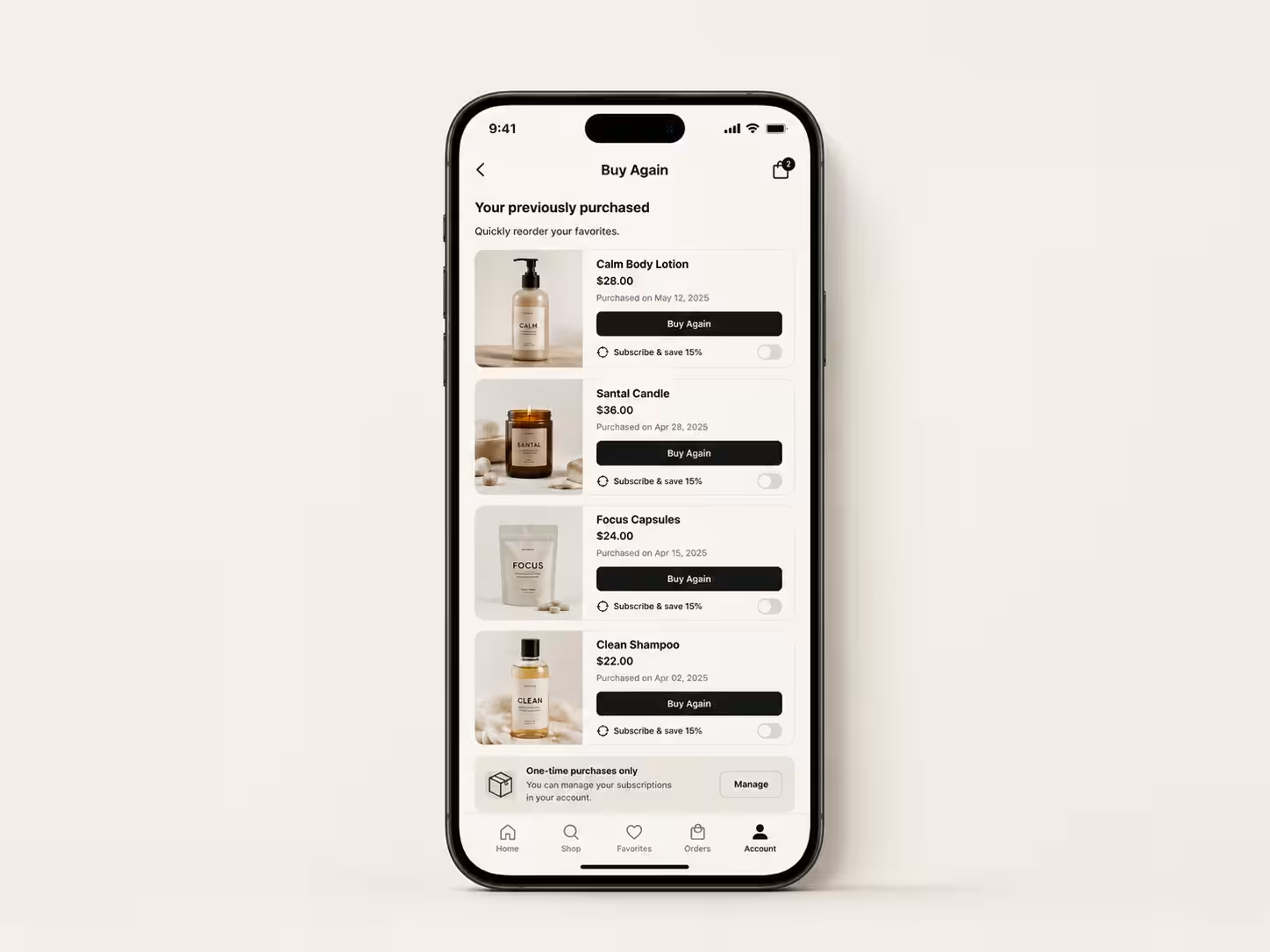
For consumable and replenishable products, subscriptions and one-tap reorder remove all friction from the repeat purchase. Making it faster to buy again matters: app-based repeat buyers place their second order 21.3% sooner than web-only buyers, compressing the gap between purchases and accelerating LTV.
Hyphen built its HyCash program directly into its app so customers earn and redeem points on purchases, reviews, and referrals, which gave repeat buyers a running reason to come back. Its app now converts 2.5x higher than the web and drives 27% of the brand's DTC revenue. Hyphen's full story shows how loyalty and retention were the point, not an add-on.
5. Personalized recommendations and post-purchase offers
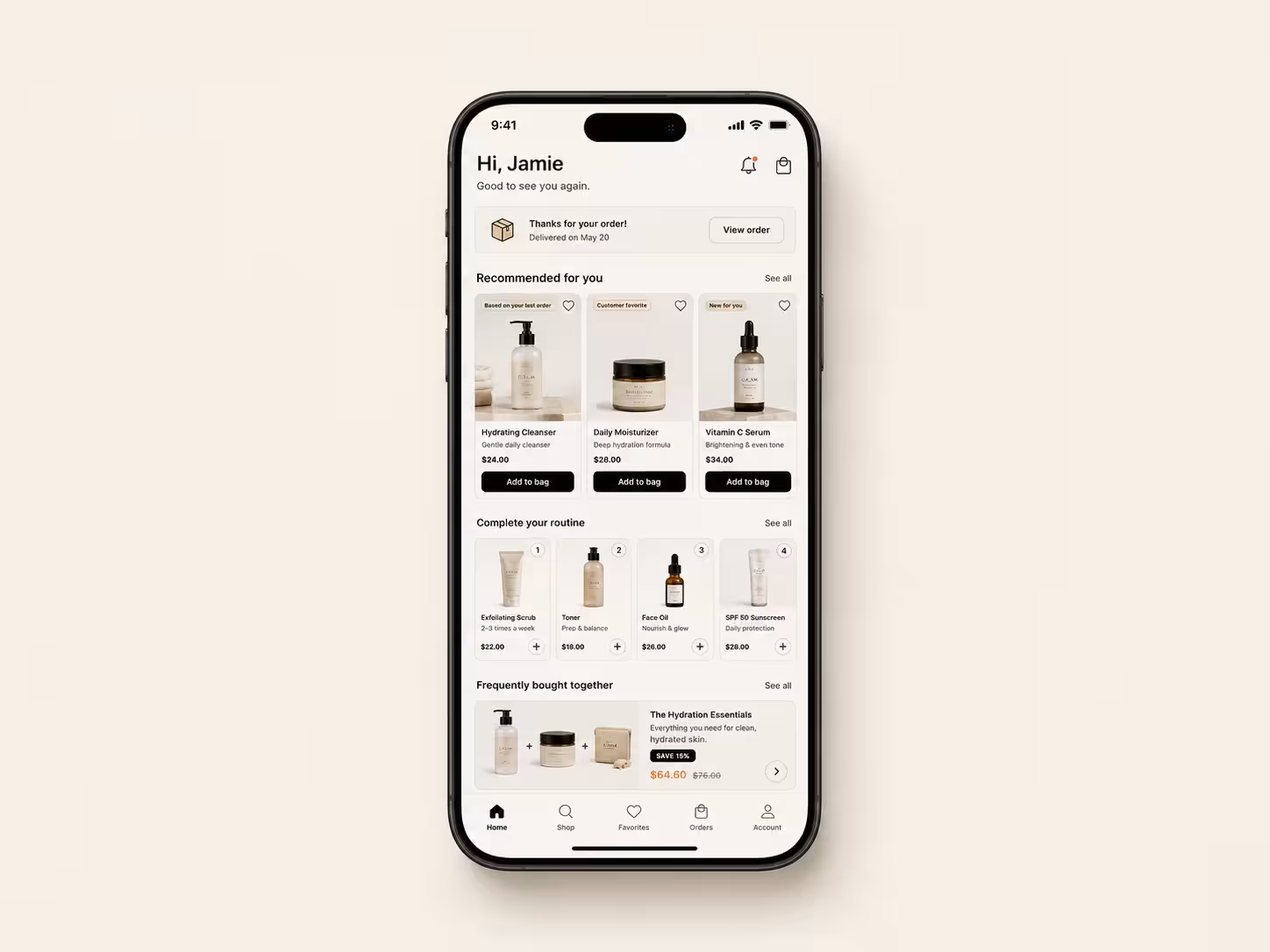
Use purchase history to recommend complementary products and time offers to the customer’s actual replenishment cycle. Relevance, not frequency, is what makes post-purchase marketing feel helpful instead of spammy.
Kiyoko Beauty is a clean example. It surfaced personalized recommendations through Rebuy at high-intent moments instead of only on the product page, and it kept one unified customer record across web and app using Multipass, so a returning shopper is recognized rather than treated like a stranger. The result was a 60% higher conversion rate and 7% higher AOV on the app versus the web. See how Kiyoko built it.
6. Frictionless returns and exchanges
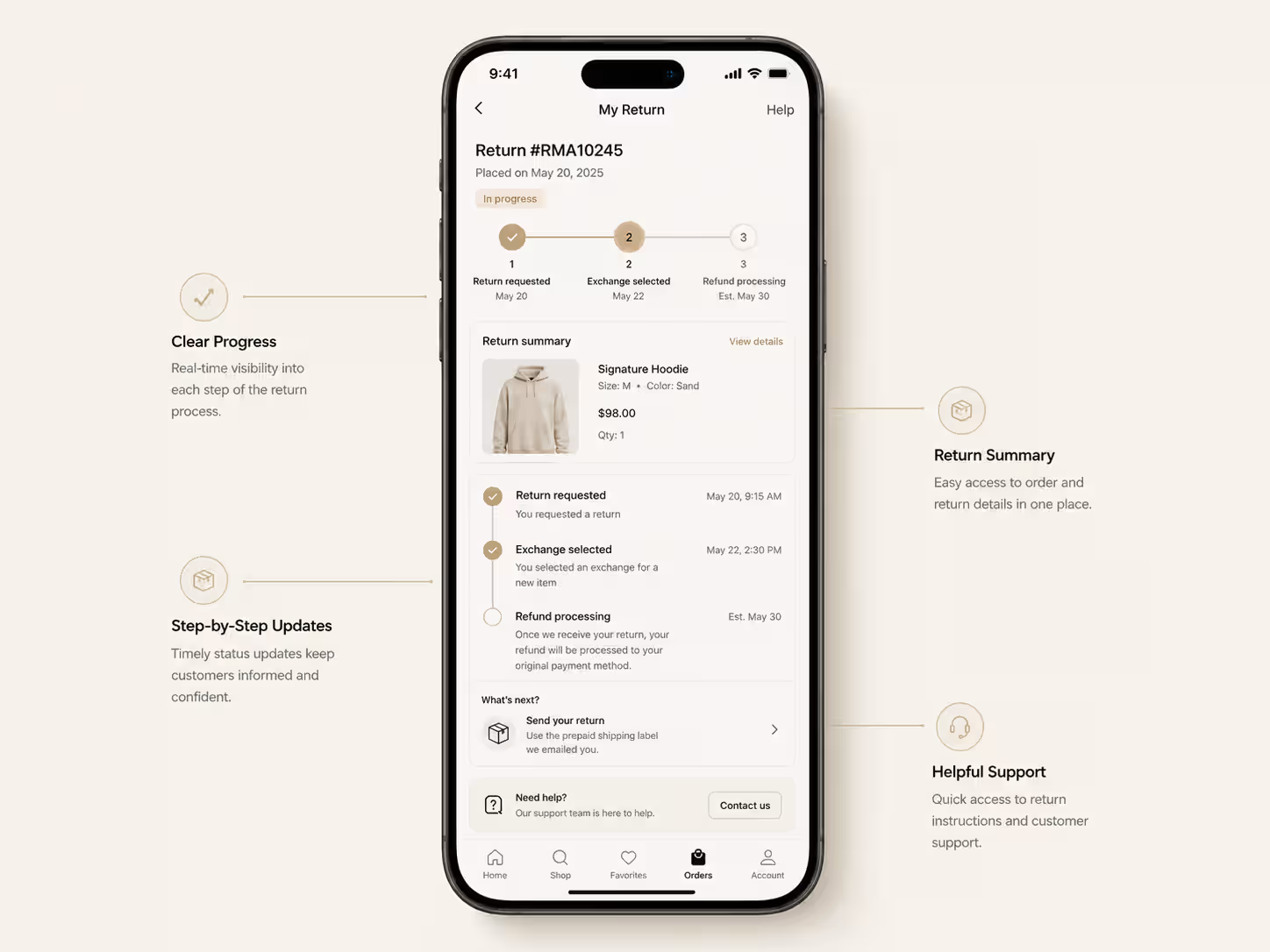
67% of shoppers check the return policy before they buy anything (Shopify), so a clear, self-serve process protects the sale before it happens and the relationship after. A returns flow that lives inside your app, with instant status and easy exchanges, keeps a disappointed customer inside your ecosystem instead of gone.
7. A memorable unboxing and fast onboarding
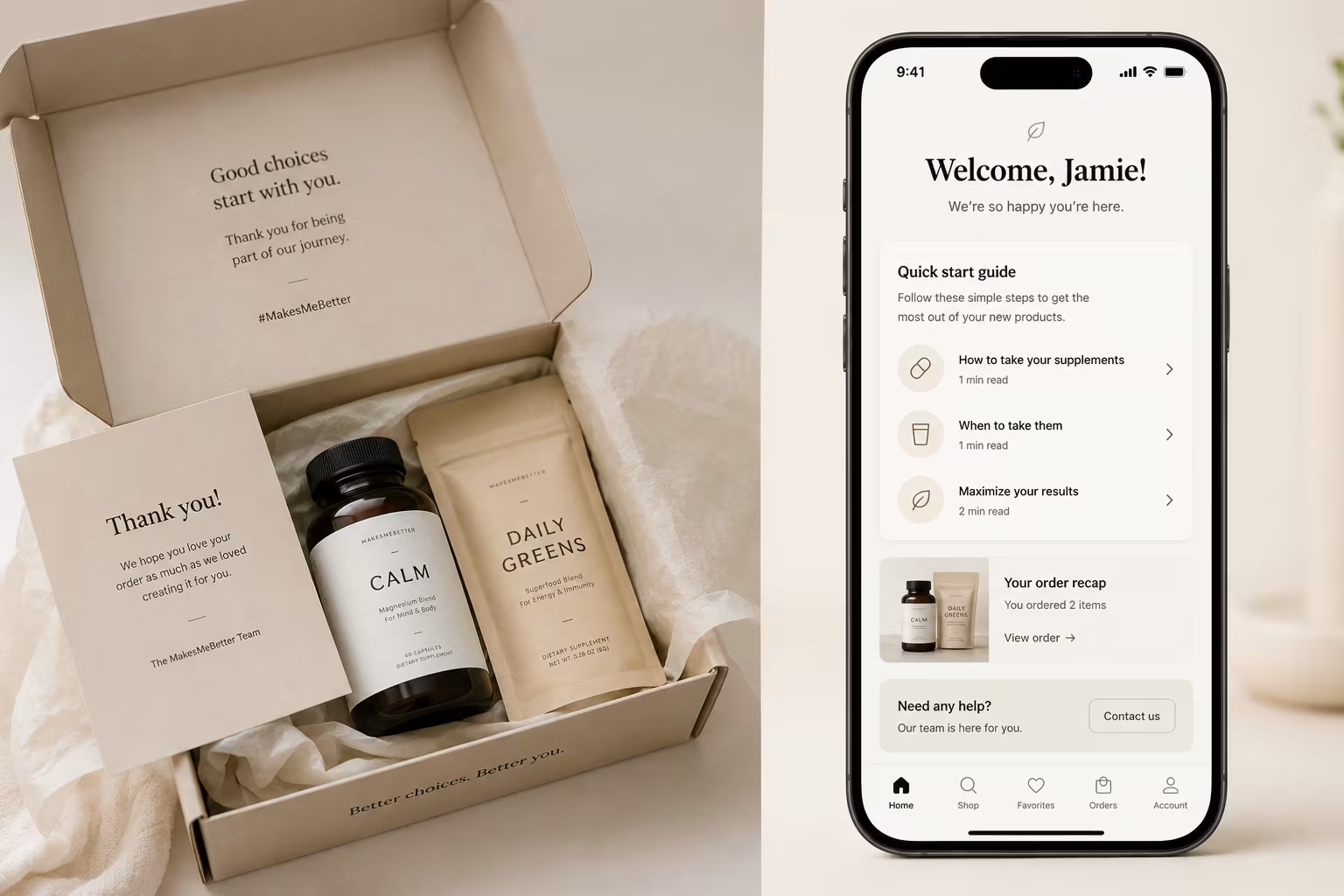
The delivery is the first thing a customer touches. Thoughtful packaging and onboarding content that helps someone get value quickly both cut post-purchase doubt, which shows up later as fewer returns and faster reorders.
8. Choosing the right post-purchase engagement channels
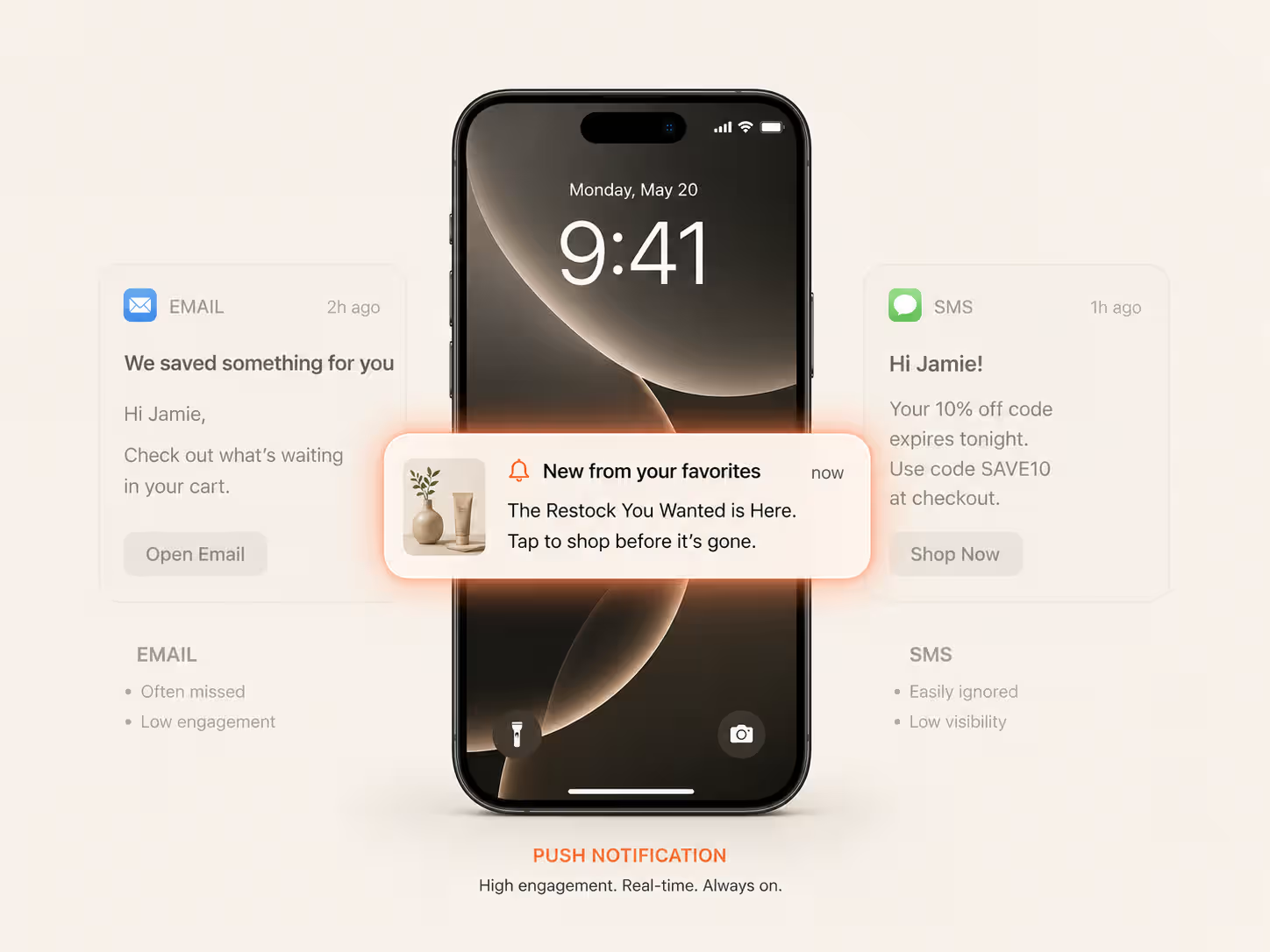
The channel you re-engage on matters as much as the message. Email deliverability decays and SMS costs add up per send. An owned, permission-based channel like push notifications carries no per-send cost and no spam-folder tax, which is why the economics of re-engagement improve the more you lean on it.
{{cta}}
Post-purchase experience examples from leading D2C brands
Top brands have become skilled at post-purchase engagement through creative strategies. Let's get into some outstanding examples that show what works.
Dermalogica makes its mark with a tailored packaging approach. They add handwritten thank-you notes and free product samples to each order. These thoughtful touches create memorable unboxing moments that make customers want to share their excitement.
Warby Parker changed eyewear shopping with their Home Try-On program. Customers can test five frames with no risk. Their user-focused approach with expert styling support has boosted purchase rates by 50%. The brand's social media presence through #WarbyHomeTryOn has generated over 50,000 posts.
Chewy shows exceptional customer care through AI-driven personalization and emotional connections. They send tailored AI-generated videos with pet care tips and product suggestions. The company goes beyond digital by sending handwritten notes, flowers, and hand-painted pet portraits to select customers.
Glossier's soaring win comes from 80% of their growth through peer-to-peer recommendations. Their support team reaches out to customers after purchase to check satisfaction and help when needed.
Away's creative 100-day trial period removes buying hesitation. Customers can test their suitcase and return it if unhappy, whatever the use. This builds trust and shows the company's confidence in their products.
Instant Pot employs community involvement through their active Facebook group. Members share recipes and experiences. This creates a thriving ecosystem where users support and inspire each other.
Method Soaps uses an eco-friendly refill system that cuts waste while encouraging repeat purchases. Their replenishment emails feature time-limited discounts that boost customer retention effectively.
These examples show how smart post-purchase strategies turn one-time buyers into loyal fans. Each brand finds unique ways to keep customers involved, add value, and create lasting impressions beyond the original purchase.
The lift is not evenly distributed across categories. The verticals that treat replenishment and loyalty as core see the steepest returns from re-engaged customers:
|
Vertical |
Brands |
App RPR |
Web RPR |
RPR Lift |
Median LTV Lift |
|---|---|---|---|---|---|
|
Beauty & Personal Care |
30 |
30.2% |
21.6% |
+40.1% |
+91.7% |
|
Food & Health |
14 |
29.7% |
24.4% |
+21.4% |
+92.5% |
|
Fashion |
74 |
28.4% |
21.1% |
+34.8% |
+54.5% |
|
Jewelry & Accessories |
11 |
19.7% |
15.5% |
+26.9% |
+23.2% |
|
Home & Decor |
4 |
24.7% |
23.2% |
+6.2% |
+44.0% |
Source: Based on an Appbrew proprietary data analysis across 250+ Shopify e-commerce brands (2026).
Beauty and personal-care brands see a median LTV lift above 91% from customers re-engaged on owned channels, while fashion brands, often higher-frequency but lower-margin, still see a 54.5% lift. The lesson: no category treats post-purchase as optional.
How mobile apps improve the post-purchase experience
Most post-purchase touchpoints depend on reaching the customer and that’s exactly where email deliverability and SMS costs work against you. A branded mobile app changes the economics, because it gives you an owned, permission-based channel (push notifications) plus native order tracking, loyalty, reorder, and subscriptions in one place.
The retention impact is significant and consistent across our platform, across 250+ Shopify e-commerce brands (2026):
- Repeat purchase rate: 27.97% for app users vs. 20.42% for web-only, a 37% relative lift in retention.
- Lifetime value: 96.8% of brands see higher LTV from app users, with a median lift of 60.3% (1.6x).
- Reorder speed: app buyers return for a second purchase 16.5 days faster than web-only buyers.
If retention is the goal, the channel you re-engage customers through matters as much as the message. This is the core reason performance-focused DTC brands add a native app to their post-purchase stack. See how Appbrew’s post-purchase features work. Book a free demo.
How to measure post-purchase experience success (key metrics)
Track a focused set of metrics to know whether your post-purchase experience is working:
- Repeat purchase rate (RPR). The share of customers who buy more than once. The clearest signal your post-purchase experience is working.
- Customer lifetime value (LTV). Total value a customer generates over the relationship.
- Time-to-second-purchase. How fast customers come back. Shorter is better.
- Retention rate and churn. How many customers you keep over a given window.
- Net Promoter Score. Post-purchase sentiment and likelihood to recommend.
Best post-purchase experience software and tools
The right stack depends on your gaps: tracking and returns, loyalty and subscriptions, reviews, or an owned re-engagement channel. For a side-by-side breakdown of the leading platforms and where each fits, see our dedicated guide to the best post-purchase experience software.
How Appbrew helps you turn post-purchase into a retention channel
Every strategy above comes down to two jobs: reach the customer after checkout, and give them a reason to buy again. A branded app does both better than email or mobile web because it runs on channels you own, not ones you rent. Appbrew turns a Shopify store into a native app built for exactly that, and its capabilities line up against each stage of the post-purchase journey:
- Unlimited push notifications power the delivery, back-in-stock, and win-back moments. Push carries no per-send cost like SMS and no spam-folder decay like email, so the economics of re-engaging a customer improve the more you use it.
- Native post-purchase experience handles order tracking, delivery updates, returns, exchanges, and cancellations inside the app, turning the most-checked touchpoint after a purchase into a place customers come back to instead of a support ticket.
- Native subscriptions and one-tap reorder cut the friction out of the second and third purchase for consumable products, which shortens time-to-second-purchase and compounds LTV.
- Loyalty and referral rewards, through integrations like LoyaltyLion and Smile.io, sit on the home screen rather than buried in an inbox, giving repeat buyers a running reason to consolidate spend with you.
- Personalization surfaces the right recommendation and offer based on purchase history at high-intent moments, not just on the product page, which lifts both repeat conversion and AOV.
- Milo, the AI growth operator, orchestrates push campaigns end to end (segmentation, drafting, scheduling, re-engagement) and spins up offers and bundles in seconds, so a lean retention team can run the whole post-purchase calendar without engineering.
Because Appbrew plugs into the retention stack a brand already uses across 120+ native integrations, tools like Klaviyo, Recharge, and Yotpo stay connected instead of siloed. The app becomes the surface those tools act on. That is the difference between an app that mirrors your website and one that shortens time-to-second-purchase and raises LTV, which is what the platform data above reflects.
Conclusion
The post-purchase experience is the cheapest growth lever most Shopify brands are underusing. The order is already won; the only question is whether you build the tracking, loyalty, reorder, and re-engagement moments that turn it into a second and third purchase or let the relationship go quiet until you pay to win the same customer back. Start by fixing the touchpoints where customers currently drop off, move re-engagement onto channels you own, and measure progress with repeat purchase rate and LTV rather than delivery vanity metrics.
Build a post-purchase experience that compounds retention instead of leaking it. See how Appbrew turns your Shopify store into a mobile app built for repeat revenue. Book a demo now.
FAQs on post-purchase experience
What is a good post-purchase experience?
A good post-purchase experience keeps customers informed and reassured after checkout, delivers the order smoothly, makes support and returns effortless, and re-engages the customer with relevant, well-timed communication that earns the next purchase.
What are the best tools for post-purchase customer experience?
The best tools depend on your needs: order tracking and returns platforms, loyalty and subscription apps, review tools, and for owned re-engagement, a branded mobile app with push notifications. Most brands combine several rather than relying on one.
How can i Improve my post-purchase customer experience?
Start with proactive order tracking and delivery updates, build automated communication flows across owned channels, add loyalty and easy reorder options, and measure the impact through repeat purchase rate and LTV. Prioritize the touchpoints where customers currently drop off.
How long does the post-purchase phase last?
The post-purchase phase begins the moment an order is placed and, for retention-focused brands, never fully ends. Operationally it runs through confirmation, shipping, delivery, and onboarding, usually the first few weeks. Strategically it continues through every reorder, subscription renewal, and win-back, because each repeat purchase reopens the cycle.
What is post-purchase dissonance and how do you reduce it?
Post-purchase dissonance is the doubt a customer feels after buying, the quiet "did I make the right choice?" that can trigger returns or cancellations. You reduce it with reassuring order confirmations, easy access to support, and content that reinforces the product's value. The faster you close that doubt, the fewer returns you absorb and the likelier a second order becomes.
What is a good repeat purchase rate for ecommerce?
A good repeat purchase rate varies by category, but most DTC brands land between 20% and 30%, with consumable verticals like beauty and food running higher.
How is the post-purchase experience different on a mobile app versus a website?
A mobile app gives you an owned, permission-based channel, push notifications, that email deliverability and SMS costs can't match. It also keeps order tracking, loyalty, reorder, and subscriptions in one place customers actually return to. That's why app users show a 37% relative lift in repeat purchase rate and a median 60.3% higher LTV than web-only buyers.