


.webp)
.webp)
Discover the key differences between web view and native apps for Shopify eCommerce. Learn why native apps deliver superior performance and long-term ROI.
In eCommerce, there’s no single approach to achieve great results. Everything on the internet can be done in multiple ways, and building a mobile app for your Shopify store is no different.
As your business scales, however, it’s crucial to prioritize the most efficient workflow and channels to drive profitability. This brings us to one of the most discussed mobile app topics for eCommerce business owners: Native mobile apps vs. web view apps.
Both options offer unique advantages, and there’s no “wrong” choice at face value. Yet, the long-term ROI of your app depends on making the right decision.
In this blog, we’ll dive into what web view and native apps are, explore their differences, and highlight what makes each type of app suitable (or not) for growing eCommerce brands.
To find out which one could be your best choice for maximizing business impact, let’s dive right in!
What are web view apps for eCommerce businesses?
Web view apps are essentially mobile applications that function as a browser, displaying your online store within an app interface.
Built by wrapping your eCommerce website in an app shell, they provide a faster and more budget-friendly way to launch a mobile presence.
However, web view apps largely mirror the website experience, which can limit their functionality and responsiveness compared to native apps.
What are native apps for eCommerce businesses?
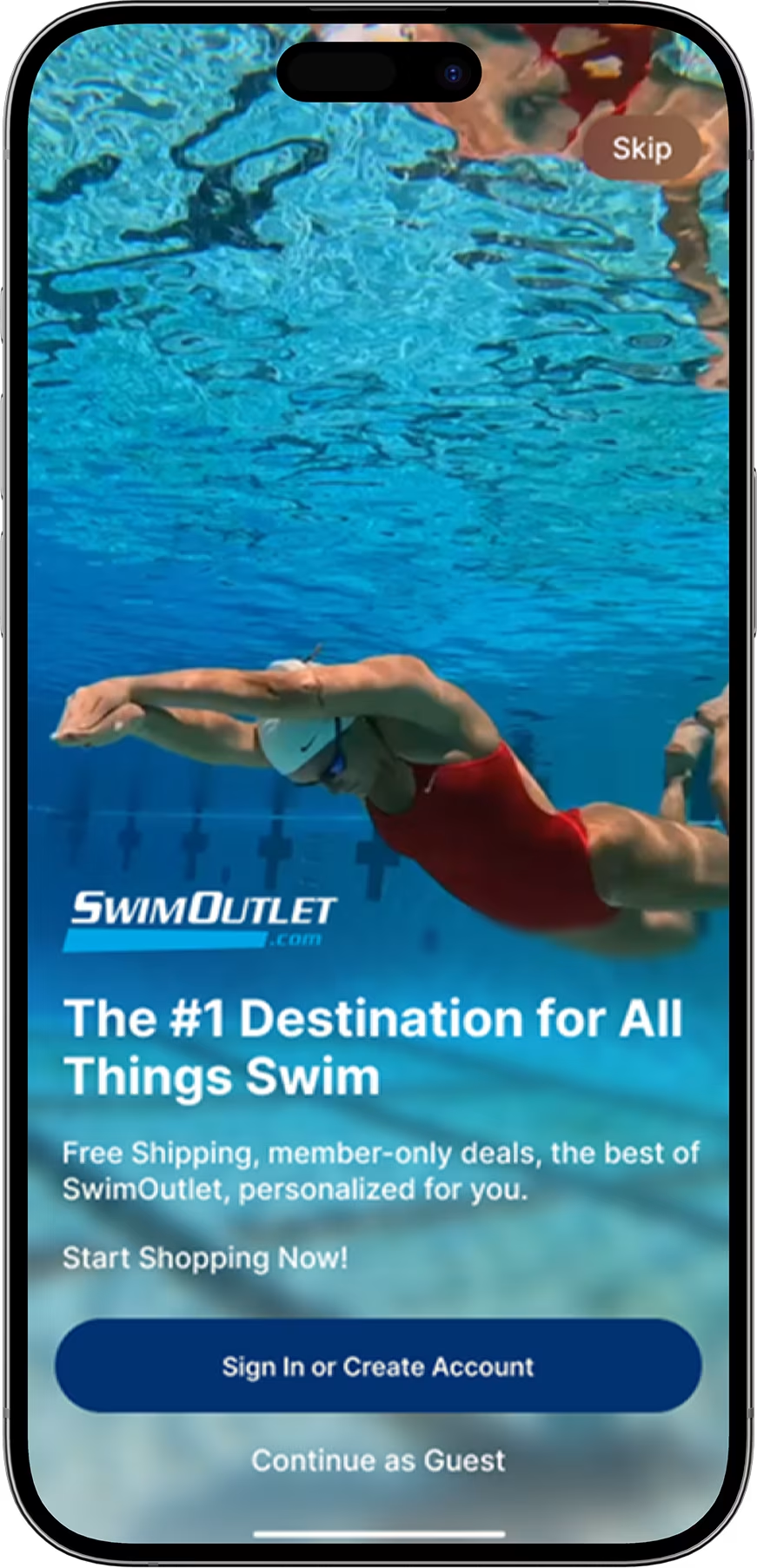
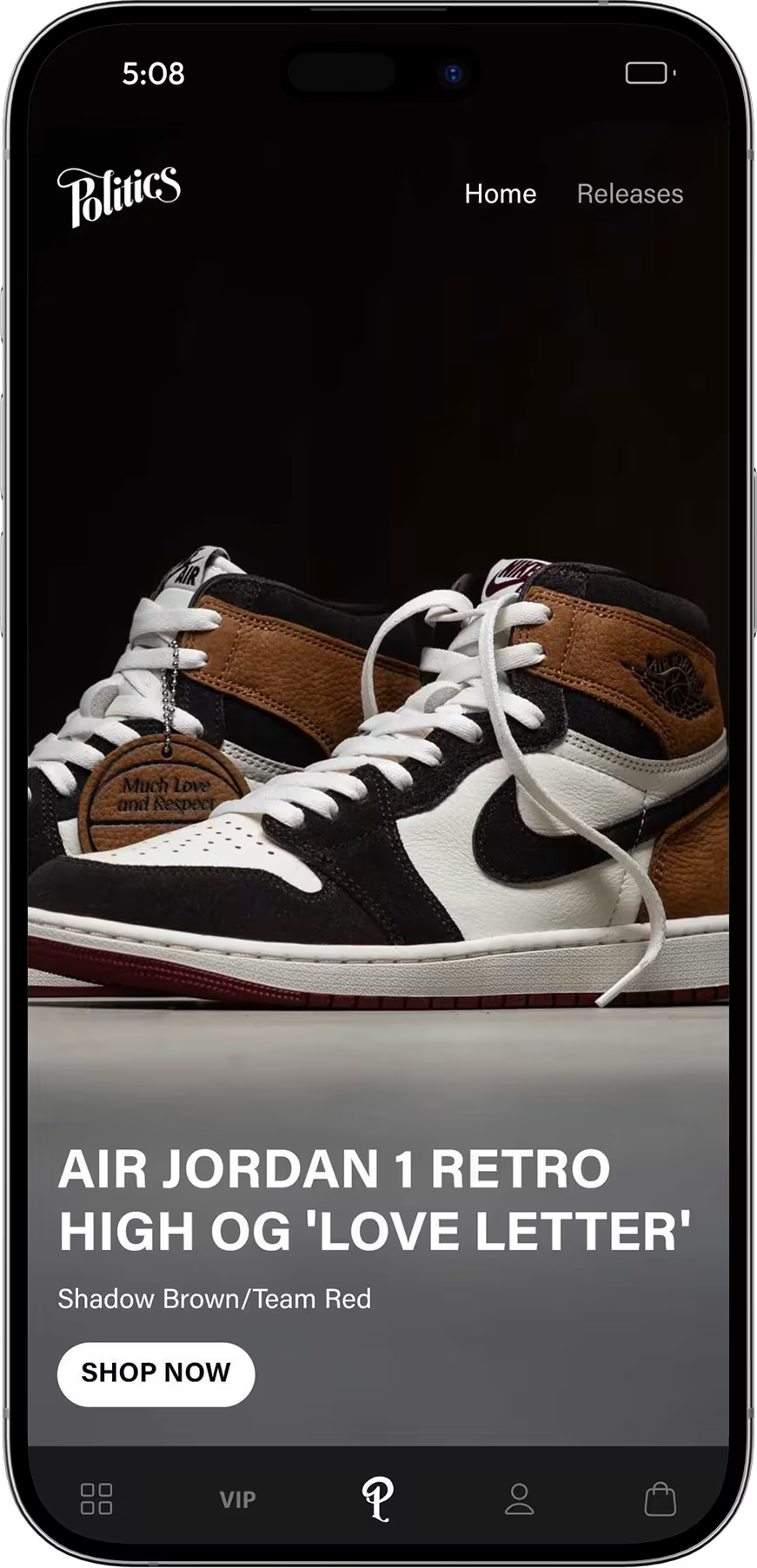
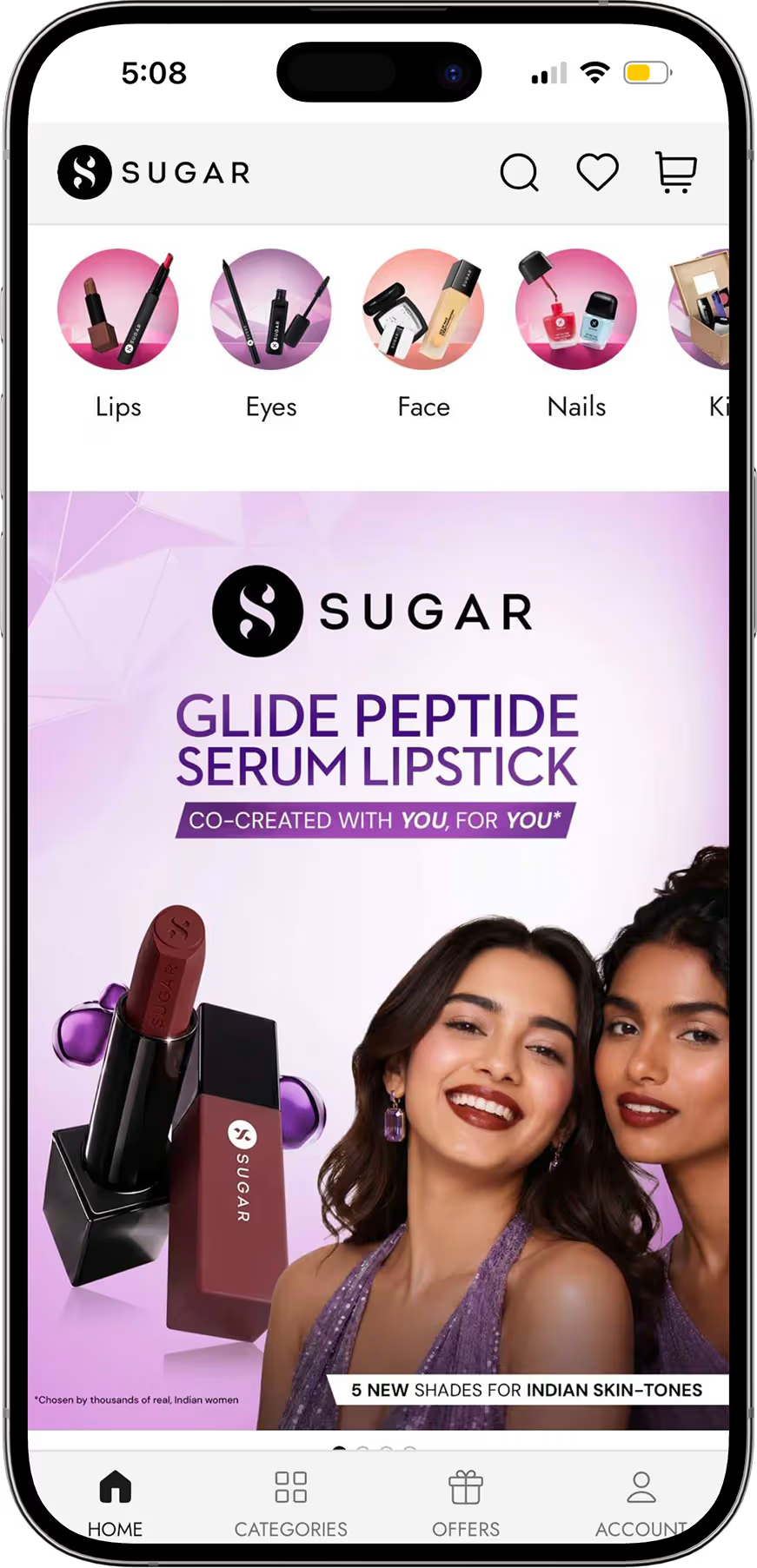
Native apps are applications developed specifically for either iOS or Android, designed to fully leverage the capabilities of each platform.
For eCommerce businesses, turning your Shopify store into native apps provides a powerful, personalized shopping experience that drives conversions and builds customer loyalty.
By integrating with core device features like push notifications, camera access, GPS, and offline functionality, native apps allow brands to deliver engaging and personalized user experiences.
They offer faster load times, smoother navigation, and a more responsive design than web view apps, which are essential for engaging today’s mobile-first consumers.
Key differences between web view and native apps for Shopify brands
For eCommerce brands using Shopify, the choice between web view and native apps isn’t just a matter of preference; it’s a significant one that can impact how customers experience your brand.
While both can host a mobile storefront, the performance, usability, and depth of features vary widely between these app types.
Native apps are built directly for iOS and Android, delivering enhanced functionality and a smoother user experience. In contrast, web view apps rely on loading your website in an app shell, which limits the depth of interaction and engagement that a brand can achieve.
To help you make an informed decision, let’s dive into a detailed comparison:
| Feature | Web View App | Native App |
|---|---|---|
| Performance | Limited speed due to web rendering | High speed and responsiveness |
| User Interface (UI) | Basic, often similar to a mobile website | Advanced, fully customizable UI |
| Device Integration | Limited (e.g., no access to GPS, camera) | Full integration (GPS, camera, biometrics) |
| Offline Mode | Not available; relies on internet connection | Available; can access cached content |
| Push Notifications | Restricted; limited to basic notifications | Fully supported; advanced personalization options |
| Load Times | Slower due to web-based elements | Faster with seamless app interactions |
| User Engagement | Limited interactivity | High engagement through app-specific features |
| Customization | Restricted by web constraints | Extensive, supports brand-specific customizations |
| Analytics and Tracking | Limited; primarily web-based tracking | Advanced, app-specific analytics |
| Security | Standard web security | Enhanced security, supporting secure transactions |
| App Store Presence | May be limited; app approval more challenging | App store-friendly; follows iOS/Android guidelines |
| In-App Purchases | Restricted; web-only purchase flow | Native in-app purchases supported |
| Personalization | Minimal personalization options | Deep personalization based on user data |
| Scalability | Less scalable for complex eCommerce needs | High scalability for feature expansions |
| Cost of Development | Lower upfront costs | Higher upfront costs, better long-term ROI |
Limitations of web view apps for eCommerce businesses
Web view apps may provide an initial mobile presence, but they come with significant limitations that can hamper the growth and engagement of eCommerce brands.
Here’s a look at some of the core limitations of web view apps for Shopify businesses:
1. Attribution and analytics challenges
One of the biggest hurdles with web view apps is tracking and analyzing customer behavior.
Since web view apps are essentially embedded websites, brands often lack access to app-specific analytics. This limits insights into customer journeys, making it difficult to understand conversion funnels, optimize marketing efforts, or implement targeted strategies.
For eCommerce brands that rely on data-driven decision-making, this lack of accurate attribution is a substantial drawback, leading to missed opportunities in personalization and engagement.
2. Slow performance leading to poor customer experience
Web view apps are generally slower than native apps, as they load content directly from the website. This can lead to lagging interfaces, increased load times, and a generally clunky experience.
For eCommerce, where smooth and fast browsing is key to retaining customers, this delay can significantly impact the user journey.
If customers experience sluggish load times, they’re more likely to abandon their shopping journey, resulting in lost sales and reduced brand loyalty.
3. Limited incentive for customers to install the app
Web view apps offer little in terms of unique functionality, as they merely replicate the website experience in an app form.
Without added value or unique features, customers have little incentive to download and engage with the app regularly.
For eCommerce brands, the primary goal of an app is to provide a more engaging and immersive experience that distinguishes it from the website. When web view apps fail to deliver this, the app’s potential to drive repeat traffic and conversions remains underutilized.
Also Read: 2x your eCommerce App Installs: A 2026 Launch Checklist for Shopify Businesses
4. Lack of core features
Web view apps have limited access to device features, which restricts eCommerce brands from implementing essential functionalities like geotargeting through GPS or advanced customization.
This restricts brands from delivering localized offers or personalized experiences, both of which are proven to boost engagement.
Additionally, the dependence on live website loading can lead to increased loading times and potentially drive users to churn, as shoppers prefer fast, smooth app experiences.
5. Minimal push notifications and engagement capabilities
One of the primary advantages of having an app is the ability to send app push notifications to engage users, encourage repeat visits, and drive conversions.
However, web view apps have limited push notification capabilities, which restricts brands from capitalizing on this powerful engagement tool.
With reduced access to notifications, brands struggle to reconnect with customers post-download, ultimately defeating one of the main benefits of having an app: to re-engage users and drive repeat sales.
What’s the role of native Shopify mobile app in eCommerce success?
A native Shopify mobile app offers powerful tools for eCommerce brands to enhance user experience, drive engagement, and increase conversions.
Here’s a closer look at the ways it can contribute to eCommerce success:
1. Enhanced performance and speed
Native apps are designed specifically for either iOS or Android, optimizing them to perform faster and more efficiently than web view apps. This results in smoother browsing, quick load times, and instant response rates, all of which are essential for keeping shoppers engaged. A responsive, seamless experience reduces friction in the customer journey, leading to higher retention and conversion rates.
2. Full device integration for richer features
Native apps have full access to device features, allowing for geolocation, camera access, and even biometric logins. This level of integration allows eCommerce brands to offer advanced functionalities, such as location-based deals, augmented reality product previews, and quick logins. These features create a richer, more personalized shopping experience that’s difficult to replicate in web view apps.
3. Advanced personalization and customization
A native Shopify mobile app allows brands to deliver personalized experiences through customer data integration and advanced analytics. For example, brands can show users tailored product recommendations based on browsing history, past purchases, and location. This level of personalization not only increases engagement but also drives conversions, as customers are more likely to buy products that align with their preferences.
4. Offline access for continuous browsing
Native apps allow users to access content offline, which is particularly useful for customers with limited connectivity. This feature ensures users can continue browsing or reviewing products without needing a continuous internet connection, helping to keep engagement high and reducing the likelihood of app abandonment during shopping sessions.
5. Push notifications for effective engagement
Push notifications are a key driver of customer re-engagement. Native apps offer brands the ability to send personalized, real-time notifications to remind customers of cart items, promote special offers, and notify them of product restocks. This type of direct communication builds engagement, encourages repeat visits, and increases conversions by keeping customers aware of new opportunities to shop.
6. Higher security and reliable payment processing
Security is essential in eCommerce, especially for transactions and customer data. Native apps provide robust security protocols, including encryption and two-factor authentication. With secure payment processing capabilities, customers can confidently complete purchases, leading to higher conversion rates and increased trust in the brand.
7. Comprehensive analytics for data-driven growth
Native Shopify apps provide access to advanced analytics that enable brands to track user behavior, monitor conversion funnels, and gather insights into customer preferences. These insights allow eCommerce managers to make informed, data-driven decisions on app improvements, marketing strategies, and product offerings, thereby contributing to long-term growth and profitability.
Why native apps are the future of eCommerce
Today’s customers have high expectations for app performance, speed, and features, and meeting those expectations is critical for eCommerce success.
While web view apps may seem convenient, they often fall short on performance, leaving customers frustrated with slow load times, limited features, and lackluster experiences. This can lead to disappointment with your brand, resulting in lost conversions and poor retention.
To transform potential disappointment into increased conversions and sustained retention, it’s essential to choose a native app. Native apps offer the responsiveness, engagement features, and full-device integration that modern shoppers expect, enhancing user satisfaction and loyalty.
Fortunately, native apps are now easier to build and launch, especially with Shopify mobile app builders like Appbrew. With Appbrew, you can create a custom, high-performance native app that aligns with your brand and delivers the engaging experience your customers crave.
To see how a native app can add to your Shopify store, book a demo with Appbrew today and unlock the potential of mobile commerce.
Appbrew builds fully native apps without the limitations of a web view.