.webp)

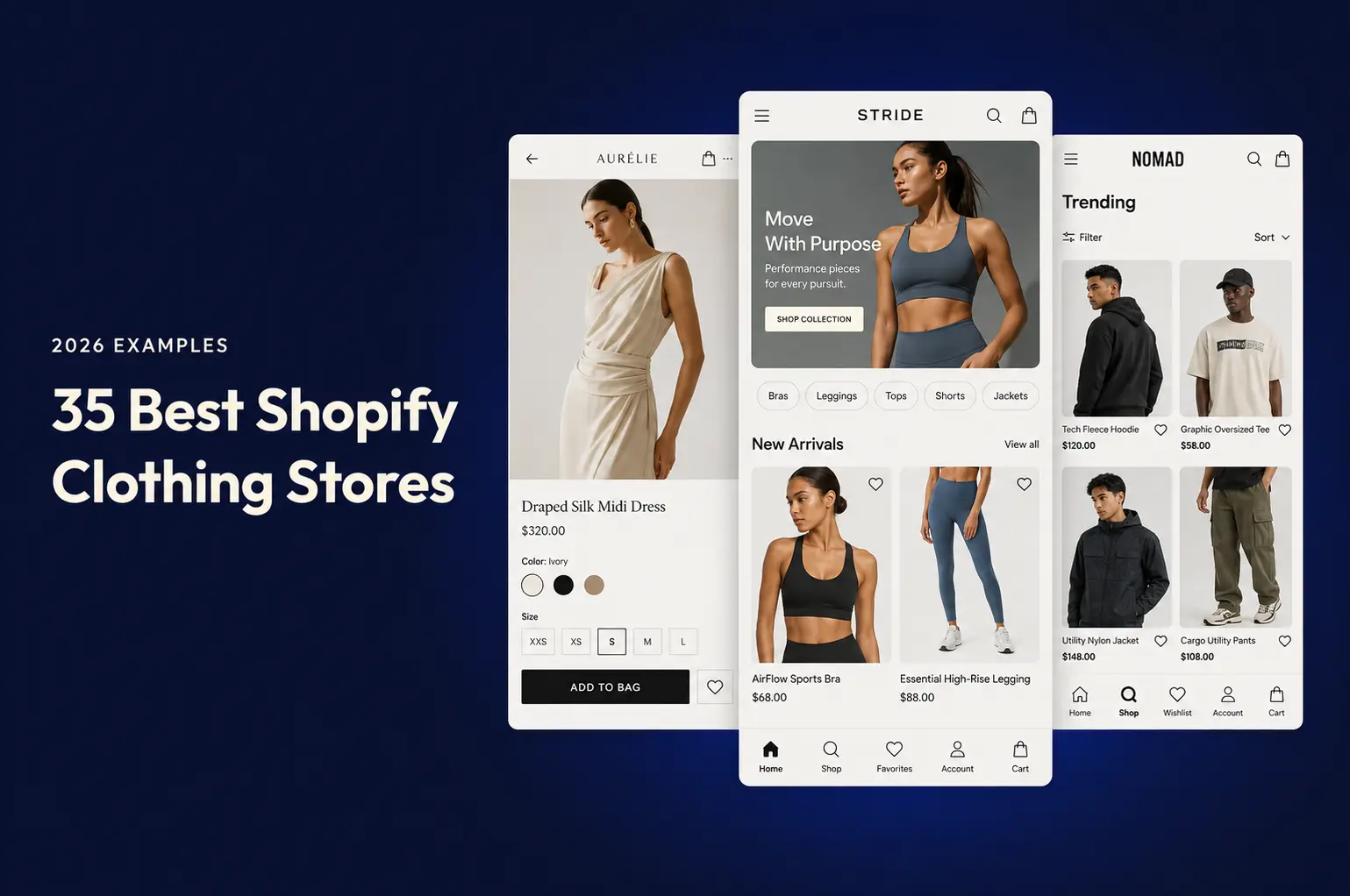
Compare top 15 ecommerce mobile app makers for 2026 on features, verified pricing, and real reviews. Find the right app builder to grow your Shopify store.
Shoppers now live on their phones, and a large share of them will abandon a purchase rather than fight through a mobile browser to finish it. An ecommerce mobile app removes that fight. It puts your store on the home screen, loads instantly, and lets you reach buyers with a notification instead of an email nobody opens.
Deciding you want one is the easy part. The category has splintered into dozens of near-identical pitches, spanning Shopify specialists, multi-platform builders, and website-to-app converters, and picking wrong means months rebuilding on a tool that could not do what you needed.
This guide ranks the top 15 ecommerce mobile app builders for 2026. Each platform receives a clear best-for verdict and an honest assessment of its limitations, so you can build a shortlist around your store, requirements, and operating model.
TL;DR
- Roughly six in ten ecommerce dollars are spent on mobile in 2026, and phones account for about 75 to 78% of store traffic, yet mobile browsers still lag desktop on conversion (Statista, 2026).
- Apps are where the mobile money actually closes: close to 70% of US mobile purchases happen in an app rather than a browser, and only 8% of mobile shoppers say they would rather buy on a mobile site (Capital One Shopping, 2026).
- Appbrew is the best ecommerce mobile app builder for scaling Shopify brands. Other strong alternatives include Tapcart for self-managed app merchandising, MobiLoud for converting an existing website into an app, Venn Apps for premium custom design, and AppMySite for WooCommerce stores.
- Entry pricing runs from $29 a month plus success fees at the low end to $1,999 a month at the top, and success fees or paid integrations often make the real bill higher than the headline number.
What is an ecommerce mobile app?
An ecommerce mobile app is a phone application that lets shoppers browse and buy from your store, downloaded from the App Store or Google Play instead of opened in a browser tab.
People use the phrase loosely for three separate things: the big marketplace apps such as Amazon or Temu, a single brand's own shopping app, and the software platforms that generate a branded app for you. This guide is about that last group and the branded apps they produce, since that is the version a store owner can actually choose to build.
What makes a branded app outperform a mobile site is a mix of speed, permanence, and permission. The best builders compile a truly native app that loads in about a second, keeps your brand one tap away on the home screen, and gives you a push channel no inbox filter sits between.
The weaker ones wrap your mobile website in a shell, which launches faster but carries the same friction you already have. That single distinction, native build versus wrapper, does more to determine results than any feature list, and it is the first thing to check on any tool below.
{{cta}}
How we ranked the 15 best ecommerce mobile apps
Each tool was scored on five things that decide whether an app justifies its cost once the launch buzz fades, rather than on how slick the pitch deck looks.
|
Build quality |
30% |
Whether it produces a real native app or a wrapped website, plus load speed and stability |
|
Revenue features |
25% |
Checkout flow, personalization, and the retention tooling that turns installs into repeat orders |
|
Platform coverage |
20% |
How well it fits your stack, whether that is Shopify, WooCommerce, Magento, or BigCommerce |
|
Hands-off usability |
15% |
How much a marketer or ops lead can manage without pulling in a developer |
|
Real cost |
10% |
Base price plus success fees, revenue shares, and integrations billed on top |
Pricing and ratings come from the Shopify App Store, G2, and Capterra as of mid-2026. These numbers shift often, so double-check each vendor before you commit.
Top 10 must-have features in your ecommerce app
Before comparing tools, know what a strong ecommerce app actually needs. Use this as a checklist against any builder below.
- Truly native performance. A real iOS and Android build that loads in about a second, not a webview wrapper of your mobile site.
- Unlimited push notifications. A direct channel to the home screen for drops, restocks, and cart recovery, with no per-message cost.
- Fast, native checkout. A short checkout with saved payment and biometric login to cut the drop-off that kills mobile-web carts.
- Personalization. Banners, offers, and recommendations tailored to customer segments and behavior rather than one view for everyone.
- Real-time store sync. Catalog, pricing, inventory, and collections that update automatically so the app never drifts from the website.
- AI assistance. Built-in tools that draft campaigns, generate content, and personalize journeys without adding manual work or headcount.
- Loyalty and rewards. Native support for points, tiers, and subscriptions to turn one-time app installs into repeat buyers.
- Deep integrations. Clean connections to Klaviyo, Recharge, Yotpo, and your existing stack, ideally included rather than billed as add-ons.
- Analytics and attribution. App-level reporting tied to your marketing tools so you can see what the channel actually contributes.
- App-only offers and segmentation. Exclusive discounts and targeted campaigns that give shoppers a reason to install and come back.
The 15 best ecommerce mobile applications in 2026
The best ecommerce mobile application depends on your platform, budget, customization needs, and how much support your team requires after launch. Some tools are built specifically for Shopify, while others support WooCommerce, Magento, BigCommerce, or existing websites.
The table below compares 15 leading ecommerce mobile app builders by platform fit, starting price, customer rating, and best use case.
|
Tool |
Platform fit |
Starting price |
Rating (reviews) |
Best for |
|
Appbrew |
Shopify, Shopify Plus |
$199/mo |
5.0 (60+, Shopify) |
Scaling Shopify brands |
|
Tapcart |
Shopify, Shopify Plus |
$500/mo |
4.6 (334, Shopify) |
Established teams running the app in-house |
|
MobiLoud |
Shopify + non-Shopify |
$399/mo |
4.7 (109, Capterra) |
Retaining an existing website experience |
|
Venn Apps |
Shopify |
$1,999/mo |
5.0 (31, Shopify) |
Bespoke Shopify app design |
|
Shop2App |
Shopify |
$500/mo |
5.0 (13, Shopify) |
Enterprise Shopify custom workflows |
|
Apptile |
Shopify |
$99/mo |
5.0 (122, Shopify) |
AI-assisted customization |
|
Shopney |
Shopify |
$149/mo |
5.0 (737, Shopify) |
Fast Shopify launch with hands-on support |
|
Superfans (Vajro) |
Shopify |
$150/mo |
4.9 (855, Shopify) |
Live selling and community commerce |
|
Plobal Apps |
Shopify |
Free / $199/mo |
4.8 (150, Shopify) |
Reducing upfront investment |
|
OneMobile |
Shopify |
$29/mo |
4.9 (352, Shopify) |
Budget-friendly Shopify launches |
|
MageNative |
Shopify + others |
$49/mo |
4.8 (500+, Shopify) |
Broad functionality at a lower price |
|
Fuego |
Shopify Plus |
$499/mo |
4.9 (19, Shopify) |
Shopify Plus social commerce |
|
JMango360 |
Shopify, Magento, BigCommerce |
$249/mo |
4.6 (Shopify) / 4.8 (App stores) |
Magento and BigCommerce brands |
|
AppMySite |
WooCommerce, WordPress, any URL |
Free / $69/mo |
4.4 (300+, Capterra) |
WooCommerce and WordPress stores |
|
GoodBarber |
Standalone / multi-platform |
$25/mo |
Polarized (Capterra / G2) |
Smaller standalone ecommerce |
1. Appbrew, best for scaling Shopify brands
Appbrew is an AI-native Shopify mobile app builder trusted by fast-scaling DTC brands including Minimalist, Kiyoko Beauty, and Karma and Luck. It turns online stores into high-performing mobile apps that drive higher conversions, deeper engagement, stronger retention, and measurable revenue growth.
Where it shines.
The reason it leads this segment is performance tied to outcomes. Appbrew is built on React Native, the same stack behind apps like H&M, and its apps load in under a second against the 5 to 6 seconds typical of webview-based competitors.
That responsiveness translates into money: across more than 250+ shopify brands, Appbrew reports app conversion at three times mobile web, order value up 1.3 times, and lifetime value up 6x.
The AI layer is the real separator.
- Milo, Appbrew's AI growth assistant, lets a marketer change the app or draft and schedule push campaigns with plain-text commands, and it analyzes shopper behavior to suggest send times and write abandoned-cart flows, which is part of why app push performs the way it does.
- The AI Concierge helps shoppers find products and reduces cart abandonment in real time, and an AI skin analyzer serves beauty brands specifically.
- Depth is the other edge. Appbrew is Built for Shopify with 120+ native integrations, so the stack you already run keeps working in the app: Klaviyo and Attentive for messaging, Gokwik to smooth checkout, Judge.me and Loox to pull reviews straight onto the product page.
With Appbrew, push notifications come with deep linking, allowing brands to direct customers to specific product pages or offers, driving higher engagement and conversions. The no-code CMS offers an effortless way to manage content within the app, while advanced analytics allow businesses to track user behavior and app performance without needing technical expertise.
Pros and cons.
|
Pros |
Cons |
|
Measured results: 3x conversion, 1.3x AOV, 6x LTV across 250+ stores |
Built for Shopify and Shopify Plus only |
|
AI is native and included, not a paid bolt-on |
Priced for growth-stage brands rather than first-time experiments |
|
Build is handled for you; marketer-run afterward |
- |
|
Spotless review record and named DTC brands |
- |
What customers say.
It carries a 5.0 across 60+ Shopify App Store reviews, with the ease of running it without technical help mentioned again and again.
Las Vegas jewelry brand Karma and Luck moved over from an older builder and recorded a 50% jump in conversion, 25% higher order value, and 30% more signups, laid out in the Karma and Luck case study.
Pricing. From $599/month on Pro, with Enterprise quoted on request.
Verdict. The best ROI on this list for a Shopify brand. It pairs true native performance with included AI and a done-for-you setup, and backs it with measured conversion and retention gains rather than promises. The only real limit is that it serves Shopify and Shopify Plus exclusively.
2. Tapcart, best for established Shopify teams managing the app internally
Tapcart is the label most Shopify merchants already know, powering apps for names like Princess Polly. You assemble the storefront inside its App Studio, and it wraps native iOS and Android apps around your build.
Key features.
- Block-based App Studio that lets a team design and merchandise the app separately from the website.
- Broad integration marketplace covering Klaviyo, Recharge, Yotpo, and Gorgias.
- Unlimited push notifications, with automated behavioral flows on higher tiers.
- AI tools for personalization and push, though the automated push engine sits in a paid add-on.
- Real-time Shopify sync for catalog, pricing, and inventory.
Pros and cons.
|
Pros |
Cons |
|
Stable, polished, widely proven at scale |
Base price now starts at $500, and the key AI push is a $250/mo add-on |
|
Very wide integration catalog |
Android features can trail iOS |
|
Strong brand recognition |
12-month contract that reviewers find hard to exit |
What customers say.
Tapcart sits at 4.6 across 337 Shopify App Store reviews, with the finished quality praised and the recurring gripes being cost and limited flexibility. The Tapcart vs Appbrew comparison walks through the differences point by point.
Pricing. From $500/month (Growth), $1,250/month (Scale), and Enterprise from $2,850/month, plus a $250/month AI Push add-on.
Best for. Design-led Shopify brands with the internal resources to treat the app as a standalone channel.
Verdict. A dependable, proven choice, but the value depends on scale: once the AI add-on and higher tiers are counted, the real cost climbs quickly, and the annual lock-in leaves little room to change your mind.
3. MobiLoud, best for retaining an existing website experience
MobiLoud takes a different path from most of this field. Rather than rebuilding the store in a separate editor, it mirrors your live website into native apps and keeps them locked together.
Key features.
- Website-to-app mirroring so anything on the web appears in the app without a rebuild.
- Broad platform support including Shopify, WooCommerce, Adobe Commerce, and Salesforce Commerce Cloud.
- Managed service that handles build, submission, and maintenance for you.
- Push notifications and app-only offers layered onto the mirrored experience.
- Automatic sync, so a website change flows through to the app on its own.
Pros and cons.
|
Pros |
Cons |
|
One storefront to maintain, never out of sync |
A mirrored webview never feels as fast as a native build |
|
Works well beyond Shopify |
Wrong fit if you want app-only merchandising |
|
Low ongoing maintenance |
Higher-tier pricing plus setup fee |
What customers say. MobiLoud holds a 4.7 across roughly 109 Capterra reviews. Merchants love that website updates flow through automatically and cite it as far cheaper than custom development, while the sharpest criticism comes from a wellness brand that reported a buggy year and unhelpful support, and others note multi-language setups and slow cellular load as pain points.
The MobiLoud vs Appbrew comparison digs into the native-versus-wrapper question.
Pricing. From $399/month (Startup), $799/month (Growth), and $1,499/month (Corporate), plus setup.
Best for. Mid-market and enterprise brands wanting a managed app that stays perfectly in sync with their existing site.
Verdict. A smart pick when site parity and low maintenance matter most, though the webview approach trades away the native speed that drives the biggest conversion gains, so it is rarely the top choice for a conversion-first brand.
4. Venn Apps, best for bespoke Shopify app design
Venn Apps sells itself as the anti-template option, combining a flexible builder with a hands-on designer who shapes the app around your brand rather than the other way round.
Key features.
- Custom design modules and a dedicated designer on higher tiers.
- Live metafield mirroring so app functionality matches the website.
- Unlimited integrations on upper plans.
- No-code and custom-code paths for deeper builds.
- Real-time Shopify sync for content and catalog.
Pros and cons.
|
Pros |
Cons |
|
Genuinely bespoke, designer-led builds |
Four-figure monthly floor prices out most stores |
|
Strong onboarding and service |
Small review base, less independent signal |
|
Deep customization |
Overkill for a standard catalog |
What customers say. Venn Apps scores 5.0 across 31 Shopify App Store reviews, with the onboarding team and the tailored build drawing consistent praise. If custom design is the priority, the Venn Apps vs Appbrew comparison is worth reading.
Pricing. From $1,999/month (Pro), rising to $2,999/month (Enterprise).
Best for. Established Shopify brands after a designer-led, one-of-a-kind app who can carry a premium price.
Verdict. Excellent if a fully custom design is the goal and budget is no object, but the entry price makes the return hard to justify for most brands, which keeps it a niche rather than a default choice.
5. Shop2App, best for enterprise Shopify custom workflows
Shop2App aims at bigger stores that have outgrown templates, and it leans hardest into subscription management and B2B selling.
Key features.
- In-app subscription portal for pausing, skipping, swapping, and rescheduling orders.
- Custom workflow development for unusual needs like local pickup or wholesale pricing.
- AI-powered recommendations and cart recovery.
- Multi-currency support for global selling.
- Automated promotion and retention alerts.
Pros and cons.
|
Pros |
Cons |
|
Deep subscription and B2B tooling |
High price floor for a small-review-base product |
|
Builds bespoke features quickly |
Aimed at established stores, not first-timers |
|
Strong, hands-on support |
Limited independent validation |
What customers say. Shop2App holds a 5.0 across 13 Shopify App Store reviews. A takeaway-and-restaurant merchant singles out the team for building add-on ordering and delivery-time selection quickly, and subscription businesses describe it as close to a growth concierge. The honest limitation is the sample size: with so few reviews, there is less independent proof than the leaders carry.
Pricing. From $500/month (Growth), up to $1,500/month (Premium).
Best for. Larger Shopify stores with subscription or B2B workflows that go beyond off-the-shelf features.
Verdict. A capable option for specialized subscription and B2B needs, but with so few reviews and a high starting price, it is a considered choice for a specific use case rather than a broadly proven pick.
6. Apptile, best for AI-assisted customization
Apptile puts generative AI at the center of the build. You piece the app together from a library of 100-plus "tiles," and its Tile AI can spin up a section from a written prompt.
Key features.
- Tile-based builder with more layout freedom than fixed templates.
- Tile AI that generates sections from text prompts.
- Code access on higher tiers for deeper customization.
- Migration support from Tapcart, OneMobile, Shopney, and Vajro.
- Native quizzes, blogs, and live selling.
Pros and cons.
|
Pros |
Cons |
|
Low $99 entry with AI assistance |
Key integrations are paid add-ons ($25 to $49/mo each) |
|
Flexible tile-based layouts |
Total cost climbs past the headline price |
|
Easy migration from other tools |
Newer, smaller footprint than the leaders |
What customers say. Apptile earns 5.0 across around 122 Shopify App Store reviews, with quick support and the freedom of the tile editor praised, while the add-on pricing for integrations is the steady complaint.
Pricing. From $99/month (Core), climbing to $999/month (Enterprise).
Best for. Budget-aware Shopify brands that want AI help without giving up room to customize.
Verdict. A flexible, affordable starting point, though the add-on pricing for core integrations eats into the value as you scale.
7. Shopney, best for a fast Shopify launch with hands-on support
Shopney is engineered to get a solid app live quickly, with plenty of guidance along the way. You pick an industry theme, adjust it in a no-code editor, and the team takes care of store submission.
Key features.
- Industry-specific themes for a fast, credible launch.
- Hands-on onboarding and support, the most-praised part of the product.
- Unlimited push and in-app live chat on every plan.
- AR product previews.
- Shopify Markets support for multiple languages and currencies, with no revenue cut.
Pros and cons.
|
Pros |
Cons |
|
Fast launch with strong support |
Customization thins out past the home screen |
|
Unlimited push on all plans |
Short integration list |
|
No revenue fee |
No native payment gateway |
What customers say. Shopney holds 5.0 across roughly 740 Shopify App Store reviews, with support the dominant theme and the integration limits the main critique. The Shopney vs Appbrew comparison shows where each one fits.
Pricing. From $149/month, up to a $1,299/month Enterprise tier, with no revenue fee.
Best for. Small and mid-sized Shopify stores that want a quick launch backed by strong support.
Verdict. A reliable, well-supported way to get live fast, but the shallow customization and thin integrations put a ceiling on it, so growth-stage brands often outgrow it.
8. Superfans (Vajro), best for live selling and community commerce
Superfans, the tool formerly called Vajro, commits to live shopping harder than anyone else here, with a feature set organized around drops, rewards, and repeat buyers.
Key features.
- Live selling inside the app and on Facebook with buying built into the stream.
- Unlimited segmented push and app-only drops.
- In-app live chat.
- Wide integration range for the price.
- Loyalty and repeat-buyer rewards.
Pros and cons.
|
Pros |
Cons |
|
Standout live-selling toolkit |
Checkout runs in a web view, no biometric pay |
|
Fast onboarding and good support |
Success fee on top of the monthly rate |
|
Strong for impulse categories |
Reports of price jumps and shaky integrations |
What customers say. Superfans holds a 4.9 across roughly 855 Shopify App Store reviews. Quick onboarding and support draw praise, while rising costs and flaky integrations show up in the critical reviews. The Vajro vs Appbrew comparison covers the specifics.
Pricing. From $150/month (Starter) to $1,000/month (Unlimited), plus a success fee.
Best for. Small and mid-sized Shopify stores that want live selling paired with a loyalty channel.
Verdict. The right tool if live and community selling is your focus, but the web-view checkout and the pricing surprises in its reviews mean it asks for careful due diligence before you scale on it.
9. Plobal Apps, best for reducing upfront investment
Plobal Apps is the rare option you can launch without paying a monthly fee, taking a slice of app sales instead and flipping the usual risk onto itself.
Key features.
- Free Starter plan monetized as 3% of in-app sales.
- Unlimited push with abandoned-cart and abandoned-browse flows.
- Custom code blocks for tailored layouts.
- CleverTap-powered analytics.
- Integrations including Klaviyo, Recharge, and Yotpo.
Pros and cons.
|
Pros |
Cons |
|
Launch with little or nothing upfront |
Service-led rather than true self-serve |
|
Solid retention and analytics stack |
Shopify-only |
|
Long-tenured, stable customers |
Revenue share adds up at volume |
What customers say. Plobal holds a 4.8 across roughly 150 Shopify App Store reviews. One long-tenured merchant is refreshingly honest in a 5-star review: the support is outstanding and the app is stable, but they openly note Plobal is not cheap and that the jury is still out on whether the cost fully pays for itself.
Pricing. Free to install (3% of in-app sales), or paid plans from $199/month up to $1,199/month (with a 1% revenue share).
Best for. Shopify brands that want to launch a native app with little or nothing paid upfront.
Verdict. A low-risk way to get started, though even its own long-term users are candid that the payback is unproven, and the service-led model gives you less direct control than a self-serve platform.
10. OneMobile, best budget-friendly Shopify launches
OneMobile has the lowest entry price on the list, built for stores that want a native app without a heavy monthly outlay.
Key features.
- $29 native app entry point.
- Flexible design controls for the price.
- Basic and image push notifications.
- Hands-on support merchants single out.
- Migration help from other builders.
Pros and cons.
|
Pros |
Cons |
|
Cheapest way onto native |
Success fees climb as app revenue grows |
|
More design flexibility than the price suggests |
Higher tiers jump to $299/mo |
|
Responsive support |
Billing complaints in reviews |
What customers say. OneMobile holds a 4.9 across roughly 352 Shopify App Store reviews. Positive reviews highlight smooth website-to-app conversion and standout support, while a genuine critical review calls it overpriced with billing issues. The OneMobile vs Appbrew comparison contrasts a budget builder with a performance-first one.
Pricing. From $29/month (Starter), rising to $299/month (BrandUp), plus success fees.
Best for. Cost-conscious Shopify stores that want the cheapest way onto native.
Verdict. A genuine budget entry, but the $29 headline understates the real cost once tiers and success fees kick in, so it fits testing the water more than scaling a mature channel.
11. MageNative, best for broad functionality at a lower price
MageNative is among the cheapest routes to a native ecommerce app, and it packs in more than the price hints at.
Key features.
- $49 entry with no success fee.
- AR product viewing.
- AI product recommendations.
- Multi-language and currency support.
- Social login and push.
Pros and cons.
|
Pros |
Cons |
|
Wide feature set for the price |
Not Built for Shopify certified |
|
International selling built in |
Reports of bugs and downtime |
|
No success fee |
Add-on fees for some basics |
What customers say. MageNative sits near 4.8 across 500-plus Shopify App Store reviews. Affordability and feature breadth earn the credit, but the harshest reviews are serious: merchants describe technical bugs, slow issue resolution including a reported stretch of app downtime, and add-on fees for features they expected as standard.
Best for. Budget-minded stores wanting wide functionality, including international selling, at a low monthly cost.
Verdict. Strong value on paper, but the reliability complaints are the catch, so it suits a cost-first store willing to trade some stability rather than one that treats the app as mission-critical.
12. Fuego, best for Shopify Plus social commerce
Fuego is a generative-AI builder made for Shopify Plus brands, with social and community features front and center.
Key features.
- AI creative assistant that builds screens from prompts.
- In-app community features for engagement beyond the sale.
- 80+ Shopify app integrations.
- Unlimited personalized push.
- Rapid deployment aimed at larger brands.
Pros and cons.
|
Pros |
Cons |
|
Genuinely novel social and AI features |
Shopify Plus focus shuts out smaller stores |
|
Fast rollout for large brands |
Thin review base |
|
Modern generative-AI workflow |
Uneven support reports |
What customers say. Fuego holds a 4.9 across a small base of 19 Shopify App Store reviews. Feedback is positive but on a thinner base and split on support.
Pricing. From $499/month once published, up to around $999/month on the standard tier.
Best for. Shopify Plus brands wanting AI-driven design and social commerce in a single app.
Verdict. Promising and genuinely differentiated on social commerce, but the small track record and inconsistent support make it a bet on potential rather than a settled, proven choice.
13. JMango360, best for Magento and BigCommerce brands
JMango360 is one of the few here not tied to Shopify, spanning several platforms and adding real B2B muscle.
Key features.
- Multi-platform support across Shopify, Magento, BigCommerce, and Adobe Commerce.
- B2B tooling with company hierarchies and sales-rep roles.
- Multi-role ordering for wholesale and consumer accounts.
- Push notifications and analytics.
- In-admin app management on supported platforms.
Pros and cons.
|
Pros |
Cons |
|
Rare true multi-platform reach |
Patchier B2C feedback than B2B |
|
Deep B2B and wholesale features |
Lighter customization than Shopify specialists |
|
Responsive, collaborative team |
Thin Shopify review base |
What customers say. JMango360 sits at 4.6 across a tiny Shopify sample and around 4.8 across the app stores, and the two Shopify reviews capture its range: an apparel brand praises a smooth migration and a collaborative team, while an early reviewer bluntly said the app was not ready and lacked a Shopify preview, a point the vendor conceded.
Best for. Magento, BigCommerce, and multi-platform brands, especially those with B2B or wholesale operations.
Verdict. The natural choice of Shopify and for B2B, but on Shopify specifically its lighter customization and thin track record mean the dedicated Shopify tools tend to be the stronger option.
14. AppMySite, best for WooCommerce and WordPress stores
AppMySite turns a website into a native app, and unlike most of this list it is built first for WooCommerce and WordPress rather than Shopify.
Key features.
- WooCommerce, WordPress, and any-URL support.
- Free plan to preview the app before paying.
- No-code builder with a built-in CMS.
- iOS and Android output.
- Low-cost paid tiers for small stores.
Pros and cons.
|
Pros |
Cons |
|
Affordable and easy DIY setup |
Limited customization vs commerce specialists |
|
Works beyond Shopify |
No source-code export |
|
Free preview plan |
Reports of sudden price hikes and quiet support |
What customers say. AppMySite holds around 4.4 across 300-plus Capterra reviews. Ease of use and competitive pricing get the nod, while limited customization and support responsiveness draw the criticism.
Pricing. Free plan available; paid plans from $69/month.
Best for. WooCommerce and WordPress stores after an affordable native app.
Verdict. The most accessible route for a WooCommerce or WordPress store, though the renewal-pricing complaints are a real caution, so read the terms before you build on it long term.
15. GoodBarber, best for smaller standalone ecommerce businesses
GoodBarber is a general no-code platform for native apps and progressive web apps, with an ecommerce add-on aimed at smaller independent stores.
Key features.
- Native iOS and Android plus SEO-friendly PWAs.
- Polished design templates and a visual editor.
- No-code drag-and-drop builder.
- Ecommerce add-on for standalone stores.
- Content and commerce app types in one platform.
Pros and cons.
|
Pros |
Cons |
|
Flexible across native and PWA |
Not tailored to Shopify |
|
Strong design and templates |
Support quality is inconsistent |
|
Accessible to freelancers and small stores |
Ratings drop from trial to daily use |
What customers say. Reviewers love the design and no-code builder, but the recurring and blunt criticism is support: several describe being stuck with a bug that made the app unusable and getting little help. Read the Capterra reviews across both trial and long-term users.
Pricing. From about $25/month (Content), with ecommerce plans from roughly $50/month.
Best for. Smaller standalone ecommerce businesses and creators wanting native apps or a PWA outside Shopify.
Verdict. A flexible, design-led option for a standalone store, but the support complaints from long-term users make it a risky base for a business-critical app, so weigh that before committing.
How to Choose the Right Ecommerce Mobile App
Shortlisting gets easier once you interrogate a builder on the things that bite later rather than the features that demo well. Five questions do most of the work.
1. Is the output truly native, or a wrapped website?
Native apps are faster, steadier, and open up push and biometric login, while wrappers run your mobile site inside a shell and behave much like the web experience you already have. For a store, that split lands straight on conversion.
2. How does the app keep pace with the store?
Most tools have you rebuild the storefront in their editor, leaving two versions to maintain. A few sync straight from your live site. Be honest about how much duplicate work your team will tolerate.
3. What is the bill once it scales?
Success fees, revenue shares, and integrations charged separately can turn a cheap-looking plan into your biggest software line once volume arrives. Price the busy months, not the quiet ones.
4. Are your essential integrations supported today?
If your store leans on a particular loyalty, subscription, or reviews app, confirm it works before you build. Discovering a gap after launch is the regret merchants report most.
5. Does it match your platform and where you are in growth?
A Shopify Plus brand and a first-year WooCommerce store need different things. Send Shopify to the Shopify specialists, Magento and BigCommerce to JMango360 or MobiLoud, and WordPress or standalone stores to AppMySite or GoodBarber.
One number cuts through the noise better than the monthly fee: the share of revenue the app drives a few months in. Well-run stores routinely see the app reach 15 to 25% of online sales inside the first half-year. A tool with no path to that, because it only wraps your mobile site, is capping your upside no matter how little it costs.
Where the growth actually comes from
Your best customers are already on their phones. What they are not always willing to do is finish a purchase in a cramped browser session, which is exactly the friction a native app clears away while handing you a direct line to their home screen. Every tool here can build that app. The separation is in fit: native speed and AI for Shopify brands with momentum, genuine multi-platform reach for Magento and WooCommerce stores, and a cost structure that still makes sense once the channel is pulling its weight.
{{cta2}}
FAQs
What is the best app for ecommerce in 2026?
For Shopify and Shopify Plus, Appbrew leads on native speed, AI tooling, and measured lift in conversion and retention. Tapcart fits teams that want to run the app themselves, and Shopney is the pick for a fast, well-supported launch on a tighter budget. Off Shopify, JMango360 and MobiLoud are the strongest multi-platform choices.
How much does it cost to build an ecommerce mobile app?
Builder subscriptions run from about $29 a month plus success fees (OneMobile) to $1,999 a month (Venn Apps), with most Shopify tools landing between $149 and $499. Building a custom native app from scratch is a different order of spend, commonly quoted from $50,000 to $250,000 plus upkeep, which is why most brands pick a builder.
Are ecommerce mobile apps worth it?
If your store has repeat buyers and meaningful mobile traffic, yes. Apps convert well above mobile web and give you a push channel you own, and close to 70% of US mobile purchases already run through apps (Demandsage, 2026). A store with almost no repeat custom or very low volume is usually better off sharpening its mobile site first.
Do these tools build real native apps or web wrappers?
Both exist in this list, and the difference matters. Appbrew, Tapcart, and Apptile compile true native iOS and Android apps, while MobiLoud and some budget tools render your website inside a native shell. Native builds load faster and convert better, so check which you are getting before committing.
Can a non-technical team run an ecommerce mobile app?
Yes, that is the whole premise. Visual editors, ready-made blocks, and AI generation let marketing and ops teams build and manage the app without engineers. Some tools, Appbrew among them, hand over a finished app after onboarding so the team runs campaigns and content instead of infrastructure.
250+ Shopify brands run their app on Appbrew: 1.3x AOV, 6x LTV, and a CMS your marketer operates alone. No ticket to change a banner.