


.webp)
Compare the best Shopify abandoned cart apps for 2026. Reviews, pricing, features, and recovery channels to recover more sales and reduce cart abandonment.
Cart abandonment is the biggest revenue killer in ecommerce. If your Shopify store doesn't have a strategy for recovering abandoned shopping carts, you're essentially letting potential revenue slip away. According to Baymard Institute, the average abandoned cart rate hovers around 70%, and you're losing big time without a abandonment cart recovery strategy in place.
There are tons of Shopify apps that enable you to recover those almost-sales, but some stand out from the crowd. After diving deep into what's available, here are my ten picks for the best abandoned cart recovery apps for Shopify.
You already paid to get these shoppers. They found your store, added a product, and then closed the tab. Seven out of ten of them do exactly that, and most stores treat it as the cost of doing business.
It isn't. A shopper who added to cart told you they want the product. Winning even a fraction of them back is cheaper than any ad you will run this quarter, because the acquisition cost is already spent. The gap between the stores that recover 4% and the stores that recover 20% is almost never the discount. It is the app doing the work: how many channels it reaches, how well it times the follow-up, and whether it can tell a $30 cart apart from a $600 one.
This guide compares the 12 abandoned cart apps worth your time in 2026, grouped by the job they do, with real merchant reviews and verified pricing. Then it covers the recovery channel most stores never touch: their own mobile app.
{{cta}}
TL;DR
- The average ecommerce cart abandonment rate is 70.19%, and it runs higher on mobile web. That is the cheapest revenue most stores are ignoring.
- Shopify's built-in abandoned checkout email recovers roughly 3 to 8% of lost sales alone. A multi-step, multi-channel sequence reaches 15 to 20% or more.
- Best all-in-one platform: Klaviyo for deep segmentation, Omnisend for the same multi-channel reach with a lighter learning curve.
- Best budget pick: Cartly at $14.99/mo, or Shopify's native tool for free.
- Best for WhatsApp markets: Getgabs. Best for anonymous visitors: PushOwl web push. Best conversational SMS: TxtCart.
- Mobile web is where abandonment is the worst. A branded mobile app flips that math, and in-app push reaches installed shoppers no cart app can touch.
Quick comparison: best Shopify abandoned cart apps
| App | Best for | Rating (reviews) | Starting price | Channels | Free plan |
|---|---|---|---|---|---|
| Shopify native | The free baseline | Built in | Free | Yes | |
| Getgabs | WhatsApp-first markets | 4.7 (13) | Free to install | Yes | |
| Cartly | Budget email + push | 4.8 (240) | $14.99/mo | Email, web push | Yes |
| Retainful | Simple email + coupons | 4.4 (27) | $14/mo | Email, SMS | Yes |
| Adoric | Popup-led recovery | 4.9 (249) | $4.99/mo | Popups, email | Yes |
| Klaviyo | Deep segmentation at scale | 4.6 (2,832) | Free to install | Email, SMS | Yes |
| Omnisend | Multi-channel, less complexity | 4.8 (2,958) | Free to install | Email, SMS, web push | Yes |
| Recart | Managed WhatsApp + SMS | 4.7 (480+) | $299/mo | WhatsApp, SMS, email | No |
| PushOwl | Anonymous-visitor web push | 4.8 (1,872) | $19/mo | Web push, email, SMS | Yes |
| TxtCart | Conversational AI SMS | 4.9 (370+) | $29/mo min. | SMS | Free to install |
| CartBoss | Pay-per-SMS, no monthly fee | 3.5 (8) | Pay per SMS | SMS | Free to install |
| WisePops | Exit-intent popups | 4.9 (66) | $49/mo | Popups, web push | Trial only |
Ratings and starting prices verified against live Shopify App Store listings, July 2026. Prices shown are starting tiers; costs rise with contacts, messages, or volume.
Why shoppers abandon carts
Seven out of ten people who add something to a Shopify cart leave without buying. The average abandonment rate across ecommerce is 70.19%, and on mobile web it climbs higher. These are not lost causes. They are people who wanted the product enough to add it, which makes them the warmest audience you will ever message.
What causes cart abandonment? The top reasons are unexpected costs at checkout (shipping, taxes, or fees shown too late), forced account creation, a checkout that is too long or clunky, and plain comparison shopping. Baymard's testing puts surprise costs at the top of that list year after year.
Knowing the cause changes the cure. A shopper who bailed on a surprise shipping fee needs a free-shipping nudge, not a blanket 10% coupon. A shopper who was only comparing needs social proof and a reason to trust you. Send everyone the same discount and you teach your buyers to abandon on purpose, and you bleed margin on carts that would have converted anyway.
How we evaluated these apps
We evaluated 40 apps, and narrowed to the 12 that earn a place for a specific type of store. Each app was scored on the factors that actually move recovery rate:
- Recovery channels. Email, SMS, web push, WhatsApp, popups, or a mix. More channels means more ways to reach a shopper who ignored the first message.
- Automation depth. Multi-step sequences, cart-value rules, timing control, A/B testing.
- Personalization. Dynamic cart contents, unique discount codes, real segmentation.
- Ease of setup. How fast a store owner gets it live without a developer.
- Pricing transparency. Whether the entry price reflects the real bill at scale.
- Analytics and attribution. Whether you can see which message recovered which sale.
- Shopify App Store rating. Star rating weighted by review volume.
The 12 best Shopify abandoned cart apps in 2026
The 12 apps below are grouped by the job they do, not ranked one to twelve. The best app for a new US store running its first recovery email is not the best app for a WhatsApp-first brand in the Gulf. Start with the group that matches your situation, then read the individual entries for the trade-offs.
Budget and starter options
The cheapest recovery is the recovery you already have turned on. Start here before paying for anything.
1. Shopify's built-in abandoned checkout email
If you're reading a guide like this, you've probably already turned this on and hit its limits. That's why it's first: not as a pick, but as the baseline every paid tool below is measured against.
Shopify ships with a free abandoned checkout email that fires automatically once a shopper enters their email and leaves before paying. Turn it on in Marketing > Automations and it pulls in product images, prices, and a checkout link, editable inside the admin with no third-party tool. For a brand-new store with light traffic, it's the right first move.
Where it stops: it sends one email, when most buyers need a few nudges. It doesn't segment, so a $30 cart and a $600 cart get the identical message. It only fires for shoppers who reached checkout and gave an email, so anyone who added to cart but never started checkout is invisible to it. And it silently skips sends for a long list of reasons (out-of-stock items, phone-only checkout, unsupported addresses) that are easy to miss.
Best for: New or low-volume stores with no recovery running at all.
Rating: Built into Shopify | Starting price: Free | Free plan: It is a free plan.
Key features:
- One automatic recovery email per abandoned checkout, with adjustable timing.
- Pulls product images, prices, and a checkout link in automatically.
- Editable template inside the Shopify admin, no third-party tool.
Pros:
- Free, and the data sync is tighter than any external app because it is native.
- Live in minutes.
Cons:
- Only fires for shoppers who reached the checkout and gave an email. Anyone who added to cart but never started checkout is invisible to it.
- Silently skips sends for a long list of reasons: out-of-stock items, phone-only checkout, an unsupported shipping address. The misfires are easy to miss.
What merchants say: Store owners describe checking their abandoned checkout list, seeing activity, and finding the recovery email never went out, with no clear reason why. Most growing stores outgrow it within 6 to 12 months.
Verdict: Turn it on today, then treat it as a baseline you will replace, not a recovery system.
The cheapest recovery is the recovery you already have turned on. After Shopify's native email, choose the channel that best matches your customers. If you sell into WhatsApp-first markets, start with Getgabs. Otherwise, a budget email platform like Cartly or Retainful is usually the better fit.
2. Getgabs
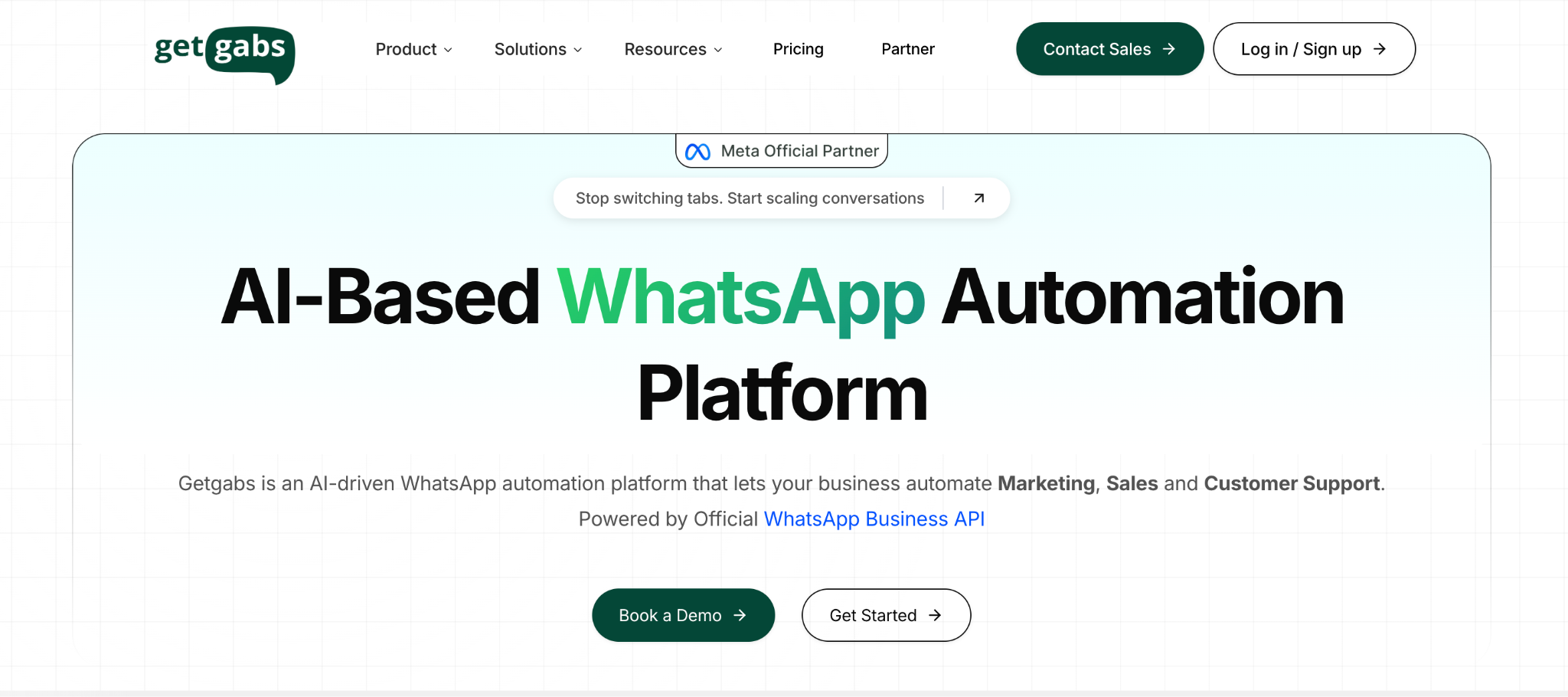
Getgabs is the best Shopify abandoned cart recovery app built on the WhatsApp Business API, helping merchants reconnect with customers through one of the highest-engagement channels in ecommerce. With significantly higher open and response rates than email or SMS, WhatsApp allows businesses to recover abandoned carts in a more direct, personalized, and effective way.
Best for: Stores selling into WhatsApp-heavy markets (India, MENA, LATAM, parts of the EU and SEA).
Rating: 4.7 (13 reviews) | Starting price: Free to install | Free plan: Yes
Key features:
- Automated WhatsApp cart recovery with product images and one-tap checkout links.
- AI flows plus an AI chatbot to handle objections in-chat.
- Klaviyo integration for an omnichannel WhatsApp-plus-email setup.
- Visual flow builder and live chat support.
Pros:
- WhatsApp open rates far exceed email in its target markets.
- Perfect 5.0 rating, with support and results praised in reviews.
- Plugs into an existing email stack rather than replacing it.
Cons:
- Only valuable if your customers actually use WhatsApp.
- Limited use for the US and Canada, where WhatsApp is not dominant.
- $89/mo entry is higher than the budget email tools.
What merchants say: Merchants appreciate the platform's straightforward Shopify integration, automation capabilities, and responsive support. Reviews frequently highlight how WhatsApp recovery campaigns help re-engage shoppers more effectively than traditional email in markets where customers already use WhatsApp as their primary messaging app.
Verdict: The clear pick for WhatsApp-first markets.
3. Cartly (formerly Care Cart)
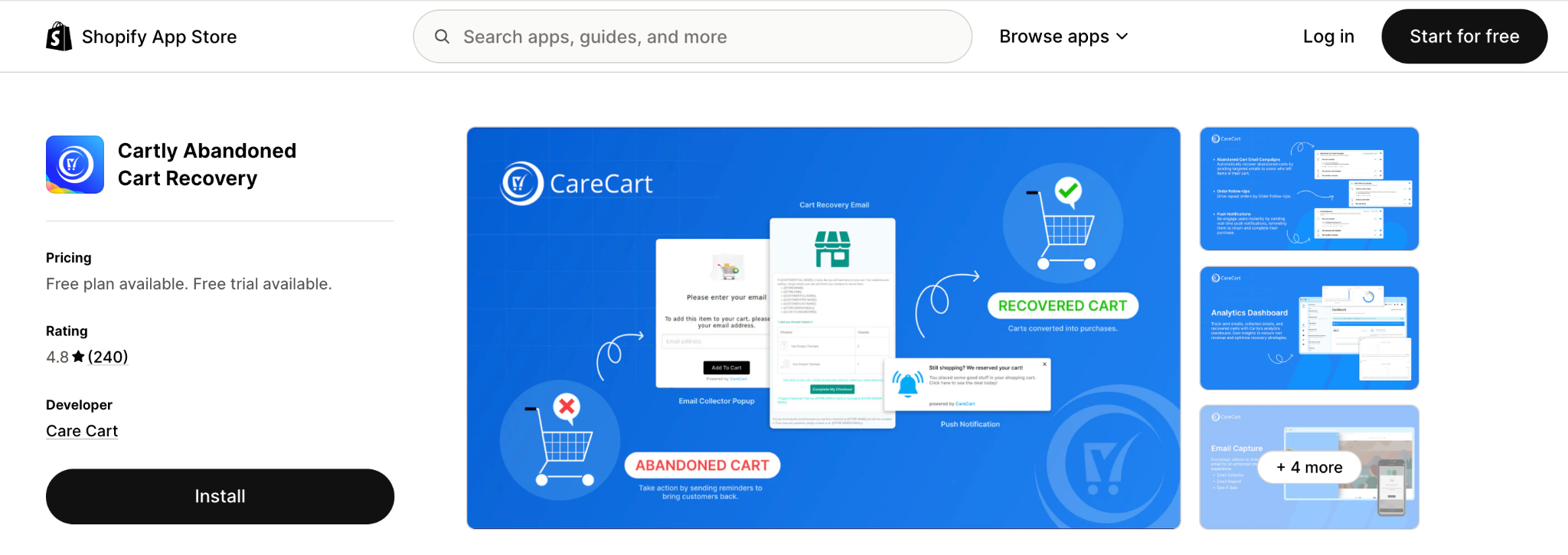
Cartly is a focused recovery app rather than a full marketing platform. It handles abandoned cart emails and web push well at a price that is easy to justify, plus a spin-to-win popup for email capture.
Best for: Small stores that have outgrown the native tool but do not need Klaviyo.
Rating: 4.8 (240 reviews) | Starting price: Free plan, or $14.99/mo Pro | Free plan: Yes, capped at 100 recovery emails.
Key features:
- Automated recovery emails plus browser push notifications.
- Email-capture popup and spin-to-win wheel for list growth.
- Order follow-up and win-back campaigns.
- Dashboard for recovered carts and failed checkouts.
Pros:
- The Pro plan at $14.99 includes unlimited recovery emails, no per-email fees.
- Setup is fast and the interface stays out of your way.
- Support is genuinely responsive, a theme in nearly every positive review.
Cons:
- No SMS channel.
- Templates look dated next to Klaviyo or Omnisend.
- Carts do not sync across devices.
What merchants say: Reviewers consistently praise two things, the 24/7 support and the price. The limitation shows up on deliverability. Multi-currency and multi-language stores also report the wrong currency or language going out unless everything is configured carefully.
Verdict: The best value pick for a small store, as long as you monitor deliverability rather than setting it and forgetting it.
4. Retainful
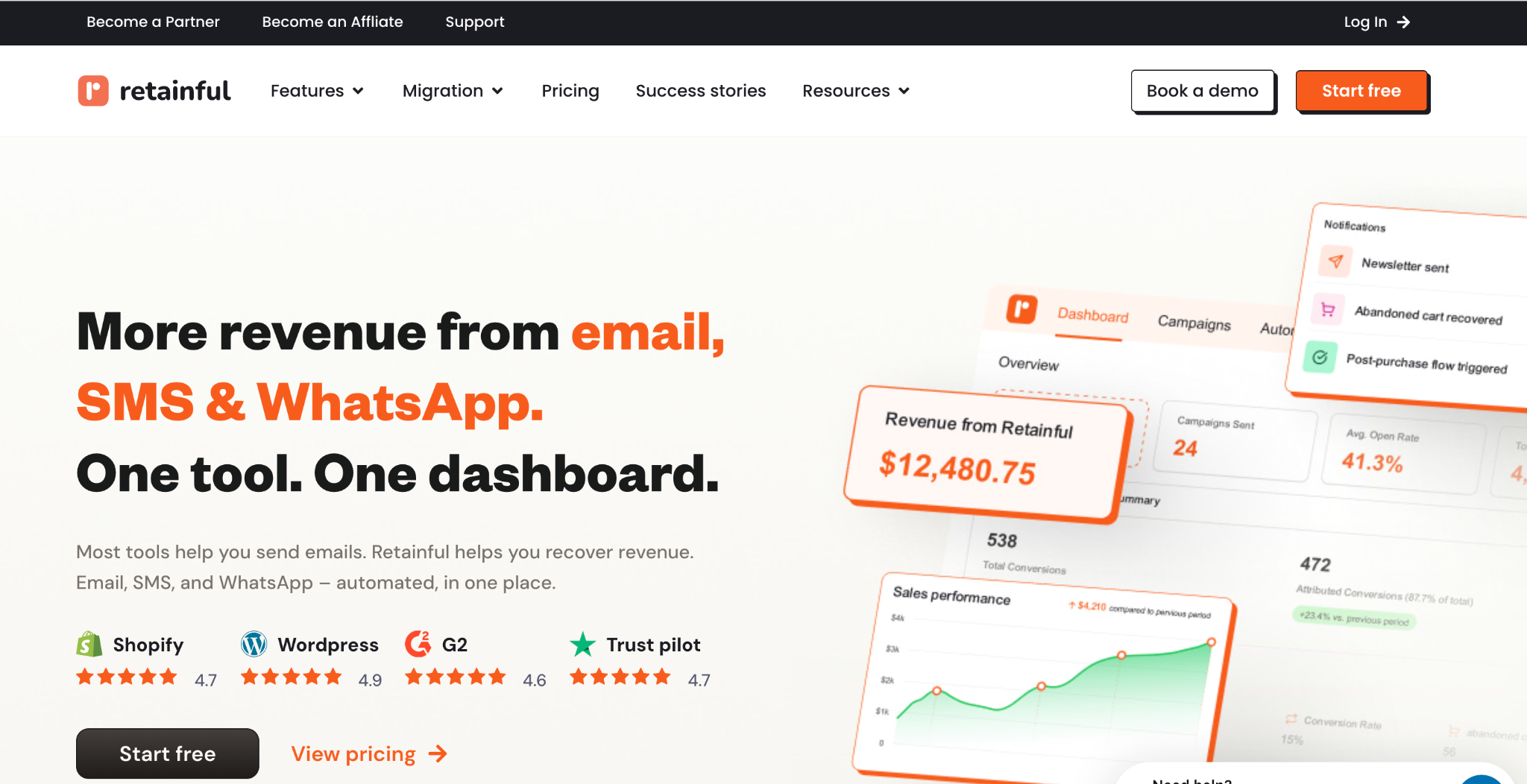
Retainful bundles email, SMS, popups, and forms into one dashboard, with a standout feature: next-order coupons that generate a unique, time-limited code for each recovered cart. It is also a common landing spot for stores migrating off WooCommerce, since it supports both.
Best for: Small stores that want simple email recovery plus dynamic coupon incentives.
Rating: 4.4 (27 reviews) | Starting price: Free plan, or $14/mo Pro | Free plan: Yes, 500 emails/month.
Key features:
- Drag-and-drop email builder with 100+ templates.
- Abandoned cart flows plus welcome, win-back, and post-purchase automations.
- Unique next-order coupon codes to drive repeat purchases.
- Signup forms and popups for list growth.
Pros:
- Generous free tier makes it low-risk to test.
- The automations run reliably once set, a repeated theme in reviews.
- One bill for email and SMS together.
Cons:
- Small review count, so less community signal than the big platforms.
- Fewer advanced segmentation options than Klaviyo.
- The 1-star reviews cluster around billing and support-response frustration.
What merchants say: Long-term users describe it as a practical retention tool rather than just an email sender, praising how fast flows are to build without a developer and how well the automations hold up in the background. The recurring negative is uneven support once something goes wrong.
Verdict: A solid, cheap entry point for stores that want more than the native tool and value the dynamic-coupon angle.
5. Adoric
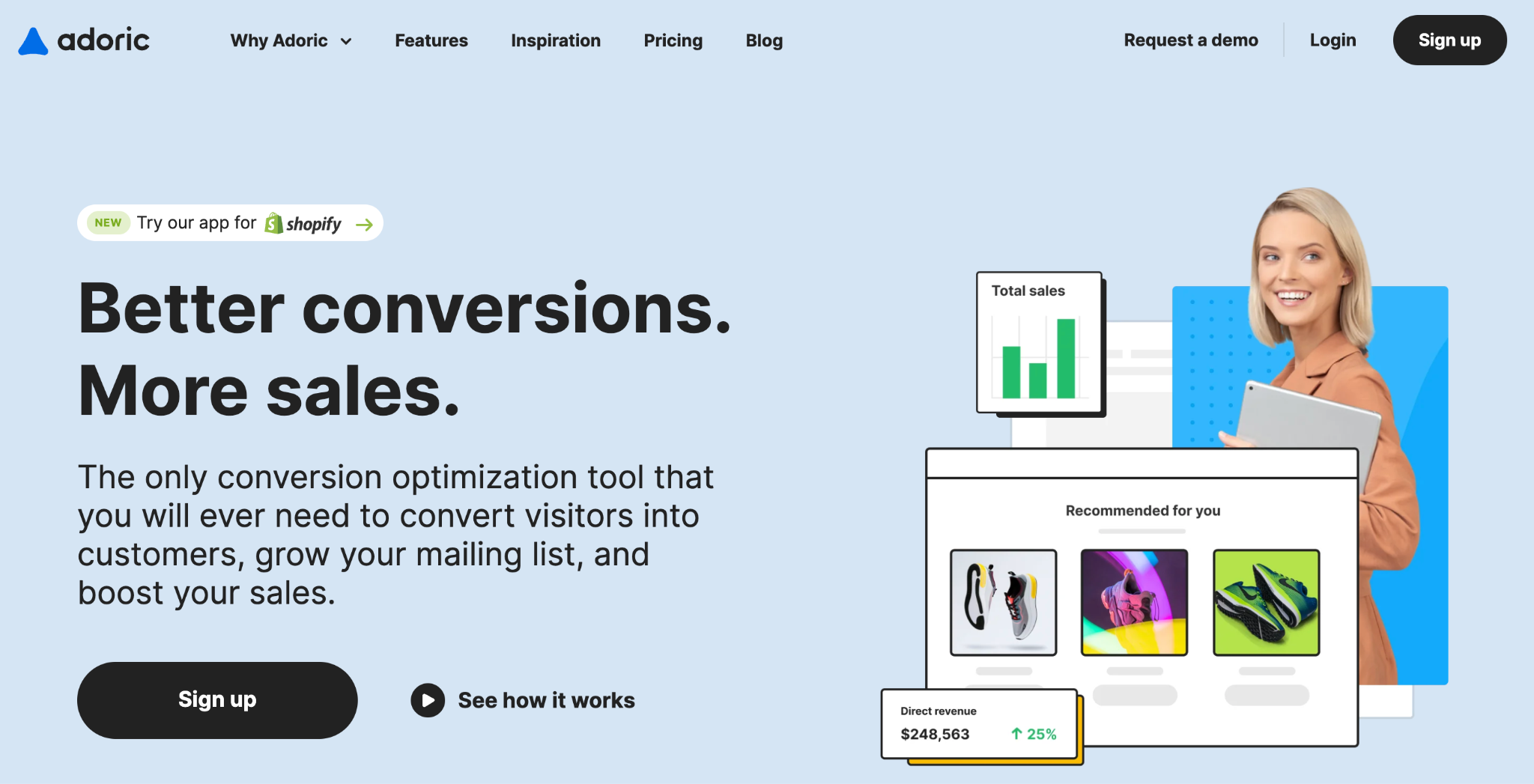
Adoric approaches recovery from the front of the funnel, using exit-intent popups, email capture, and on-site widgets to intervene before a shopper leaves, then following up with email. Its targeting fires popups based on cart value, scroll depth, time on page, or exit behavior.
Best for: Stores that want popup-led, prevent-before-you-recover coverage on a small budget.
Rating: 4.9 (249 reviews) | Starting price: Free plan, then from $4.99/mo (tiered by orders) | Free plan: Yes, up to 20 orders/month.
Key features:
- Exit-intent and cart-abandonment popups with A/B testing.
- Spin-the-wheel gamification and free-shipping bars.
- Product recommendations and cart upsells to lift AOV.
- Integrates with Klaviyo and Mailchimp for downstream email.
Pros:
- The lowest paid entry price on this list at $4.99/mo.
- Near-perfect rating across 249 reviews, with support singled out repeatedly.
- Doubles as a list-growth and AOV tool, not just recovery.
Cons:
- Popup-first, so it is a complement to an email tool, not a full recovery engine.
- Order-based pricing tiers can climb as you scale.
- Less suited to stores that need deep multi-step email flows.
What merchants say: Multi-year users highlight how easy the drag-and-drop builder is and how well the popups work across web and mobile. The main limitation reviewers imply rather than complain about: it is a conversion and capture layer, so most pair it with a dedicated email sender.
Verdict: The best low-cost popup layer for catching shoppers before they leave, paired with an email tool for the follow-up.
All-in-one email and SMS platforms
These are full marketing platforms that happen to be very good at cart recovery. Pick one of these when you want recovery to live inside the same system as your campaigns, flows, and segmentation.
6. Klaviyo
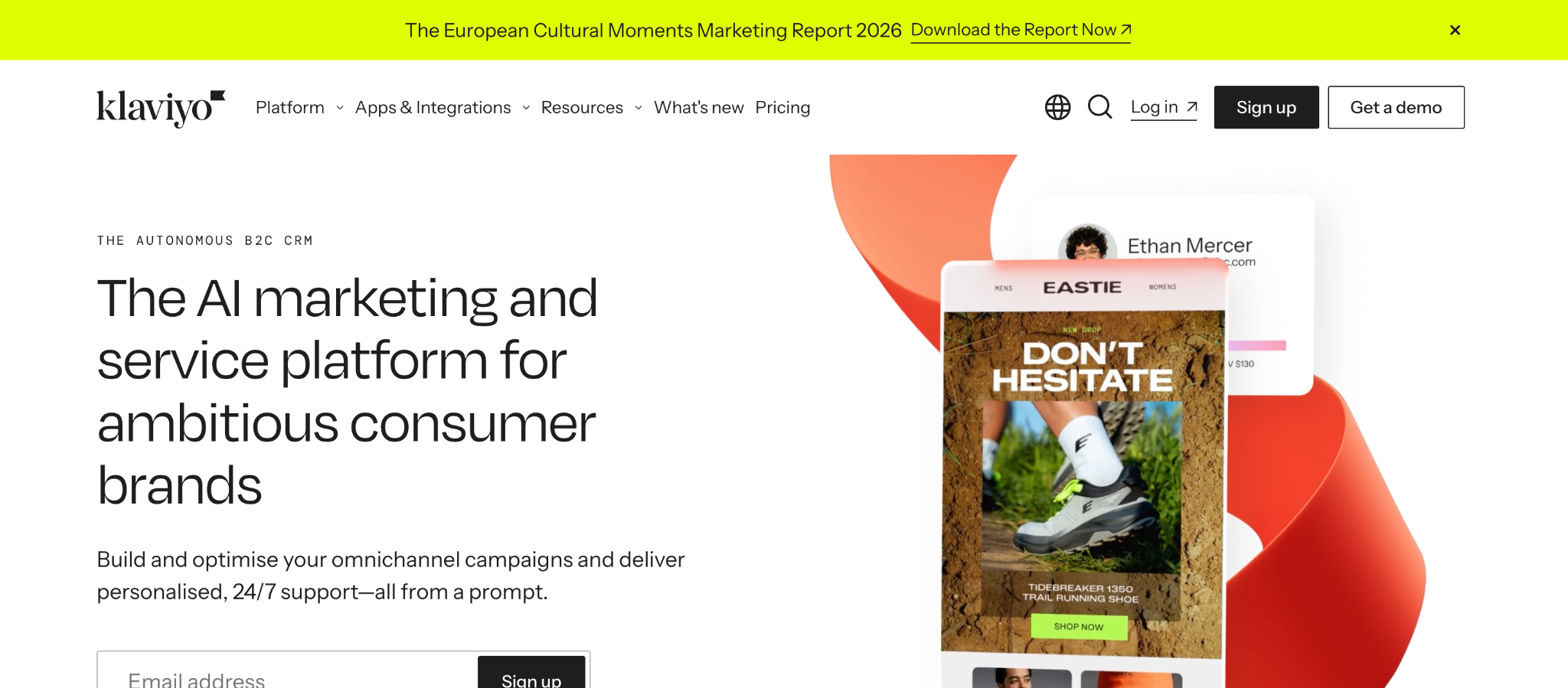
Klaviyo is the default choice for serious email and SMS on Shopify, and the platform email agencies know cold. Its Shopify integration is the deepest on this list, syncing order history, browsing, and catalog data in real time to power segmentation most tools cannot match.
Best for: Scaling and agency-managed stores that need deep segmentation.
Rating: 4.6 (2,832 reviews) | Starting price: Free to install, paid from ~$20/mo (by contacts) | Free plan: Yes, up to 250 contacts.
Key features:
- Pre-built abandoned cart flows with branching logic by cart value, LTV, or history.
- Email and SMS in the same flow.
- Predictive analytics that score likelihood to purchase.
- Segmentation across 50+ data points.
Pros:
- Best-in-class segmentation and reporting.
- If you use an email agency, they almost certainly run Klaviyo already.
- Scales to any store size.
Cons:
- Steep learning curve; most stores that get real value pay an agency or a dedicated marketer to run it.
- Pricing scales fast, and billing is now based on all active profiles, not just the ones you email.
What merchants say: The praise centers on power: reviewers call it the system of record for their marketing and credit the segmentation for lifting recovery-email performance well above their old tools. The complaints are just as consistent, a hard learning curve and bills that jump without warning as contact counts grow.
Verdict: The industry standard if you have an agency or a marketing hire. If you are the founder doing everything, the complexity tax is steep.
7. Omnisend
Omnisend delivers most of Klaviyo's multi-channel reach with far less overhead, which is why so many stores land here after deciding Klaviyo is more than they need. Email, SMS, and web push live in one workflow builder, and the abandoned cart flow is one of its strongest.
Best for: Growing stores that want true multi-channel recovery without Klaviyo's complexity.
Rating: 4.8 (2,958 reviews) | Starting price: Free to install, paid from $16/mo | Free plan: Yes, up to 250 contacts.
Key features:
- One-click abandoned cart setup with a product picker that pulls from your catalog.
- Email, SMS, and web push combined in a single sequence.
- Split-testing on delays, subject lines, and discount amounts.
- Pre-built automation library.
Pros:
- Much gentler learning curve than Klaviyo; the free plan includes all features.
- Live chat support averages a fast response.
- Strong value up to mid-size lists.
Cons:
- Deliverability complaints surface more than they should for a platform this size.
- Popups and embedded forms can be finicky to configure.
- The advertised entry price rises quickly once you pass the free contact cap.
What merchants say: Reviewers reward the ease of use, nearly nine in ten Shopify reviews are five stars, and the multi-channel flow builder that does not require an agency to run. The recurring negatives are deliverability (merchants reporting sends landing in spam or not arriving) and bills climbing faster than expected after the free tier.
Verdict: The best all-rounder for growing stores that want multi-channel recovery without the operational weight of Klaviyo.
8. Recart
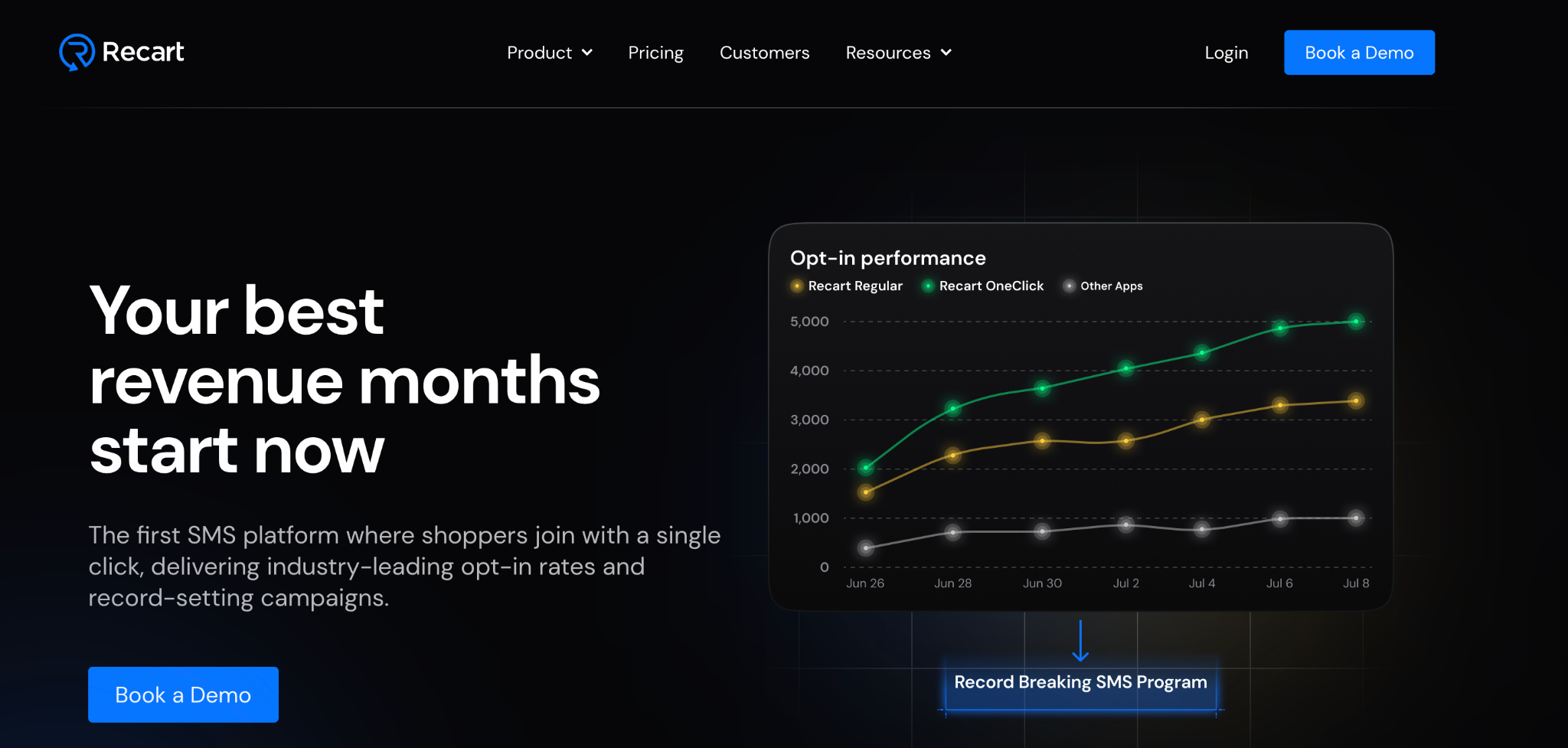
Recart is a managed WhatsApp, SMS, and email platform built around conversational commerce, where pre-built flows guide shoppers through a branded chat with dynamic discounts that escalate across the sequence. The premium price reflects a done-for-you, enterprise-level service.
Best for: High-volume stores that want a managed, conversational recovery program.
Rating: 4.7 (480+ reviews) | Starting price: From $299/mo | Free plan: No.
Key features:
- WhatsApp, SMS, and email in one platform.
- Managed service: the team drafts, schedules, and optimizes campaigns.
- Conversational flows with escalating dynamic discounts.
- Fully branded chat experience.
Pros:
- Hands-off for teams that want an outside team running the channel.
- Strong per-message ROI at high volume.
- Multi-channel conversational depth few tools match.
Cons:
- $299/mo starting cost prices out smaller stores.
- The managed model means less direct control for hands-on marketers.
- Overkill unless you have the volume to justify it.
What merchants say: Reviewers running high volume praise the managed campaigns and the ROI, with the team handling copy and scheduling so the store owner does not have to. The friction shows up around the price and the fit: smaller stores find the entry cost hard to justify against simpler tools.
Verdict: The right pick for larger stores that want conversational recovery managed for them, not a fit for early-stage budgets.
For brands with growing mobile revenue, email and SMS work even better alongside a native shopping app. Here's how to create a mobile app for your Shopify store without building one from scratch.
Specialized single-channel apps
Each of these does one channel and does it well. They are usually run alongside an email tool, not instead of one, to cover shoppers your primary channel misses.
9. PushOwl (Brevo)
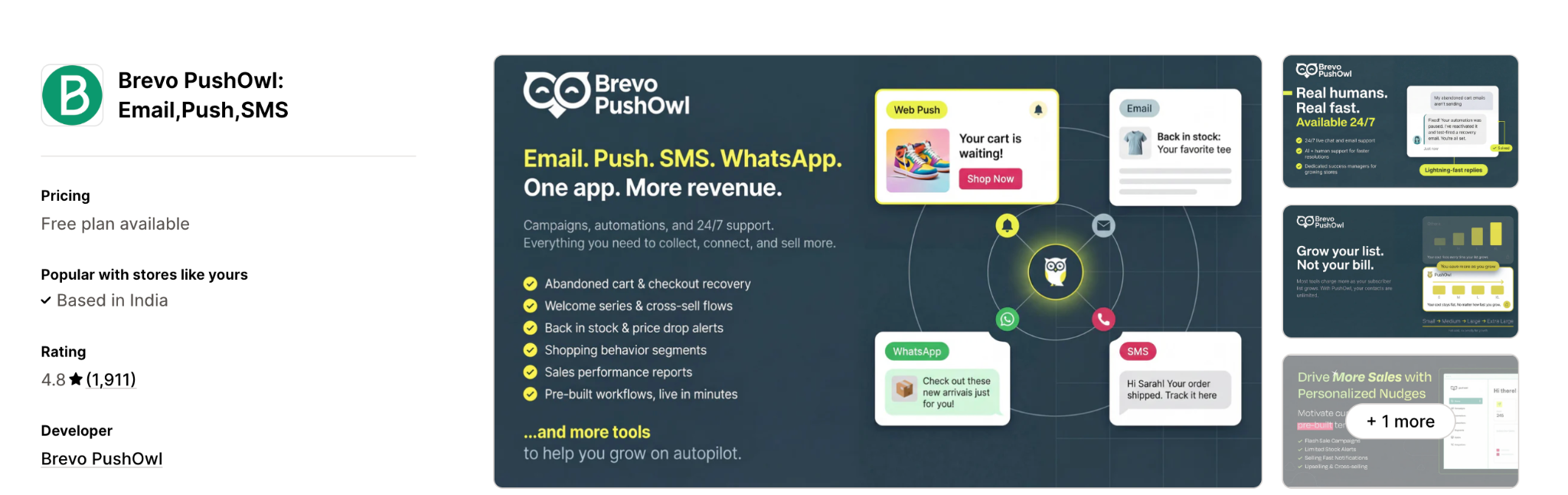
PushOwl, now part of Brevo, recovers carts through browser push notifications that need no email address or phone number. A visitor opts in with one click, then receives automated cart reminders on their device, even after leaving your store. That reach into anonymous visitors is its whole point.
Best for: Reaching shoppers who never hand over an email or phone number.
Rating: 4.8 (1,872 reviews) | Starting price: Free plan, paid from $19/mo | Free plan: Yes.
Key features:
- One-click push opt-in, no contact details required.
- Automated three-notification abandoned cart sequences.
- Back-in-stock and price-drop alerts.
- Now bundled with Brevo email and SMS.
Pros:
- Reaches the large share of visitors who never subscribe.
- Consumption-based pricing means your list can grow without cost pressure.
- Clean setup, and it does not compete with email for inbox space.
Cons:
- Push messages are short; you cannot tell a story the way email can.
- Best as a supplementary channel, not a standalone recovery engine.
- Desktop and mobile web only, not native app push.
What merchants say: The strong rating reviews reflect real satisfaction, with reviewers highlighting how cheaply push adds a recovery channel that reaches non-subscribers. The limitation reviewers accept is that push is a complement: it works best layered on top of email, not in place of it.
Verdict: The best way to add web push for anonymous-visitor recovery, on top of an email tool you already trust.
10. TxtCart
TxtCart is an SMS-first recovery app that uses AI to hold real two-way text conversations with shoppers who abandon, answering questions, handling objections, and offering dynamic discounts rather than firing a one-way reminder.
Best for: US stores that want conversational, AI-driven SMS recovery.
Rating: 4.9 (370+ reviews) | Starting price: Free to install, $29/mo minimum spend + per-message fees | Free plan: Starter tier with revenue share.
Key features:
- AI agents that engage shoppers in two-way SMS within 30 to 60 minutes.
- Dynamic discounts and objection handling inside the conversation.
- Managed campaign option where the team drafts and sends.
- Compliance tools and revenue attribution built in.
Pros:
- The conversational AI drives reply rates well above one-way SMS.
- Fast setup and clear ROI tracking.
- Results often show within the first few weeks.
Cons:
- US-focused; international SMS support is limited.
- Per-message and revenue-share costs add up at scale.
- Single channel, so you still need email coverage elsewhere.
What merchants say: Reviewers report strong ROI figures. The negatives are specific: a merchant billed during a two-month store outage, and another frustrated by a promised segmentation feature that shipped late.
Verdict: The best SMS-only recovery tool for US stores that want conversational AI, run alongside email.
11. CartBoss
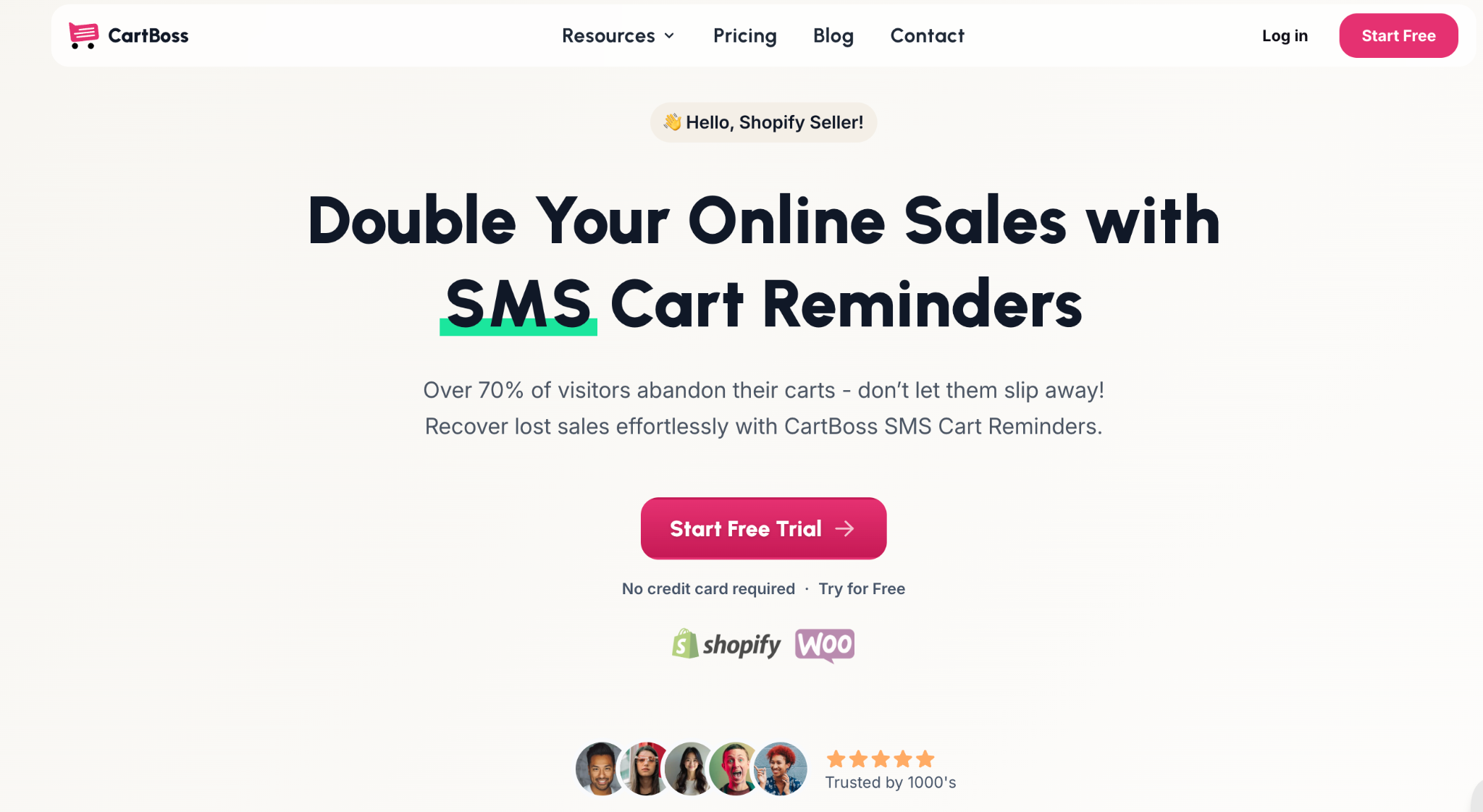
CartBoss strips SMS recovery down to a pure pay-per-message model with no monthly subscription. It sends up to three recovery texts with dynamic cart links, using pre-translated templates, and starts working on autopilot right after install.
Best for: Stores that want no-frills SMS recovery with zero monthly commitment.
Rating: 3.5 (8 reviews) | Starting price: Free to install, pay per SMS | Free plan: Pay-as-you-go.
Key features:
- Pay only for messages actually sent, no monthly fee.
- Pre-written, pre-translated recovery templates.
- Automated sequence with dynamic cart links.
- Minimal setup, sensible defaults out of the box.
Pros:
- No subscription, so it suits low or irregular volume.
- Fast to launch with default timing and copy.
- Translated templates help for non-English markets.
Cons:
- Little customization compared to TxtCart or Klaviyo SMS.
- No email or other channel.
What merchants say: The appeal in positive feedback is the pay-per-use simplicity and hands-off automation. The lower rating reflects the small sample and some setup and billing friction. The useful read: worth a look only if a no-commitment SMS model specifically fits your volume, and test it in a low-stakes window first given the limited track record.
Verdict: A niche pick for pay-as-you-go SMS recovery, best treated as an experiment rather than a core system.
12. WisePops
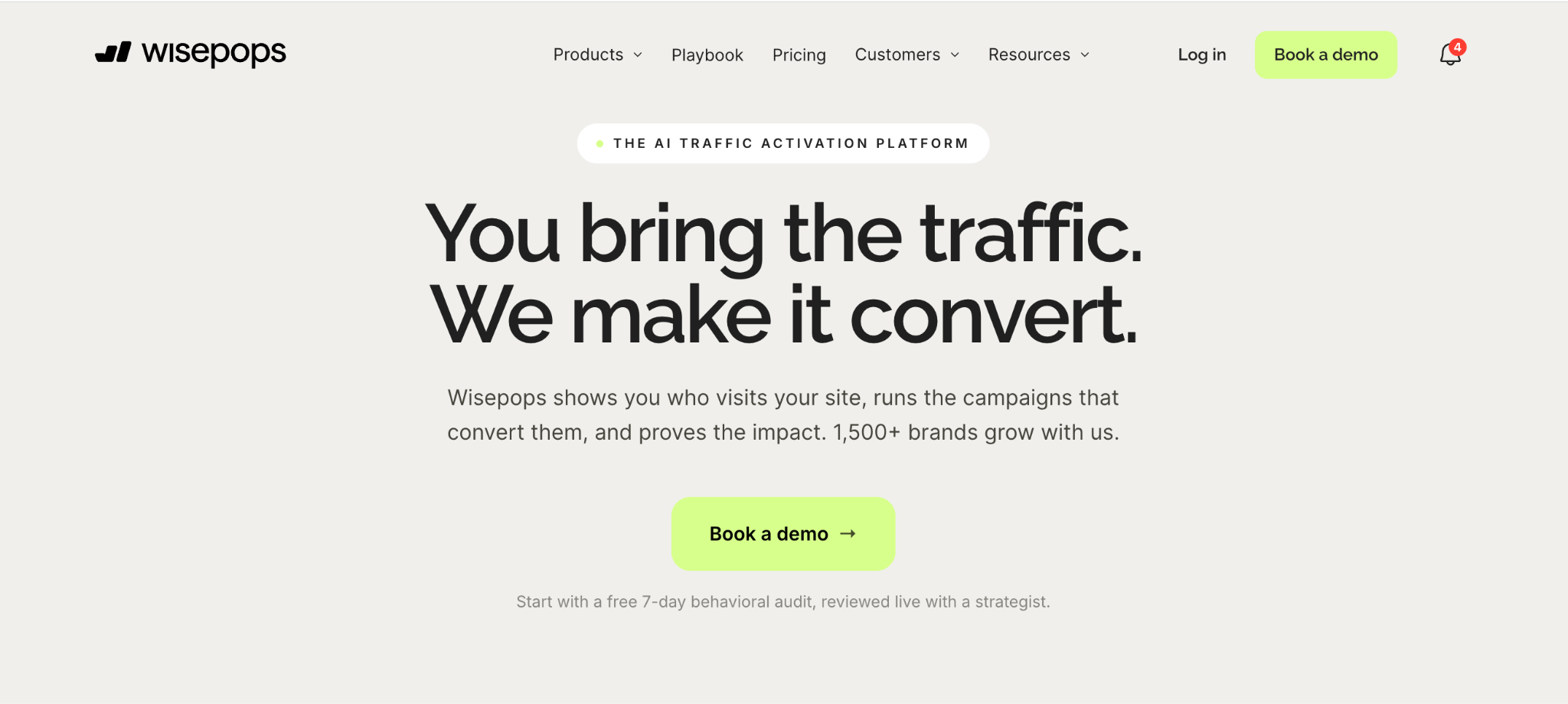
WisePops is a popup and on-site messaging platform that tries to stop cart loss before it happens, using AI-powered exit-intent popups that fire when a shopper is about to leave, plus web push and on-site notifications.
Best for: Stores focused on exit-intent popups and on-site conversion.
Rating: 4.9 (66 reviews) | Starting price: From $49/mo (free trial) | Free plan: Trial only.
Key features:
- AI exit detection that triggers before a visitor leaves, on desktop and mobile.
- 30+ targeting rules including cart value, item count, and traffic source.
- Dynamic cart-content display inside popups.
- Built-in A/B testing and web push.
Pros:
- AI exit detection is genuinely strong and works on mobile.
- All features included on every plan, no gating.
- Polished, easy-to-use popup builder.
Cons:
- Trial only, no permanent free plan, and $49/mo is steep for a popup tool.
- Smaller review base (66) than the category leaders.
- Focused on prevention, so pair it with an email tool for follow-up.
What merchants say: Reviewers praise the builder and the targeting depth. The recurring caveats are price relative to single-purpose popup tools and the absence of a free tier.
Verdict: The best exit-intent popup layer for prevention, run alongside an email tool rather than on its own.
Which channel recovers more? Email vs SMS vs WhatsApp vs web push vs in-app push
No single channel wins outright, and the strongest recovery programs layer two or three. The right mix depends on where your customers are and what contact details you have. The pattern across the tools above is consistent: email is the cheap workhorse, SMS and WhatsApp buy urgency and reach, web push captures anonymous visitors, and in-app push reaches your most committed shoppers.
|
Channel |
Typical open rate |
Best for |
The catch |
|
|
20 to 30% |
Rich content, longer sequences, lowest cost |
Crowded inboxes, needs an email address |
|
SMS |
90%+ |
Urgency, time-sensitive offers |
Per-message cost, needs a phone number and opt-in |
|
|
90%+ |
Conversational selling in WhatsApp-first markets |
Only works where WhatsApp is dominant |
|
Web push |
Higher opt-in than email |
Anonymous visitors, zero-contact recovery |
Short messages, browser-based, easy to ignore |
|
In-app push |
Instant, no spam filters or carrier fees |
Installed, high-intent repeat shoppers |
Requires a mobile app |
Email plus one high-urgency channel is the baseline most stores should run. The last row is the one almost no cart app touches, and it is where the highest-intent shoppers already live.
How to choose the right app for your store
There is no single best app, only the best app for where your store is right now. Match your situation to the shortlist:
- Brand new, no recovery yet: Turn on Shopify's native email today. It is free and better than nothing. Add a budget tool when you outgrow it.
- Small store, tight budget: Cartly or Retainful for email, Adoric if you want popup-led capture on top. All under $15/mo to start.
- Scaling with a marketing hire or agency: Klaviyo. The segmentation and reporting justify the complexity once someone owns it.
- Growing, want multi-channel without the overhead: Omnisend. Email, SMS, and push in one place, no agency required.
- WhatsApp-first market: Getgabs. Skip it if your base is US or Canada.
- Want to reach anonymous visitors or add urgency: PushOwl for web push, TxtCart for conversational SMS, layered on your email tool.
One question sits underneath all of these: which channels do you actually own? Email and SMS lists are rented against inbox algorithms and carrier rules, and every re-engagement on Meta or Google costs you again. The most durable recovery happens on channels you control outright, and the most valuable of those is a home-screen presence with your most loyal, highest-intent customers.
If a growing share of your revenue is mobile and repeat, the question stops being which cart app to add and starts being whether you own the surface where those customers already shop. That is the difference between recovering carts and preventing them.
Mobile app push notifications: the cart recovery channel most stores miss
You're optimizing how to recover abandoned carts, but you're overlooking the channel that prevents many abandoned carts in the first place while also giving you a stronger way to recover the rest.
Most cart abandonment starts on mobile
Mobile now drives the majority of ecommerce traffic, but it still converts at roughly half the rate of desktop, about 1.8% versus 3.9% (Statista, 2026). Slow-loading pages, browser friction, and interrupted sessions mean shoppers are far more likely to abandon their carts before completing checkout.
A mobile app removes much of that friction.
Across 250+ Shopify brands on Appbrew, native apps convert around 3× higher than mobile web, and shoppers view roughly 4× more products per session. The result is simple: fewer shoppers abandon their carts in the first place.
Recovery is better, too
When someone does leave without purchasing, a mobile app gives you a recovery channel that traditional cart apps can't.
Instead of relying only on email or SMS, you can send an in-app push notification that lands directly on the customer's home screen and opens straight to their abandoned cart.
Compared with other recovery channels, in-app push offers several advantages:
- No spam folders or inbox competition
- No carrier fees like SMS
- Deep links that reopen the exact abandoned cart
- A direct line to your highest-intent customers, people who already installed your app
For brands using abandoned-cart push flows, these notifications typically recover 15–20% of abandoned carts, while delivering open rates of 15–25%, as per Appbrew data of 250+ shopify brands.
Web push vs. in-app push
Both are real channels, and they do different jobs:
|
Dimension |
Web push |
In-app push |
|
Where it lives |
In the shopper's browser |
In your installed app |
|
Reach |
Depends on them returning to that browser |
Persists across sessions, on the home screen |
|
Message |
Short text banner |
Rich media, images, deep links |
|
Deep-linking |
Limited |
Straight into the abandoned cart |
|
Best audience |
Anonymous, top-of-funnel visitors |
High-intent shoppers who installed you |
Web push widens the top of the funnel. In-app push works at the bottom, where intent is highest. They complement each other rather than compete.
When it's worth it. An app isn't the right first move for every store. It earns its place once you have an audience worth keeping close. Consider it when you have:
- Meaningful mobile traffic, so a faster surface lifts real volume.
- Repeat purchasers or a loyal base, the exact shoppers in-app push serves best.
- Rising ad costs you'd rather sidestep, since a push is free where a retargeting impression is not.
If you're still validating your store, the email and SMS tools above are the right place to start. But once mobile becomes your primary sales channel, the conversation shifts. It stops being "Which abandoned cart app should I install?" and becomes "How do I prevent more abandoned carts while owning a recovery channel my competitors can't?"
Appbrew: turn your store into a recovery channel you own
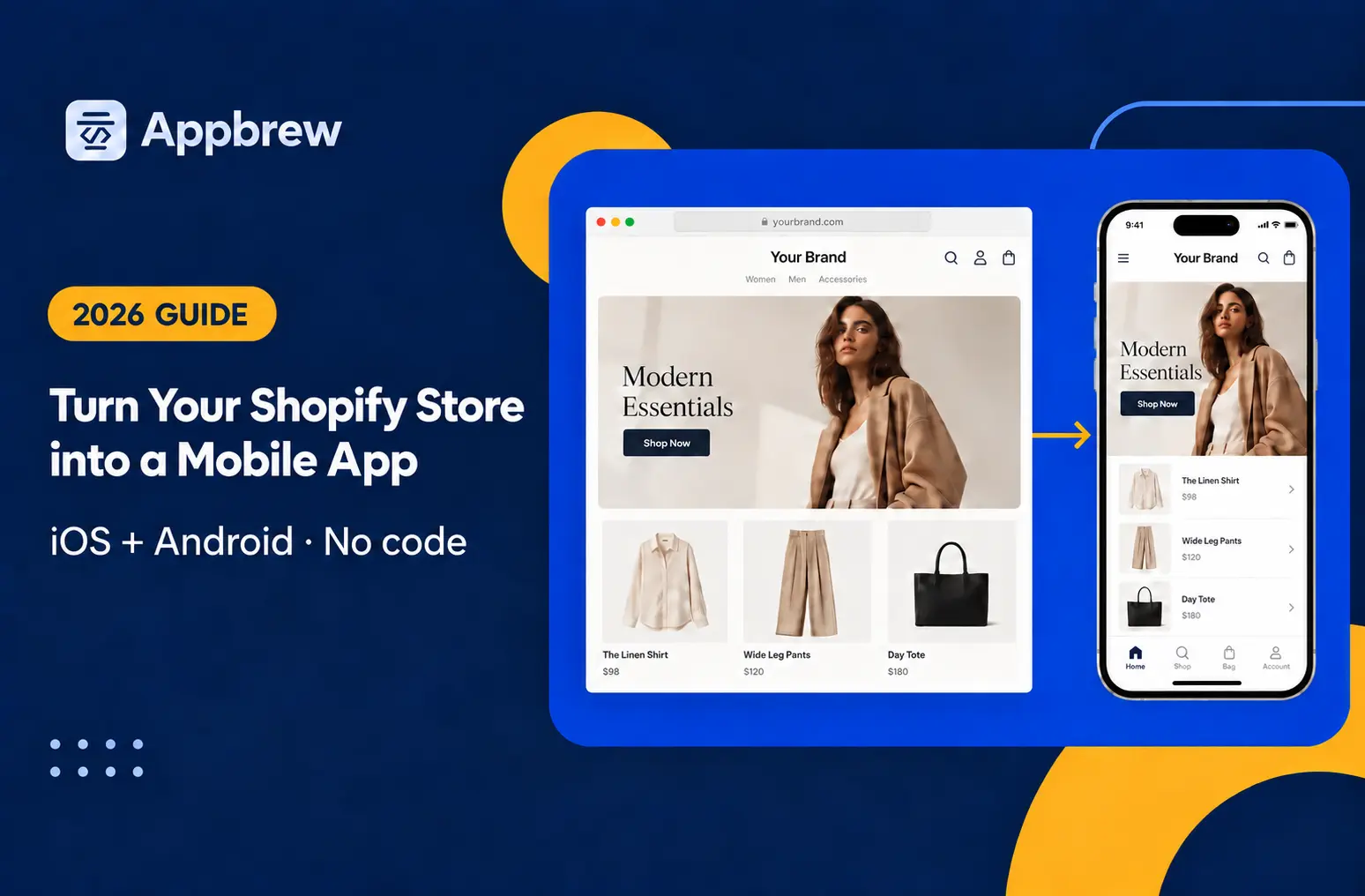
This is the layer Appbrew builds. It turns a Shopify store into a native iOS and Android app, then gives you the in-app push and automated flows to recover carts on a channel you own outright, without the $50k and six-month timeline of a custom build.
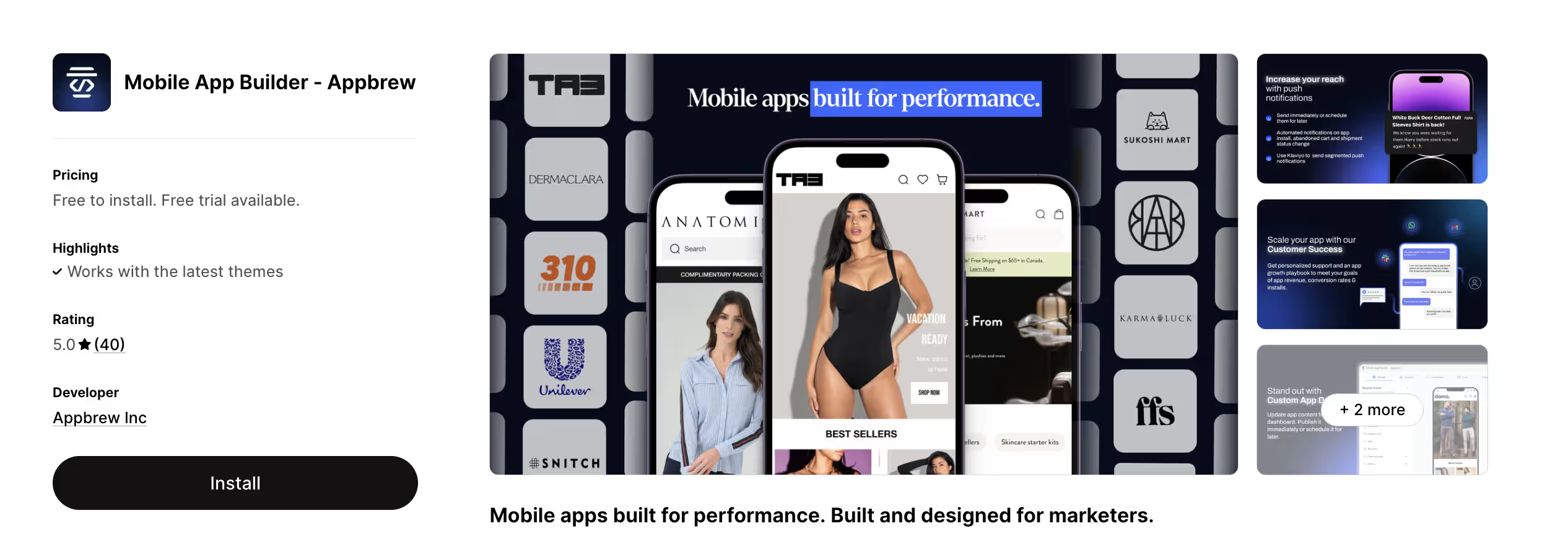
For abandoned cart recovery, Appbrew helps you:
- Automated flows on a channel you own. Unlimited push, including abandoned-cart and back-in-stock automations that sync with the tools you already run, like Klaviyo, so recovery lives alongside your existing stack rather than replacing it.
- Deep links back to the exact cart. A "return to cart" push reopens the app straight to the abandoned items, the mechanic behind those 8 to 12% click-through rates.
- Fewer carts to recover in the first place. React Native performance and sub-second loads prevent much of the abandonment that a slow mobile browser causes upstream.
US luxury travel-wear brand Anatomie is a clean example. After launching its Appbrew-powered mobile app, the brand achieved 3× higher conversion rates than its mobile website while increasing average order value by 1.5×. Those gains came from giving shoppers a faster, more seamless mobile buying experience, meaning fewer carts were abandoned to begin with, and more returning customers could be re-engaged through app push notifications.
If you're evaluating whether a branded mobile app is worth the investment, our comparison of the best Shopify mobile app builders breaks down the leading platforms, pricing, and features for different store sizes.
{{cta2}}
How to build an abandoned cart recovery sequence that converts
The single biggest upgrade in recovery is moving from one message to a timed sequence. A reliable structure for most stores:
- 30 to 60 minutes after abandonment: a friendly reminder with the cart contents and a one-tap link back to checkout. No discount yet. Many of these shoppers were simply distracted, and the product is still fresh.
- 24 hours later: add reassurance. Answer the most common objection (usually shipping cost), add light social proof like a review or a low-stock note.
- 48 to 72 hours later: introduce a modest, time-limited incentive, and only for shoppers who still have not converted.
The discount escalates only at the end on purpose. Lead with a coupon and you train buyers to abandon carts to trigger one, which quietly erodes margin on sales that would have closed anyway.
Test the timing and the incentive depth against your own data, since the right numbers shift with average order value and category. And make sure the return experience holds up: the cart should still contain the items, the discount should auto-apply, and the checkout should pre-fill whatever it can. A shopper who returns to a cleared cart abandons again at nearly the same rate as the first time.
Conclusion
Start where your store is. If you have nothing running, turn on Shopify's native email today and add Cartly or Omnisend as you grow. If you are scaling, Klaviyo's segmentation earns its keep. If your customers live on WhatsApp, Getgabs wins its market outright.
But the ceiling on cart recovery is set upstream, by the surface your customers shop on. Mobile web abandons more carts than any tool on this list can win back, and the channels you rent, email, SMS, paid ads, all cost you again on every re-engagement. The stores pulling away in 2026 are the ones that own their mobile channel outright and recover carts with a free push to customers who already chose them.
FAQs
What is the best Shopify abandoned cart app?
There is no single best app for every store. Klaviyo is the industry standard if you have an agency or marketing hire. Omnisend is the sweet spot for growing stores that want multi-channel recovery without the complexity. For small budgets, Cartly at $14.99/mo or Shopify's free native email are the right starting points. Match the tool to your store's stage, not to a leaderboard.
Does Shopify have built-in abandoned cart recovery?
Yes. Shopify includes a free abandoned checkout email you turn on in Marketing > Automations. It sends one reminder to shoppers who reached checkout and entered an email, and recovers roughly 3 to 8% of lost sales. It does not segment, only fires for checkout-starters, and most growing stores add a dedicated app within 6 to 12 months.
How many abandoned cart emails should I send?
Three to four over 48 to 72 hours is the sweet spot. Send the first at 30 to 60 minutes, a reassurance message at 24 hours, and a time-limited incentive at 48 to 72 hours for shoppers who still have not returned. A multi-step series consistently recovers more than a single email.
Are abandoned cart apps worth it?
For almost any store with steady traffic, yes. A basic recovery email brings back 3 to 8% of lost cart revenue, and a multi-channel sequence reaches 15 to 20% or more. Against a store losing meaningful revenue to abandonment every month, that return far exceeds what any app on this list costs.
What is the difference between an abandoned cart and an abandoned checkout on Shopify?
An abandoned cart is when a shopper adds items but never starts checkout. An abandoned checkout is when they enter checkout, usually giving an email, but do not pay. Shopify only tracks abandoned checkouts natively. Some apps can also track cart-level abandonment, giving you a larger pool of shoppers to recover.
Do mobile app push notifications recover abandoned carts?
Yes, and they reach a segment cart apps cannot. In-app push goes to shoppers who installed your branded app, arriving instantly with no carrier fees or spam filters, and can deep-link straight back to the abandoned cart. Because installed users are your highest-intent audience and apps convert around 3x higher than mobile web, a mobile app both recovers more carts and prevents them. It complements email and SMS rather than replacing them.