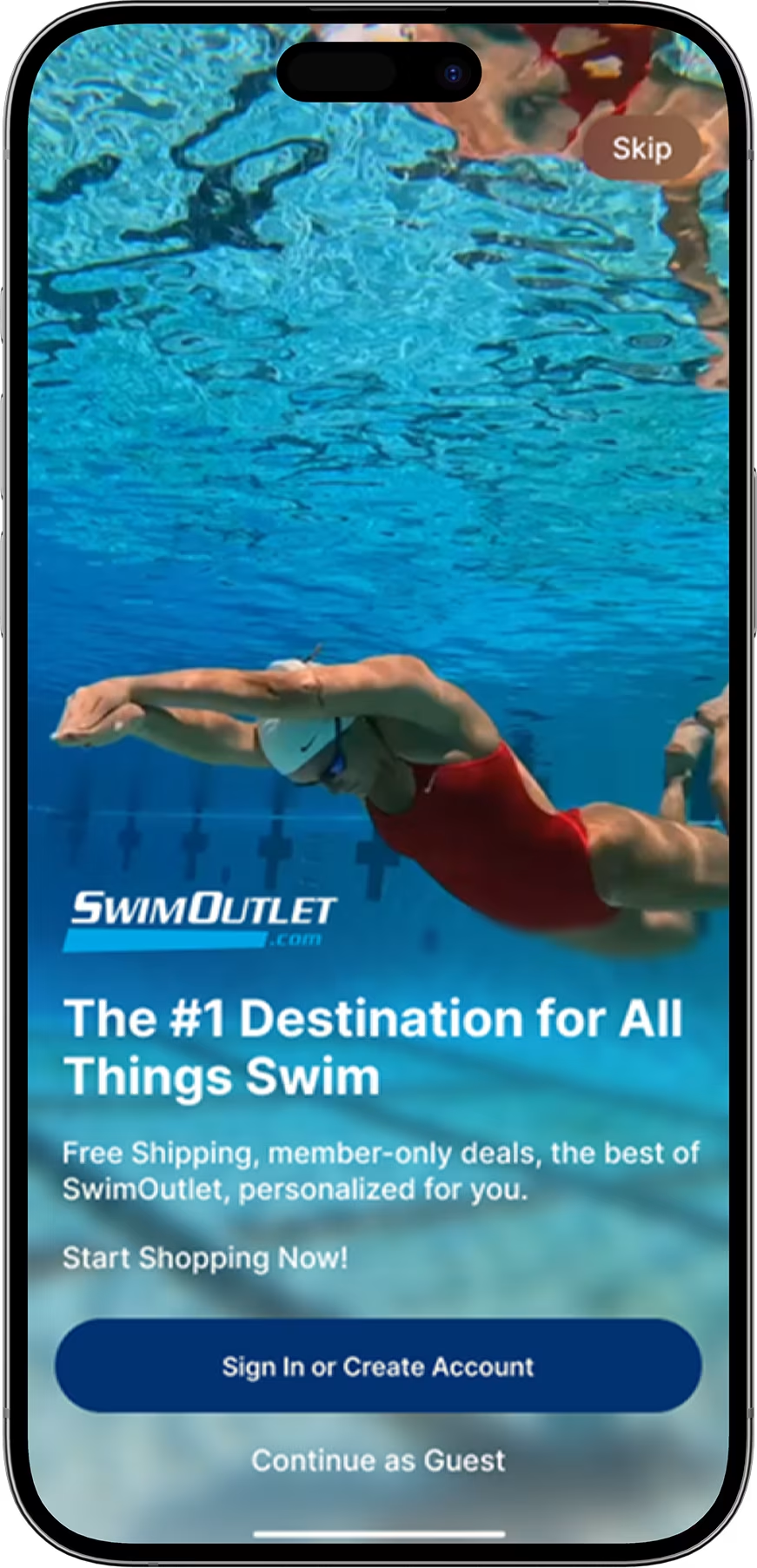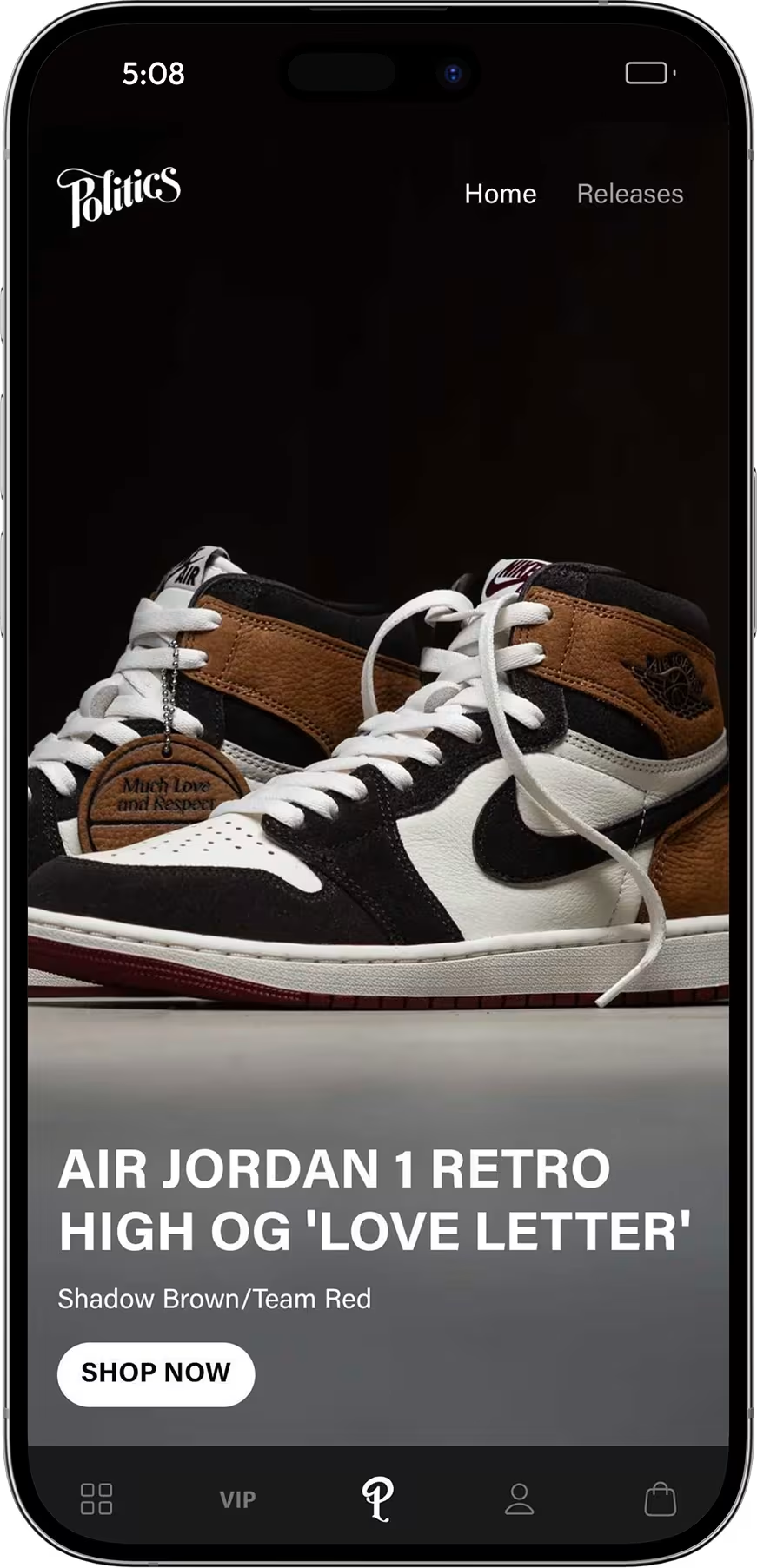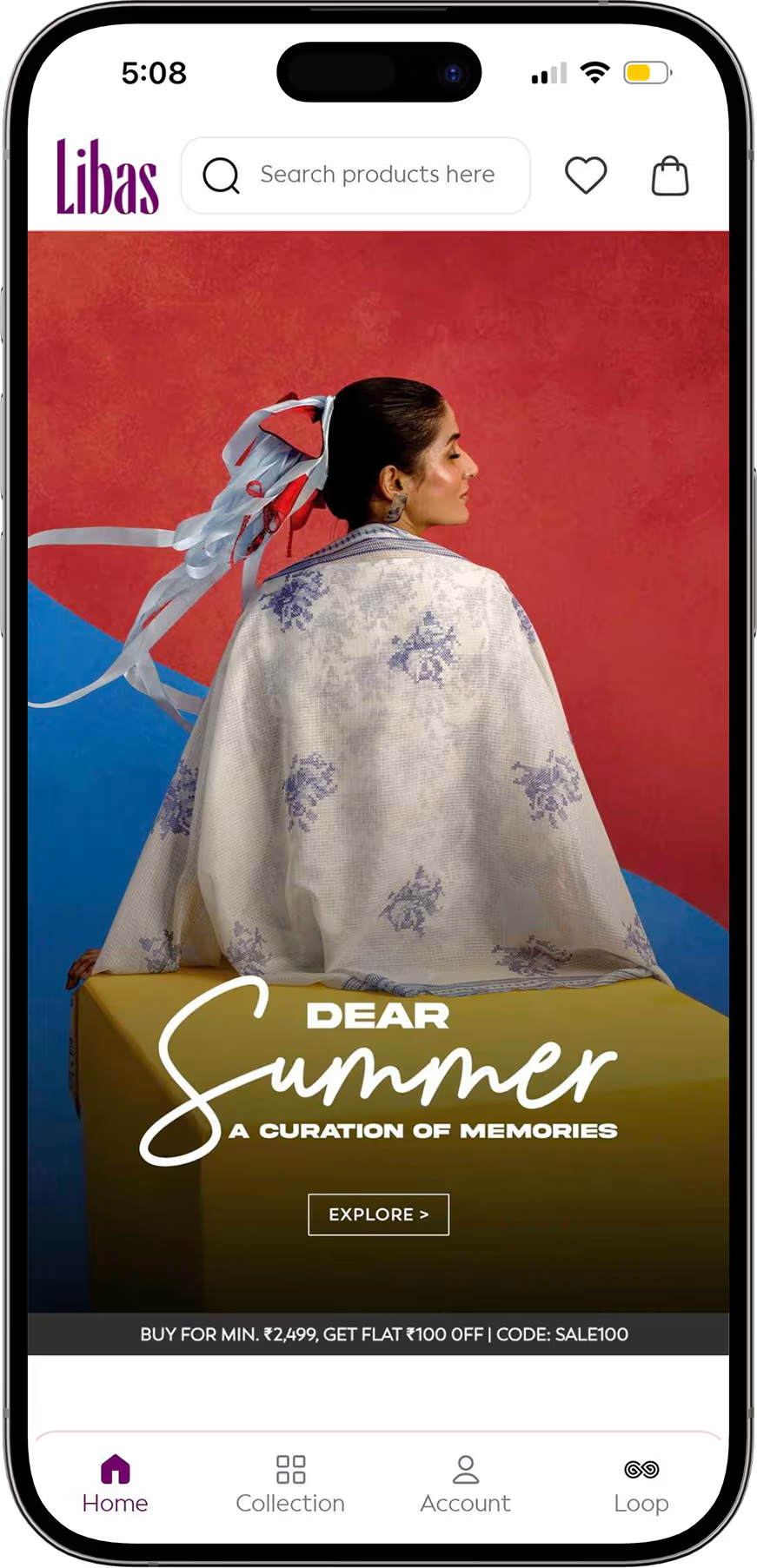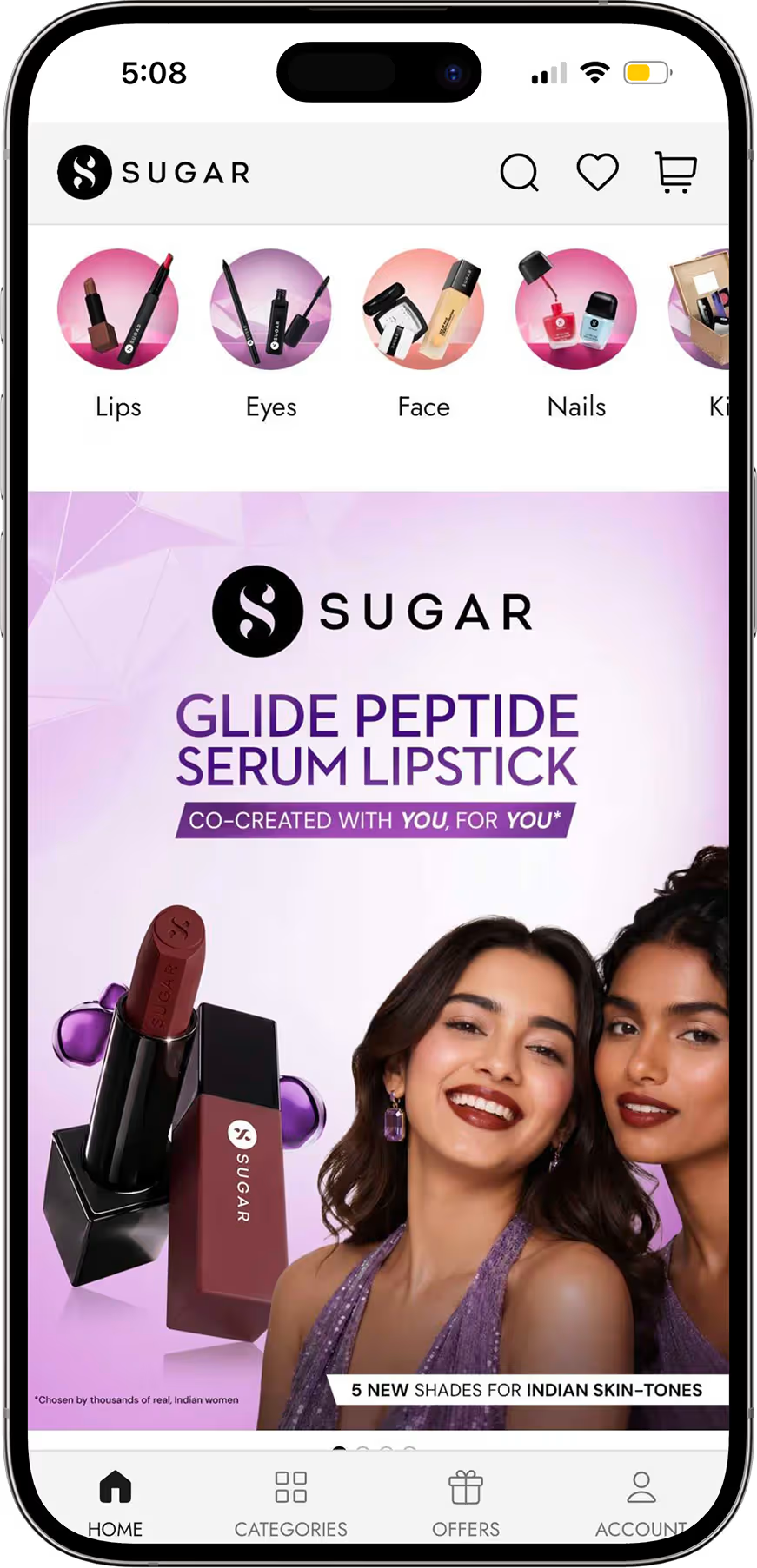





What an AI personal shopper does, how it differs from chatbots and quizzes, what it needs from your Shopify catalog, and why it works best in your app.
A customer opens your store with a clear goal: a birthday gift under $60, a night routine for dry skin, an outfit for a beach wedding in two weeks. Your store answers with a menu, 14 filters and a grid of 240 products.
That gap is not a catalog problem. Your catalog probably has the right product. The problem is that nobody is there to ask two questions, narrow it down and say "this one, and here's why." In a physical store, that person is a personal shopper or a good sales associate. Online, for most Shopify brands, there is no one.
An AI personal shopper fills that seat. This guide explains what an AI personal shopper actually does, how it differs from the chatbots, quizzes and "you may also like" widgets you already have, what it needs from your Shopify store to give good answers, where it should live, what it costs, and how to tell whether it is earning its keep.
TL;DR
- An AI personal shopper is a conversational assistant on your own store or app that asks what a shopper needs, recommends specific products from your catalog, explains why, and takes them to checkout.
- Shoppers already use them at scale. 250 million people used Amazon's Rufus in 2025, and Rufus users were 60% more likely to complete a purchase (Amazon, Q3 2025 earnings, via Fortune).
- Brand-owned agents are pulling ahead. Retailers that ran their own AI agents grew online holiday sales 59% faster than those that didn't: 6.2% vs 3.9% year over year (Salesforce, 2025 holiday data).
- Shoppers want help deciding, not a robot deciding for them. Only 11% would let AI make the purchase decision even in low-stakes categories (Gartner survey of 322 US consumers, January 2026).
- The output is only as good as your product data. Vague descriptions, missing attributes and thin reviews produce generic recommendations.
- It works best where shoppers are logged in and come back, which for most Shopify brands means the mobile app.
What is an AI personal shopper?
An AI personal shopper is software that does the job of a human personal shopper inside your store: it learns what a customer wants through conversation, recommends a short list of products that fit, explains the choice, and helps them buy. The shopper types (or says) a goal in plain language instead of browsing categories.
The word "personal" is doing real work here. A generic AI shopping assistant answers the question in front of it. A personal shopper also uses what it knows about this customer: past orders, sizes, skin type, budget, what they returned and why. Our guide to AI shopping assistants covers the wider category, including Rufus and Walmart's Sparky. This post is about the version you run on your own store, for your own customers.
It is also different from the AI agents that shop on a customer's behalf from outside your store, such as ChatGPT or Perplexity comparing products across retailers. Those are covered in AI shopping agents. The personal shopper works for you, inside your storefront, with your catalog only.
What does a good personal shopper actually do?
A good human personal shopper does four things, and an AI version should be judged against the same four.
- Intake. They ask the two or three questions that matter: budget, occasion, size or skin type, what the customer already owns. Not twelve questions. Two or three.
- Edit. They cut the catalog down to three or four options and say why each one fits. The value is in what they leave out.
- Memory. Next visit, they remember the customer's size, the jacket they returned for running small, and that they hate wool.
- Follow-up. They tell the customer when the restock lands, suggest the refill before the bottle runs out, and pair the new arrival with what was bought last month.
Most "AI personal shopper" tools on the market today handle the first two well. Memory and follow-up are where they fall apart, because they live in a website chat widget that doesn't know who the shopper is. We'll come back to that, because it decides where you should deploy one.
How does an AI personal shopper work?
Under the hood, an AI personal shopper combines a large language model with retrieval over your catalog. The model handles the conversation. The retrieval layer makes sure every recommendation is a real product you sell, in stock, at the current price.
A typical exchange runs like this:
- The shopper states a goal. "I have dry skin and want a simple night routine, nothing over $80 total."
- The assistant reads intent. It extracts the constraints (dry skin, night, simple, under $80) and asks a follow-up only if something critical is missing, such as sensitivity to fragrance.
- It searches your catalog. It matches those constraints against product titles, descriptions, ingredients, tags, metafields and reviews, then filters out anything out of stock.
- It recommends and explains. It returns a cleanser, serum and moisturizer that total $74, and says why each was picked.
- It handles objections. "Can I use the serum with retinol?" gets an answer drawn from your product content, not the open internet.
- It moves to cart. The shopper adds the routine to cart from the conversation and checks out.
Step 3 is where most implementations succeed or fail. If your product data says "luxurious, nourishing formula" and nothing else, the assistant has nothing to match against. Shopify's own advice for AI discovery says the same thing: write specific product descriptions, use clear photography, and structure your data (Shopify, AI personal shopper guide).
{{cta}}
AI personal shopper vs chatbot vs quiz vs recommendation widget
You may already run one or more of these. They overlap, but they don't do the same job.
| AI personal shopper | Support chatbot | Product quiz | Recommendation widget | |
|---|---|---|---|---|
| What the shopper does | Describes a goal in their own words | Asks a question about an order or policy | Answers fixed multiple-choice questions | Scrolls past a carousel |
| How it decides | Reads intent, searches the catalog, explains the pick | Matches the question to an answer or ticket | Maps answers to a preset result | Uses browsing and purchase patterns |
| Handles "something for a beach wedding under $120" | Yes | Rarely | Only if the quiz has that path | No |
| Remembers the shopper next time | Only where the shopper is logged in | Sometimes, via helpdesk history | Stores answers as profile data | Yes, passively |
| Best for | High-consideration products, large catalogs, routines and bundles | Order status, returns, shipping | List building, small catalogs, brand-led onboarding | Cross-sell on product and cart pages |
| Typical cost (Nov 2026) | Varies widely; usually priced per conversation or bundled with a platform | Free (Shopify Inbox) to usage-based | Octane AI from $50/month for 400 credits | Often included in your theme or search app |
The honest read: if your catalog is 30 products and most customers buy one hero item, a well-built quiz will do 80% of the job for a fraction of the effort. The AI personal shopper earns its place when the catalog is big enough that shoppers get lost, or when the right answer is a combination (a routine, a look, a bundle) rather than a single product.
For support-first tools, see our guide to the AI chatbot for ecommerce. For the broader shift to selling through conversation, see conversational commerce.
Do shoppers actually use AI personal shoppers?
Yes, and the numbers from 2025 settled the question for large retailers. Amazon said 250 million customers used Rufus in 2025, monthly active users grew 140% year over year, and customers who engaged with it were 60% more likely to complete a purchase (Amazon Q3 2025 earnings call, reported by Fortune, November 2025). Amazon expected Rufus to drive over $10 billion in annual incremental sales.
Brand-owned assistants moved too. Across the 2025 holiday season, Salesforce counted $262 billion of global online sales influenced by AI and agents. Retailers that deployed their own AI agents grew sales 6.2% year over year against 3.9% for those that didn't, and shoppers used retailers' agents for customer service 126% more during the holiday rush than in the two months before (Salesforce, January 2026).
The limit is trust. In a January 2026 Gartner survey of 322 US consumers, willingness to let AI narrow choices peaked at 31% for household supplies, and willingness to let AI make the purchase decision topped out at 11%. Gartner's advice to marketers was to build tools that help shoppers research and compare, not to hand the purchase over to an agent.
That is exactly the personal shopper model. It narrows, explains and recommends. The customer still taps "add to cart."
What does an AI personal shopper need from your Shopify store?
An AI personal shopper is a reasoning layer on top of your data. Feed it thin data and it gives thin answers. Before you install anything, check these five inputs.
- Specific product descriptions. "100% merino, odor-resistant, for 40°F to 65°F" can be matched to "something warm for hiking that won't smell after three days." "Premium comfort" can't.
- Attributes in structured fields. Size, color, material, skin type, scent, occasion and compatibility belong in variants, metafields or tags, not buried in paragraph text.
- Reviews that mention fit and use. Reviews are how an assistant answers "does it run small?" Ask for detail in your review request emails.
- Policies in plain language. Shipping times, return windows and exchange rules, so the assistant can answer "can I return it if it doesn't fit?" without escalating.
- Live inventory and pricing. A recommendation for a sold-out product costs you more trust than no recommendation at all.
The same work makes your products easier for outside AI agents to read, which is why writing product descriptions for AI shopping assistants pays off twice.
Where should an AI personal shopper live: website or app?
Put it where the shopper is logged in and where they come back. For most Shopify brands, that is the mobile app.
The reason is memory. On the mobile website, most visitors are anonymous. The assistant can use what they've clicked in this session and nothing else, so every visit starts from zero. In an app, the shopper is signed in, their order history is attached, and the assistant can remember their size, their skin type and what they returned. That is the difference between a search box that talks and an actual personal shopper.
Follow-up works the same way. A website widget can't reach a shopper once they close the tab. In an app, the conversation can continue through a push notification when their size is back in stock or when it's time to reorder. Pair that with personalization so the home screen reflects what the shopper told the assistant, and the edit carries across the whole app.
For product categories where fit is the main doubt, an AI personal shopper also pairs naturally with AI virtual try-on: the conversation narrows the options, and try-on settles the last question.
A real example: Dermaclara's in-app skincare guide
Dermaclara, a science-led skincare brand, was the first brand to launch Appbrew's AI Concierge inside its app, under the name Clara. Clara asks shoppers about their skin goals, then recommends products, routines and bundles that fit, answers usage questions and helps with reorders.
Before, a customer with a specific concern had to work out the right combination of products from the product pages alone. Now the app asks, recommends a routine, and explains how to use it.
After moving its app from Tapcart to Appbrew, Dermaclara's app saw a 32% higher conversion rate and 3.5x growth in app-driven revenue (Appbrew case study). Those are whole-app results, driven by personalized flows, AI-powered product guidance and a smoother checkout together, so treat Clara as one part of the change rather than the whole of it. The full Dermaclara story breaks down what changed.
AI Concierge is built for this kind of guided selling. Shoppers ask in their own words, it weighs their goals, budget and preferences, recommends from your live catalog, and lets them add to cart without leaving the conversation. It lives inside your Appbrew app, so it works with logged-in shoppers rather than anonymous visitors.
How much does an AI personal shopper cost?
Expect anything from free to several hundred dollars a month for a Shopify brand, depending on how the tool is priced. As of November 2026, the main pricing models are:
- Per conversation or per resolution. You pay for each session or each conversation the AI handles. Costs track usage, which is fair at low volume and painful in a busy sale week.
- Credit-based. Quiz tools like Octane AI start at $50/month for 400 credits, or $200/month for 2,200 credits on the Plus plan (Octane AI pricing page, November 2026).
- Bundled with a platform. Some app and commerce platforms include an assistant as part of a broader plan or add-on.
Whatever the model, compare it against one number: the extra gross margin from orders the assistant influenced. If you can't measure that, you can't tell whether the tool is worth renewing.
How do you measure whether it's working?
Track the assistant's users as a cohort and compare them with similar shoppers who didn't use it. Five metrics cover most of it:
- Engagement rate: the share of sessions that start a conversation.
- Assisted conversion rate: orders from sessions with a conversation, divided by those sessions. Compare with sessions that had none.
- AOV on assisted orders: routines and bundles should lift it.
- Return rate on assisted orders: if the assistant is good at fit and suitability, returns should drop.
- Unanswered or escalated questions: each one is a gap in your product data, and the fix usually belongs in your catalog, not your prompt.
Read the comparison carefully. Shoppers who start a conversation are already more engaged, so some of the lift would have happened anyway. Run a holdout (assistant hidden for a slice of traffic) for a few weeks if you want a clean number.
{{cta2}}
Frequently asked questions
What is an AI personal shopper?
An AI personal shopper is a conversational assistant inside a store or app that asks shoppers what they need, recommends specific products from the store's catalog, explains why each fits and helps them check out. Unlike a generic chatbot, it uses what it knows about the shopper, such as past orders and preferences, to tailor the picks.
How is an AI personal shopper different from a chatbot?
A support chatbot answers questions about orders, shipping and returns. An AI personal shopper sells: it reads the shopper's goal, searches the catalog, narrows the options to a few products and explains the choice. Many tools now do both, but the selling job needs much richer product data than the support job.
Can I add an AI personal shopper to my Shopify store?
Yes. Shopify brands can add one through an app on the online store, through a quiz or chat tool, or inside their mobile app. Start by cleaning up product descriptions, attributes, reviews and policies, because the assistant can only recommend as well as your catalog data allows.
Do customers trust AI personal shoppers?
Customers trust AI to help them research and narrow choices, but few will let it buy for them. A January 2026 Gartner survey found willingness to let AI make the purchase decision topped out at 11%. Assistants that recommend, explain and leave the final tap to the shopper fit that comfort level.
Does an AI personal shopper work better in a mobile app?
It usually works better in an app, because app shoppers are logged in. The assistant can use order history, sizes and past returns, and follow up with push notifications when a restock or reorder is due. On the mobile website, most visitors are anonymous, so each conversation starts from scratch.
Start with the questions your best sales associate gets
The fastest way to scope an AI personal shopper is to list the ten questions your best store associate or support agent answers every week, then check whether your product data can answer them. Where it can't, fix the data first. The assistant will be better on day one, and so will your product pages, your search and your visibility in every outside AI agent that reads your catalog.
If your customers already shop in your app, book a demo to see AI Concierge working on a live catalog.
Appbrew shows products and banners based on how each shopper browses your app.