

.webp)
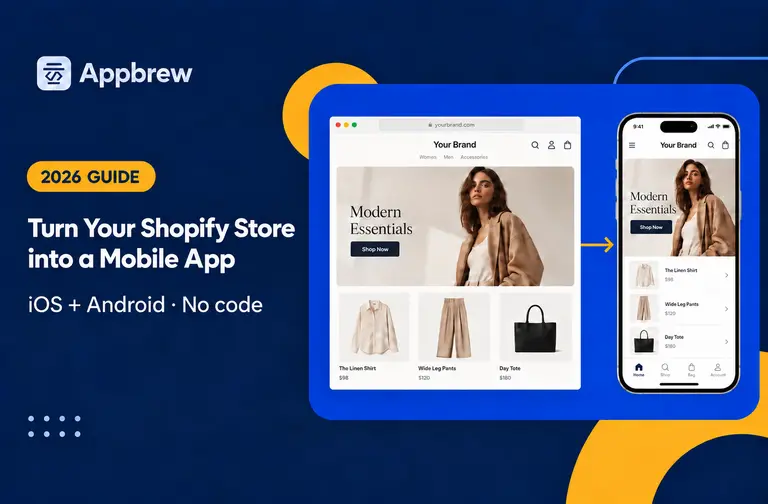
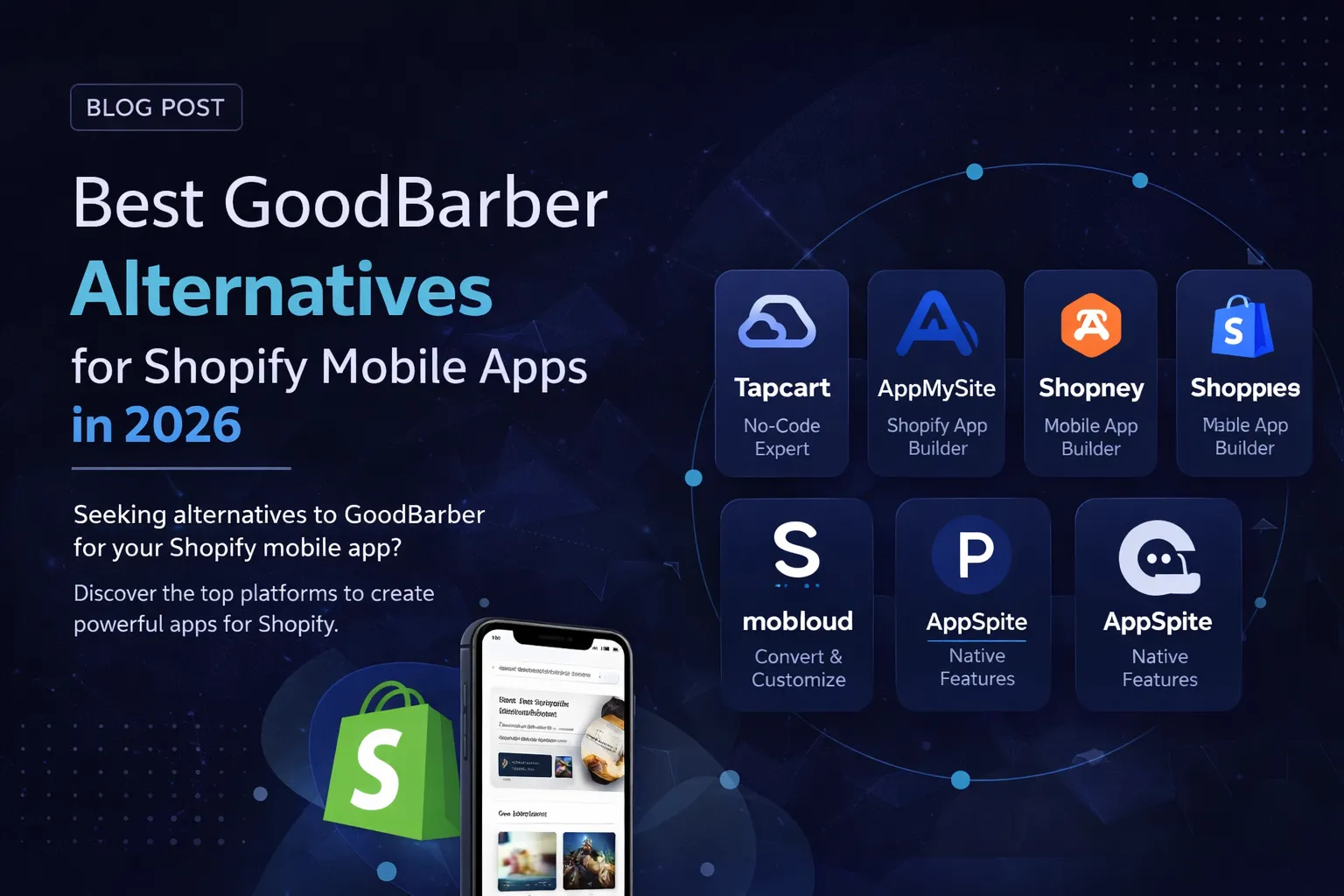
Best GoodBarber alternatives for Shopify in 2026. Compare top mobile app builders and find the best choice for growth-focused brands.
There's a version of the GoodBarber story that makes total sense. You want a mobile app, you don't want to hire developers, and GoodBarber shows up in your search with nice-looking screenshots and a price that doesn't send you into a panic. You sign up. You start building. And somewhere around the third week, you realize the app you're building isn't actually the app you need.
That's the GoodBarber trap for Shopify brands, specifically. Not that the product is bad. It's that it was built for a much wider audience than you, and that gap shows up in ways that cost you real money.
This post is about what to do instead. We'll cover why GoodBarber falls short for serious Shopify ecommerce, which alternatives are actually worth your time, and how to think through the decision before you commit.
The GoodBarber Reality Check for Shopify Brands
GoodBarber is a genuinely capable no-code app builder. It's used across dozens of industries, produces decent-looking apps, and has features that work well for content publishers, event organizers, and small businesses with simple commerce needs. For what it is, it earns its reviews.
The problem is what it isn't: a Shopify-native platform.
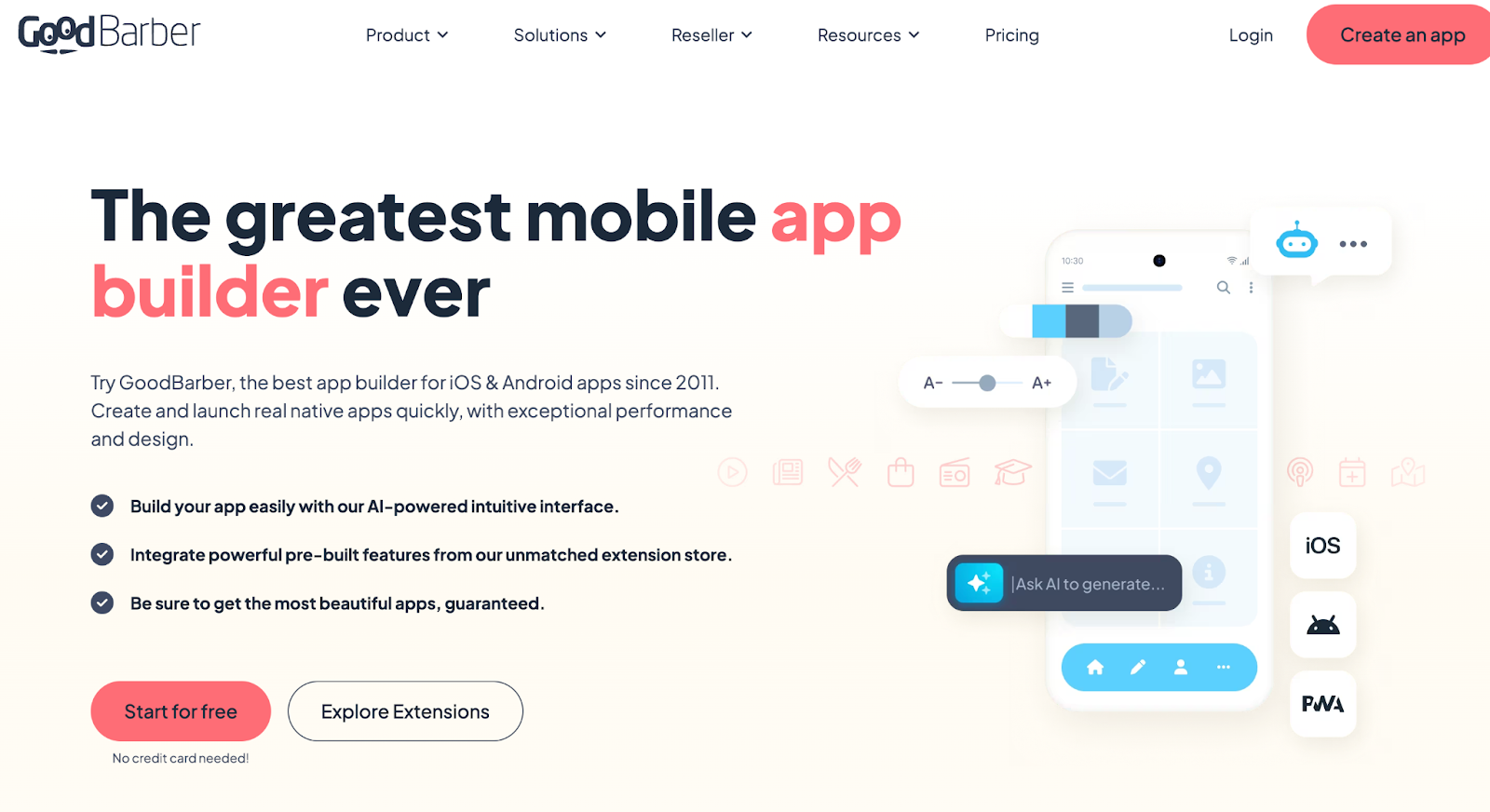
1. The Shopify integration isn't native
Here's the part that catches most Shopify merchants off guard. GoodBarber's eCommerce connector works by pulling in your store via URL. You connect your Shopify or Amazon or Etsy shop, and GoodBarber surfaces the products inside the app. Sounds fine in theory. But there's a line buried in GoodBarber's own documentation that tells you everything you need to know: "checkout must occur in a browser."
Your customer finds a product they like inside your beautifully designed app, and then they get kicked out to a browser window to complete the purchase. That handoff is conversion friction at the worst possible moment. It's the mobile equivalent of telling someone to go outside and come back in through a different door to pay.
That's not a native Shopify app. That's a mobile-friendly frame around a web experience.
2. The pricing tiers hide what you actually need
GoodBarber's eCommerce plans start at $50/month, which sounds accessible. But the Standard plan only gives you a progressive web app (PWA), not a native iOS or Android app you can publish to the App Store and Google Play. For that, you need to be on the Premium plan at $90/month. And features like chat ($20/month), memberships ($49/month), and user groups are additional line items on top of your plan.
By the time you've assembled a feature set that actually competes with what Shopify-native builders include out of the box, you're often paying more and managing more complexity.
3. Support becomes an issue when it matters most
This comes up repeatedly in GoodBarber reviews on SoftwareAdvice and G2. Bugs exist in every platform. What differentiates platforms is how fast they get fixed. Multiple GoodBarber users have described opening urgent support tickets and receiving next-day responses that don't address the problem, with some bugs taking weeks or months to resolve. One reviewer described a single bug costing their business a significant amount of time and customer discontent before it was fixed.
When your app is your primary sales channel and something breaks, "we couldn't replicate the issue" is not a helpful response.
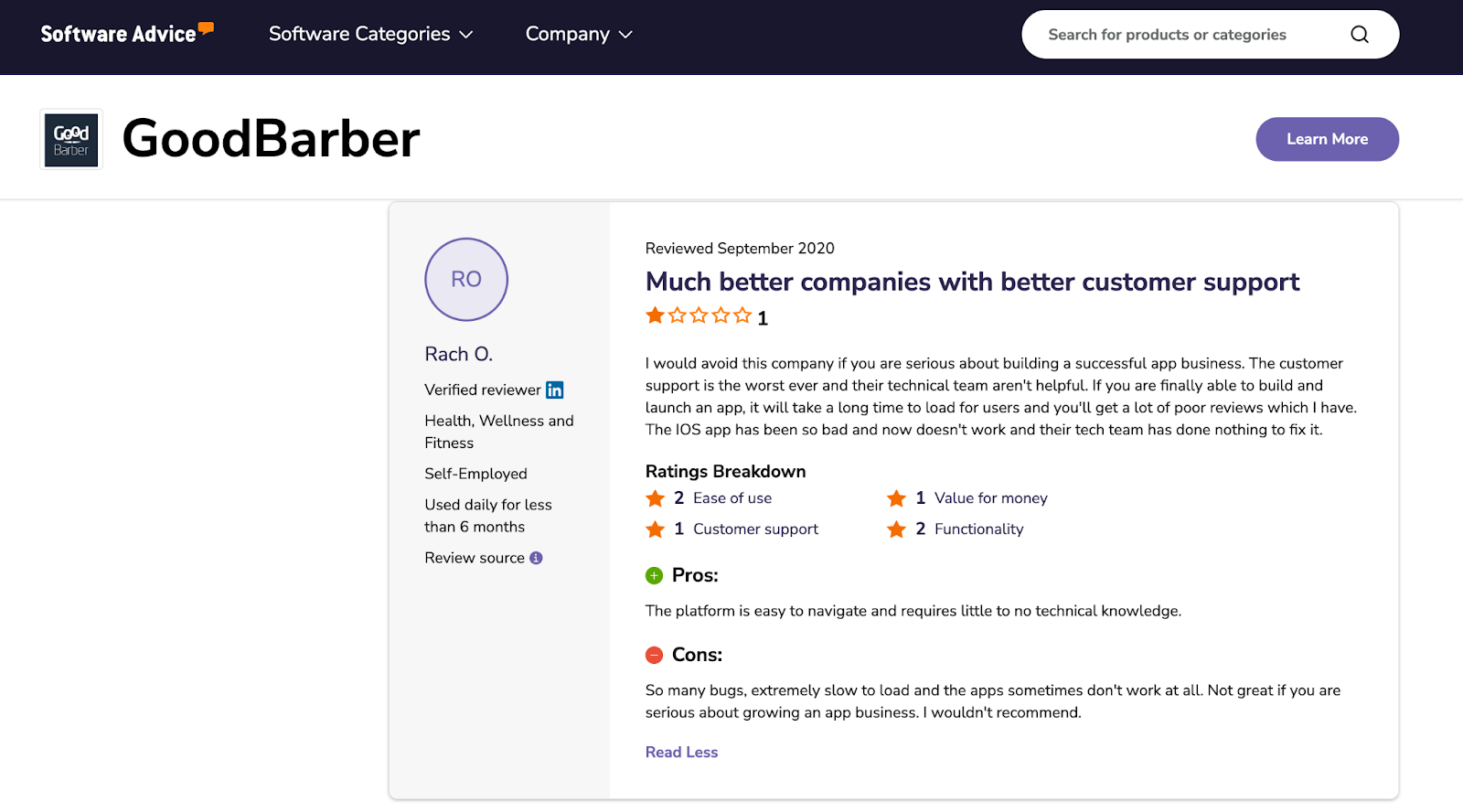
4. The generalist tax
Every feature GoodBarber builds has to work for eCommerce brands, news publishers, fitness studios, travel companies, and every other industry it serves. That's a significant product surface area to maintain. What that means in practice is that the ecommerce-specific depth you need in areas like behavioral personalization, loyalty integration, subscription management, and push notification automation tends to be thinner than you'd get from a platform that only thinks about one problem.
If you're a Shopify brand that wants mobile to be a real revenue channel, you're going to outgrow GoodBarber. The question is just how much you spend learning that lesson.
What Shopify Brands Actually Need from a Mobile App Builder
Before jumping into alternatives, it's worth being clear on the standard. Because different builders solve different problems, and picking the wrong one usually comes down to not knowing what you were actually optimizing for.
For a Shopify brand that's serious about mobile, the baseline requirements look something like this:
- A native Shopify integration where products, pricing, inventory, and orders stay in sync automatically without a URL connector or Zapier workflow.
- Push notifications that go beyond basic broadcast messages, with segmentation, behavioral triggers, and deep links into specific products or collections.
- A design system that lets you build a branded, mobile-first experience rather than a mobilized version of your website.
- Integration with the tools already in your Shopify stack: review platforms, loyalty programs, subscription management, attribution partners, and email marketing tools.
And underneath all of that: app performance that doesn't frustrate people into leaving.
Most GoodBarber alternatives meet some of these requirements. A few meet all of them. Here's how they break down.
The Best GoodBarber Alternatives for Shopify in 2026
Here are the best GoodBarber alternatives you can consider to turn your Shopify store into mobile app:
1. Appbrew
If the criticism of GoodBarber is that it's a generalist tool trying to serve ecommerce, Appbrew is the opposite: a Shopify-only platform that doesn't try to be anything else. It was built for Shopify and Shopify Plus brands that want mobile to be their highest-converting channel, and every product decision reflects that.
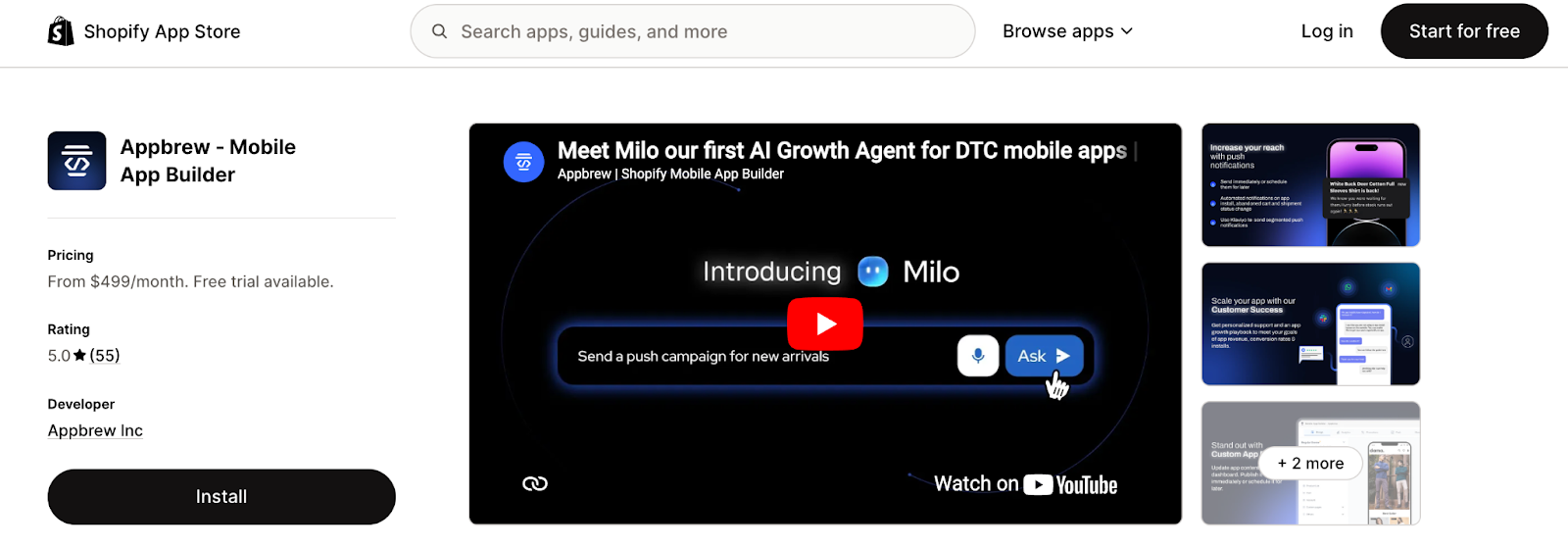
What's actually under the hood
Appbrew builds fully native iOS and Android eCommerce apps on React Native. Not a webview. Not a URL connector. Not a progressive web app. Native code that compiles to each platform, which means the app feels like it belongs on a phone because it was built for one.
Products, collections, pricing, promotions, and customer data sync directly from Shopify in real time. When you update a product in Shopify admin, it updates in the app. No manual sync, no import process, no lag. The app and your store are the same data.
Appbrew comes with sub-1-second load times and small app sizes. Both of those numbers matter: slow apps lose users before they see anything, and large apps see lower install completion rates.
Personalization that feels like it was built for retail
Most app builders support "show different content to different user segments." Appbrew goes several layers deeper than that.
You can vary layouts, banners, product recommendations, promotions, and even app themes by customer segment, not just swap a banner. A customer who's been shopping with you for two years and has placed ten orders sees a different home screen than someone who installed the app after seeing an Instagram ad. The conditions that drive these variations can be built on purchase history, Shopify customer tags, location, browsing behavior, or a combination.
That kind of conditional personalization is what separates apps that feel like an extension of a relationship versus apps that just display a product grid.
Brands using Appbrew report conversion rates around 3x higher than their mobile web store. Some fashion brands on the platform attribute over 60% of their DTC revenue to the app channel. These aren't projections from a pitch deck, they come from actual case studies on Appbrew's site that name the brands and the numbers.
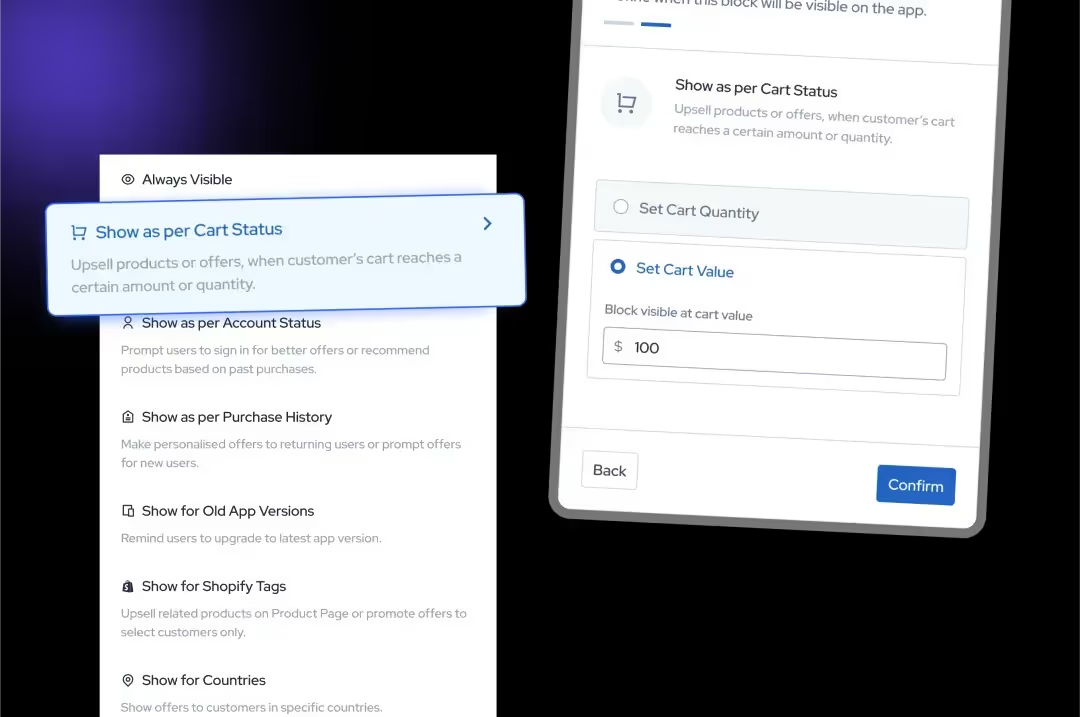
Two AI products that actually change workflows
Appbrew has two distinct AI layers, and they do different things.
Milo is the AI growth assistant for your marketing team. It drafts push notification copy, generates banner creative variations, helps build personalization rules using plain-language descriptions instead of conditional logic trees, and assists with content generation inside the CMS. If you've ever sat in front of a push notification automation builder wondering why you need to understand boolean logic to send customers a discount, Milo is the answer to that frustration.
Concierge is the in-app AI shopping assistant that customers interact with. It handles conversational product discovery, guided shopping flows, and size recommendations. For beauty and skincare brands specifically, there's also an AI skin analyzer that personalizes product recommendations based on customer inputs. These aren't gimmicks. They're functional tools that reduce friction in the buying journey.
Push notifications done right
GoodBarber has push notifications. So does almost every app builder. The difference is in the depth.
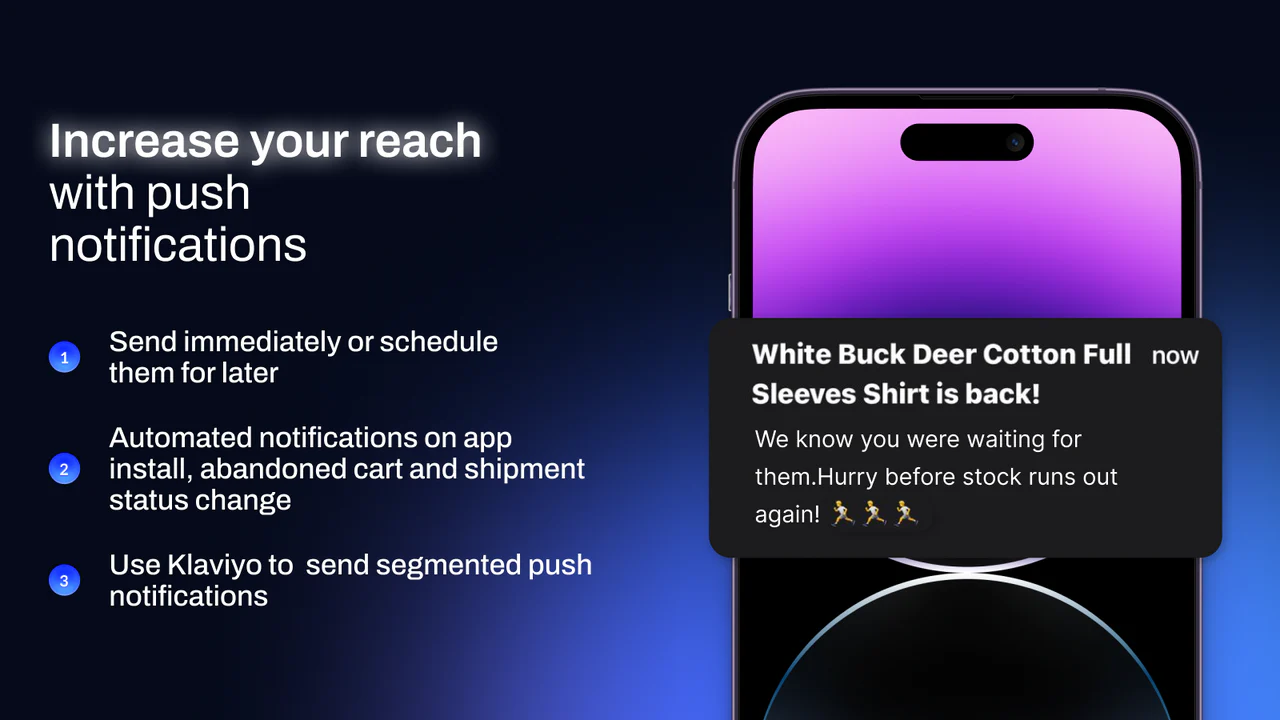
Appbrew gives Pro and Enterprise users unlimited push notifications with no per-message fees and no volume caps. Automated flows cover abandoned carts, back-in-stock alerts, price drops, order tracking updates, re-engagement after inactivity, and welcome sequences for new installs. Every push can deep link directly to a specific product, collection, or campaign landing page, not just the app home screen.
Segmentation covers new vs. returning customers, LTV tiers, product category interest, and behavioral triggers. The analytics layer tracks opens, clicks, and revenue attributed to each campaign so you can see which flows are actually earning their keep.
That's a different category of push capability than most builders offer. It's the difference between a megaphone and a conversation.
The integration layer
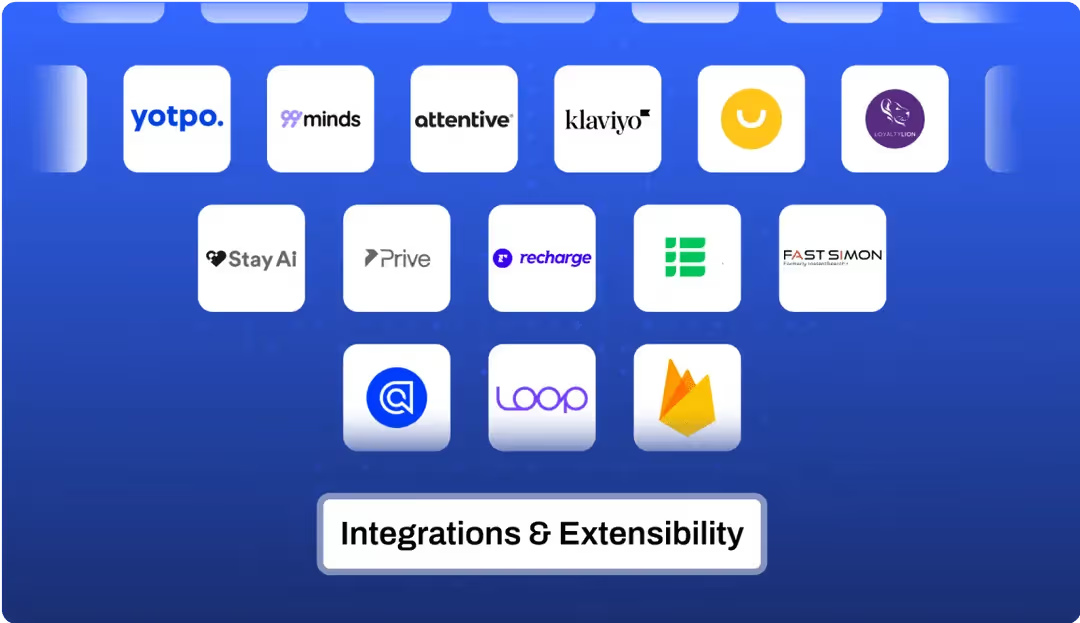
Appbrew connects natively with 100+ Shopify apps. The list includes Yotpo for reviews and loyalty, Recharge, Stay AI, and Prive for subscriptions, AppsFlyer, Adjust, and Branch for mobile attribution, Klaviyo for cross-channel automation flows, Meta and Google SDKs for retargeting and audience syncing, and Stamped for reviews.
None of these are Zapier workflows. They're native integrations maintained as part of the product, which means they're less likely to break when Shopify updates its API or one of the platforms makes a change.
Compare this to GoodBarber's approach, where Shopify integration itself goes through an automation layer, and the depth of third-party integration for ecommerce-specific tools is limited.
What implementation actually looks like
Appbrew handles the initial implementation. You don't spend three weeks inside a drag-and-drop builder trying to recreate your brand identity from template blocks. The team builds the app based on your brand guidelines and requirements, which is how growth-stage brands get from decision to live app in days rather than months.
After launch, the dashboard is built for marketers, not developers. A non-technical person can update banners, schedule seasonal themes, configure push campaigns, and review analytics without filing a ticket.
The price question
Pro plans start at $599/month with a 14-day free trial. Enterprise offers custom pricing for Shopify Plus brands and includes custom app design, metafield-based content blocks, native subscription management, multi-currency support, user referral rewards, a dedicated account manager, and a direct Slack channel with the Appbrew team.
That's a higher sticker price than GoodBarber. It's also a different category of product. When mobile is generating 60% of your DTC revenue, the platform that powers it shouldn't be evaluated on monthly subscription cost alone.
Book a demo with Appbrew to see the product against your specific stack.
2. Tapcart
Tapcart is Shopify-native, well-designed, and one of the more mature players in this space. It's a credible step up from GoodBarber for brands that want a polished storefront app with solid Shopify integration and reliable push notifications.
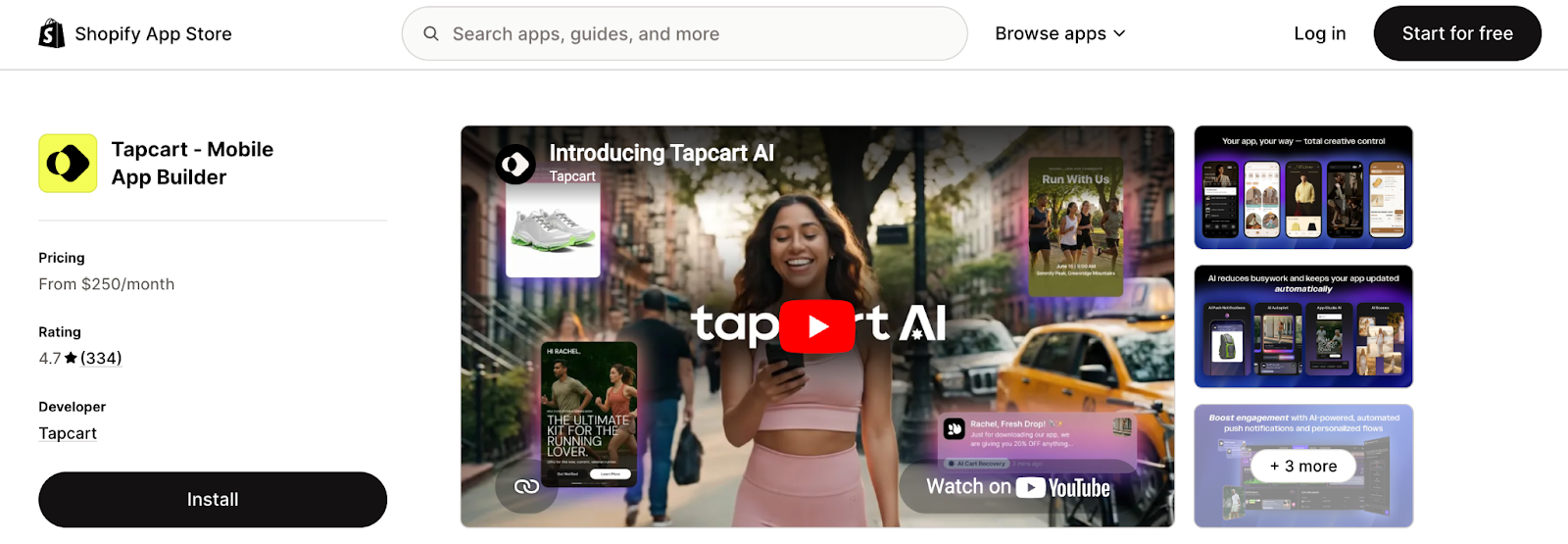
Where Tapcart earns its reputation: the design system is genuinely good. The drag-and-drop blocks look clean, the Shopify sync is reliable, and the platform has been around long enough to have worked out most of the major bugs. For a brand that primarily needs an app to serve an existing customer base and run promotional push campaigns, Tapcart delivers.
The gaps start to show when you push into advanced territory. AI-powered personalization is marketed more prominently than the actual feature depth suggests. Deep subscription management requires integrations that need configuration. And enterprise pricing can reach $2,000/month or more before you've unlocked the full feature set. For brands that need heavy personalization, AI-driven growth, or deep subscription tooling, there's a ceiling.
Tapcart is a good choice for mid-size Shopify brands that want a clean app with strong Shopify integration and don't need the most advanced personalization or AI layer.
3. Shopney
Shopney sits at the more accessible end of the market. Plans start around $149/month, which makes it one of the cheapest credible options for Shopify brands that want a native app without GoodBarber's Shopify integration limitations.
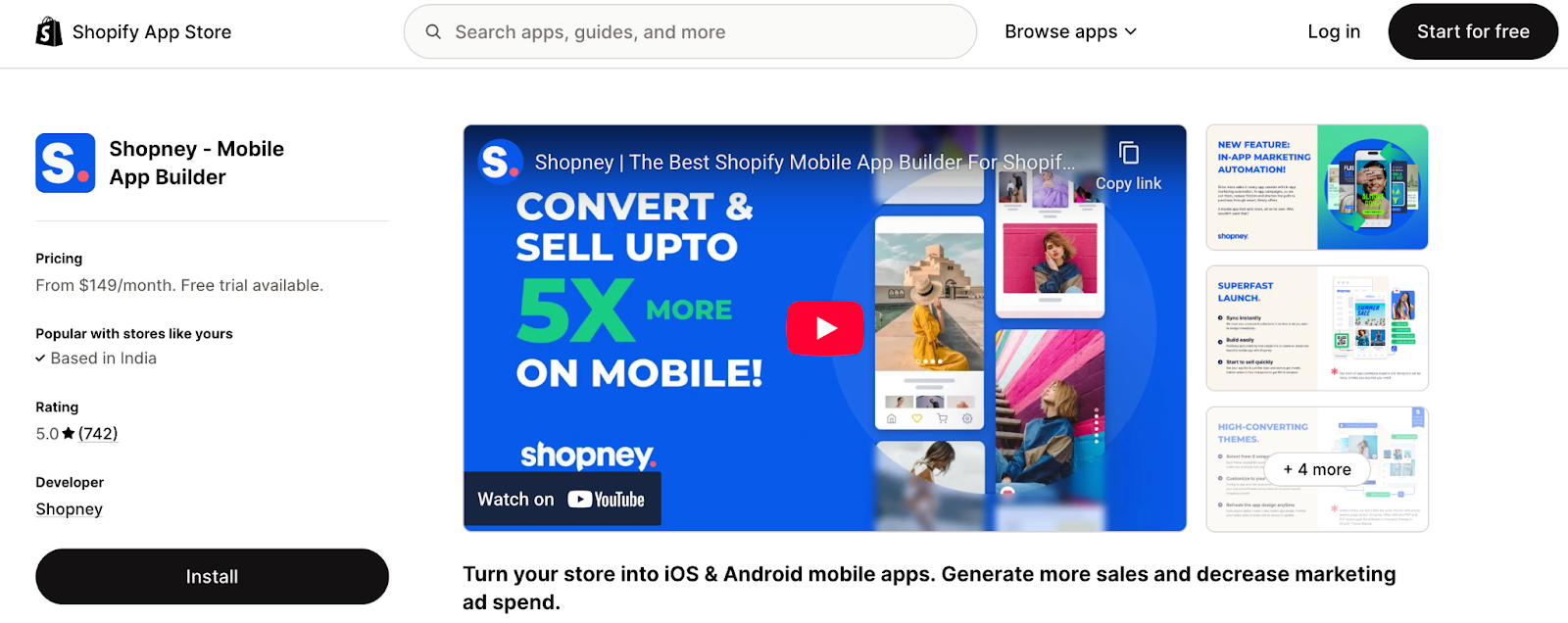
The core product covers what smaller brands need: real-time Shopify sync, push notifications, an in-app chat option, and a drag-and-drop builder. The design quality is reasonable. The Shopify integration actually works the way it's supposed to, without the browser checkout redirect issue you get with GoodBarber.
The limitations show up quickly for scaling brands. Personalization options are basic. AI features are minimal. The integration library with loyalty, subscription, and attribution tools is thinner than Appbrew or Tapcart. And the support experience gets mixed reviews.
Shopney is a reasonable starting point if you're testing whether a native app moves the needle for your store. It's not where you want to be when mobile is generating a meaningful share of your revenue.
4. Plobal Apps
Plobal Apps takes a different angle: it focuses more heavily on analytics and conversion optimization than most builders in this price range. The platform gives marketing teams good visibility into what's happening inside the app, with detailed funnel analytics, push performance data, and revenue attribution broken down by campaign.
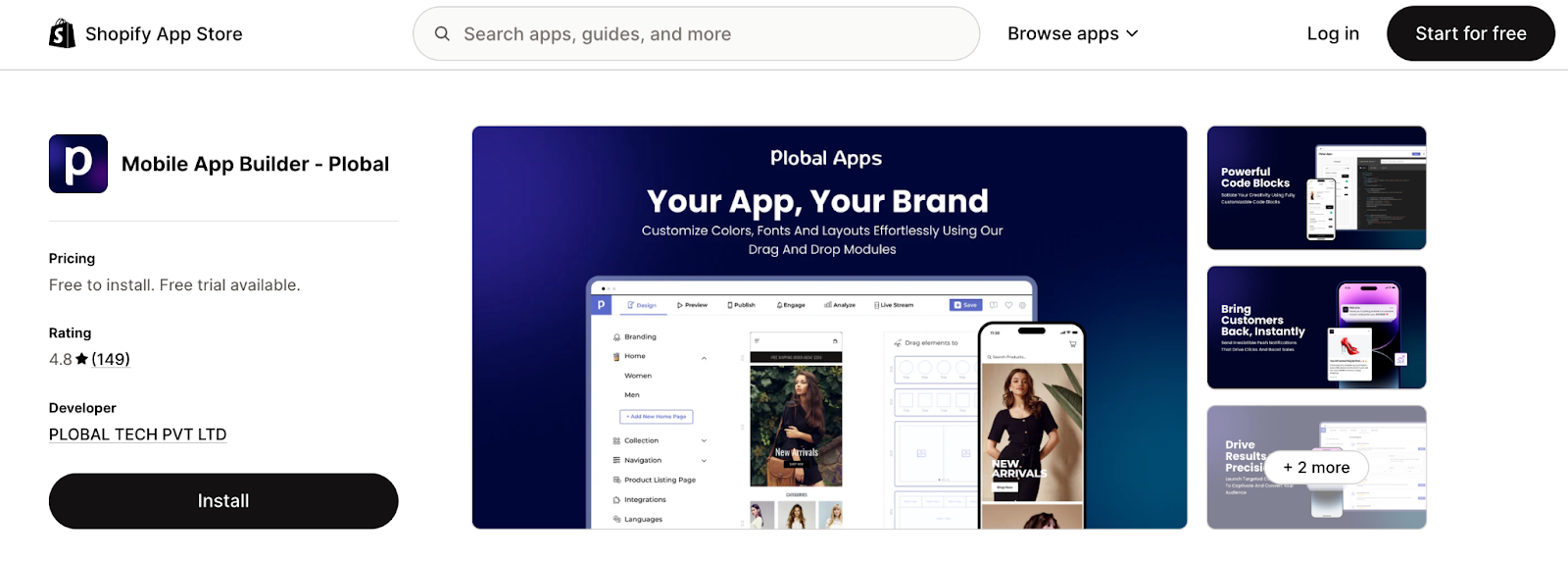
It integrates with Klaviyo, Recharge, Yotpo, and the key Shopify apps. The drag-and-drop builder has solid customization options. Pricing starts at $199/month, with more capable tiers between $499 and $1,199/month.
The trade-off is in AI maturity and the depth of behavioral personalization. If your team wants to systematically vary the app experience based on customer segments using AI-generated recommendations, Plobal is less developed in that direction than Appbrew. For brands where analytics and marketing automation are the primary drivers and deep personalization is secondary, Plobal is a strong option.
5. MobiLoud
MobiLoud is worth understanding before you rule it out, because it solves a genuinely different problem.
Where GoodBarber asks you to rebuild your store inside its system, and Appbrew builds a native app from your Shopify store's data, MobiLoud converts your existing Shopify web experience into an app. Your website becomes the app, with native push notifications added. Any change you make to your website carries over to the app automatically. MobiLoud handles the engineering and app store submission, typically getting brands live within four weeks.
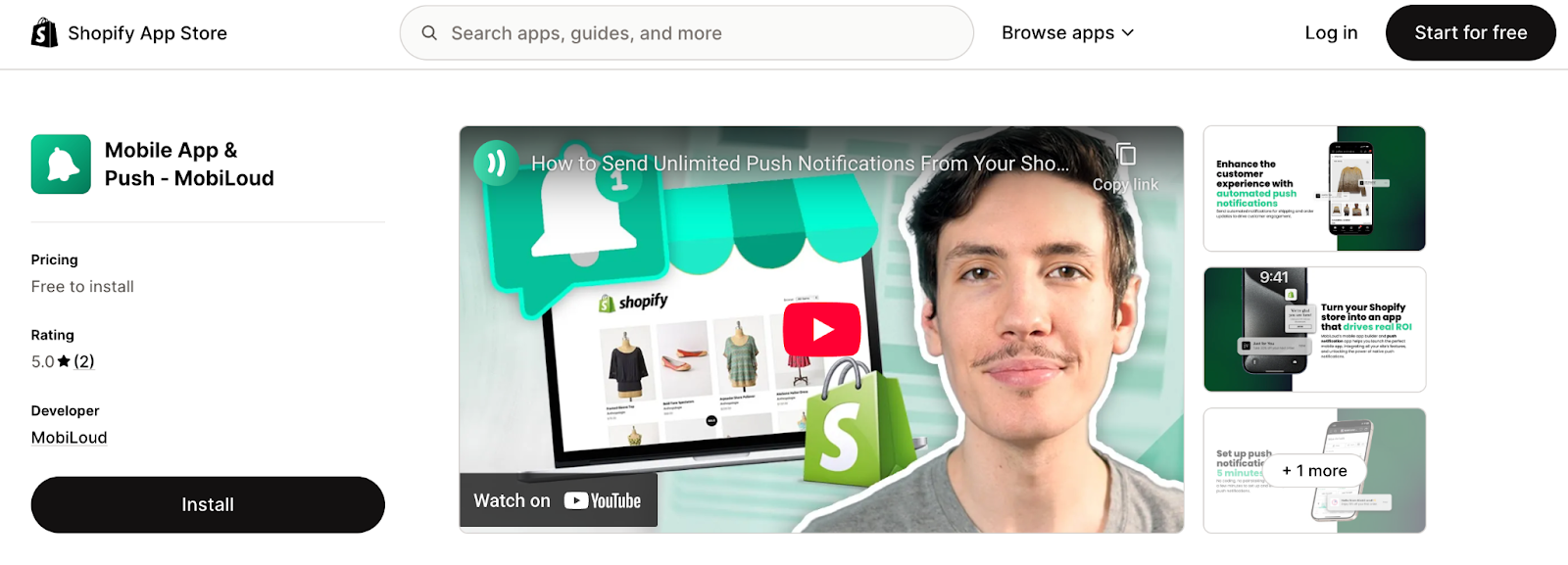
This is valuable for specific situations. If you've invested heavily in your Shopify theme, have a complex custom checkout flow, or have integrations that are hard to replicate in a native app builder, MobiLoud preserves all of that without rebuilding. It's also a faster path to launch if your mobile website is already good.
The limitation is the ceiling. Your app is bounded by what your website can do. You don't get the native performance characteristics, mobile-first interaction patterns, or commerce-specific features that a native builder like Appbrew provides. For brands where the goal is mobile-native performance and advanced push retention, MobiLoud is the wrong architecture. For brands where web parity and speed to market are the priority, it's genuinely compelling.
6. Vajro (now Superfans)
Vajro, now operating as Superfans, starts at $99/month and occupies a niche around community features and live video selling. If your brand's growth engine involves live shopping events, creator-led selling, or community features, Superfans has differentiated capabilities that most other builders on this list don't offer in the same depth.
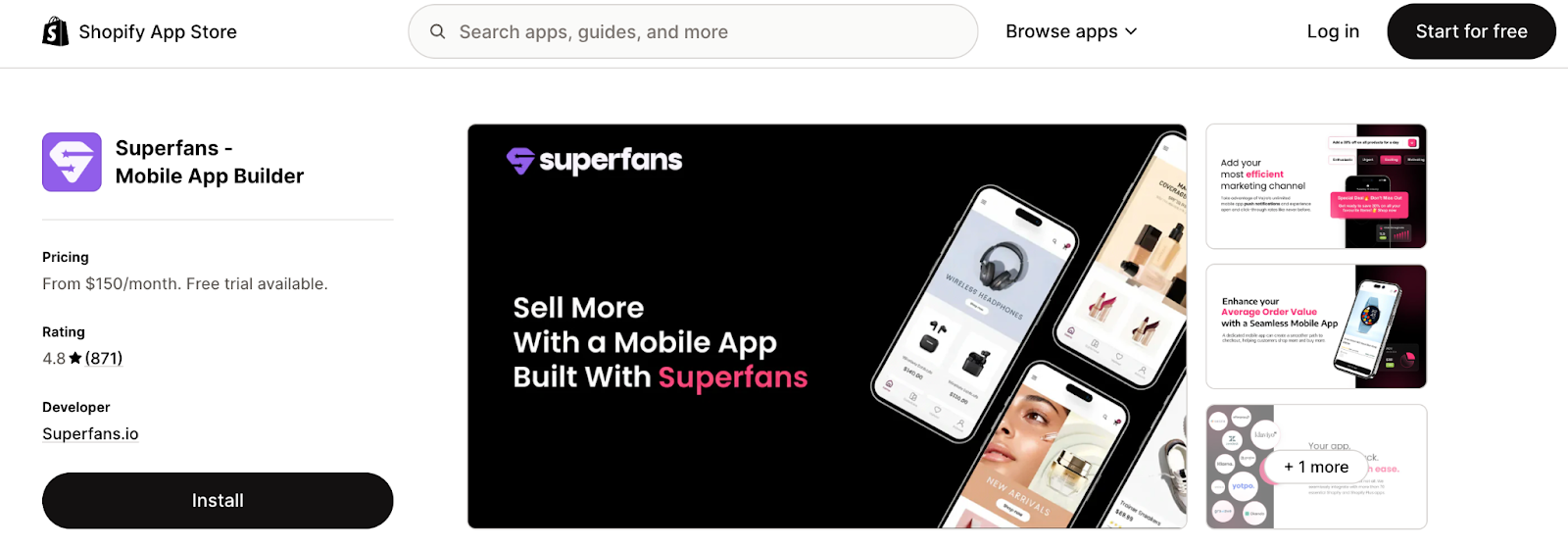
The ecommerce fundamentals are solid: real-time Shopify sync, push notifications, and standard app design tools. Where it's lighter is in deep personalization, AI features, and the analytics layer you'd want to systematically optimize a mature mobile channel.
It's a reasonable option for brands at earlier growth stages, particularly those with a strong social or creator-led commerce angle. For brands focused on retention mechanics, systematic personalization, and LTV optimization, the feature set feels constrained.
7. StoreLab
StoreLab is newer to the Shopify app builder market and targets brands that want managed support alongside the app itself. Plans start around $199/month and include ongoing expert support for push notifications, combined with targeted Meta ads as part of their growth service.
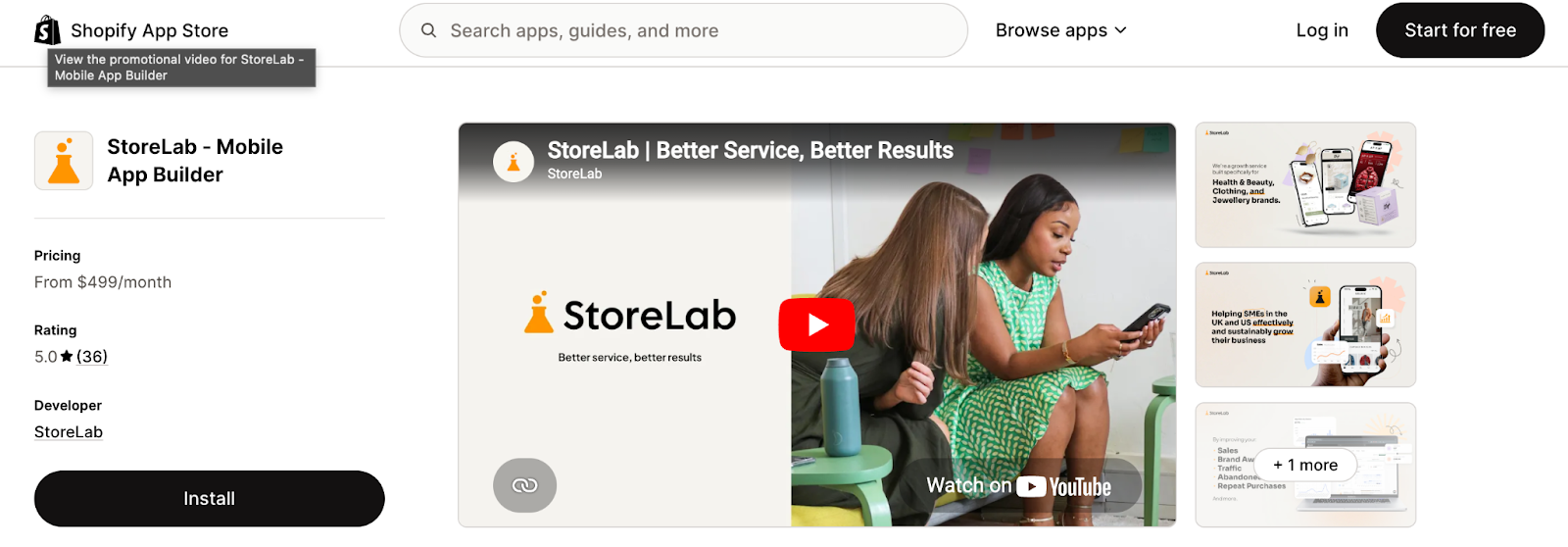
The no-code builder is solid for its price point and has attracted positive feedback for ease of use. The managed support model is useful for small teams that don't want to operate the app entirely themselves.
The gaps are in advanced features: personalization options are basic, AI features are limited, and the integration library is narrower than more established players. StoreLab works well for brands earlier in their mobile journey that value hand-holding over feature depth.
How to Actually Choose a GoodBarber Alternative
Most comparison guides give you a list of features and leave you to figure out what matters. Here's a more useful frame.
Ask what you're replacing first
GoodBarber's checkout-in-a-browser approach means you're currently delivering a fragmented purchase experience. Any Shopify-native builder solves that. The question after that is what you need on top of native Shopify integration. Personalization? Subscriptions? Deep analytics? AI-driven growth? Your answer to that question points you to a shortlist.
Match the architecture to your goal
If you want the fastest path to a functional app that mirrors your Shopify store, MobiLoud or Shopney get you there quickly. If you want mobile to genuinely outperform your website, you need a native app with a personalization layer, which means Appbrew or Tapcart. If you have a strong live selling strategy, Superfans is worth serious consideration.
Don't optimize the monthly plan, optimize the total cost
GoodBarber at $90/month looks cheaper than Appbrew at $199/month. But GoodBarber requires more internal time to configure and maintain, has a shallower feature set that may require additional tools or workarounds, and produces a less capable mobile experience that may convert worse. The platform that generates more revenue at lower operational overhead is the cheaper platform, regardless of what the monthly invoice says.
Actually test the Shopify integration
Before committing to any builder, ask for a live demo specifically of how Shopify products, pricing, and checkout work inside the app. Watch the purchase flow from product detail page to order confirmation. If there's a browser handoff anywhere in that flow, you've found your first red flag.
Ask about what happens when something breaks
Every platform has bugs. The meaningful question is how fast they get fixed and what your recourse is. GoodBarber's support issues are well-documented in public reviews. Ask prospective vendors for their average response time, their bug resolution process, and whether you get a dedicated contact.
Check integration depth, not just breadth
Most builders will tell you they integrate with Klaviyo and Yotpo. What that can mean in practice ranges from a full bidirectional data sync that powers behavioral targeting to a basic webhook that fires when someone places an order. Ask specifically what data flows between the app and each key integration.
The Bottom Line
GoodBarber is a fine product for businesses it was designed for. Shopify ecommerce brands that want mobile to be a serious revenue channel aren't really in that group.
The checkout-in-browser architecture, the generalist feature set, the gap between marketing claims and actual Shopify integration depth: these aren't minor inconveniences you can work around. They're structural limitations that affect how well your app converts and retains customers.
Of all the alternatives here, Appbrew is the one that was built with the specific problem of Shopify mobile commerce in mind. Not as one use case among many, but as the entire product thesis. Native app performance, a personalization layer that actually adapts the experience by customer, an AI growth assistant that changes how marketers work, and a push notification engine that's been designed around retention rather than broadcast messaging.
If you're past the point of testing whether an app is worth it and you're now trying to make mobile a channel that meaningfully contributes to revenue, Appbrew is where that conversation starts.
See Appbrew in action with a live demo and a 14-day free trial on the Pro plan.