


.webp)
.webp)
Discover why a mobile app is the best channel for eCommerce brands to build lasting customer trust and community.
Most DTC brands spend years building a social following, then watch their reach drop to 3% overnight when an algorithm changes. The brands that survive these cycles have one thing in common: they have moved the relationship to a place they own.
Social media is noisy. Email is passive. SMS is transactional. None of these channels were designed for the community; brands just defaulted to them because they were accessible. The result is a lot of activity with very little belonging.
The mobile app is different. It's the only channel that combines identity, personalization, exclusivity, and two-way engagement in one owned surface, and that combination is exactly what real community requires.
This post breaks down why the app is structurally better for community building than every alternative, and what that looks like in practice for ecommerce brands.
TL;DR:
- Social media, email, and SMS all have roles in ecommerce but none of them are built for community
- The app is the only channel that combines owned identity, real-time personalization, and two-way engagement in one surface
- Persistent identity, behavioral push, and in-app exclusivity are what separate the app community from every alternative
- Brands serious about retention and LTV need to stop treating their app as a mobile storefront and start treating it as community infrastructure
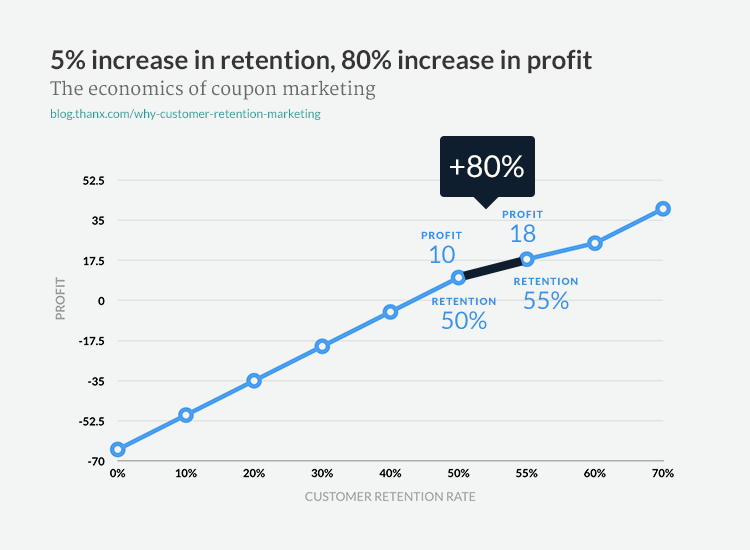
- Track repeat purchase rate, referral rate, and review submission rate separately for app users those are your real community health metrics
Why Existing Channels Fall Short for Community Building
Brands aren't failing at community because they lack effort. They're failing because they're using the wrong infrastructure. Here's why each default channel falls short:
Social Media: High Reach, Low Ownership
Follower count is not a community. It's an audience on borrowed land, and the platform decides how much of it you can reach, when, and at what cost.
Organic reach across Instagram, TikTok, and Facebook has been declining for years. Algorithm changes consistently deprioritize repetitive brand content. And even when your posts do reach people, you get no customer data, no purchase context, and no ability to personalize. You're broadcasting into a feed you don't control, to an audience you don't own.
A brand with 500K Instagram followers and 2% engagement is not a community. A brand with 50K app installs, push opt-ins, and a 40% repeat purchase rate is.
Email: Passive and One-Directional
Email reaches customers when they're at a desk, buried in an inbox, with no awareness of where they are in the purchase journey. The channel is scheduled, not reactive, and that gap matters.
Average ecommerce open rates sit around 20–25% and are declining. More importantly, email cannot deliver real-time behavioral triggers, community feeds, or interactive experiences. A weekly newsletter with discount codes and new arrivals is useful. It is not a brand environment.
Compare that to a push notification fired the moment a wishlist item goes on sale, landing the customer inside an app where they can review, share, earn points, and browse. Email retains its role in lifecycle sequences. It cannot replace a live, two-way brand surface.
SMS: Useful but Thin
SMS has high open rates because it's intrusive, not because it's relational. That's an important distinction. Customers open texts quickly they also opt out quickly when brands overuse the channel.
The surface area is simply too limited. No imagery, no interactivity, no browsing context. SMS cannot host community content, drive product discovery, or carry social proof. A brand sending four generic discount codes a month via SMS isn't building anything; it's burning goodwill.
SMS works best as a trigger, not a destination. A well-timed flash-sale text that drops customers directly into a relevant in-app experience is powerful. That power comes from where it lands people not from the message itself.
{{cta}}
Why the App Is Structurally Built for Trust and Community
This isn't about having a slicker interface. It's about what the app enables that no other channel can replicate. Here's why the structure of a mobile app makes it the strongest surface for trust and community in ecommerce:
1. Persistent Identity Creates Real Relationships
Every app session is attached to a named, logged-in customer. The brand knows who they are, what they've bought, what they've browsed, and what they care about. That's not a small thing; it's the foundation of every meaningful relationship.
Logged-in state enables personalization at scale: tailored feeds, relevant recommendations, real-time loyalty status. But there's something more fundamental happening. A customer who installs an app has already cleared the intent bar. They chose the brand deliberately, not because an ad interrupted their scroll.
Identity also enables reciprocity. Instead of generic "thanks for shopping" messages, the brand can reward the right customer for the right behavior at the right moment. Anonymity kills community. An app ends it.
2. Owned Push Is the Highest-Leverage Communication Channel
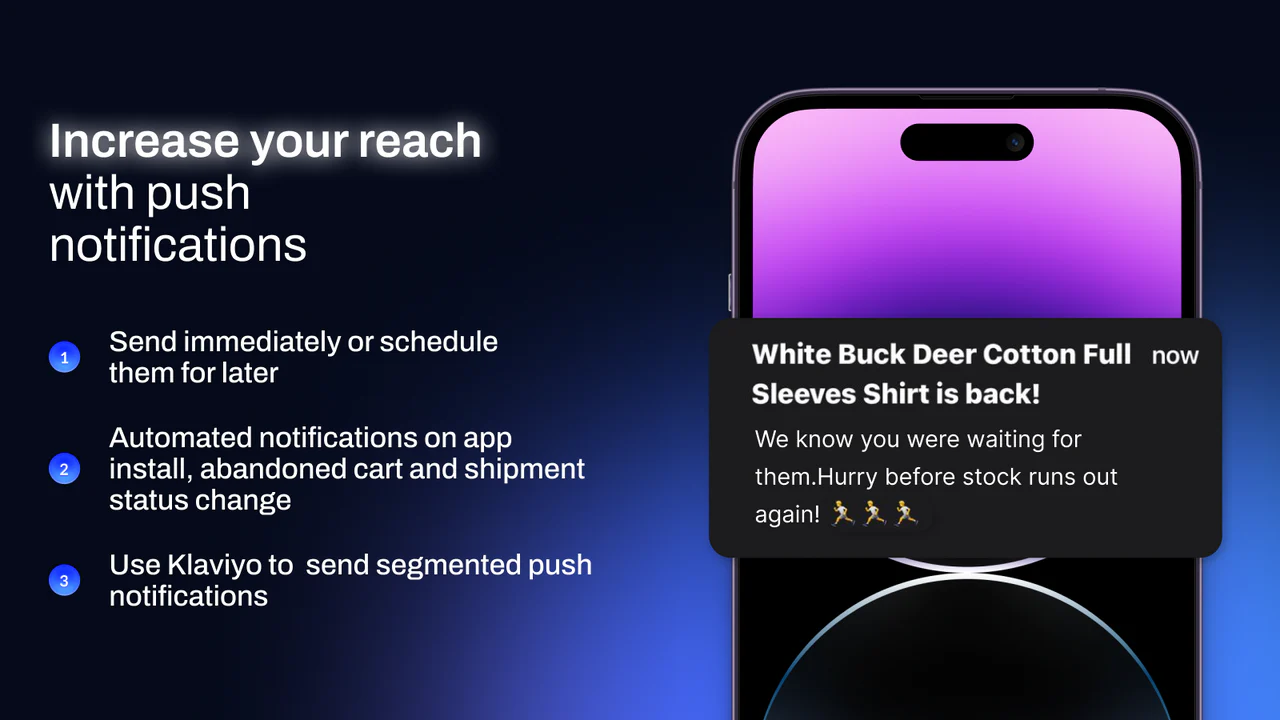
Push notifications sent to opted-in app users average 7-10x the open rate of email, and they land inside the brand's own environment, not a crowded inbox. That combination is what makes push irreplaceable.
The difference between weak and strong push comes down to context:
- Weak: A blanket "Don't miss our sale" push sent to all users
- Strong: "Your saved item just dropped to [price]" sent to a wishlist segment, landing the customer inside a personalized product page
Rich push takes this further by delivering images, CTAs, and product carousels in a single notification. Behavioral segmentation makes it precise: a customer who browses the same category three times gets a different message than a lapsed buyer who hasn't opened the app in 60 days. The channel is only as powerful as the data behind it, and the app owns both.
3. Exclusivity and Insider Access Drive Belonging
Community forms when people feel they have access that others don't. The app is the natural home for that. App-only launches, early access drops, loyalty tier rewards, gated founder content, these aren't gimmicks. They're the mechanism that makes app users feel recognized rather than just targeted.
Beauty and fashion DTC brands have used this well: an early-access drop sent only to top-tier loyalty members in the app doesn't just drive revenue, it creates a category of customers who identify with the brand, not just the product. The behavioral output is visible. App-first exclusivity creates higher open rates on subsequent pushes, stronger repeat-purchase frequency, and word-of-mouth driven by a genuine insider feeling, not by a referral incentive.
4. In-App Social Features Reduce Dependency on Third-Party Platforms
Reviews, referrals, wishlists, loyalty programs, this is community infrastructure. It doesn't need to live on Reddit or Instagram if the app is built to hold it. Consider the contrast.
A brand relying on a Facebook Group for community owns none of it, can't observe behavior, can't monetize it, can't integrate it with purchase data. An in-app review wall paired with a loyalty leaderboard does something different: it creates visible social proof and low-stakes competition among real customers, built directly into the shopping experience.
Post-purchase UGC prompts, referral tracking with in-app rewards, and wishlist sharing as a native social behavior, none of these require the customer to leave the brand's environment or take an extra step. That's the point. The goal is to make community activity a byproduct of normal shopping behavior, not a separate task the customer has to do somewhere else.
What This Looks Like in Practice: Building Your App Community
Any trust, community, or eCommerce retention strategy is only useful when it translates into action. Here are four concrete moves ecommerce brands can make immediately to start building real community through their app:
- Set an install goal tied to LTV, not vanity metrics: Track what app users spend versus non-app users over 90 days. That delta is your business case, and it's usually significant enough to shift budget priorities.
- Create one app-exclusive experience in the next 30 days: An early access window, a member-only product, or a push-triggered referral campaign. It doesn't need to be elaborate; it needs to be exclusive. That's what signals to users that the app is worth keeping.
- Audit your push strategy: If you're sending the same message to every subscriber, you're treating push like email. Segment by recency, category affinity, or loyalty tier and watch engagement rates respond accordingly.
- Replace one social-first initiative with an in-app equivalent: Move your product review asks, referral prompts, or UGC requests inside the app flow where purchase context is live. Customers are far more likely to engage when they don't have to go elsewhere to do so.
- Instrument your community health metrics: Track repeat purchase rate, referral rate, and review submission rate separately for app users. These numbers tell you whether you're building community or just building installs.
Conclusion
Brands that build real communities don't do it on platforms they don't own. The app is the only channel that gives a DTC brand full identity, full delivery, and full context simultaneously and that combination isn't replicable anywhere else.
For brands serious about LTV and retention, the app isn't just another channel. It's the channel that makes the others work better. If your app is currently functioning as a mobile storefront and nothing more, you're leaving the most defensible growth lever in ecommerce untouched.
Book a demo with Appbrew to see how leading DTC brands are turning their apps into community infrastructure.
FAQs
What does "community building" actually mean for an ecommerce brand?
It means creating an environment where repeat customers feel recognized, engaged, and rewarded beyond transactions. In ecommerce, it typically shows up as loyalty programs, referral behavior, UGC, and high repeat purchase rates.
How is an app different from a loyalty program for building community?
A loyalty program is a feature. An app is the environment that hosts it, along with every other touchpoint: browsing, purchasing, reviewing, and referring. Community compounds when these behaviors happen in one's own place.
Do smaller DTC brands need an app, or is this only for large brands?
App community strategy works at any scale. What matters is install intent and engagement quality, not total user count. A 10K-user app with strong push opt-ins and loyalty participation outperforms a 100K social following with passive consumption.
How do I measure whether my app is actually building community vs just driving transactions?
Track repeat purchase rate, referral rate, review submission rate, and push opt-in rate separately for app users. If these numbers exceed those of your non-app customer cohort, the app is functioning as community infrastructure.
Isn't social media still important for DTC community building?
Social media matters for discovery and acquisition. It is not a reliable infrastructure for a retention-stage community. Brands that use both well treat social as a top-of-funnel feeder and the app as the place where the relationship actually lives.