


.webp)
.webp)
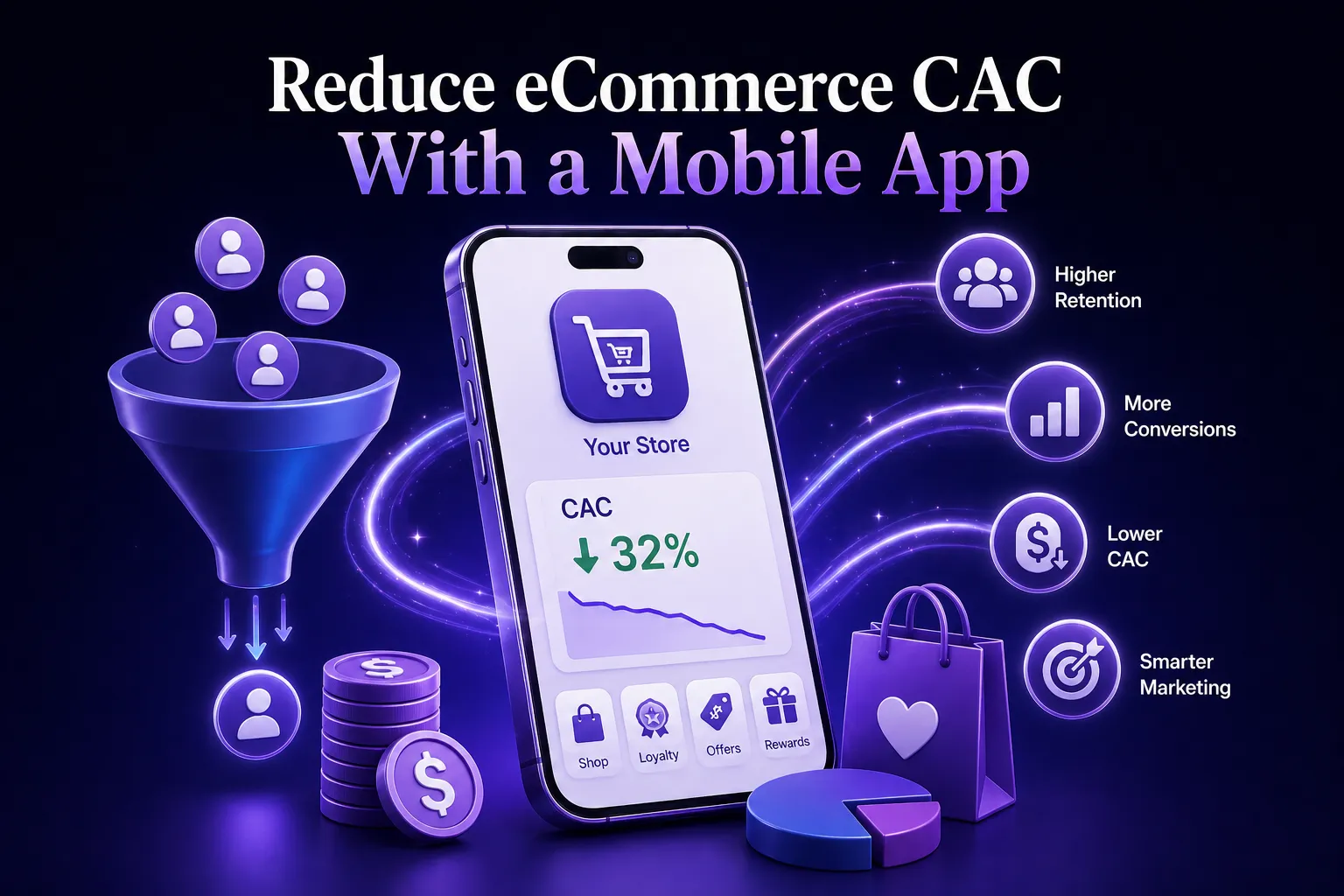
Learn actionable strategies, including using a mobile app, to reduce your eCommerce Customer Acquisition Cost (CAC) and boost profitability.
Spend more on Meta. Test a new creative. Hire a better media buyer. For most DTC brands, that's what reducing CAC looks like in practice. The budgets shift but the number doesn't.
The actual problem is more uncomfortable: paid channels are being used to reach customers who already bought from you. Every repeat purchase that runs through Meta or Google is money spent reacquiring someone you already paid for once.
A mobile app doesn't fix your ad account. What it does is give you a channel where existing customers keep buying without you paying for them again. Push notifications, app-exclusive offers, higher native conversion rates vs mobile web, that compounds over time.
Paid spend can go back to doing what it's supposed to do.
This post covers how that shift works and the specific strategies brands are using to make it happen.
Why eCommerce CAC Keeps Rising
Before fixing the problem, it helps to understand exactly what's driving it.
The paid channel dependency trap
Most DTC brands are running the same loop without realising it. Pay to acquire a customer. Customer buys once. Customer goes quiet. Pay again to bring them back.
The loop has always been inefficient. What's changed is the cost of running it.
- CPMs on Meta and Google have climbed steadily as more brands compete for the same eyeballs.
- iOS privacy changes broke the attribution models brands used to rely on, so spend that used to be optimised is now partly guesswork.
- The platforms are more expensive and less precise than they were three years ago.
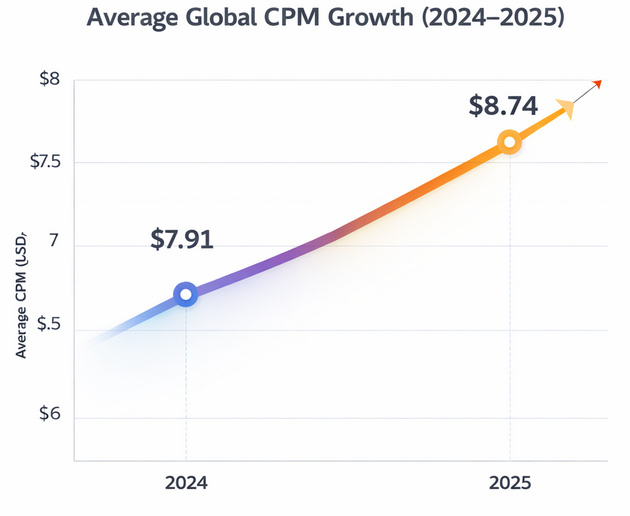
What most brands don't account for is that a significant chunk of their acquisition spend isn't actually acquiring anyone. It's reacquiring people who already bought from them. That's not a media buying problem. It's a retention problem showing up in the wrong line of the budget.
The LTV:CAC ratio is the real metric to fix
Cutting ad spend is the obvious response to rising CAC. It's also rarely the right one. Pull back too hard and revenue drops faster than costs.
The more useful frame is LTV:CAC. If a customer spends more over their lifetime, or buys again without needing a paid touchpoint to get there, the acquisition cost becomes easier to absorb. CAC doesn't have to fall if LTV rises fast enough.
That's what a mobile app actually changes. Not the cost of the first purchase, but how many purchases follow it.
How a Mobile App Reduces eCommerce CAC
The app doesn't replace your acquisition channels, it makes every acquisition go further.
1. Push notifications replace paid retargeting
Every time you send an SMS, you pay for it. Every retargeting impression on Meta costs money. For brands running these channels at scale, the per-message costs add up fast, and the returns diminish as audiences get fatigued.
Shopify mobile app push notifications change that math. Once a customer has your app installed, you can reach them directly at near-zero marginal cost. No per-send fees, no CPM, no algorithm deciding whether your message gets through.
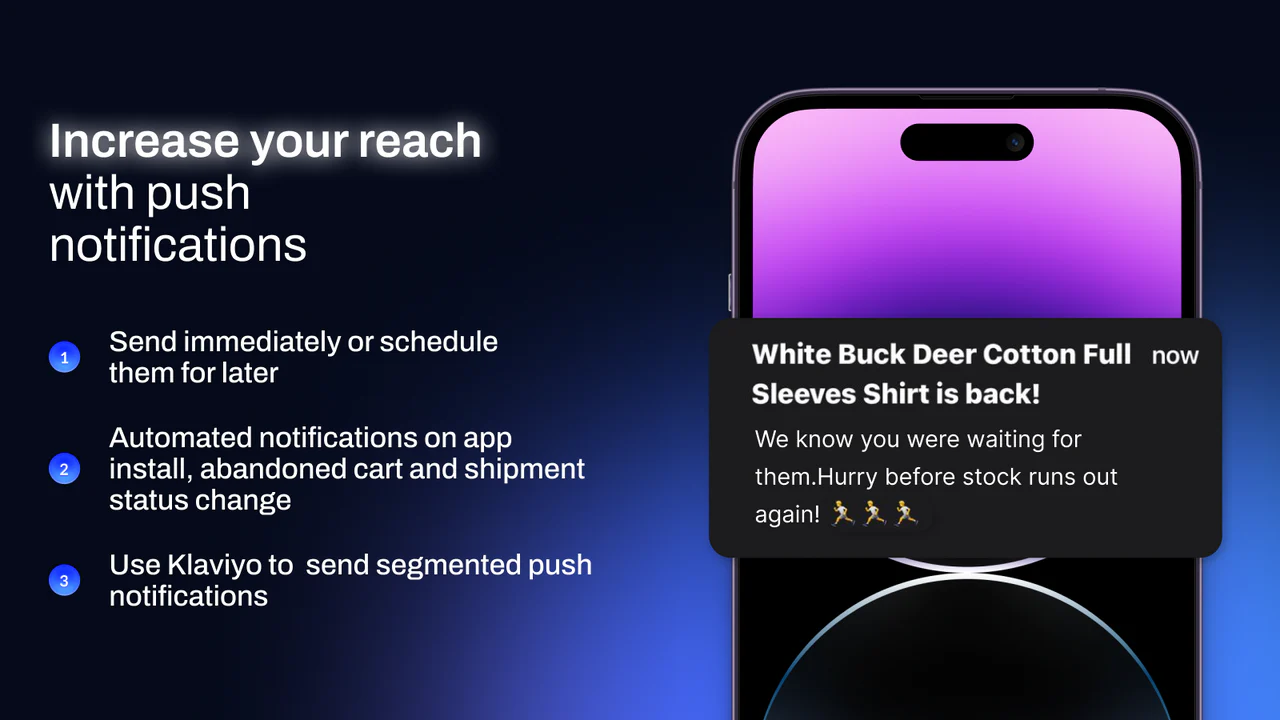
Groove Life (app built using Appbrew) figured this out and built their retention model around it. By shifting users from paid SMS and email to push notifications, they moved repeat purchase conversations onto a channel that costs almost nothing to run. Their app conversion rate outperformed the web. So did AOV. The economics improved not because they spent less acquiring customers, but because keeping those customers stopped costing as much.
Appbrew includes unlimited push notifications across its plans, with event-based automation for things like abandoned cart, back-in-stock, and re-engagement flows built in.
2. Higher conversion rate means more return on every install
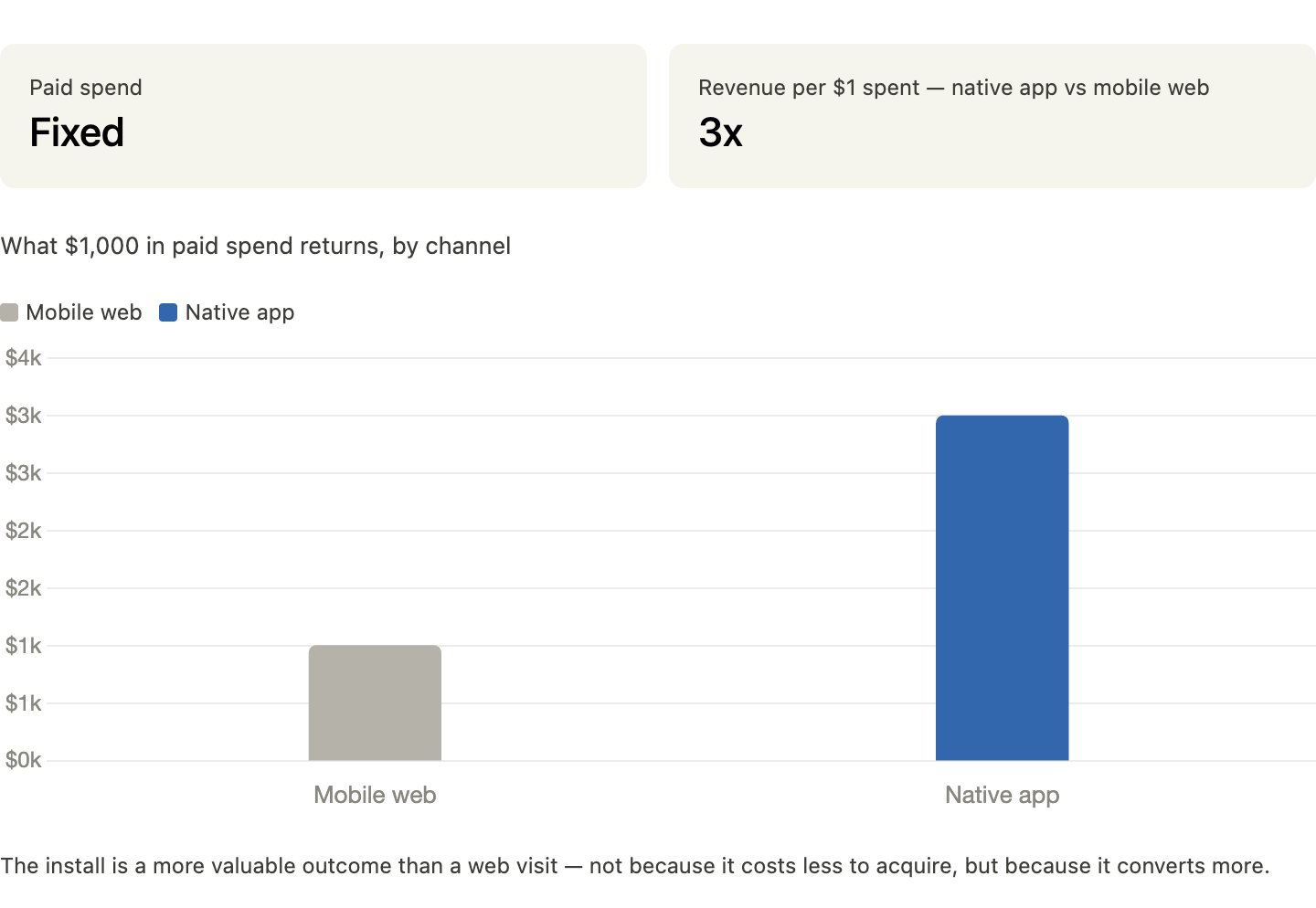
A customer who installs your app is worth more than one who stays on mobile web, in most cases by a significant margin. Our data across our customers points to roughly 3x higher conversion rates on native app versus mobile web.
That gap matters for CAC in a specific way. If your paid acquisition spend is fixed, a higher-converting channel means more revenue per dollar spent. The install becomes a more valuable outcome than a web visit.
But conversion rate on the app only holds if the experience after install is actually good. TA3 Swim (app by Appbrew) focused on this directly. They aligned their app PDP with the web experience, making sure sizing guides and product content carried over cleanly.
Customers who installed and had a worse experience than they had on the web would drop off, wasting the install spend. Getting that continuity right protected the investment made to acquire the install in the first place.
3. App-exclusive offers shift traffic from paid to owned
One of the more simpler ways to use an app to reduce CAC is to give existing customers a reason to move there. App-only discounts and exclusive drops create that reason without requiring any new acquisition spend.
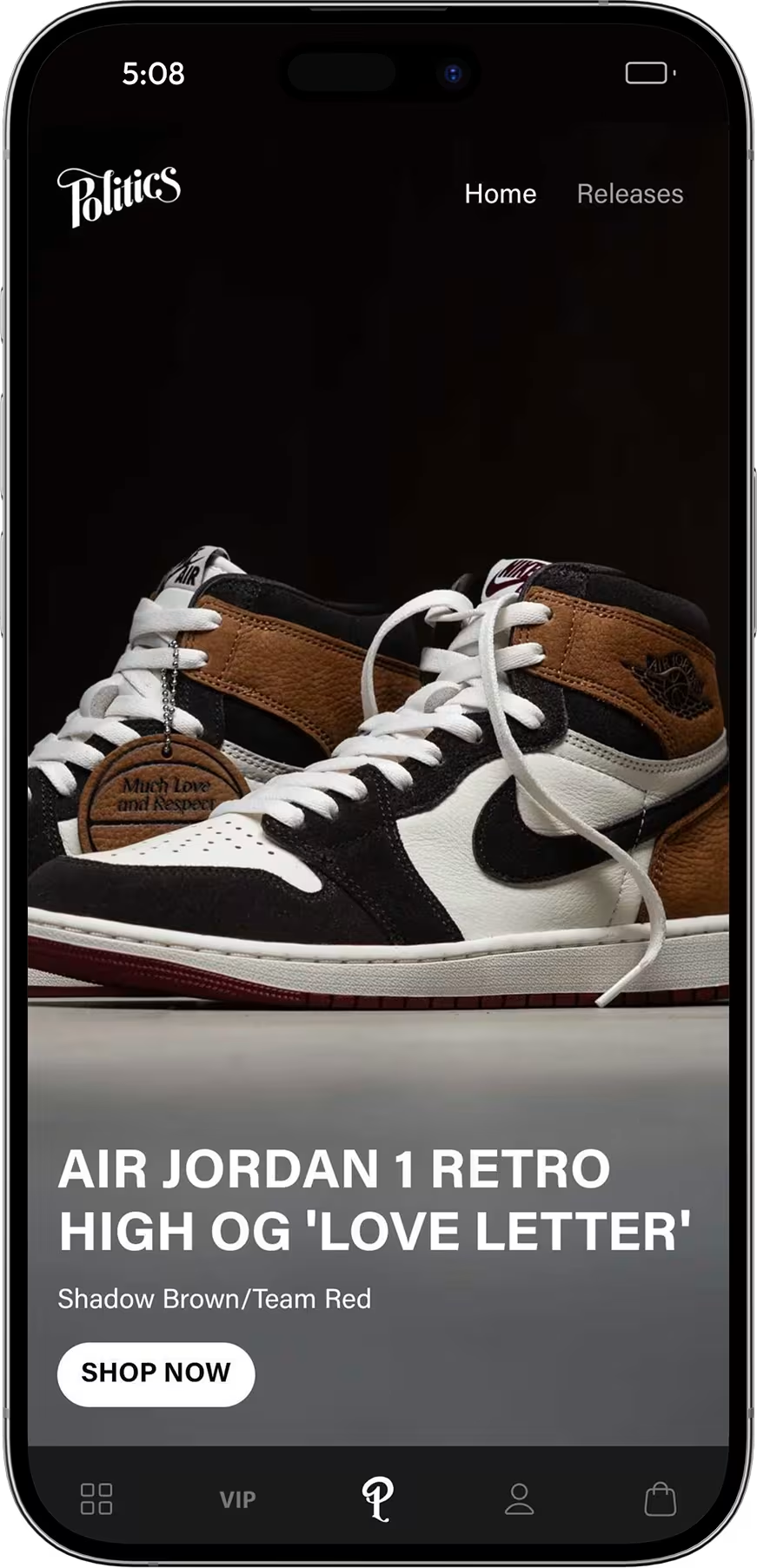
Sneaker Politics (app by Appbrew) uses this well. For limited drops, they drive traffic via SMS directly into app-exclusive releases, bypassing paid ad platforms for those campaigns entirely. The customers receiving those messages already bought from them. The SMS is cheap. The conversion happens in the app. No Meta CPM involved.
The structural benefit goes beyond a single campaign. Once a customer is engaged through the app, future touchpoints are owned. You're not renting attention from a platform. Appbrew's app-exclusive offers and discounts module is built for exactly this, handling app-only pricing, bundles, and gift-with-purchase configurations without custom dev work.
4. Advanced attribution means smarter paid spend
Part of why paid CAC gets expensive is that spend ends up distributed across audiences that don't convert well. Better attribution fixes that by showing you which campaigns and audiences are actually driving valuable installs.
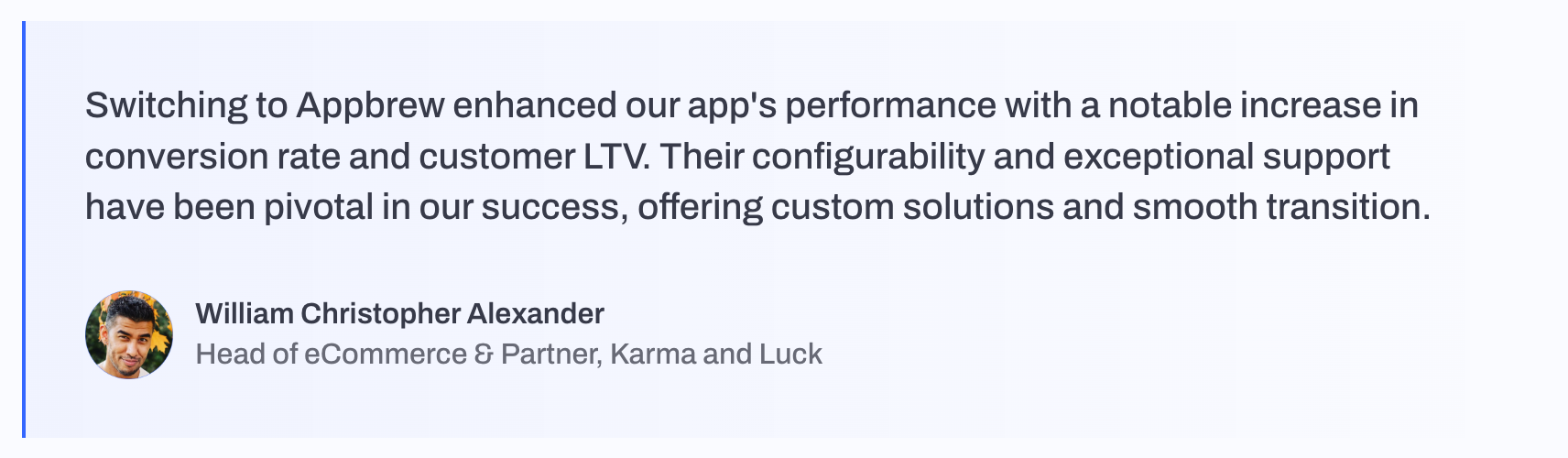
Home Essentials (app by Appbrew) used deep Meta and Google SDK integration to do this precisely. By connecting ad campaigns to app install events and downstream purchase behaviour, they could shift spend toward high-intent users rather than continuing to spray budget at broad traffic.
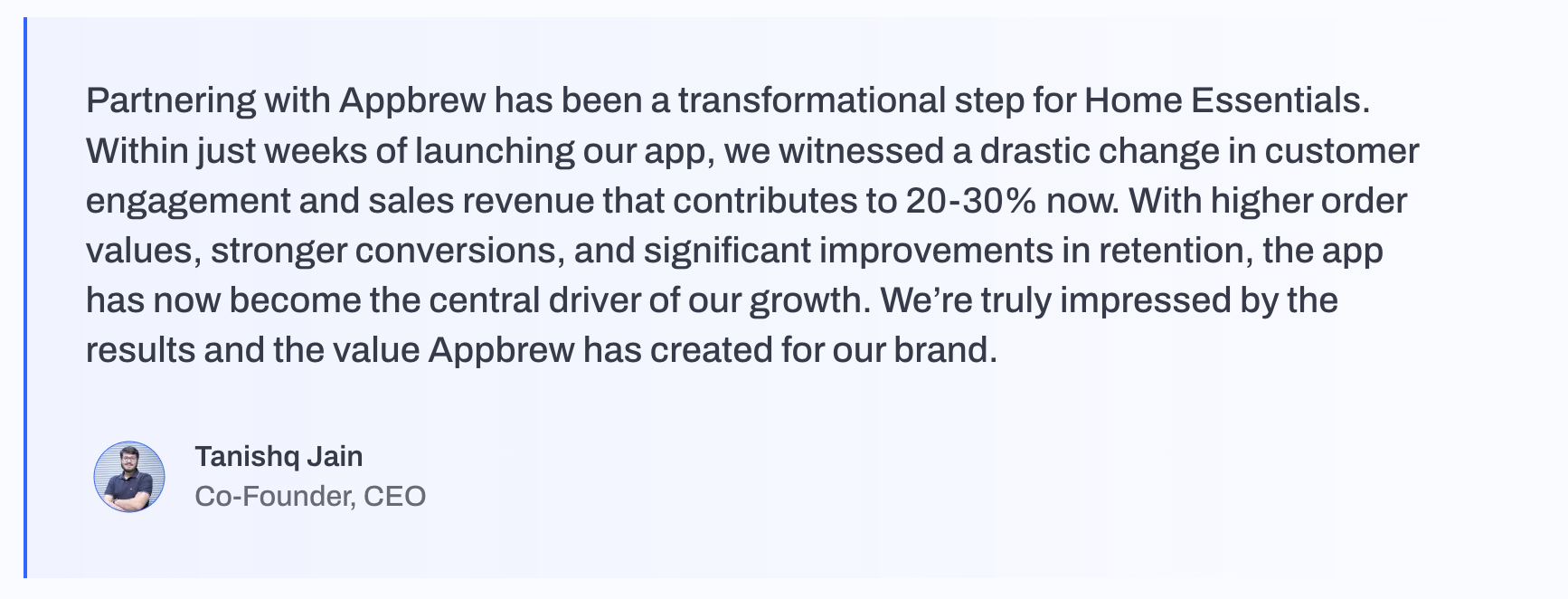
Karma & Luck (app by Appbrew) took a similar approach but focused on retargeting. Rather than spending on cold audiences, they converted existing web visitors into app users, getting more value from traffic they had already paid to acquire.
Appbrew supports clean attribution through integrations with AppsFlyer, Adjust, and Branch, alongside native Meta and Google SDK connections, so the data feeding those decisions is reliable.
Real Strategies US Brands Are Using Right Now
These aren't theoretical frameworks, they're acquisition strategies our customers built around their mobile apps.
1. Zero-cost acquisition channels built into the product
The best moment to get a customer onto your app is right after they've bought from you. Satisfaction is high, the brand is front of mind, and they're already holding your product.
Neven Eyewear built a channel around exactly that moment. QR codes in their product packaging link to app download and product registration. A customer who just received their order gets a natural reason to install. No ad spend involved. Every shipment that goes out is an acquisition opportunity at zero marginal cost.
Copper Pearl runs a version of this across multiple touchpoints. Smart banners on the website and post-purchase QR codes push customers toward the app consistently throughout their journey. It functions as an always-on funnel that doesn't require a campaign budget to keep running.
The practical upside is that both channels scale with order volume automatically. The more you ship, the more install opportunities you create.
2. Loyalty and referral programs as organic acquisition
A loyalty program is usually framed as a retention tool. It's also an acquisition channel if you set it up that way.
Kut from the Kloth ties their rewards program to app downloads. Customers who want to access and redeem points do it through the app, which converts one-time buyers into regular app users and reduces how often those customers need a paid touchpoint to come back.
Anatomie targets their highest-value customers specifically. Referral and loyalty programs give high-AOV buyers a reason to bring in people they know, turning the existing customer base into an organic acquisition engine. The customers doing the referring tend to bring in customers like themselves.
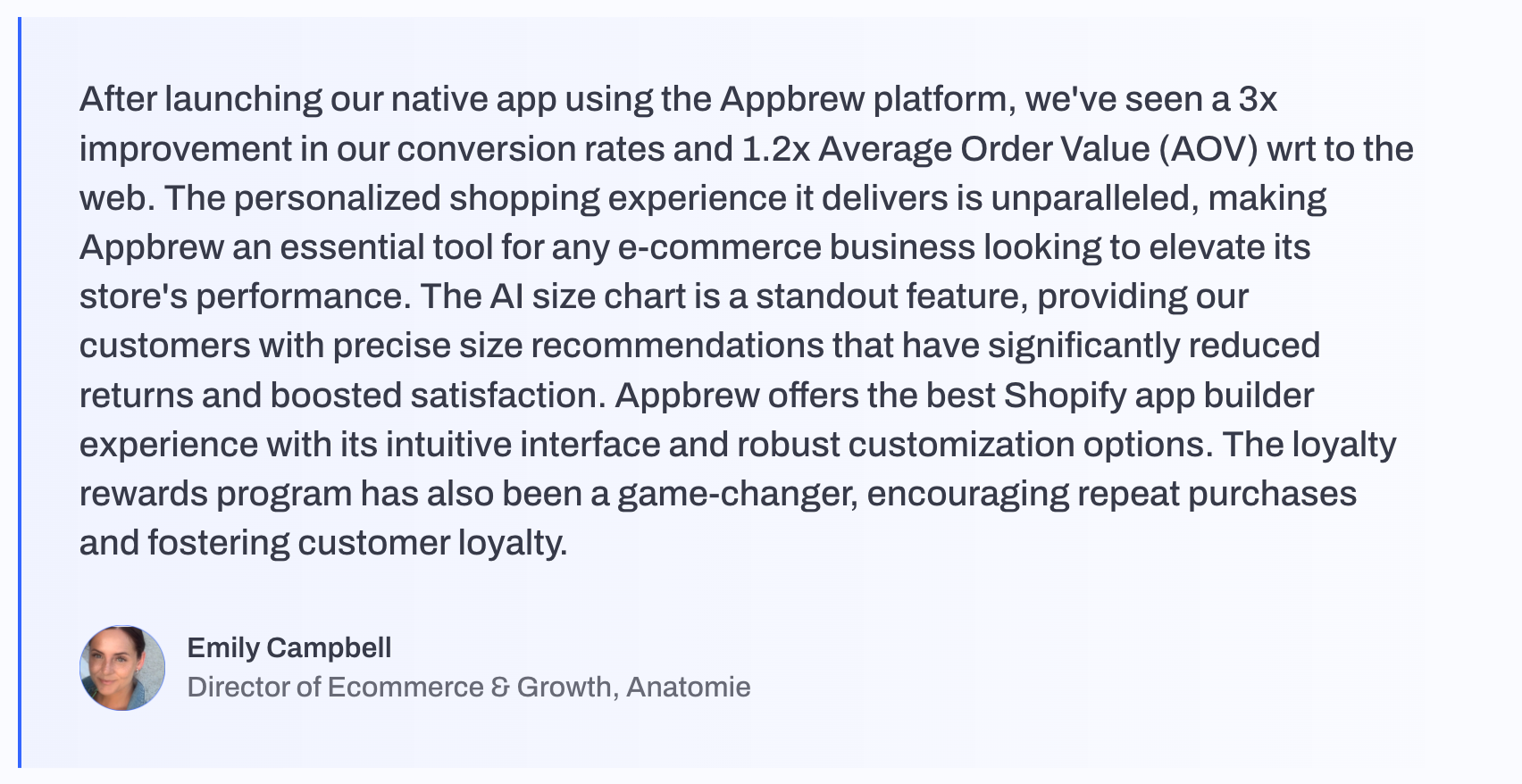
Appbrew supports this natively with cart-redeemable rewards and user referral flows available in the Enterprise tier.
3. Onboarding and segmentation that protect install spend
Getting the install is only half the job. A customer who installs and then hits a confusing or generic onboarding experience is likely to drop off before converting, which means the acquisition spend that drove the install is wasted.
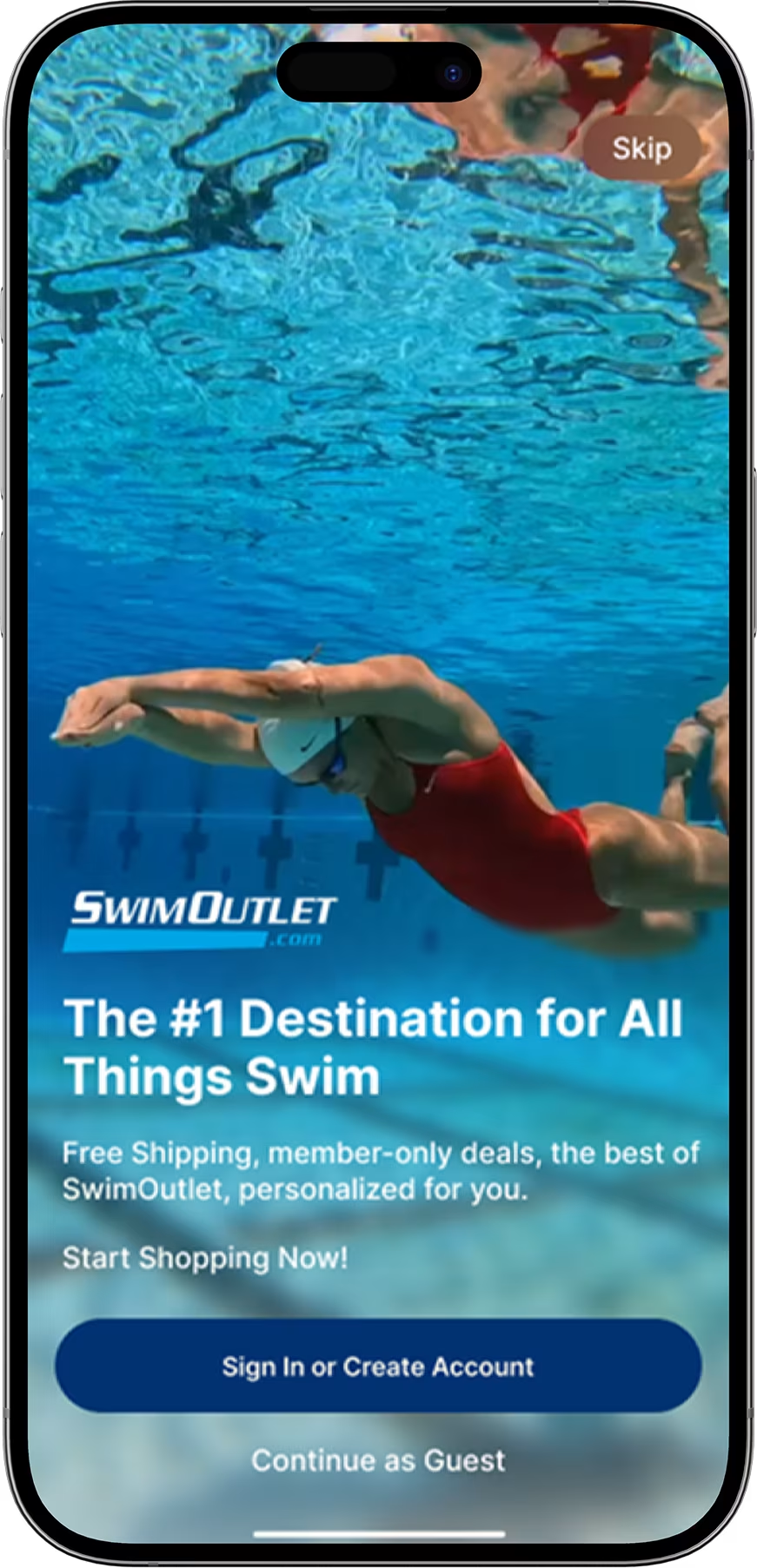
SwimOutlet (app by Appbrew) solved this by building a custom onboarding flow that distinguishes between existing members and new users from the start. Each group gets a different path. Friction drops, immediate conversion improves, and the install budget goes further because more installs actually turn into buyers.
Every install converted well is one you don't need to replace.
4. Migrating web traffic to the app through smart funnels
Web visitors are already acquired customers. Moving them to the app doesn't require new acquisition spend, it requires making the migration obvious and frictionless.
perfectwhitetee does this with smart banners and post-purchase flows that consistently point web traffic toward the app. Session frequency goes up. Retention improves. The customers were already there; they just needed a clear path.
Appbrew's Onelink handles the routing automatically, sending users to the correct app store or directly into the app depending on their device and install status. One link works across iOS and Android, which makes it practical to include in emails, ads, and post-purchase pages without managing multiple destinations.
Other Strategies That Work Alongside the App
The app is the anchor, but these levers compound its impact.
1. Email and SMS as install drivers, not just retention channels
Most brands use email and SMS to drive purchases. That's a reasonable use of the channel, but there's a more valuable move available if you have a mobile app.
Your email and SMS lists represent customers you already paid to acquire. Using those lists to drive app installs converts a sunk cost into something more efficient. Once those customers are on the app, future engagement is cheaper, conversion rates are higher, and you're no longer dependent on inbox placement or SMS deliverability to reach them.
The shift is simple in practice: instead of sending an email that links to a web PDP, send one that links to the app. Appbrew's Onelink routes users correctly regardless of device or install status, so the handoff doesn't require multiple links or manual segmentation.
2. Influencer and UGC campaigns that drive installs directly
eCommerce Influencer campaigns that point to a website have a retention problem. Traffic arrives, some of it converts, and most of it leaves. There's no lasting channel created by the visit.
Pointing influencer campaigns to app downloads changes that. A customer who installs after seeing a post is reachable indefinitely through push. The engagement compounds rather than ending when the campaign does. Attribution also gets cleaner. Appbrew's Onelink ties installs back to the campaign source, so you can see which creators are driving installs that actually convert.
3. Post-purchase experience as a retention firewall
Most churn happens before the second purchase. A customer who has a poor post-purchase experience, no order visibility, a frustrating return, or no reason to come back, is a customer you'll need to reacquire.
Anatomie addresses this by tying post-purchase flows directly to loyalty activation. Customers who complete a purchase are immediately brought into a program that gives them a reason to return. Appbrew supports this with native order tracking pages, returns and exchange interfaces, and push notifications for order status updates all built into the platform.
Every customer retained through that window is a CAC you didn't have to spend.
How to Prioritise These Strategies for Your Brand
Not every tactic applies equally, here's how to sequence them.
Start with a quick audit before adding anything new. Four things worth checking immediately:
- Calculate what percentage of your repeat purchases are coming from paid vs owned channels. That gap is your CAC leak, and its size tells you how urgently you need to act.
- Identify your highest-LTV customer segment and check whether they're on your app. If they're not, that's your first migration target, not a new audience.
- Map every post-purchase touchpoint (packaging, order confirmation, follow-up email) and check whether each one has an app install CTA. Most brands find at least two or three gaps here.
- Pull your push notification open rate and compare it against your SMS and email cost-per-click. The delta is your case for shifting budget toward push.
Once you know where the gaps are, use this matrix to decide where to focus first:
| Strategy | Best for | Effort to implement | CAC impact |
|---|---|---|---|
| Push over paid retargeting | Brands with active app users | Low | High |
| Zero-cost packaging installs | Brands shipping physical products | Low | Medium |
| Loyalty and referral programs | Brands with repeat purchase potential | Medium | High |
| Web-to-app migration funnels | Brands with strong web traffic | Medium | High |
| Influencer-to-install campaigns | Brands with active influencer programs | Medium | Medium |
| Onboarding segmentation | Brands with mixed new/returning user base | Medium | Medium |
| Post-purchase retention flows | Brands with high first-purchase churn | Medium | High |
Conclusion
Cheaper clicks are not the answer. At some point, every brand running hard on paid acquisition hits the same wall: the channel gets more expensive, the returns flatten, and there's no owned audience to fall back on.
The brands seeing real CAC improvement are building differently. Groove Life shifted repeat purchases onto push. Anatomie turned high-value customers into a referral engine. Neven Eyewear made every shipment an install opportunity. None of these are media buying tactics. They're structural changes to how customers are retained and reactivated.
A mobile app is what makes most of them possible. The push channel, the attribution layer, the loyalty stack, the conversion rate advantage over mobile web, these compound over time in a way that paid spend simply doesn't.
Appbrew gives Shopify brands everything needed to make that shift without building from scratch. Book a demo to see what it looks like for your store.