

.webp)
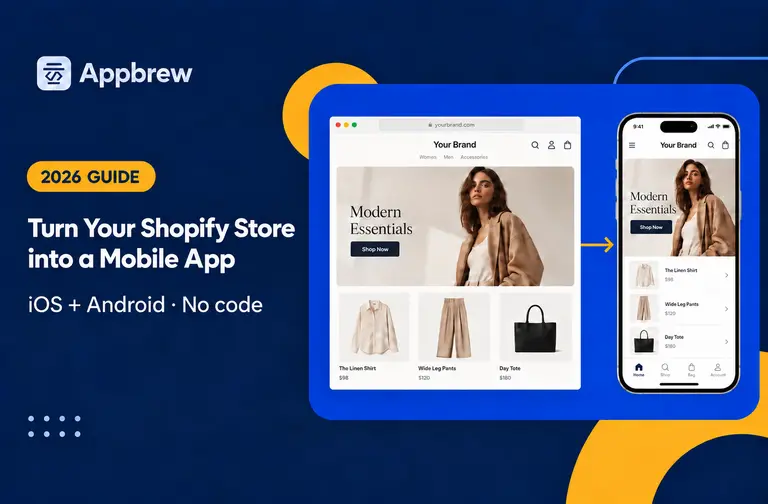
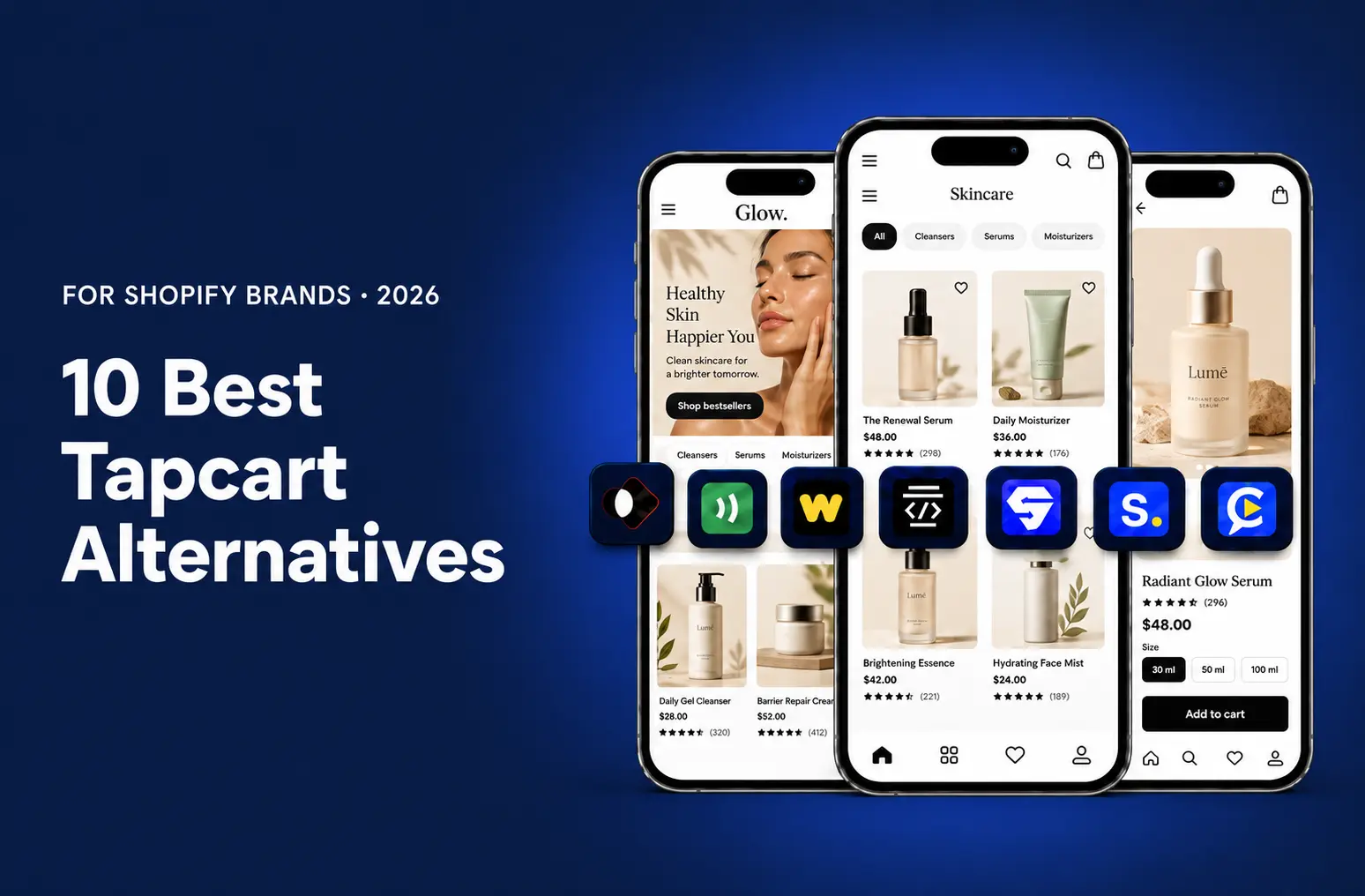
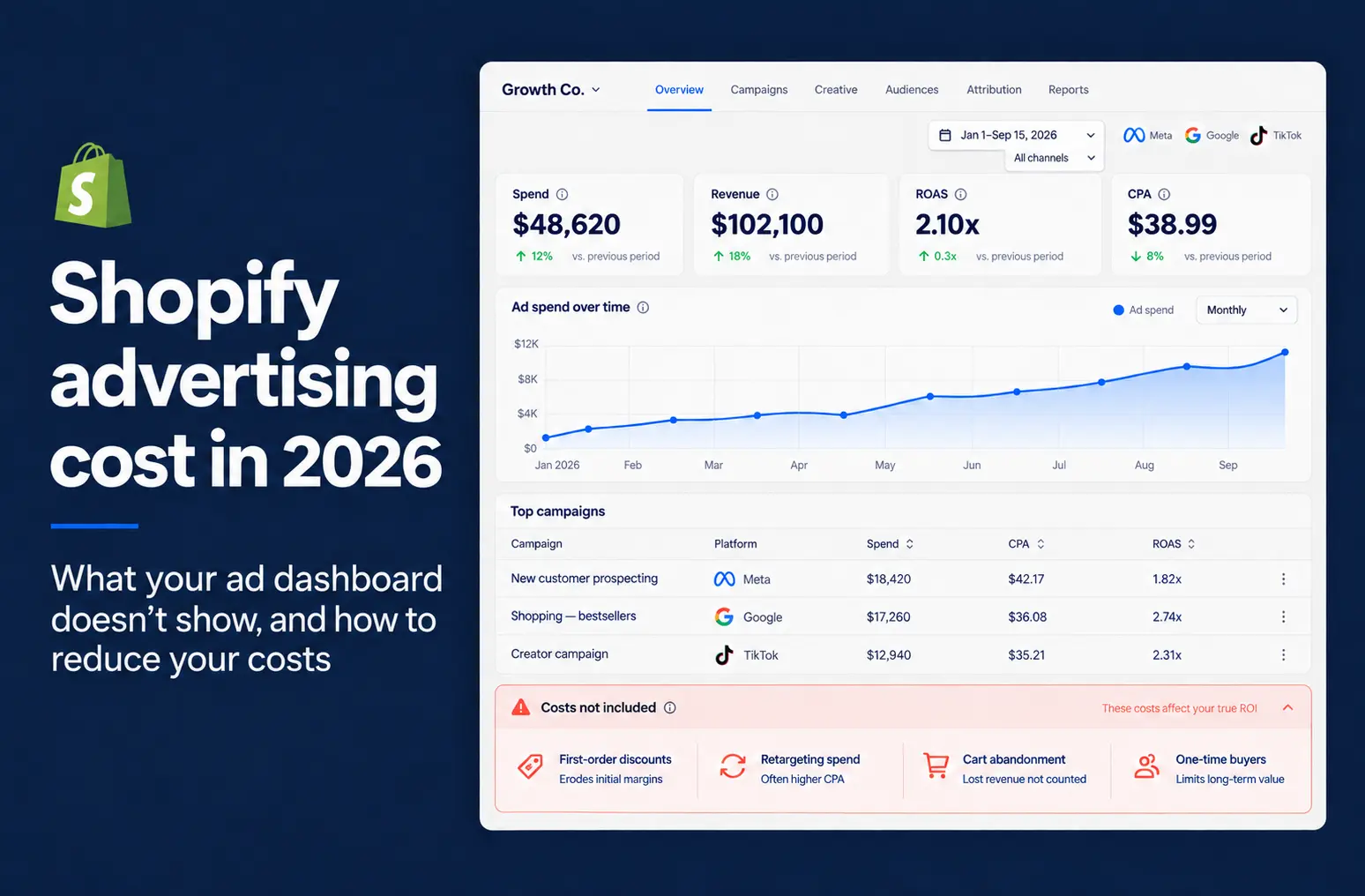
Best AppMySite alternatives for Shopify in 2026. Compare top mobile app builders and find the best choice for growth-focused brands.
You built a Shopify store that converts well on desktop. Mobile is a different story. You tried AppMySite to close that gap, but the app feels clunky, the design options are thin, and iOS support only kicks in on the expensive tier. Sound familiar?
For Shopify brands serious about mobile revenue, a fast app is table stakes. What you actually need is one that converts browsers into buyers, keeps customers coming back, and fits into your existing marketing stack without a six-month dev project. The good news: there are several AppMySite alternatives in 2026 that do exactly that. By the end of this post, you'll know which ones are worth your time and what to look for before you commit.
What AppMySite Gets Right (and Where It Runs Out of Road)
AppMySite's appeal is real. It's quick to set up, syncs with Shopify in real time, and gets you a basic iOS and Android app without writing a line of code. For a small store testing whether mobile apps move the needle, it's a reasonable starting point.
The problems show up when you try to grow.
The builder is slow and the layout control is limited. If your brand has a specific look and feel, you'll hit a wall fast. Users on G2 consistently flag missing features, unclear upgrade pricing, and gaps around advanced commerce flows like in-app subscriptions or bundles. Perhaps most notably, iOS support doesn't even unlock until you're on a higher-priced plan, which means you're paying more before you can even reach half your audience.
For a brand doing real volume on Shopify, these aren't minor inconveniences. They're blockers.
The Best AppMySite Alternatives for Shopify in 2026
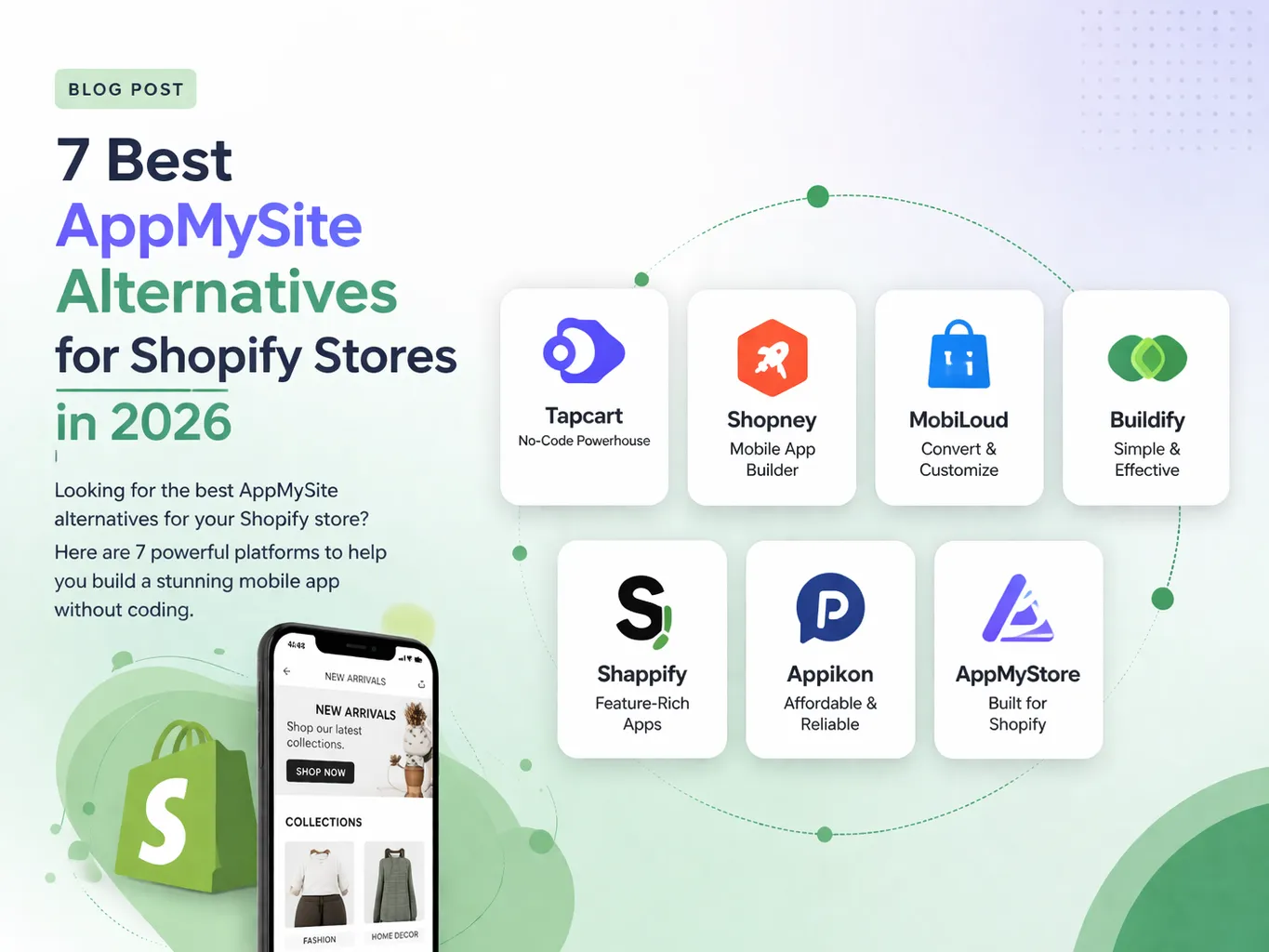
Here are the best AppMySite alternatives you can consider to turn your Shopify store into mobile app:
1. Appbrew (Best Overall)
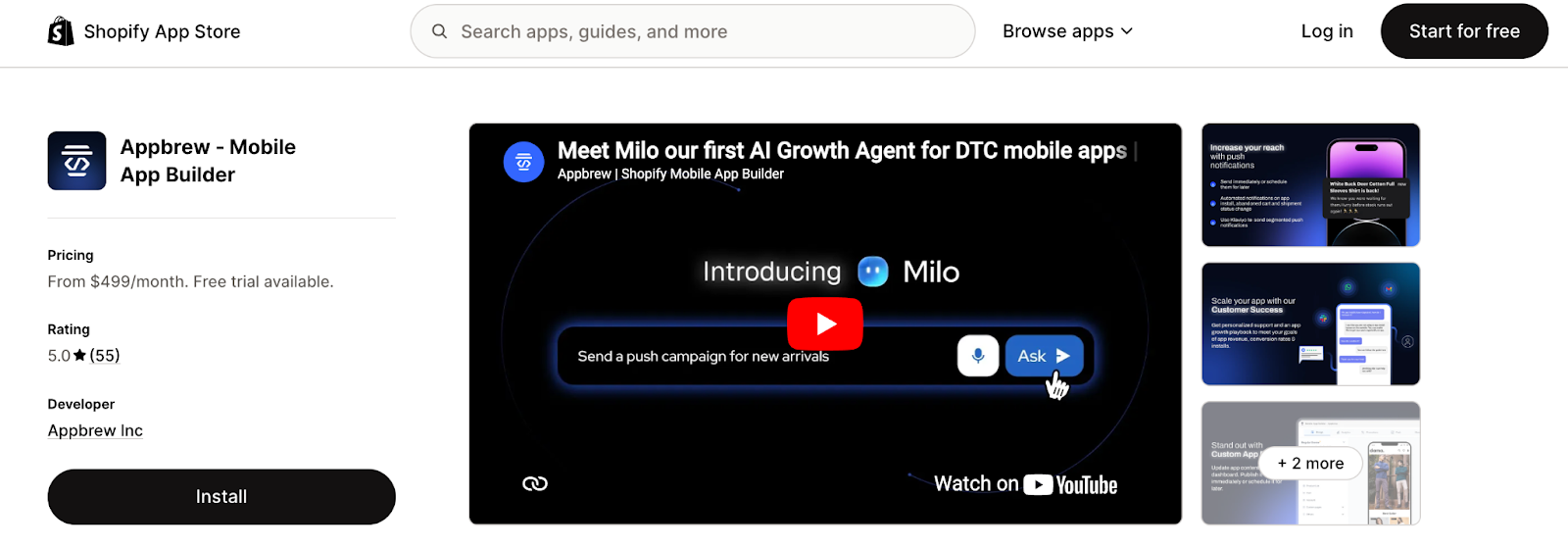
Appbrew is one of the best Shopify mobile app builders built specifically for Shopify and Shopify Plus brands that want mobile to be their highest-converting channel. It's not a site-to-app wrapper. It's a native mobile commerce layer that sits on top of your Shopify store and gives your marketing team the tools to run campaigns, personalize experiences, and retain customers without touching code.
How the app is actually built
Appbrew produces fully native iOS and Android apps built on React Native. That matters because native apps load faster, feel smoother, and get higher engagement than webview-based apps that just frame your mobile website. Appbrew claims sub-1-second load times and app sizes under 45 MB, which directly affects install rates and session quality.
Real-time Shopify sync means your products, inventory, pricing, and promotions stay in sync automatically. Your app team doesn't manage a second source of truth.
Personalization that goes beyond segments
Most app builders let you push a banner to all users. Appbrew lets you show different banners, layouts, promotions, and product recommendations to different customers based on their behavior, purchase history, location, or Shopify tags.
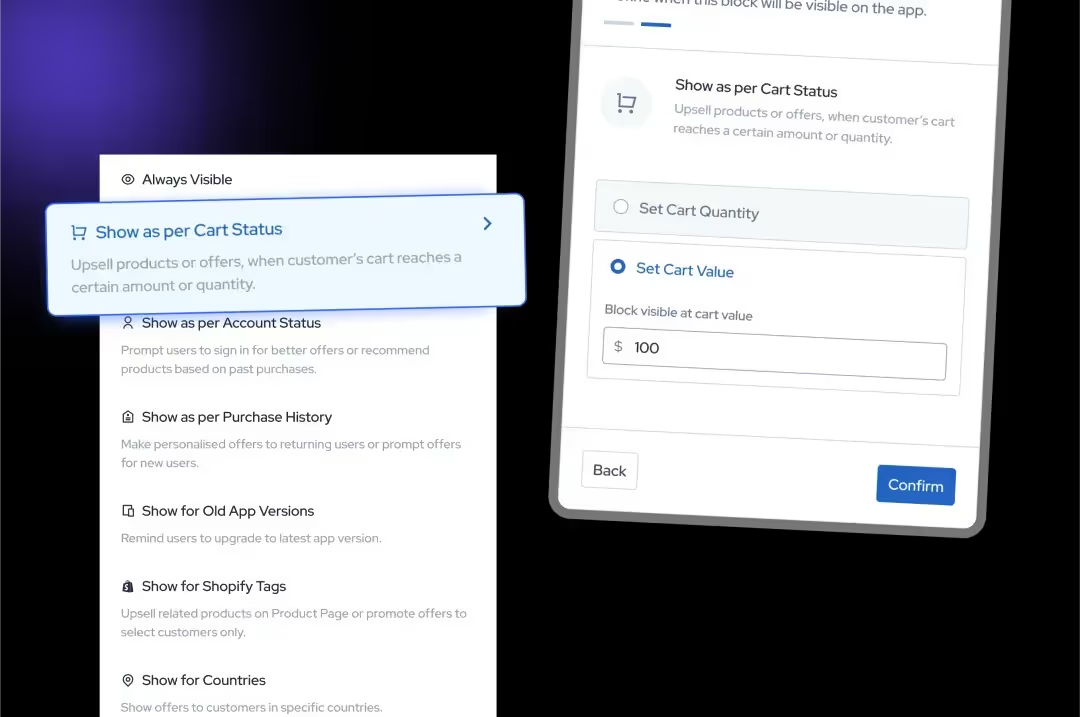
A customer who's bought from you three times sees something different than a first-time visitor. That difference in experience compounds over time. Brands using Appbrew report conversion rates around 3x higher than mobile web, with some fashion brands attributing up to 60% of DTC revenue to the app channel.
Multiple AI layers most builders don't have
Appbrew has two distinct AI products built into the platform.
Milo is the AI growth assistant for your team. It drafts push notification copy, generates creative variations for banners, and helps build personalization rules using natural language instead of complex logic trees. If you've ever wanted to describe a campaign in plain English and have the system set it up for you, that's the direction Milo moves in.
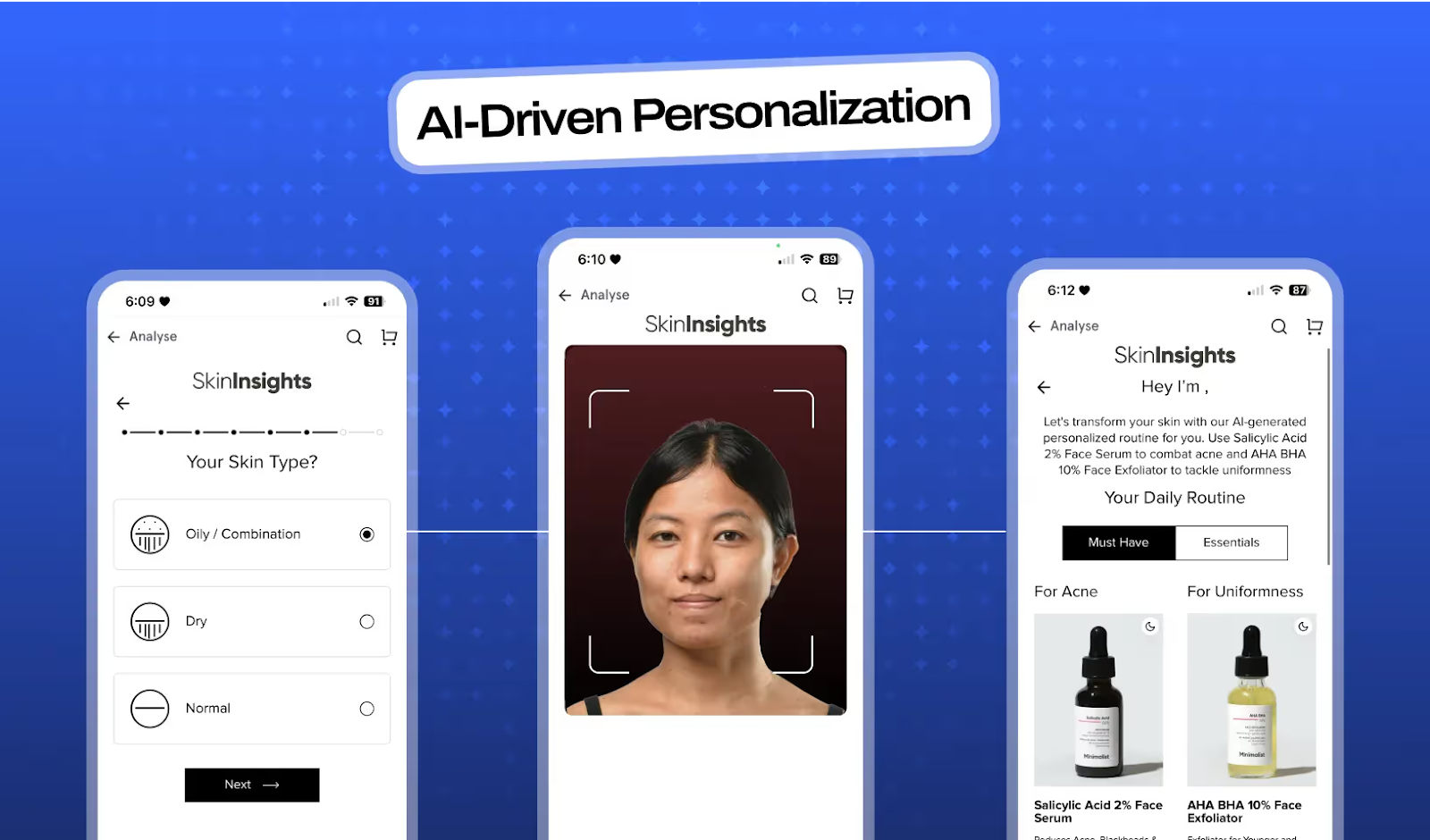
Concierge is the in-app shopping assistant for your customers. It handles conversational product discovery, size recommendations, and guided shopping flows inside the app. For beauty brands, there's also an AI skin analyzer that tailors product suggestions based on customer inputs.
AI Skin Analyzer is specifically for beauty brands. Customers upload a selfie, the tool analyzes skin concerns, and it recommends matching products from the catalog. Brands like Minimalist use it to reduce purchase hesitation on skincare products where fit matters.
Push notifications without the guesswork
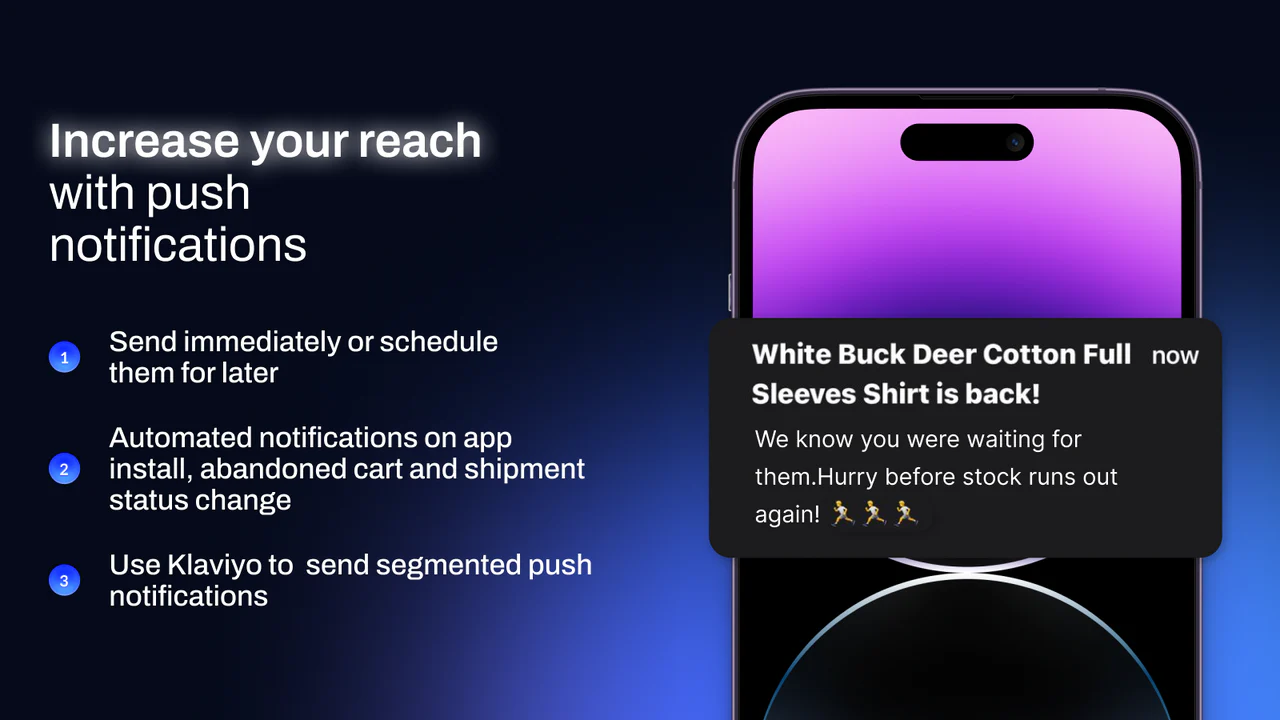
Mobile App Push is one of the highest-ROI channels for mobile commerce, and Appbrew treats it as a first-class feature. You get unlimited push notifications on Pro and Enterprise plans, no per-message fees, with automated flows for abandoned carts, back-in-stock alerts, order tracking, and re-engagement. Deep links from every push take users directly to the product or collection you want them to see.
You can segment by new vs. returning, by LTV tier, by product interest, or by behavior. Campaigns can be scheduled around product drops, seasonal sales, or BFCM without rebuilding anything from scratch.
Integration coverage that matches your stack
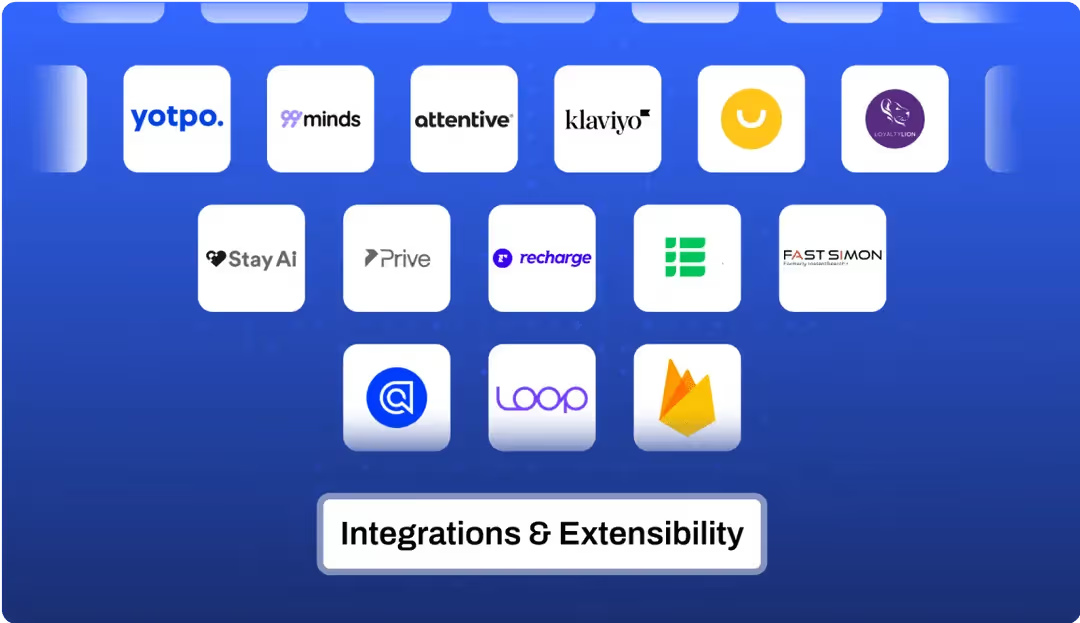
Appbrew connects natively to 100+ Shopify apps, including Yotpo for reviews and loyalty, Recharge and Stay AI for subscriptions, AppsFlyer, Adjust, and Branch for attribution, Klaviyo for cross-channel automation, and Meta and Google SDKs for retargeting.
That breadth matters. If you switch app builders and lose your loyalty integration or your attribution data, you're rebuilding months of work.
Built for marketers, not just developers
The dashboard is built so that a marketer can launch a campaign, update a banner, schedule a seasonal theme, and review performance without filing a ticket to engineering. Appbrew also handles the initial implementation, which means your team isn't spending weeks in a no-code builder trying to recreate your brand identity from scratch.
Pricing
Pro plans start at $599/month with a 14-day free trial. Enterprise offers custom pricing for Shopify Plus brands and includes custom flows, multi-currency support, metafield-based content blocks, a dedicated account manager, and a direct Slack channel with the Appbrew team.
If you're generating real revenue from mobile and want a platform that grows with you, Appbrew is worth a look.
2. Tapcart
Tapcart is one of the more well-known names in Shopify mobile app building. It's strong on design and deep Shopify integration, and it's a credible choice for brands that prioritize a polished storefront over advanced personalization.
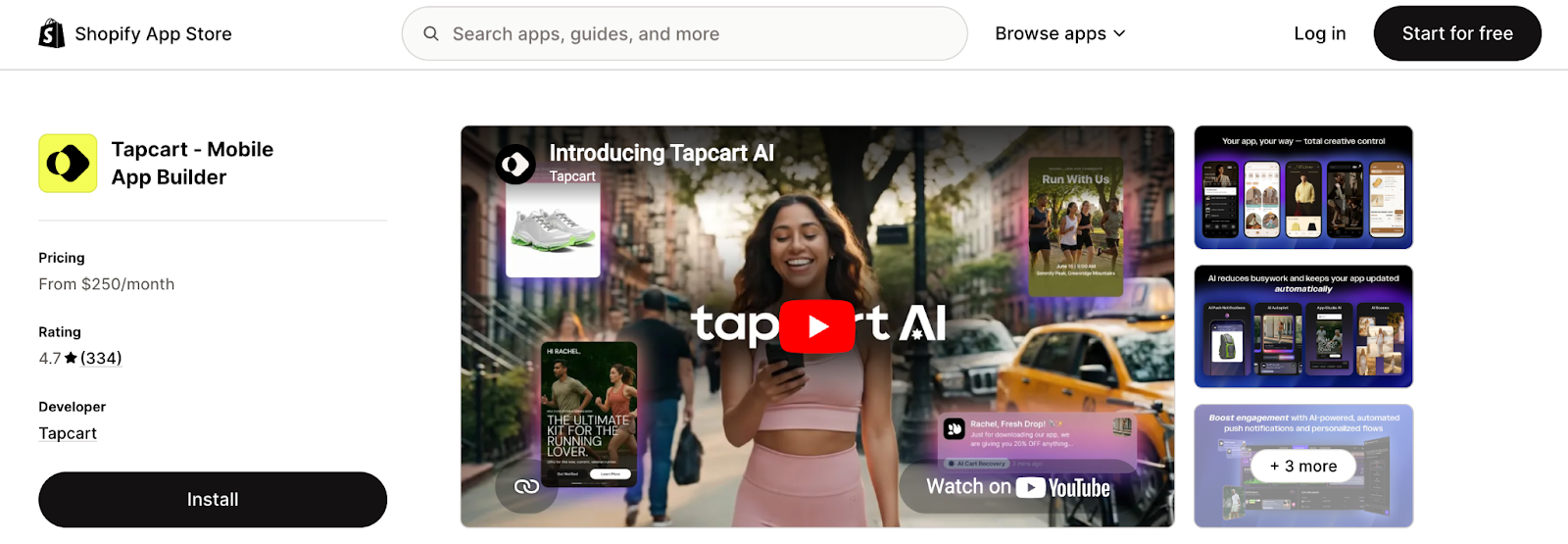
The main consideration with Tapcart is pricing. Plans can climb to $2,000/month or more for enterprise features, and some users report that the AI and automation features are more surface-level than they appear in marketing materials. For brands that primarily need a clean, well-designed app with solid push notification capabilities, Tapcart delivers. For brands that want advanced segmentation, AI-driven personalization, or deep subscription management, the gaps start to show.
3. Shopney
Shopney is a solid mid-tier option that's particularly attractive to smaller and mid-sized Shopify stores. Plans start around $149/month, which puts it in a different budget bracket than Appbrew or Tapcart.
The trade-off is depth. Shopney covers the essentials well: push notifications, real-time sync, in-app chat, and a drag-and-drop builder. Where it falls short is in advanced personalization, AI features, and the kind of commerce-specific flows (bundles, subscriptions, gifting) that higher-revenue brands depend on.
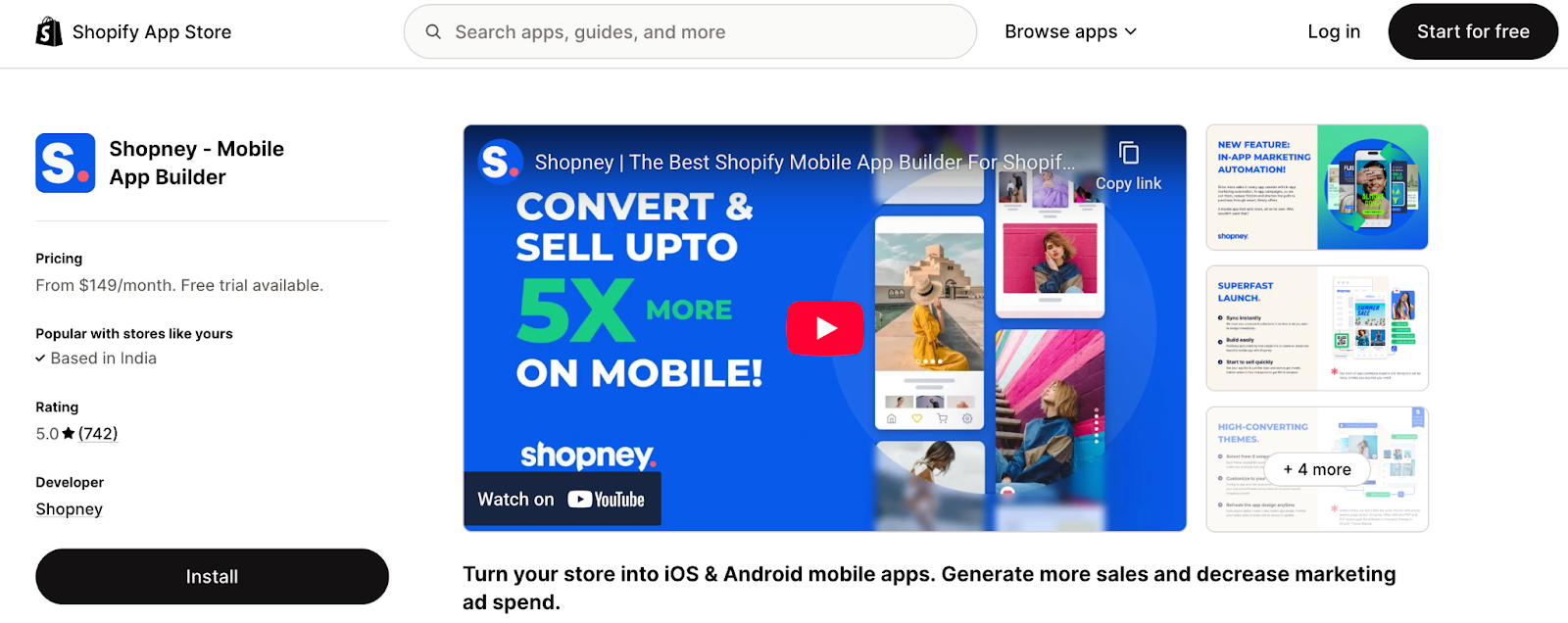
If you're at an earlier stage and cost is the constraint, Shopney is a reasonable starting point. If you're scaling aggressively, you'll likely outgrow it.
4. Vajro (now Superfans)
Vajro, rebranded to Superfans, starts at around $99/month and focuses on community and engagement features alongside standard app building. It's one of the more affordable options with live video selling capabilities, which can be a differentiator for brands with strong social and creator-led marketing strategies.
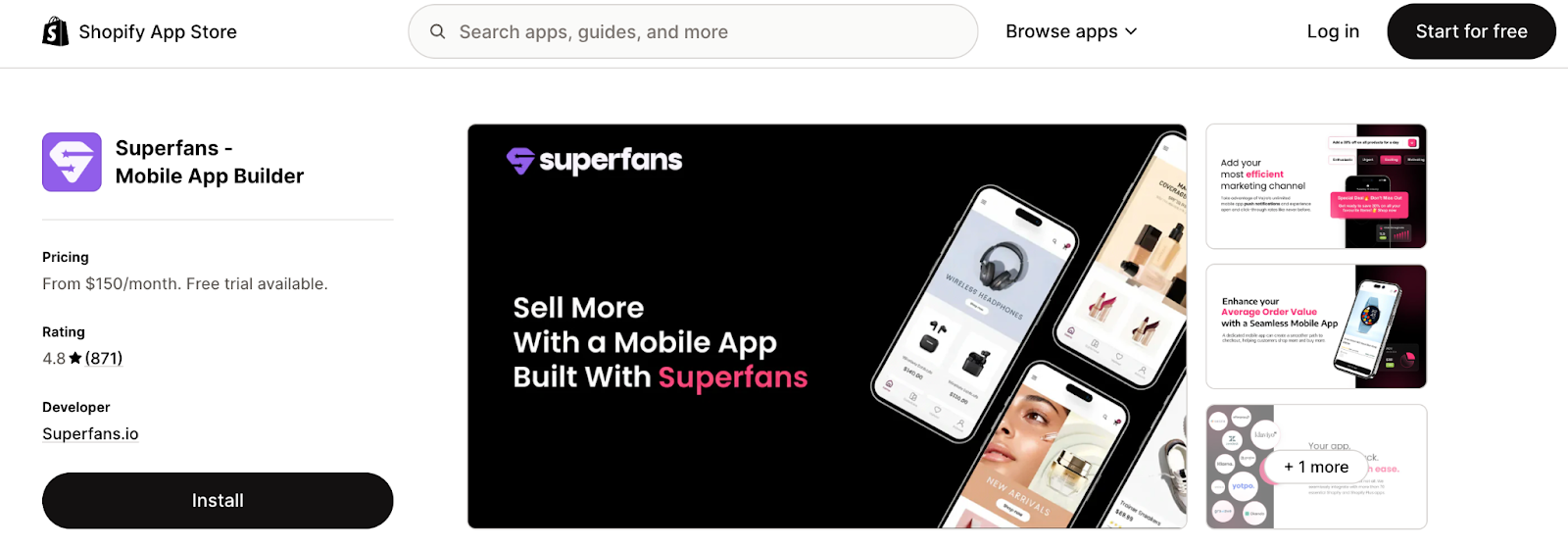
The limitations are similar to others in this tier: lighter on deep personalization, limited AI features, and fewer native integrations with the broader Shopify ecosystem. It works well for brands where live commerce and community are central to the strategy.
5. Plobal Apps
Plobal Apps is a strong contender for Shopify brands that want a native app with good push notification capabilities and a clean interface. It sits between Shopney and Appbrew in terms of features and price.
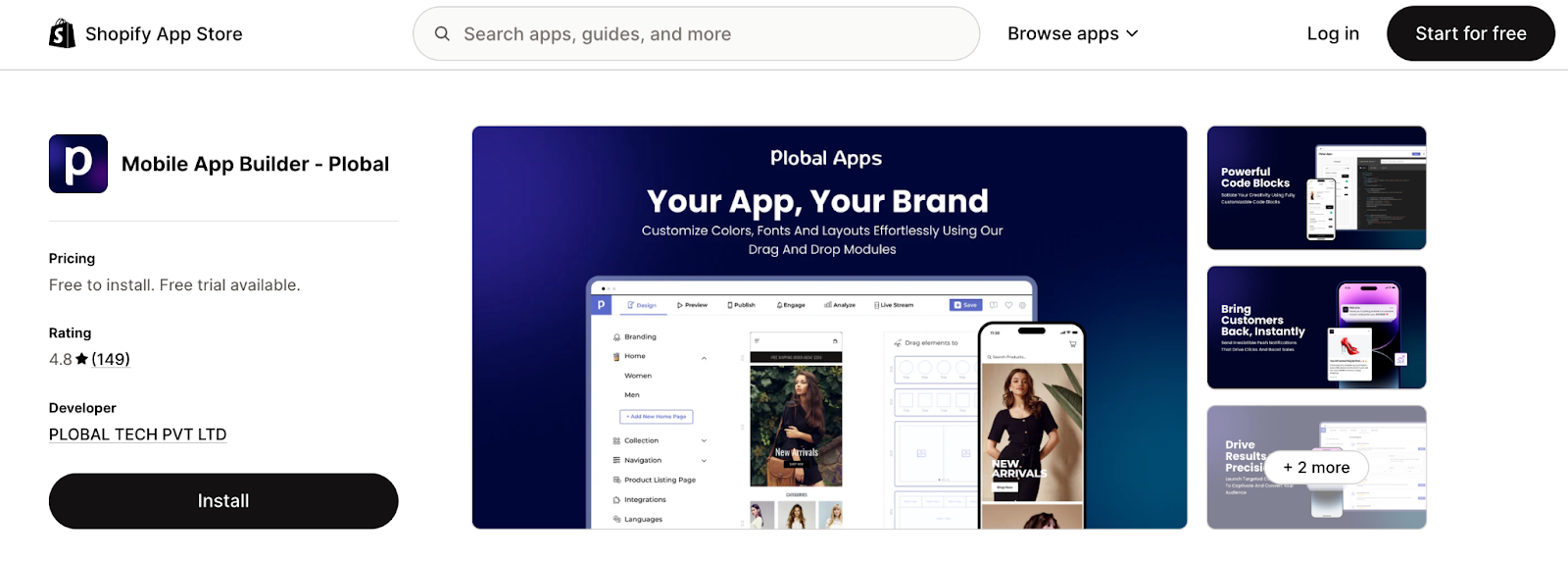
Where Plobal differentiates is in its analytics layer and its focus on conversion rate optimization. The platform gives teams good visibility into what's performing inside the app. The personalization and AI features are less developed than Appbrew's, but the overall product is solid and better supported than some of the smaller players in this space.
6. MobiLoud
MobiLoud takes a different approach from the others on this list. Rather than building a purpose-built native ecommerce app, it converts your existing Shopify web store into a mobile app using a managed service model. This can work well for brands that have heavily customized their Shopify theme and want the app to mirror the web experience exactly.
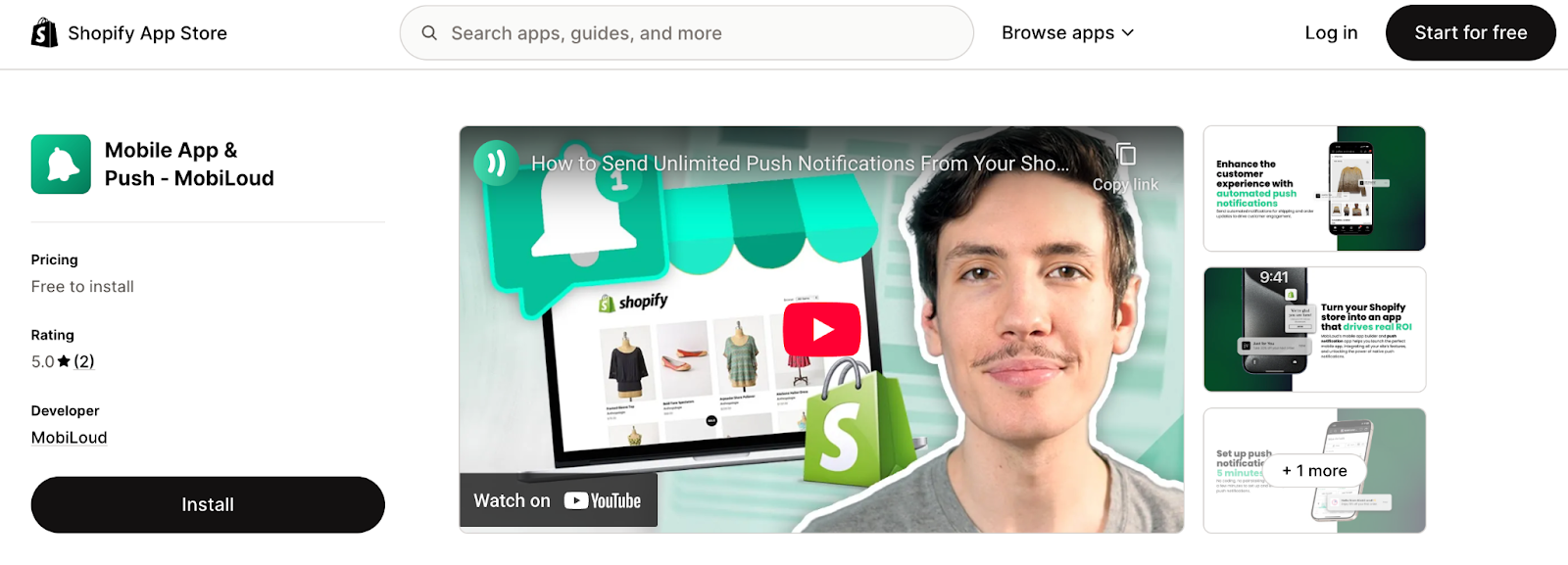
The limitation is the approach itself. A web-to-app conversion inherits the performance characteristics and UX patterns of the website. You don't get the native speed, native interactions, or commerce-specific app features that a platform like Appbrew builds in from scratch. For brands that prioritize parity with their web experience over mobile-native performance, MobiLoud is worth exploring.
7. MageNative
MageNative is a value-oriented option that targets smaller Shopify stores wanting a native app on a budget. It supports multi-language and real-time sync, and covers the standard feature set you'd expect at the lower end of the market.
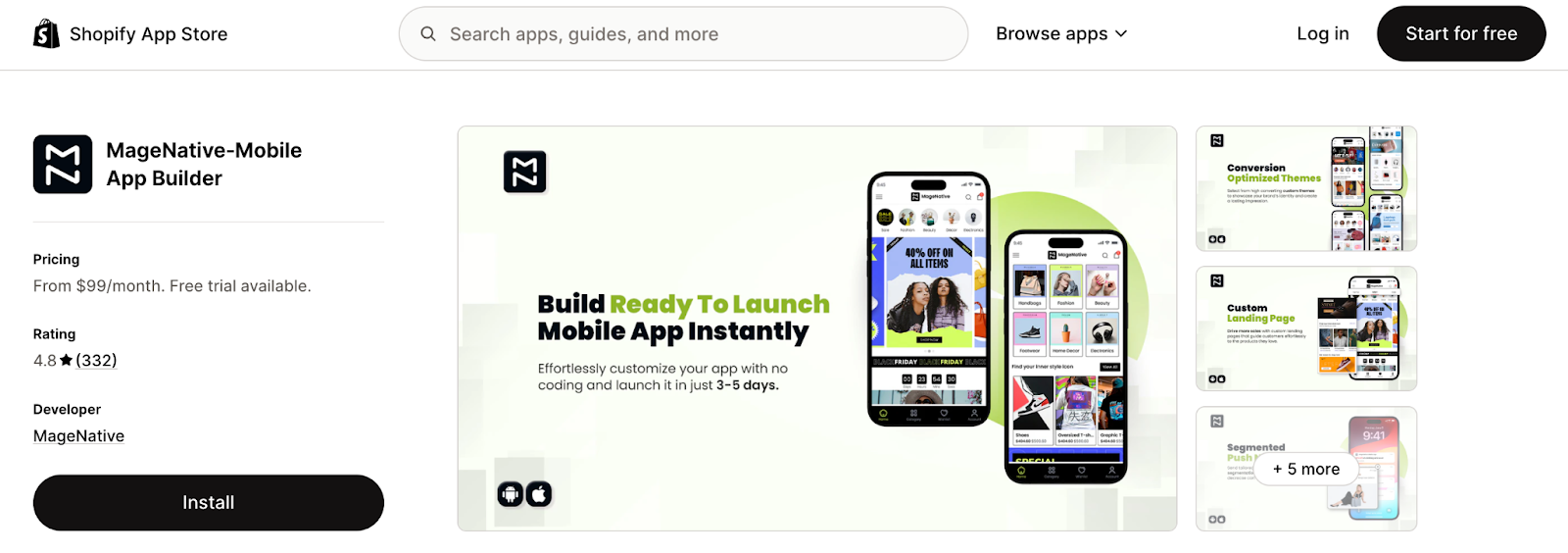
The trade-offs are significant for any brand past early growth stage: fewer AI features, a more template-driven design system, and lighter integration coverage. It's a reasonable option if budget is the primary constraint and the store is still building its mobile audience.
How to Choose the Best AppMySite Alternative for Your Shopify Store
The right choice depends on where your store is and what you need mobile to do for you.
1. Start with platform focus
Shopify-specific tools integrate more reliably than generic site-to-app converters. Every time a new Shopify feature ships, Shopify-first builders tend to support it faster. Generic builders often lag or require workarounds.
2. Think about app performance
A large, slow-loading app loses installs before the customer even sees your product. Look for builders that produce lean native apps rather than webview wrappers. App size and load time both affect conversion and retention.
3. Match the retention tooling to your business model
If subscriptions are core to your revenue, you need a builder with native subscription management and integrations to tools like Recharge. If loyalty is your retention engine, check how deeply the platform integrates with your loyalty stack. Don't assume integrations exist. Verify them.
4. Weigh implementation effort against your team's capacity
DIY builders cost less but take longer and depend on your internal bandwidth. Managed platforms like Appbrew cost more but get you to launch faster and reduce the ongoing operational overhead of running and updating the app.
5. Calculate the real cost
The sticker price of a plan is rarely the full number. Factor in the cost of upgrading for features that are gated, success fees, and the internal time required to build, maintain, and iterate on the app. A $149/month plan that requires 20 hours of internal work per month to maintain may cost more in practice than a $499/month plan with managed implementation.
6. Ask about AI maturity
A lot of builders are marketing AI features that are closer to autocomplete than real intelligence. Ask specifically what the AI does, how it learns from your data, and what workflows it actually replaces.
The Bottom Line
AppMySite is a reasonable first step for small stores testing mobile. But if you're past that stage and mobile is a serious revenue channel for your brand, the limitations pile up quickly.
Of all the AppMySite alternatives available for Shopify in 2026, Appbrew is the one built for brands that want to win on mobile. It combines native app performance with deep Shopify integration, an AI growth layer that actually changes how your team works, and push notification infrastructure that drives real retention numbers.
The other builders on this list have their place. Shopney and Vajro work for cost-constrained early-stage brands. Tapcart is a strong design-forward option. MobiLoud suits teams that want web parity. But if you're a growth-stage or Shopify Plus brand and mobile needs to carry real commercial weight, Appbrew is the platform built to do that.
Book a demo with Appbrew to see what a native, AI-powered Shopify app looks like for your brand.