
.png)
.webp)

.avif)
.avif)
.avif)

How FUAARK Built a Repeat-Purchase Engine With Appbrew
{{blockqoute}}
About FUAARK
FUAARK started in Surat in 2017, when Rimpy Juneja got frustrated with the gym wear he could find. The cheap options looked shapeless. The premium ones were priced like imports. Nothing fit the way it should for someone actually training. He and his wife Swati Juneja began building a brand around that gap, and were later joined by Rimpy's brother Saket, who brought retail experience from industry giants like Tommy Hilfiger.
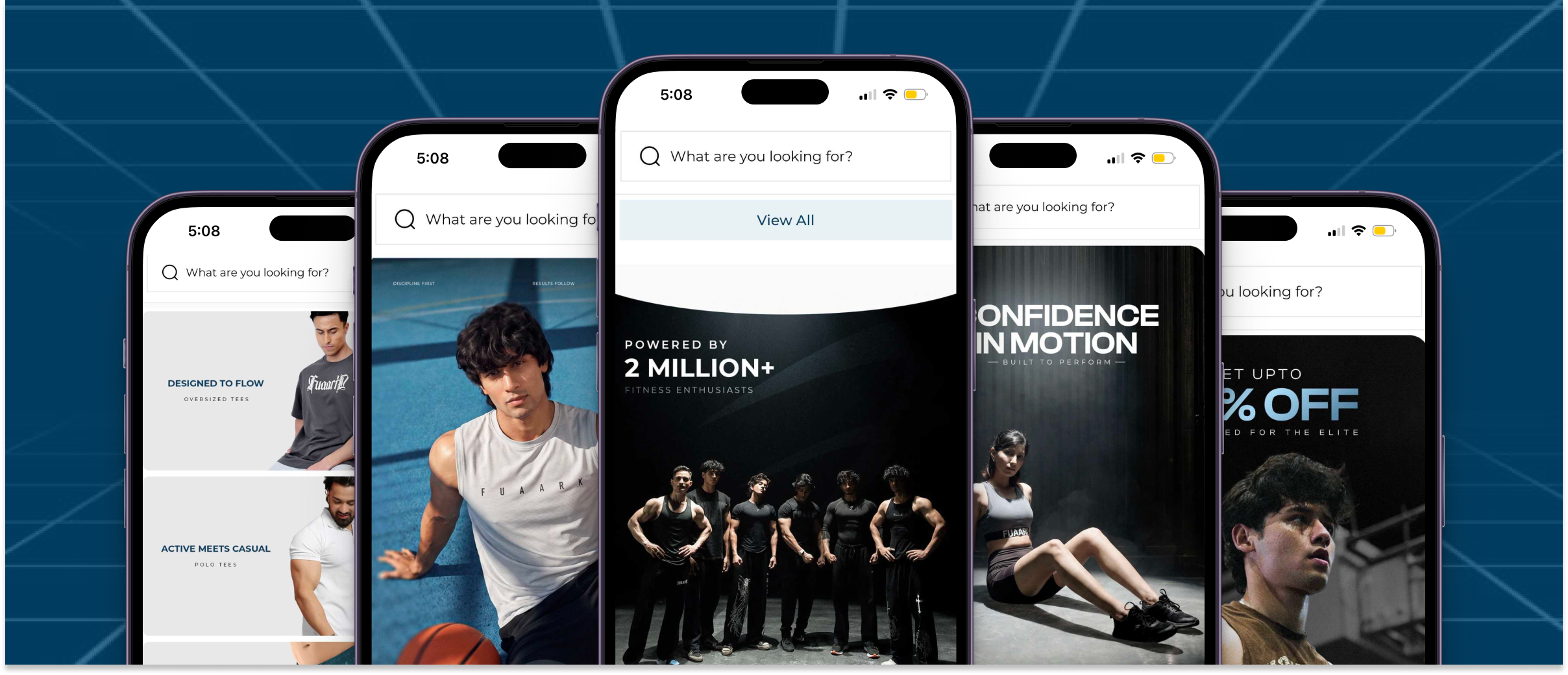
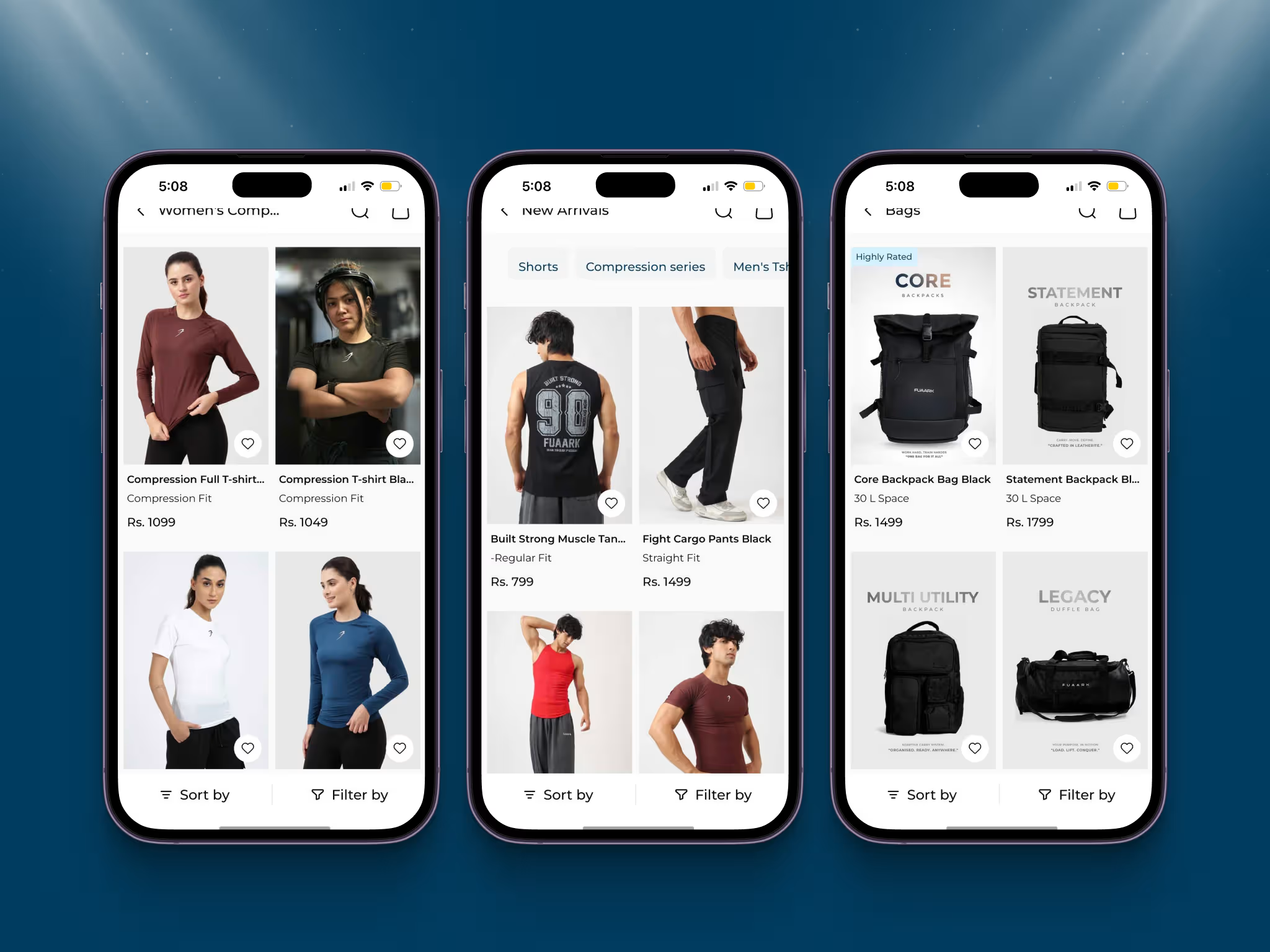
The brand sources fabric from the same suppliers used by Nike and Adidas, then cuts it with tapered fit technology built around the body of someone who lifts. FUAARK has stayed fully bootstrapped since day one, growing from a small family-led operation into a business with over a million customers. An appearance on Shark Tank India gave the brand a further push.
Fitness apparel is a repeat-purchase category almost by design. Customers come back for new drops, new colorways, seasonal sales. That made FUAARK a strong candidate for a mobile app built around retention, not just checkout.
The challenge
Repeat-purchase categories live or die on how easily a brand can bring past customers back. A website can sell to someone once, but it has no dedicated channel to reach that customer again, no way to build anticipation before a sale, no way to make a loyal shopper feel like they're getting something the average visitor isn't.
FUAARK needed a channel that could reach past customers directly, create real exclusivity around moments like sales, and turn first-time buyers into repeat buyers faster than the website ever could.
The results: A structural shift, not a spike
App customers repeat at more than 3x the rate of web-only customers
Customers who've bought through the app repeat at over 3x the rate of web-only customers. Cross-channel customers, the ones who use both, place more than double the orders of an app-only buyer over their lifetime.
The app isn't winning on basket size either. The value comes from getting customers to come back, not from getting them to spend more each time they do.
Retention holds steady as the app scales
Monthly cohorts of first-time app buyers show 90-day repeat rates in the 24-31% range and 180-day repeat rates in the 31-38% range. That's held consistently from FUAARK's very first app cohort of 41 buyers in October 2024 through cohorts of several thousand buyers today. Retention hasn't diluted as the app has grown, which is a harder thing to pull off than a single strong sale.
{{form-wrap}}
App revenue share has climbed for 21 straight months
The climb has been close to monotonic since launch. Two sale events besides the Hustler Sale, in July 2025 and January 2026, each produced a clear month-over-month jump. July 2026 is on pace to be the app's biggest revenue month yet.
The Hustler Sale: exclusivity as the incentive
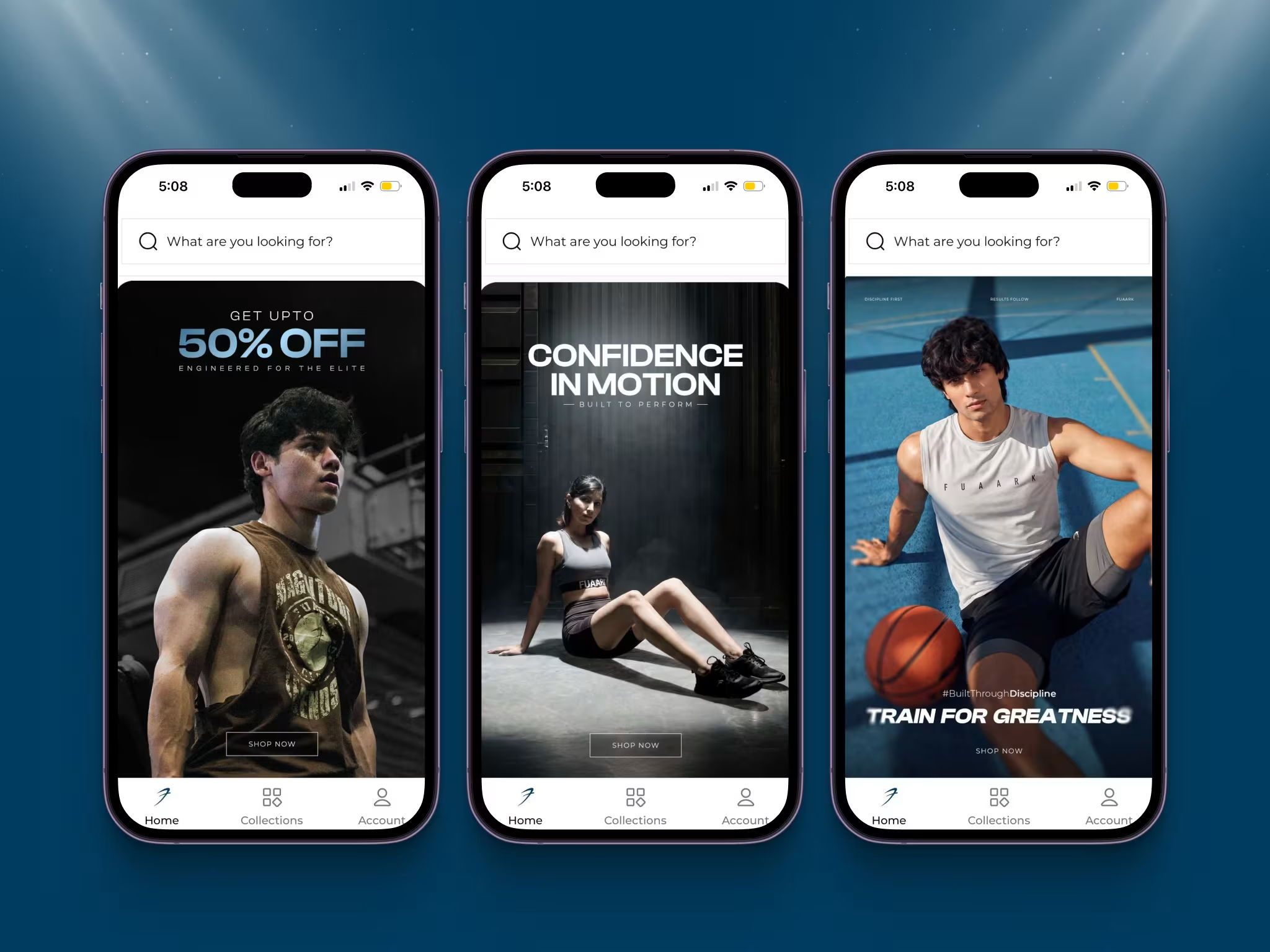
FUAARK's four-day Hustler Sale shows what happens when the app gets treated as more than a smaller website. Checkout on the website was password-locked, giving the app first access to the sale before web shoppers could buy at all. An in-app countdown teaser built anticipation before launch, then a "last day" urgency banner closed the window. Sale traffic ran through app deep links instead of mobile web, and a "Lowest Price Since Launch" merchandising nudge went up mid-sale to reinforce the discount.
App revenue grew 1,047% and app orders grew 1,094% against the seven-day pre-sale baseline. The app's share of orders jumped from 28.3% to 46.4%. Its share of revenue jumped from 32.8% to 52.7%. Both moves happened in four days.
Push notifications carried real weight during the window too. The July 2-5 stretch produced four of the eight highest push-attributed revenue days FUAARK has recorded since launch. Across its full history, push has driven roughly 10% of total app revenue from an open rate of just 1.56%, proof that a small, well-timed channel can still move a meaningful share of sales when the timing lines up with a moment customers already care about.
{{footer-cta}}
Why FUAARK's mobile commerce strategy worked
FUAARK didn't build an app to be a smaller copy of its website. It built a channel where being a repeat customer means something. First access to sales. A direct line through push. A retention curve that's held steady since the very first cohort. For a category built on drops and loyalty, that's what turned a four-day sale into a channel doing nearly half of online revenue.


Great experience with Appbrew. They helped us launch our very first mobile app smoothly, and the backend is genuinely user-friendly. Customization is super easy for non-tech teams, which made day-to-day changes hassle-free.

- Fast, smooth launch of FUAARK's first-ever mobile app
- A non-technical-friendly backend that lets FUAARK's own marketing team make day-to-day changes without engineering support
- Push notification infrastructure that drove ~10% of total app revenue.
- A retention engine that held steady from a 41-buyer first cohort to a several-thousand-buyer scale