


.webp)
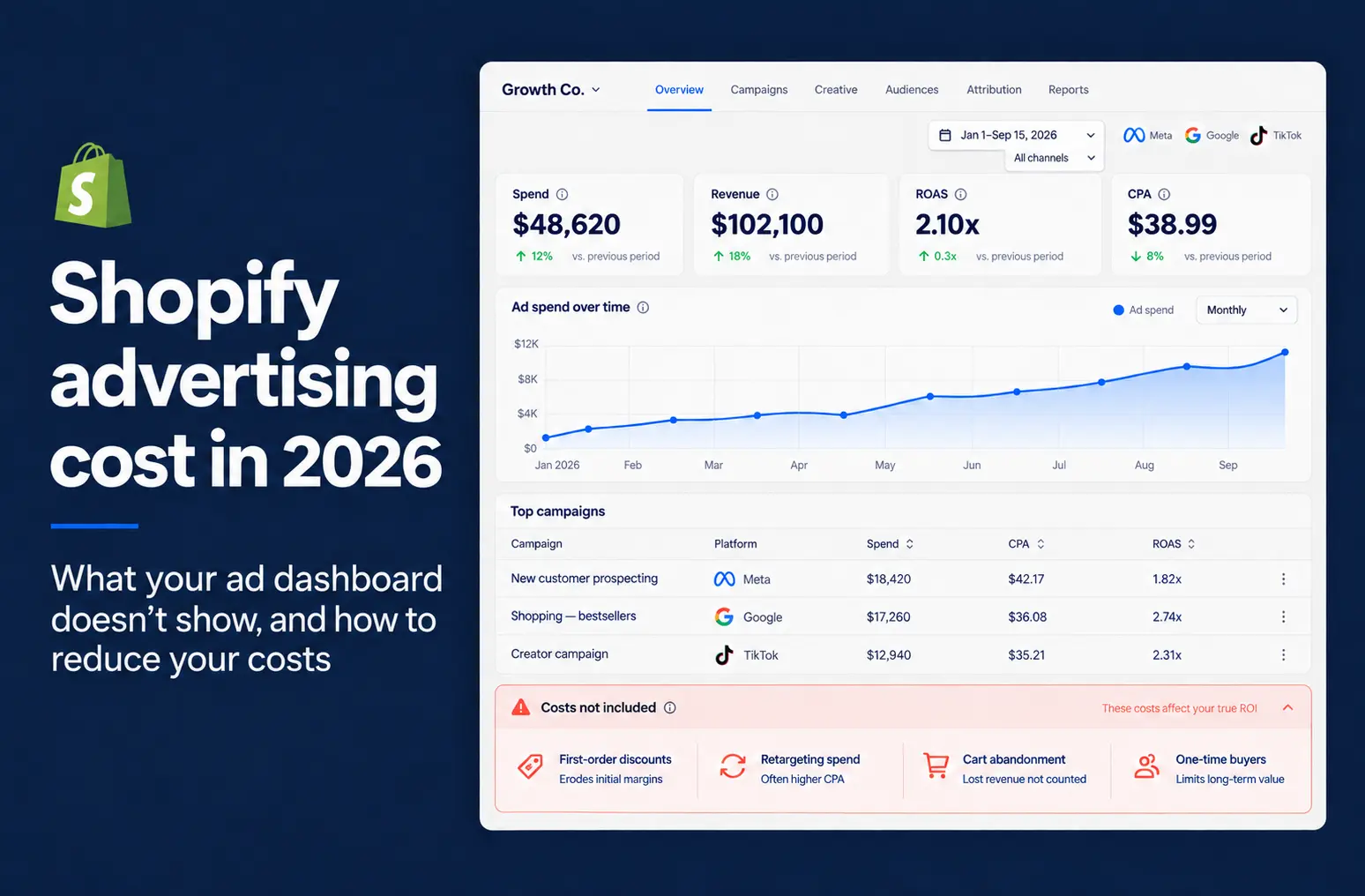
Compare 12 ecommerce app development agencies serving US brands by services, pricing, development model, strengths, limitations, and ideal use cases.
An ecommerce app can cost $50,000 to $300,000 when commissioned from a custom development agency. The first release may take six months. Maintenance, operating-system updates, and new integrations add to the bill after launch.
That level of investment makes sense when the app needs proprietary technology. It is harder to justify when a retailer wants a faster storefront, native product pages, checkout, customer accounts, loyalty, subscriptions, and push notifications. Specialized commerce platforms can handle much of that work with shorter launch timelines and fewer engineering resources.
We reviewed 12 companies that take different approaches to ecommerce app development. The list includes custom development agencies, enterprise consultancies, Shopify-focused platforms, and services that package an existing website as an app.
Each company was assessed using six questions:
- Has it built apps for ecommerce businesses?
- Can shoppers test its published work?
- Does it build native interfaces, cross-platform apps, or webviews?
- Which commerce platforms and third-party integrations does it support?
- What does implementation cost, and how long does it take?
- What happens after the app launches?
TL;DR
- The market splits into three build models: custom agencies ($50K–$300K+), offshore development shops ($10K–$50K), and productized app platforms (low monthly cost, live in weeks). Most of the "which agency" question is really a "which model" question.
- Custom agencies make sense for genuinely custom needs: complex ERP integrations, marketplace logic, or a flagship app that is itself the product. For a standard Shopify storefront, they are usually overkill.
- Appbrew is the top pick for Shopify and Shopify Plus brands that want a native app without a custom build. US brands like Kiyoko Beauty (60% higher conversion on app vs web) and Karma and Luck (50% higher CVR) run on it.
- Budget 15–20% of your original build cost per year for maintenance, whichever model you pick. The apps that fail usually fail here, not at launch.
- The strongest signal that an app is worth building is your repeat-purchase rate. Above 20%, an app pays for itself through retention. Below 10%, fix retention first.
What the best ecommerce app development agencies actually do
An ecommerce app development agency builds and maintains a native mobile app (iOS, Android, or both) that connects to your existing store's catalog, checkout, and customer data. The good ones do more than ship an app. They own the parts you don't want to staff internally.
A full-scope engagement usually covers:
- Discovery and architecture: auditing your platform, mapping integrations, and defining the feature set before anyone writes code.
- UX and UI design: wireframes and high-fidelity screens for product pages, cart, checkout, account, and push flows.
- Development: building the app and wiring it to your backend (catalog, inventory, orders, payments) plus third-party tools like loyalty, reviews, and analytics.
- QA and store submission: testing across real devices and OS versions, then handling the Apple and Google review process.
- Post-launch maintenance: OS updates, bug fixes, and new features, which is where most of the long-term cost lives.
The models differ in how much is built for one retailer. A custom agency scopes and develops the application around proprietary requirements. A productized platform supplies commerce infrastructure that can be configured for the brand. The app builder versus custom development comparison covers the operational differences in more detail.
How we evaluated these ecommerce app development companies
Our research went beyond company websites and marketing claims. Where apps were publicly available, we downloaded and used them firsthand, testing key shopping journeys such as product discovery, search, product pages, cart, checkout, login, and customer accounts. We also looked for signs of native interfaces, cross-platform development, and webview-based experiences.
To evaluate reputation and results, we reviewed published case studies, App Store and Google Play feedback, Shopify App Store and G2 ratings where applicable, and customer discussions on Reddit and other independent platforms.
We compared these findings with service documentation, portfolios, pricing pages, and third-party company profiles to assess each provider’s capabilities, limitations, and real-world ecommerce experience.
Each company was evaluated using the same criteria:
- Ecommerce experience: Evidence of apps built for retailers, marketplaces, or commerce businesses.
- Development model: Custom development, cross-platform engineering, website-to-app conversion, or a productized app platform.
- Mobile architecture: Whether key shopping experiences are native, cross-platform, or delivered through webviews.
- Platform expertise: Experience with Shopify, Adobe Commerce, Magento, WooCommerce, or custom commerce backends.
- Integration capabilities: Support for payments, loyalty, subscriptions, reviews, analytics, marketing, ERP, CRM, and order-management systems.
- Published work: Availability of live apps, portfolios, client examples, and measurable ecommerce outcomes.
- Cost and launch time: Published pricing, estimated project ranges, implementation requirements, and expected timelines.
- Post-launch support: Maintenance, operating-system updates, app-store management, bug resolution, and continued development.
Editorial disclosure: Appbrew publishes this comparison and is included in the list. Its position is based on the evaluation criteria above and its suitability for established retailers. Pricing, services, and platform capabilities can change, so you should verify current information before selecting a provider.
The 12 best ecommerce app development agencies in the USA (2026)
This list spans every model and price point, from productized platforms to enterprise custom shops, so you can match an agency to your actual budget and complexity.
Some are suited to retailers launching a standard shopping app. Others make more sense for marketplaces, unusual buying flows, or enterprise systems that require extensive backend work.
Here is a quick comparison before we examine each company in detail.
|
Company |
Best for |
Core specialty or strength |
Pricing |
|
Appbrew |
Shopify & Shopify Plus |
Fully native storefronts, real-time Shopify sync, no-code merchandising, personalized push, native loyalty and subscriptions, and 120+ integrations |
Starts at $199/month |
|
Appinventiv |
Large Enterprise Builds |
Custom ecommerce apps, multi-vendor marketplaces, AI personalization, and complex ERP/PIM integrations |
$40,000–$300,000 |
|
ScienceSoft |
Omnichannel & B2B Retail |
Secure enterprise architecture, custom payments, headless commerce, and ERP/CRM/PIM integrations |
Typical: $80,000–$200,000 |
|
Droids On Roids |
Mobile Product Teams |
Product strategy, native and cross-platform development, backend engineering, and continuous iteration |
$70,000–$150,000+ |
|
Brainvire |
Adobe Commerce & Magento |
Enterprise mobile commerce, high-volume catalogs, real-time inventory, and ERP integration |
Custom quote |
|
MobiLoud |
Website-to-App Conversion |
Converting existing ecommerce websites into mobile apps while retaining the current website and integrations |
Starts at $1,499/month |
|
Konstant Infosolutions |
Cost-Conscious Custom Builds |
Shopping apps, marketplaces, B2B commerce, loyalty programs, and app modernization |
$25,000–$150,000 |
|
Empat |
Retail Products & Operations |
Customer-facing commerce apps, admin systems, reporting tools, and workflow automation |
Custom quote |
|
BairesDev |
Enterprise Engineering Teams |
Proprietary catalogs, pricing engines, custom checkout, backend development, and staff augmentation |
Custom quote |
|
Simform |
Cloud-Heavy Applications |
Mobile engineering, APIs, microservices, cloud infrastructure, and backend modernization |
Custom quote |
|
Dinarys |
Multi-Platform Ecommerce |
Shopify, Adobe Commerce, Magento, marketplaces, migrations, and custom mobile apps |
$30,000–$150,000+ |
|
Zco Corporation |
US-Based Custom Development |
Bespoke iOS and Android apps, custom backends, cloud integrations, and long-term maintenance |
About $40,000–$200,000+ |
1. Appbrew
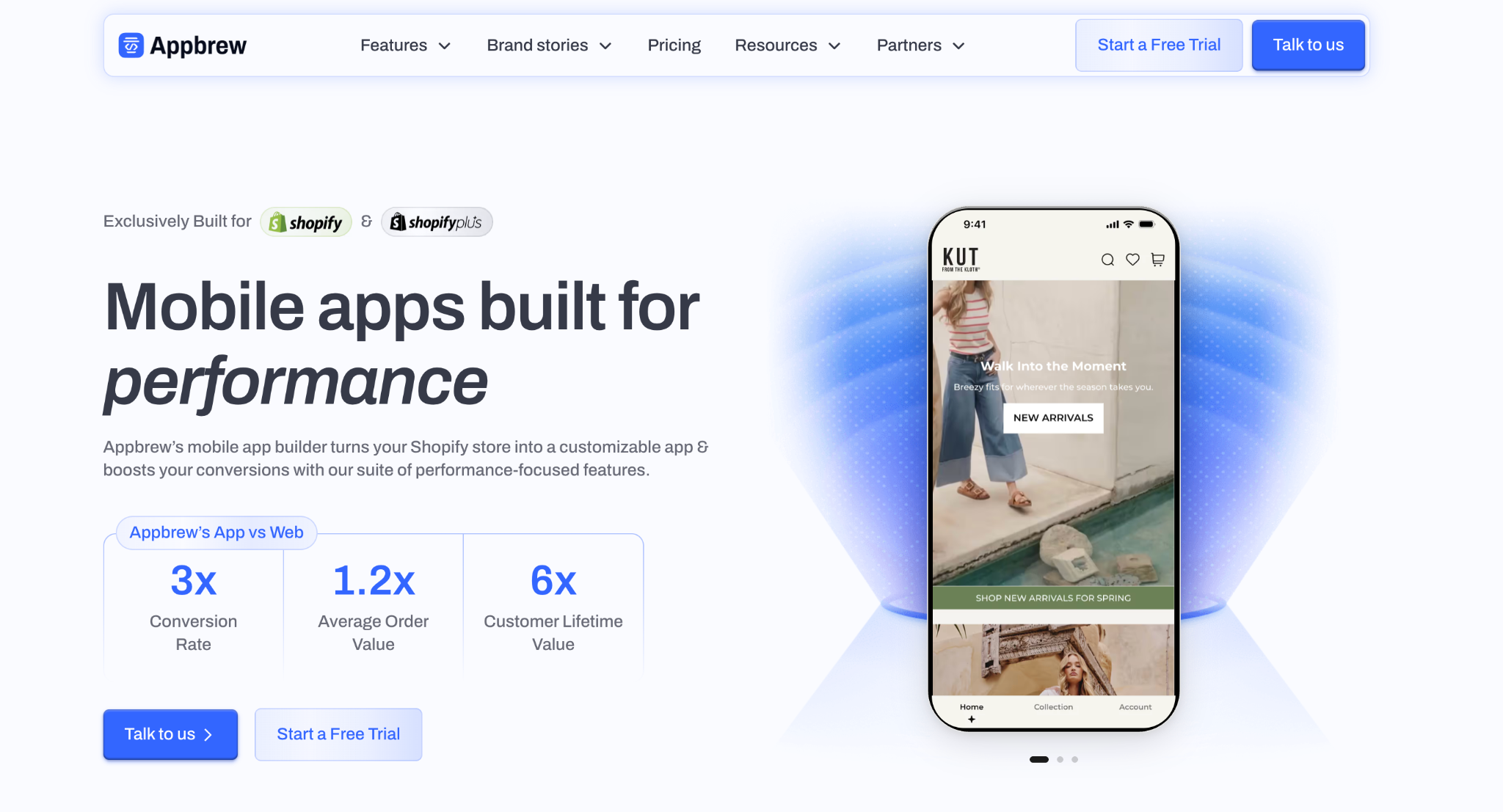
Appbrew is a no-code Shopify mobile app platform used by more than 250 ecommerce brands. It builds native iOS and Android storefronts for Shopify and Shopify Plus retailers, including US brands such as Svaha USA, Anatomie, Karma and Luck, Dermaclara, and Mixology.
The app stays connected to the retailer’s Shopify catalog, inventory, checkout, customer records, and order data. It also works with the loyalty, subscription, review, support, and marketing tools already used by the store. Ecommerce teams can change app layouts, collections, content, and campaigns without maintaining separate iOS and Android codebases.
Standout strengths:
- Purpose-built for ecommerce: personalization, push notifications, subscriptions, and 120+ integrations with Shopify apps brands already run.
- Proven US results: Kiyoko Beauty (60% higher conversion on app vs web, 33% higher AOV), Karma and Luck (50% higher CVR, 25% AOV growth), Anatomie (5x higher LTV).
- Weeks, not quarters: the same conversion lift a $150K custom build delivers, because the gain comes from the channel (a native app with push access), not bespoke code.
Key features
- Native iOS and Android storefronts
- Real-time synchronization with Shopify products, collections, inventory, customers, and orders
- No-code tools for changing layouts and app content
- Native search, product pages, customer accounts, and checkout
- Unlimited push notifications with segmentation and deep links
- Loyalty, subscription, reviews, support, and marketing integrations
- More than 120 integrations, including Klaviyo, Yotpo, Recharge, and LoyaltyLion
- AI-assisted personalization, product recommendations, size guidance, and shopping support
- App analytics and event tracking for GA4, Firebase, Meta, and other marketing tools
Appbrew pros and cons
|
Pros |
Cons |
|
Developed specifically for Shopify and Shopify Plus, provides native shopping interfaces for iOS and Android |
Does not support stores running on Magento or other commerce backends |
|
App content can be changed without submitting a new version for every merchandising update |
Proprietary marketplace logic may require a custom development agency |
|
Supports more than 120 ecommerce and marketing integrations, uses the retailer’s existing Shopify catalog, checkout, customer data, and payment configuration |
Custom features outside the existing platform require separate scoping |
Pricing
Appbrew pricing starts at $199 per month.
Pro at $599 per month.
Enterprise: custom pricing.
Best for: US Shopify and Shopify Plus brands that already have a working ecommerce operation and want to add a native mobile storefront without commissioning separate iOS and Android builds.
Verdict
Appbrew fits established US Shopify brands that want to turn mobile traffic and repeat customers into an owned app channel. Its Shopify connection removes much of the work involved in synchronizing products, inventory, customers, checkout, and orders.
2. Appinventiv
Appinventiv is a custom software development company with offices in New York and other international markets. It designs and develops ecommerce apps, marketplaces, retail systems, and supporting backend infrastructure. Its ecommerce work includes applications for Adidas and Edamama.
Key features
- Native iOS and Android development
- Cross-platform development using Flutter and React Native
- Custom ecommerce and marketplace applications
- Headless commerce architecture
- Customer, inventory, loyalty, and order-management integrations
- AI-based product recommendations and predictive search
- Augmented reality and virtual product experiences
- Payment gateway and third-party API integration
- Quality assurance, deployment, monitoring, and version updates
Appinventiv pros and cons
|
Pros |
Cons |
|
Covers product strategy, design, engineering, testing, and maintenance |
Requires a larger upfront investment than a subscription app platform |
|
Builds proprietary ecommerce applications around the client’s requirements |
Appinventiv estimates a three-to-nine-month development timeline |
|
Offers native and cross-platform development |
The retailer must scope, review, and manage a custom software project |
|
Maintains a New York presence and offers post-launch support |
New features and integrations may require additional development work |
Pricing
Appinventiv estimates that custom ecommerce app development costs between $40,000 and $300,000. The final cost depends on the platforms, feature set, interface design, backend architecture, security requirements, integrations, and use of technologies such as AI or augmented reality.
Best for: Enterprises and funded companies building a proprietary ecommerce application, multi-vendor marketplace, or retail system that cannot be assembled from an existing commerce platform and standard integrations.
Verdict
Pick Appinventiv when your app is a large, integration-heavy build and offshore delivery at scale is acceptable.
3. ScienceSoft
ScienceSoft is a US-headquartered software development and IT consulting company based in McKinney, Texas.
Its mobile commerce services cover business analysis, UX and UI design, native and cross-platform development, backend engineering, testing, integrations, and application support. ScienceSoft also works with headless commerce, Adobe Commerce, microservices, and progressive web apps.
Key features
- Native iOS and Android development
- Cross-platform development using React Native and Flutter
- Mobile commerce strategy and business analysis
- UX research, interface design, and prototyping
- Product catalog, cart, account, wishlist, and delivery-tracking development
- Payment integrations with providers such as Visa, Mastercard, PayPal, and Stripe
- Loyalty programs, coupons, bonuses, and store-location features
- ERP, CRM, PIM, inventory, and order-management integrations
- Quality assurance, security testing, maintenance, and technical support
ScienceSoft pros and cons
|
Pros |
Cons |
|
Covers consulting, design, development, testing, integration, and support |
Average-complexity apps fall into a six-figure published price range |
|
Has experience connecting commerce apps with enterprise systems |
Projects require detailed discovery and technical scoping before development |
|
Offers native, cross-platform, PWA, and responsive web development |
A full-service engineering engagement may be excessive for a standard Shopify storefront |
|
Is headquartered in Texas and works with US clients |
Custom features continue to require engineering work after launch |
Pricing
ScienceSoft estimates that a mobile app of average complexity costs between $80,000 and $200,000.
- Simple application: $30,000 to $80,000
- Medium-complexity application: $80,000 to $200,000
- High-complexity application: $200,000 to $500,000
Best for: US retailers and enterprises that need a custom commerce application connected to ERP, CRM, inventory, payment, or other internal systems.
Verdict
ScienceSoft makes sense when the mobile app is one part of a larger technology project. Its experience covers architecture, backend integration, QA, and long-term support. Ecommerce brands seeking a standard native storefront may find a specialized app platform faster and less expensive.
4. Droids On Roids
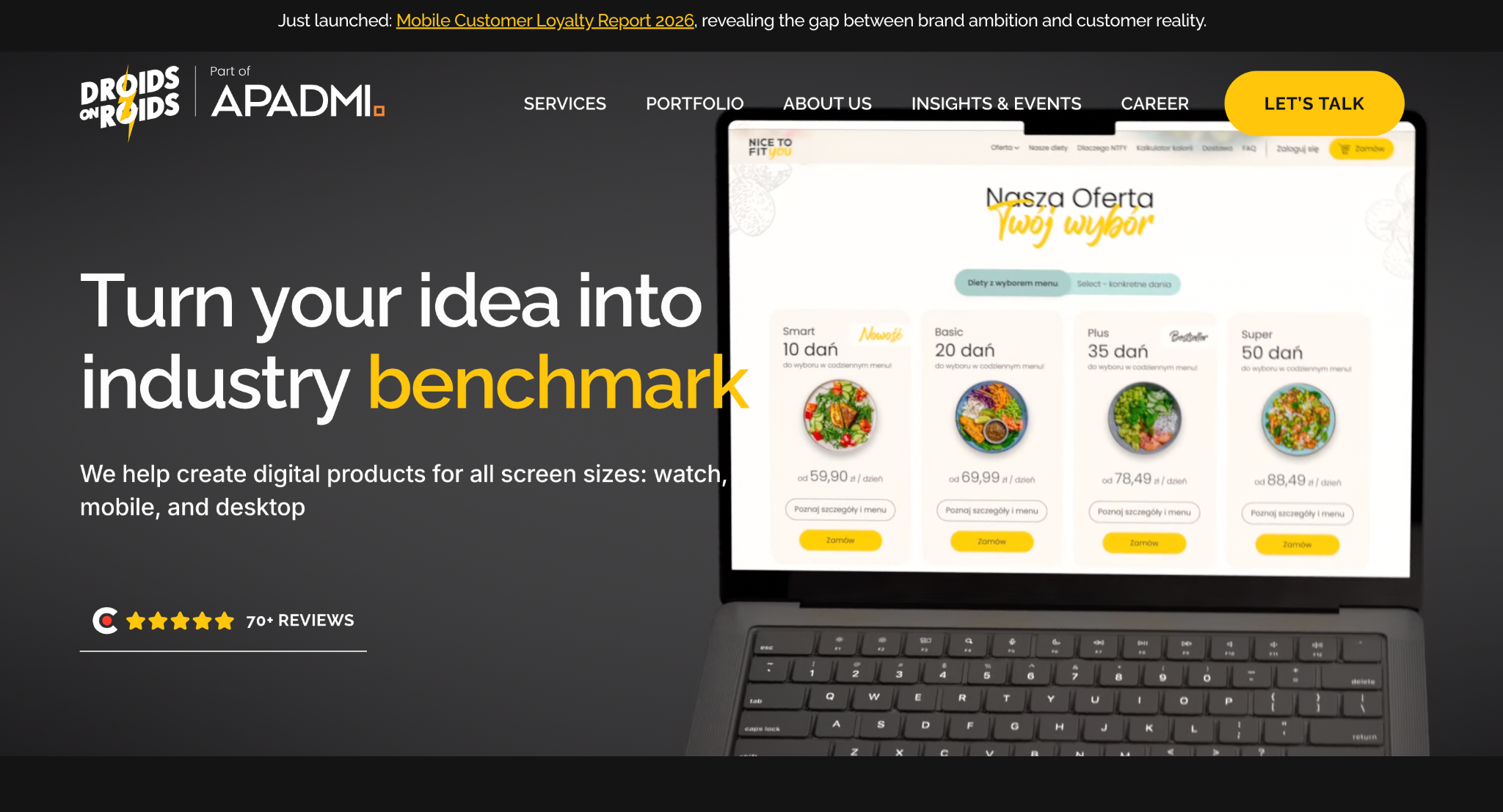
Droids On Roids is a mobile and web development company based in Wrocław, Poland. Founded in 2011, it became part of the Apadmi Group in 2025. The company works with clients in the United States, the United Kingdom, and Europe.
Its ecommerce service covers product discovery, UX design, mobile engineering, backend development, testing, release, and maintenance. Teams can build native iOS and Android apps or use cross-platform technologies such as Flutter and Kotlin Multiplatform.
Key features
- Native iOS and Android development
- Flutter and Kotlin Multiplatform development
- Product strategy and discovery workshops
- UX research, interface design, and prototyping
- Product catalog, search, cart, checkout, and customer account development
- Payment gateway integration
- CRM, ERP, analytics, and marketing integrations
- Loyalty programs, personalization, and push notifications
- Quality assurance, app-store release, maintenance, and product updates
Droids On Roids pros and cons
|
Pros |
Cons |
|
Provides product strategy, design, engineering, QA, and maintenance |
Custom ecommerce projects require a substantial upfront budget |
|
Offers native and cross-platform development |
Development takes longer than launching through a commerce app platform |
|
Has published work in ecommerce and retail |
The retailer remains responsible for managing a custom software product |
|
Can connect apps with payment, CRM, ERP, and marketing systems |
New integrations and major interface changes require development work |
Pricing
Droids On Roids states that its custom ecommerce app projects typically cost between $70,000 and $150,000 or more, depending on the scope and integrations.
Best for: Mid-market and enterprise teams commissioning a custom commerce app that requires product design, backend development, and integrations with internal systems.
Verdict
Droids On Roids suits companies that want an external team to design and develop a mobile product from the ground up.
5. Brainvire
Brainvire is a digital engineering company headquartered in Irving, Texas, with offices and delivery teams in several international markets. Its mobile commerce practice covers native apps, cross-platform development, interface design, backend systems, and integrations with enterprise software.
The company works with Adobe Commerce, Magento, Shopify, and custom ecommerce systems. Its services include real-time inventory, customer accounts, payment flows, order management, loyalty programs, and connections with ERP and CRM software.
Key features
- Native iOS and Android development
- Cross-platform development with React Native and Flutter
- Adobe Commerce and Magento mobile commerce
- Shopify and custom ecommerce development
- Real-time product and inventory synchronization
- Customer accounts, payments, and order management
- ERP and CRM integrations
- AI-based product recommendations
- AR and VR product experiences
- Mobile app modernization and post-launch support
Brainvire pros and cons
|
Pros |
Cons |
|
Has a dedicated mobile commerce practice |
Does not publish standard mobile commerce pricing |
|
Works with Adobe Commerce, Magento, Shopify, and custom systems |
Project cost and timeline depend on the required integrations |
|
Maintains a headquarters and client-service presence in Texas |
Major changes require continued engineering work |
|
Can connect mobile apps with ERP, CRM, inventory, and order systems |
Marketing teams may depend on developers unless content-management tools are included |
|
Supports native and cross-platform development |
Its enterprise delivery model may be excessive for a standard Shopify app |
Pricing
Custom quote.
Best for: Mid-market and enterprise retailers that need a custom mobile app connected to Adobe Commerce, Magento, Shopify, or internal business systems.
Verdict
Brainvire is a practical candidate when the app forms part of a larger ecommerce implementation. Its experience with Adobe Commerce, Magento, ERP connections, and high-volume catalogs is relevant to retailers with complex operations.
6. MobiLoud
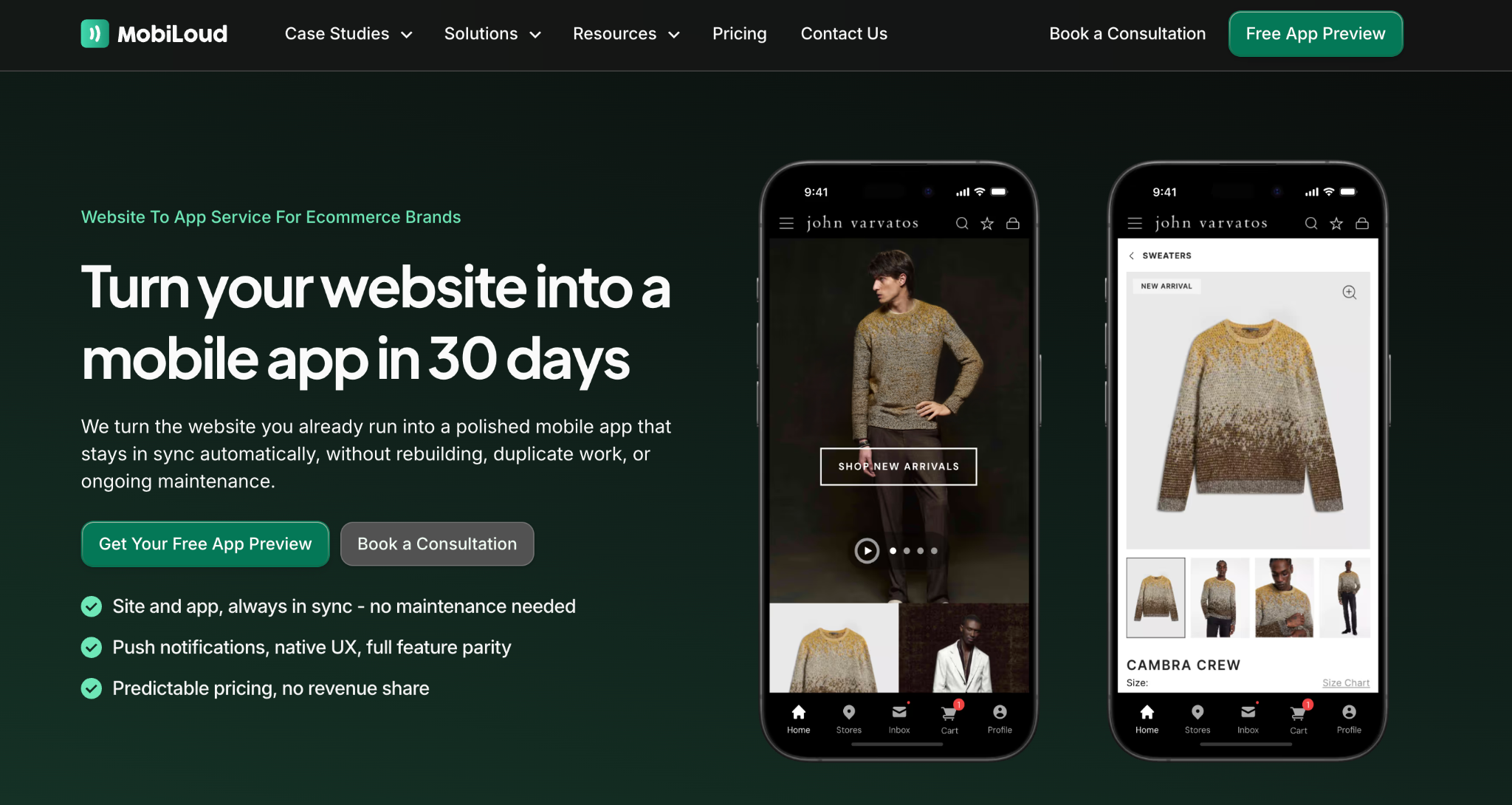
MobiLoud turns an existing ecommerce website into an iOS and Android app. The live website remains the foundation for the product catalog, account experience, checkout, and installed ecommerce tools. Changes made to the site appear in the app without rebuilding the same feature in another codebase.
This model suits retailers whose mobile website already provides the desired shopping experience. App speed and interface quality remain closely connected to the underlying website.
Key features
- iOS and Android apps built on the existing mobile website
- Compatibility with the website’s current ecommerce tools
- Existing checkout, account, and payment flows carried into the app
- Unlimited push notifications
- Automated cart-recovery notifications
- App Store and Google Play submission
- Ongoing updates and maintenance
- Support for several ecommerce platforms
- Retention of website-based B2B pricing and approval workflows
MobiLoud pros and cons
|
Pros |
Cons |
|
Reuses the existing website and technology stack |
The app experience depends on the speed and usability of the mobile website |
|
Existing website integrations continue working |
Product and checkout interfaces are not rebuilt as fully native screens |
|
MobiLoud handles submission and ongoing maintenance |
Native customization is more limited than a ground-up build |
|
Works with several ecommerce platforms |
A weak mobile website will produce a weak app experience |
|
Site changes appear in the app without duplicate development |
Pricing is higher than many self-service app builders |
Pricing
MobiLoud’s monthly plans are priced at:
- Business: $1,499 per month
- Enterprise: custom
Best for: Retailers with a well-designed mobile website that want an app without rebuilding their storefront and integrations in a separate system.
Verdict
MobiLoud reduces duplicate development by using the website as the source of the app experience. This can work well for stores whose websites already support custom pricing, account rules, and uncommon integrations. Brands seeking native product pages, native navigation, or an app experience that differs substantially from the website should consider another development model.
7. Konstant Infosolutions
Konstant Infosolutions is a custom software and mobile app development company based in India, with a US office in Florida. Its ecommerce practice covers shopping apps, marketplaces, B2B commerce, loyalty programs, and app modernization.
The company develops native iOS and Android applications along with cross-platform products. Its services can include consulting, interface design, backend development, payment integration, testing, deployment, and maintenance.
Key features
- Native iOS and Android development
- Cross-platform application development
- Custom shopping and marketplace apps
- B2B commerce development
- Product catalogs, search, filters, and wishlists
- Payment gateway integration
- Inventory synchronization and order tracking
- Loyalty and rewards programs
- App migration and modernization
- Maintenance and post-launch support
Konstant Infosolutions pros and cons
|
Pros |
Cons |
|
Publishes an ecommerce development price range |
The lower end of the range may cover only limited functionality |
|
Supports shopping apps, marketplaces, and B2B commerce |
Final cost can rise with integrations and multiple platforms |
|
Provides development and ongoing maintenance |
The retailer must manage a custom software project |
|
Offers native and cross-platform development |
New functionality requires engineering work |
Pricing
Konstant Infosolutions states that custom ecommerce app development typically costs between $25,000 and $150,000. The final price depends on the app’s features, target platforms, development location, project size, and maintenance requirements.
Best for: Companies seeking a custom shopping app, marketplace, or B2B commerce product with a lower entry price than several enterprise agencies.
Verdict
Konstant Infosolutions covers the services required to commission and maintain a custom commerce app. Its broad price range leaves room for smaller projects, though buyers need a detailed scope to understand what the initial quote includes.
{{cta}}
8. Empat
Empat is a product development company that builds mobile apps, web platforms, and internal software. Its retail and ecommerce practice covers digital storefronts, customer portals, order-management tools, reporting systems, and workflow automation.
The company supports mobile development and provides Shopify and Magento engineering. Retail projects can include custom checkout flows, customer-facing products, admin systems, CRM and ERP connections, and software used by internal operations teams.
Key features
- Mobile app design and development
- Custom ecommerce platforms and digital storefronts
- Shopify development
- Magento development and custom extensions
- Customer portals and shopping flows
- Order-management and internal retail systems
- Admin dashboards and reporting tools
- CRM and ERP integrations
- Product discovery, UX design, and prototyping
- Dedicated development teams
Empat pros and cons
|
Pros |
Cons |
|
Combines product discovery, design, and engineering |
Ecommerce is one part of a broader software practice |
|
Supports customer-facing apps and internal retail systems |
Does not publish standard ecommerce app pricing |
|
Works with Shopify and Magento |
Final cost and timeline require a custom scope |
|
Can build admin, reporting, and operational tools alongside the app |
Ongoing changes require access to a development team |
|
Offers dedicated developers for existing product teams |
It may be excessive for a retailer that only needs a Shopify storefront app |
Pricing
Custom quote.
Best for: Startups and established companies building a customer-facing commerce product together with custom admin, reporting, or operational software.
Verdict
Empat is most relevant when the project extends beyond a shopping interface. Work that includes internal workflows, custom reporting, or a proprietary commerce backend can use its broader product-development capabilities.
9. BairesDev
BairesDev provides custom software development and staff augmentation for companies in the United States and other markets. Its ecommerce service covers native mobile apps, custom commerce platforms, product-management systems, pricing engines, multi-tenant storefronts, and checkout flows.
Key features
- Native iOS and Android development
- Hybrid and cross-platform mobile development
- Custom ecommerce platforms
- Configurable product-management systems
- Advanced pricing engines
- Multi-tenant storefronts
- Custom checkout processes
- Backend and API development
- Staff augmentation
- Deployment and post-launch support
BairesDev pros and cons
|
Pros |
Cons |
|
Can deliver a complete application or augment an internal team |
Does not publish standard ecommerce app pricing |
|
Builds custom catalog, pricing, and checkout logic |
Staff augmentation requires internal product and engineering management |
|
Covers mobile interfaces and backend architecture |
Custom development takes longer than using an app platform |
|
Supports native and hybrid applications |
Its service model may be unnecessary for a standard retail storefront |
Pricing
Custom quote.
Best for: Enterprises with proprietary catalog, pricing, checkout, or marketplace requirements, including teams that need additional mobile engineers.
Verdict
BairesDev is an engineering partner rather than an ecommerce app product. It can provide the people needed to build custom systems or extend an internal team. That flexibility suits proprietary products, but it also places more product management and long-term ownership on the retailer.
10. Simform
Simform is a digital engineering company with offices across the United States. Its mobile practice builds native iOS and Android applications along with cross-platform products using React Native, Flutter, and Xamarin.
The company’s ecommerce work covers product catalogs, shopping flows, account systems, backend services, API connections, and cloud infrastructure. Simform also develops microservices and serverless systems for applications that need to process high traffic or connect with several business platforms.
Key features
- Native iOS and Android development
- React Native, Flutter, and Xamarin development
- Ecommerce app design and engineering
- API and third-party service integration
- Cloud architecture and migration
- Microservices and serverless development
- Backend modernization
- Application security and testing
- DevOps and release automation
- Product maintenance and engineering support
Simform pros and cons
|
Pros |
Cons |
|
Combines mobile development with cloud and backend engineering |
Does not publish standard ecommerce app pricing |
|
Supports native and cross-platform technologies |
Buyers need a discovery process to estimate the final cost |
|
Can modernize the systems behind the mobile app |
Custom development requires continued engineering support |
|
Maintains several US offices |
Its technical scope may be excessive for a standard Shopify app |
|
Fits applications with complex infrastructure requirements |
Development takes longer than a productized app launch |
Pricing
Custom quote.
Best for: Retailers and software companies building commerce apps that require substantial API, cloud, microservices, or backend work.
Verdict
Simform fits projects where the mobile interface cannot be separated from the infrastructure behind it. Its cloud and backend work distinguishes it from mobile-only studios. A retailer with a working Shopify backend and conventional storefront requirements may use only a small part of those capabilities.
11. Dinarys
Dinarys is an ecommerce development company with experience in mobile apps, online stores, marketplaces, and platform migrations. It works with Shopify, Adobe Commerce, Magento, BigCommerce, and custom commerce systems.
Its mobile services cover Android and iOS development, product catalogs, payment processing, customer accounts, order management, and third-party integrations. The company also develops progressive web apps and platform-specific extensions.
Key features
- Native Android development using Kotlin
- Native iOS development using Swift
- Custom ecommerce mobile apps
- Shopify app and store development
- Adobe Commerce and Magento development
- Product catalog and inventory features
- Payment gateway integration
- Customer accounts and order management
- Marketplace development
- PWA development and ecommerce migration
Dinarys pros and cons
|
Pros |
Cons |
|
Specializes in ecommerce development |
An enterprise app can exceed $150,000 |
|
Works with Shopify, Magento, and other commerce platforms |
Final cost depends heavily on platform and integration requirements |
|
Can develop the store, mobile app, and custom extensions |
Marketing updates may require development unless management tools are included |
|
Offers native Android and iOS development |
Separate native builds increase maintenance work |
Pricing
Dinarys states that ecommerce app development ranges from $30,000 for a basic application to $150,000 or more for an enterprise product.
Best for: Retailers that need custom mobile development alongside Shopify, Adobe Commerce, Magento, or marketplace engineering.
Verdict
Dinarys has a clearer commerce focus than a general mobile agency. That matters when the project involves a store migration, custom Magento modules, or work across the commerce backend and mobile app. Shopify brands that do not require custom backend development should compare its project cost with a native app platform.
12. Zco Corporation
Zco Corporation is a US mobile app development company founded in 1989. It has offices in New Hampshire, Massachusetts, and New York and reports a team of more than 250 mobile development specialists.
The company develops native iOS and Android apps, cross-platform applications, progressive web apps, and custom backend systems. Its technology stack includes Swift, Kotlin, React Native, Flutter, .NET MAUI, AWS, and Azure.
Zco works across several industries rather than focusing only on ecommerce. Retailers can engage the company to design and build a proprietary shopping app, connect it with APIs and internal systems, and maintain the product after launch.
Key features
- Native iOS development with Swift
- Native Android development with Kotlin
- React Native and Flutter development
- Progressive web app development
- UX and interface design
- Custom backend and API integration
- AWS and Azure cloud development
- AR, VR, and IoT capabilities
- Quality assurance and app-store deployment
- Maintenance and staff augmentation
Zco Corporation pros and cons
|
Pros |
Cons |
|
Has more than 35 years of software-development experience |
Does not specialize exclusively in ecommerce |
|
Maintains development and client-service operations in the US |
A basic application starts around $40,000 |
|
Supports native, cross-platform, and PWA development |
Custom projects typically take three to nine months |
|
Can build custom backends and API integrations |
Features and integrations require continued engineering work |
Pricing
Zco estimates that:
- A basic app costs approximately $40,000
- A medium-complexity app costs approximately $100,000
- A complex app costs $200,000 or more
The company states that custom mobile applications typically take three to nine months from concept to launch.
Best for: US companies that want a domestic development partner for a proprietary mobile application with custom backend or integration requirements.
Verdict
Zco is a strong fit when US presence and a long operating history are important selection criteria. Its team can handle the interface, mobile code, backend, cloud infrastructure, and release process. Retailers should confirm how much ecommerce-specific experience the proposed delivery team has before committing to a custom build.
Questions to ask before hiring an ecommerce app development agency
A polished proposal can hide important differences in architecture, ownership, maintenance, and ongoing costs. Ask each company the same questions so you can compare the answers directly.
1. Can we download and test ecommerce apps you have built?
Ask for live App Store and Google Play links. Prioritize apps built for retailers with a similar catalog size, ecommerce platform, and technology stack.
Test the search, filters, product pages, cart, checkout, login, order history, and account features. Check how quickly screens load and whether any part of the shopping flow opens a mobile webpage.
Screenshots and prototypes do not show how an app performs with real shoppers, live inventory, and third-party integrations.
2. Is the app native, cross-platform, or webview-based?
These terms describe different technical approaches.
A native app uses mobile interfaces built for iOS and Android. Cross-platform frameworks such as React Native and Flutter share code across both platforms while retaining access to native device features. A webview displays website content inside an app container.
Ask the company to identify which screens are native and which use webviews. Product pages, search, customer accounts, subscriptions, loyalty, and checkout deserve particular attention.Our PWA versus native app guide explains where browser-based and native experiences differ.
3. Have you worked with our ecommerce platform?
Experience with a platform such as Shopify, Adobe Commerce, Magento, BigCommerce, or WooCommerce reduces the amount of custom integration work.
Ask how the company handles product data, customer accounts, discounts, inventory, checkout, payments, taxes, and order creation on your platform. A general mobile developer may understand app engineering without understanding the commerce rules behind the storefront.
4. Which parts of our existing technology stack will work in the app?
Prepare a list of the tools used for search, loyalty, subscriptions, reviews, customer support, analytics, attribution, returns, and marketing automation.
Ask the company to classify each integration as:
- Already supported
- Available through an API
- Displayed through a webview
- Requiring custom development
- Not supported
A logo on an integrations page does not confirm that every feature works natively inside the app. Use this Shopify mobile app integrations guide to build a stack-specific checklist before vendor calls.
5. How will store data stay synchronized?
Products, variants, prices, inventory, customer records, discounts, and orders should remain consistent across the website and app.
Ask whether synchronization happens in real time, through webhooks, on a fixed schedule, or through manual updates. Find out what happens when an API request fails or inventory changes while a customer is checking out.
The app should not create a second catalog that the ecommerce team has to maintain.
6. Who owns the source code and customer data?
A custom development contract should state who owns the application code, designs, documentation, and backend systems. A platform agreement should explain what the retailer owns and what remains the provider’s intellectual property.
The retailer should retain access to customer data, analytics, attribution data, and campaign history. Ask which formats are available if the information needs to be exported.
7. Who controls the Apple and Google developer accounts?
The app should be published through developer accounts owned by the retailer. This keeps the store listing, bundle ID, package name, ratings, reviews, and install history under the brand’s control.
If the provider publishes through its own account, ask what happens when the contract ends or the brand moves to another company.
8. What is included in the quoted price?
Request a written breakdown covering:
- Product strategy and discovery
- UX and interface design
- iOS and Android development
- Backend development
- Third-party integrations
- Quality assurance
- App Store and Google Play submission
- Hosting and infrastructure
- Maintenance and operating-system updates
- Support
- New feature development
Check for setup charges, revenue-based fees, minimum contract terms, API costs, and separate maintenance retainers.
9. How are bugs, OS updates, and new features handled after launch?
Apple, Google, Shopify, payment providers, and third-party apps change their APIs and policies. The mobile product needs ongoing maintenance even when the retailer is not adding features.
Ask what the support agreement classifies as a bug, a platform update, and a new feature. Confirm response times for checkout failures, crashes, login problems, and payment issues.
10. What support is available during US business hours?
Ask where the support team is located and which hours it covers. Confirm the escalation process for urgent issues that affect orders or customer access.
A support promise such as “24/7 availability” should be backed by response-time commitments for critical, high-priority, and routine requests.
11. How will app performance and revenue be measured?
The app should track more than downloads and push-notification opens.
Ask how it measures:
- Conversion rate
- Average order value
- Revenue per user
- Repeat purchase rate
- Customer lifetime value
- App-attributed revenue
- Push-notification revenue
- Install-to-purchase conversion
- Crashes and screen-load times
Confirm that events can be sent to the retailer’s own GA4, Firebase, Meta, and attribution accounts. Conversion rate, average order value, retention, and app revenue should be measured against mobile web using the same definitions. See the mobile conversion rate guide for the metrics that deserve attention.
12. What happens if we end the contract?
This question should be answered before development starts.
Confirm whether the app will remain live, how long the retailer can access the platform, and which data can be exported. Ask whether another provider can reuse the existing bundle ID and package name so customers receive an update instead of downloading a new app.
The exit terms should also cover source code, design files, analytics history, integrations, notification tokens, and technical documentation.
Do you need a custom ecommerce app development agency?
Before you shortlist an agency, identify which requirements cannot be handled by your commerce platform or existing integrations.
Custom development is justified when the mobile product requires proprietary architecture or workflows. A Shopify brand that needs a native catalog, customer accounts, subscriptions, loyalty, checkout, analytics, and push notifications may be able to use an app platform instead.
A custom agency is the right call in a narrow set of cases:
- You need non-standard integrations with a legacy ERP, marketplace, or fulfillment system.
- The app itself is the product, not a companion to your store.
- The buying flow cannot run through your existing commerce backend.
- Your internal team can manage discovery, development, QA, and ongoing maintenance.
Here's a quick way to decide whether an app of any kind is worth it yet:
- Repeat-purchase rate above 20%: an app pays for itself through retention. Build it.
- Mobile traffic above 50% of your total: your shoppers are already mobile-first, so app adoption potential is high.
- Annual revenue above $1M: the app can realistically drive 10–35% of revenue, enough to justify the spend.
- Any of these missing: fix the fundamentals first. An app won't rescue weak retention or a broken mobile site.
Final verdict
There is no single development model that fits every retailer. Appbrew is the most relevant option in this list for established Shopify and Shopify Plus brands that want a native storefront connected to their current commerce stack. MobiLoud fits retailers that want to reuse an existing mobile website. Custom agencies fit marketplaces, proprietary backends, and projects with unusual integration or fulfillment requirements.
Shortlist companies based on live ecommerce work, architecture, integration coverage, ownership terms, support, and three-year cost. Then test the apps they have already shipped.
{{cta2}}
FAQs
What is the best ecommerce app development company?
The best company depends on the commerce platform and the amount of proprietary development required. Appbrew fits Shopify and Shopify Plus brands that want a native storefront connected to their existing store. A custom agency is more suitable for a proprietary marketplace, unusual fulfillment logic, or a commerce system built outside Shopify.
How much does it cost to hire an ecommerce app developer in the USA?
Published prices in this comparison range from $199 per month for Appbrew to $200,000 or more for complex custom development. Cost depends on the development model, platforms, integrations, backend systems, interface requirements, and post-launch support. Compare the three-year cost rather than the initial price alone.
How long does it take to build an ecommerce app?
A platform-based Shopify app can launch in days or weeks. MobiLoud states that its website-based apps typically take six to eight weeks. Custom ecommerce apps commonly take three to nine months, while enterprise projects with extensive backend work may take longer.
Should I use an ecommerce app development agency or an app builder?
Use an agency when the product requires custom logic, complex integrations, or proprietary architecture. Use an ecommerce app platform when the existing store already handles the catalog, inventory, customers, and checkout, and the goal is to add a branded mobile storefront without developing each layer separately.
What is the difference between an ecommerce app developer and a mobile commerce development service?
An ecommerce app developer handles software engineering. A mobile commerce development service may also cover product strategy, interface design, integrations, app-store submission, analytics, maintenance, and post-launch support. Buyers should check which services are included in the quoted price.
Can Shopify stores create native mobile apps?
Yes. A Shopify store can connect its products, inventory, customers, checkout, and orders to a native iOS and Android app. A Shopify-focused platform handles this connection without requiring the retailer to rebuild its commerce backend or maintain separate mobile development teams.
Who should own the Apple and Google developer accounts?
The retailer should own both accounts. This keeps the app listing, bundle ID, package name, ratings, reviews, and install history under the brand's control. The development company can receive the permissions needed to submit and maintain the app without owning the accounts.