.webp)
A complete guide to the types of discounts, from percentage-off and BOGO to trade and cash discounts, with clear examples and when to use each one.
Your customers already assume a discount is coming. They add items to a cart, then open a second tab to hunt for a code before they will click buy. Ninety-two percent of online shoppers look for an offer or coupon before completing a purchase, and 82% say the availability of a digital coupon influences which store they buy from in the first place (Capital One Shopping and Opia data, 2026).
So the real question was never whether to discount. It is which type of discount to run, and when. Most stores default to a blanket percentage off, watch revenue tick up, and never notice the margin quietly bleeding out of every order. A percentage-off sale and a minimum-spend threshold can produce the same headline revenue while doing opposite things to your profit.
This guide breaks down 20+ types of discounts across: promotional and retail offers, and the trade and financial discounts.
TL;DR
- Discounts fall into three families: promotional/marketing, retail/ecommerce, and trade/financial.
- 92% of online shoppers look for an offer before buying, and 82% say coupon availability influences which store they choose.
- Percentage-off is the default, but dollar-off, BOGO, free shipping, and minimum-spend offers each move a different number: conversion, average order value, or inventory clearance.
- Free shipping is the single most effective coupon type for driving conversions at 73%, and 46% of shoppers will add items to a cart to hit a free-shipping or tiered threshold (2026 coupon marketing benchmarks).
- The right discount depends on your goal. Match the type to the objective (acquisition, AOV, retention, or clearance), then protect margin with rules, thresholds, and expiry dates.
What is a discount?
A discount is a reduction from the normal price of a product or service, offered to trigger a purchase, reward a behavior, or clear inventory. That is the whole concept. Everything below is a variation on who gets the reduction and what they have to do to earn it.
Discount amount = original price × discount rate.
A 20% discount on a $100 product removes $20, so the customer pays $80. A fixed $15-off coupon on that same $100 product leaves the price at $85. The framing changes how the offer feels even when the savings are close, which is why the type of discount matters as much as the size.
A few terms get used interchangeably and shouldn't be. A discount is the price reduction itself. A coupon or promo code is the mechanism that unlocks it. A markdown is a permanent price drop on slow-moving stock, not a promotion. A sale is a discount applied across a range of products for a set window. Keep those straight and your reporting stays clean.
Why businesses offer discounts
Discounts work because they change behavior at the moment of decision. Consumers are twice as likely to buy a product with a 20% discount than at full price, and a 50% discount makes them 99% more likely to purchase (Capital One Shopping, 2026). Discounting is one of the few levers that moves both traffic and conversion at once.
Beyond the immediate sale, the right discount does specific jobs for your store:
- Acquires new customers. A first-order or welcome discount lowers the barrier for someone trying your brand for the first time.
- Lifts average order value. Minimum-spend and bundle offers push customers to add one more item, raising the value of each transaction.
- Clears inventory. Seasonal markdowns and bundles move overstock before it ties up cash.
- Builds retention. Loyalty and referral discounts reward the behavior you want repeated.
The danger is treating all four goals with the same tool. A blanket sitewide sale acquires, clears, and rewards indiscriminately, which means you are handing margin to loyal customers who would have paid full price anyway.
Promotional and retail discount types
These are the offers you run to drive sales, the category most ecommerce stores live in.
Shopify’s native discount system offers a few basic discount options, but for more advanced discount features, you can use discount apps like AIOD - All-in-1 Discount, this app provides 8+ automatic discount types, including bundles, BOGO, free gifts, volume discounts, tiered pricing, and more, helping you maximize your sales effortlessly.
Here are 15 that cover the vast majority of ecommerce use cases.
1. Percentage-off offers
Percentage-off discounts, such as “20% off,” are popular for a reason: they’re simple, attractive, and effective. This type of offer instantly gives customers a sense of savings and can be used sitewide, on specific categories, or on individual products.
It works well for both new and returning customers, helping to increase conversions by providing a straightforward incentive.
2. BOGO deals (buy one, get one)
BOGO deals encourage customers to buy multiple products by offering a second item for free or at a discounted rate. This type of discount is excellent for moving inventory, increasing average order value, and enticing customers to try new products. BOGO offers can be tailored, like “Buy One, Get One 50% Off,” to maximize both sales and customer satisfaction.
3. Free shipping offers
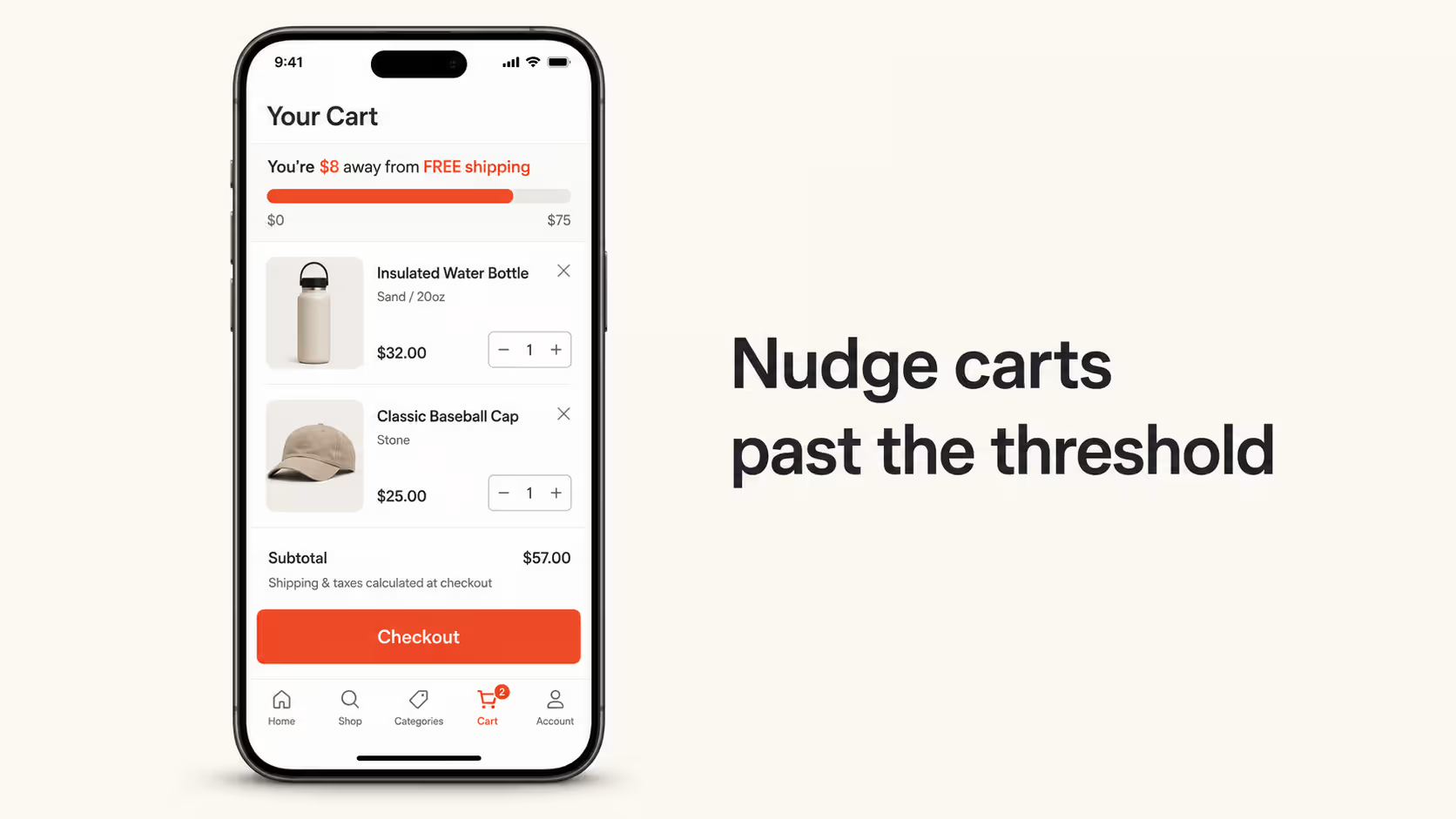
These discounts reduce the “extra cost” barrier and encourage customers to complete their purchases. Whether you offer free shipping on all orders or set a minimum order threshold, it can significantly reduce cart abandonment and drive conversions.
If cart abandonment is your main leak, this guide to improving your ecommerce app conversion rate covers the wider fixes.
4. Weekly deal
Weekly deals are great for maintaining customer engagement and boosting sales on a consistent basis. You can promote a particular product, category, or collection each week with a special discount, encouraging customers to keep coming back to see what’s on offer. This approach can help establish a predictable sales rhythm and foster a sense of excitement around your brand.
5. Flash sale offer
Flash sales create urgency by offering limited-time discounts, typically lasting only a few hours. They work well to create a sense of exclusivity and immediate action, as customers don’t want to miss out on a fleeting deal. To increase the chances of success, promote your flash sales in advance via social media, email, and app notifications to get as many eyes on the sale as possible.
Here’s how Macy’s, a fashion brand, promotes their flash sale discount:

6. Product bundle discount
Product bundle discounts incentivize customers to buy multiple items together at a reduced price. Raises AOV and lets customers try complementary items. Best for pairing a hero product with slower movers.
7. Influencer coupons
Influencer coupons use social media reach by partnering with influencers who promote your brand and offer exclusive discount codes to their followers. This strategy helps increase brand exposure, builds credibility, and attracts new customers. By working with influencers who align with your brand values, you can drive targeted traffic to your store and convert it into sales, especially if their followers trust their recommendations.
Also Read: Influencer Marketing for Shopify Mobile App: Everything You Need to Know
8. Free gift with purchase coupons
Offering a free gift with purchase is a great way to sweeten the deal and enhance the customer experience.
Shoppers feel they’re getting extra value when they receive an additional product for free, even if it’s a small item. To give your customers this experience, use a Shopify free gift with purchase app.
This is best for launching a new SKU by putting it in customers' hands.
Here’s how Lancome Paris does it:

9. Loyalty points programs
Loyalty points programs reward customers for making repeat purchases, giving them points that can be redeemed for discounts or exclusive products.
This type of program increases customer retention by incentivizing them to continue shopping at your store.
Over time, customers who accumulate points are more likely to make additional purchases to reach their reward goals, helping build long-term brand loyalty. There are Shopify apps that can help you implement these programs and track points. Pair that with a subscription offer using one of the best Shopify subscription apps to lock in repeat revenue.
10. Exit-intent discount offer
Exit-intent discounts target shoppers who are about to leave your site without completing a purchase. By offering a small discount or incentive when customers attempt to close the window, you have a chance to recover sales that would otherwise be lost.
These offers are often implemented through pop-ups and can be a powerful tool to reduce cart abandonment rates, giving hesitant shoppers an extra nudge to finish their purchase.
The pop-up would look something like this:

These exit-intent discounts:
- Reduces cart abandonment: Offering a discount as a customer is about to leave can prompt them to complete their purchase.
- Targets hesitant shoppers: Exit-intent offers reach customers who are interested but need a final push, making it a targeted discount strategy.
- Can be customized for triggers: Tailor exit-intent discounts based on customer behavior, such as cart size or time spent on site, for a more personalized offer.
11. Holiday discount
Holiday discounts capitalize on seasonal shopping spikes, like Black Friday, Cyber Monday, or Christmas.
Shoppers expect deals during these times, and offering discounts can help you stand out from competitors.
Whether you run sitewide promotions, product-specific deals, or bundled holiday packages, holiday discounts allow you to reach new customers and retain existing ones.
Use holiday-themed banners and countdown timers to create urgency and excitement around these limited-time offers.
Also Read: BFCM Discounting Strategies to 10x Your Sales Using an eCommerce App
12. Product pre-launch offer
Product pre-launch offers create buzz around upcoming releases by offering discounts to early buyers. This approach builds anticipation and rewards loyal customers who stay up-to-date with your brand’s new products.
With a Shopify mobile app, you can send notifications or emails to alert customers about pre-launch deals, creating a sense of exclusivity. Pre-launch discounts help you test demand, gauge interest, and make adjustments if needed before the official release.
Even brands like Samsung run discounts on pre-booking of products like here:

13. Newsletter signup offer
A newsletter signup offer is a simple but effective way to grow your email list and convert new visitors into paying customers. By offering a small discount in exchange for signing up for your newsletter, you capture potential customers’ emails and open up communication for future marketing. Once they’ve signed up, you can follow up with targeted emails to nurture them and offer exclusive deals, increasing their chances of returning to your store.
14. Minimum purchase discount
A minimum purchase discount is an ideal strategy to increase the average order value. This offer encourages customers to add a bit more to their cart to unlock a discount, such as “Spend $50, Get 10% Off.”
For customers who’ve already spent $20, spending an extra $5 makes sense if it leads to a discount. This technique helps direct customers toward certain products, driving sales while also motivating them to spend slightly more to reach the minimum threshold.
15. More discount types to increase sales
As long as it doesn’t hurt profitability, you can explore various discount types to increase sales. Here are some more ideas to help:
- Code for Purchasing In-Store: Incentivizes online shoppers to visit your physical store by offering a special discount code.
- Birthday Discount: Sends a personalized discount code to customers on their birthday, making them feel valued.
- Deal of the Hour: Creates urgency with limited-time offers for high traffic during specific hours.
- Members-Only Coupons: Rewards loyalty program members with exclusive discounts.
- Referral Coupons: Encourages existing customers to bring in new shoppers with discounts for referrals.
- Feedback Survey Discount: Offers a discount in exchange for completing a survey, gathering valuable customer insights.
You can even use AI-powered dynamic discounting to personalize offers based on visitor behavior and intent, optimizing conversions for your D2C brand. With solutions like Cooee, AI analyzes real-time visitor data to segment users and deliver targeted promotions.
For instance, first-time visitors can receive a welcome discount to encourage their first purchase, while repeat visitors might see time-sensitive offers based on their browsing history. Loyal customers can be rewarded with exclusive discounts or early access to sales, strengthening retention.
By implementing AI-driven real-time personalization, you can maximize engagement, drive incremental conversions, and build lasting customer relationships.
{{cta}}
Trade and financial discount types
These are the formal, B2B, and accounting discount types. You will meet them on the supplier side of your business even if you never advertise them to shoppers.
16. Trade discount
A reduction a manufacturer or wholesaler gives to a retailer for stocking and reselling their product. Example: a supplier lists an item at $100 but invoices a retailer at $85, a 15% trade discount. It never appears on the customer-facing price.
17. Quantity or volume discount
A lower per-unit price for buying in bulk. Example: $10 per unit, or $8.50 per unit on orders of 500 or more. Common in wholesale and B2B, and the mechanic behind consumer "buy more, save more" offers.
18. Cash or early-payment discount
A small reduction for paying an invoice quickly. The standard notation is "2/10, net 30": take 2% off if you pay within 10 days, otherwise the full amount is due in 30. It improves the seller's cash flow and rewards prompt buyers.
19. Seasonal allowance
A discount offered to move goods during their off-peak period. Example: discounting swimwear to wholesalers in autumn. It smooths demand and clears inventory before it ages.
20. Contractual discount
A fixed discount written into an ongoing agreement between buyer and seller. Example: a contract specifying an automatic 8% off every order. Applied at the point of sale, with no negotiation each time.
21. Trade-in discount
A reduction granted when a customer returns an old item toward a new purchase. Example: money off a new phone when you hand back the old one. It lowers the effective price while capturing the returned goods.
Discount types at a glance
How to build an ecommerce discount strategy that protects margin
An effective ecommerce discount strategy starts from the goal, not the offer. The most common discounting mistake is picking a tactic ("let's do 20% off") before naming the outcome you want.
Map the discount to the objective:
- Acquisition: first-purchase, welcome, or referral discounts. You are paying to earn a new customer, so the offer should target people who have not bought before.
- Higher AOV: minimum-purchase, tiered, and bundle offers. These reward the customer for spending more, so the margin you give up is funded by a larger basket.
- Retention: loyalty, birthday, and members-only discounts. Reserve your best offers for people worth keeping.
- Clearance: flash sales, seasonal markdowns, and BOGO. Speed matters more than margin when stock is aging.
Before you set a rate, run the margin math. A 20% discount on a product with a 30% gross margin cuts profitability by roughly two-thirds, so you would need to sell three times the units to hold the same profit.
From there, a handful of strategies keep discounts profitable:
- Use thresholds, not blanket sales. "Spend $75, get 20% off" lifts average order value and only fires on a bigger basket, unlike a sitewide sale that hands margin to customers who would have paid full price.
- Keep the depth between 10% and 30%. Under 10% barely registers; over 30% signals desperation or a quality problem.
- Put a deadline on every offer. A time limit creates urgency and stops a promotion from quietly becoming your permanent price.
- Discount sparingly. Run offers too often or too predictably and you train customers to wait for the next sale, which erodes both margin and full-price demand.
Whatever you run, it should answer three things before going live: who qualifies, what they have to do, and when it ends.
How to run discounts on your Shopify store
Shopify's native engine handles the basics: percentage-off, fixed-amount, free shipping, and simple BOGO, set as either automatic discounts or unique codes. That choice is your discount code strategy in miniature: automatic discounts fire at checkout with no friction and suit sitewide or threshold offers, while codes let you track a channel, creator, or campaign.
For tiered logic, bundles, and gift-with-purchase, most stores add a discount app from the Shopify App Store.
The bigger lever is where your discounts run. A branded mobile app is the closest thing to a fully owned channel in ecommerce, and it is where offers perform hardest: a push notification puts a flash sale on the home screen, and app-exclusive deals give customers a reason to leave the browser.
Karma and Luck saw a 50% lift in conversion rate after moving to a branded app. If you are weighing tools, this breakdown of the best Shopify mobile app builders is a good place to start.
Appbrew turns your Shopify store into a native iOS and Android app, and every discount you already run carries over automatically. Abandoned-cart offers work especially well here, paired with deep-link push recovery that reaches customers where email often can't.
Final thoughts
Discounts remain powerful purchase motivators, enticing online shoppers and encouraging repeat visits. To make the most of their potential, experiment frequently, assess the impact, and fine-tune your strategy to find the best approach for your audience.
Running these discounts on your mobile app is just as essential. However, implementing them seamlessly requires a strong app foundation. If your app isn’t built with the right tools, certain discounts may be challenging to apply effectively. That’s why choosing the right Shopify mobile app builder is crucial.
With Appbrew, any discount you’re running on your Shopify store can be integrated effortlessly into your eCommerce mobile app. Book a demo to see how!
{{cta2}}
FAQs
What are the main types of discounts?
Discounts group into three families. Promotional and retail offers (percentage-off, BOGO, free shipping, bundles) drive sales. Trade and financial discounts (trade, quantity, cash/early-payment) operate between businesses. And behavioral offers (loyalty, referral, first-purchase) reward specific customer actions. Most ecommerce stores use the first and third families.
What is the most common type of discount?
The percentage-off discount, such as "20% off," is the most widely used because it is simple to communicate and flexible across products or a whole store. For high-value items, though, a flat dollar-amount discount often converts better because the savings read as larger.
What is the difference between a trade discount and a cash discount?
A trade discount is a reduction from the list price that a manufacturer or wholesaler gives a retailer for stocking their product, and it is deducted before the invoice is issued. A cash discount rewards fast payment of that invoice, such as "2/10, net 30," meaning 2% off if paid within 10 days. One lowers the price; the other speeds up payment.
Which types of discounts work best for a Shopify store?
Free shipping and minimum-spend thresholds are the highest-leverage offers for most Shopify stores: free shipping cuts abandonment, and spend thresholds lift average order value while protecting margin. First-purchase and abandoned-cart discounts round out the set for acquisition and recovery.
How do you calculate a discount?
Multiply the original price by the discount rate to get the amount off, then subtract it. A 25% discount on an $80 product is $80 × 0.25 = $20 off, so the customer pays $60. For a fixed-amount coupon, subtract the flat figure directly.
How do you build an effective ecommerce discount strategy?
Start with one objective for each offer (acquisition, AOV, retention, or clearance), then choose the discount type that serves it and run the margin math before setting the rate. Wrap every offer in rules: a minimum spend, clear eligibility, and an expiry date. Avoid discounting so often that customers learn to wait for the next sale, which is the fastest way to erode both margin and full-price demand.